

Protect Sneakers During Machine Washing: A Safe Step-by-Step Guide
To protect sneakers during machine washing, start by confirming the shoes are machine-washable, place them in a properly sized shoe washing bag, use cold water and a gentle cycle, balance the washer load, and air dry the shoes afterward. A washing bag can reduce rubbing, impact, and uncontrolled movement, but it cannot make leather, suede, damaged shoes, or other unsuitable footwear safe for machine washing.
Can You Safely Machine Wash Sneakers?
Many sneakers can be machine washed, but the safest approach depends on the shoe's materials, construction, care instructions, and condition. Before putting any footwear in a washer, check the manufacturer's care label or cleaning instructions. A protective bag is useful only after you have established that the shoes can tolerate machine washing.
Sneakers Usually Suitable for Machine Washing
Canvas sneakers and many fabric or synthetic running shoes are commonly more suitable for gentle machine washing. Shoes with durable textile uppers and relatively simple construction are generally better candidates than delicate footwear. Even when a shoe appears washable, use conservative settings because repeated agitation can still affect adhesives, cushioning, shape, and surface finishes.
Sneakers That Should Not Go in a Washing Machine
Leather and suede shoes generally require dedicated hand-cleaning methods rather than a washing machine. Delicate constructions, footwear with decorative elements that can detach, shoes with weakened glue, and shoes with explicit manufacturer restrictions should also stay out of the washer.
If a sneaker already has loose soles, significant tears, separating layers, or visibly weakened adhesive, machine agitation can make the problem worse. A shoe washing bag provides mechanical protection, not structural repair.
Quick Machine-Wash vs. Hand-Wash Decision Guide
| Check | Machine Wash | Hand Wash |
| Material | Canvas, washable fabric, many synthetic meshes | Leather, suede, delicate materials |
| Construction | Durable and intact | Delicate, decorative, or weakened |
| Care instructions | Machine washing permitted | Hand wash or specialist care required |
| Condition | No major tears or loose adhesive | Existing structural damage |
How Does a Shoe Washing Bag Protect Sneakers?
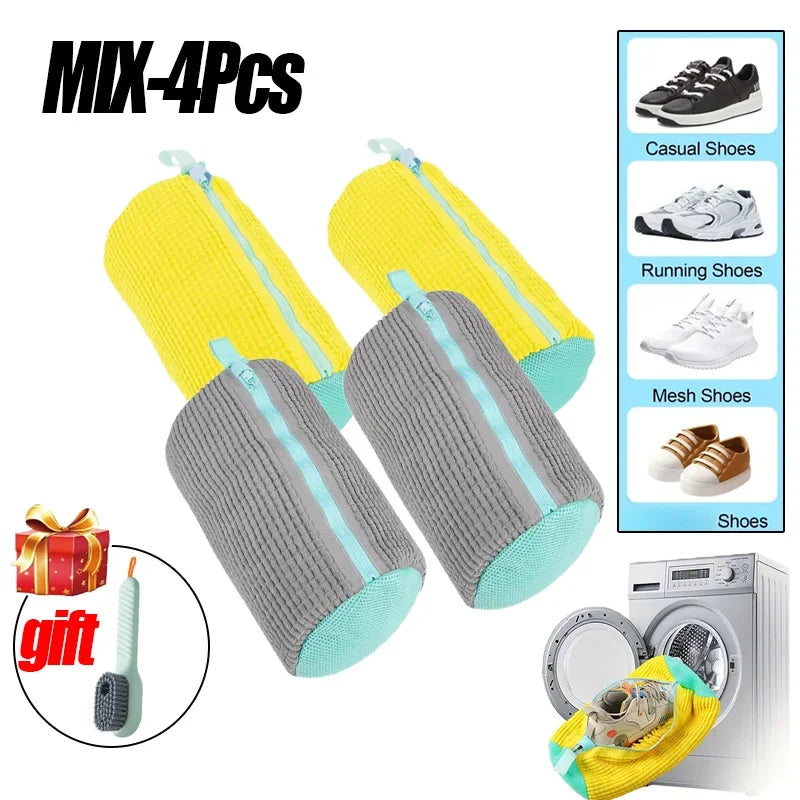
A shoe washing bag creates a protective layer between sneakers and the surrounding washer environment. Instead of allowing loose shoes to repeatedly strike the drum and rub against other items, the bag helps contain them during the cycle. It should be viewed as one part of a broader sneaker-protection routine rather than a guarantee against every type of damage.
Reduces Direct Contact With the Washer Drum
Loose sneakers can tumble independently and repeatedly contact the washer drum. A purpose-built washing bag helps keep the shoes contained, which can reduce uncontrolled movement and direct impacts during agitation.
This is particularly useful when the goal is to stop shoes from repeatedly rubbing against the washer drum. Containment does not eliminate movement, but it can make the washing process more controlled.
Helps Reduce Surface Abrasion
Repeated rubbing can contribute to scuffing, surface wear, and unwanted contact between sneakers and other laundry. A protective bag places a layer of fabric between the footwear and surrounding surfaces, helping reduce some of this abrasion.
The level of protection depends on the bag's construction. A durable, sneaker-specific design can offer a more suitable containment solution than a thin general-purpose laundry bag.
Helps Keep Sneakers Together and Contained
Keeping sneakers together can make the load easier to manage. Instead of having two loose shoes moving independently around the drum, a washing bag keeps them in one controlled space while still allowing water and detergent to reach the footwear.
What a Washing Bag Cannot Prevent
A washing bag cannot compensate for hot water, aggressive agitation, excessive spin, improper drying, or an unsuitable shoe material. It also cannot prevent damage caused by deteriorated adhesives or an already weakened sole.
Think of the bag as a friction- and impact-reduction tool. Safe sneaker washing still requires the correct shoes, settings, preparation, and drying method.
What to Look for in a Sneaker Washing Bag
If you regularly machine wash suitable sneakers, the construction of the washing bag matters. Look for a design that balances protection with water and detergent circulation rather than simply choosing the thickest or largest bag available.
Protective Padding or Cushioning
Some sneaker washing bags use additional cushioning or a thicker construction to provide more separation between footwear and the washer environment. This can be useful when reducing impact and abrasion is the main objective.
Durable Mesh and Breathable Construction
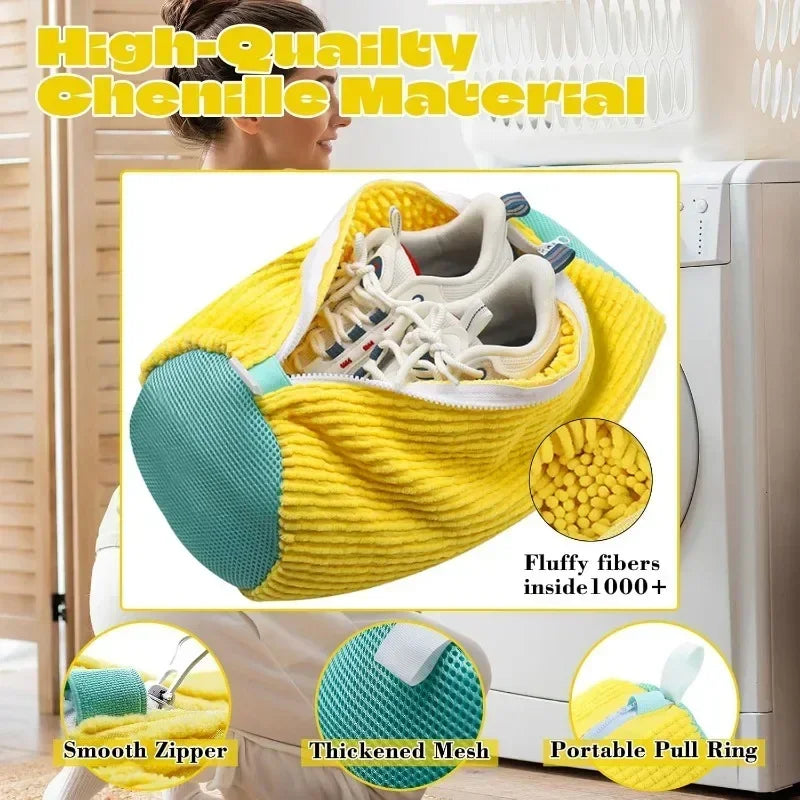
The bag should allow water and detergent to flow through the material so the shoes can actually be cleaned. Durable polyester or nylon construction can also be preferable for repeated use because the bag needs to withstand regular washing and handling.
The supplied shoe washing bag uses polyester nylon and is designed as a reusable washing-machine accessory. Its stated size is 39 × 19 cm, giving users a specific sneaker-sized format rather than relying on an oversized general laundry bag.
Secure Zipper or Closure
A secure closure keeps sneakers inside the bag throughout the wash cycle. A zipper that remains closed during agitation is especially important because an opening bag defeats much of the containment benefit.
Size and Shape for the Shoes
A bag should provide enough room for the sneakers without tightly compressing them. Overpacking can restrict water circulation and reduce cleaning performance, while an excessively large bag may provide less controlled containment.
Shoe Washing Bag vs. Basic Mesh Laundry Bag
| Feature | Shoe Washing Bag | Basic Mesh Laundry Bag |
| Primary purpose | Sneaker containment and protection | General laundry organization |
| Shoe-specific sizing | Often designed around footwear | Varies widely |
| Closure | Commonly includes a secure zipper | May use different closure types |
| Protection focus | Designed to reduce rubbing and uncontrolled movement | Primarily keeps laundry together |
| Water flow | Designed to permit washing through the fabric | Usually allows water flow through mesh |
For users specifically trying to protect sneakers during machine washing, a purpose-built shoe washing bag is generally the more targeted option because its design is intended for footwear containment rather than general laundry organization.
For a reusable option, the KentDo Shoe Washing Bag uses polyester nylon, a secure zipper, a hook for hanging, and a reusable design. These features make it suitable as a practical sneaker-washing accessory without replacing the need for proper washing settings.
How to Prepare Sneakers Before Machine Washing
Good preparation can prevent many of the problems people associate with machine-washing sneakers. The goal is to remove loose contamination, identify structural weaknesses, and prepare the footwear so it can move safely inside the protective bag.
Check the Care Label and Material
Start with the manufacturer's instructions. Confirm the material and whether machine washing is permitted. Do not assume that every fabric-looking sneaker is washer-safe.
Remove Laces and Insoles When Appropriate
If laces and insoles are removable, separating them can make cleaning and drying easier. Follow the care instructions for each component rather than automatically washing every part together.
Brush Off Loose Dirt and Mud
Remove loose mud, grit, and surface debris before washing. A soft brush can help loosen dirt from the upper and outsole. Pre-cleaning reduces the amount of debris entering the washer and can improve the final result.
Check for Loose Soles, Tears, or Weak Adhesive
Inspect the shoe carefully. If the sole is already separating or the upper is badly damaged, machine agitation can accelerate the deterioration. Hand cleaning is the safer choice for footwear in poor structural condition.
Place Sneakers Correctly Inside the Washing Bag
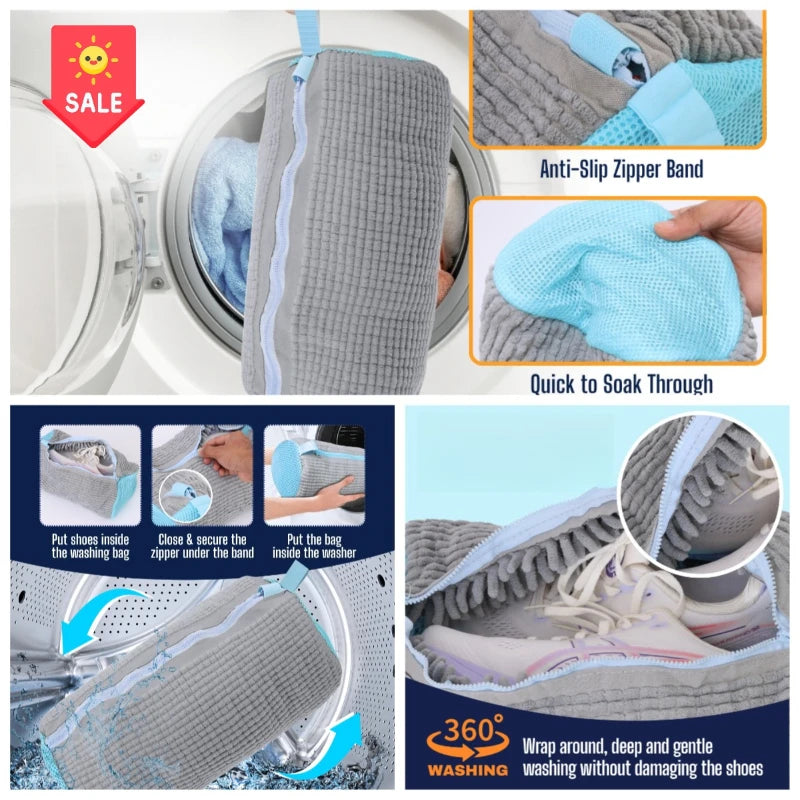
Put the sneakers inside the bag without tightly compressing them. Avoid overfilling the bag. Close the zipper completely and make sure the footwear has enough room for water and detergent to circulate around the surfaces being cleaned.
The Safest Washing Machine Settings for Sneakers
Once the footwear is confirmed as machine-washable and prepared correctly, conservative washer settings are generally the best approach. The exact controls vary by machine, so prioritize the manufacturer's shoe-care instructions whenever they specify different settings.
Choose Cold Water
Cold water is a practical default for machine-washable sneakers because it can help reduce risks associated with heat, including color changes and additional stress on some materials and adhesives.
Use a Gentle or Delicate Wash Cycle
A gentle or delicate cycle reduces aggressive agitation compared with heavier wash programs. Lower mechanical stress can help reduce unnecessary abrasion, deformation, and impact.
Use a Low or Moderate Spin Setting
High-speed extraction creates additional mechanical forces. A low or moderate spin setting is a more conservative choice when protecting sneaker shape is a priority.
Use a Small Amount of Mild Detergent
Use enough mild detergent for the load without adding excessive product. Too much detergent can leave residue, while an unnecessarily aggressive formula may be less suitable for delicate footwear.
Avoid Overloading the Washer
Give the shoes and surrounding laundry enough room to move. An overloaded drum can restrict water circulation, increase compression, and create more uncontrolled rubbing.
Step-by-Step: How to Machine Wash Sneakers in a Protective Bag
Follow this sequence when the sneakers are confirmed to be suitable for machine washing:
- Inspect and pre-clean the sneakers. Remove loose dirt and confirm that the footwear has no major structural damage.
- Prepare the shoe washing bag. Check the bag for tears, confirm that the zipper works correctly, and make sure the interior is large enough for the sneakers.
- Position the sneakers inside. Place the shoes in the bag without tightly compressing or overfilling it. Close the zipper securely.
- Balance the washer load. Avoid creating a load in which the shoes are the only heavy objects moving around the drum. Follow your washer's normal load-balancing guidance.
- Select cold water and a gentle cycle. Use a conservative wash program and avoid unnecessarily aggressive agitation.
- Use appropriate detergent and a restrained spin speed. Use a small amount of mild detergent and choose a low or moderate spin setting when available.
- Remove the sneakers promptly after washing. Take them out of the washer soon after the cycle ends to reduce prolonged dampness and help preserve their shape.
Common Mistakes That Damage Sneakers in the Washer
Washing Sneakers Without Any Protection
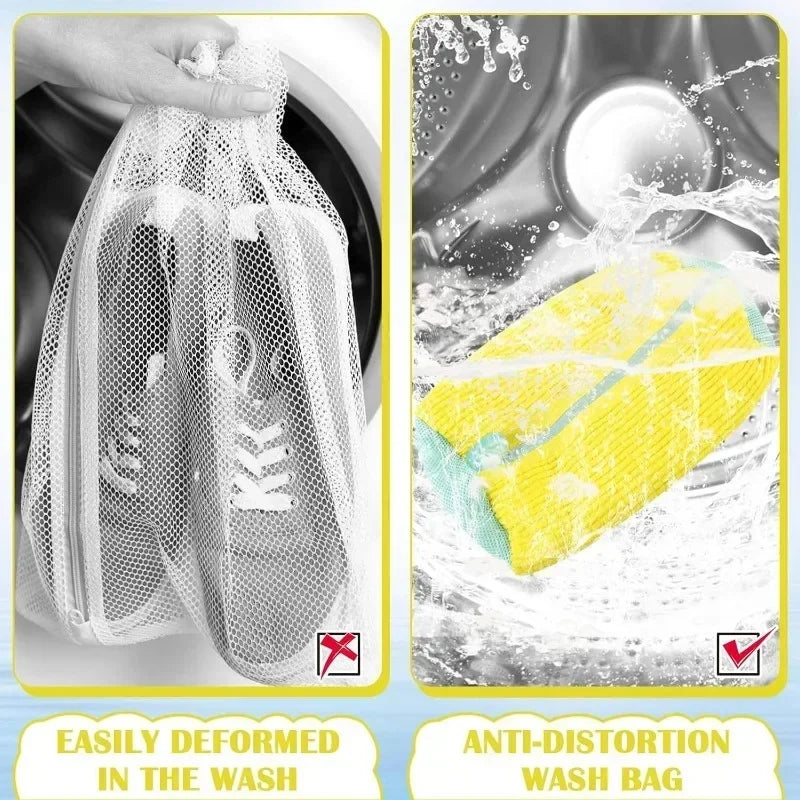
Loose shoes can repeatedly strike the drum and rub against other items. A protective bag can help reduce this uncontrolled movement and provide an additional layer between the footwear and surrounding surfaces.
Using Hot Water or High Heat
Excessive heat can contribute to deformation, color changes, and stress on adhesives or synthetic components. When machine washing is permitted, cold water is generally the more conservative choice.
Choosing an Aggressive Cycle
Heavy agitation creates more mechanical stress than necessary for many washable sneakers. A gentle or delicate cycle can help reduce abrasion and deformation.
Overloading the Bag or Washer
An overloaded bag can restrict water movement and prevent the shoes from being cleaned effectively. An overloaded washer can also increase compression and rubbing. Give both the bag and drum sufficient room.
Machine Drying Sneakers
Do not assume that a successful wash means the dryer is also appropriate. High dryer heat can increase the risk of deformation and adhesive damage. Air drying is the safer general approach unless the footwear manufacturer specifically permits another method.
How to Dry Sneakers After Machine Washing
Drying is an important part of protecting sneakers because a correct washing process can still be followed by problems if footwear is exposed to excessive heat or left damp for too long.
Air Dry Sneakers at Room Temperature
Remove the shoes from the washer promptly and allow them to dry naturally at room temperature. Place them in a clean, well-ventilated location where air can circulate around the footwear.
Preserve Shoe Shape While Drying
Gently reshape the sneakers while they are damp. Supporting the upper can help reduce unwanted creasing or deformation as the material dries.
Improve Airflow and Drying Speed
Separate removable components when appropriate and position the shoes so air can reach the inside and outside surfaces. Good ventilation can help moisture escape more efficiently.
Avoid Direct High Heat
Avoid radiators, high-heat dryers, and other aggressive heat sources unless the manufacturer's care instructions explicitly allow them. Natural drying is generally the less stressful option for washable sneakers.
Material-Specific Sneaker Washing Precautions
Canvas Sneakers
Canvas is often more machine-friendly than leather or suede, but machine washing can still affect color, shape, and construction. Use the manufacturer's care instructions, cold water, gentle agitation, and air drying when machine washing is permitted.
Running Shoes and Synthetic Mesh
Running shoes can contain mesh uppers, foam cushioning, molded components, and multiple adhesive layers. These materials may tolerate gentle washing in some designs but should not automatically be treated as universally machine-safe. Inspect the construction and follow the manufacturer's instructions.
Leather Shoes
Leather generally requires hand cleaning rather than machine washing. Water, agitation, and heat can affect the material and its finish. Use a leather-appropriate cleaning process instead of relying on a washing bag.
Suede Shoes
Suede should generally stay out of the washing machine. Machine agitation and saturation can alter the nap and appearance of the material. Use cleaning methods specifically intended for suede.
Sneaker Washing Protection Checklist
Before Washing
- Check the manufacturer's care instructions.
- Confirm the sneaker material is suitable for machine washing.
- Remove loose mud and surface debris.
- Inspect for tears, loose soles, and weakened adhesive.
- Remove laces and insoles when appropriate.
- Choose a properly sized shoe washing bag.
During Washing
- Place sneakers securely inside the protective bag.
- Close the zipper completely.
- Use cold water when appropriate.
- Select a gentle or delicate cycle.
- Use a small amount of mild detergent.
- Avoid overloading the bag or washer.
- Use a low or moderate spin setting when available.
After Washing
- Remove sneakers promptly.
- Reshape the shoes while damp.
- Allow them to air dry at room temperature.
- Improve ventilation around the footwear.
- Avoid direct high heat.
- Make sure the shoes are completely dry before wearing or storing them.
A purpose-built shoe washing bag can be a practical addition to this routine when your sneakers are suitable for machine washing. The reusable polyester nylon construction, secure zipper, 39 × 19 cm size, and hanging hook are designed to make repeated sneaker washing more convenient.
Conclusion
Protecting sneakers during machine washing is not about using a washing bag alone. The safest approach combines machine-washable footwear, proper pre-cleaning, a correctly sized protective bag, cold water, a gentle cycle, balanced loading, controlled spin, and natural air drying.
A shoe washing bag can help reduce direct drum contact, rubbing, and uncontrolled movement while keeping sneakers contained during the wash. However, it cannot override material-specific care requirements or make leather, suede, damaged footwear, or other unsuitable shoes safe for machine washing.
If you regularly clean machine-washable sneakers, a reusable shoe washing bag can provide a simple layer of protection while fitting naturally into a careful laundry routine.
Pillar Article: Best Shoe Washing Bags: Top Picks for Safer Machine Washing













