

Protective Laundry Bag Material: Polyester vs Nylon & More
The best protective laundry bag material is not simply the thickest or toughest-looking fabric. For machine-washing sneakers, the useful combination is a material that resists abrasion and tearing while still allowing water and detergent to circulate, plus construction that keeps the shoes contained. Polyester mesh, nylon mesh, padded layers, reinforced seams, and secure zippers each solve a different problem.
If your goal is to protect sneakers during machine washing, think beyond the fiber label. Mesh density affects water flow, cushioning affects impact, seams affect durability, and the closure determines whether the shoes stay enclosed throughout the cycle. The right design depends on the type of shoes you wash, how often you wash them, and how much protection you need.
Polyester vs Nylon: Which Material Is Better for a Shoe Washing Bag?
For everyday sneaker washing, polyester and nylon can both work well when the bag has suitable mesh construction, durable stitching, and a secure closure. Polyester is often a practical choice for balanced abrasion resistance, shape retention, and routine use, while nylon is valued for flexibility and strong tear resistance. In either case, construction quality can matter more than the fiber name alone.
Polyester Mesh: Strengths and Trade-Offs
Polyester mesh is commonly used in laundry accessories because it can provide a useful balance of durability, abrasion resistance, lightweight construction, and dimensional stability. For sneakers that need protection from repeated rubbing against a washer drum, a well-constructed polyester mesh bag can create a physical barrier without making the shoe difficult for water to reach.
Another practical advantage is that polyester does not need to be excessively bulky to provide useful containment. A breathable polyester mesh can let water and detergent move through the bag while keeping the shoe separated from other laundry and reducing direct contact with hard washer surfaces.
The trade-off is that not every polyester mesh is equally durable. A lightweight fabric with weak seams or an unsuitable weave can fail even if the material itself is reasonably abrasion resistant. Look at the complete construction rather than assuming every polyester bag performs the same way.
Nylon Mesh: Strengths and Trade-Offs
Nylon is known for flexibility and high tensile strength, which can make nylon mesh useful when a washing bag needs to flex repeatedly as shoes move during a cycle. Its resistance to tearing can also be valuable for heavier or frequently washed footwear.
However, nylon should not automatically be considered superior. A poorly stitched nylon bag can still fail at the seams or zipper, while an overly dense construction can restrict water circulation. The useful question is not simply “Is it nylon?” but “Does the material and construction provide the right balance of containment, airflow, abrasion resistance, and durability?”
Quick Comparison: Polyester vs Nylon
| Feature | Polyester Mesh | Nylon Mesh | What Matters Most |
| Durability | Good when properly constructed | Good when properly constructed | Fabric quality and stitching |
| Abrasion resistance | Strong practical option | Strong practical option | Weave and surface construction |
| Tear resistance | Good, depending on construction | Often a strong choice | Fiber plus seam strength |
| Flexibility | Moderate to good | Very flexible | Important for moving shoes |
| Water flow | Depends mainly on mesh opening and density | Depends mainly on mesh opening and density | Breathable mesh construction |
| Drying | Generally suitable for breathable bags | Generally suitable for breathable bags | Ventilation and fabric density |
| Best use | Routine sneaker washing | Frequent or demanding use | Match construction to footwear |
The comparison shows why material alone should not determine your purchase. A well-designed polyester bag can outperform a poorly constructed nylon bag, especially when the polyester design has better seams, appropriate mesh density, and a more secure closure.
What Material Actually Protects Shoes During Machine Washing?
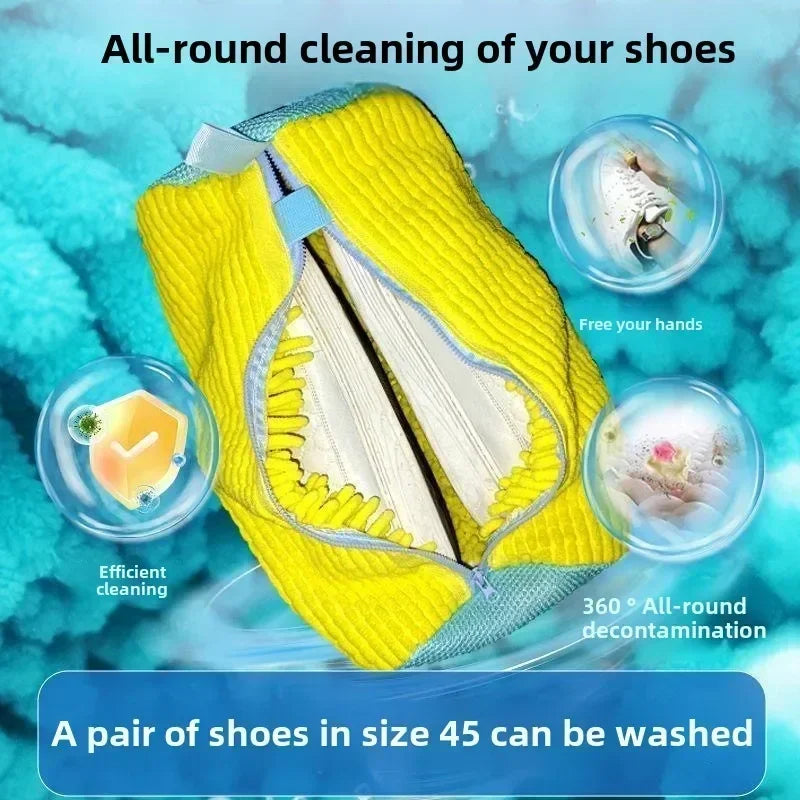
There is no single fabric that guarantees shoe protection. A protective laundry bag material needs to work as part of a complete system. The bag should reduce direct rubbing and impact while still permitting sufficient water and detergent circulation for the wash and rinse stages.
Abrasion Resistance vs Tear Resistance
Abrasion resistance describes how well a material withstands repeated rubbing or surface wear. This matters because sneakers can move continuously against the bag during a machine cycle. A durable surface can help the bag withstand that movement over repeated washes.
Tear resistance is different. It concerns the ability of the fabric to resist ripping when force concentrates around a point, such as a seam, zipper area, or snag. A bag can have reasonable abrasion resistance but still fail if its seams are weak.
For this reason, inspect both the fabric and the stitching. If the bag will hold heavier shoes, reinforced seams become especially relevant.
Mesh Density and Cleaning Performance
Mesh density creates a balance between containment and permeability. Very open mesh can provide excellent water movement but may offer less physical separation from the washer environment. Extremely dense fabric may provide more coverage but can slow the movement of water and detergent through the bag.
The ideal construction gives water enough access to reach the shoe while preventing the footwear from freely striking the washer drum. This is one reason a shoe washing bag can be more useful than simply placing shoes loose inside a machine.
Why Breathable Construction Matters
Breathability is important during both washing and drying. During the wash, water needs to reach the shoe and detergent needs to circulate around it. During rinsing, used water and detergent residue need pathways to leave the bag.
After the cycle, a breathable construction can also make it easier for the bag and shoes to air out. A washing bag should protect the footwear without turning the shoe into a sealed container of moisture.
Does a Thicker Laundry Bag Protect Shoes Better?
Not necessarily. Thickness can increase cushioning, but more material is not automatically better. The most effective shoe washing bag balances protection with water flow, detergent circulation, flexibility, and drying.
When Padding Helps
Padded construction can add a buffer between shoes and the washer drum. It may also reduce direct shoe-to-shoe contact when multiple items move during the cycle. This can be useful for footwear that has structured areas, exposed surfaces, or finishes that you want to protect from unnecessary rubbing.
However, padding should be considered a protective feature rather than a substitute for good washing technique. Shoes should still be suitable for machine washing, and removable insoles, laces, or delicate components may need separate care according to the manufacturer's instructions.
When Too Much Material Can Hurt Cleaning
A very thick or tightly constructed bag can reduce water circulation. If water and detergent have difficulty moving through the material, the shoe may not receive the same cleaning action as it would in a breathable enclosure.
That creates a basic trade-off: more cushioning can mean more protection, but excessive density can mean less permeability. For ordinary washable sneakers, moderate protection with good airflow is often more practical than maximum bulk.
Protection vs Permeability: Finding the Balance
When comparing bags, look for a design that keeps shoes enclosed without behaving like a waterproof pouch. The fabric should permit washing water and detergent to pass through, while the construction provides enough separation to reduce unnecessary impact and abrasion.
Why Water and Detergent Flow Through the Bag Matters
A shoe washing bag is still part of the washing process. Its job is not simply to surround the footwear. It must allow the cleaning solution to reach the shoe and allow rinse water to move through afterward.
How Mesh Lets Water Reach the Shoe
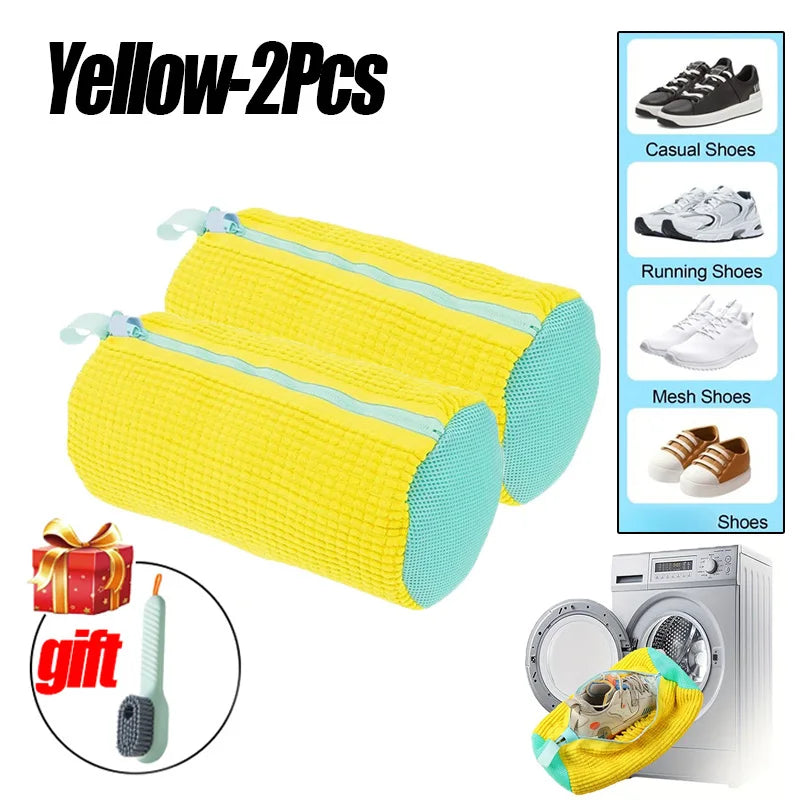
During a wash cycle, water moves through the washing machine and around the enclosed footwear. Mesh openings provide pathways for this movement. The exact flow depends on the weave, opening size, fabric density, shoe shape, and how tightly the bag is packed.
A breathable shoe bag therefore provides a useful middle ground: the sneaker remains contained while water can still circulate around it.
How Laundry Detergent Reaches Dirt and Odor
Detergent needs physical access to the shoe's exterior surfaces to help loosen everyday soil, sweat residue, and other buildup. A bag that severely restricts water movement can interfere with that process.
This is why a breathable shoe laundry bag is generally more practical than an impermeable cover. Protection should not come at the expense of basic washing and rinsing.
Why Fast Rinsing and Drying Matter
Rinsing removes loosened soil and detergent residue from the shoe. Afterward, airflow becomes important for drying. A mesh bag can be hung after washing when it includes a suitable hook or hanging feature, making storage and post-wash drying more convenient.
Construction Features That Make a Shoe Washing Bag More Durable
Material selection is only one part of durability. For repeated machine washing, the points where fabric joins, closes, and carries tension can be just as important as the fabric itself.
Reinforced Seams
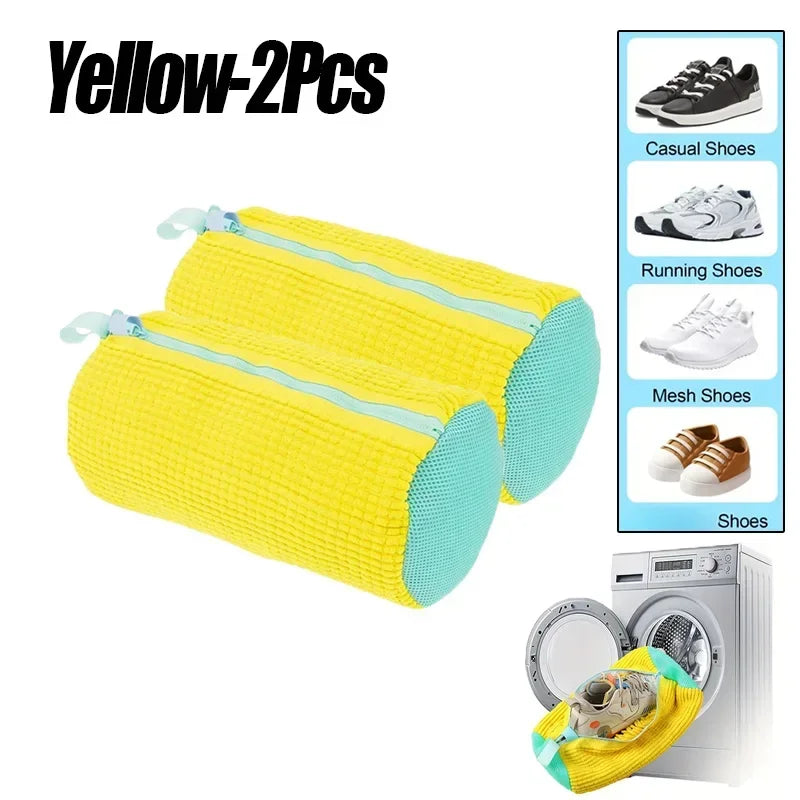
Seams concentrate stress because multiple pieces of fabric meet at one location. Reinforced or well-stitched seams can distribute that stress more effectively and reduce the likelihood of premature separation.
When inspecting a bag, pay particular attention to the areas around the opening, corners, handles, and zipper. These locations can experience repeated tension during loading and unloading.
Tear-Resistant Fabric
Tear-resistant fabric helps the bag withstand repeated movement when footwear shifts inside the enclosure. This is especially relevant for heavier shoes, textured soles, or frequent washing.
Still, tear resistance should be evaluated alongside seam construction. Strong fabric cannot compensate for stitching that pulls apart under load.
Secure Zipper Closure
A secure zipper keeps the shoes inside the bag throughout the wash cycle. An unsecured opening defeats much of the purpose of the enclosure because the footwear can escape and return to direct contact with the washer drum or other laundry.
Look for a zipper that closes completely and remains secure under movement. A simple, dependable closure can be more valuable than decorative construction features that do not improve containment.
Zipper Guards and Protected Closures
A zipper guard can help keep the zipper hardware from directly rubbing against shoes or other garments. This is a useful construction detail when the bag will be used with mixed laundry.
The goal is to prevent the closure itself from becoming a new source of abrasion or snagging.
Breathable Construction
Breathable construction connects nearly every performance requirement discussed in this guide. It supports water access during washing, detergent circulation, rinsing, and post-wash airflow.
For machine-washing sneakers, the best protective design is therefore not simply strong. It is strong enough to contain the shoes while remaining open enough to support effective washing.
Best Shoe Washing Bag Material by Shoe Type
Canvas and Everyday Sneakers
For everyday canvas sneakers and washable casual footwear, breathable polyester or nylon mesh with moderate protection is usually a practical configuration. These shoes generally benefit from reduced rubbing without requiring an excessively thick enclosure.
The priority should be balanced construction: suitable mesh, reliable stitching, a secure zipper, and enough room for the shoe to sit without being tightly compressed.
Running and Athletic Shoes
Running shoes often combine lightweight textile uppers with foam midsoles and structured components. A washing bag should therefore provide containment without excessively restricting water movement.
Flexible mesh, abrasion resistance, breathable construction, and secure closure are useful criteria. Before machine washing, always check the shoe manufacturer's care instructions because not every athletic shoe is designed for machine washing.
Lightweight Fabric Shoes
Lightweight fabric shoes can benefit from a smooth, breathable enclosure with gentle cushioning. The objective is to reduce unnecessary friction while allowing water and detergent to reach the shoe's exterior.
In this category, an oversized or excessively abrasive bag can be counterproductive. Fit and surface construction matter as much as material strength.
Heavier or Bulkier Shoes
Heavier footwear places more stress on the bag as it moves through the wash cycle. If the shoes are machine-washable, prioritize appropriate dimensions, durable fabric, strong stitching, and a secure closure.
A bag that is too small can place unnecessary strain on the zipper and seams. A suitable fit should allow the shoes to be enclosed without forcing them into the bag.
How to Evaluate a Protective Laundry Bag Before Buying
Once you understand the material trade-offs, choosing a shoe washing bag becomes much easier. Instead of shopping by the word “heavy-duty” alone, evaluate the features that actually affect washing performance.
Material and Mesh Checklist
- Check whether the bag uses polyester, nylon, or a polyester-nylon construction.
- Look for breathable mesh rather than an impermeable enclosure.
- Consider whether the mesh is dense enough to contain and protect the footwear.
- Look for tear-resistant fabric if you plan to wash shoes frequently.
- Make sure the construction allows water and detergent to circulate.
Construction Checklist
- Check the quality of the seams, especially around corners and openings.
- Look for a secure zipper that closes completely.
- Consider whether zipper hardware is protected from direct contact with footwear.
- Look for cushioning when additional impact reduction is important.
- Verify that the bag dimensions suit the shoes you intend to wash.
Repeated-Wash Durability Checklist
A reusable shoe washing bag should be evaluated for what happens after more than one wash. Repeated movement can expose weak stitching, fraying fabric, zipper problems, and stretched attachment points.
After each use, inspect the seams and zipper, remove trapped debris, and allow the bag to dry fully before storing it. A hanging hook can make this routine easier because the bag can be aired out instead of being left damp in a laundry basket.
The 30-Second Buying Checklist
- Material: Is the fabric suitable for repeated machine washing?
- Mesh: Can water and detergent circulate?
- Protection: Does the design reduce direct rubbing and impact?
- Seams: Are high-stress areas securely stitched?
- Zipper: Does it close securely and stay closed?
- Airflow: Can the bag and shoes dry after washing?
- Size: Does the bag comfortably accommodate the intended shoes?
- Use case: Is the construction appropriate for your shoe type and washing frequency?
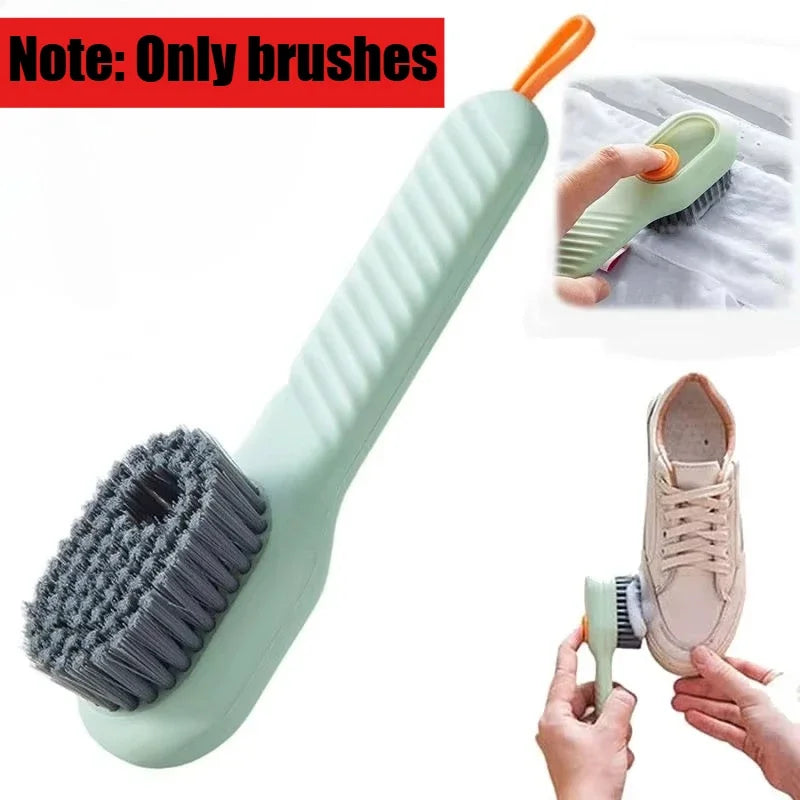
For a practical example of these criteria, the Shoe Washing Bag for Gentle Sneaker Machine Wash Tool uses polyester nylon, a reusable design, zipper closure, a hanging hook, and a 39 × 19 cm size. Its purpose is to create a protective layer around sneakers while allowing water and detergent to pass through. It is designed as a straightforward option for routine machine washing rather than as a claim that one material is universally superior.
If you are building a broader home-care routine, the store's Lifestyle collection is another relevant place to explore practical everyday accessories: https://kentdohealthybeauty.com/collections/lifestyle
Polyester vs Nylon Protective Laundry Bags: Which Should You Choose?
There is no universal winner between polyester and nylon. For most routine sneaker washing, either can work when the bag has appropriate mesh density, durable seams, and a secure zipper. The better choice depends on the combination of material and construction rather than the fiber label alone.
Choose Polyester When...
- You want balanced everyday performance for washable sneakers.
- You value abrasion resistance and stable, lightweight construction.
- You want breathable mesh without excessive bulk.
- You wash ordinary sneakers regularly and want a reusable solution.
Choose Nylon When...
- Flexibility is particularly important for the way the shoes move during washing.
- You place a higher priority on tear resistance and tensile strength.
- You expect frequent use or need a fabric that can flex repeatedly.
- The overall bag construction is strong enough to take advantage of the material's properties.
Prioritize Construction Over Fiber When...
Two bags made from different fibers can deliver similar real-world performance when their construction is comparable. Conversely, a bag made from a theoretically strong material can perform poorly if it has weak seams, an unreliable zipper, unsuitable mesh density, or inadequate dimensions.
For that reason, evaluate the complete package: material, mesh density, water permeability, abrasion resistance, tear resistance, cushioning, seam strength, zipper security, breathability, size, and intended shoe type.
Frequently Asked Questions
What is the best material for a protective laundry bag?
The best material depends on the intended use, but breathable polyester or nylon mesh can both be effective for shoe washing bags. The most important factors are appropriate mesh density, abrasion and tear resistance, durable seams, and secure closure. Construction quality often matters more than choosing one fiber universally.
Is polyester or nylon mesh better for washing shoes?
Both can be suitable. Polyester is a practical balanced option for routine use, while nylon can offer useful flexibility and tear resistance. The weave, mesh density, stitching, zipper, and overall design should be evaluated alongside the material.
Does a thicker laundry bag protect shoes better?
Not automatically. Additional padding can reduce impact, but excessive thickness or dense construction can restrict water and detergent circulation. A good shoe washing bag balances cushioning with permeability and breathability.
Why does water and detergent flow through fabric matter in a shoe washing bag?
Water and detergent need to reach the shoe's exterior during the wash, while rinse water needs to carry away loosened soil and detergent residue. Breathable mesh helps the bag provide protection without turning the shoe into a sealed container.
What makes a shoe washing bag durable enough for repeated machine washing?
Look for durable fabric, tear resistance, strong stitching, reinforced high-stress areas, and a secure zipper. Appropriate sizing also matters because forcing oversized footwear into a small bag can increase stress on the seams and closure.
Final Takeaway: The Best Protective Laundry Bag Balances Material and Construction
When choosing a protective laundry bag material, do not stop at polyester versus nylon. The strongest practical design combines a suitable mesh material with the right density, breathable construction, controlled cushioning, durable seams, and a secure zipper.
For everyday washable sneakers, a breathable polyester or polyester-nylon shoe washing bag can provide a useful balance of protection, water flow, and reusability. If flexibility and tear resistance are especially important, nylon can also be a strong option. In both cases, the construction determines how effectively the bag performs over repeated washes.
The simple rule is this: choose enough protection to reduce rubbing and impact, but not so much material that water, detergent, rinsing, and airflow are compromised. That balance is what turns a basic laundry bag into a practical shoe-washing accessory.
For a reusable option designed specifically for machine-washing sneakers, you can view the Shoe Washing Bag for Gentle Sneaker Machine Wash Tool here: https://kentdohealthybeauty.com/products/shoe-washing-bag
Pillar Article: Best Shoe Washing Bags: Top Picks for Safer Machine Washing













