

Does reducing heat loss at doors really work?
Yes. Reducing heat loss at doors works by sealing the small gaps that allow cold outdoor air to enter while heated indoor air escapes. Upgrades such as weather stripping, door sweeps, adjustable thresholds, and insulated door curtains can reduce unwanted air leakage by up to 30% around problem doors, improving comfort and helping lower heating bills in winter. While sealing a single door won't solve every insulation issue in a home, it can noticeably reduce drafts, eliminate cold spots, and help your heating system maintain a more stable indoor temperature.
Stop Heat Loss at Door Threshold: Step-by-Step Guide to Seal Drafts and Save Energy
Cold floors. Drafty hallways. A heater that never seems to stop running. In many homes, the real issue isn't poor wall insulation—it's the small gaps around exterior doors. Even a narrow opening beneath the threshold or around the frame can leak surprising amounts of warm air. The good news is that most door heat loss problems can be fixed in a single afternoon using affordable DIY solutions.
⏱ 9 min read

Seal the gaps early to reduce heat loss at doors and keep house warm in winter. See it in action.
Why heat escapes through your door threshold (and how to fix it)
The threshold is one of the most common sources of door heat loss, but it isn't always the only culprit. Understanding where air leaks originate helps you choose the right repair instead of replacing parts unnecessarily.
Air gaps, stack effect, and pressure differences
Warm air naturally rises while colder, denser air sinks. During winter, this creates a pressure difference known as the stack effect, drawing cold outdoor air through the smallest openings around doors. Even a gap only a few millimeters wide can create a noticeable draft.
Threshold vs door sweep vs weatherstripping failures
If cold air enters beneath the door, the threshold or door sweep may be worn or incorrectly adjusted. Drafts around the sides or top usually point to compressed or damaged weatherstripping instead. Identifying the leak location before making repairs saves both time and money.
Other hidden leak points around the door frame
Loose trim, cracked caulk, warped door frames, or settling foundations can also create air leaks. If replacing a sweep doesn't solve the problem, inspect the entire frame before assuming the threshold is responsible.
How to identify drafts at your door threshold (quick DIY tests)
Inspect first, repair second. Locating the exact leak prevents unnecessary work.
The candle or smoke test
Move a candle flame or incense stick slowly around the bottom, sides, and top of the closed door. Flickering flames or drifting smoke reveal the precise location of air leaks.
The paper test for door seals
Close the door on a sheet of paper. If it slides out easily without resistance, the seal isn't making proper contact and likely needs adjustment or replacement.
Signs you're losing heat under the door
- Cold air around your feet near the entrance
- Visible daylight beneath the door
- Rooms near exterior doors feel colder than the rest of the house
- Higher-than-expected winter heating bills
- Drafts remain even when windows are closed
If drafts appear only on one side of the door, inspect the frame before replacing the threshold.
Door sweep vs threshold seal vs weatherstripping: which solution works best?
Comparison by gap size
| Solution | Best For | Gap Size | Durability |
|---|---|---|---|
| Door sweep | Bottom edge drafts | Small to medium | High |
| Threshold seal | Uneven floor contact | Medium to large | Very high |
| Weatherstripping | Sides and top | Small | Medium to high |
| Draft stopper | Temporary insulation | Small | Low |
Best option for renters vs homeowners
Renters usually benefit from removable draft stoppers, adhesive weatherstripping, and insulated curtains that leave no permanent marks. Homeowners often achieve better long-term performance by installing adjustable thresholds, quality door sweeps, and replacement weatherstripping.
Cost, durability, and effectiveness
Door sweeps and weatherstripping offer excellent value for most homes. Adjustable thresholds cost more initially but can eliminate recurring drafts caused by uneven floors or shifting doors.
Step-by-step: how to stop heat loss at door threshold
1. Measure the gap first
Close the door and measure the clearance beneath it. Knowing the gap size ensures you choose the correct seal instead of installing one that's too thick or too thin.
2. Seal the bottom gap
Install a properly sized door sweep or draft stopper to block the largest source of cold air infiltration.
3. Replace weatherstripping
Inspect the top and sides of the frame. Replace compressed or cracked seals so the door closes evenly on all sides.
4. Adjust or replace the threshold
If a gap remains after replacing the sweep, raise an adjustable threshold or install a new one to improve contact with the bottom seal.
5. Caulk surrounding gaps if needed
Seal cracks between the door frame and surrounding wall using exterior-grade caulk to eliminate hidden air leaks.
Best door draft stopper solutions (ranked by cost vs effectiveness)
Temporary fixes
- Fabric draft stoppers
- Rolled towels or blankets
- Removable adhesive weatherstripping
These inexpensive options work well for renters and mild climates but usually require periodic repositioning or replacement.
DIY upgrades
- Door sweeps
- Foam or rubber weatherstripping
- Brush seals
These provide a better balance of durability, affordability, and long-term energy savings.
Long-term energy-saving solutions
- Adjustable thresholds
- Automatic door bottoms
- Magnetic insulated door curtains
These solutions are ideal for colder climates where doors are exposed to frequent temperature differences throughout winter.
Door insulation for winter: materials and tools comparison
- Foam: Low-cost and easy to install but compresses faster.
- Rubber: Excellent weather resistance with a longer service life.
- Brush: Performs well on uneven flooring and sliding doors.
- Silicone: Flexible, durable, and effective in changing temperatures.
- Magnetic insulation: Creates an additional thermal barrier across the doorway.
Best materials for wood, metal, and sliding doors
- Wood doors: Rubber weatherstripping with an adjustable sweep.
- Metal doors: Silicone seals resist compression and moisture.
- Sliding doors: Brush seals combined with insulated curtains improve comfort.
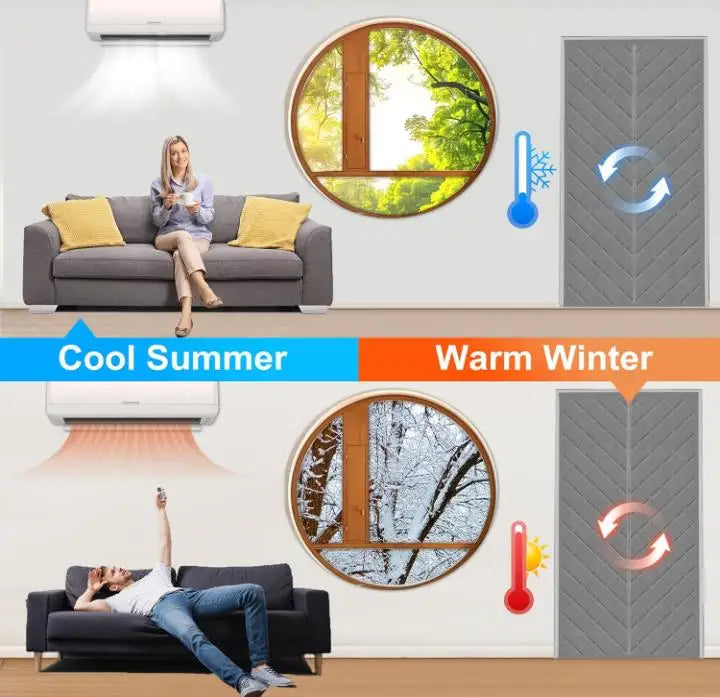
For an additional insulating layer during colder months, consider the winter magnetic insulated door curtain .
How this magnetic curtain helps reduce heat loss at doors
A magnetic insulated door curtain works as a secondary barrier rather than replacing proper weatherstripping. It helps reduce drafts, slows heat transfer, and automatically closes after people or pets pass through.
- No drilling required
- Adds another insulating layer
- Helps maintain more consistent indoor temperatures
- Suitable for frequently used doorways
A flexible secondary barrier that helps reduce heat loss through doors.
How sealing your door threshold lowers your heating bill
Reducing air leaks allows your heating system to maintain indoor temperatures more efficiently. While savings vary depending on climate, insulation quality, and heating type, sealing drafty doors often improves comfort immediately and may reduce unnecessary heating costs over the course of winter.
- Less heat escapes outdoors
- More consistent room temperatures
- Reduced cold drafts
- Lower strain on heating equipment
When should you replace the threshold instead of repairing it?
Signs of worn thresholds
- Cracks or rot
- Loose mounting screws
- Persistent gaps after replacing the sweep
- Water intrusion beneath the door
Uneven floors and large gaps
If the floor has settled or the door no longer sits evenly, an adjustable threshold may restore a proper seal more effectively than repeatedly replacing weatherstripping.
When a new door is the better option
If the door itself is warped, severely damaged, or no longer aligns with the frame, replacement may provide a better long-term solution than continued repairs.
Seasonal maintenance checklist for winter door sealing
Before winter
- Inspect weatherstripping
- Clean threshold surfaces
- Check for visible daylight
- Replace damaged seals
Mid-season inspection
- Verify sweeps remain in contact with the floor
- Check for compressed seals
- Retighten loose hardware
Spring maintenance
- Remove dirt and salt buildup
- Inspect for moisture damage
- Repair worn caulk before next winter
Common mistakes when trying to seal door thresholds
- Ignoring leaks around the door frame
- Choosing oversized seals that prevent proper closing
- Installing adhesive products on dirty surfaces
- Failing to measure the gap before purchasing materials
- Skipping a final draft test after installation
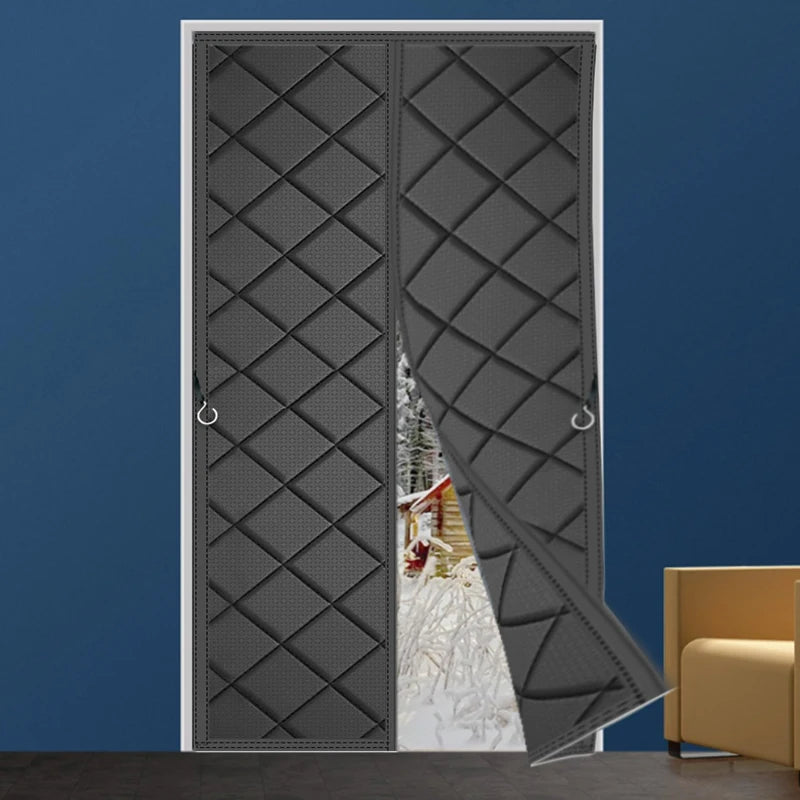
Proper installation and routine maintenance help keep drafts from returning.
FAQs: Stop heat loss at door threshold
What is the fastest way to stop heat loss at a door threshold?
Installing a correctly sized door sweep or draft stopper is usually the quickest improvement.
How do I stop cold air coming through the bottom of my door?
Seal the bottom gap with a sweep, threshold seal, or draft stopper, then inspect the surrounding frame for additional leaks.
Does sealing a door really reduce heating costs?
Yes. Reducing drafts improves heating efficiency and can lower winter energy use while increasing comfort.
What is the best door insulation for winter?
A combination of weatherstripping, a quality door sweep, and an insulated curtain provides the best overall performance.
Can renters fix door drafts without permanent changes?
Yes. Removable weatherstripping, fabric draft stoppers, and insulated magnetic curtains are good temporary options.
How do I know if my threshold needs replacing?
If drafts remain after replacing the door sweep and weatherstripping, or the threshold is cracked, warped, or loose, replacement may be necessary.
Can an uneven floor cause drafts under the door?
Yes. Uneven flooring often creates inconsistent gaps that are best corrected with an adjustable threshold or automatic door bottom.
Should I use a door sweep or weatherstripping first?
Repair the largest air leak first. If cold air comes from underneath, install a door sweep. If it enters from the sides or top, replace the weatherstripping first.
Conclusion: The fastest way to keep your home warm this winter
Stopping heat loss at your door threshold doesn't require major renovations. By identifying the source of the draft, repairing the largest leaks first, and choosing the right sealing products, you can create a warmer, more comfortable home while improving heating efficiency.
Measure before you buy, inspect your seals every season, and remember that combining several small improvements usually delivers better results than relying on a single fix.













