

Reusable Shoe Bag vs Disposable: Cost, Durability & Protection Compared
A reusable shoe bag is usually the better choice when you wash, store, or travel with shoes regularly, while a disposable bag can make sense for one-time or temporary protection. The key difference is not just the upfront price. Compare cost per use, durability, washability, shoe protection, convenience, storage, and waste, and the better option often becomes clear.
Reusable Shoe Bag vs Disposable: Which Is Better?
Quick Verdict
For repeated use, a reusable shoe bag generally offers better long-term value because it can be cleaned and used again instead of replaced after every use. A durable fabric bag can also provide a more consistent protective layer around footwear during machine washing, storage, and travel.
Disposable shoe bags have a narrower advantage: convenience. If you need temporary protection for a single event, move, trip, guest situation, or emergency, avoiding the need to clean and store a reusable bag may be worth the trade-off.
Reusable vs Disposable at a Glance
| Factor | Reusable Shoe Bag | Disposable Shoe Bag |
| Upfront cost | Usually higher per bag | Usually lower per bag |
| Cost per use | Can decrease substantially with repeated use | Remains tied to each replacement |
| Durability | Designed for repeated handling and cleaning | Generally intended for limited use |
| Cleaning | Can be washed and dried for reuse | Typically replaced rather than cleaned |
| Shoe protection | Depends on fabric, seams, closure, and construction | Depends heavily on material and intended purpose |
| Storage | Can be stored and reused between trips or washes | Convenient for temporary separation |
| Travel | Useful for recurring trips and separating shoes from clothing | Useful when temporary protection is all that is needed |
| Waste | One bag can serve multiple uses | Repeated replacement creates more discarded material |
Reusable Shoe Bags vs Disposable Shoe Bags: Key Differences
Materials and Construction
Material is one of the biggest differences between reusable and disposable shoe bags. Reusable designs commonly use polyester, nylon, mesh, or other washable fabrics selected for repeated handling. Construction details such as stitching, seam strength, fabric thickness, and abrasion resistance can determine how well the bag holds up over time.
Disposable options may use thin plastic, nonwoven material, or other lightweight constructions. That can keep manufacturing and upfront costs low, but a lightweight bag should not automatically be treated as equivalent to a purpose-built reusable shoe washing bag.
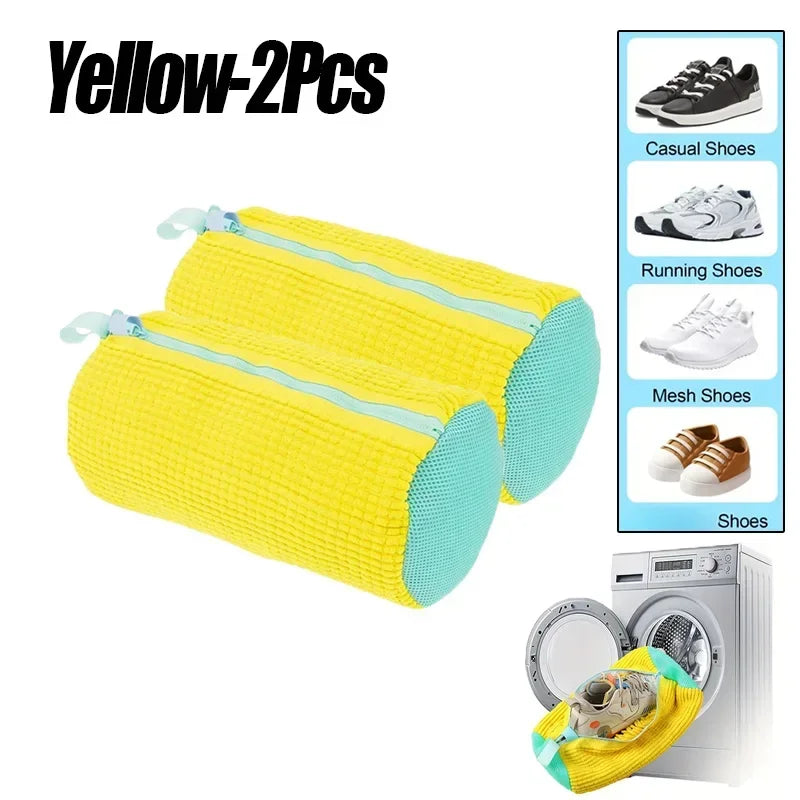
Closures and Ease of Access
A shoe bag's closure affects both convenience and protection. Zippers can keep footwear enclosed during handling and washing, while drawstrings may provide quick access for storage. Hook-and-loop closures can also be convenient, but repeated opening and closing can affect their long-term performance depending on construction quality.
For machine washing, a secure zipper can be especially practical because it helps keep the shoes inside the protective bag during the wash cycle. The goal is not to make the bag completely sealed; water and detergent still need to reach the shoes for effective cleaning.
Protection and Shoe Ventilation
A shoe bag can help create a buffer between footwear and surrounding surfaces, but it does not eliminate all movement inside a washing machine. Its value comes from reducing direct rubbing, impact, and contact with other laundry or parts of the washer.
Ventilation matters for another reason: drying. Recently worn shoes can contain moisture, so a breathable fabric or mesh design may be preferable when the bag is being used for storage rather than washing. A waterproof bag can provide stronger separation from external moisture, but waterproofing can also limit airflow.
Cost Per Use: Why Reusable Shoe Bags Can Be Cheaper
Upfront Price vs Lifetime Cost
The simplest way to compare reusable and disposable shoe bags is to stop looking only at purchase price.
Cost per use = purchase price ÷ realistic number of uses
For example, imagine a reusable bag costs $10 and remains functional for 40 uses. Its basic purchase cost works out to $0.25 per use. If a disposable alternative costs $1 per bag and is used once, ten uses would require approximately $10 in replacement purchases.
These are hypothetical examples rather than universal market prices. Actual value depends on purchase price, construction quality, how often the bag is used, and how long it remains serviceable.
Simple Cost-Per-Use Examples
| Scenario | Reusable Example | Disposable Example |
| 10 uses | $10 bag ÷ 10 = $1.00/use | $1 bag × 10 = $10 total |
| 25 uses | $10 bag ÷ 25 = $0.40/use | $1 bag × 25 = $25 total |
| 40 uses | $10 bag ÷ 40 = $0.25/use | $1 bag × 40 = $40 total |
The important variable is frequency. Someone who washes sneakers several times a month can get substantially more value from a reusable shoe laundry bag than someone who needs a bag once a year.
When Disposable Bags Still Cost Less
Disposable can still win financially when the required number of uses is extremely low. If you need temporary shoe protection for a single move or short event, buying a reusable product that will rarely be used may not provide meaningful savings.
Durability and Shoe Protection Compared
Which Bag Lasts Longer?
For reusable bags, look beyond the word “durable.” Fabric strength, zipper quality, stitching, seam construction, and resistance to repeated abrasion all matter. A reusable bag that develops a torn seam or broken zipper after only a few uses may not deliver the expected cost-per-use advantage.
Polyester nylon is a practical material for a reusable shoe washing bag because it combines relatively low weight with a fabric construction intended for repeated handling. The specific performance of any bag still depends on its actual construction and how it is used.
Protection During Storage and Travel
A shoe bag is useful beyond laundry. Separating shoes from clean clothing can help keep dirt and debris contained inside luggage, drawers, closets, or storage containers.
Reusable travel shoe bags are particularly useful for people who pack footwear frequently. Instead of treating the bag as a single-purpose disposable cover, you can use the same washable bag across multiple trips.
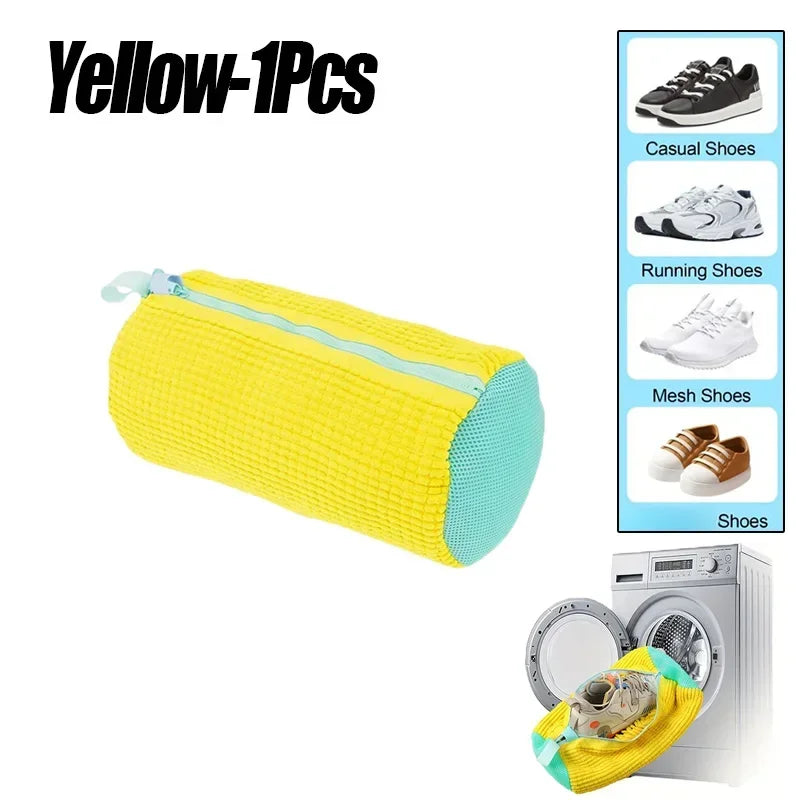
Protection During Machine Washing
Machine washing creates a different use case. Shoes can move, tumble, rub against the washer drum, and contact other items. A purpose-built shoe washing bag helps create a protective layer around sneakers during the cycle.
This does not mean every shoe should automatically go into a washing machine. Always consider the shoe manufacturer's care instructions, construction, adhesives, materials, and decorations first. Some footwear is better cleaned by hand.
When machine washing is appropriate, a reusable shoe washing bag can make the process more controlled by keeping the footwear enclosed while still allowing water and detergent to flow through the fabric.
Cleaning and Maintenance: Can Reusable Shoe Bags Be Washed?
How to Wash a Reusable Shoe Bag
Yes, a reusable shoe bag can generally be cleaned when its material and care instructions permit washing. A simple maintenance routine is:
- Remove shoes and shake out loose dirt, sand, and debris.
- Check the zipper, seams, and fabric for damage before washing.
- Wash according to the bag manufacturer's material and care instructions.
- Rinse thoroughly if detergent or dirt remains in the fabric.
- Air-dry the bag completely before storing or using it again.
A reusable shoe washing bag with a practical hanging hook can make the final step easier because the bag can be hung where air can circulate around it.
How to Dry and Prevent Odor
Do not store a damp shoe bag immediately after washing. Moisture trapped in fabric, seams, or folds can contribute to unpleasant odors. Open the bag, allow air to circulate, and let it dry completely before putting it away.
Ventilation is especially important when the bag has been used with recently worn footwear. A breathable fabric can be useful for storage, while a more water-resistant construction may be preferable when the priority is separating shoes from wet surroundings.
When to Replace a Reusable Bag
Replace a reusable bag when its protective function has noticeably deteriorated. Warning signs include torn fabric, broken seams, a damaged zipper, stretched openings, or other defects that allow the shoes to escape or reduce the bag's ability to provide a protective layer.
Convenience and Environmental Trade-Offs
Reusable Bags: More Setup, More Long-Term Value
Reusable products require a small amount of maintenance. You need to empty the bag, clean it when necessary, dry it thoroughly, and store it between uses. That is more work than throwing away a disposable bag.
However, that extra maintenance can be worthwhile for frequent users. A single reusable bag can serve repeated washing, storage, and travel needs rather than requiring a new purchase each time.
Disposable Bags: Maximum Short-Term Convenience
Disposable bags are attractive when convenience matters more than repeated-use value. They can be useful for guest footwear, temporary storage, moving, events, or unexpected situations where there is no convenient opportunity to clean and dry a reusable bag.
Waste and Sustainability Considerations
Reusable does not automatically mean environmentally superior in every situation. Environmental impact depends on factors such as material production, manufacturing, transportation, cleaning frequency, product lifespan, and eventual disposal.
Still, repeated disposal means repeatedly consuming a new bag. Extending the useful life of a durable shoe bag can reduce the number of replacement bags needed for the same number of uses. For buyers focused on reducing single-use consumption, durability and realistic longevity are therefore important considerations.
When Disposable Shoe Bags Make More Sense
One-Time or Emergency Use
A disposable shoe bag can be the practical choice when you need temporary protection and have no expectation of using the bag again. Examples include a one-time move, a short event, or an unexpected need to separate dirty footwear from other belongings.
Large-Scale Distribution and Guest Use
Disposable options can also make operational sense when many individual users need a basic shoe cover or bag and collecting, washing, drying, and redistributing reusable bags would be impractical.
Situations Where Cleaning Is Impractical
If there is no convenient way to clean and completely dry a reusable bag, a disposable option may provide simpler short-term logistics. This is especially relevant when the bag is being used for temporary containment rather than repeated washing or long-term storage.
Best Reusable Shoe Bag Features to Look For
Choose the Right Size
Size should match the footwear you intend to store or wash. A bag that is too small can compress shoes and strain the zipper or seams, while an excessively large bag may allow unnecessary movement.
For example, a compact sneaker washing bag may work well for many everyday shoes but may not be appropriate for bulky boots or oversized footwear. Check the bag's stated dimensions before purchasing.
Check Material and Construction
Look for washable polyester, nylon, or mesh construction that matches your intended use. For machine washing, also consider seam quality, abrasion resistance, and whether the material is designed to withstand repeated wet-dry cycles.
Choose the Right Closure
A secure zipper is useful when the primary goal is keeping shoes enclosed during machine washing. Drawstrings can be convenient for storage, while other closures may work for lightweight temporary use. Choose the closure based on how securely and repeatedly you need to contain the footwear.
Look for Ventilation
Breathable material can help airflow around shoes after use. This is particularly helpful when the same bag is used for travel or storage as well as washing.
Consider Waterproofing
Water-resistant and waterproof are not interchangeable terms. A water-resistant shoe bag may repel some moisture while remaining relatively breathable. A fully waterproof construction provides stronger moisture separation but can restrict airflow. Choose according to whether your main goal is washing, storage, travel, or protection from external moisture.
Check Cleaning Requirements
Before buying, confirm how the bag should be cleaned and dried. A reusable shoe laundry bag is most useful when its maintenance requirements fit naturally into your normal laundry routine.
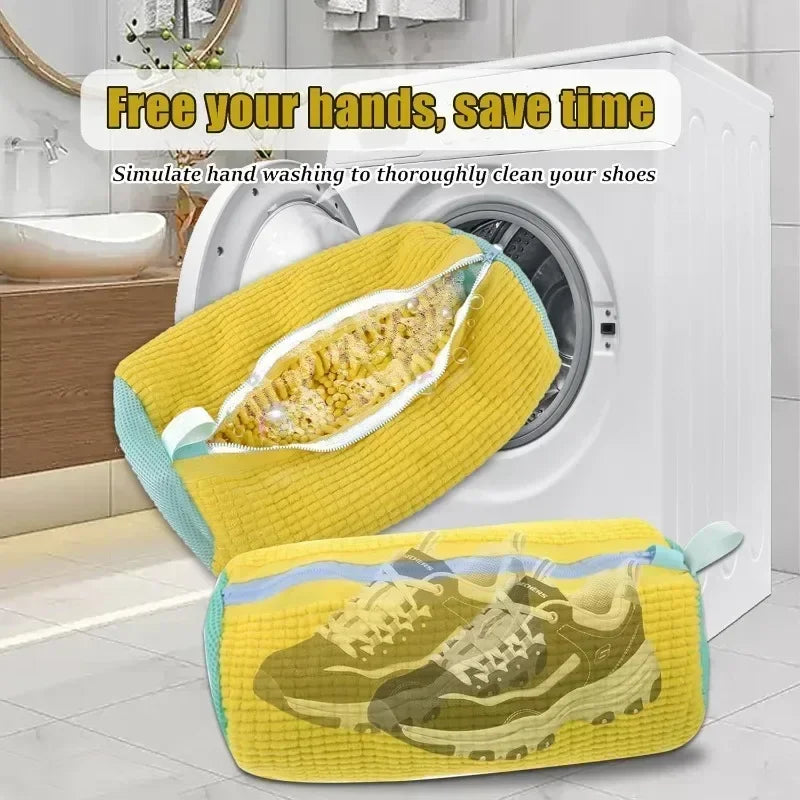
For a reusable option designed specifically around machine-washing sneakers, the KentDO shoe washing bag uses polyester nylon, a secure zipper, a hanging hook, and a 39 × 19 cm format. Its purpose is to help reduce rubbing and impact during washing while allowing water and detergent to pass through the protective fabric.
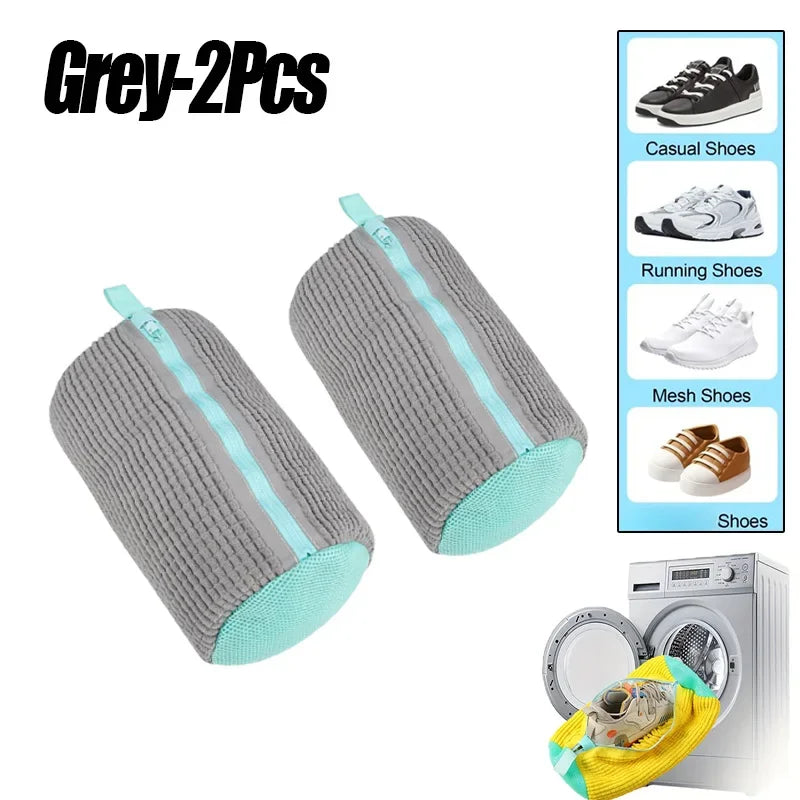
Because it is reusable, the same bag can also be cleaned, dried, stored, and brought along for travel rather than treated as a single-use accessory.
Reusable vs Disposable Shoe Bags: Which Should You Buy?
Choose Reusable If You Wash, Travel, or Store Shoes Regularly
Choose a reusable shoe bag if you expect repeated use. It is the stronger fit for people who regularly machine-wash suitable sneakers, travel with multiple pairs of shoes, or want a dedicated bag for separating footwear from clothing.
Reusable is also the more logical choice when cost per use matters. The more often a durable bag is successfully reused, the less its original purchase price matters relative to its lifetime value.
Choose Disposable If You Need Temporary, One-Time Protection
Choose disposable when the need is genuinely temporary. A one-time move, occasional event, guest footwear, emergency packing situation, or large-scale distribution may justify prioritizing immediate convenience over long-term reuse.
A Simple Buying Decision
Frequent use favors reusable; rare or one-time use can favor disposable. If you expect to wash or store shoes repeatedly, compare durability, closure quality, cleaning requirements, ventilation, and cost per use rather than choosing solely by upfront price.
If your main goal is machine-washing sneakers safely, a reusable shoe washing bag is generally the more useful category because it is designed for repeated washing routines rather than one-time containment.
Reusable Shoe Bag Buying Checklist
Before You Buy, Check These 7 Features
- Size: Make sure the dimensions accommodate the footwear without excessive compression or empty space.
- Material: Look for durable polyester, nylon, mesh, or another construction suited to your intended use.
- Closure: Choose a secure zipper or another closure that reliably contains the shoes.
- Ventilation: Consider breathable construction when the bag will also be used for storage or travel.
- Waterproofing: Decide whether you need water resistance or true waterproof protection.
- Washability: Confirm how the bag should be cleaned and dried before purchasing.
- Intended use: Match the bag to machine washing, travel, storage, or temporary protection rather than assuming one design does everything equally well.
For broader household and lifestyle solutions, you can also explore the KentDO Lifestyle collection and related Beauty & Self-Care articles for other practical everyday-care ideas.
Reusable Shoe Bag vs Disposable: The Bottom Line
Reusable shoe bags generally provide better long-term value when shoes need protection repeatedly. Their main advantages are the ability to clean and reuse them, lower potential cost per use, consistent storage and travel utility, and less reliance on repeated replacement.
Disposable shoe bags still have a legitimate place. They are convenient for one-time protection, temporary storage, events, moving, guest use, or situations where cleaning a reusable bag is impractical.
The best choice therefore depends less on which bag is cheapest at checkout and more on how often you will use it. For recurring sneaker washing, a durable reusable shoe washing bag with a secure closure and washable fabric is the more practical long-term solution.
If you regularly machine-wash suitable sneakers and want a simple reusable layer between your shoes, the washer, and other laundry, a reusable shoe washing bag can be a practical addition to your laundry routine.
Pillar Article: Best Shoe Washing Bags: Top Picks for Safer Machine Washing













