

What Is EPS Foam in Helmets? Beginner Guide to Snow Skiing Helmet Safety, Warmth, and Protection
What Is EPS Foam in Helmets?
EPS (Expanded Polystyrene) foam is a lightweight, rigid material that serves as the primary energy-absorbing liner inside most modern helmets. If you've ever wondered what is EPS foam in helmets , it is the protective layer positioned directly beneath the outer shell and above the comfort padding. Its primary purpose is to reduce the amount of impact energy transferred to the head during a collision.
An EPS foam helmet liner differs from the soft interior padding that makes a helmet feel comfortable. Comfort padding improves fit, cushions pressure points, and helps manage moisture, while the EPS liner is an engineered safety component designed to protect against impacts. During a crash, the foam compresses in a controlled manner, helping reduce peak forces before they reach the skull.
This controlled deformation is a key reason expanded polystyrene helmet safety technology has become the industry standard across snow sports, cycling, climbing, and many other helmet categories. Because the foam is designed to crush rather than rebound, it can significantly improve protection in a single significant impact.
- Primary safety layer: Positioned between the outer shell and the wearer's head to absorb impact energy.
- Lightweight construction: Adds protection without making helmets unnecessarily heavy.
- Engineered energy absorption: Closed-cell foam compresses to help reduce transmitted forces.
- Separate from comfort padding: Soft liners improve fit, while EPS provides structural impact protection.
- Single-impact performance: A helmet should generally be replaced after a major crash because compressed EPS does not fully recover.
Snow Skiing Helmet for Beginners Staying Warm and Protected
⏱ 6 min read
Understanding how an EPS helmet liner works makes it easier to evaluate helmet safety features beyond marketing claims. This guide explains how EPS foam absorbs impact, where it fits within helmet construction, how it compares with other liner materials, and why it remains the foundation of modern protective helmet design.
Explore the helmet components, impact mechanics, and material comparisons explained throughout this guide.
Understanding the role of the EPS liner helps you distinguish genuine protective features from simple comfort enhancements. Throughout this article, you'll learn how the different layers inside a helmet work together to improve impact protection while maintaining a lightweight design.
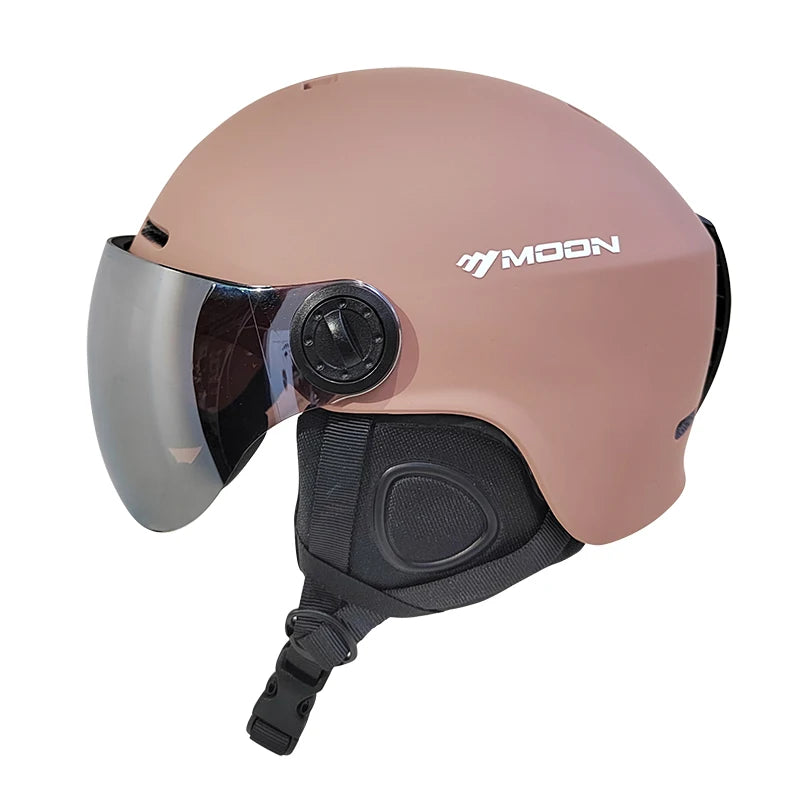
Snow skiing helmet comfort and snow sports head protection in action See it in action
How EPS Foam Helmet Liners Work to Absorb Impact
An EPS foam helmet liner protects the head by converting impact energy into controlled deformation. Instead of allowing the full force of a collision to reach the skull, the foam's closed-cell structure compresses and crushes in a predictable way, reducing peak acceleration. This is the fundamental principle behind shock absorbing foam for helmets and explains how helmet foam works in most certified protective helmets.
Linear Impacts
During a direct impact, the helmet's outer shell spreads the force across a wider surface before transferring it to the EPS liner. The liner then compresses progressively, slowing the head over a slightly longer period. Although this happens in milliseconds, increasing the stopping time significantly reduces the force transmitted to the brain.
- Initial impact: The outer shell receives the collision and distributes the load.
- Energy transfer: Impact forces move into the EPS foam helmet liner.
- EPS cell compression: Thousands of tiny closed cells collapse in a controlled manner to absorb energy.
- Energy dissipation: Less force reaches the wearer's head than would occur without the protective liner.
Limits of Protection
While EPS foam impact protection is highly effective, no helmet can eliminate every injury risk. Helmets are engineered to reduce the severity of many impacts, particularly direct linear impacts, but extremely high-energy crashes or impacts from unusual angles may still result in injury. Proper helmet fit, certification, and correct use remain essential for achieving the intended level of protection.
Single Significant Impact
EPS is designed to crush permanently during a substantial impact. Once its cellular structure has compressed, it cannot fully return to its original shape or absorb the same amount of energy again. Even if the helmet shell appears undamaged, the liner may have lost much of its protective capability. For this reason, manufacturers generally recommend replacing a helmet after any significant crash.
EPS Foam vs Other Helmet Liner Materials
Comparing helmet liner materials EPS vs EPP and other technologies helps explain why different helmets are designed for different activities. Each material offers unique advantages, but they are not interchangeable.
EPS vs EPP
Expanded Polystyrene (EPS) is the most widely used helmet liner because it provides excellent energy absorption while remaining lightweight and cost-effective. Expanded Polypropylene (EPP) is more resilient and can withstand multiple lower-energy impacts without permanent deformation, making it common in helmets intended for repeated minor impacts.
EPS vs EPU
Expanded Polyurethane (EPU) is less common than EPS and EPP but offers a balance between energy absorption and durability in certain specialized helmet designs. Material selection depends on the intended application, testing requirements, and manufacturer design goals.
EPS vs MIPS
MIPS is not a foam material. Instead, it is a low-friction layer designed to reduce certain rotational forces during angled impacts. Helmets equipped with MIPS still rely on an EPS foam helmet liner as the primary energy-absorbing component. Rather than replacing EPS, MIPS complements it by addressing a different aspect of impact protection.
EPS vs Comfort Foam
Comfort foam should not be confused with protective EPS. Soft comfort padding improves fit, cushions pressure points, and helps manage moisture, but it provides little meaningful impact absorption. The EPS liner is the engineered structural component responsible for helmet safety.
| Material or System | Primary Function | Impact Performance | Reusable After Major Impact? |
|---|---|---|---|
| EPS Foam | Primary energy-absorbing liner | Excellent for single significant impacts | No |
| EPP Foam | Multi-impact energy management | Good for repeated lower-energy impacts | Often yes, depending on damage |
| EPU Foam | Specialized impact absorption | Varies by helmet design | Depends on manufacturer guidance |
| MIPS | Rotational impact management layer | Works alongside EPS | Not an impact-absorbing foam |
| Comfort Foam | Fit and cushioning | Minimal protective value | Not designed for impact protection |
Modern helmets often combine EPS foam with advanced shell materials and rotational impact technologies to improve overall safety performance while keeping weight low and comfort high.
Why EPS Foam Is Considered Single-Impact Protection
One of the most important characteristics of an EPS foam helmet liner is that it is engineered for single significant impacts. During a collision, the foam permanently crushes to absorb energy. This controlled deformation reduces the force transmitted to the head but also changes the internal structure of the liner.
Because the closed-cell structure does not fully recover after absorbing a major impact, the helmet may no longer provide the same level of protection in a subsequent crash. Even when the outer shell appears undamaged, the EPS liner may have sustained hidden internal damage that cannot be identified through a simple visual inspection.
- Permanent crushing is an intentional safety feature, not a product defect.
- Internal damage may exist without visible cracks in the shell.
- A helmet that has experienced a significant impact should generally be replaced.
- Following the manufacturer's replacement guidance helps maintain expected protection levels.
Helmet Safety Standards and EPS Testing
Helmet safety certifications verify that a helmet has met established performance requirements through standardized laboratory testing. Although certification standards vary by intended sport and region, they all evaluate how effectively the helmet's EPS liner manages impact energy.
Laboratory Drop Tests
During certification testing, helmets are dropped onto specially designed anvils at controlled speeds. Sensors measure the forces transmitted through the helmet to determine whether the EPS liner successfully reduces impact energy to acceptable levels. These repeatable tests allow manufacturers to compare designs under consistent conditions.
Certification Requirements
A certified helmet combines multiple components—including the shell, EPS foam liner, retention system, and straps—to function as an integrated protective system. Certification does not mean a helmet prevents every injury, but it demonstrates that the design has satisfied recognized impact-performance criteria for its intended use.
How to Inspect EPS Foam and Know When to Replace a Helmet
Routine inspection helps ensure an EPS foam helmet liner remains capable of providing its intended level of protection. While obvious damage is easy to identify, some impact-related damage may be hidden beneath removable comfort padding or beneath an intact outer shell.
- Inspect the EPS liner for visible cracks, crushed areas, dents, or missing pieces.
- Replace the helmet after any significant impact, even if exterior damage appears minimal.
- Follow the manufacturer's recommended service life and replacement guidelines.
- Store helmets away from excessive heat, prolonged sunlight, and harsh chemicals that could accelerate material degradation.
- Check straps, buckles, and the shell regularly for signs of wear or damage.
Proper storage and routine inspection cannot restore damaged EPS foam, but they can help identify when replacement is necessary to maintain helmet safety.
Common Myths About EPS Foam
-
Myth: EPS foam bounces back after a crash.
Fact: Protective EPS permanently compresses during a significant impact and cannot regain its original energy-absorbing structure. -
Myth: A thicker liner is always safer.
Fact: Protection depends on the complete helmet design, including foam density, shell construction, and certification testing—not thickness alone. -
Myth: Comfort foam protects against impacts.
Fact: Soft interior padding improves comfort and fit, while the EPS foam helmet liner provides the primary impact protection. -
Myth: Small crashes never matter.
Fact: Any impact severe enough to compress the EPS liner can reduce future protective performance, even if external damage is difficult to see.
Frequently Asked Questions About EPS Foam in Helmets
Is EPS foam good for helmets?
Yes. EPS (Expanded Polystyrene) foam is widely used because it provides an excellent balance of lightweight construction, reliable impact energy absorption, and cost-effective manufacturing. Its controlled crushing behavior makes it one of the most effective materials for reducing the forces transmitted to the head during a significant impact.
Why is EPS foam considered single-use after a crash?
EPS foam absorbs impact by permanently compressing its closed-cell structure. Once those cells have crushed, they cannot provide the same level of energy management again, so manufacturers generally recommend replacing the helmet after a major impact.
Can EPS foam recover after being compressed?
No. Unlike resilient foams used for cushioning, protective EPS is designed to deform permanently during a significant collision. This permanent deformation is what allows it to absorb impact energy efficiently.
What is the difference between EPS and EPP helmet liners?
EPS is optimized for absorbing energy during a single significant impact, while EPP (Expanded Polypropylene) is more resilient and can better withstand repeated lower-energy impacts. Both materials have legitimate applications depending on helmet design and intended use.
Does EPS foam expire over time?
EPS itself does not have a fixed expiration date, but helmets naturally age due to environmental exposure, normal wear, and degradation of other components such as straps, adhesives, and comfort padding. Always follow the manufacturer's recommended replacement schedule.
Can a helmet look fine even if the EPS liner is damaged?
Yes. The outer shell may show little or no visible damage even though the internal EPS liner has cracked or compressed. For this reason, a helmet should be replaced after any significant impact, regardless of its external appearance.
Does MIPS replace EPS foam?
No. MIPS is a rotational impact management system, not a substitute for an EPS foam helmet liner. Helmets equipped with MIPS still depend on EPS to absorb the primary impact energy during a collision.
How do helmets absorb impact using EPS foam?
When the helmet strikes an object, the outer shell distributes the force across the EPS liner. The foam then compresses in a controlled manner, converting impact energy into deformation and reducing the amount of force transferred to the head.













