

Shoes Getting Damaged in Washer? How to Prevent It
If your shoes are getting damaged in the washer, the problem is usually not the washing machine alone. Repeated friction, impact, heat, aggressive agitation, unsuitable materials, and poor preparation can all contribute to scratched uppers, misshapen sneakers, damaged mesh, loose laces, or worn rubber components. For shoes that are approved for machine washing, you can reduce many avoidable problems by preparing them properly, using a protective shoe washing bag, choosing cold water and a gentle cycle, and air drying afterward.
The key is to treat machine washing as a low-impact cleaning process rather than simply putting shoes into the drum. The right preparation and washing setup can help protect both your footwear and the rest of your laundry.
Why Are My Shoes Getting Damaged in the Washer?
Shoes can be damaged during machine washing because a washer combines water, detergent, mechanical movement, friction, and repeated impact. Shoes are also constructed from multiple materials that may respond differently to moisture, heat, and agitation.
Friction Against the Washing Machine Drum
One of the most common causes of washer-related shoe damage is repeated rubbing. As shoes tumble and move through the cycle, the uppers, edges, and soles can repeatedly contact the washer drum or other items. This friction may contribute to scuffing, surface wear, and abrasion, especially on mesh or lightweight synthetic materials.
A protective layer between the shoes and the surrounding laundry can reduce some of this direct contact. This is one reason a purpose-built shoe washing bag can be useful when machine washing compatible sneakers.
Repeated Impact During the Wash Cycle
Shoes are heavier and more rigid than most clothing. During tumbling, they can repeatedly strike the drum or collide with other laundry. Excessive movement may increase mechanical stress on flexible uppers, padding, laces, and bonded components.
Reducing unnecessary movement is therefore an important part of preventing shoes from getting damaged in the washer. A gentle cycle, an appropriately loaded drum, and a protective bag can help create a lower-impact washing environment.
Heat, Water, and Adhesive Stress
Heat can be particularly important because many shoes contain glued or bonded components. Hot water and high drying temperatures can place additional stress on adhesives, foam, coatings, and synthetic materials. Moisture itself is not necessarily a problem for machine-washable footwear, but excessive heat can make the cleaning process more aggressive than necessary.
For compatible shoes, cold water and air drying are generally lower-impact choices than hot washing and high-heat drying.
The Wrong Cycle or Detergent
An aggressive wash cycle can expose shoes to more agitation and spinning than they need. Excessive detergent is also unnecessary. More detergent does not automatically produce cleaner shoes and can make thorough rinsing more difficult.
For machine-washable sneakers, a gentle cycle and a small amount of suitable laundry detergent are practical starting points.
Which Shoes Are Most at Risk of Damage?
Whether shoes can safely go into a washing machine depends primarily on their materials, construction, and the manufacturer's care instructions. A protective bag can reduce friction and impact, but it cannot make unsuitable footwear machine washable.
Sneakers and Running Shoes
Many fabric and synthetic sneakers can tolerate careful machine washing when their care instructions allow it. However, athletic shoes often combine mesh, foam, rubber, synthetic overlays, and adhesives. These different components can react differently to mechanical stress and heat.
For this reason, machine washing should still be treated as a controlled cleaning process rather than a completely risk-free method.
Mesh Shoes and Breathable Uppers
Mesh and other breathable fabrics can be more vulnerable to snagging and abrasion. Repeated rubbing against the washer drum or other items may contribute to visible wear or deformation.
Keeping mesh shoes inside a suitable protective washing bag can help reduce direct contact while still allowing water and detergent to circulate through the bag.
Rubber Soles and Glued Components
Rubber soles can withstand normal use, but repeated impact, heat, and moisture may place additional stress on bonded areas. Shoes with visible separation, damaged adhesive, or fragile construction may therefore be poor candidates for machine washing.
Shoe Materials That Should Not Go in a Washer
Do not assume every shoe can be machine washed. Leather, suede, delicate finishes, and footwear with construction that the manufacturer specifically says should not be machine washed should be cleaned using the recommended method instead.
Always check the shoe manufacturer's care instructions before choosing a washing-machine method.
How to Prevent Shoes From Getting Damaged in the Washer
The safest approach for machine-washable shoes is to reduce friction, impact, heat, and unnecessary agitation while preparing the footwear before it enters the washer.
1. Check the Shoe Care Instructions First
Start by checking whether the shoes are actually suitable for machine washing. Look for the manufacturer's cleaning instructions and material guidance. If the manufacturer recommends hand washing or another method, follow those instructions instead of relying on a washing bag.
2. Remove the Laces and Insoles When Appropriate
Remove removable laces and insoles when the shoe's care instructions allow it. Separating these components can make cleaning easier and reduce tangling. Insoles may also benefit from being cleaned separately when appropriate.
3. Brush Off Loose Dirt Before Washing
Remove loose mud, grit, sand, and other debris before putting the shoes in the washer. Grit can contribute to abrasion during the cycle, while large pieces of dirt can make the wash less effective.
4. Put Shoes Inside a Shoe Washing Bag
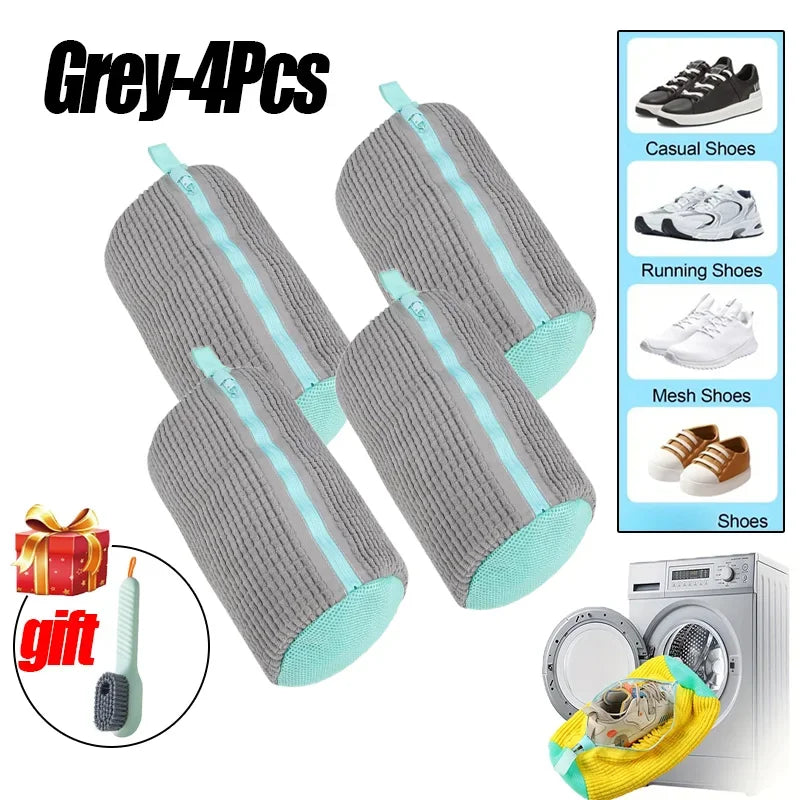
A shoe washing bag creates a protective layer around compatible sneakers during machine washing. Its purpose is to help reduce direct rubbing and impact while keeping the shoes contained.
The KentDo Shoe Washing Bag is made from polyester nylon and uses a secure zipper closure. Its 39 × 19 cm size is designed as a shoe laundry bag for machine washing, while the reusable construction makes it suitable for repeated cleaning routines.

Product: https://kentdohealthybeauty.com/products/shoe-washing-bag
The bag is intended to allow water and detergent to flow through while helping reduce rubbing and impact. Its zipper helps keep shoes enclosed during the cycle, and its hook can be used to hang the bag for drying after washing.
For readers looking for a reusable protective shoe laundry accessory, this type of bag can be a practical addition to a machine-washing routine without replacing the need to follow shoe-specific care instructions.
5. Use Cold Water and a Gentle Wash Cycle
For compatible shoes, choose cold water and a gentle wash cycle. Lower mechanical and thermal stress can help reduce unnecessary wear compared with aggressive cycles and hot water.
6. Use a Small Amount of Suitable Laundry Detergent
Use an appropriate amount of laundry detergent rather than assuming more detergent will improve the result. Excess detergent may be harder to rinse away and does not compensate for inadequate preparation.
7. Avoid Overloading the Washing Machine
Give the shoes enough room to move without packing the washer tightly. An overloaded drum can increase compression and friction and may also interfere with effective cleaning and rinsing.
How to Use a Shoe Washing Bag Correctly
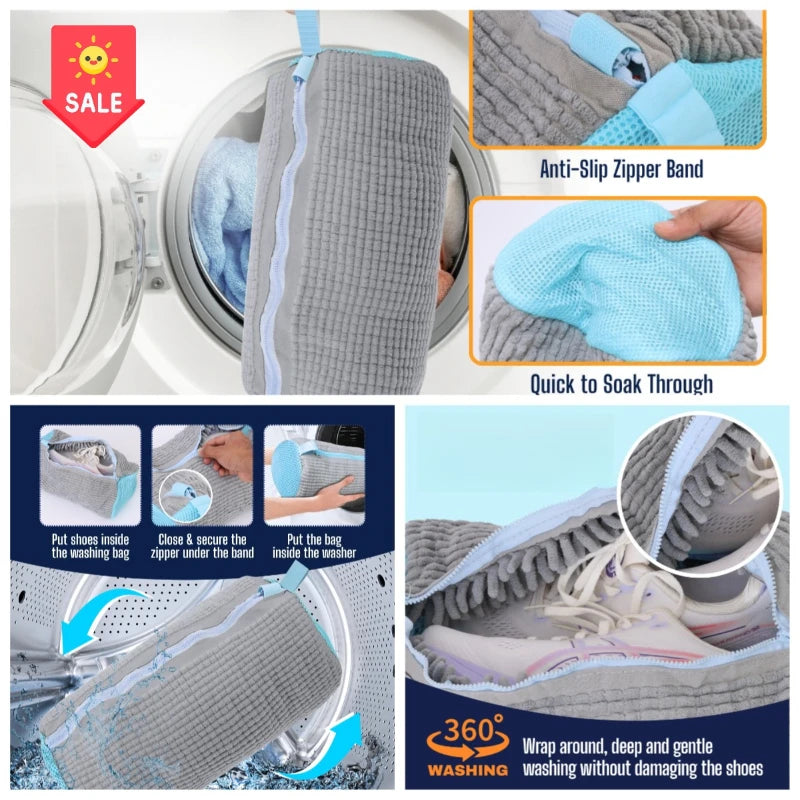
A washing bag works best when it is used as part of a complete shoe-care process. Correct loading matters because the bag needs to protect the shoes without preventing water and detergent from circulating.
Choose the Right Size and Construction
The bag should provide enough room for the shoes without forcing them into an overly compressed position. A purpose-built shoe laundry bag with a secure closure is preferable to an improvised container that may open or restrict water flow.
Place the Shoes Inside Without Overstuffing
Place the shoes inside the bag so they have reasonable space. Avoid overstuffing the bag because the shoes still need exposure to water and detergent for effective cleaning.
Secure the Closure Before Starting the Washer
Check the zipper or other closure before beginning the wash. A secure closure helps keep the shoes and loose components contained during tumbling.
Do Not Treat a Washing Bag as a Substitute for Care Instructions
A washing bag can help reduce friction and impact, but it cannot change the material properties of a shoe. If footwear is not approved for machine washing, using a protective bag does not make the washing process appropriate.
How to Stop Shoes From Losing Their Shape in the Washer
Surface protection and shape preservation are related but different concerns. Shoes may lose their shape when flexible uppers, padding, or internal structures experience excessive agitation, spinning, compression, or heat.
Use a Gentle Cycle With Cold Water
Cold water and a gentle cycle reduce thermal and mechanical stress. For machine-washable footwear, this lower-impact setup can help preserve the original construction better than an aggressive cycle.
Avoid Excessive Spinning and Agitation
Strong spinning and agitation can increase mechanical stress on flexible shoe materials. If your washer provides a lower-impact setting suitable for the footwear, use it according to the machine and shoe-care instructions.
Reshape Shoes Immediately After Washing
Remove the shoes after the cycle and reshape them while they are still damp. If appropriate for the shoe, lightly support the interior so the upper can return to its normal form while drying.
The Safest Way to Wash Shoes Without Damaging Them
Before Washing
- Check the manufacturer's instructions and confirm that the shoes are machine washable.
- Inspect the footwear for damaged materials, loose components, or failing adhesives.
- Brush away loose dirt, mud, and grit.
- Remove laces and insoles when appropriate.
- Place compatible shoes in a protective shoe washing bag.
During Washing
- Use cold water.
- Select a gentle or low-impact cycle.
- Use a small amount of suitable laundry detergent.
- Avoid overloading the washer.
- Keep the shoes securely enclosed in the washing bag.
After Washing
- Remove the shoes promptly after the cycle.
- Reshape them while damp.
- Air dry them in a suitable location.
- Avoid excessive direct heat that could stress materials or adhesives.
- Allow the shoes to dry completely before wearing them again.
What to Avoid When Machine Washing Shoes
Hot Water and High Heat
Avoid unnecessary heat when cleaning machine-washable shoes. Hot water and high drying temperatures can increase stress on adhesives, foam, coatings, and synthetic materials.
Harsh or Excessive Detergent
Do not assume that a large amount of detergent will compensate for dirt or stains. Use a suitable amount and make sure the shoes receive adequate rinsing.
Aggressive Wash Cycles
Strong agitation and spinning can increase rubbing, impact, and deformation. A gentle cycle is generally a better starting point for compatible sneakers.
Machine Drying When Air Drying Is Safer
High heat can be more stressful than the wash itself. Unless the manufacturer specifically permits machine drying, air drying is the lower-impact finishing approach for many washable sneakers.
Washer Damage Prevention Checklist for Shoes
Before the Cycle
- Verify that the shoe materials are suitable for machine washing.
- Remove loose dirt and grit.
- Remove appropriate laces and insoles.
- Place the shoes inside a suitable shoe washing bag.
- Secure the zipper or closure.
Washer Settings
- Choose cold water.
- Select a gentle wash cycle.
- Use suitable detergent in a reasonable amount.
- Do not overload the drum.
- Avoid unnecessary high-speed or aggressive settings.
After the Cycle
- Remove shoes promptly.
- Reshape them while damp.
- Lightly support the shape if appropriate.
- Air dry away from excessive heat.
- Allow them to dry fully before use.
Shoe Washing Bag vs. Washing Shoes Without a Bag
A shoe washing bag is primarily a protective accessory, while washing shoes without a bag leaves the footwear more directly exposed to the washer environment. The choice is especially relevant when the goal is to reduce rubbing and impact rather than simply remove dirt.
| Factor | Shoe Washing Bag | No Protective Bag |
| Direct drum contact | Helps reduce direct rubbing | More direct exposure |
| Containment | Helps keep shoes enclosed | Shoes move freely in the drum |
| Lace management | Helps contain loose components | Laces may move independently |
| Reuse | Reusable options are available | No accessory to reuse |
| Water and detergent flow | Designed to allow circulation | Direct circulation around shoes |
The important distinction is that a washing bag can reduce certain mechanical risks, but it does not eliminate the risks associated with unsuitable materials, excessive heat, or an aggressive cycle.
Practical Shoe Washing Setup for Safer Machine Cleaning
If your sneakers are approved for machine washing, the simplest prevention formula is to reduce unnecessary mechanical and thermal stress at every stage. Start by checking the materials and manufacturer's instructions. Prepare the footwear by removing loose dirt and appropriate removable components. Use a protective shoe washing bag, cold water, a gentle cycle, and a reasonable amount of detergent. Afterward, reshape the shoes and allow them to air dry.
For other product categories and care accessories, the available KentDo collection resources include:
- Body Care and Health Devices: https://kentdohealthybeauty.com/collections/body-care-and-health-devices-1
- Lifestyle: https://kentdohealthybeauty.com/collections/lifestyle
- Skin and Beauty Care Devices: https://kentdohealthybeauty.com/collections/skin-and-beauty-care-devices
Conclusion
Most avoidable washer damage comes down to friction, impact, heat, unsuitable wash settings, and insufficient preparation. If your shoes are machine washable, you can lower these risks by checking the care instructions first, cleaning away loose dirt, removing appropriate components, placing the shoes in a protective shoe washing bag, choosing cold water and a gentle cycle, and air drying afterward.
A reusable shoe washing bag is particularly useful when your goal is to reduce direct rubbing and impact during the wash. It should be viewed as one part of a broader shoe-care routine, not as a guarantee that every type of footwear can safely go into a washing machine.
For a purpose-built protective option, see: https://kentdohealthybeauty.com/products/shoe-washing-bag
Pillar Article: Best Shoe Washing Bags: Top Picks for Safer Machine Washing













