

Small Fan for Outdoor Use: How to Choose the Right One
A small fan for outdoor use can make hot-weather travel, commuting, camping, events, and outdoor work more comfortable, but not every compact fan performs equally well outside. Open-air conditions disperse airflow, wind can overpower a weak fan, humidity can reduce evaporative cooling, and direct sun can make heat feel substantially worse.
The right choice depends less on maximum fan speed and more on how you plan to use it. For outdoor cooling, compare usable airflow, realistic battery runtime, charging convenience, size, weight, noise, mounting flexibility, construction, and stated weather protection. A handheld fan may be ideal for walking through a crowded event, while a clip-on or tabletop fan can be more practical at a campsite or patio.
What Makes a Small Fan Good for Outdoor Use?
The best small fan for outdoor use provides enough personal airflow to be noticeable without becoming inconvenient to carry, charge, position, or store. Outdoor conditions make portability and positioning especially important because you may not have a stable surface or electrical outlet nearby.
Airflow Matters More Outdoors Than Indoors
Inside a room, walls and furniture can help keep air movement concentrated around you. Outside, airflow disperses immediately. Natural wind can also compete with the fan, making a low-powered model feel less effective than it does indoors.
Look for multiple speed settings and a fan head or airflow path that lets you direct air toward exposed skin. A higher maximum speed can be useful, but maximum speed alone does not tell you how comfortable the fan will be during normal use.
Battery Runtime and Recharge Speed
If you are camping, commuting, traveling, or attending an outdoor event, battery life becomes more important because an outlet may not be available when you need it. Compare expected runtime at the speeds you actually intend to use rather than relying exclusively on a manufacturer's longest possible runtime.
Charging compatibility also matters. A fan that fits easily into your existing charging routine can be more practical than a model that requires a specialized charger. If a product does not publish battery capacity, charging time, or speed-specific runtime, treat precise runtime assumptions cautiously.
Portability, Noise, and Mounting Flexibility
A genuinely portable fan should be easy to carry for the duration of your activity. Weight, folded dimensions, grip design, and storage size all affect whether you will actually bring it with you.
Noise is another practical consideration. A louder fan may be acceptable at a busy sporting event but distracting during outdoor work, conversation, camping, or relaxation.
Mounting flexibility can eliminate the need to hold a fan continuously. Stands, clips, adjustable heads, and neck-worn designs each solve different positioning problems.
Outdoor Durability and Weather Exposure
Outdoor use exposes electronics to dust, humidity, accidental splashes, and changing temperatures. Construction materials matter, but material alone does not establish water resistance.
If a fan has an IP rating, check the exact rating and the manufacturer's instructions. Water resistance is not automatically the same as waterproofing, and a fan without a stated weather-resistance rating should not be assumed safe for rain or direct water exposure.
Small Fan Types for Outdoor Cooling
Handheld Fan
A handheld fan is one of the simplest options for walking, commuting, standing in queues, traveling, and attending outdoor events. You control exactly where the airflow goes, which is useful when only your face, neck, or upper body needs personal cooling.
The trade-off is that you need one hand available. A foldable design can improve convenience by making the fan easier to carry and allowing more flexible positioning when you reach a desk, table, or other stable surface.
Clip-On Fan
A clip-on fan is useful when you want continuous airflow without holding the device. It can work well on a camping chair, tent structure, desk edge, stroller, or another compatible stable surface.
For outdoor use, pay attention to clip strength and stability. A fan that vibrates, tips, or slips easily may be frustrating even if its airflow is strong.
Neck Fan
A neck fan is designed for hands-free personal airflow. It can make sense for walking, commuting, sightseeing, or outdoor activities where carrying a handheld device is inconvenient.
Its main advantage is hands-free operation, while fit, weight distribution, airflow direction, and noise become especially important. Some people may also prefer a handheld design because it allows more precise airflow placement.
Tabletop Fan
A tabletop fan is better suited to stationary outdoor situations such as patios, balconies, campsites, outdoor workstations, and picnics with a stable surface.
Because you do not need to hold it, a tabletop format can provide more consistent airflow. Stability, directional adjustment, oscillation, noise, and outdoor protection are useful specifications to compare.
Rechargeable Fan
A rechargeable fan is particularly useful when you expect to spend time away from electrical outlets. Instead of evaluating rechargeable models as a separate physical shape, think of rechargeability as a feature that can appear in handheld, clip-on, tabletop, and other portable formats.
The most useful comparison is not simply whether a fan is rechargeable. Check how long it operates at different speeds, how it charges, how long a full recharge takes, and whether the charging method fits your travel setup.
Best Small Fan Type by Outdoor Scenario
- Camping and tent use: Prioritize long practical battery life, low noise, compact storage, stable mounting, and construction appropriate for the manufacturer's stated conditions.
- Patios and balconies: Look for stronger usable airflow, stable placement, directional adjustment, and appropriate weather protection.
- Beaches and outdoor events: Favor lightweight designs that are easy to carry and store. Keep unprotected electronics away from sand and water.
- Sports and outdoor activities: Handheld fans offer precise personal airflow, while neck fans provide hands-free convenience.
- Outdoor work and travel: Compact dimensions, quiet operation, convenient charging, and flexible positioning can matter more than maximum airflow.
How to Compare Outdoor Fan Performance
When comparing small fans, use the same criteria for every model. This prevents a prominent specification such as maximum speed or claimed runtime from overshadowing more useful everyday characteristics.
Airflow and Speed Settings
Compare the number of speed levels, how easily airflow can be directed, and whether the lowest setting is comfortable for extended use. Maximum speed can be helpful in intense heat, but usable airflow at normal settings is often more relevant.
Battery Runtime at Different Speeds
A fan may operate for much longer on its lowest setting than on its highest setting. If available, compare low-, medium-, and high-speed runtime. This gives you a more realistic picture of whether the fan can cover a commute, afternoon event, work session, or night at camp.
Battery Capacity and Charging
Battery capacity can provide useful context, but capacity alone does not determine runtime. Motor efficiency, speed setting, airflow design, and electronics also affect how long a fan operates.
For travel, consider the charging connector, charging time, cable requirements, and whether the fan can conveniently be recharged from your existing power setup.
Size and Weight
Portability is a performance feature when the fan will be used outdoors. A slightly heavier fan with better airflow may be worthwhile for stationary use, while a lightweight model may be preferable for walking, commuting, or travel.
Noise Level
Noise should be evaluated according to the environment. A fan intended for a crowded festival does not necessarily need the same acoustic characteristics as one used beside a sleeping bag or outdoor workstation.
Mounting and Positioning
Consider whether you can hold the fan, stand it upright, clip it to something, hang it around your neck, or adjust its direction. More positioning options can make a modest fan more useful across multiple situations.
Outdoor Durability and IP Rating
An IP rating describes protection against specified levels of solid particles and water ingress. The exact digits matter, so never interpret a generic statement such as “water resistant” as permission to expose an electronic fan to rain, immersion, or standing water.
Small Fan Outdoor Cooling Comparison Matrix
- Handheld: Best portability and direct personal airflow; requires one hand during use; especially useful for walking, commuting, travel, and events.
- Clip-on: Best for hands-free stationary airflow; useful for camping, chairs, desks, and compatible structures; depends on secure mounting.
- Neck fan: Best for hands-free mobility; useful for walking and outdoor activities; fit, weight, and airflow direction deserve careful comparison.
- Tabletop: Best for stable outdoor setups; useful for patios, balconies, campsites, and outdoor work; less convenient for walking.
- Rechargeable: Best when outlet access is limited; compare actual runtime, charging method, charging time, and battery specifications rather than rechargeability alone.
What to Look For in the Specifications
Prioritize specifications that describe how the fan will fit your routine: speed settings, runtime, charging method, weight, dimensions, mounting options, materials, and any verified ingress-protection rating.
Be cautious with vague phrases such as “powerful cooling” or “all-day battery” when they are not supported by measurable specifications. A transparent specification sheet is more useful for comparing products than promotional language alone.
How to Match Specifications to Your Use Case
For camping, prioritize runtime, quiet operation, and stable positioning. For travel and events, prioritize weight and compact storage. For patios and outdoor work, prioritize airflow, stability, directional adjustment, and suitable weather protection.
How We Tested Small Fans for Outdoor Use
A useful outdoor-fan evaluation should focus on repeatable conditions rather than a single subjective impression. If you are comparing several models, use the same test framework for each one.
Airflow Testing
Test each speed at a consistent distance and evaluate whether airflow remains noticeable when the fan is positioned at the same angle. Consider both maximum airflow and the lower settings that may be more comfortable for prolonged use.
Battery and Charging Testing
Record runtime separately for each available speed when practical. Start with a full charge and use the same operating conditions for every model. Record charging time using the manufacturer's intended charging method.
Portability and Mounting Testing
Evaluate how easily each fan fits into a bag, how comfortable it is to carry, whether it remains stable when positioned, and how easily any clip, stand, handle, or adjustable mechanism works.
Noise and Outdoor Usability Testing
Consider the fan in realistic situations rather than only measuring sound in isolation. Ask whether the noise interferes with conversation, work, relaxation, camping, or nighttime use.
Durability and Weather-Use Considerations
Inspect construction quality and follow the manufacturer's stated environmental limits. Avoid unsafe water-exposure experiments on products that do not claim water resistance. Outdoor durability should be assessed through documented specifications and sensible use rather than unnecessary exposure to rain or standing water.
Do Small Fans Actually Work Outdoors in Hot Weather?
Yes, a small fan can provide noticeable personal comfort outdoors, but it does not lower the surrounding air temperature. Its effectiveness depends heavily on environmental conditions and how the airflow reaches your skin.
Why Outdoor Airflow Feels Weaker
Outside, air is not confined by walls. A small fan's airflow disperses quickly, and natural wind can overpower the fan's output. This is why direct personal positioning is usually more useful than expecting a tiny fan to cool a large outdoor area.
Humidity and Evaporative Cooling
Part of the cooling sensation from moving air comes from increased evaporation of moisture from the skin. In very humid conditions, evaporation can be less effective, so a fan may feel less cooling than it does in drier air.
Direct Sun and Extreme Heat
A fan cannot remove heat from the environment. Direct sunlight can substantially increase heat exposure, so shade should be treated as a primary comfort strategy rather than simply turning the fan to a higher speed.
If someone develops concerning symptoms associated with excessive heat exposure, such as confusion, fainting, or worsening illness, a portable fan should not be treated as a substitute for appropriate heat-safety measures or medical attention.
How to Get More Cooling From a Small Outdoor Fan
Use Shade Before Increasing Fan Speed
Move under an umbrella, canopy, awning, tree cover, or other suitable shade whenever possible. Reducing direct solar exposure can make personal airflow considerably more useful.
Aim Airflow at Exposed Skin
Instead of pointing a small fan toward clothing or an open area, position it so moving air reaches exposed skin. The goal is personal airflow rather than attempting to circulate the entire outdoor environment.
Use Stable Mounting When Possible
If the fan has a stand, clip, or foldable structure that supports stable positioning, use it when you can. Continuous airflow from a fixed position can be more convenient than holding the fan throughout an activity.
Combine Airflow With Hydration and Breathable Clothing
A fan works best as one part of a broader hot-weather strategy. Adequate fluids, breathable clothing, shade, rest periods, and sensible activity timing can all contribute to better heat management.
Take Cooling Breaks in Extreme Heat
Do not assume that increasing fan speed makes prolonged exposure to extreme heat safe. Take breaks in a cooler or shaded environment when conditions are severe, particularly during strenuous outdoor activity.

Outdoor Fan Safety and Weather Considerations
What an IP Rating Actually Tells You
Ingress Protection, commonly abbreviated IP, uses standardized digits to describe protection against solids and water under defined test conditions. The rating is specific to the device and should be interpreted exactly as stated by the manufacturer.
If a portable fan has no stated IP rating, do not assume that its housing provides meaningful water protection simply because it is made from plastic.
Using a Fan in Humidity or Light Moisture
Humid air is not the same as direct water exposure. A fan can be exposed to humid environmental conditions without being designed for rain, splashes, or immersion. Follow the product's instructions and keep unprotected electronics dry.
Charging and Lithium-Ion Battery Precautions
Rechargeable fans that use lithium-ion batteries should be charged according to the manufacturer's instructions. Avoid using a device with a visibly swollen, damaged, leaking, or unusually hot battery. Do not charge or store rechargeable electronics in conditions beyond the manufacturer's recommended temperature range.
When to Bring the Fan Indoors
Bring an unprotected fan indoors when rain, direct splashing, standing water, or other conditions exceed its stated environmental limits. Extreme heat can also affect electronics and batteries, so avoid leaving the device exposed to intense sunlight inside a hot vehicle or enclosed space.
Small Fan for Outdoor Use: Buying Checklist
Choose the Fan Format
- Choose handheld for walking, commuting, queues, and events.
- Choose clip-on for hands-free stationary cooling.
- Choose neck-mounted for hands-free movement.
- Choose tabletop for patios, campsites, and outdoor workstations.
- Choose rechargeable when access to outlets is limited.
Set Your Minimum Battery Requirement
Estimate how long you expect to be away from an outlet, then compare realistic runtime at the speed you are most likely to use. Do not base your decision entirely on the longest advertised runtime.
Check Charging and Portability
Confirm the charging method, charging time, dimensions, weight, and storage requirements. A compact fan that is easy to recharge and carry is more likely to become a useful everyday summer essential.
Check Mounting and Outdoor Protection
Confirm whether the fan can stand, clip, hang, or adjust to your intended position. Then verify any stated weather-resistance claims instead of assuming that a plastic housing is waterproof.
Best Small Fan Features for Different Outdoor Needs
Best Features for Camping
Camping favors quiet operation, practical battery life, compact storage, and flexible positioning. A fan that can remain stable beside a sleeping area or attach securely to an appropriate surface can be more useful than a model that only offers a very high maximum speed.
Best Features for Travel and Events
Travel and outdoor events favor low weight, easy storage, convenient charging, and direct personal airflow. A foldable handheld fan can be particularly practical because it can be carried in a bag and repositioned quickly when moving between indoor and outdoor environments.
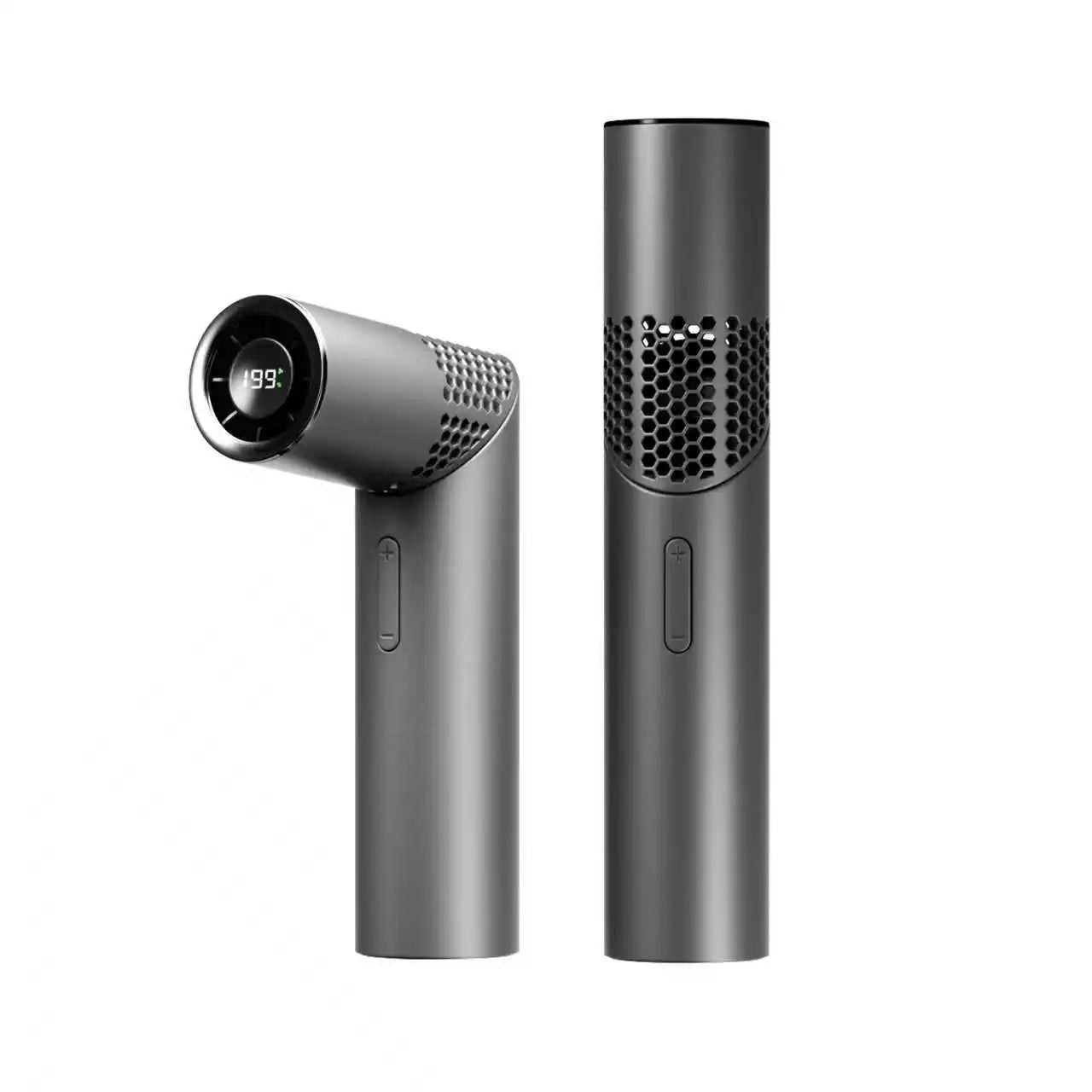
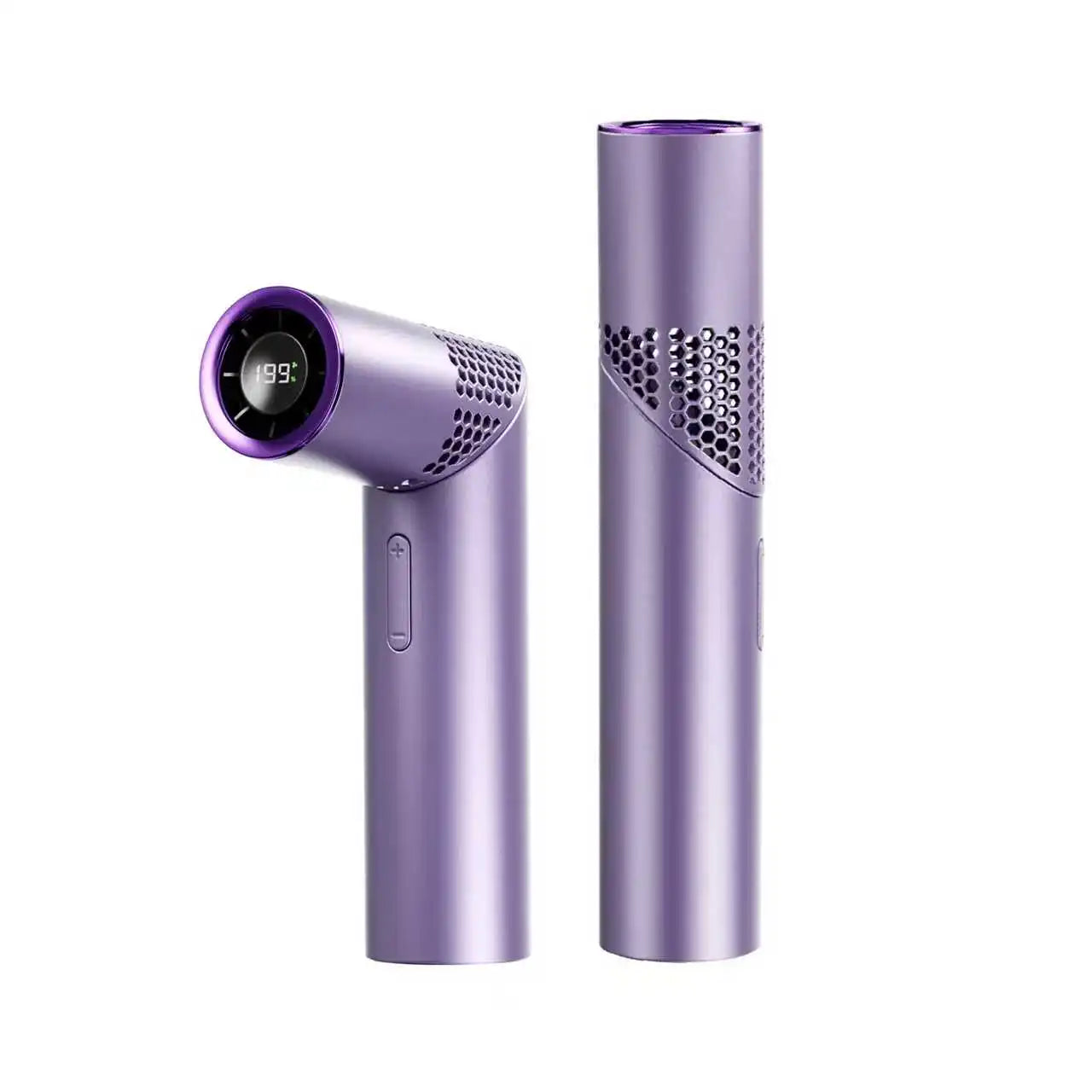
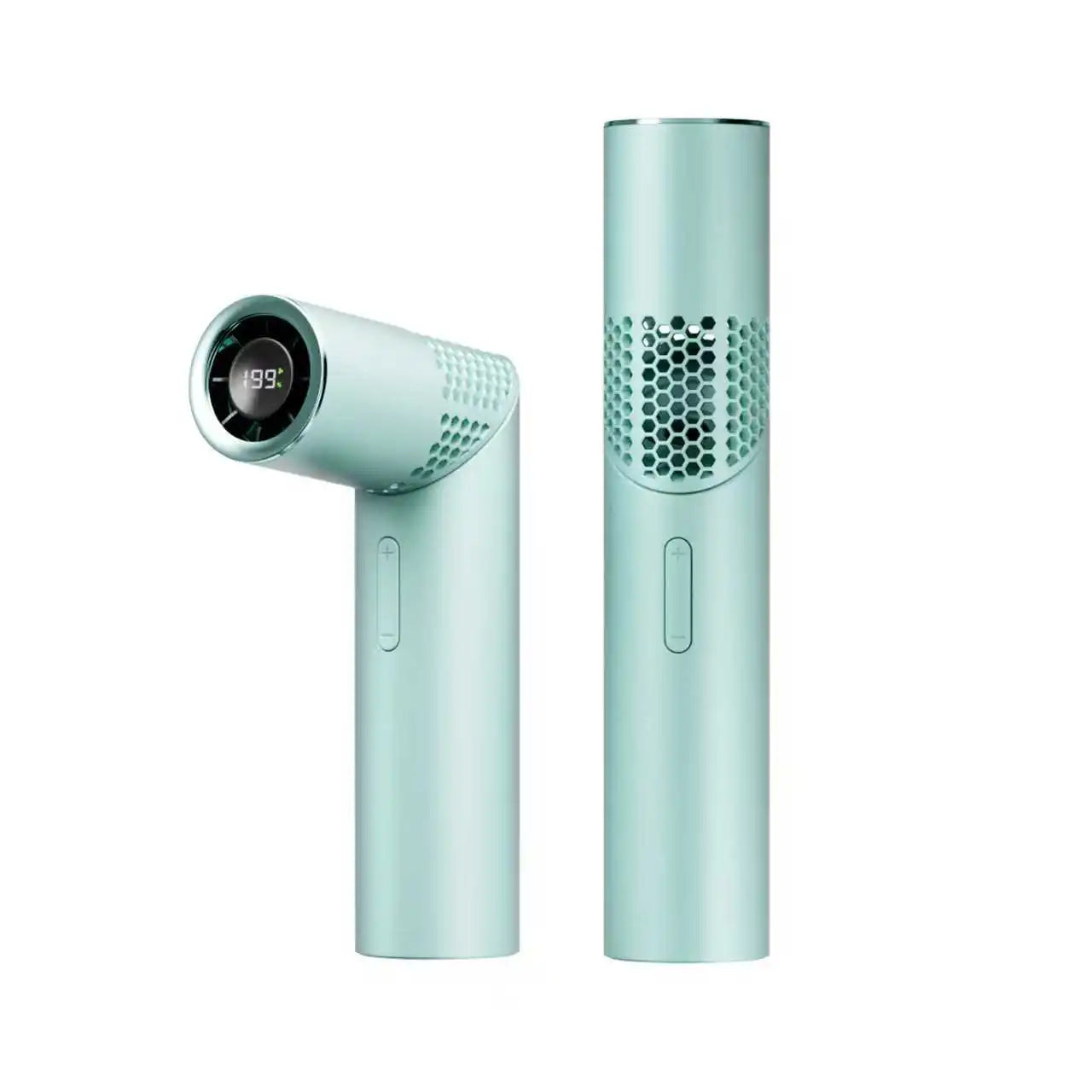
For this use case, a compact option such as the Portable Handheld Fan | Foldable Cooling Comfort for Travel! is designed around personal airflow rather than attempting to cool a large area. Its ABS construction, foldable format, and compact design allow it to be held, positioned nearby, or used in its versatile configuration for personal cooling.
The product specifications provided for this model list ABS plastic construction, a foldable compact design, electric power, and white, grey, and purple color options. The supplied specifications do not state an IP weather-resistance rating, battery capacity, charging time, or speed-specific runtime, so those characteristics should not be assumed when comparing it with other outdoor fans.
Best Features for Patios and Outdoor Work
Stationary outdoor use places greater emphasis on stable positioning, directional airflow, noise, and adequate airflow strength. If you spend several hours at an outdoor workstation or patio, a tabletop or securely mounted fan may be more convenient than a handheld model.
Is a Foldable Handheld Fan Right for You?
A foldable handheld fan makes the most sense when portability and personal airflow are higher priorities than room-scale circulation. It is particularly suited to situations where you move between locations and want a compact cooling device that can transition from handheld use to nearby placement.
The foldable design also solves a simple travel problem: bulky fans are harder to pack and less convenient to carry throughout a day. A compact fan can fit more naturally alongside other summer and travel essentials.
For camping, patios, and prolonged stationary outdoor use, however, compare the handheld format with clip-on or tabletop alternatives. If hands-free operation is essential, a neck fan may also be a better fit.
Final Takeaway: Choose the Fan Around the Situation
The best small fan for outdoor use is not necessarily the fan with the highest advertised speed. Start with the scenario: walking, commuting, camping, attending an event, relaxing on a patio, or working outdoors. Then compare the features that directly affect that situation.
For mobile personal cooling, prioritize portability, usable airflow, battery practicality, charging convenience, and comfortable handling. For stationary outdoor use, prioritize stable mounting, airflow direction, noise, and appropriate environmental protection. In all cases, remember that a small fan provides airflow rather than eliminating environmental heat.
Shade, hydration, breathable clothing, cooling breaks, and sensible activity planning remain important during hot weather. A compact foldable fan can then serve as a practical personal airflow tool that complements those strategies wherever summer takes you.
If your priority is a lightweight, foldable option for travel, commuting, work, or everyday personal comfort, the featured portable handheld fan is a straightforward format to consider. Compare its documented specifications with your required runtime, charging needs, mounting preferences, and outdoor conditions before choosing.
Pillar Article: Best Portable Handheld Fan for Travel: 2026 Tested Picks













