

Which Small Room Electric Heater Heats Best Without Wasting Energy?
The best small room electric heater uses PTC ceramic technology to deliver fast, even warmth while regulating power automatically. Compared to traditional coil heaters, a PTC ceramic fan heater heats up quickly, reduces temperature fluctuations, and improves comfort in bedrooms, offices, and other compact spaces.
1500 Watt Heater Room Size: How Many Square Feet Will a 1500W Heater Heat?
Choosing the right heater size is one of the most important factors in achieving efficient, comfortable heating. Whether you're heating a bedroom, office, basement, or small living room, understanding how many square feet a 1500 watt heater can heat helps prevent wasted energy and uneven room temperatures.
⏱ 6 min read
Explore how modern ceramic heaters compare and what really makes the difference.
Many heating problems come down to incorrect sizing. A heater that is too small may run continuously without reaching the desired temperature, while an oversized unit can waste electricity and cycle inefficiently. This guide explains heater wattage calculations, room coverage estimates, and real-world sizing adjustments.

Compact comfort for tight spaces — see how a small room electric heater performs 💡 See it in action
How Many Square Feet Does a 1500 Watt Heater Heat?
A 1500 watt heater will typically heat approximately 150 square feet in a normally insulated room using the common heating rule of 10 watts per square foot. Under ideal conditions, coverage may reach 180–200 square feet, while poorly insulated spaces may require significantly more heating power.
The Direct Answer
Most homeowners can expect a 1500W heater room size capacity of about 150 square feet when used as the primary heat source.
Typical Coverage Range by Room Conditions
- Excellent insulation: 150–200 sq ft
- Average insulation: 120–150 sq ft
- Poor insulation: 80–120 sq ft
- Garages and workshops: often less than 100 sq ft
Why Coverage Estimates Vary
Ceiling height, outdoor temperature, insulation quality, window area, air leaks, and room layout all influence how many square feet a 1500 watt heater can effectively heat.
Why the Right Heater Size Changes Everything
Choosing the correct electric heater room size directly affects comfort, heating speed, and energy efficiency.
- Too small: Runs continuously and struggles to reach target temperature
- Too large: May cycle inefficiently and waste energy
- Correct size: Maintains stable, consistent warmth
Matching heater wattage to room size helps maximize comfort while minimizing electricity consumption.
Electric Heater Room Size Calculator (Watts & Room Size Formula)
Watts Per Square Foot Rule Explained
The standard sizing guideline is 10 watts per square foot for rooms with average insulation and standard ceiling heights.
Required Watts = Room Area × 10
Room Size Calculator Formula
- Measure room length.
- Measure room width.
- Multiply length by width.
- Multiply square footage by 10.
Example: 12 ft × 15 ft = 180 sq ft. A room this size requires approximately 1800 watts for primary heating.
Quick Room Size to Wattage Chart
- 100 sq ft = 1,000 watts
- 150 sq ft = 1,500 watts
- 200 sq ft = 2,000 watts
- 300 sq ft = 3,000 watts
- 500 sq ft = 5,000 watts
BTU vs Watts Conversion
One watt equals approximately 3.41 BTU per hour.
A 1500 watt heater produces roughly 5,115 BTU/hour.
For additional efficiency tips, see our Best Portable Heater Indoor Use: 2025 Comparison Guide .
How to Calculate What Size Electric Heater You Need
Step 1: Measure Room Size
Multiply room length by width to determine square footage.
Step 2: Adjust for Ceiling Height
Add approximately 20–25% more wattage if ceilings exceed 8 feet.
Step 3: Adjust for Insulation & Climate
Cold climates and poorly insulated homes often require additional heating capacity.
Step 4: Apply Heating Load Adjustments
- Large windows: +10–20%
- North-facing rooms: +10%
- Basements: +15–25%
- Open floor plans: +20–40%
Step 5: Final Wattage Formula
Final Heater Size = Base Wattage × Adjustment Factors
1500 Watt Heater Room Size Chart by Room Type
Bedroom Coverage
Most bedrooms between 100 and 150 square feet can be heated effectively by a 1500W heater.
Living Room Coverage
Living rooms often exceed 200 square feet and may require multiple heaters or central heating support.
Office Coverage
Home offices typically fall within the ideal coverage range of a 1500 watt heater.
Basement Coverage
Basements generally require additional wattage due to cooler surrounding surfaces.
Garage Coverage
Garages often need more heating power because insulation levels are usually lower than living spaces.
Watt Heater Room Size: A Practical Guide
The common rule of 10 watts per square foot provides a useful starting point, but actual performance depends on insulation quality, airflow, and room layout.
| Room Size | Recommended Wattage | Best Use Case |
|---|---|---|
| 80–120 sq ft | 750–1000W | Bathrooms, small offices |
| 120–200 sq ft | 1000–1500W | Bedrooms, nurseries |
| 200–300 sq ft | 1500W+ | Living rooms, studios |
If heating feels slow, uneven, or ineffective, the watt heater room size ratio may not match the space requirements.
How Many Watts to Heat a Room?
Standard Heating Rule
Use approximately 10 watts per square foot for average conditions.
Cold Climate Adjustments
In colder regions, many homeowners increase calculations to 12–15 watts per square foot.
Supplemental Heating vs Primary Heating
If the heater supplements central heating, lower wattage may be sufficient because the heater only needs to warm occupied zones.
What Size Electric Heater Do I Need for My Room?
100 sq ft Room
Approximately 1,000 watts.
150 sq ft Room
Approximately 1,500 watts.
200 sq ft Room
Approximately 2,000 watts.
300 sq ft Room
Approximately 3,000 watts.
500 sq ft Room
Approximately 5,000 watts.
Use these estimates together with insulation and climate adjustments for the most accurate sizing calculations.
Best Heater Size for Small Room Scenarios
Bedroom
Most bedrooms need 1000W–1500W depending on size. Quiet operation and even heat distribution matter most.
Bathroom
Bathrooms often require higher watt density due to tile surfaces and moisture. A 1500W heater typically provides faster comfort.
Office / Workspace
A 750W–1500W heater works well depending on workspace size and insulation quality.
Garage or Poorly Insulated Room
Increase wattage estimates by 25–50% where significant heat loss occurs.
Why Is 1500 Watts the Maximum for Most Portable Heaters?
Household Circuit Limits
Most portable heaters are designed around standard 120-volt household circuits.
Safety and Electrical Codes
Manufacturers limit heater output to reduce overload risks and improve safe operation.
What Happens Above 1500 Watts
Larger heaters generally require dedicated circuits, higher-voltage connections, or permanent installation.
How PTC Ceramic Technology Delivers Faster Comfort
PTC ceramic technology uses self-regulating heating elements that adjust resistance as temperatures rise, helping deliver quick, stable heat.
PTC Ceramic Heating Benefits You'll Notice Daily
- Fast warm-up times
- Stable temperature output
- Reduced overheating risk
- More consistent comfort
For practical heating solutions, many homeowners choose the portable electric heater ceramic for bedrooms, offices, and other compact spaces.
Does Ceramic Technology Change Room Coverage?
No. A 1500 watt ceramic heater and a 1500 watt coil heater produce similar total heat output. The primary difference is heat delivery, warm-up speed, and comfort characteristics rather than maximum room coverage.
Understanding the technology helps you make a more informed buying decision.
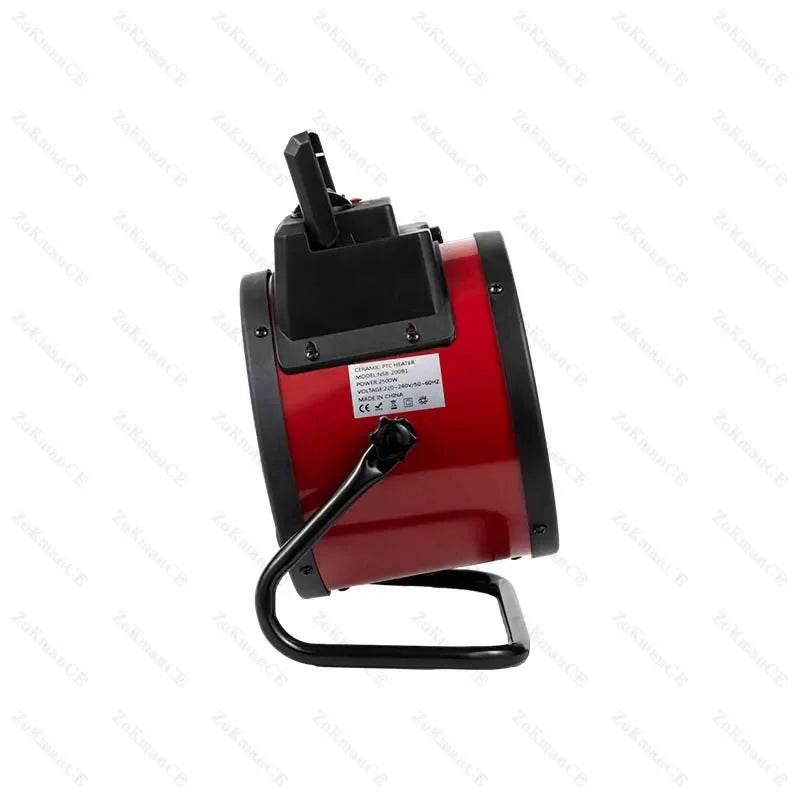
PTC ceramic fan heater warming a compact space evenly 💡 See it in action
Why Your Room Is Not Heating Evenly
Uneven heating is often caused by airflow restrictions, poor placement, insulation problems, or insufficient heater capacity.
- Furniture blocking airflow
- Limited air circulation
- Low wattage for room size
- Drafts and insulation issues
Additional troubleshooting tips can help identify airflow and placement issues before upgrading heater size.
What If Your Heater Takes Long to Heat Up?
If your heater takes a long time to warm the room, the cause may be insufficient wattage, poor insulation, or slower heating technologies.
Ceramic heaters provide usable warmth quickly, making them a popular choice for occupied rooms that need rapid comfort.
Common Mistakes When Choosing Heater Size
Oversizing vs Undersizing
Undersized heaters struggle to maintain temperature, while oversized units can operate inefficiently for the space.
Ignoring Insulation
Heat loss through walls, ceilings, and windows can dramatically change heater sizing requirements.
Wrong Placement
Placing a heater near drafts, doorways, or obstructed corners reduces performance and heat distribution.
Proper heater placement often improves comfort as much as increasing wattage.
Factors That Affect Electric Heater Room Size
Ceiling Height
Taller ceilings increase the volume of air that must be heated.
Window Area
Large windows can significantly increase heat loss.
Insulation Quality
Well-insulated rooms retain heat longer and require less energy.
Outdoor Temperature
Extreme cold conditions increase heating demand.
Open Floor Plans
Open spaces allow heat to disperse into adjacent areas, reducing heater effectiveness.
Frequently Asked Questions About 1500 Watt Heater Room Size
Is a 1500W heater too much for a small room?
No. A 1500W heater is generally appropriate for rooms up to about 150 square feet and provides faster heating in colder conditions.
How many watts to heat a room efficiently?
Use approximately 10 watts per square foot as a baseline and adjust for insulation, climate, and ceiling height.
What size heater for a 12x12 room?
A 12x12 room equals 144 square feet and typically requires around 1500 watts.
How many square feet will a 1500 watt heater heat?
Most 1500 watt heaters effectively heat around 150 square feet under average conditions.
What size electric heater do I need?
Multiply room square footage by 10 to estimate the wattage required.
Can a 1500W heater heat a garage?
It may heat a small insulated garage, but larger or poorly insulated garages often require additional heating capacity.
Why is my heater not heating evenly?
Common causes include poor placement, blocked airflow, drafts, or insufficient wattage.
Do ceramic heaters really cost less to run?
All electric resistance heaters convert electricity to heat at similar efficiency levels, but ceramic heaters often feel more efficient because they deliver warmth quickly and distribute heat effectively.

Portable design meets everyday comfort — small room electric heater performance 💡 See it in action
Experience the difference a right-sized ceramic heater can make.
Related Guide: Best Portable Heater Indoor Use: 2025 Comparison Guide













