

Do Snow Blindness Glasses Really Help Prevent and Relieve Snow Blindness?
Yes—snow blindness glasses help both prevent UV damage and reduce discomfort during recovery, but they do not heal the cornea directly. Glasses for snow blindness relief work by blocking harmful UV rays, reducing glare, and minimizing light sensitivity so your eyes can recover without additional irritation. Choosing UV400 lenses with wraparound coverage offers the best protection in snowy environments.
Can glasses relieve symptoms after UV exposure?
After photokeratitis develops, your corneas need time to heal naturally. Wearing snow blindness glasses creates a more comfortable visual environment by reducing bright light, limiting glare, and preventing additional UV exposure that could worsen inflammation.
Many people notice relief from:
- Burning or stinging eyes
- Excessive tearing
- Snow blindness eye strain
- Light sensitivity (photophobia)
- Snow blindness headaches triggered by glare
What glasses can and cannot do during recovery
Proper eyewear supports recovery, but it should not replace appropriate medical care when symptoms are severe.
| Snow Blindness Glasses Can | Snow Blindness Glasses Cannot |
|---|---|
| Block UV exposure | Repair damaged corneal cells instantly |
| Reduce glare and eye strain | Treat eye infections |
| Improve comfort during healing | Replace professional medical evaluation |
| Help prevent additional damage | Eliminate symptoms immediately |
Snow Blindness Glasses: Best Picks, How They Work, and How to Use Them for Fast Relief
Snow blindness glasses reduce glare, block harmful UV rays, and help your eyes recover more comfortably after intense snow exposure. Whether you're skiing, snowboarding, hiking, or mountaineering, choosing eyewear with proper UV protection dramatically lowers the risk of photokeratitis while improving comfort in extremely bright winter conditions.
⏱ 6 min read
What Is Snow Blindness and Why Eye Protection Matters
What is photokeratitis?
Snow blindness, medically known as photokeratitis, is essentially a sunburn of the cornea caused by excessive ultraviolet (UV) radiation. Although temporary in most cases, it can be extremely painful and temporarily affect vision.
How UV reflection from snow increases exposure
Fresh snow reflects approximately 80–90% of ultraviolet radiation, meaning your eyes receive UV light both directly from the sun and reflected upward from the ground. This dramatically increases exposure compared with most other outdoor environments.
Altitude, weather, and environmental risk factors
Risk increases when several factors combine:
- High elevations where UV intensity rises roughly 10–12% for every 1,000 meters
- Fresh snow with strong reflectivity
- Long hours outdoors
- Cloudy conditions that still allow UV rays to pass through
- Windy environments that dry the eye surface
Snow blindness symptoms and treatment overview
Symptoms usually appear several hours after exposure and commonly include:
- Eye pain or burning
- Redness
- Watery eyes
- Blurred vision
- Light sensitivity
- Headaches
- A gritty sensation similar to having sand in the eyes
Most mild cases improve within 24–48 hours by avoiding additional UV exposure, resting the eyes, wearing snow blindness eye protection glasses, and using preservative-free lubricating eye drops when appropriate.
Ever stepped off the slopes only to feel burning, watery eyes hours later? That sharp ache, sensitivity to light, and pounding headache can make even a cozy lodge feel unbearable.
Which protection actually speeds relief—and which just darkens your vision?
Discover how the right winter eye protection transforms your recovery

Snow blindness glasses for glare reduction and UV400 protection. See them in action.
Who Is Most at Risk of Snow Blindness?
Skiers and snowboarders
High speeds, prolonged exposure, and constant reflection from groomed slopes make winter sports participants one of the highest-risk groups.
Mountaineers and glacier travelers
Extreme elevations combined with glacier reflection create some of the world's highest UV exposure levels, making Category 4 glacier glasses essential.
Winter hikers and snowmobilers
Long days outdoors often involve changing weather conditions that can make people underestimate UV exposure.
Children and high-altitude visitors
Children may not recognize symptoms early, while travelers unfamiliar with alpine environments frequently underestimate how quickly snow blindness can develop.
How Snow Blindness Glasses Work
Why UV400 protection is essential
UV400 lenses block virtually 100% of UVA and UVB radiation. This is the single most important feature because dark lenses without UV protection may actually increase damage by causing the pupils to dilate.
Wraparound coverage and side protection
Snow reflects light from every direction. Wraparound frames and side shields reduce peripheral UV exposure that ordinary sunglasses often leave unprotected.
Visible light transmission for snow conditions
Different snow conditions require different amounts of visible light transmission (VLT). Brighter days generally benefit from darker lenses, while lower-light conditions often require lighter tints that maintain visibility without sacrificing UV protection.
Why fit matters
A secure, close-fitting frame minimizes light leakage, improves comfort during activity, and reduces the need for constant adjustment while skiing or hiking.
For advanced winter protection, explore options inside our Eye Care Devices collection designed for daily eye comfort and recovery.
How to Choose the Best Snow Blindness Glasses
Essential certifications
- UV400 certification
- High-quality optical lenses
- Impact-resistant construction for outdoor activities
Lens color selection
- Gray: Best for bright sunshine and natural color perception
- Brown or amber: Improves contrast in mixed lighting
- Rose or yellow: Helpful during low-light conditions, though not ideal for intense midday glare
Fit, durability, and side shields
Look for lightweight frames with secure nose pads, comfortable temples, and side protection that blocks reflected UV without limiting peripheral awareness.
Choosing by activity
- Casual winter walks: UV400 wraparound sunglasses
- Skiing and snowboarding: Ski goggles or performance snow glasses
- Mountaineering: Category 4 glacier glasses with side shields
- Winter hiking: Lightweight wraparound glasses with polarized lenses
How to Use Snow Blindness Glasses Safely
Before outdoor exposure
Put your glasses on before entering bright snowfields rather than waiting until your eyes begin feeling uncomfortable.
- Keep eyewear on consistently
- Replace damaged lenses that reduce visibility
- Clean lenses regularly to maximize contrast
- Use anti-fog features during strenuous activity
After symptoms develop
If snow blindness symptoms appear, continue wearing your glasses whenever exposed to daylight or bright indoor lighting while combining them with rest, hydration, and reduced screen time.
Learn step-by-step how to protect your eyes on your next ski day
Snow Blindness Glasses vs Sunglasses vs Ski Goggles
Can sunglasses prevent snow blindness?
Only sunglasses that provide UV400 protection and adequate wraparound coverage offer meaningful protection. Fashion sunglasses frequently lack sufficient UV blocking or side protection.
When ski goggles are the better choice
Ski goggles outperform glasses during downhill skiing, snowboarding, and severe weather because they provide a sealed fit, superior anti-fog performance, and better compatibility with helmets.
Comparison table
| Feature | Snow Blindness Glasses | Regular Sunglasses | Ski Goggles |
|---|---|---|---|
| UV400 Protection | Yes | Sometimes | Yes |
| Side Coverage | Excellent | Limited | Full seal |
| Glare Reduction | Excellent | Moderate | Excellent |
| Helmet Compatible | Some models | No | Yes |
| Best Use | General winter activities | Everyday wear | Winter sports |
How to Protect Your Eyes From Snow Blindness
Skiing and snowboarding
- Wear UV400 eyewear throughout the day.
- Replace scratched lenses that reduce visibility.
Mountaineering and glacier travel
- Use Category 4 glacier glasses or mountaineering goggles.
- Choose side shields for maximum protection.
Winter hiking and snowmobiling
- Carry protective eyewear even during shorter trips.
- Keep backup glasses in your pack.
Cloudy-day UV precautions
Cloud cover reduces visible brightness much more than ultraviolet radiation. Continue wearing eye protection even when the sun is hidden.
Lens Technologies Explained: What Actually Matters
UV400 vs polarized lenses
UV400 refers to ultraviolet protection, while polarization reduces reflected glare. They serve different purposes, and the best snow eyewear combines both.
Category 3 vs Category 4 lenses
Category 3 lenses work well for most skiing and outdoor recreation, while Category 4 lenses are intended for extremely bright alpine or glacier environments.
Lens tint comparison for snow glare
- Gray: Bright sunny days
- Brown or amber: Variable conditions
- Rose or yellow: Low-light visibility
Anti-fog and ventilation benefits
Proper ventilation and anti-fog coatings help maintain clear vision during physical activity without constantly removing your eyewear.
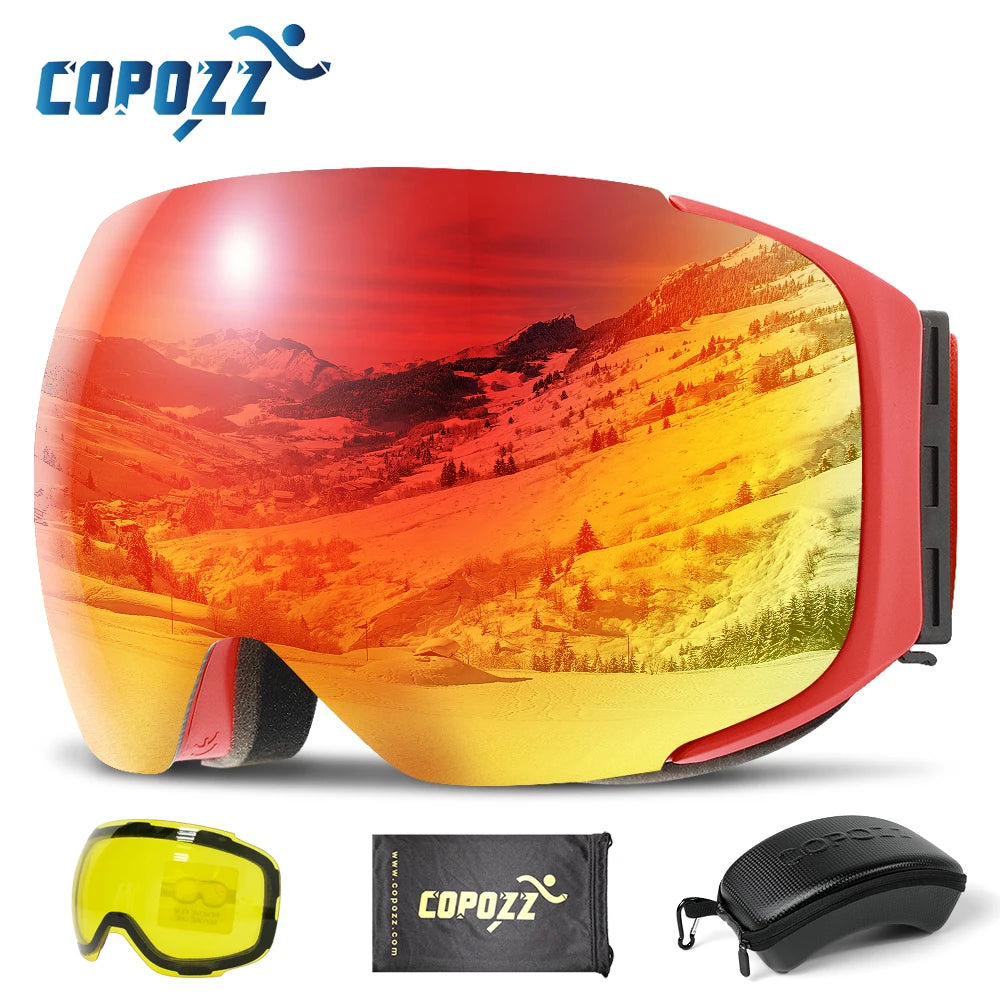
Ski goggles with UV400 protection help reduce snow blindness eye strain while improving visibility.
Snow Blindness Symptoms, Treatment, and Recovery Timeline
Early symptoms
Symptoms generally appear several hours after UV exposure and may worsen overnight.
- Move indoors or into shade.
- Wear UV400 protective glasses if exposed to light.
- Avoid rubbing your eyes.
- Use preservative-free artificial tears if recommended.
Recovery expectations
Most mild cases improve within one to two days. Continue protecting your eyes from sunlight until symptoms fully resolve.
When to seek medical care
Contact an eye care professional immediately if you experience severe pain, worsening vision, persistent symptoms beyond 48 hours, significant swelling, or suspect another eye injury.
For additional recovery tools, browse our Body Care and Health Devices collection for at-home wellness support.
"After switching to proper ski goggles with UV400 protection, my snow blindness headache didn't return the rest of the season."
"The wraparound fit made a huge difference—I didn't realize how much side glare was causing my eye strain."

Snow blindness glasses help reduce glare, improve comfort, and support safer winter adventures.
Common Myths About Snow Blindness Glasses
Polarized means UV protection
False. Polarization reduces glare, but only UV400 certification guarantees full ultraviolet protection.
Cloudy days are safe
False. UV rays penetrate clouds, and snow continues reflecting them toward your eyes.
Dark lenses always protect better
False. Lens darkness does not indicate UV protection. Clear or lightly tinted UV400 lenses protect far better than dark lenses without certified UV blocking.
Frequently Asked Questions
How long does snow blindness take to heal?
Most mild cases improve within 24–48 hours when you avoid further UV exposure and allow your eyes to rest.
Can sunglasses prevent snow blindness?
Yes—but only if they provide certified UV400 protection and adequate side coverage.
Are polarized lenses enough?
No. Polarization reduces glare but does not automatically provide UV protection. Always look for UV400 certification.
What lens category is best for snow?
Category 3 lenses are suitable for most winter recreation, while Category 4 lenses are recommended for glaciers, mountaineering, and extremely bright alpine environments.
When should I see an eye doctor?
Seek prompt medical evaluation if severe pain, vision loss, persistent blurred vision, or symptoms lasting longer than 48 hours occur.
What are the best glasses for snow glare?
The best glasses combine UV400 protection, polarized lenses, wraparound frames, and side shields to minimize glare from every angle.
For more winter wellness insights, explore our Eye Care Blog and stay ahead of seasonal discomfort.













