

Best Snowboarding Goggles of 2026: Tested Picks, Lens Tech & Buyer’s Guide
The best snowboarding goggles help riders handle changing light, freezing temperatures, wind, and snow glare with better visibility and comfort. Modern designs combine advanced lens technology, anti-fog systems, helmet-friendly fits, and quick-change options to keep your vision clear from the first run to the last. This guide compares top-performing options, explains important lens features, and helps you choose the right pair for your riding style.
⏱ 6 min read
Quick Picks: Best Snowboarding Goggles by Category (2026)
Best Overall Snowboarding Goggles
The best overall snowboarding goggles balance optical clarity, anti-fog performance, comfort, and versatility. They are designed for riders who experience mixed weather conditions and want one reliable pair that performs across sunny mornings, cloudy afternoons, and changing mountain conditions.
Best Budget Snowboard Goggles
Budget snowboard goggles are ideal for beginners, casual riders, or anyone building a winter setup without overspending. The best affordable options still provide UV protection, dual-layer lenses, ventilation, and dependable visibility for occasional mountain use.
Best Premium Snowboard Goggles
Premium snowboard goggles deliver upgraded optics, wider fields of view, advanced lens coatings, and more durable frames. They are built for frequent riders who prioritize maximum clarity, comfort, and performance in demanding conditions.
Best Snowboard Goggles for Low Light
Snowboard goggles for low light use higher VLT (Visible Light Transmission) lenses to allow more light through during cloudy, snowy, or flat-light conditions. These lenses improve contrast and help riders identify terrain changes when shadows disappear.
Best Anti-Fog Snowboard Goggles
The best anti fog snowboard goggles combine dual-pane lenses, anti-fog coatings, and efficient ventilation channels to reduce condensation during intense activity. Proper airflow and a correct helmet fit are just as important as the lens coating itself.
Best Snowboard Goggles with Interchangeable Lenses
Snowboard goggles with interchangeable lenses allow riders to adapt quickly when weather changes. Magnetic lens systems make swaps faster and easier, especially when wearing bulky winter gloves or riding in unpredictable mountain conditions.
Best OTG Snowboard Goggles
OTG (Over The Glasses) snowboard goggles provide extra interior space for prescription eyewear while maintaining airflow and comfort. They are a practical choice for riders who need glasses compatibility without sacrificing peripheral vision.
Best Photochromic Snowboard Goggles
Photochromic snowboard goggles automatically adjust lens tint based on changing light levels. They are useful for riders who move between bright slopes, tree-covered trails, and cloudy conditions without wanting to carry multiple lenses.
Snowboarding Goggles Comparison Table (Lens, VLT, Price, Features)
A good snowboarding goggles comparison should look beyond price and consider lens shape, VLT range, swapping system, and overall value. The right choice depends on your typical riding conditions, experience level, and how often you need to adjust your lens.
| Model | Lens Type | VLT % | Lens Swap System | Best For | Price Range |
|---|---|---|---|---|---|
| Model A | Spherical | 15% | Traditional | Bright sunny conditions | Premium |
| Model B | Cylindrical | 35% | Magnetic quick swap | All-mountain riding | Mid-range |
| Model C | Dual Lens | 60% | Interchangeable lens | Low light and snowy weather | Budget |
In-Depth Reviews: Best Snowboarding Goggles Tested
The best ski and snowboard goggles should deliver reliable visibility, comfort, and protection across different mountain conditions. These picks are evaluated based on optical clarity, anti-fog performance, lens versatility, frame comfort, helmet compatibility, and overall value for different rider needs.
Best Overall
The best overall snowboarding goggles provide the strongest balance of lens quality, weather versatility, and everyday comfort. They are ideal for riders who want one dependable pair that performs well in bright sun, changing clouds, and variable conditions.
- Pros: Excellent optics, versatile lens performance, comfortable fit, strong anti-fog capability
- Cons: Usually costs more than basic snowboard goggles
- Best for: All-mountain riders who want a premium daily-use option
Best Budget
Budget snowboard goggles are designed for beginners and occasional riders who need reliable eye protection without paying for advanced features. The strongest affordable models still include UV protection, ventilation systems, and dual-layer lenses.
- Pros: Affordable price, lightweight design, good value for casual riding
- Cons: Fewer lens color options and fewer premium features
- Best for: New snowboarders and riders who visit the mountain occasionally
Best Premium
Premium snowboard goggles use advanced optical technology, improved frame materials, and enhanced lens coatings to maximize clarity and durability. They are built for riders who spend many days on the mountain and want consistent performance.
- Pros: Superior optics, wider field of view, premium materials, advanced lens systems
- Cons: Higher upfront cost
- Best for: Frequent snowboarders and performance-focused riders
Best Low-Light
Snowboard goggles for low light conditions use higher VLT lenses to improve contrast when visibility drops. These goggles help riders read terrain more easily during cloudy weather, snowfall, and flat-light situations.
- Pros: Better depth perception in poor visibility, improved contrast
- Cons: May feel too bright during intense sunny conditions
- Best for: Riders who frequently experience overcast or snowy conditions
Best Anti-Fog
The best anti fog snowboard goggles combine dual-pane lenses, moisture-resistant coatings, and effective ventilation channels. These features reduce condensation during high-intensity runs and temperature changes.
- Pros: Reliable clarity, improved airflow, better performance during long sessions
- Cons: Proper fit and care are still required to prevent fogging
- Best for: Active riders who prioritize uninterrupted visibility
Best Interchangeable Lens
Snowboard goggles with interchangeable lenses are ideal for riders who need to adjust quickly between sunny, cloudy, and stormy conditions. Magnetic systems allow faster lens changes while wearing gloves and reduce the chance of damaging the lens during swaps.
- Pros: Fast lens changes, adaptable performance, convenient for changing weather
- Cons: Replacement lenses may increase total cost
- Best for: Riders who experience frequent weather changes

Magnetic ski goggles with quick change lenses — See it in action
Snowboard Goggles vs Ski Goggles: Is There a Difference?
When comparing snowboard goggles vs ski goggles, the main differences are usually related to fit preferences, riding style, and design choices rather than completely different technology. Most modern goggles can be used for both sports because they share essential features such as UV protection, anti-fog coatings, ventilation systems, and impact-resistant lenses.
- Fit: Snowboard goggles often emphasize a wider field of view to support freestyle riding, jumps, and quick terrain scanning. Ski goggles may prioritize a more streamlined fit for speed-focused skiing.
- Style: Snowboard designs often feature larger frames, bold shapes, and lifestyle-focused styling, while ski goggles may use more traditional performance-oriented designs.
- Lens Performance: Both snowboard and ski goggles use similar lens technologies, including spherical lenses, cylindrical lenses, polarized options, photochromic lenses, and magnetic interchangeable systems.
- Compatibility: The best choice depends more on face shape, helmet fit, and comfort than whether the goggles are marketed for skiing or snowboarding.
In practice, either option can work well on the mountain. A properly fitted pair with clear optics, effective ventilation, and the right lens tint will provide better performance than choosing based only on the sport label.
Side-by-Side Lens System Comparison
A snowboarding goggles comparison should consider more than appearance. The lens replacement system affects how quickly riders can adapt to changing weather, how securely the lens stays attached, and how easy the goggles are to use in freezing conditions.
| Lens System | Swap Speed | Security | Durability | Cold-Weather Ease |
|---|---|---|---|---|
| Magnetic Lens System | Seconds | High with multi-point magnetic attachment and frame guides | Excellent when properly maintained | Very easy, even with gloves |
| Clip-In Lenses | Moderate | Reliable but requires precise alignment | Good with careful handling | More difficult in freezing temperatures |
| Traditional Fixed Lenses | Slow or requires replacing goggles | High because the lens stays permanently installed | Long-lasting with proper care | Limited flexibility for changing weather |
Magnetic Lens Systems
Magnetic lenses use embedded magnets and alignment points to secure the lens while allowing fast changes. They are especially useful for riders who move between sunny slopes, cloudy conditions, and snowfall during the same day.
- Quick lens swaps without removing gloves
- Easy alignment reduces handling mistakes
- Convenient for riders carrying multiple lenses
Clip-In Lenses
Clip-in lens systems use mechanical attachment points to secure replacement lenses. They provide reliable performance but typically require more pressure and careful alignment during installation.
- Secure attachment when installed correctly
- Often available on a wide range of goggles
- Can be slower to change in cold weather
Traditional Lens Systems
Traditional fixed-lens goggles are simple and durable because there are fewer moving parts. They are a practical choice for riders who usually experience consistent weather conditions and do not need frequent lens changes.
- Simple and dependable design
- No replacement mechanism to maintain
- Less adaptable for rapidly changing light
How to Choose the Best Snowboarding Goggles
Knowing how to choose snowboard goggles starts with matching lens technology, fit, and features to your riding environment. The best goggles should feel comfortable with your helmet, provide clear vision, and prevent fog during long sessions.
Lens Types
Lens shape affects peripheral vision, optical clarity, and overall comfort. Spherical lenses curve horizontally and vertically, helping reduce distortion while creating a wider field of view. Cylindrical lenses use a flatter design and are often more affordable while still providing solid performance.
- Spherical lenses: Best for riders who want maximum clarity and a wider visual range.
- Cylindrical lenses: A good choice for beginners or riders looking for value.
VLT Explained
Visible Light Transmission (VLT) measures how much light passes through a goggle lens. Choosing the right VLT helps improve contrast and visibility in different weather conditions.
- Low VLT (10–20%): Better for bright sunny days and strong snow glare.
- Medium VLT (20–40%): Suitable for mixed conditions and all-mountain riding.
- High VLT (40–60%+): Ideal for cloudy weather, storms, and flat light.
Anti-Fog Performance
The best anti fog snowboard goggles combine multiple features rather than relying on one coating. Look for dual-pane lenses, anti-fog treatments, moisture control, and well-designed ventilation channels.
- Dual-layer lenses create insulation between indoor and outdoor temperatures.
- Top and bottom vents improve airflow and reduce condensation.
- Proper face coverage prevents warm air from escaping upward into the lens.
Helmet & Face Fit
A proper fit improves both comfort and performance. Snowboard goggles should create a secure seal around your face without pressure points while aligning smoothly with your helmet.
- Check for gaps between the helmet and goggle frame.
- Choose frame sizes that match your face shape.
- Make sure the strap stays secure without pulling the goggles out of position.
OTG Compatibility
OTG (Over The Glasses) snowboard goggles provide extra interior space for riders who wear prescription glasses. They use deeper frames and ventilation channels to improve comfort while reducing pressure on eyewear.
- Look for wider frames and integrated temple channels.
- Confirm your glasses fit comfortably before riding.
- Choose models with strong ventilation to reduce fogging.
How Quick-Change Lenses Perform on the Mountain
Snowboard goggles with interchangeable lenses give riders more control when weather conditions change throughout the day. A fast lens swap can improve contrast, depth perception, and visibility when moving from bright sunlight to cloudy skies or snowfall.
Modern magnetic lens systems are designed for cold-weather usability, allowing riders to change lenses quickly without removing gloves or struggling with small clips in freezing temperatures. This makes them especially useful for all-day mountain sessions and travel where carrying multiple goggles is inconvenient.
- Hold the goggle frame securely and release the current lens attachment points.
- Remove the existing lens carefully to avoid fingerprints or scratches.
- Align the replacement lens with the frame guides.
- Allow the magnets or locking system to secure the lens into position.
- Check the lens seal before starting your next run.
Reliable quick-change systems reduce downtime on the mountain and help riders stay prepared for unpredictable weather. They are a practical upgrade for anyone who frequently rides in mixed conditions or travels between different climates.
Many riders pair their goggles with other winter essentials found in the Lifestyle collection to stay comfortable from first chair to last run.
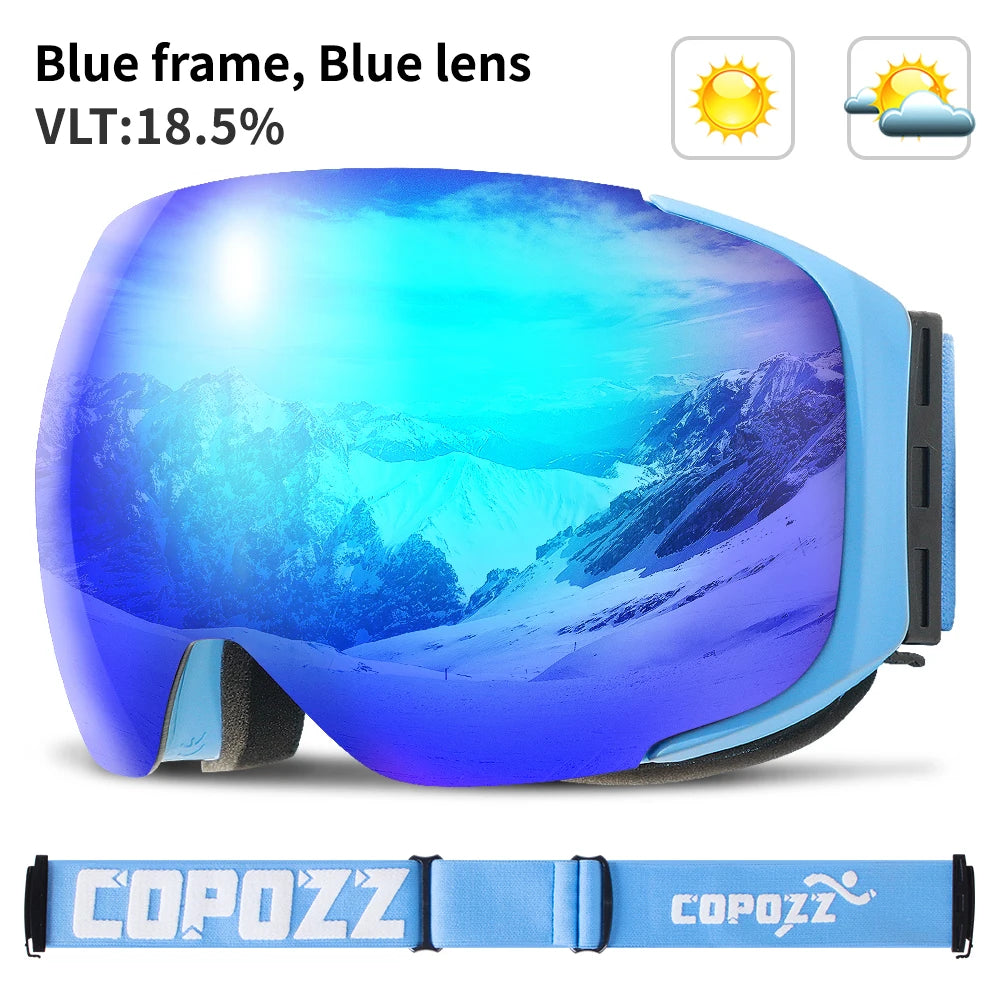
Best magnetic ski goggles tested in variable light — See it in action
How to Prevent Goggle Fog While Snowboarding
Even the best anti fog snowboard goggles can fog if airflow, fit, or maintenance is neglected. Fog usually happens when warm moisture from your face reaches the colder lens surface and creates condensation.
- Choose dual-pane lenses: Double-layer lenses provide insulation and help reduce temperature differences that cause fogging.
- Maintain proper ventilation: Keep top and bottom vents clear so air can circulate through the frame.
- Avoid wiping the inside of lenses: Rubbing the inner lens can damage anti-fog coatings and create streaks.
- Use a breathable face covering: Choose masks or neck gaiters that direct warm air away from the goggles.
- Dry goggles properly after use: Let moisture evaporate naturally before storing them in a protective case.
- Avoid placing wet goggles in enclosed bags: Trapped moisture can reduce performance and encourage condensation.
For eye comfort beyond the slopes, riders often browse the Eye Care Devices collection to support recovery after long days in glare and wind.
Durability & Security: Do Magnetic Lenses Stay Locked?
High-quality magnetic snowboard goggles are designed with more than magnets alone. Reliable systems combine magnetic attachment points with frame channels, alignment features, and secure seals to keep lenses stable during aggressive riding.
Durability testing focuses on lens retention during common mountain situations, including high-speed descents, jumps, vibrations from lifts, and repeated lens changes. A well-designed system should maintain a secure connection without making lens swaps difficult.
- Impact resistance: Strong frames and reinforced attachment points help protect the lens during accidental bumps or falls.
- Lens retention: Multi-point magnets and mechanical guides prevent unwanted movement while riding.
- Long-term durability: Quality materials resist cold temperatures, moisture, and repeated use.
- Maintenance: Cleaning lenses correctly and storing goggles safely helps preserve magnetic components and coatings.
For riders who frequently change lenses, durability depends on both the goggle construction and proper care. A secure magnetic system should provide convenience without sacrificing confidence during demanding runs.
Frequently Asked Questions About Snowboarding Goggles
What are the best snowboarding goggles for beginners?
The best snowboarding goggles for beginners should provide clear vision, reliable anti-fog performance, UV protection, and a comfortable fit with a helmet. Beginners usually benefit from versatile mid-range goggles with medium VLT lenses because they perform well in a variety of weather conditions without requiring multiple lenses.
What VLT is best for snowboarding?
The best VLT depends on the weather conditions you ride in. Lower VLT lenses around 10–20% are ideal for bright sunny days because they reduce excess glare. Medium VLT lenses around 20–40% are the most versatile for changing conditions, while higher VLT lenses around 40–60% work best for cloudy, snowy, or flat-light environments.
Which VLT is best for flat light?
For flat light conditions, choose snowboard goggles with a higher VLT rating, usually between 40–60% or higher. These lenses allow more available light to reach your eyes and improve contrast, helping you identify bumps, slopes, and terrain changes when shadows are difficult to see.
Are polarized snowboarding goggles better?
Polarized snowboarding goggles can be better in bright conditions because they reduce reflected glare from snow and ice. They improve comfort and contrast during sunny days, but they may not always be the best choice for flat light or storm conditions where maximum light transmission is more important.
Are magnetic goggles more durable than traditional designs?
Magnetic goggles can be highly durable when they combine strong magnets with secure frame channels and protective lens structures. Their main advantage is convenience rather than automatically increased durability. Proper maintenance, careful lens handling, and safe storage have a major impact on how long they last.
Can snowboard goggles be used for skiing?
Yes. Most snowboard goggles can be used for skiing, and most ski goggles can also be used for snowboarding. When comparing snowboard goggles vs ski goggles, the most important factors are fit, helmet compatibility, lens performance, and personal comfort rather than the sport category.
How do interchangeable lenses work?
Interchangeable lenses allow riders to replace the lens based on lighting and weather conditions. Magnetic systems use built-in magnets and alignment points for quick swaps, while traditional systems use clips or mechanical locks. Both designs help riders choose the right lens tint for better visibility.
How long do snowboard goggles last?
Most quality snowboard goggles can last several seasons with proper care. Lifespan depends on frame durability, lens coatings, frequency of use, and storage habits. Avoid scratching the inside of the lens, store goggles in a protective case, and allow moisture to dry completely after riding.
Do expensive snowboard goggles reduce fog better?
Higher-priced snowboard goggles often include improved ventilation, better anti-fog coatings, and higher-quality dual-pane lenses, which can improve fog resistance. However, proper fit, airflow, and care habits are still essential because even premium goggles can fog if moisture becomes trapped inside.
Can I wear snowboard goggles over glasses?
Yes. Riders who wear prescription glasses should look for OTG (Over The Glasses) snowboard goggles with deeper frames, extra interior space, and ventilation channels. A proper OTG fit prevents pressure on glasses while helping maintain airflow and comfort.
How do I know if goggles fit my helmet?
Snowboard goggles should sit smoothly against your helmet without leaving gaps between the top of the frame and the helmet edge. The strap should stay secure around the helmet, and the goggles should create a comfortable seal around your face without excessive pressure.
Should beginners buy premium goggles?
Beginners do not always need the most expensive goggles, but investing in a quality pair can improve comfort, visibility, and confidence while learning. A reliable mid-range option with good anti-fog performance and the correct lens tint is often the best starting point for new riders.
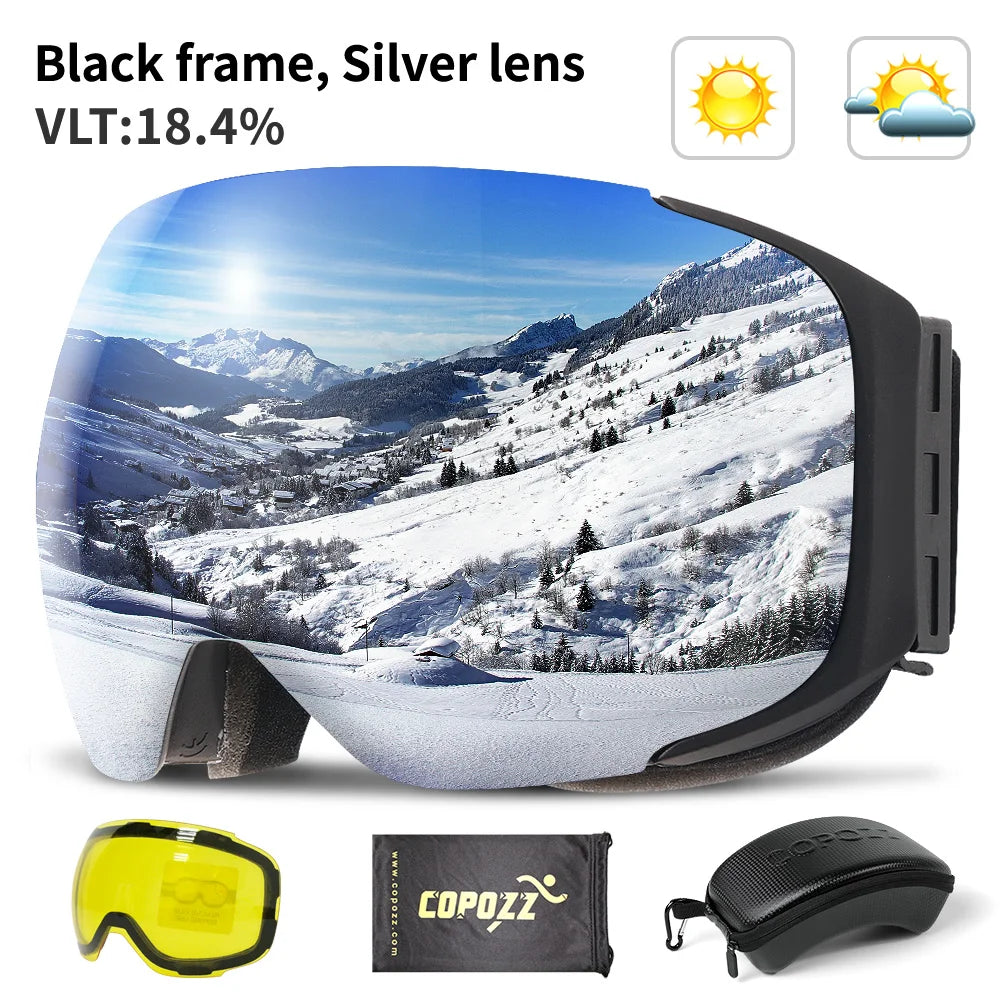
Interchangeable ski lenses built for speed — See it in action













