

Do snowboard goggles for wide faces really make a difference?
Absolutely. Choosing the right snowboard goggles for wide faces can significantly improve comfort, visibility, and confidence in every riding condition. Standard-size goggles are designed for average face shapes, which often leads to excessive pressure on the temples, gaps around the cheeks, and reduced airflow control for riders with broader facial features.
Wide-fit models are engineered with larger frame geometry, flexible multi-density face foam, and longer adjustable straps to better accommodate broader faces and larger head sizes. The improved seal minimizes cold air leaks, helps reduce lens fogging, expands peripheral vision, and creates a more balanced fit with your helmet.
If you regularly experience red pressure marks, headaches, watery eyes, or persistent fogging, upgrading to mens snowboard goggles wide face designs or snowboard goggles for big head riders is one of the simplest ways to improve all-day comfort and on-mountain performance.
Snowboard Goggles for Wide Faces: Best Picks + Fit Guide (2026)
Snowboard goggles for wide faces aren't just about comfort—they directly affect visibility, helmet compatibility, and riding performance. Many riders unknowingly struggle with narrow frames that create temple pressure, leave gaps around the face, and allow moisture to build up inside the lens. In this guide, you'll learn how to identify the best snowboard goggles for wide faces, understand proper fit, and avoid the most common sizing mistakes before your next day on the mountain.
⏱ 7 min read
Ever notice how some riders spend more time adjusting their goggles than enjoying the run? In many cases, the difference isn't the brand—it's choosing the right fit for your face.

Wide-fit snowboarding goggles mens design that seals comfortably and reduces wind sensitive eyes. See it in action.
Why Proper Fit Matters More Than Brand or Style
While premium lens technology and stylish frames are valuable, proper fit has the greatest impact on your riding experience. A well-fitting goggle distributes pressure evenly across your face, maintains a consistent seal against snow and wind, and integrates cleanly with your helmet. Even the highest-end goggles will perform poorly if the frame is too narrow for your face.
A proper snowboard goggles fit guide focuses on comfort, airflow, and helmet compatibility rather than appearance alone. When goggles fit correctly, you'll spend less time making adjustments and more time focusing on the terrain ahead.
How the Right Fit Improves Your Ride
- Reduces pressure headaches and painful temple compression during long sessions.
- Creates a complete seal that blocks cold wind and minimizes watery, irritated eyes.
- Improves airflow to reduce internal condensation and lens fogging.
- Maintains a flush connection with your helmet to eliminate uncomfortable gaps.
- Provides a wider, more stable field of view for changing snow and light conditions.
Common Problems Riders With Wide Faces Experience
Most snowboarding goggles are designed around average facial dimensions. Riders needing snowboard goggles for big head sizes frequently encounter predictable fit issues that affect both comfort and safety. Identifying these problems makes it easier to choose a model that fits correctly from the start.
| Problem | Why It Happens | Result |
|---|---|---|
| Temple pressure | Frame width is too narrow | Headaches, facial fatigue, discomfort |
| Watery eyes | Poor seal around the sides of the face | Cold wind reaches the eyes |
| Foggy lenses | Air leaks disrupt proper ventilation | Reduced visibility and frequent cleaning |
| Helmet gaps | Frame shape doesn't match helmet profile | Cold air enters through the snowboard helmet goggles gap |
| Restricted peripheral vision | Small frame opening | Reduced awareness of surrounding terrain |
How to Choose Snowboard Goggles for Wide Faces (Fit Guide)
Finding the right fit is just as important as choosing the right lens. A quality snowboard goggles fit guide starts with frame size, helmet compatibility, and face shape rather than brand alone. Use the checklist below to identify goggles that stay comfortable from your first run to the last lift.
Frame Width, Flex & Face Seal
Choose goggles labeled large fit, wide fit, or wide fit ski goggles mens. Wider frame geometry spreads pressure more evenly across the face, while flexible TPU frames and multi-density foam conform to different facial contours without creating hot spots.
- Foam should contact your face evenly around the cheeks and forehead.
- No pressure should develop at the temples after several minutes of wear.
- The nose bridge should seal comfortably without pinching.
- Peripheral vision should remain unobstructed.
Strap Length & Adjustability
An adjustable snowboard goggles fit allows the strap to secure comfortably over your helmet without reaching its maximum extension. Wide silicone-backed straps help prevent slipping while maintaining even pressure throughout the day.
- Adjust both sides evenly.
- Avoid overtightening, which can reduce ventilation.
- The goggles should stay in place without creating forehead pressure.
Helmet Compatibility (Critical)
Always test goggles with the helmet you intend to wear. The top edge of the frame should sit flush against the helmet to eliminate the "gaper gap" that allows cold air inside. Matching helmet and goggle profiles also improves ventilation and reduces fogging.
When properly paired, the frame should:
- sit evenly beneath the helmet brim,
- leave no visible gap across the forehead,
- maintain a complete seal during head movement, and
- remain comfortable without excessive strap tension.
OTG (Over Glasses) Considerations
Riders who wear prescription glasses should choose OTG-compatible goggles with a deeper interior cavity, discreet frame cutouts, and enhanced ventilation. These features reduce pressure on eyewear while improving airflow to minimize fogging on both lenses.
Frame Measurements & Sizing Tips
Manufacturers use different sizing systems, but large-fit goggles generally feature wider frames and taller lens openings than standard models. If standard goggles consistently leave temple marks or feel tight within minutes, sizing up is usually the better choice.
- Measure the widest part of your face across the temples.
- Compare manufacturer sizing charts whenever available.
- If you wear a large helmet, prioritize goggles marketed as large or XL fit.
- Test the complete helmet-and-goggle setup before riding.
Key Features That Actually Help Wide Faces
Wide or Large Frame Geometry
The best snowboard goggles for wide faces use expanded frame dimensions to improve comfort and increase peripheral vision. Rather than squeezing the sides of your face, a wider frame distributes pressure evenly and creates a more reliable seal.
Triple-Layer Face Foam & Compression
Triple-layer foam combines soft comfort against the skin with supportive outer layers that maintain consistent contact during movement. This combination helps reduce pressure points while sealing out wind and blowing snow.
Adjustable Strap Systems
High-quality adjustment systems make it easier to fine-tune fit for different helmet sizes and head shapes. Wide elastic straps with silicone grip help keep goggles securely positioned throughout aggressive riding.
Magnetic / Quick-Change Lens Systems
Magnetic lens systems simplify lens changes when weather conditions change unexpectedly. Riders can swap lenses while wearing gloves, making them especially useful for resorts where visibility shifts throughout the day.
Ventilation & Anti-Fog Design
Effective ventilation is essential in any anti fog snowboard goggles helmet combo. Dual-pane lenses, strategically positioned vents, and moisture-resistant coatings work together to regulate temperature differences and reduce condensation without sacrificing warmth.
Lens Technology Breakdown (VLT, Visibility & Conditions)
What VLT % You Need
Visible Light Transmission (VLT) indicates how much light passes through a lens. Choosing the right VLT improves contrast, terrain definition, and overall snowboard goggles visibility.
| VLT | Best Conditions |
|---|---|
| 5–20% | Bright sunshine and glacier conditions |
| 20–40% | Mixed sun and cloud |
| 40–60% | Overcast weather |
| 60–80% | Snowfall, dusk, and flat light |
Cylindrical vs Toric vs Spherical Lenses
- Cylindrical: Affordable, lightweight, and ideal for casual riders.
- Spherical: Curved vertically and horizontally for improved optics and reduced distortion.
- Toric: Combines excellent clarity, natural peripheral vision, and premium optical performance.
Low-Light vs Sunny Conditions
Cloudy weather benefits from higher VLT lenses that brighten terrain detail, while sunny days require darker lenses with lower VLT to reduce glare and eye fatigue. Carrying multiple lenses helps maintain optimal visibility throughout changing mountain conditions.
Interchangeable Lens Systems Explained
Quick-change lens systems allow riders to adapt rapidly as weather changes. Instead of compromising with one all-purpose lens, interchangeable systems provide the flexibility to optimize visibility for bright mornings, afternoon storms, and low-light evening sessions.
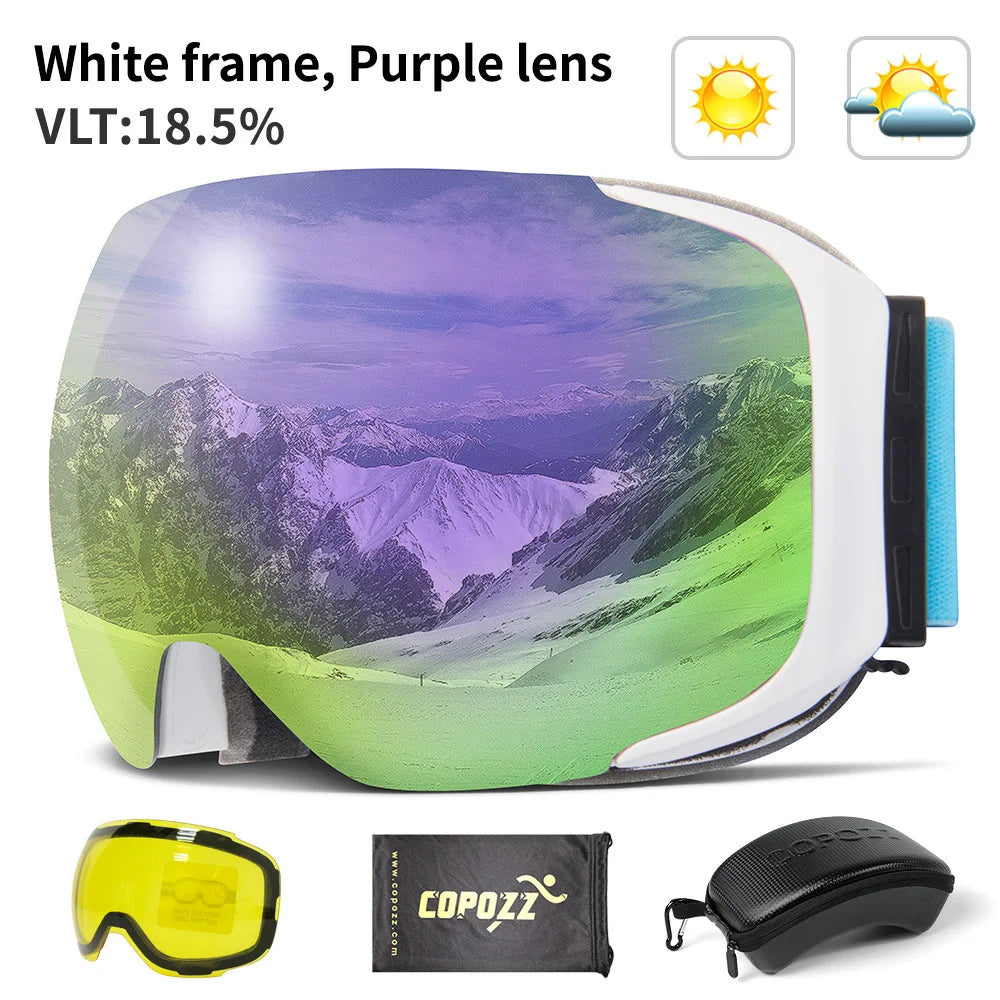
Clear vision matters when conditions shift fast—snowboarding goggles mens built for poor visibility skiing. See it in action.
Best Snowboard Goggles for Wide Faces (Tested & Reviewed)
The best snowboard goggles for wide faces combine generous frame dimensions, dependable anti-fog performance, and all-day comfort without creating pressure around the temples. The recommendations below focus on fit, lens performance, and rider needs rather than marketing features.
Best Overall
Large-fit goggles with toric lenses, premium ventilation, and magnetic lens systems deliver the best balance of optical clarity, comfort, and convenience for most riders.
Pros
- Outstanding peripheral vision
- Comfortable for full-day riding
- Fast magnetic lens changes
- Excellent helmet compatibility
Best for: Riders who want one pair for changing weather and varied terrain.
Best Budget
Affordable cylindrical-lens goggles with flexible frames provide dependable performance for beginners and occasional riders without sacrificing wide-face comfort.
Pros
- Budget-friendly pricing
- Comfortable flexible frame
- Simple, durable construction
Considerations: Typically offer fewer premium lens options and narrower fields of view than high-end models.
Best for Low Light
Models equipped with higher-VLT lenses improve terrain definition during snowfall, overcast conditions, and flat light, making them ideal for early morning or storm riding.
Best for: Resorts with frequent cloudy weather and changing visibility.
Best Magnetic Lens System
Magnetic lens systems allow riders to switch between bright- and low-light lenses within seconds without removing gloves, making them especially convenient for rapidly changing mountain conditions.
Pros
- Quick lens replacement
- Secure magnetic retention
- Excellent versatility
Best OTG (Over Glasses)
OTG-compatible goggles feature larger interior cavities, improved ventilation, and pressure-relief channels that comfortably accommodate prescription eyewear.
Best for: Riders who prefer wearing glasses instead of contact lenses.
Best Premium Option
Premium wide-fit goggles typically combine toric or spherical lenses, advanced anti-fog coatings, premium optics, and lightweight construction for riders seeking maximum performance in every condition.
Best for Large Helmets
Extra-large frame designs with extended straps integrate more naturally with larger helmet shells, minimizing forehead gaps while maintaining a secure seal.
Explore advanced options like magnetic ski goggles designed to balance comfort, visibility, and ease of use for wider faces.
Wide-Fit Snowboard Goggles Comparison Table
| Category | Fit Size | Lens Type | Typical VLT | OTG Compatible | Helmet Compatibility | Best For |
|---|---|---|---|---|---|---|
| Best Overall | Large | Toric | 20–35% | Yes | Excellent | All conditions |
| Budget Pick | Wide | Cylindrical | 20–40% | No | Good | Beginners |
| Low-Light | Large | Spherical | 50–70% | Yes | Excellent | Cloudy weather |
| Magnetic System | Wide | Toric | Interchangeable | Optional | Excellent | Frequent lens swaps |
| Premium | Large | Toric/Spherical | Multiple options | Yes | Excellent | Advanced riders |
How to Properly Fit & Adjust Snowboard Goggles
How Should Snowboard Goggles Fit
If you're wondering how should snowboard goggles fit, the answer is simple: they should create an even seal around your face without painful pressure. The foam should touch your forehead, cheeks, and nose evenly while leaving no visible gaps.
- Comfortably snug without squeezing.
- No gaps along the cheeks or forehead.
- Stable during movement.
- Natural alignment with your helmet.
How to Tighten Snowboard Goggles Properly
Learning how to tighten snowboard goggles correctly helps improve comfort and ventilation.
- Place the goggles against your face before tightening.
- Adjust both strap sides evenly.
- Stop tightening once the foam seals comfortably.
- Check that the goggles remain stable while turning your head.
- Avoid excessive tension, which may increase facial pressure and reduce airflow.
Signs Your Goggles Are Too Small
- Pressure around the temples or forehead.
- Visible gaps near the cheeks or nose.
- Persistent fogging despite clean lenses.
- Red marks after a short ride.
- Restricted peripheral vision.
- Straps fully extended but still feeling tight.
How to Fix Helmet-Goggle Gap
A gap between your helmet and goggles can allow cold air inside while increasing the likelihood of fogging. To improve the fit:
- Choose goggles designed for your helmet size.
- Position the helmet before adjusting the strap tension.
- Select large-fit frames if standard models leave a forehead gap.
- Replace incompatible helmet-and-goggle combinations instead of overtightening the strap.
Snowboard Goggles for Big Heads – Quick FAQs
How do I know if I need wide-fit goggles?
If standard goggles leave red marks on your temples, create pressure around your forehead, or feel too tight after a few runs, it's time to consider snowboard goggles for big head riders. A properly sized frame should seal evenly around your face without squeezing or creating gaps.
Do wide goggles reduce pressure and fogging?
Yes. Wide-fit frames distribute pressure more evenly while improving the face seal around your cheeks and nose. A better seal reduces unwanted airflow, helping anti-fog ventilation systems perform more effectively and keeping your vision clearer throughout the day.
Are ski goggles UV400 necessary?
Absolutely. Snow reflects a significant amount of ultraviolet radiation, increasing eye exposure even on cloudy days. UV400 lenses block virtually all UVA and UVB rays, helping reduce long-term eye damage and improving visual comfort during extended rides.
What's the easiest upgrade for better visibility?
Choosing a toric or spherical lens with a quality anti-fog coating usually delivers the biggest improvement. Riders who frequently encounter changing weather also benefit from interchangeable magnetic lens systems, allowing quick swaps without removing gloves.
Can I wear glasses with snowboard goggles?
Yes. Choose OTG (Over-The-Glasses) compatible models with additional interior volume, ventilation channels, and foam cutouts designed to accommodate prescription eyewear while minimizing pressure and lens fogging.
Which goggles fit best with helmets?
The best helmet-compatible goggles sit flush against the helmet brim with no visible gap, often called the "gaper gap." Look for adjustable outriggers, flexible frames, and straps that easily fit over both standard and large snowboard helmets for maximum comfort and protection.
What size snowboard goggles are best for wide faces?
Most riders with broader facial dimensions should choose goggles labeled large fit, XL, or wide fit. These models provide greater frame width, longer straps, and wider fields of view than standard sizes.
Do wide-fit goggles work with all helmets?
Most modern wide-fit goggles are designed to fit major snowboard helmet brands, but compatibility varies slightly. Always check that the frame follows the helmet contour without creating pressure points or ventilation gaps.
How do I measure my face for snowboard goggles?
Measure the distance across your temples at the widest point of your face. Compare that measurement with the manufacturer's sizing guide and look for large-frame dimensions if you typically wear XL helmets or standard goggles feel restrictive.
Are spherical lenses better for wide faces?
Spherical lenses often provide improved optical clarity and a wider field of view, making them an excellent choice for riders seeking better peripheral vision. Toric lenses offer similar benefits while maintaining a lower-profile frame.
Can wide goggles reduce fogging issues?
Yes. A properly fitting frame allows ventilation channels to function as intended. Combined with dual-pane lenses and anti-fog coatings, the improved seal significantly reduces internal condensation.
What are the best budget wide-fit snowboard goggles?
Budget-friendly large-fit cylindrical goggles are ideal for beginners, while riders seeking better optics should consider mid-range toric or spherical models that offer improved clarity, anti-fog performance, and enhanced comfort for long riding sessions.













