

Do Snowboarding Goggles for Small Faces Women Actually Work?
Yes. Ski and snowboarding goggles designed for women with small or narrow faces provide a noticeably better fit, clearer vision, and improved comfort than standard-size models. Instead of relying on oversized unisex frames, small-fit goggles use narrower frame geometry, softer multi-layer face foam, and a more contoured profile that seals naturally against petite facial features.
If you regularly experience fogging, pressure on your nose, cold air leaks, or a noticeable gap between your helmet and goggles, there's a good chance your current goggles are simply too large. Switching to goggles for small faces often improves both comfort and on-slope performance.
A properly fitted small-frame design helps:
- Reduce pressure on the nose bridge and temples during long days on the mountain
- Create a tighter facial seal that minimizes fogging and wind intrusion
- Maintain wide peripheral vision with less visual distortion
- Prevent cold air leaks that can dry and irritate your eyes
- Improve helmet compatibility by reducing unwanted gaps above the goggles
Women with petite faces, riders with narrow facial structures, and skiers with lower nose bridges typically benefit the most from dedicated small-fit goggles. Rather than adjusting oversized frames, choosing ski goggles built specifically for small faces delivers a more secure fit, better insulation, and consistently clearer visibility in changing mountain conditions.
Best Ski Goggles for Small Faces (Tested & Ranked for 2026)
Finding the best ski goggles for small faces isn't just about choosing a premium brand—it's about selecting the correct frame size, lens technology, and facial fit. For this guide, we evaluated the features that matter most to petite riders, including seal quality, anti-fog performance, helmet compatibility, optical clarity, and long-wearing comfort.
Whether you ski, snowboard, or enjoy both sports, the following recommendations focus on small-face performance rather than oversized universal sizing.
Quick Comparison: Best Ski Goggles for Small Faces (2026 Picks)
If you have a petite or narrow face, prioritize fit before brand. A well-fitting frame provides better visibility, improved comfort, and more reliable fog resistance throughout the day. Here's a quick comparison of the top categories to help narrow your choice.
- Best Overall: Balanced fit, high-contrast optics, and excellent all-day comfort
- Best Budget: Dependable anti-fog performance with a true small-frame design
- Best for Low Light: Higher VLT lenses for cloudy, snowy, and tree-covered terrain
- Best Anti-Fog: Dual-pane lens construction with effective ventilation
- Best Low-Profile Fit: Compact frame that suits narrow faces and pairs well with helmets
- Best Magnetic Lens System: Fast lens changes for rapidly changing weather conditions
- Best for Helmet Compatibility: Comfortable fit with minimal or no forehead gap
Continue below for detailed reviews, fit considerations, and expert guidance on choosing the best ski goggles for small faces and petite facial profiles.
Best Ski Goggles for Small Faces (Detailed Reviews)
Best Overall
The strongest all-around option combines a true small-fit frame, distortion-free optics, dependable anti-fog performance, and long-lasting comfort. Prioritize flexible TPU frames, triple-layer face foam, and lenses that maintain excellent contrast across changing terrain. Riders with petite or narrow faces should look for models specifically designed for small or low-bridge facial profiles rather than scaled-down standard goggles.
Best Budget Pick
Budget-friendly ski goggles can still deliver dependable UV protection, dual-pane lenses, and reliable ventilation. Instead of focusing solely on price, choose a compact frame that seals properly against your face, as a good fit has a greater impact on comfort and visibility than premium branding alone.
Best for Low Light
Flat-light conditions demand higher Visible Light Transmission (VLT) lenses that brighten terrain without sacrificing contrast. Amber, rose, or yellow-tinted lenses help reveal snow texture during overcast weather, making them an excellent choice for tree runs, storms, and late-afternoon skiing.
Best Anti-Fog Performance
The best anti-fog ski goggles combine dual-pane construction, quality lens coatings, and effective ventilation with a consistent facial seal. Properly fitted small-frame goggles reduce unwanted airflow that commonly causes condensation inside oversized models.
Best for Narrow Faces
Low-profile frames are ideal for skiers and snowboarders with narrow facial structures. They sit closer to the face, reduce excess bulk, improve peripheral awareness, and pair more naturally with modern ski helmets.
Best Magnetic Lens System
Magnetic lens systems simplify lens changes when mountain conditions shift throughout the day. Strong magnetic retention combined with alignment locks allows riders to swap lenses quickly without removing gloves, helping maintain optimal visibility from bright mornings to snowy afternoons.
Best Helmet Compatibility
The ideal small-fit goggles integrate seamlessly with your helmet, eliminating the "gaper gap" while maintaining even pressure around the face. A balanced helmet-and-goggle fit improves warmth, stability, and overall comfort during long days on the mountain.
Well-designed ski goggles for small faces do far more than improve comfort. They enhance visibility, minimize wind exposure, maintain a secure seal, and help reduce fatigue so you can stay focused in changing mountain conditions.
⏱ 6 min read
Why a Smaller Frame Fit Changes Everything on the Slopes
If your goggles slide during turns, press uncomfortably on your nose, or leave noticeable gaps around your cheeks, they're likely too large for your face. Ski goggles designed for small faces follow your facial contours more closely, creating a comfortable seal that blocks wind, snow, and glare without creating pressure points.
A properly sized frame also improves peripheral vision, keeps the lens positioned correctly in front of your eyes, and works with your helmet to maintain consistent airflow. The result is greater comfort, more stable visibility, and fewer distractions from the first lift to the final run.
A precise small-frame fit improves comfort, visibility, and protection from wind exposure.
Common Problems with Poor-Fit Goggles (And How to Fix Them)
- Fogging: Persistent fog usually results from an inconsistent facial seal rather than the lens itself. Choosing ski goggles with a true small-fit frame and quality face foam helps regulate airflow and reduce internal condensation.
- Nose Pressure: Excessive pressure on the bridge of your nose often means the frame is too wide or the contour doesn't match your facial shape. A compact frame distributes pressure more evenly for lasting comfort.
- Helmet Gap: A visible gap between your helmet and goggles exposes your forehead to cold air while reducing overall stability. Select goggles designed to pair with your helmet size and profile for a seamless fit.
- Slipping During Movement: Goggles that shift while carving or riding uneven terrain are typically too large. Properly sized frames stay securely in place without requiring overly tight straps.
- Reduced Peripheral Vision: Oversized goggles that sit incorrectly can limit your natural field of view. Small-fit models position the lens more effectively, helping maintain better side visibility.
- Cold Air Leaks: Gaps around the cheeks or nose allow wind to reach your eyes, causing dryness and discomfort. Softer multi-layer foam and an anatomically shaped frame create a more effective seal.
Most of these issues cannot be solved by tightening the strap alone. Choosing ski goggles specifically engineered for small or narrow faces provides a more comfortable fit, better visibility, and improved performance throughout the day.
How to Choose Ski Goggles That Actually Fit Small Faces
Frame Width & Fit Categories (XS / Small / Youth)
Manufacturers commonly label compact models as XS, Small, or Small Fit. Adults with petite facial features can also consider premium youth goggles, which often include the same lens technologies while offering dimensions better suited to narrow faces.
Foam Layers & Face Seal
Triple-layer face foam provides a comfortable seal while adapting to different facial contours. High-quality foam minimizes pressure points, improves insulation, and helps maintain consistent contact around the cheeks and nose.
Helmet Compatibility & Gap Test
Always try goggles with your helmet whenever possible. The top edge of the goggles should meet the helmet cleanly without leaving a forehead gap, while the frame should remain secure without excessive strap tension.
Asian Fit vs Standard Fit
Riders with lower nose bridges or flatter facial profiles often achieve a better seal with Asian Fit (also called Low Bridge Fit) models. These designs reduce pressure on the nose while improving overall stability and comfort.
Many riders browsing winter sports eyewear find it helpful to explore related lifestyle gear curated in the Lifestyle collection.

The right frame size delivers better comfort, a secure seal, and clearer vision throughout your day on the mountain.
Lens Technology Breakdown (What Actually Matters)
VLT % Explained (Low Light vs Sunny Days)
Visible Light Transmission (VLT) indicates how much light passes through a ski goggle lens. Matching VLT to the day's conditions improves terrain definition, reduces eye fatigue, and helps riders react more confidently.
- 10–25% VLT: Best for bright sunshine and high-glare alpine conditions.
- 20–40% VLT: A versatile range for mixed weather and variable visibility.
- 40–70% VLT: Ideal for cloudy skies, snowfall, shaded runs, and flat-light conditions.
Cylindrical vs Spherical Lenses
Cylindrical lenses offer excellent value with a lower-profile design, while spherical lenses curve horizontally and vertically to deliver a wider field of view and reduced edge distortion. Riders with smaller faces often benefit from whichever design provides the best overall frame fit rather than focusing solely on lens shape.
Anti-Fog Coatings & Venting Systems
Reliable visibility depends on the combination of dual-pane lens construction, quality anti-fog treatments, effective ventilation, and a well-fitting frame. Even premium lenses perform better when the face foam creates a consistent seal that regulates airflow.
Magnetic vs Traditional Lens Swap
Magnetic lens systems simplify changing lenses as weather evolves throughout the day. Secure magnets combined with locking mechanisms allow fast lens swaps while maintaining a dependable fit during skiing and snowboarding.

Choosing the correct lens tint and VLT improves visibility across changing mountain conditions.
Why Magnetic Ski Goggles Are a Game-Changer
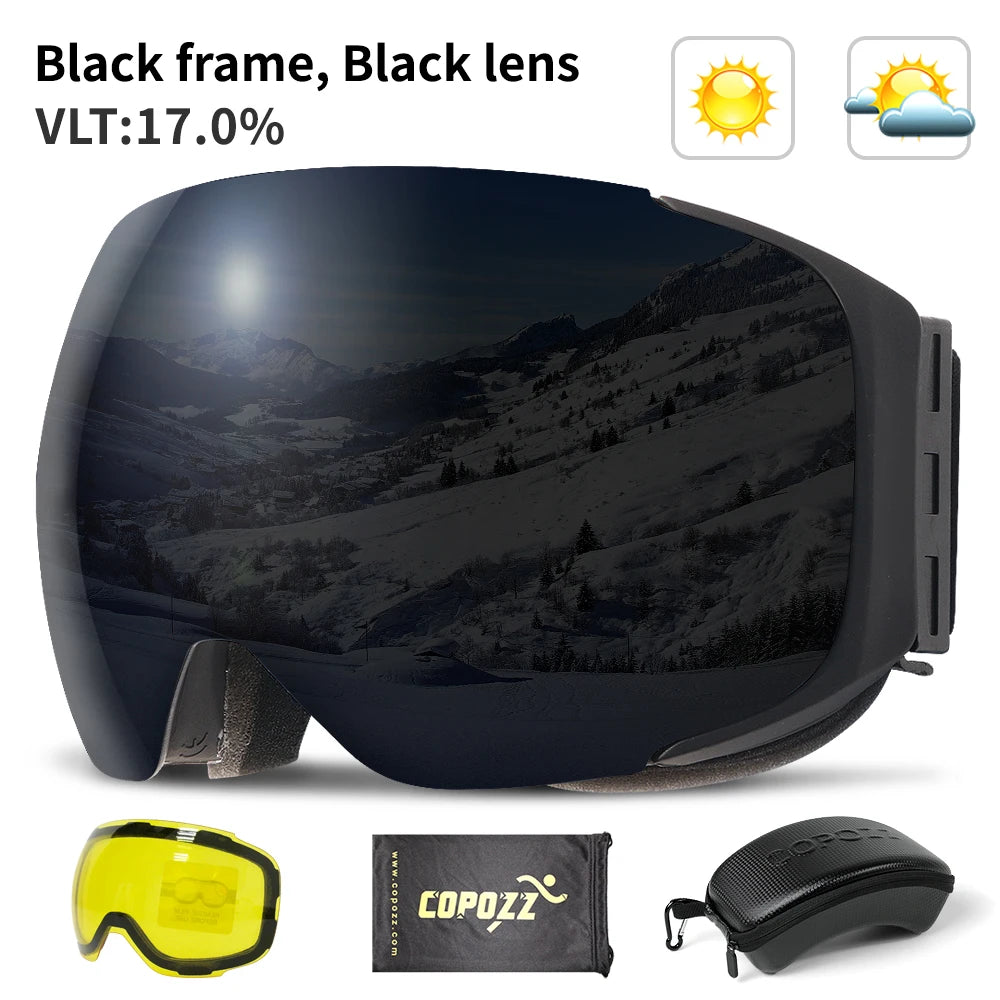
The Magnetic Ski Goggles combine a compact frame with a quick-change lens system, making them an excellent option for riders with small faces who encounter changing weather throughout the day. Instead of carrying multiple pairs of goggles, you can switch to the most suitable lens within seconds while maintaining a secure fit.
| Feature | Benefit |
|---|---|
| Magnetic lens system | Quick, tool-free lens changes without removing gloves |
| Compact frame geometry | Provides a secure seal for petite and narrow faces |
| Dual-pane anti-fog lens | Maintains clearer vision in changing weather conditions |
| Wide field of view | Improves terrain awareness and peripheral visibility |
Frequently Asked Questions
Are ski goggles for small faces women different from standard goggles?
Yes. Small-fit women's ski goggles typically feature narrower frame dimensions, softer multi-layer face foam, and contours designed to seal comfortably against petite facial structures. This improves comfort, reduces pressure points, and helps maintain clearer vision throughout the day.
Can I use youth goggles as an adult?
Yes. Many adults with petite or narrow faces successfully wear premium youth ski goggles because they often include the same lens technologies, UV protection, and anti-fog features as adult models in a more compact frame.
Do smaller goggles reduce fogging?
They can. A properly fitted small-frame goggle creates a more consistent seal around your face, allowing the ventilation system to work efficiently and reducing the likelihood of internal condensation.
What VLT is best for all-day riding?
A VLT between 20% and 40% is a versatile choice for mixed weather conditions. If you frequently encounter changing light throughout the day, interchangeable or magnetic lenses provide the greatest flexibility.
Are magnetic goggles worth it?
Yes. Magnetic lens systems make it easy to switch between lenses as weather conditions change while maintaining a secure fit. They are particularly useful for riders who encounter bright mornings, cloudy afternoons, and varying visibility during a single day.
What size ski goggles are best for small faces?
Look for models labeled XS, Small Fit, Low Bridge Fit, or Compact Fit. These designs are built specifically for petite facial dimensions and generally provide a better seal than standard unisex goggles.
Which ski goggle brands fit narrow faces best?
Several manufacturers offer dedicated small-fit collections, including Smith, Oakley, Giro, Anon, and OutdoorMaster. Rather than choosing by brand alone, compare the frame dimensions and helmet compatibility for the best overall fit.
Are women's ski goggles smaller than unisex models?
Not always, but many women's models feature narrower frames, softer facial foam, and contours better suited to smaller faces. Always verify the listed fit category instead of relying solely on the product name.
Can adults wear youth ski goggles safely?
Yes, provided the goggles fit properly and meet modern safety standards. Many high-quality youth models offer the same optical performance, UV protection, and anti-fog technology as adult versions.
What is the best VLT for variable weather?
For frequently changing mountain conditions, a lens around 30% VLT or a magnetic interchangeable lens system offers an excellent balance between brightness and contrast.
Are magnetic lens goggles more reliable than traditional systems?
Modern magnetic systems are highly reliable when paired with mechanical locking features. They provide secure lens retention while making lens changes significantly faster than traditional clip-in designs.
How do I check helmet and goggle compatibility?
Wear both together and check for an even fit across your forehead. There should be little or no gap between the helmet and goggles, and the frame should remain comfortable without excessive strap tension.
Do small-fit ski goggles work with prescription glasses?
Some do. If you wear glasses, look for OTG (Over-the-Glasses) ski goggles specifically designed to accommodate prescription frames while maintaining adequate ventilation and a comfortable seal.













