

Solar Inverter Sizing: Step-by-Step Guide to Calculate the Right Size for Any System
Choosing the correct solar inverter size is one of the most important steps in designing an efficient solar energy system. Whether you're powering a small cabin, a family home, or an off-grid installation, accurate inverter sizing helps prevent overloads, improves energy efficiency, and supports reliable long-term performance.
In this guide, you'll learn how to calculate the right inverter capacity using practical formulas, continuous and surge load calculations, efficiency adjustments, and real-world sizing principles.
⏱ 7 min read
Explore real examples and avoid the most common sizing mistakes.
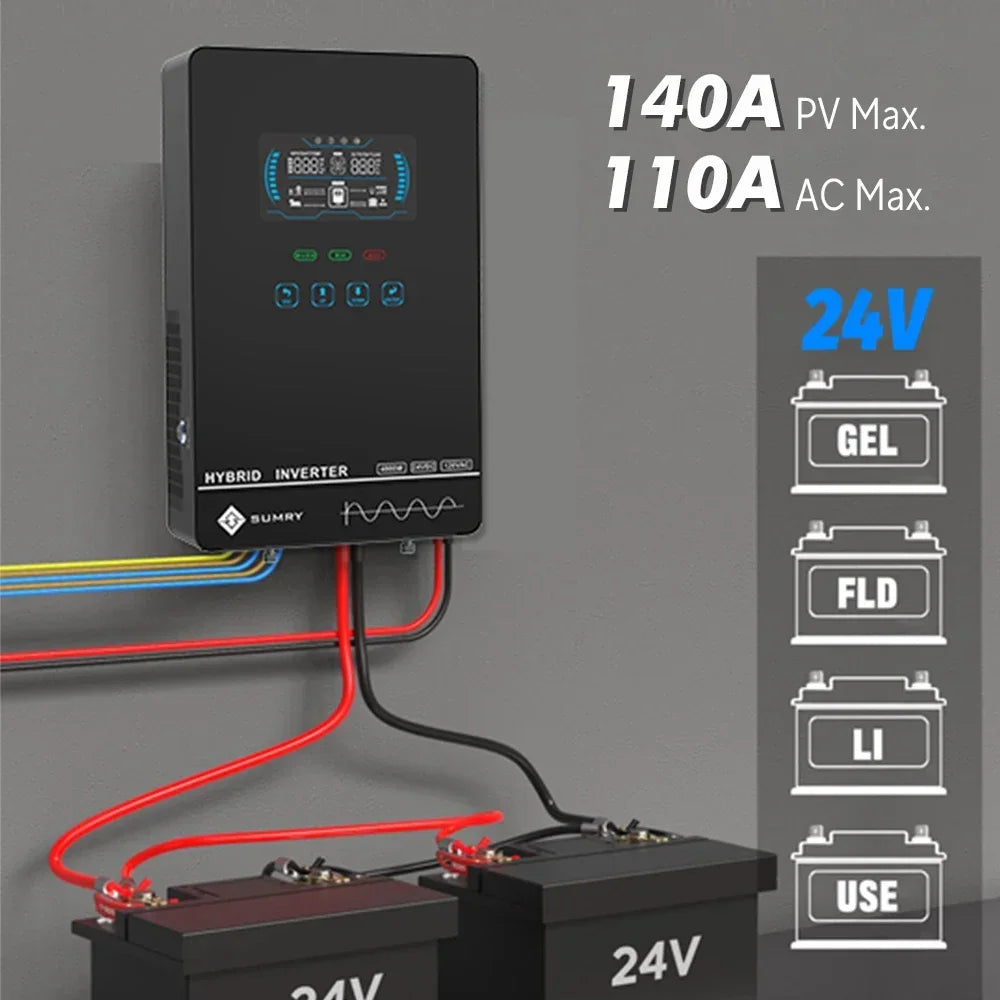
Solar inverter sizing for real homes, not theory. See it in action.
What is Solar Inverter Sizing?
Solar inverter sizing is the process of selecting an inverter with enough continuous and surge power capacity to operate your electrical loads safely and efficiently. The inverter converts direct current (DC) generated by solar panels or stored in batteries into alternating current (AC) used by household appliances.
Proper solar inverter sizing balances present energy needs with expected future demand. An appropriately sized inverter reduces the risk of overloads, minimizes unnecessary energy losses, and provides dependable operation throughout the life of the solar system.
Peak Load vs Continuous Load Explained
Understanding the difference between continuous power and surge power is essential before performing any solar inverter capacity calculation.
- Continuous load: The amount of power appliances consume while operating normally over an extended period, such as lighting, televisions, refrigerators, computers, and internet equipment.
- Peak (surge) load: The brief but higher power required when certain motors or compressors start. Air conditioners, well pumps, refrigerators, and power tools commonly require two to three times their running wattage during startup.
Your inverter must support both values. Even if the continuous load is within the inverter's rating, insufficient surge capacity can cause shutdowns when high-startup appliances switch on.
Why Inverter Sizing Matters for System Performance
Correct inverter sizing improves both system reliability and overall energy performance. Selecting an inverter based solely on average power consumption often results in poor efficiency or unexpected overloads.
- Prevents overload protection from tripping during high-demand periods.
- Improves conversion efficiency by operating within the inverter's optimal range.
- Extends the service life of the inverter and connected equipment.
- Supports multiple appliances running simultaneously with greater stability.
- Provides room for modest future increases in household electricity demand.
Solar Inverter Sizing Formula (Step-by-Step Calculation)
The most accurate way to determine inverter capacity is to calculate your total running load, account for startup surges, and adjust for real-world operating conditions such as efficiency losses and elevated temperatures.
Step 1: Calculate Total Load (Watts)
List every appliance that may operate at the same time and record its running wattage. Add these values together to determine your continuous load.
For example:
- Refrigerator: 200 W
- Lighting: 300 W
- Television: 150 W
- Computer: 250 W
- Microwave: 1,000 W
Total continuous load = 1,900 W .
Step 2: Account for Surge Power
Next, identify appliances with electric motors or compressors. These devices require additional power for a few seconds during startup.
If your refrigerator requires an extra 400 W during startup and a water pump needs an additional 800 W, include the highest expected simultaneous surge when selecting inverter capacity.
Ignoring surge requirements is one of the most common reasons an inverter trips even though the normal running load appears acceptable.
Step 3: Apply Efficiency, Safety Margin, and Temperature Derating
Real-world operating conditions reduce usable inverter output. Account for inverter efficiency, high ambient temperatures, cable losses, and modest future load growth by applying a safety margin of approximately 20% to 30%.
- Typical inverter efficiency ranges from 85% to 95%.
- Hot installation environments can reduce available output.
- A 20% to 30% reserve allows for future appliances without immediately replacing the inverter.
Step 4: Determine Recommended Inverter Capacity
After combining continuous load, expected surge demand, and the safety margin, compare the result with standard inverter sizes available on the market. In most cases, choosing the next larger standard rating provides a practical balance between performance and future flexibility.
Final Solar Inverter Sizing Formula
Recommended Inverter Size (W) = (Continuous Load + Required Surge Capacity) × Safety Margin ÷ Inverter Efficiency
- Use actual appliance wattages whenever possible rather than estimates.
- Include only simultaneous loads instead of your home's total connected load.
- Round the calculated value up to the nearest commercially available inverter size.
- Review your calculation whenever major appliances or future electrical loads are added.
How to Size a Solar Inverter (Practical Example)
Example: Small Home Calculation
Suppose a small home has a combined continuous load of 1,500 W and the largest appliance startup surge adds another 500 W . The inverter selection process would look like this:
- Continuous load + surge requirement = 2,000 W
- Apply a 25% safety margin = 2,500 W
- Round up to the next standard inverter size = 3,000 W (3 kW)
A 3 kW inverter provides enough capacity for normal daily operation while maintaining reserve power for occasional demand spikes.
Example: Large Home Calculation
Consider a larger property with a 5,000 W continuous electrical demand, plus several motor-driven appliances that may start during the same period.
- Surge-adjusted load = 7,000 W
- Add a 20% to 25% design margin = approximately 8,500 W
- Select an inverter rated between 8 kW and 10 kW , depending on expected future expansion and manufacturer specifications.
Homes with central air conditioning, EV charging, or electric heating often benefit from additional capacity to accommodate simultaneous high-power loads.
Example: Off-Grid or Hybrid System
In off-grid and hybrid installations, inverter sizing depends on both electrical demand and the battery bank's maximum discharge capability. The inverter should never exceed the battery system's ability to safely deliver power, or performance and battery life may be affected.
Learn more in our guide to off-grid solar system design .
Solar Inverter Sizing for Small Homes
For apartments, condos, tiny homes, and other compact residences, solar inverter sizing for small homes generally falls between 3 kW and 5 kW . The ideal capacity depends on the number of appliances that operate simultaneously rather than the home's floor area alone.
Typical Load Profile
- Refrigerator or freezer operating continuously.
- LED lighting throughout the home.
- Wi-Fi router, television, and personal computers.
- Occasional microwave, coffee maker, or induction cooktop.
- Seasonal or intermittent air conditioner use.
Recommended Inverter Size Range
- 3 kW: Small households with efficient appliances and modest daily electricity use.
- 4 kW: Typical apartments or homes using several appliances simultaneously.
- 5 kW: Homes expecting moderate future growth or frequent use of higher-wattage kitchen appliances.
Key Considerations for Small Systems
- Base inverter selection on simultaneous power demand instead of total connected appliances.
- Choose energy-efficient appliances to reduce required inverter capacity.
- Leave reasonable headroom for future devices without significantly oversizing the system.
- Limit concurrent operation of multiple high-power appliances if working within a smaller inverter capacity.
See how small homes optimize inverter capacity.
Solar Inverter Sizing for Large Homes
Inverter sizing for large homes requires careful planning because several high-power appliances may operate simultaneously. Most properties with extensive electrical demand require an inverter rated between 8 kW and 15 kW , although homes with electric vehicles, workshops, or all-electric heating may benefit from multiple inverters for greater flexibility and redundancy.
High-Load Appliance Breakdown
Begin by identifying appliances that contribute the most to your home's peak demand.
- Central air conditioning or heat pump systems.
- Electric ovens, cooktops, and clothes dryers.
- Level 2 EV chargers.
- Electric water heaters.
- Well pumps, pool pumps, and pressure pumps.
- Workshop equipment or large power tools.
Calculating the likelihood of these loads operating together provides a more realistic estimate than simply adding every appliance in the home.
Inverter Headroom Requirements
Large residential systems benefit from additional capacity beyond today's electrical demand. Adequate headroom helps the inverter operate efficiently while accommodating future lifestyle changes.
- Support multiple high-demand appliances operating at the same time.
- Provide sufficient surge capacity for motors and compressors.
- Allow future additions such as EV charging, battery storage, or home expansions.
- Reduce the likelihood of nuisance shutdowns during periods of heavy usage.
Recommended Sizing Strategy
- Calculate the expected peak simultaneous electrical load.
- Include startup surge requirements for motor-driven equipment.
- Add a design margin of approximately 25% to 30%.
- Consider multiple inverters where load balancing, redundancy, or phased expansion is desirable.
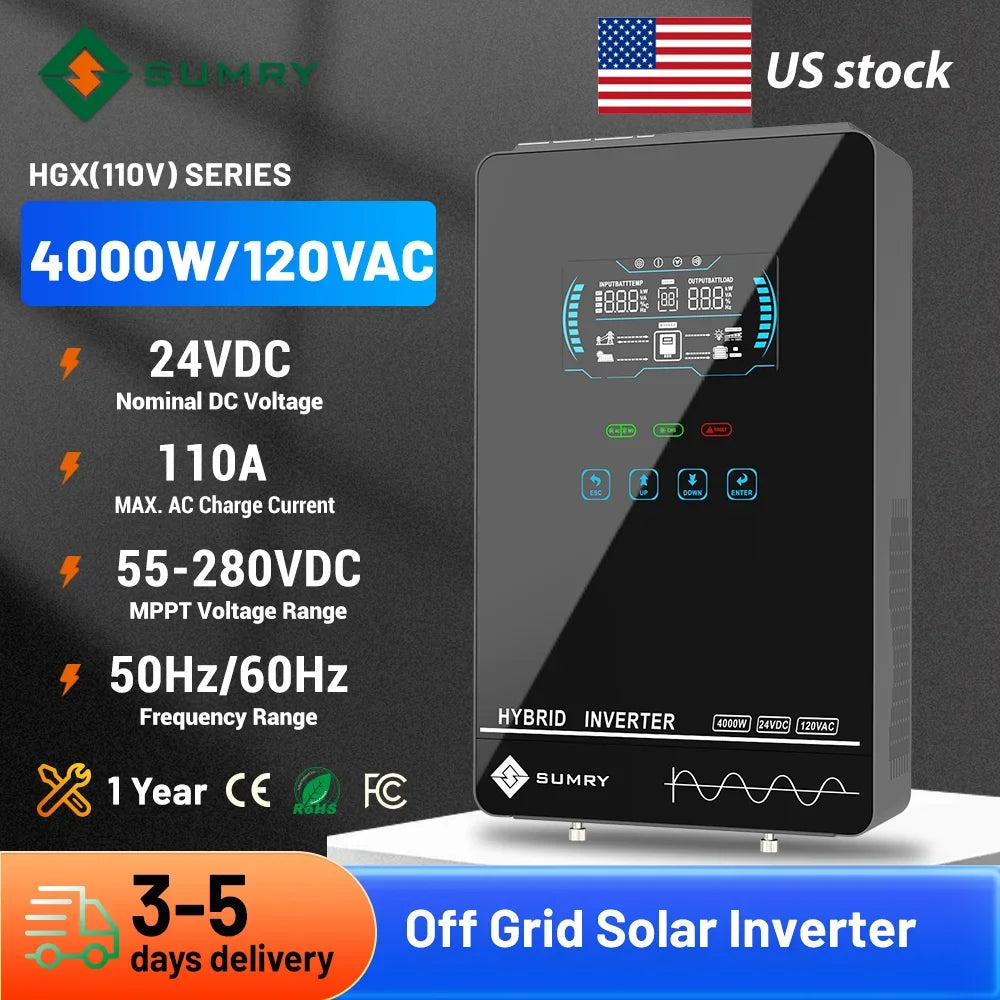
Sizing for peak demand, not average use ⚡ See it in action
Grid-Tied vs Hybrid vs Off-Grid Inverter Sizing
Grid-Tied Systems
Grid-tied solar systems primarily offset household electricity consumption while relying on the utility grid whenever solar production is insufficient. Inverter sizing is generally based on expected household demand and the solar array's output rather than battery capacity.
Hybrid Systems
Hybrid systems combine solar panels with battery storage, allowing energy to be stored for evening use or backup power. The inverter should be sized to support both household loads and battery charging or discharging without exceeding its continuous or surge ratings.
Off-Grid Systems
Off-grid installations depend entirely on solar generation and battery storage, making inverter selection especially important. The inverter must safely power all anticipated loads while remaining compatible with the available battery output.
Learn more about system design considerations in our guide to off-grid solar solutions when planning an independent installation.
Battery Compatibility
Battery capacity alone does not determine inverter size. The battery bank must also deliver sufficient continuous and peak discharge current to support the inverter during periods of maximum demand.
- Verify the battery's maximum continuous discharge rating.
- Ensure surge output matches the inverter's startup requirements.
- Confirm voltage compatibility between the inverter and battery bank.
- Select equipment that allows future battery expansion if greater storage is anticipated.
Pairing your system with a reliable off-grid solar inverter can significantly improve performance in independent energy setups.
Using a Solar Inverter Size Calculator
A solar inverter size calculator can quickly estimate the inverter capacity needed for a residential or off-grid system. While these tools save time, the quality of the result depends entirely on the accuracy of the information entered.
Inputs Required
A reliable solar inverter size calculator should request enough information to perform a realistic solar inverter capacity calculation rather than relying on average household consumption.
- Total continuous electrical load (watts).
- Expected startup or surge wattage for motor-driven appliances.
- Inverter efficiency or estimated conversion losses.
- Battery specifications, if energy storage is included.
- Appropriate safety margin for future electrical demand.
Manual Calculation vs Calculator
Online calculators are useful for obtaining an initial estimate, but manual calculations remain the best way to verify inverter sizing. Reviewing appliance wattages individually helps identify large loads, account for simultaneous usage, and avoid selecting an inverter that is either too small or unnecessarily oversized.
For larger homes, hybrid systems, or installations with multiple air conditioners, pumps, or EV chargers, manual verification provides greater confidence before purchasing equipment.
Calculator Limitations
Many online calculators simplify assumptions by using average household consumption or fixed efficiency values. They may not fully consider surge power, installation temperature, appliance diversity, or future expansion plans.
- May underestimate startup power requirements.
- Often assume ideal operating conditions.
- Rarely account for temperature derating.
- Typically cannot evaluate complex multi-inverter installations.
If your system includes large electrical loads, battery storage, or off-grid operation, consider validating calculator results with a detailed load analysis or professional system review.
Common Mistakes in Inverter Sizing
Oversizing or Undersizing the Inverter
Selecting an inverter that is too small can cause overload protection to activate whenever demand exceeds its capacity. Conversely, choosing a significantly oversized inverter increases equipment costs and may reduce efficiency under light electrical loads.
Ignoring Surge Loads
Motors, compressors, and pumps frequently require much higher startup power than their normal running wattage. Failing to include these temporary surges can result in nuisance shutdowns even when continuous demand appears well within the inverter's rating.
Ignoring Efficiency and Temperature Losses
Inverters do not operate at 100% efficiency, and elevated ambient temperatures can further reduce available output. Including realistic efficiency values and allowing for temperature derating produces a more dependable system design.
Not Planning for Future Expansion
Household electricity demand often increases over time as new appliances, home additions, battery storage, or EV chargers are installed. Leaving reasonable headroom in your inverter sizing helps accommodate future upgrades without requiring a complete inverter replacement.
Frequently Asked Questions
Can I oversize my solar inverter just to be safe?
A modest amount of extra capacity can provide flexibility for future electrical demand, but significantly oversizing an inverter usually increases equipment costs and may reduce operating efficiency during periods of low power consumption. The best approach is to size the inverter according to calculated loads while including a reasonable safety margin.
Does inverter size affect battery life?
Yes. An improperly matched inverter can place unnecessary stress on a battery bank by drawing excessive current during heavy loads or operating inefficiently. Matching the inverter's power requirements to the battery's voltage and discharge capability helps improve battery performance and service life.
Is one inverter enough for large homes?
It depends on the home's electrical demand and system design. Many large homes operate efficiently with a single appropriately sized inverter, while properties with multiple high-load circuits, battery storage, or phased installations may benefit from two or more inverters for improved load balancing, redundancy, and future expansion.
How often should sizing be reviewed?
Review your solar inverter sizing whenever your electrical demand changes significantly, such as after installing an EV charger, upgrading HVAC equipment, adding a workshop, expanding your home, or increasing battery storage capacity.
How do I calculate the right solar inverter size?
Calculate the total continuous wattage of the appliances expected to run simultaneously, add any required surge power, apply an appropriate safety margin, and account for inverter efficiency. Round the final result up to the nearest standard inverter rating.
What size inverter do I need for a 5 kW solar system?
A 5 kW solar array is commonly paired with an inverter in the 4 kW to 5 kW range, depending on the system's DC-to-AC ratio, local design practices, and manufacturer recommendations. The ideal choice depends on both solar production and household electrical demand.
What is the ideal DC-to-AC ratio?
Many residential solar systems use a DC-to-AC ratio between approximately 1.1:1 and 1.3:1. This allows the solar array to maximize energy production throughout the day while keeping inverter clipping within acceptable limits.
Can a solar inverter be larger than the solar array?
Yes, although doing so is not always the most economical option. An oversized inverter generally operates below its rated capacity unless additional solar panels are added later. The decision should align with planned future expansion and system design goals.
Can an inverter be too small for a solar system?
Yes. An undersized inverter may limit available output, struggle with simultaneous appliance loads, or shut down during periods of high demand. Proper sizing balances efficiency, surge capability, and expected daily energy use.
How does surge wattage affect inverter sizing?
Surge wattage determines whether the inverter can start appliances with electric motors or compressors. Even if the continuous load is within specification, insufficient surge capacity can prevent equipment such as refrigerators, pumps, and air conditioners from starting properly.
Does inverter efficiency change the required size?
Yes. Because every inverter experiences conversion losses, efficiency affects the usable AC output available to your appliances. Higher-efficiency models reduce energy losses but should still be selected using realistic operating conditions.
How do batteries influence inverter sizing?
Batteries must be capable of supplying the inverter's required voltage and discharge current. Selecting compatible battery and inverter ratings helps ensure stable operation during both continuous and peak electrical demand.
Should I size an inverter for future expansion?
If you expect to install additional appliances, battery storage, or an EV charger within the next few years, including moderate capacity headroom can reduce the need for replacing the inverter later. However, excessive oversizing should generally be avoided.
Are online solar inverter size calculators accurate?
Online calculators provide a useful starting point, but their accuracy depends on the information entered. For the best results, verify calculator estimates using actual appliance wattages, surge requirements, and manual load calculations before selecting an inverter.
Upgrade your power system with confidence today.
Related Guide: Best 4kW Solar Inverter Home Compared for Reliable Backup













