Does deep conditioning natural hair really work without a steamer?
Yes—deep conditioning natural hair can work effectively without a steamer when you control moisture, timing, and heat retention. Using a deep conditioning heat cap or similar method helps improve absorption, soften strands, reduce breakage, and enhance curl definition—delivering salon-like results at home.
What Are the Heat Cap for Hair Benefits?
Heat caps are one of the most effective ways to upgrade your deep conditioning routine at home. By adding controlled warmth, they help conditioners penetrate deeper and work more efficiently.
- Improved moisture absorption: Heat lifts the cuticle so conditioners reach the inner hair layers
- Better product performance: You get stronger results with less product
- Enhanced softness and shine: Smoother cuticles reflect more light
- Reduced breakage: Hydrated hair is more elastic and less prone to snapping
- Salon-like results at home: Mimics the effect of professional steam treatments
Expect noticeably softer, more manageable hair after consistent use—especially if your hair struggles to retain moisture.
What Is a Heated Hair Cap and How Does It Work?
A heated hair cap is a treatment tool designed to deliver gentle, consistent warmth during deep conditioning. It creates a controlled environment that helps moisture and nutrients penetrate deeper into the hair shaft.
How gentle heat opens the hair cuticle
The hair cuticle acts as a protective barrier. When exposed to mild heat, it lifts slightly, allowing conditioners to move beyond the surface and into the cortex.
The science behind conditioner penetration
Heat increases molecular movement, helping conditioning ingredients like oils, humectants, and proteins spread evenly and absorb more effectively. This results in longer-lasting hydration and improved hair strength.
How Heat Improves Product Absorption in Hair
Without heat, many deep conditioners sit on the outer layer of the hair. With heat, absorption improves significantly.
- Heat softens product formulas for better distribution
- Improves penetration of moisture and nutrients
- Supports longer-lasting hydration
- Enhances overall hair treatment cap effectiveness
This is why deep conditioning with a heat cap consistently delivers better results than no-heat methods.
Deep Conditioning Natural Hair at Home Without a Steamer
Deep conditioning natural hair at home doesn’t require expensive tools. With the right technique—and by using heat strategically—you can restore moisture, softness, and strength in a simple routine.
⏱ 6 min read
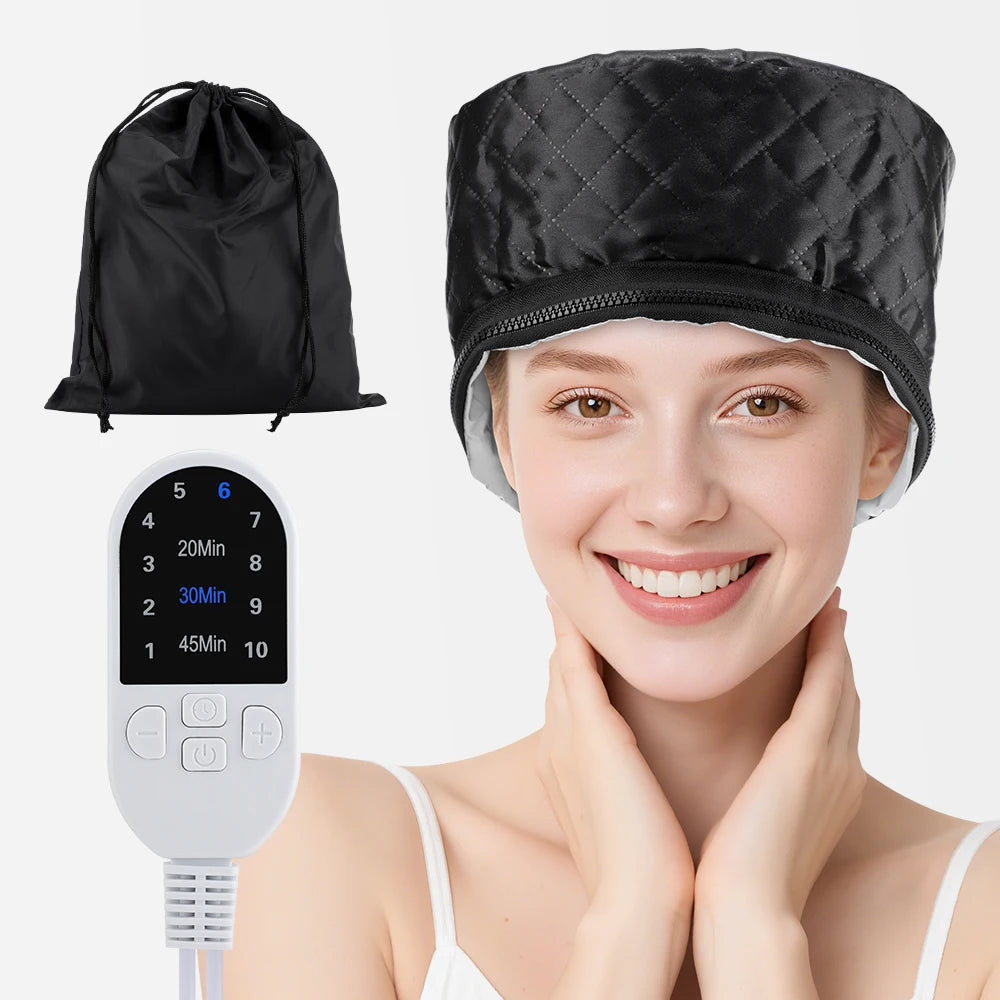
Deep conditioning natural hair without heat for softer curls
How to Deep Condition Without a Steamer
You can achieve salon-level results without a steamer by combining proper application with controlled heat.
- Start with clean, damp hair
- Apply deep conditioner evenly from roots to ends
- Cover with a plastic cap to trap moisture
- Use a heat cap for consistent warmth
- Leave on for 20–30 minutes
- Rinse with cool water to seal the cuticle
Benefits of Using a Heat Cap by Hair Type
Curly and Coily Hair
Benefits the most due to naturally drier structure. Heat improves moisture retention and curl definition.
Low-Porosity Hair
Heat is essential for opening tightly closed cuticles, allowing conditioners to penetrate effectively.
High-Porosity Hair
Absorbs quickly but benefits from shorter sessions to prevent over-softening.
Color-Treated and Damaged Hair
Helps restore elasticity, reduce brittleness, and improve overall hair strength.
How to Use a Heat Cap for Hair (Step-by-Step)
- Wash and towel-dry hair until damp
- Apply deep conditioner thoroughly
- Cover with a plastic cap
- Place the heat cap over your head
- Leave on for 20–30 minutes
- Rinse with cool water
Common mistakes to avoid
- Using excessive heat
- Skipping the plastic barrier layer
- Leaving the cap on too long
- Applying conditioner unevenly
Electric Heat Cap vs Microwave Heat Cap vs Hair Steamer
- Electric heat cap: Consistent, adjustable heat for reliable results
- Microwave heat cap: Convenient but loses heat over time
- Hair steamer: Uses moist heat but less portable
Electric and temperature-controlled caps offer the most consistent and effective performance for regular use.
What Temperature and Session Length Work Best?
- Temperature: Warm, not hot (around 40–45°C / 104–113°F)
- Duration: 20–30 minutes per session
- Frequency: 1–2 times per week
- Tip: Use a temperature controlled hair cap to avoid overheating
Hair Treatment Cap Effectiveness: What Results Can You Expect?
Results vary based on consistency and hair type, but most users notice improvements quickly.
- Softer hair after the first use
- Improved moisture balance within 2–3 sessions
- Reduced breakage over time
- Better curl definition and manageability
Consistency is key—results build over multiple treatments.
Is a Heat Cap Good for Hair? Safety and Best Practices
- Use moderate heat only
- Limit sessions to 20–30 minutes
- Always use with conditioner
- Avoid daily use
- Choose a temperature controlled model for safety
Heat caps are safe when used correctly, but excessive heat or overuse can lead to dryness.
Frequently Asked Questions
What are the main heat cap for hair benefits?
They improve moisture absorption, enhance softness, reduce breakage, and deliver salon-like deep conditioning results at home.
How does a heated hair cap improve deep conditioning?
It uses gentle heat to open the hair cuticle, allowing conditioners to penetrate deeper into the hair shaft.
Is a heat cap good for all hair types?
Yes, but it is especially beneficial for dry, curly, and low-porosity hair.
How often should you use a deep conditioning heat cap?
1–2 times per week is ideal depending on your hair’s needs.
What temperature is safest for a heat cap?
Warm, controlled heat—never hot. Around 40–45°C is generally safe.
Does a smart heat cap work better than a standard model?
Yes, because it maintains consistent temperature, improving safety and results.
What is the difference between an electric heat cap and a microwave heat cap?
Electric caps provide steady heat, while microwave caps gradually lose warmth.
Can a heat cap replace a hair steamer?
Yes, for most at-home routines, a heat cap offers similar benefits with greater convenience.
Related Guide: Best Hair Steamer Cap Home: Top Picks Compared