

Using Vibration for Menstrual Discomfort: Does It Help?
Using vibration for menstrual discomfort is an increasingly popular way to make period days feel more manageable. But does gentle vibration actually help with cramps? The short answer is that it may provide comfort for some people, particularly when used as a gentle massage-like sensation around the lower abdomen or waist. However, vibration should be viewed as a comfort strategy rather than a proven treatment for the underlying cause of menstrual pain.
For many people, a practical approach is to combine whichever non-drug comfort methods feel helpful, such as warmth, gentle massage, rest, movement, or a wearable device. The important distinction is between reducing the experience of discomfort and treating a condition that may be causing significant pelvic pain.
Can Vibration Help With Menstrual Discomfort?
Gentle vibration may help some people feel more comfortable during menstruation by providing soothing sensory stimulation and a massage-like sensation. The evidence specifically supporting ordinary mechanical vibration for period cramps is limited, so it is more accurate to describe it as a potentially useful comfort tool than as an established treatment for dysmenorrhea.
That distinction matters. Primary dysmenorrhea refers to menstrual pain without another identifiable pelvic condition, while secondary dysmenorrhea can be associated with conditions such as endometriosis, adenomyosis, fibroids, or pelvic inflammatory disease. A vibrating device cannot determine which type of pain you have or address an underlying gynecological condition.
What the Current Evidence Suggests
Research on non-drug approaches to menstrual pain includes several forms of physical stimulation, but they are not interchangeable. For example, TENS uses electrical nerve stimulation through electrodes and has some evidence suggesting it may reduce primary dysmenorrhea pain. That does not mean the same evidence can automatically be applied to a mechanical vibrating massage device.
For that reason, a responsible approach is to keep expectations realistic: gentle vibration may feel soothing, may help you relax, and may make discomfort easier to tolerate, but it should not be presented as a clinically proven way to stop uterine contractions or cure menstrual cramps.
Vibration vs. Treatment of the Underlying Cause
Period pain commonly involves cramping in the lower abdomen and may radiate toward the lower back or thighs. If your symptoms are unusually severe, increasingly painful, persistent, or disruptive to everyday life, comfort measures alone may not be enough.
In particular, recurring pain that interferes with work, school, sleep, sex, exercise, or normal activities deserves medical attention. Conditions such as endometriosis can cause substantial menstrual and pelvic pain and require appropriate evaluation rather than increasingly intense self-massage or heat.
How Gentle Vibration Massage May Relieve Period Discomfort
The exact reason vibration feels helpful can vary from person to person. A gentle vibrating sensation does not need to eliminate the source of cramping to be useful. Like other forms of massage or sensory stimulation, it can provide an alternative sensation that some people find relaxing or comforting.
Gentle Sensory Stimulation and Muscle Relaxation
When you are experiencing abdominal discomfort, you may naturally tense the muscles around your abdomen, hips, or lower back. Gentle massage-like stimulation can feel relaxing and may make that tension easier to manage.
The goal should not be maximum intensity. Stronger vibration is not automatically better. If a low or moderate setting feels pleasant, there is little reason to increase the intensity simply because you want a stronger effect.
Vibration and the Experience of Cramping
Menstrual cramps are associated with contractions of the uterus during menstruation. A vibration device applied externally does not directly control those contractions. Instead, any benefit is better understood as comfort support around the experience of cramping.
This is why individual response matters. One person may prefer steady warmth, another may prefer gentle vibration, and another may find that combining the two feels most comfortable.
Why Individual Response Can Vary
Sensitivity, timing, vibration intensity, body position, and the location of discomfort can all influence how a person responds. A setting that feels soothing on the first day of a period might feel unnecessary or uncomfortable later in the cycle.
Think of vibration as an adjustable comfort option rather than a therapy that needs to reach a particular intensity to work.
How to Use Vibration for Menstrual Discomfort
If you want to try vibration for menstrual discomfort, start conservatively. External, gentle use around the lower abdomen or waist is generally the most appropriate approach for a wearable menstrual comfort device. Always follow the specific manufacturer's instructions for placement, operating time, charging, and temperature.
Start With a Gentle Setting
Begin with the lowest comfortable vibration intensity. Give yourself time to decide whether the sensation feels soothing rather than assuming you need a stronger setting.
If vibration feels unpleasant, increases cramping, causes irritation, or simply does not help, turn it down or stop using it. Comfort is the objective, not intensity.
Where to Apply Vibration
For a menstrual heating belt designed for the abdomen and waist, position it externally where the manufacturer indicates. Avoid pressing the device tightly against a painful area simply to increase the sensation.
Keep the device on intact skin and pay attention to unusual sensations such as burning, numbness, significant irritation, dizziness, or worsening pain.
How Long to Use a Vibrating Massager
Short, comfortable sessions are a sensible starting point. There is no universally established vibration duration that guarantees menstrual pain relief, so follow the device's timer and instructions rather than assuming that longer use is more effective.
A built-in timer can be particularly useful because it creates a defined session rather than encouraging continuous use while you are distracted by work, reading, travel, or rest.
Stop If It Makes Symptoms Worse
Stop using the device if it makes your symptoms worse or causes unusual discomfort. The same principle applies to heat: a comfort device should feel soothing, not painfully hot or irritating.
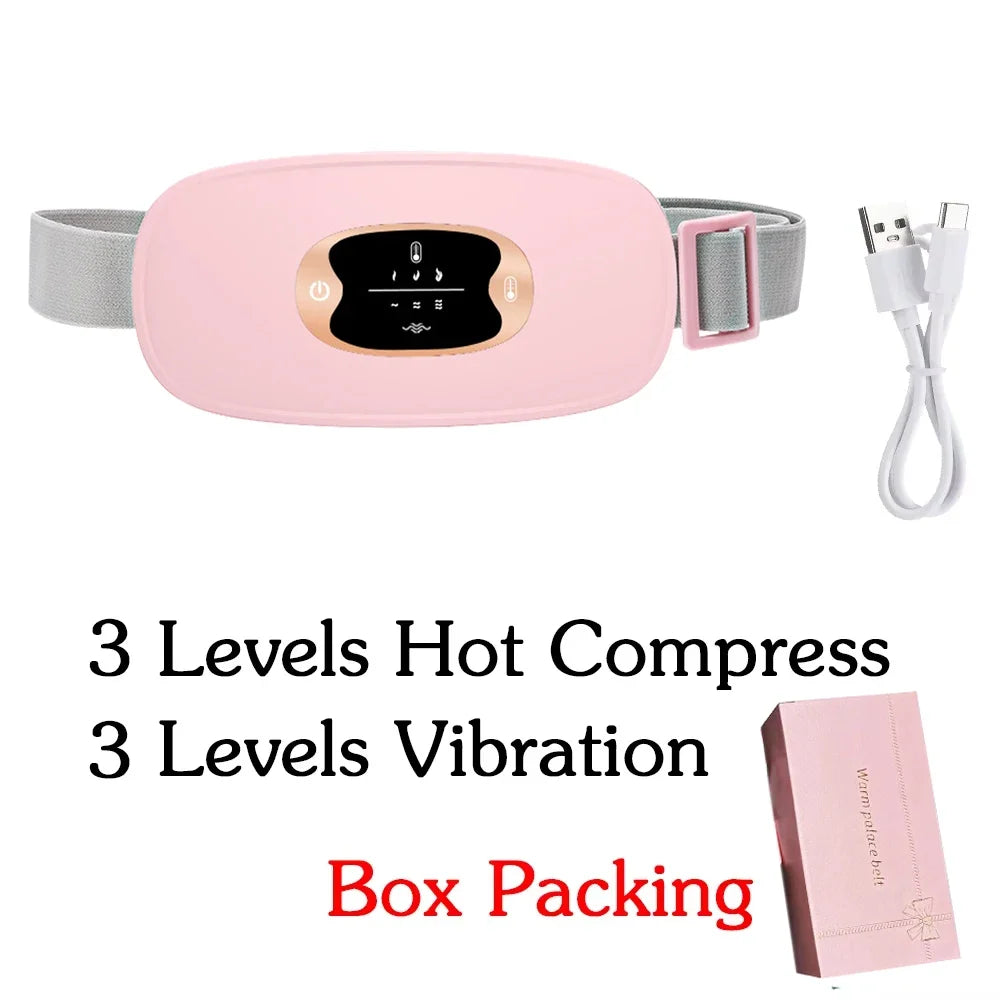
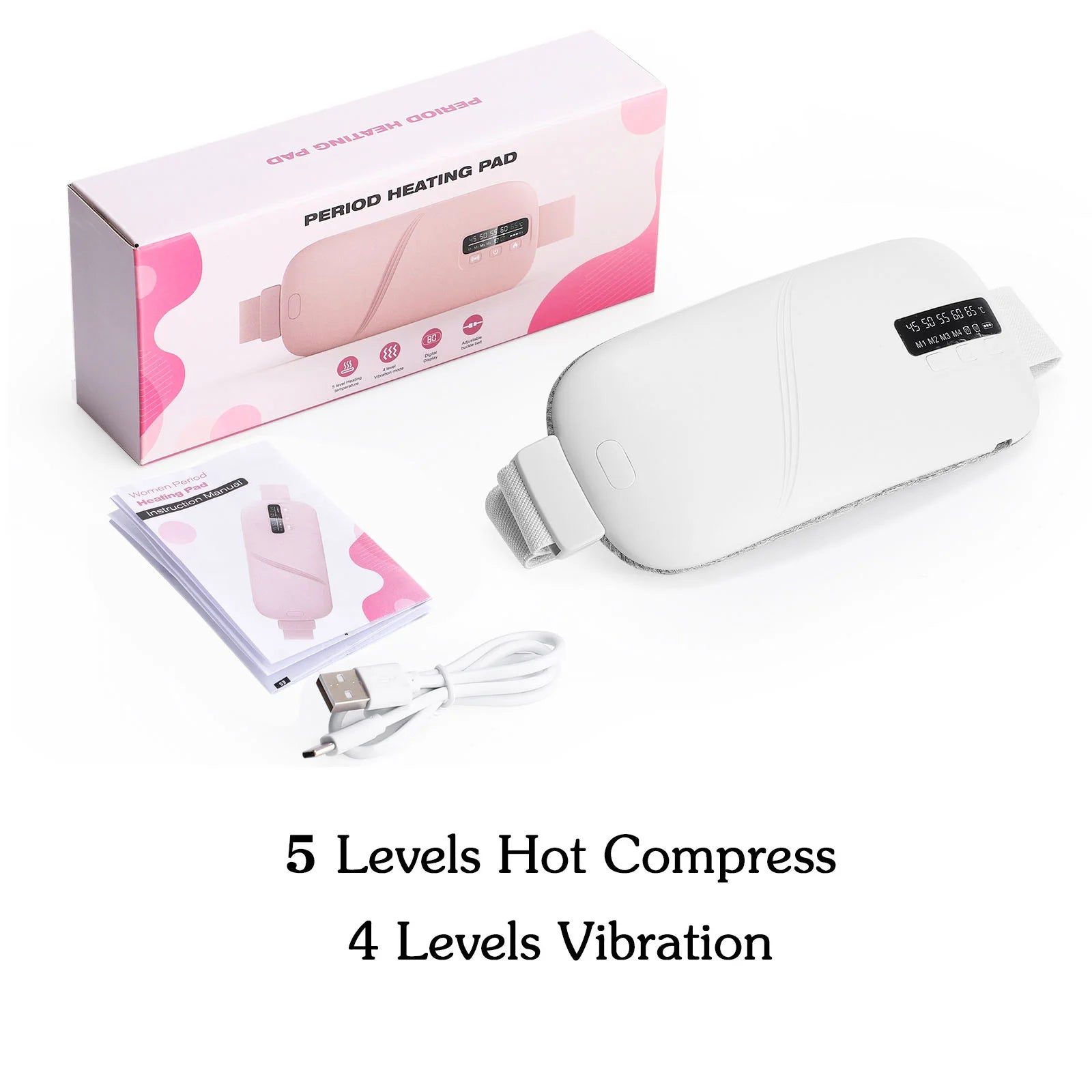
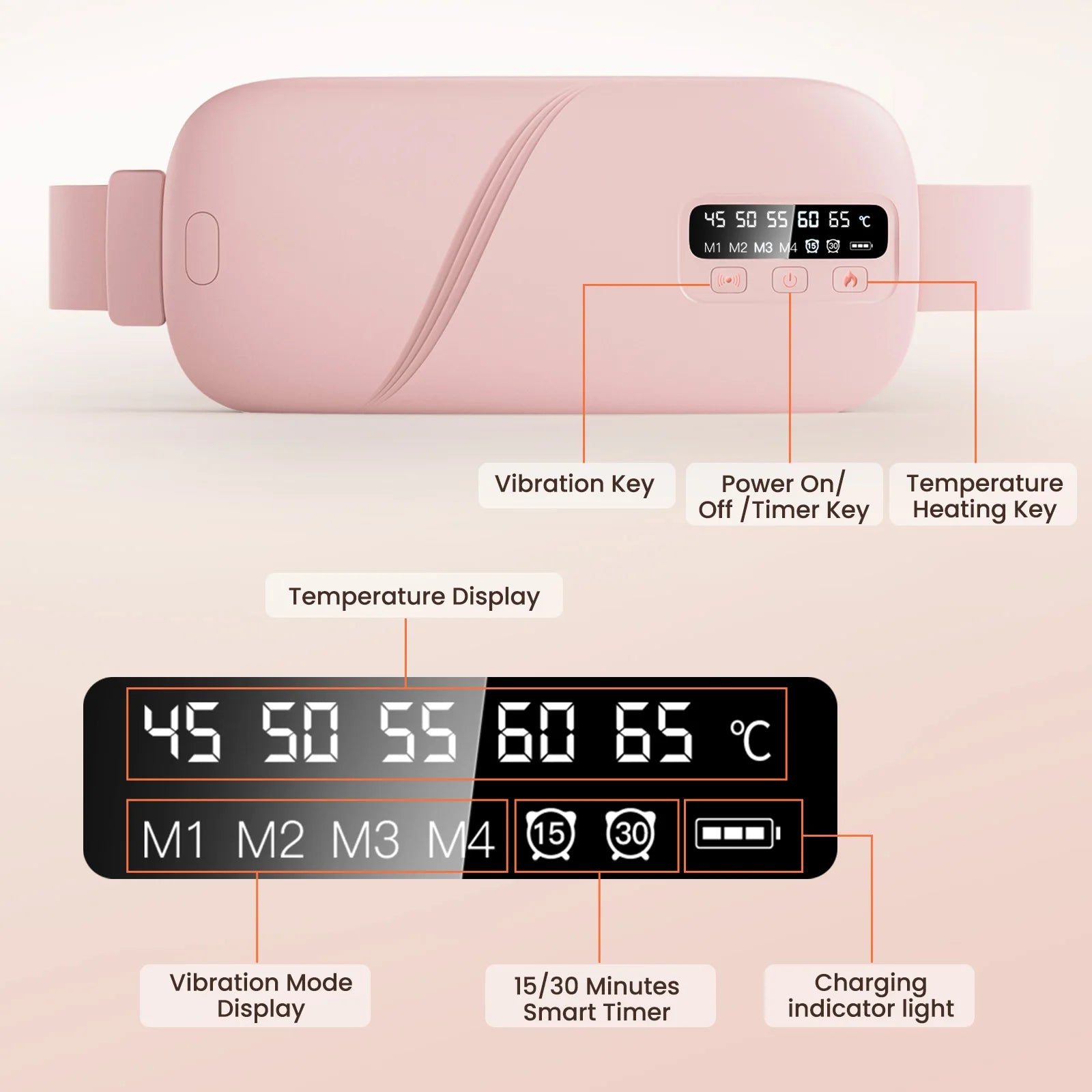
For people who want a cordless option that combines these features, the rechargeable menstrual heating pad with gentle vibration offers adjustable warmth, selectable vibration intensity, 15- or 30-minute automatic sessions, and cordless operation.
Its 1800mAh rechargeable battery and USB Type-C charging are designed for portable use, while the soft velvet cotton and ABS construction provide an external abdominal-and-waist format. These are convenience features, not guarantees of medical pain relief.
If you are interested in other body-care devices designed for practical at-home comfort, you can also explore Body Care and Health Devices for related wellness tools.
Vibration vs. Heat for Menstrual Cramps
Heat and vibration serve different comfort preferences. Heat is one of the most familiar non-drug approaches for period discomfort, while vibration adds a massage-like sensory component. Neither needs to be treated as universally superior.
- Heat: Useful when warmth itself feels soothing and when abdominal or lower-back discomfort responds well to gentle warmth.
- Vibration: Useful when you prefer massage-like sensory stimulation or want an additional comfort feature.
- Manual massage: Useful when you want complete control over pressure, location, and rhythm.
- Heat plus vibration: Convenient when you want both sensations in one device, provided each feature is used according to the manufacturer's instructions.
When Heat May Be the Better Choice
If your primary preference is warmth, a traditional heating pad or warm compress may be sufficient. Heat can also be easier to use when you want a simple, passive comfort method while resting.
A heat-based approach may be especially appealing when lower-abdominal warmth is what feels most soothing. Avoid excessive temperatures or prolonged direct skin exposure, particularly when you are distracted or sleeping.
When Vibration May Be More Convenient
Vibration can be attractive when you enjoy massage-like stimulation or want something wearable rather than manually massaging the abdomen. Cordless operation can also be useful during work, reading, relaxing, or travel.
For someone who frequently experiences period cramps away from a wall outlet, a rechargeable belt can provide a practical alternative to a traditional plug-in heating pad.
Can You Combine Heat and Vibration?
Some menstrual comfort devices combine both features. Combining them may be convenient because you can choose warmth, vibration, or both according to your preference.
However, combined features should not be interpreted as proof that the device will provide greater medical pain relief. Use the lowest comfortable heat level, follow the device's temperature and timer instructions, and stop if the sensation becomes uncomfortable.
Vibration vs. Manual Massage for Period Discomfort
Manual massage and automated vibration can both fit into a menstrual comfort routine, but they solve slightly different practical problems.
- Manual massage: Gives you direct control over pressure, location, rhythm, and duration. It requires active participation but can be adjusted instantly.
- Gentle vibration: Provides a consistent sensation without requiring continuous hand movement. It can be useful when you want to relax, work, read, or rest.
- Best choice: The option that feels comfortable and fits naturally into your routine is usually more practical than choosing based on intensity alone.
For more general self-care ideas and wellness content, the Beauty & Self-Care Blog can complement a broader personal comfort routine.
Choosing a Vibration Device for Menstrual Discomfort
If you are considering a vibration-based menstrual comfort device, focus on practical features rather than marketing promises. A useful device should make comfortable use easier, not encourage you to tolerate increasingly intense sensations.
Adjustable Vibration Intensity
Multiple intensity levels allow you to adapt the sensation to your preferences. This is particularly useful because abdominal sensitivity can vary throughout a menstrual cycle.
Body Fit and Placement
A wearable device should sit comfortably and remain stable during ordinary movement. Look for a design intended for external abdominal or waist use, with materials and construction that feel comfortable against the skin.
Battery Life and Portability
Cordless operation can make a significant difference if you experience menstrual discomfort while working, studying, traveling, or moving between rooms. Rechargeable designs also eliminate the need to remain next to an electrical outlet during a session.
Heat and Vibration Combination Features
A combination device may be useful if you like both warmth and massage-like stimulation. The important buying question is whether each feature can be adjusted comfortably and whether the device includes practical controls such as a timer.
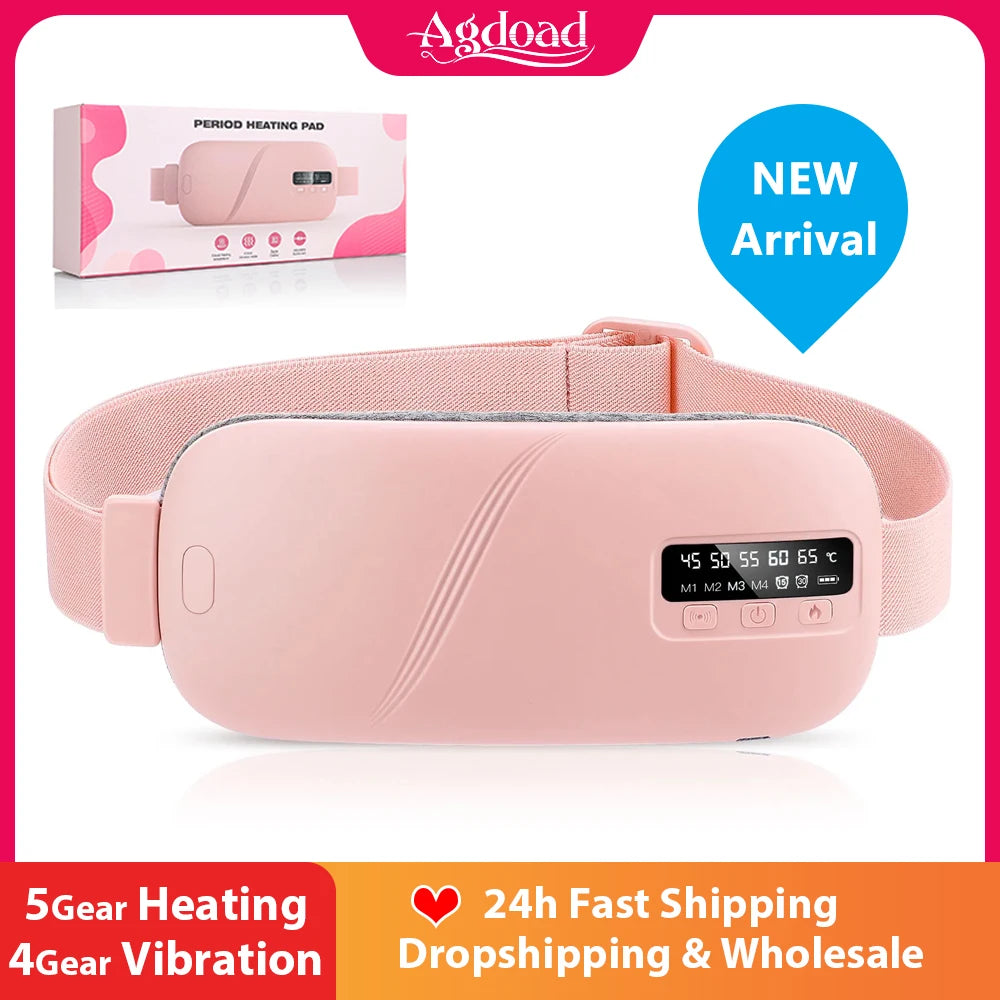
For example, the Menstrual Heating Pad for Period Relief & Soothing Heat Belt combines adjustable heat, selectable vibration intensity, automatic 15- or 30-minute sessions, and rechargeable cordless operation. Its listed heat capability is up to 65°C depending on model, so temperature selection and the manufacturer's usage instructions matter.
For a quick decision framework, consider these four questions:
- Do I prefer warmth, vibration, or both? Choose features based on the sensation you actually find comfortable.
- Will I use it away from home? If so, rechargeable cordless operation can be more practical than a plug-in design.
- Can I control intensity and duration? Adjustable settings and an automatic timer make conservative use easier.
- Is the device designed for external abdominal or waist use? Follow the manufacturer's intended placement rather than improvising.
If portability and everyday wellness are important to you, the Lifestyle collection is another relevant place to explore practical personal-use devices.
When Menstrual Pain May Need Medical Evaluation
Self-care can be reasonable for ordinary menstrual discomfort, but there is an important boundary: persistent, severe, unusual, or increasingly disruptive pain should not simply be managed with stronger heat or vibration.
Signs Your Pain May Not Be Typical Period Cramps
Consider medical evaluation if your period pain is becoming progressively worse, is significantly affecting normal activities, or is accompanied by symptoms that are unusual for you. Pain during sex, pain with urination or bowel movements, bleeding between periods, substantially heavier or irregular periods, or persistent pelvic symptoms are also reasons to discuss your symptoms with a healthcare professional.
Possible Conditions Behind Significant Pelvic Pain
Menstrual pain can sometimes be associated with conditions such as endometriosis, adenomyosis, fibroids, or pelvic inflammatory disease. These conditions require assessment based on your symptoms and medical history.
Using a heating belt or vibrating massager may provide temporary comfort, but it cannot establish whether one of these conditions is present.
When to Stop Self-Care and Seek Medical Advice
Seek prompt medical attention for severe or rapidly worsening pelvic pain, fainting or significant dizziness, heavy vaginal bleeding, fever, unusual vaginal discharge, vomiting with significant pelvic pain, or pelvic pain when pregnancy is possible. If menstrual pain is repeatedly preventing normal daily activities, make an appointment rather than continually escalating home treatments.
Building a Practical Menstrual Pain Management Routine
The most useful menstrual comfort routine is usually the one you can apply consistently and safely. Instead of relying on a single device or technique, consider how different approaches fit different moments of the day.
Use the Least Intense Option That Feels Helpful
Start with gentle warmth, low-intensity vibration, light manual massage, rest, or another comfortable approach. Increase intensity only when the sensation remains pleasant and appropriate.
More heat or stronger vibration does not necessarily mean greater relief. Discomfort, skin irritation, numbness, dizziness, or worsening pain are signals to stop rather than push through.
Track What Actually Helps
A simple symptom diary can reveal useful patterns. Note when cramps begin, where the discomfort occurs, how severe it feels, how long it lasts, and which strategies seem helpful.
You may discover that warmth works best at the beginning of your period, vibration feels more useful while working, or manual massage helps when lower-back tension accompanies abdominal cramps.
Know When Self-Care Is Not Enough
Self-care should support your comfort, not prevent you from seeking appropriate medical care. If your symptoms are severe, worsening, persistent, or interfering substantially with your life, professional evaluation is more important than finding a stronger vibration setting.
Final Takeaway: Is Using Vibration for Menstrual Discomfort Worth Trying?
Using vibration for menstrual discomfort may be worth trying if you enjoy gentle massage-like stimulation and want a convenient, non-drug comfort option. The strongest way to frame it is as symptom support: vibration may feel soothing for some people, but evidence for ordinary mechanical vibration specifically treating menstrual cramps remains limited.
Heat remains a familiar option for period discomfort, while manual massage offers precise control over pressure and location. A device that combines gentle vibration with adjustable heat can provide additional convenience when you want both sensations without staying connected to a wall outlet.
The key is to prioritize comfort over intensity, use external devices according to their instructions, and pay attention to how your body responds. If menstrual or pelvic pain becomes severe, unusual, persistent, or disruptive to your everyday life, do not rely on a comfort device alone.
If a rechargeable approach fits your routine, you can take a closer look at the cordless menstrual heating belt with adjustable heat and gentle vibration as one practical option for home, work, rest, or travel.
For broader body-care and wellness ideas, you can also browse the Body & Face Blog and build a self-care routine around the approaches that genuinely make you more comfortable.
Pillar Article: Best Heated Abdominal Belt for Women: Top Picks for Comfort













