

Waist Clip Fans Compared: Best Hands-Free Options for 2026
Waist clip fans are built for one simple problem: staying cooler without holding a fan. Whether you are working outdoors, walking in summer heat, exercising, commuting, or traveling, a wearable fan can keep personal airflow close to your body while leaving both hands available. But the best waist clip fan is not necessarily the model with the biggest airflow number. Clip stability, battery capacity, speed control, weight, charging, noise, and clothing compatibility can matter just as much.
This comparison focuses on the features that make a waist clip fan practical in real-world use, including outdoor work, hot-weather activities, travel, and everyday hands-free cooling.
Waist Clip Fans Compared: Quick Picks for 2026
Best Waist Clip Fan for Overall Hands-Free Use
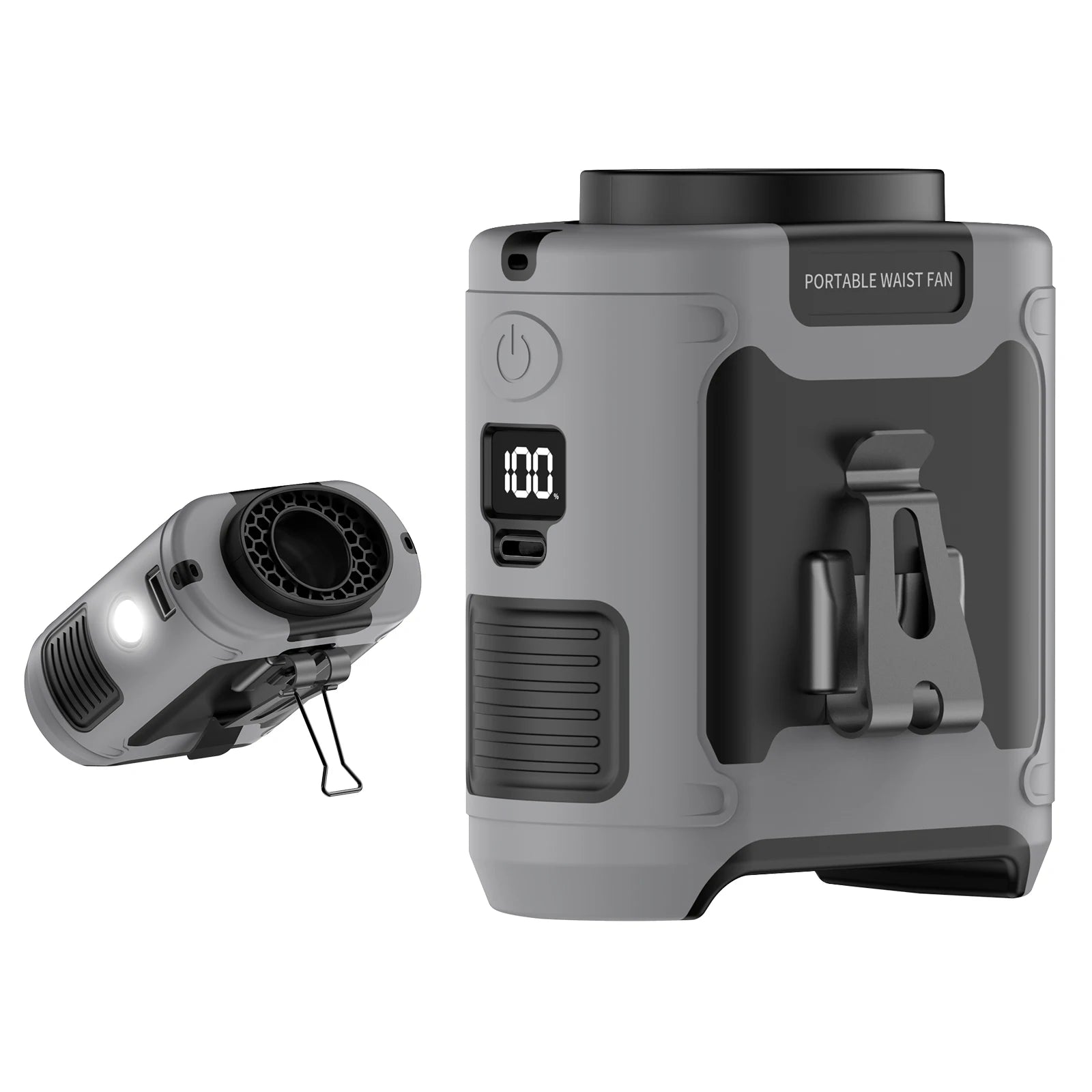
The KentDO Waist Fan Portable Cooling Device is a strong all-around option when the priority is hands-free personal airflow. It combines a waist-buckle design, 16,000 RPM brushless motor, 10 speed levels, USB Type-C charging, and an LED digital display. The clip can be positioned at the front, back, or side of the waist, allowing users to adjust where airflow is directed.
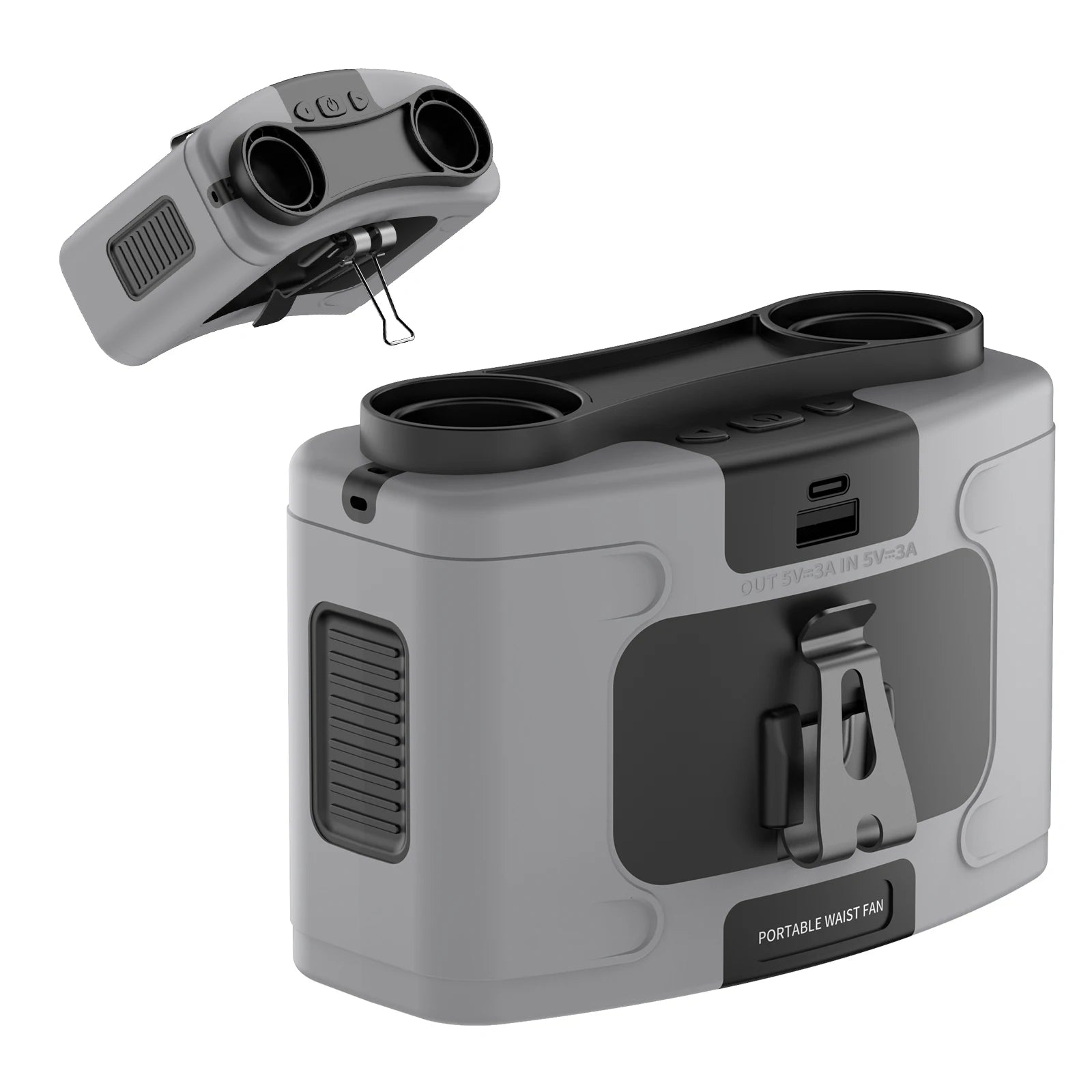
For shoppers comparing waist clip fans, these features make it particularly relevant for people who want stronger adjustable airflow without carrying a handheld fan. Product details and current availability are provided at: https://kentdohealthybeauty.com/products/waist-fan-portable-cooling-device
Best Waist Clip Fan for Work
For outdoor work, prioritize a secure attachment, adjustable airflow, adequate battery capacity, and controls that are easy to check while working. A waist-mounted design can be especially useful when both hands are occupied with tools, equipment, deliveries, gardening, construction tasks, or other physical work.
Best Waist Clip Fan for Outdoor Activities
Outdoor users should prioritize movement stability and airflow control. A fan that stays attached while walking or performing light activity is generally more useful than one that looks powerful but shifts position easily. The KentDO model offers 10 speed settings and a clip that can be placed at different waist positions, providing flexibility as activity and airflow needs change.
Best Compact Option for Travel
For travel, look for a rechargeable design that avoids disposable batteries and uses a widely supported charging connection. USB Type-C charging is useful for travelers who already carry compatible charging equipment for other electronics.
Waist Clip Fan Comparison Matrix
Instead of judging waist clip fans by a single specification, compare them across the factors that affect everyday use:
- Attachment: A dedicated waist clip or buckle should remain practical against the clothing you actually wear.
- Airflow: More speed settings give you greater control over personal airflow.
- Motor: A brushless motor can be an attractive specification for shoppers prioritizing motor design and efficiency.
- Battery: Higher mAh capacity generally provides more stored energy, although actual runtime depends on power consumption and operating conditions.
- Charging: USB Type-C makes rechargeable operation convenient for everyday carry and travel.
- Display: A digital display can make remaining power and operating speed easier to monitor.
- Weight: A wearable fan should remain comfortable when attached for extended periods.
- Movement: Outdoor workers and active users should place extra emphasis on clip stability.
- Noise: Quiet environments require more attention to operating sound than outdoor environments.
- Clothing compatibility: Thin shirts, belts, waistbands, and heavier workwear can interact differently with a clip.
What the Specs Mean in Real-World Use
A 16,000 RPM motor specification tells you about motor speed, but it does not by itself establish exactly how much cooling a user will feel. Airflow depends on the fan's design, operating speed, positioning, and surrounding conditions. Similarly, battery capacity is useful for comparing models, but actual runtime changes with the selected speed and power draw.
That is why a practical waist clip fan comparison should consider the complete system rather than treating one impressive number as the deciding factor.
What Is a Waist Clip Fan?
A waist clip fan is a personal cooling device designed to attach to clothing, a waistband, or another suitable position around the waist. Unlike a conventional portable fan that must be held or placed on a surface, the waist-mounted format is designed to provide airflow while leaving your hands free.
This makes waist clip fans particularly relevant to outdoor workers, commuters, travelers, walkers, athletes, gardeners, event staff, and anyone who spends time outside in hot weather.
Waist Clip Fan vs. Wearable Fan
“Wearable fan” is a broad category that can include waist fans, neck fans, belt-mounted fans, and other body-mounted cooling devices. A waist clip fan specifically emphasizes attachment around the waist rather than around the neck or shoulders.
The waist position can also change the airflow experience. Instead of directing air primarily toward the face or neck, the fan can provide airflow around the torso or lower body depending on its position and orientation.
Waist Clip Fan vs. Belt-Mounted Fan
The terms are sometimes used interchangeably, but attachment design matters. Some fans use a conventional clip, while others use a buckle or more integrated belt attachment. If you regularly wear thick workwear, a tool belt, or layered clothing, check how the attachment mechanism is intended to fit before purchasing.
Waist Clip Fan vs. Handheld Fan
The biggest difference is hands-free operation. A handheld fan gives you direct control over where the airflow goes, but you must keep holding it. A waist clip fan trades some of that immediate aiming flexibility for convenience while walking, working, carrying equipment, or exercising.
How We Evaluate Waist Clip Fans
1. Clip Security and Stability
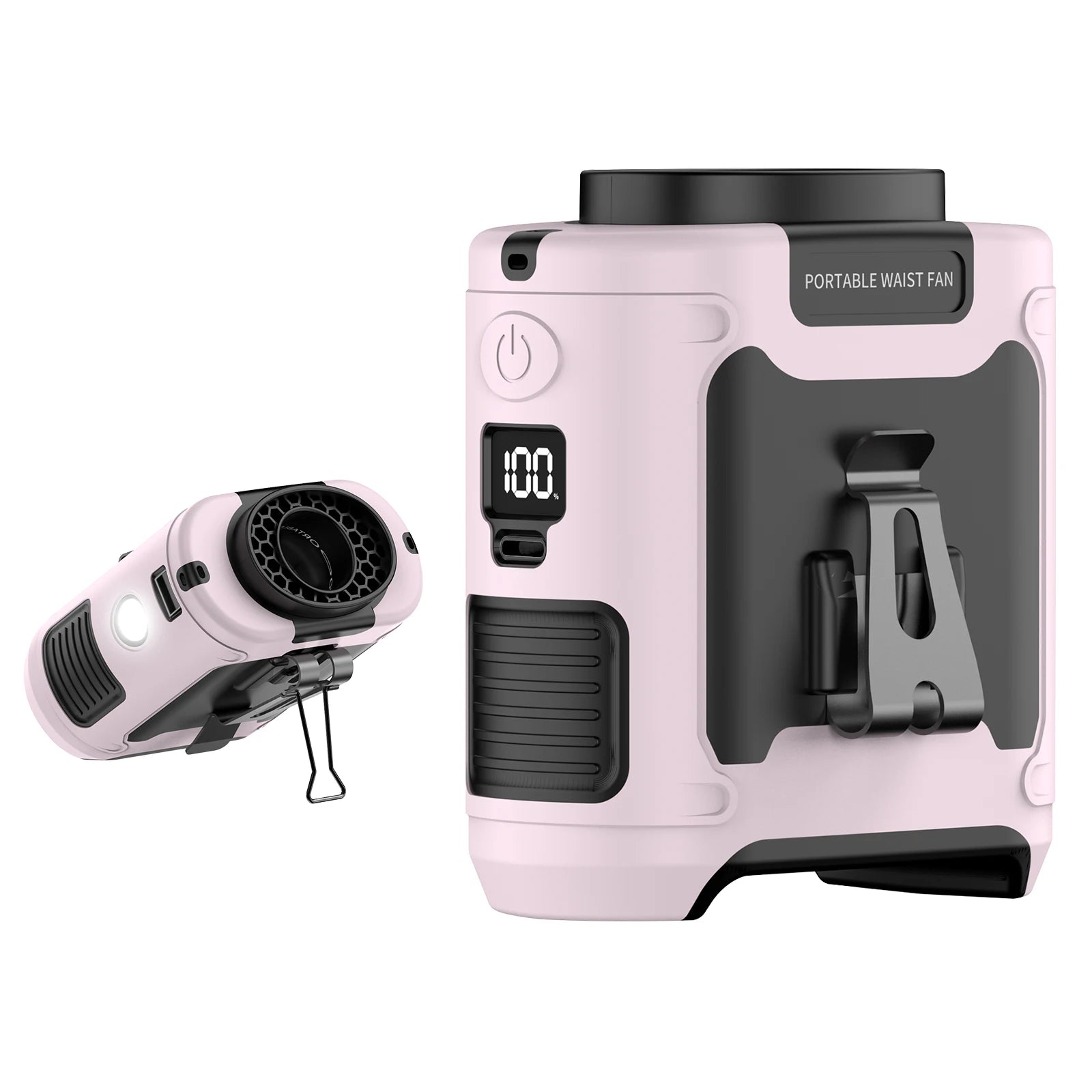
For a wearable fan, attachment is one of the most important factors. The clip should suit the material and thickness of the clothing where it will be attached. During walking or physical work, movement can place more stress on the attachment point than standing still.
When comparing models, look beyond the phrase “strong clip.” Consider whether the design fits your waistband, belt, pocket, or work clothing and whether the fan can stay in a useful position while you move.
2. Airflow and Direction
Multiple speed settings are valuable because outdoor conditions are not constant. A lower setting may be sufficient during a mild commute, while a higher setting can provide stronger personal airflow during demanding outdoor activity.
The ability to reposition the fan at the front, side, or back is also important because airflow needs differ by activity and clothing.
3. Battery Runtime and Charging
Battery capacity should be evaluated alongside intended use. A short commute and a full outdoor work shift have very different energy requirements. The KentDO waist fan is available with a rechargeable 10,000mAh or 20,000mAh battery option and uses 5V USB Type-C charging.
Do not assume that a larger mAh rating automatically translates into a specific number of operating hours. Fan speed, motor power, battery condition, and other operating variables affect actual runtime.
4. Noise
Noise becomes more important indoors than outdoors. A fan that is perfectly acceptable on a job site may be more noticeable in an office, classroom, quiet commute, or conversation.
When manufacturers do not provide a standardized noise measurement, avoid treating subjective descriptions such as “quiet” as equivalent to a laboratory-tested decibel rating.
5. Weight and Comfort
A wearable cooling device adds weight to the place where it is attached. For short periods, this may be barely noticeable. For long workdays, walking sessions, or travel, weight distribution and attachment position become more important.
6. Clothing Compatibility
Thin summer clothing can behave differently from thick workwear. A clip that works well on a sturdy waistband may feel different when attached to lightweight fabric. Consider where you normally intend to wear the fan before choosing a model.
7. Portability and Durability
For daily carry, look for a compact housing, rechargeable battery, accessible controls, and a construction suited to repeated handling. A wearable fan is most useful when it is convenient enough to bring along whenever hot weather is expected.
Key Features That Matter Most in a Waist Clip Fan
Strong Clip Design
A secure attachment is more important than an attractive exterior. The fan should remain positioned where airflow is useful without requiring constant adjustment. If you plan to wear it during movement, clip stability should be one of your first purchase criteria.
Airflow Levels and Directional Control
Ten speed levels, such as those offered by the KentDO model, allow more incremental adjustment than a simple low-medium-high control scheme. This can be useful when moving between shaded and exposed areas or between light and demanding activities.
Battery Capacity and Runtime
Battery capacity is commonly expressed in milliamp-hours, or mAh. The KentDO fan is offered with 10,000mAh and 20,000mAh rechargeable battery options. The larger capacity can be attractive to users who prioritize extended use, but actual operating time depends on the selected airflow level and power demand.
USB-C Charging
USB Type-C charging is a practical feature for people who want one rechargeable cooling device for work, travel, commuting, and summer activities. It also eliminates the need to carry disposable batteries.
Motor Type and Noise
The KentDO model uses a high-speed brushless motor rated at 16,000 RPM. Brushless motor construction can be a useful consideration when comparing motor technology, but RPM should not be treated as a direct measurement of the amount of cooling a user will experience.
Weight and Wearability
A waist fan works best when it fits naturally into your routine. If the device is uncomfortable, unstable, or inconvenient to recharge, even strong airflow becomes less valuable. Match the fan's size and attachment method to the amount of time you expect to wear it.
Best Waist Clip Fan for Different Use Cases
For Office and Indoor Work
Prioritize noise, compactness, stable attachment, and comfortable long-duration use. Indoor users generally have less need for maximum airflow than someone working outside in direct heat, so controllable speed can be more useful than simply choosing the highest advertised motor speed.
For Walking and Commuting
Commuters need a balance of stability, weight, airflow, and battery capacity. A waist fan can be useful when carrying a bag, holding a phone, navigating public transportation, or simply walking without wanting one more object in your hand.
For Outdoor Work and Activities
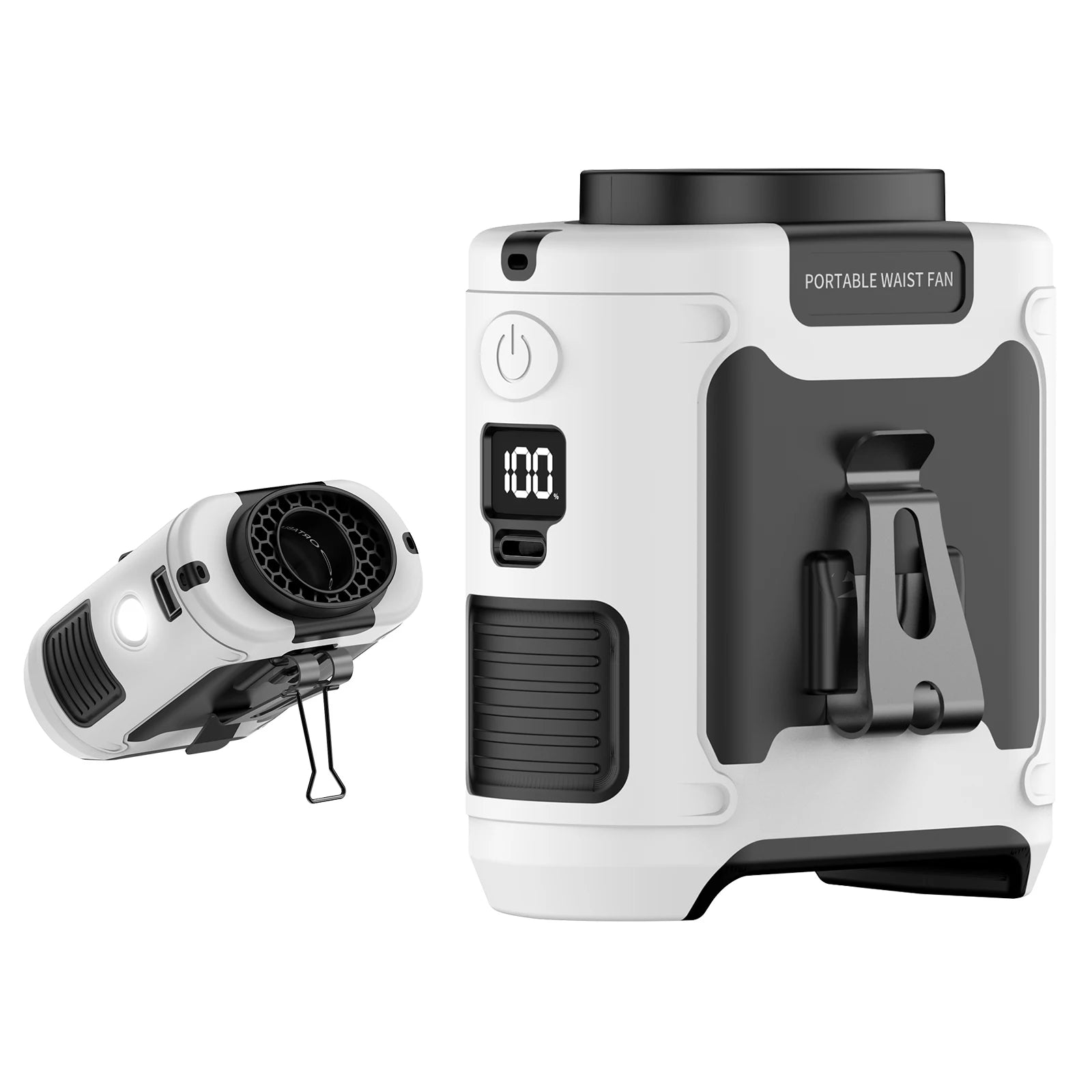
Outdoor workers should emphasize clip security, airflow control, battery capacity, and practical durability. The KentDO waist fan's wearable buckle design and 10-speed adjustment make it a relevant option for users who need personal airflow while keeping their hands available for work.
For more personal-care and everyday-use devices, explore the Body Care and Health Devices collection: https://kentdohealthybeauty.com/collections/body-care-and-health-devices-1
For Travel
Travelers should prioritize rechargeable operation, compactness, manageable weight, and USB-C charging. A waist clip fan can be especially convenient during outdoor sightseeing, waiting in lines, walking between destinations, or spending time in warm environments.
For Hot-Weather Daily Carry
The best everyday combination is usually balanced rather than extreme: reliable attachment, adjustable airflow, adequate battery capacity, easy charging, and comfortable wearability. Those characteristics make a fan more likely to become part of a regular summer routine.
For additional everyday lifestyle products, the Lifestyle collection is another relevant category: https://kentdohealthybeauty.com/collections/lifestyle
Waist Clip Fan Pros and Cons
Advantages of Waist Clip Fans
- Hands-free cooling: Both hands remain available for work, exercise, travel, or carrying items.
- Targeted personal airflow: Airflow stays close to the wearer instead of requiring a stationary fan.
- Portable design: A wearable fan can travel with you rather than staying on a desk or table.
- Adjustable airflow: Multiple speed levels allow users to adapt cooling to changing conditions.
- Rechargeable operation: USB Type-C charging is convenient for regular use.
- Flexible positioning: Waist-mounted designs can often be positioned at the front, side, or back.
Limitations to Consider
- Localized cooling: A waist fan provides personal airflow rather than cooling an entire room or outdoor area.
- Clip compatibility: Very thin, slippery, or unusually thick clothing may not work equally well with every attachment design.
- Battery dependence: Rechargeable models need to be charged before extended use.
- Possible movement: Any clip-on device can shift depending on clothing, activity, and attachment position.
- Operating noise: Even a small fan produces some sound, which may be more noticeable in quiet environments.
- Airflow positioning: Unlike a handheld fan, the airflow direction is constrained by where the device is attached.
How to Choose the Right Waist Clip Fan
Choose Based on Where You Will Clip It
Think about your normal clothing first. If you wear lightweight shorts, athletic clothing, jeans, uniforms, or heavy workwear, choose an attachment system that fits that environment. The ideal placement should keep the fan stable while positioning airflow where you want it.
Choose Based on How Long You Need Cooling
Short errands require less battery capacity than extended outdoor work. If you expect to use a fan for long periods, consider the higher-capacity battery option and build charging into your routine rather than relying on a single claimed runtime figure.
Choose Based on Noise Sensitivity
For offices and other quiet settings, noise deserves a higher priority. For outdoor work, construction areas, sporting events, and busy streets, operating sound may be less significant compared with airflow and attachment stability.
Choose Based on Movement
If you will walk, work, exercise, or perform repetitive physical tasks, prioritize a stable clip and manageable weight. The more you move, the more important attachment becomes.
Choose Based on Charging Convenience
USB Type-C is especially useful when the fan is part of your everyday carry. It makes the device easier to integrate into a travel or work charging routine.
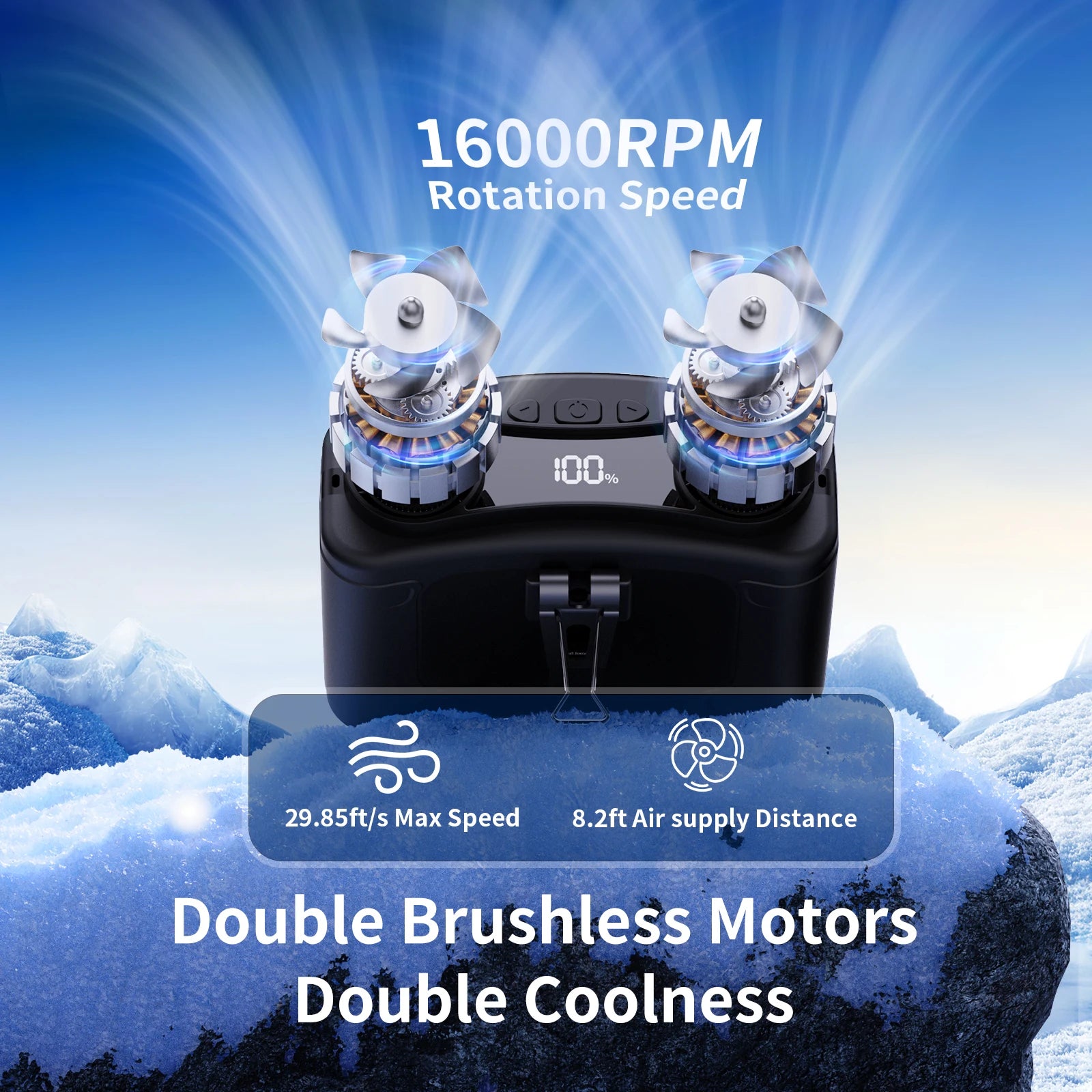
If you want a rechargeable wearable cooling option with a 16,000 RPM brushless motor, 10 speed settings, USB Type-C charging, and a digital display, review the KentDO Waist Fan Portable Cooling Device at https://kentdohealthybeauty.com/products/waist-fan-portable-cooling-device
Waist Clip Fan vs. Other Personal Cooling Options
Waist Clip Fan vs. Handheld Fan
A handheld fan wins when precise aiming is the priority because you can point it exactly where you want. A waist clip fan wins on hands-free convenience. For workers, commuters, travelers, and people carrying equipment, eliminating the need to hold the fan can be a meaningful advantage.
Waist Clip Fan vs. Neck Wearable Fan
A neck fan places the device closer to the head and neck, while a waist fan moves the attachment point toward the torso. Some users may prefer the neck format for face-level airflow, while others may find waist mounting more comfortable or less intrusive during movement.
Waist Clip Fan vs. Traditional Portable Fan
A traditional portable fan can be more versatile when you need airflow in a fixed location, such as a desk, bedside table, or campsite. A waist clip fan is better suited to situations where you are moving and want personal airflow to move with you.
Who Should Buy a Waist Clip Fan?
Best for Hands-Free Cooling
A waist clip fan is a good fit for people who regularly need airflow while their hands are occupied. That includes outdoor workers, gardeners, walkers, commuters, travelers, event workers, recreational athletes, and anyone who spends significant time outside during hot weather.
It is also useful for shoppers specifically looking for an alternative to holding a portable fan. The combination of wearable attachment, adjustable airflow, and rechargeable power addresses the core problem behind searches such as “hands-free cooling for workers” and “best waist fan for outdoors.”
When Another Fan Type May Be Better
A waist fan is not automatically the best cooling device for every situation. Choose a handheld fan when precise aiming is essential. Consider a neck fan when face- and neck-level airflow is the main priority. Choose a traditional portable or stationary fan when you need to cool a desk, room, tent, or other fixed space.
For broader self-care and personal-device content, the Beauty & Self-Care Blog is available here: https://kentdohealthybeauty.com/blogs/beauty-self-care
Final Verdict: What Makes the Best Waist Clip Fan?
The best waist clip fan is the one that fits your actual environment rather than simply offering the biggest specification on the product page. For outdoor workers, clip security, airflow, battery capacity, and movement stability should lead the decision. For commuters and travelers, weight, portability, USB-C charging, and comfortable attachment may matter more. For indoor users, operating noise deserves greater attention.
The KentDO Waist Fan Portable Cooling Device is designed around the core benefits shoppers seek from a hands-free cooling fan: a waist-buckle attachment, 16,000 RPM brushless motor, 10 adjustable speeds, rechargeable 10,000mAh or 20,000mAh battery options, USB Type-C charging, and an LED digital display. Those specifications make it a practical candidate for summer work, outdoor activities, commuting, and everyday personal cooling.
Before buying, focus on five questions: Will the clip work with my clothing? Will it stay positioned while I move? Do I need multiple airflow levels? Is the battery capacity appropriate for my routine? And is the charging method convenient? If the answers line up with your needs, a waist clip fan can be a simple way to add portable, hands-free airflow when hot weather makes outdoor activity less comfortable.
Pillar Article: Best Portable Waist Fan: 2026 Tested Picks for Cooling













