

Wearable Cooling Device Guide: Fans, Neck Coolers & More
A wearable cooling device can make hot-weather work, exercise, commuting, and outdoor activities more comfortable without requiring you to carry a traditional fan. But wearable cooling products are not all designed to cool you in the same way. Some move air across your skin, some use thermoelectric or Peltier cooling against the neck, and others provide broader torso coverage through a cooling vest.
The most important distinction is simple: airflow-based wearable fans create a cooling sensation by moving air across your body, while thermoelectric devices use active cooling at a contact point. Choosing between them depends on where you need cooling, how long you need it, how much weight you can comfortably wear, and whether you need hands-free airflow for work or exercise.
What Is a Wearable Cooling Device?
A wearable cooling device is a portable personal cooling product designed to be worn on the body rather than held or placed on a desk. Common formats include neck fans, waist fans, neck coolers, cooling vests, wrist cooling devices, and hybrid personal cooling products.
Unlike a room air conditioner, a wearable device generally does not lower the temperature of an entire space. Instead, it targets the body or the area immediately around it. That makes wearable cooling especially useful when you are moving between locations or working outside without access to stationary cooling.
Wearable Fans and Airflow Cooling
Wearable fans use a motor and fan blades to move air toward or across the body. Moving air can increase the evaporation of sweat from exposed skin, which can make you feel cooler. The effect depends heavily on the environment: airflow can feel particularly useful when you are hot and active, but very humid conditions can reduce the effectiveness of sweat evaporation.
The major advantage is versatility. A fan can continue supplying airflow while you walk, work, exercise, travel, or perform tasks that require both hands.
Neck Coolers and Thermoelectric Cooling
Neck coolers commonly use thermoelectric, or Peltier, technology to create a cooled contact surface around the neck. Rather than relying primarily on moving air, they transfer heat away from the contact area.
This creates a different type of cooling sensation from a fan. It is more localized and does not depend on blowing air across your skin in the same way. However, thermoelectric systems can consume substantial battery power, and their performance, comfort, and heat-management requirements vary by design.
Other Wearable Cooling Formats
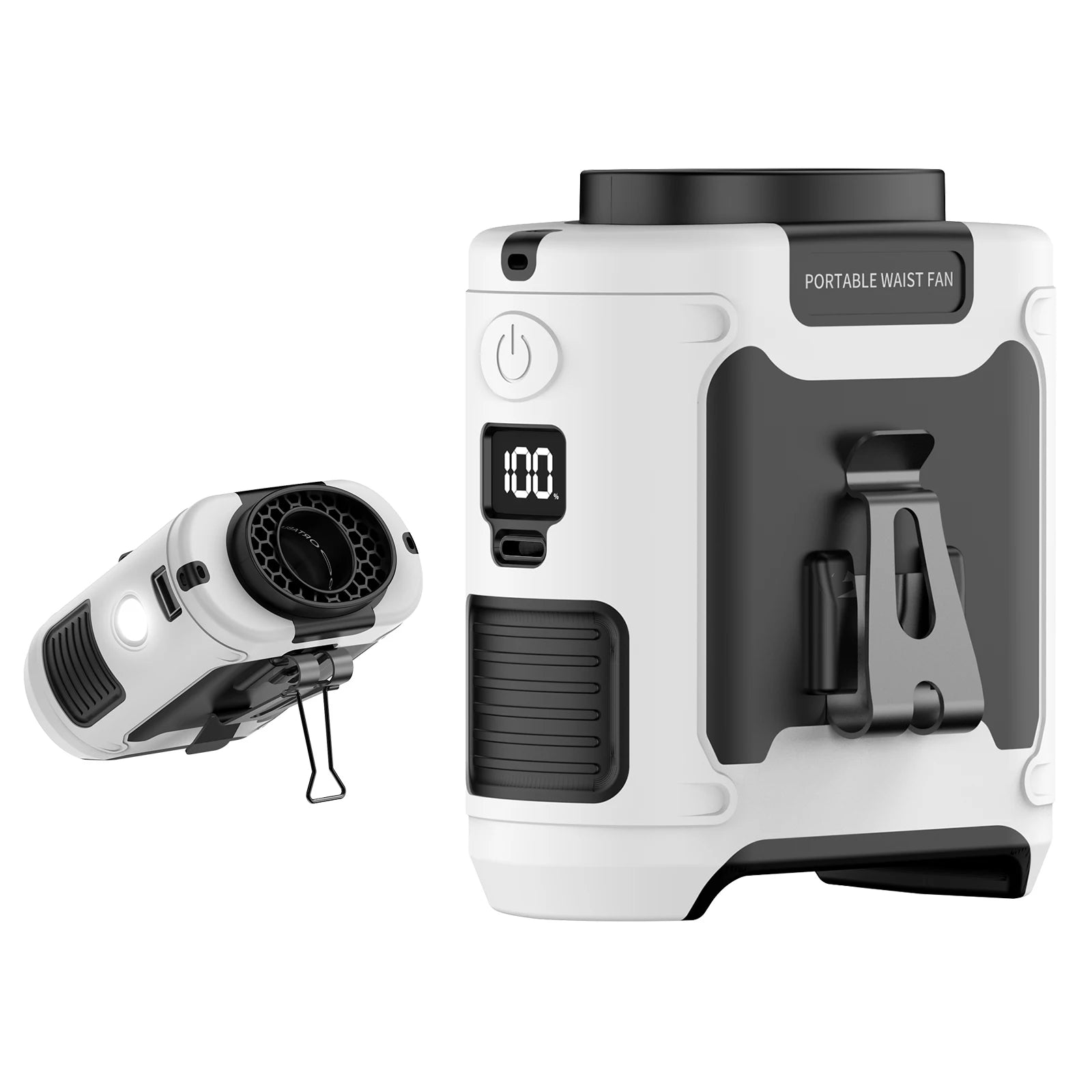
Other options include waist-mounted fans, cooling vests, wrist-based devices, and hybrid systems. A waist fan focuses airflow around the torso and waist area while leaving the hands free. A cooling vest can provide broader coverage but is generally bulkier. Wrist devices offer localized cooling in a very compact format.
Wearable Cooling Devices Compared at a Glance
Quick Comparison: Fans vs. Neck Coolers vs. Vests vs. Wrist Devices
- Wearable fan: Uses airflow; lightweight and versatile; well suited to walking, work, travel, and active use.
- Waist fan: Uses directed airflow from the waist area; hands-free and useful when carrying equipment or working outdoors.
- Thermoelectric neck cooler: Uses direct-contact cooling; useful when localized neck cooling is the priority.
- Cooling vest: Provides broader torso coverage; useful when more extensive cooling matters more than minimal weight.
- Wrist cooling device: Provides localized cooling in a compact wearable format; generally offers less overall airflow coverage.
Which Technology Cools Most Directly?
Thermoelectric cooling provides more direct cooling at the contact surface. Airflow cooling works differently: it primarily changes how hot the skin feels by moving air and supporting evaporative heat loss. Neither should automatically be considered superior.
For someone who needs continuous hands-free ventilation during physical work, a wearable fan can be more practical. For someone seeking a cooled contact point around the neck, a thermoelectric neck cooler may be more appropriate.
The Main Types of Wearable Cooling Devices
Wearable Fans and Hands-Free Fans
Wearable fans are designed for people who want personal airflow without holding a fan. Neckband models position airflow near the face and neck, while body-mounted models can direct air toward the torso or clothing.
They are particularly useful for outdoor workers, commuters, travelers, event attendees, and anyone who needs to keep both hands available. The main factors to compare are airflow strength, fan speed, battery capacity, weight, noise, and how securely the device stays in place during movement.
Wearable Cooler Fans
Wearable cooler fans can refer to fan-based products with additional cooling-oriented features. The term should not automatically be interpreted as meaning air conditioning. Unless a product uses an active cooling technology such as thermoelectric cooling, its primary mechanism is still airflow.
Neck Coolers
Neck coolers are designed to place cooling elements around the neck. Thermoelectric models can provide a localized cold sensation without depending entirely on airflow.
The tradeoff is that direct-contact cooling can require more battery power and may feel different from having air continuously moving across sweaty skin. Fit also matters because the cooling plates need appropriate contact with the body.
Waist Fans
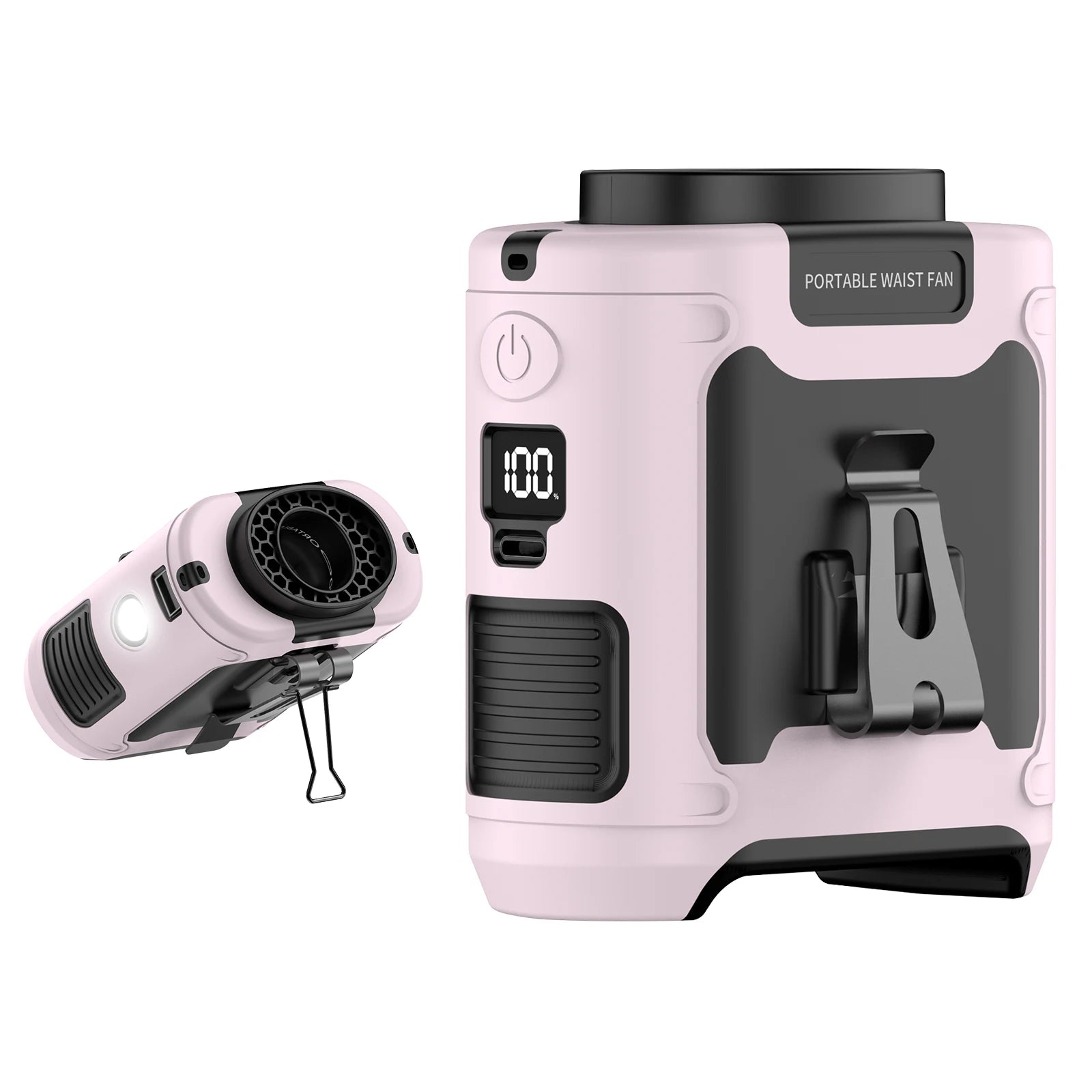
Waist fans are especially interesting for outdoor work because they combine portability with hands-free operation. Instead of holding a fan in one hand or wearing a device around the neck, a waist fan can attach to clothing around the front, back, or side.
A waist-mounted design can also work well when neck-mounted equipment becomes uncomfortable during extended activity. The best models provide adjustable airflow so you can reduce or increase ventilation as conditions change.
Cooling Vests
Cooling vests are designed for broader torso coverage. Depending on the technology, they may use evaporative materials, phase-change materials, or other cooling approaches.
The advantage is coverage. The disadvantage is usually bulk, weight, preparation requirements, or reduced portability compared with a small wearable fan. A vest can make sense when torso cooling is the priority, while a fan is often more convenient for people who want lightweight personal ventilation.
Wrist Cooling Devices
Wrist-based cooling devices focus on a small area of the body. Their compact size can make them convenient for travel and everyday use, but localized cooling is fundamentally different from circulating airflow around the upper body.
Wearable Fan vs. Neck Cooler: What Is the Difference?
Airflow Cooling vs. Thermoelectric Cooling
The simplest way to understand the difference is to ask what the device is actually doing.
- Airflow cooling: A motor moves air across the skin or clothing, helping create a cooling sensation and supporting sweat evaporation.
- Thermoelectric cooling: A Peltier-based system creates a cooled surface that contacts the body directly.
Airflow is generally more flexible because it can be directed toward a larger area. Thermoelectric cooling is more localized but can feel colder at the contact point.
Which Is Better in Humid Weather?
Humidity matters because sweat evaporates less efficiently when the air already contains a high amount of moisture. Air movement can still feel refreshing, but the evaporative component of cooling may be reduced.
This is one reason airflow should not be described as equivalent to refrigeration. A wearable fan does not make the surrounding air colder. It changes the airflow around your body.
Which Is Better for Long Outdoor Use?
For extended outdoor activity, consider battery capacity, charging convenience, weight, secure fit, and heat exposure rather than focusing on cooling technology alone. A device that feels excellent for 20 minutes but becomes uncomfortable after several hours may be a poor choice for a full workday.
How to Choose the Best Wearable Cooling Device
1. Cooling Method
Start with the mechanism. Choose airflow when you want portable ventilation and hands-free cooling. Choose thermoelectric cooling when localized direct-contact cooling is more important. Consider a cooling vest when broad torso coverage is the priority.
2. Cooling Strength and Coverage
Look beyond phrases such as “powerful cooling.” Ask where the cooling reaches. A neck fan primarily targets the upper body, a waist fan directs airflow from the torso area, and a cooling vest can cover a much larger portion of the body.
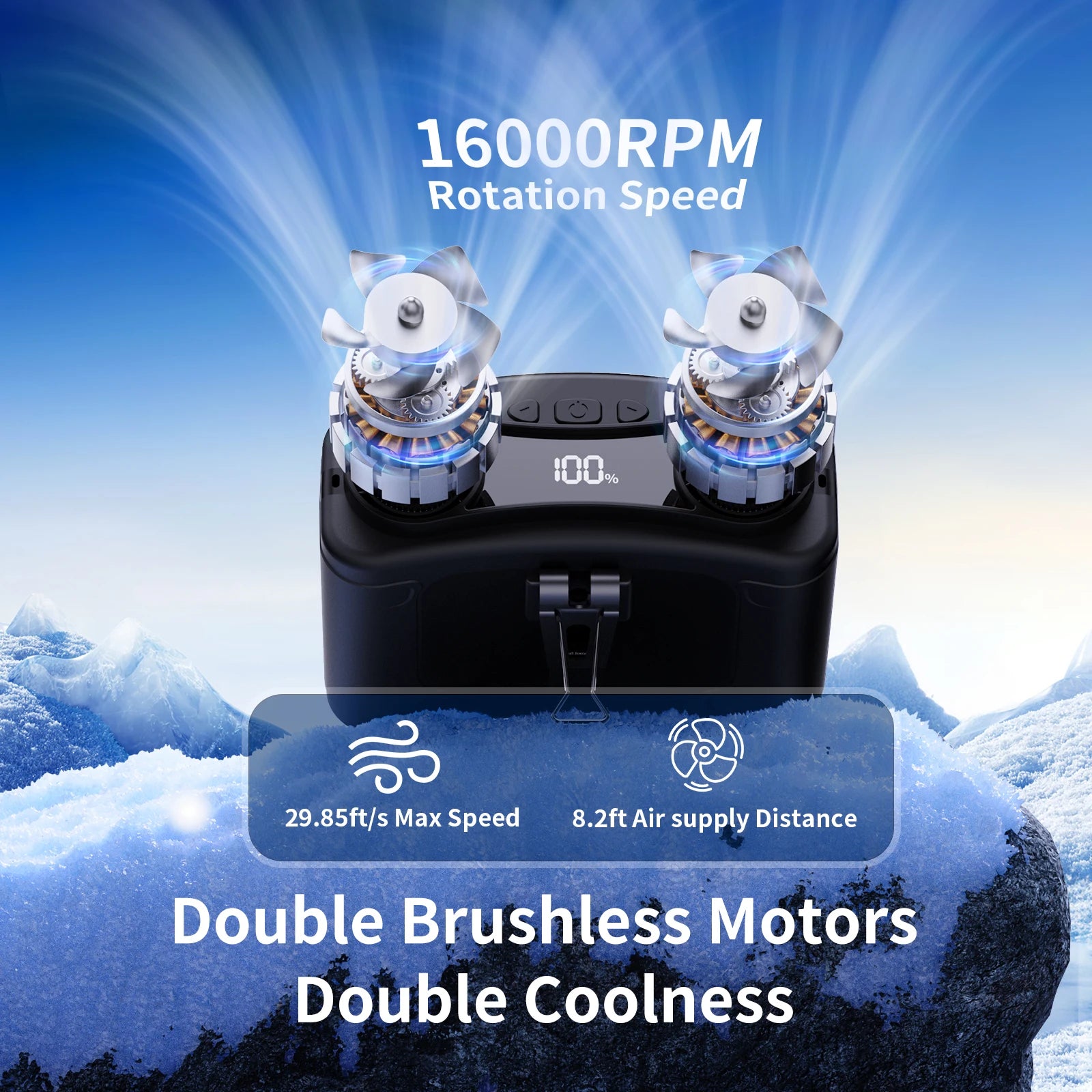
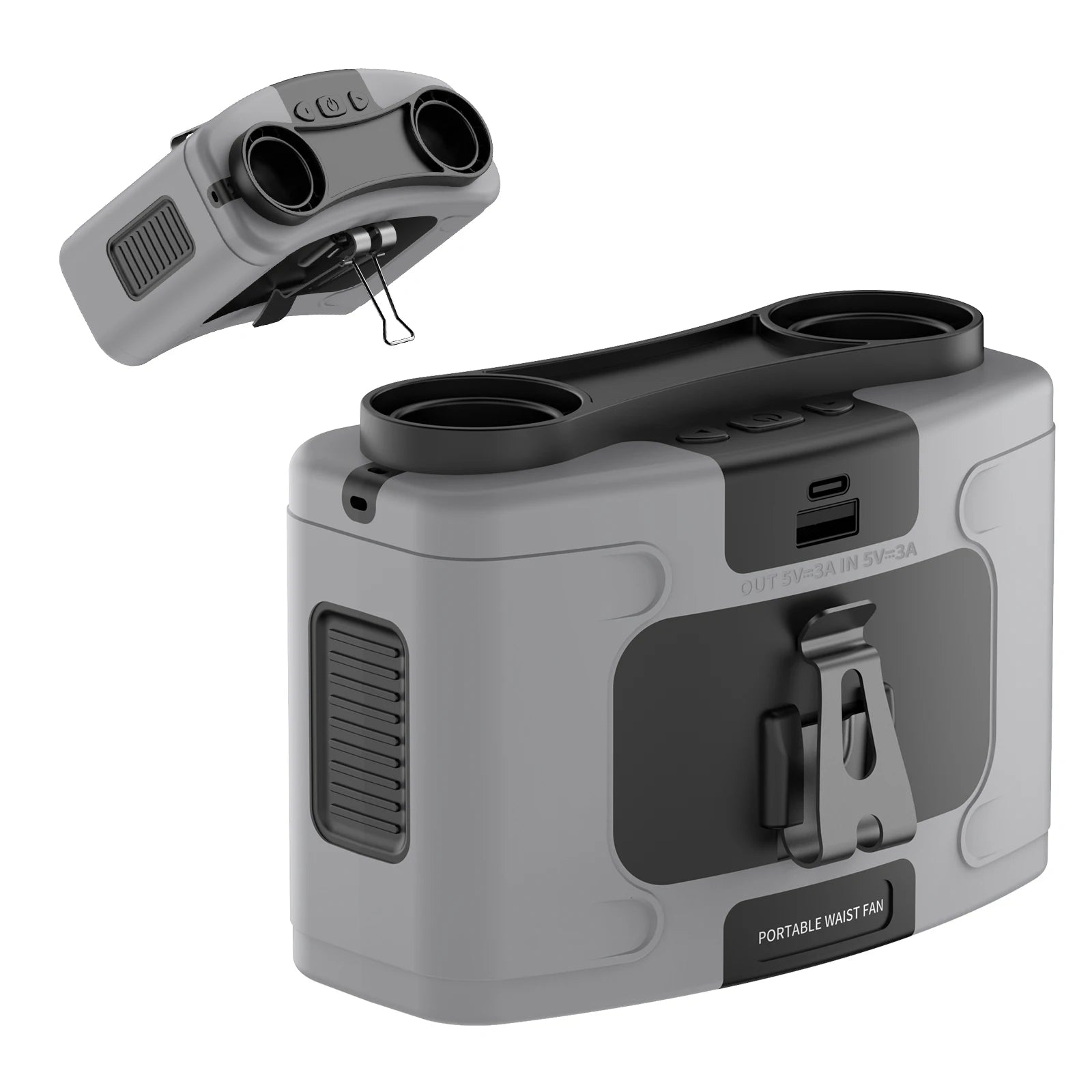
For example, the KentDO Waist Fan Portable Cooling Device uses a high-speed 16,000 RPM brushless motor and provides 10 speed levels. Its waist-buckle design can be positioned at the front, back, or side, allowing you to change where the airflow is directed based on the activity.
3. Battery Life and Runtime
Battery capacity is only one part of runtime. Fan speed, motor power, operating conditions, battery age, and charging efficiency all affect how long a device can operate.
A larger battery can provide more energy capacity, but it can also add weight. Compare expected runtime at the airflow level you are actually likely to use instead of selecting a device solely because it has the largest advertised mAh figure.
4. Weight and Hands-Free Comfort
Comfort becomes increasingly important as wear time increases. Neck devices place weight around the shoulders or neck, waist fans attach to clothing, vests cover the torso, and wrist devices stay concentrated around the arm.
If you are working with tools, carrying supplies, exercising, or moving frequently, hands-free operation can be more valuable than maximum cooling power.
5. Noise Level
Every motorized fan produces some operating noise. For construction work or outdoor activity, moderate fan noise may be less important. For meetings, commuting, libraries, or quiet indoor environments, noise can become a major selection criterion.
6. Humidity and Outdoor Suitability
Consider whether you will use the device in dry heat, humid summer weather, direct sunlight, shaded outdoor areas, or indoor spaces. Airflow can remain useful in many conditions, but the cooling sensation produced through sweat evaporation changes with humidity.
7. Portability and Charging
USB Type-C charging can simplify everyday use because it fits into many modern charging setups. The KentDO waist fan uses Type-C charging at 5V and includes an LED digital display that shows speed and remaining power at a glance.
Best Wearable Cooling Device by Use Case
Best for Outdoor Work
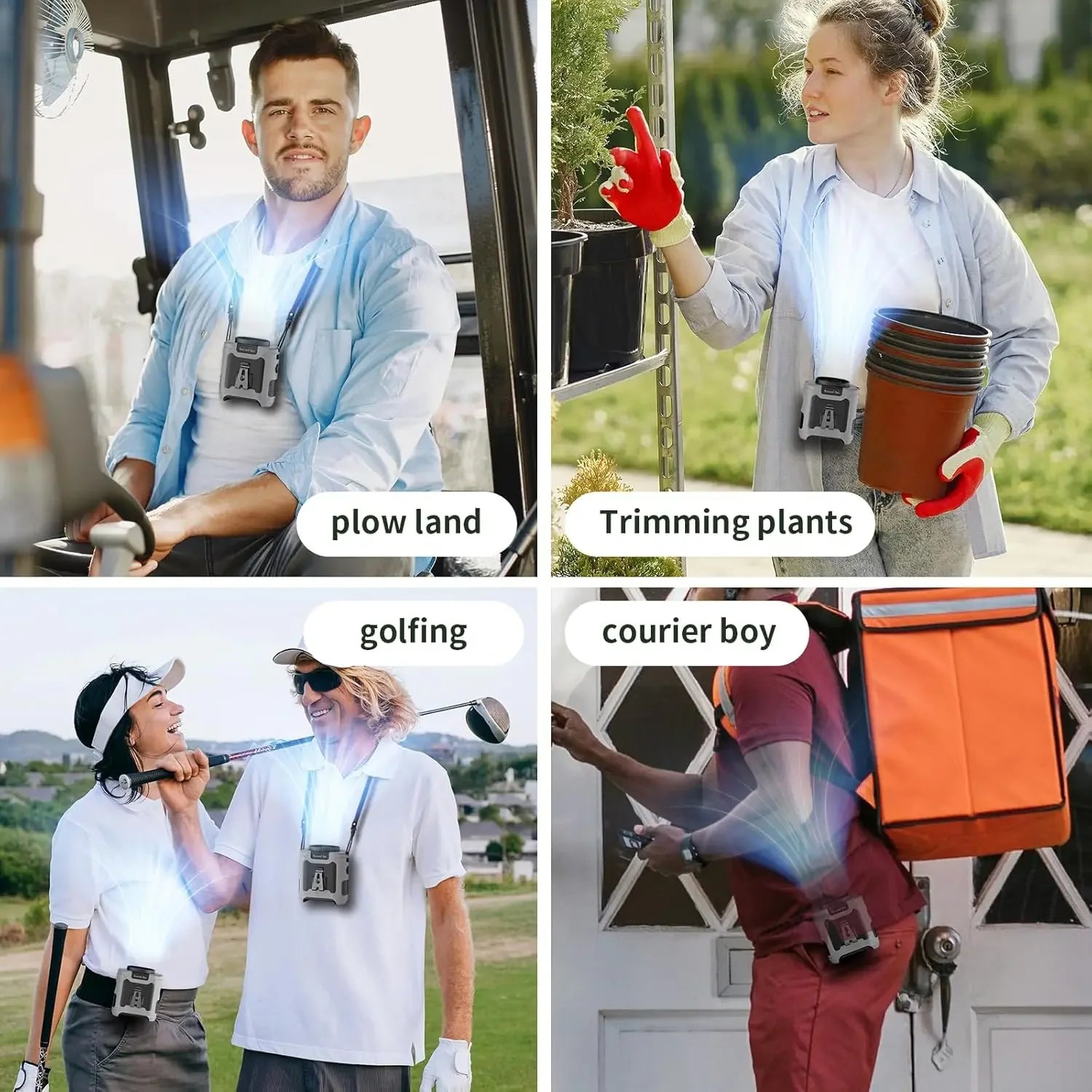
For outdoor workers, prioritize secure attachment, hands-free operation, adjustable airflow, battery capacity, and durability. A waist fan is particularly practical when holding a fan would interfere with work.
The KentDO waist fan is built around this use case, combining a wearable waist-buckle design with a 16,000 RPM brushless motor, 10 airflow settings, rechargeable power, and a digital display.
Best for Walking, Commuting, and Travel
A compact wearable fan is often more convenient than carrying a handheld fan throughout the day. Look for a lightweight design, straightforward controls, rechargeable power, and a secure fit that does not interfere with normal movement.
Best for Hot and Humid Weather
In humid weather, cooling expectations should remain realistic. A fan can provide moving air and may feel refreshing, but high humidity can limit evaporative cooling. Direct-contact thermoelectric cooling provides a different sensation and may be preferable if localized cold contact is your primary goal.
Best for Exercise and Active Use
For outdoor exercise, prioritize stability, weight, freedom of movement, sweat tolerance, and adjustable airflow. A waist-mounted fan can be useful because it keeps the hands free for running, walking, cycling-related activities, training, or other movement where carrying a handheld fan is inconvenient.
Best for Indoor Personal Cooling
For desks, events, shopping, and everyday indoor use, portability and noise may matter more than maximum airflow. A smaller wearable fan can provide personal ventilation without cooling an entire room.
Do Wearable Cooling Devices Actually Cool Your Body?
What Airflow Cooling Can and Cannot Do
A wearable fan does not lower your body's core temperature simply by blowing air. Its primary benefit is personal airflow. Moving air can help sweat evaporate and can make exposed skin feel cooler, particularly when the surrounding conditions allow evaporation to occur.
This distinction matters when evaluating claims about “body cooling.” Personal airflow can improve comfort, but it should not be treated as a substitute for appropriate hydration, shade, rest, or other heat-management practices during dangerous heat.
What Thermoelectric Cooling Can and Cannot Do
A thermoelectric neck cooler can create a cooled contact surface and provide localized cooling. However, even active contact cooling should not be confused with a portable room air conditioner. The device cools a limited area rather than conditioning the entire environment.
Why “Wearable AC” Can Be Misleading
“Wearable AC” is often used as a marketing phrase for products that provide personal cooling. Before buying, identify the actual technology. If a product contains a fan, expect airflow. If it uses Peltier modules, expect localized thermoelectric cooling. If it is a vest, determine whether its cooling comes from evaporation, phase-change materials, or another mechanism.
How Long Do Wearable Cooling Devices Last on One Charge?
Typical Runtime Factors
Runtime depends on battery capacity, motor power, fan speed, operating temperature, and how the device is used. Higher airflow generally requires more power, so maximum-speed runtime can be considerably shorter than low-speed runtime.
The KentDO waist fan is available with a rechargeable 10,000mAh or 20,000mAh battery option. Its 10W operating power and multiple airflow levels mean actual runtime depends on the selected battery and speed setting.
How to Compare Battery Claims
Do not compare battery capacity alone. A 20,000mAh battery may have greater energy capacity than a 10,000mAh battery, but the practical result depends on the device's voltage, power draw, and operating mode.
The better question is: How long will the device provide the level of cooling I actually need? If you expect to use high airflow during outdoor work, compare runtime at higher settings rather than relying on a maximum low-power figure.
Wearable Cooling Device Buying Checklist
Choose Airflow Cooling If...
- You want hands-free personal ventilation.
- You spend time walking, working, traveling, or exercising outdoors.
- You prefer adjustable airflow instead of direct-contact cooling.
- You want a rechargeable device that is easy to carry.
- You need cooling without occupying your hands.
Choose Thermoelectric Cooling If...
- You prefer direct-contact cooling around the neck.
- You want a cooled surface rather than primarily moving air.
- You understand that cooling is localized rather than room-wide.
- You are willing to consider battery consumption and device weight when comparing models.
Choose a Cooling Vest or Larger Device If...
- You need broader torso coverage.
- Localized airflow is not enough for your intended use.
- You prioritize coverage over minimal size and weight.
- You are comfortable wearing a larger piece of cooling equipment.
Pros and Cons of a Wearable Waist Fan
Pros
- Hands-free cooling for outdoor work and activities.
- Waist placement avoids holding a fan throughout the day.
- Adjustable airflow can be matched to changing conditions.
- A brushless motor can deliver strong airflow in a compact format.
- Rechargeable Type-C charging is convenient for everyday use.
- A digital display makes speed and remaining power easier to monitor.
Cons
- Airflow cooling does not actively lower the surrounding air temperature.
- Humidity can reduce the evaporative component of fan-based cooling.
- Higher fan speeds consume battery power more quickly.
- A waist-mounted design may be less suitable for people who prefer neck or torso cooling.
- Fan noise increases in importance in quiet environments.
Wearable Cooling Device Comparison Matrix
For maximum portability: choose a wrist device or compact wearable fan.
For hands-free outdoor work: a waist fan is a strong fit because it combines body-mounted airflow with freedom of movement.
For localized direct cooling: consider a thermoelectric neck cooler.
For broader torso coverage: consider a cooling vest.
For flexible personal ventilation: choose a wearable fan with adjustable speeds and a rechargeable battery.
Final Takeaway: Match the Cooling Technology to the Job
The best wearable cooling device is not necessarily the one with the strongest-sounding cooling claim. It is the one whose cooling method, body placement, battery capacity, comfort, and portability match the environment where you will actually use it.
Wearable fans and waist fans are strong choices when your priority is portable airflow, hands-free operation, and active outdoor use. Thermoelectric neck coolers make more sense when localized direct-contact cooling is the priority. Cooling vests provide broader coverage when portability is less important than torso cooling.
For outdoor workers, athletes, walkers, and anyone who wants hands-free airflow, a waist-mounted fan can be a particularly practical middle ground. The KentDO Waist Fan Portable Cooling Device combines a 16,000 RPM brushless motor, 10 speed levels, flexible waist placement, rechargeable battery options, Type-C charging, and an LED digital display in one portable design.
If your main goal is to stay more comfortable while working or moving through hot weather without carrying a handheld fan, a wearable waist fan is worth considering as part of your personal summer cooling setup.
Pillar Article: Best Portable Waist Fan: 2026 Tested Picks for Cooling













