

Do EMS Muscle Stimulators Work? What the Evidence Says
Yes—but with important limits. EMS muscle stimulators can produce real, measurable muscle contractions by electrically stimulating nerves, and appropriately used stimulation may support muscle activation and strength-related outcomes. However, EMS is not a proven shortcut for major fat loss, spot reduction, or replacing regular exercise. The key is separating what electrical muscle stimulation can actually do from what body-sculpting marketing sometimes promises.
For anyone considering an EMS or body-care health device, that distinction matters. Consumer EMS, clinical neuromuscular electrical stimulation (NMES), and electromagnetic muscle-stimulation systems may use different technologies, settings, intended uses, and evidence bases.
Do EMS Muscle Stimulators Actually Work?
EMS works in the most basic sense that an electrical stimulus can cause a muscle to contract. The harder question is whether those contractions translate into useful changes such as improved strength, muscle development, or visible body contouring.
The answer is more nuanced: EMS can activate muscles and, in appropriate circumstances, contribute to strength or muscle-function outcomes. But contraction alone does not prove muscle growth, calorie burning, or localized fat loss.
What EMS can realistically do
- Trigger involuntary muscle contractions.
- Provide targeted muscle stimulation.
- Support muscle activation and, in some settings, strength-related adaptations.
- Offer a way to stimulate selected muscles when voluntary movement is limited or when additional stimulation is desired.
What EMS cannot reliably do
- Guarantee significant weight loss.
- Remove abdominal or thigh fat specifically where the electrodes are placed.
- Automatically create visible muscle definition without considering overall body composition.
- Provide all the cardiovascular, coordination, mobility, and functional benefits of exercise.
The U.S. Food and Drug Administration has specifically cautioned against treating EMS as a proven weight-loss or girth-reduction method. FDA notes that stimulation can temporarily strengthen, tone, or firm muscles, while also emphasizing that EMS alone should not be expected to produce a major change in appearance. :contentReference[oaicite:0]{index=0}
Evidence strength at a glance
- Muscle contraction: Strong — electrical stimulation can directly produce contractions.
- Muscle activation: Strong — stimulation can recruit targeted muscle tissue.
- Strength improvement: Moderate — outcomes depend heavily on protocol, intensity, muscle group, training status, and consistency.
- Muscle hypertrophy: Limited to moderate — some stimulation protocols may support muscle development, but contraction alone does not guarantee meaningful hypertrophy.
- Major calorie expenditure: Limited — EMS should not automatically be equated with a conventional workout.
- Localized fat loss: Limited to unsupported as a general consumer claim — activating a muscle does not establish spot fat reduction.
How Electrical Muscle Stimulation (EMS) Works
Electrical muscle stimulation uses controlled electrical impulses to influence nerves associated with skeletal muscle. When the stimulation reaches an appropriate motor nerve, it can trigger a contraction without the user intentionally performing the movement.
How electrodes trigger a muscle contraction
Traditional EMS devices generally deliver electrical current through electrodes positioned on or near the target muscle. The resulting stimulation can activate motor nerves and produce repeated contractions. The sensation and contraction strength depend on the device, electrode contact, stimulation parameters, placement, and the individual user.
This is different from simply feeling a tingling sensation. A visible or palpable contraction indicates that the stimulation is producing a physiological response, although it does not by itself tell you how much long-term adaptation will occur.
EMS vs. voluntary muscle contraction
During a normal squat, curl, crunch, or other movement, your nervous system voluntarily recruits muscles to produce force. With EMS, an external electrical stimulus contributes to the activation process.
That distinction explains both the appeal and the limitation of EMS. Electrical stimulation can provide targeted contractions without requiring the same voluntary movement, but it does not reproduce everything that happens during active exercise.
What determines EMS effectiveness?
- Stimulation intensity: The stimulus needs to be appropriate for the intended goal and tolerated safely.
- Electrode or treatment-head placement: Placement influences which muscles are stimulated.
- Frequency: Different stimulation frequencies can produce different contraction characteristics.
- Session consistency: Sporadic use is unlikely to create the same adaptation as a structured routine.
- Target muscle: Larger or deeper muscle groups may respond differently from smaller superficial muscles.
- Individual response: Fitness level, muscle condition, body composition, and tolerance all affect the experience and outcome.
EMS vs. NMES: What's the Difference?
One of the most important distinctions in this topic is terminology. “EMS” is often used broadly in consumer marketing, while neuromuscular electrical stimulation (NMES) is commonly used in clinical and rehabilitation contexts to describe stimulation intended to activate nerves and muscles.
What is neuromuscular electrical stimulation (NMES)?
Clinical NMES may be used as part of rehabilitation or physical medicine to support muscle re-education, address disuse-related muscle loss, maintain or improve range of motion, or assist particular therapeutic goals. FDA's regulatory materials describe powered muscle stimulators within a medical-device framework and recognize specific therapeutic applications. :contentReference[oaicite:1]{index=1}
Consumer EMS devices vs. clinical NMES
A clinical NMES system may be selected and configured for a specific therapeutic objective under professional guidance. A consumer-oriented system may instead emphasize convenience, selectable programs, targeted muscle stimulation, and home or wellness use.
That means you should not automatically transfer evidence from a clinical NMES study to every consumer EMS or body-sculpting machine. The stimulation waveform, intensity, electrode configuration, treatment protocol, target population, supervision, and intended use may differ substantially.
Why device claims should not be generalized
A study showing that one specific stimulation protocol can improve muscle performance does not establish that every device marketed with the word “EMS” produces the same result. The more specific the claim—particularly claims involving dramatic fat loss, body reshaping, or replacing exercise—the more important it is to examine the actual evidence and intended use.
Can EMS Build Muscle and Increase Strength?
EMS and muscle activation
Yes, EMS can activate muscles. That is the fundamental mechanism behind electrical muscle stimulation. If the stimulation produces a contraction, the muscle is being activated.
But “I can feel my muscles contracting” and “I am building substantial new muscle tissue” are not equivalent statements. A strong sensation or temporary muscle pump should not be presented as proof of long-term hypertrophy.
EMS and muscle strength
Strength improvements are more plausible when stimulation is delivered at an appropriate intensity and frequency and used consistently. Outcomes depend on the protocol and context rather than simply owning an EMS device.
For people interested in muscle toning without adding another demanding routine, EMS may therefore be better understood as a targeted stimulation tool than as a replacement for progressive resistance training.
EMS and muscle hypertrophy
Muscle hypertrophy requires an adequate training stimulus over time. Electrical stimulation can provide a stimulus, but the size of any resulting adaptation depends on factors such as intensity, duration, frequency, muscle recruitment, recovery, nutrition, and the person's starting point.
Why intensity and progression matter
There is a major difference between simply using stimulation and progressively challenging muscle tissue. A device that offers adjustable settings can be more useful for structured use than one that provides only a fixed sensation, but higher intensity is not automatically better. Comfort, correct placement, manufacturer instructions, and appropriate progression remain important.
Can EMS Tone Your Abs or Change Your Body Shape?
This is where EMS claims often become confusing. “Toning” is not a separate biological process that automatically removes fat. A more defined appearance generally reflects some combination of muscle development and lower or appropriately distributed body fat.
What “toning” actually means
When people say they want toned abs, arms, glutes, or thighs, they typically mean they want these areas to look firmer or more defined. EMS may contribute to muscle activation, but visible definition cannot be guaranteed simply by stimulating the underlying muscle.
Can EMS make abdominal muscles contract?
Yes. An appropriately designed stimulation system can produce contractions in targeted abdominal musculature. That makes abdominal muscle stimulation a legitimate concept, but it should not be confused with guaranteed “six-pack” development.
Why EMS does not guarantee a leaner waist
Stimulating the abdominal muscles does not establish that the body will selectively remove fat from the abdomen. Overall body composition is influenced by energy balance, physical activity, nutrition, genetics, and other factors.
This is why responsible EMS content should distinguish muscle stimulation from fat reduction. FDA has warned that EMS should not be marketed as though electrical stimulation alone reliably produces weight loss or major girth reduction. :contentReference[oaicite:2]{index=2}
For readers exploring broader device-based approaches to personal care, the Body & Face Blog can also provide useful context around noninvasive beauty and body-care technologies.
Does EMS Burn Calories or Reduce Body Fat?
EMS and calorie expenditure
A muscle contraction requires energy, but that does not mean every EMS session creates the same energy demand as a conventional workout. Whole-body exercise can recruit many muscles while increasing heart rate, ventilation, movement, and overall physical activity.
Consequently, claims that an EMS session automatically delivers the calorie-burning equivalent of strenuous exercise should be treated cautiously.
EMS and body-fat reduction
Muscle stimulation and fat loss are different physiological objectives. An EMS device can target muscle tissue without establishing the sustained energy deficit generally associated with reductions in body fat.
Why spot-reduction claims are misleading
If stimulation is applied to the abdomen, the resulting contraction occurs in the abdominal musculature. That does not prove that fat stored above those muscles will preferentially disappear.
The distinction is particularly important when evaluating products described as body-sculpting systems. “Targets the abdomen” can accurately describe where stimulation is applied; it should not automatically be interpreted as “removes abdominal fat.”
EMS vs. Regular Exercise: Can It Replace a Workout?
For most people, EMS should be viewed as a potential complement to physical activity rather than a complete replacement for exercise.
What voluntary exercise does that EMS does not
- Builds cardiovascular capacity through sustained movement.
- Develops coordination and motor control.
- Trains functional movement patterns.
- Allows progressive loading across a broad range of muscles.
- Contributes to overall daily physical activity and energy expenditure.
- Develops skills and movement capacity that passive or externally induced stimulation cannot fully reproduce.
When EMS may complement exercise
EMS may make sense for someone who wants additional targeted muscle stimulation, has limited time, or wants to incorporate a technology-based session into a broader wellness routine. In clinical settings, electrical stimulation may also have more specialized rehabilitation applications.
EMS vs. exercise: practical comparison
| Factor | EMS | Regular Exercise |
|---|---|---|
| Targeted muscle activation | Yes, depending on placement and device | Yes, through voluntary movement |
| Cardiovascular training | Limited and device-dependent | Strong potential |
| Calorie expenditure | Should not be assumed to equal exercise | Generally meaningful during sustained activity |
| Functional movement | Limited | Broad range of movement patterns |
| Convenience | Can provide targeted stimulation in short sessions | Requires active participation |
| Best role | Targeted stimulation or exercise complement | Foundation of comprehensive physical activity |
How Long Does It Take to See EMS Results?
What you may notice first
The first noticeable result is often the contraction itself: a pulling, tightening, pulsing, or rhythmic muscle sensation. That demonstrates an immediate stimulation response, not necessarily a long-term change in muscle size or body composition.
When strength or performance changes may appear
Longer-term adaptations require repeated exposure to an adequate stimulus. The timeline can vary substantially depending on the muscle group, stimulation settings, baseline conditioning, frequency of sessions, and whether EMS is combined with conventional training.
Why individual results vary
Two people can use the same technology and experience different outcomes. Muscle size, fitness level, body composition, electrode or treatment-head placement, stimulation tolerance, consistency, recovery, and nutrition can all influence the result.
Who May Benefit From EMS—and Who Should Be Cautious?
Potentially useful scenarios
EMS may be useful when the goal is targeted muscle activation, supplemental stimulation, or a structured wellness routine. Clinical NMES has more specific rehabilitation applications, while consumer systems may be designed around convenience and targeted body areas.
Common contraindications and precautions
Electrical stimulation is not appropriate for everyone. FDA guidance for powered muscle stimulators includes important warnings and precautions involving implanted cardiac devices, application across the chest or certain sensitive areas, pregnancy, heart conditions, epilepsy, impaired skin sensation, recent surgery, inflamed or damaged skin, and other circumstances. :contentReference[oaicite:3]{index=3}
Users should always follow the specific manufacturer's instructions rather than assuming that a setting or placement used with another EMS device is appropriate. FDA has also reported adverse events associated with some electrical muscle stimulators, including shocks, burns, bruising, skin irritation, pain, and interference with implanted devices. :contentReference[oaicite:4]{index=4}
How to use EMS more responsibly
- Read the complete device instructions before the first session.
- Use only the recommended treatment heads, electrodes, leads, and accessories.
- Place treatment heads or electrodes exactly as directed.
- Begin at an appropriate intensity rather than immediately selecting the highest setting.
- Check the skin before and after use for irritation or unusual reactions.
- Do not improvise treatment locations.
- Do not use EMS to justify replacing regular physical activity.
- Seek professional medical guidance if you have a relevant medical condition, implanted electronic device, recent surgery, pregnancy, or another contraindication listed for your device.
How to Evaluate a Consumer EMS Muscle Stimulator
Once you understand what EMS can and cannot realistically accomplish, evaluating a device becomes much easier. Instead of starting with promises such as “burn fat” or “replace your workout,” look at the actual technology, controls, treatment configuration, instructions, and intended use.
Check the device's intended use
Determine whether the product is positioned for fitness, wellness, muscle stimulation, rehabilitation, pain-related use, or another purpose. Clinical evidence should not automatically be applied to a consumer product with a different intended use.
Look at stimulation controls and treatment-head quality
Adjustable stimulation parameters can make a system more adaptable to different users and target areas. Also examine how treatment heads are positioned, whether the manufacturer provides placement guidance, and whether replacement components are available.
Review safety information and instructions
A responsible device should provide clear operating instructions, warnings, contraindications, and maintenance information. For regulated medical electrical equipment, IEC 60601-2-10 is a recognized consensus standard addressing the basic safety and essential performance of nerve and muscle stimulators, including EMS. :contentReference[oaicite:5]{index=5}
Treat dramatic fat-loss and calorie claims skeptically
The simplest claim-checking rule is to ask: Does the evidence actually measure the outcome being advertised? Evidence that a device produces muscle contractions is not evidence that it causes substantial fat loss. Evidence of short-term muscle activation is not evidence that it can replace comprehensive exercise.
Consumer EMS evaluation checklist
- Intended use is clearly stated.
- Stimulation intensity and relevant settings are understandable.
- Treatment-head or electrode placement is explained.
- Safety warnings and contraindications are provided.
- Session duration and usage guidance are clear.
- Replacement or compatible treatment components are identifiable.
- Warranty and manufacturer support are available.
- Marketing claims distinguish muscle stimulation from fat loss.
- The product does not rely on unsupported promises of replacing exercise.
For readers specifically comparing targeted body-stimulation equipment, the Body Care and Health Devices collection is a logical place to review the broader category before deciding what type of device fits the intended use.
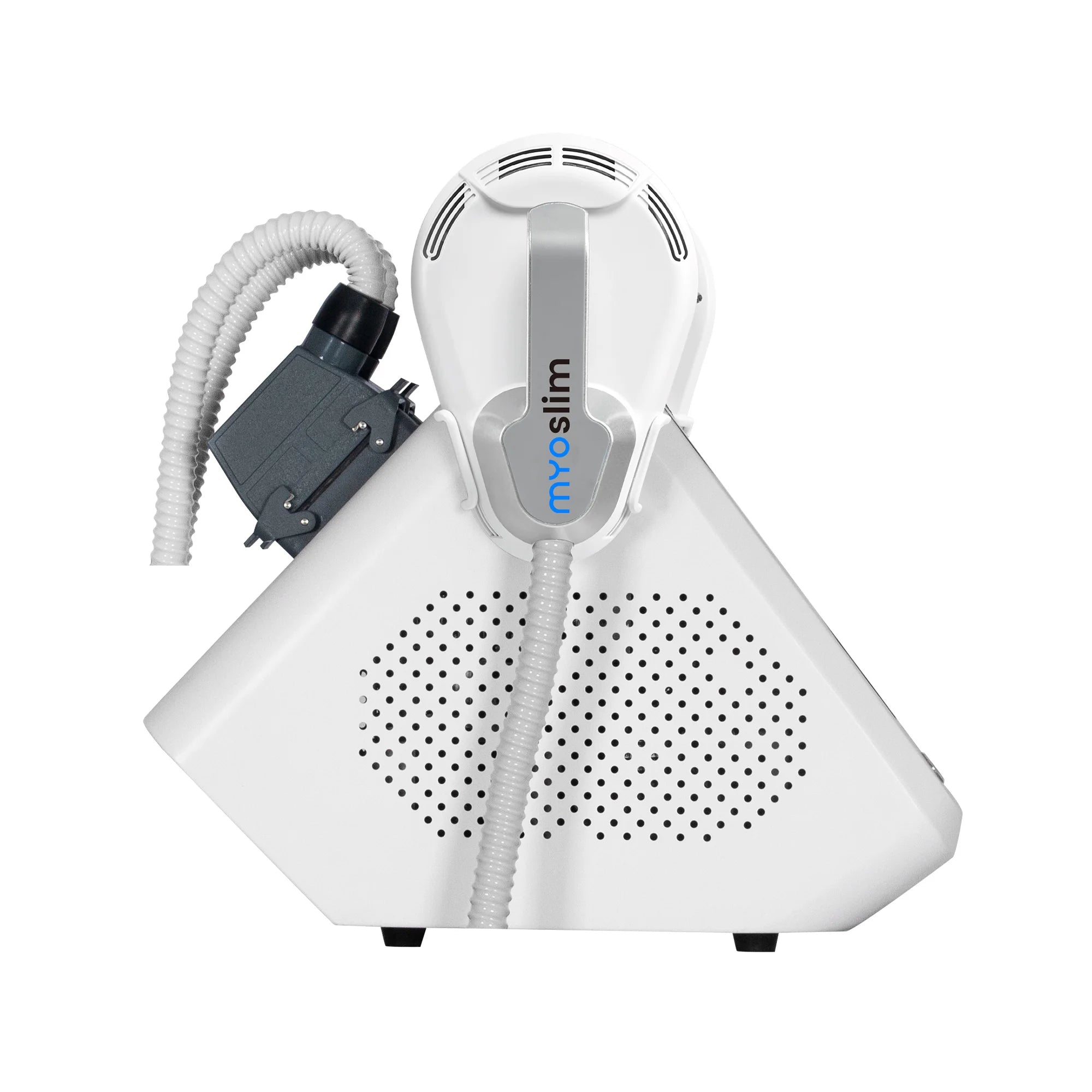
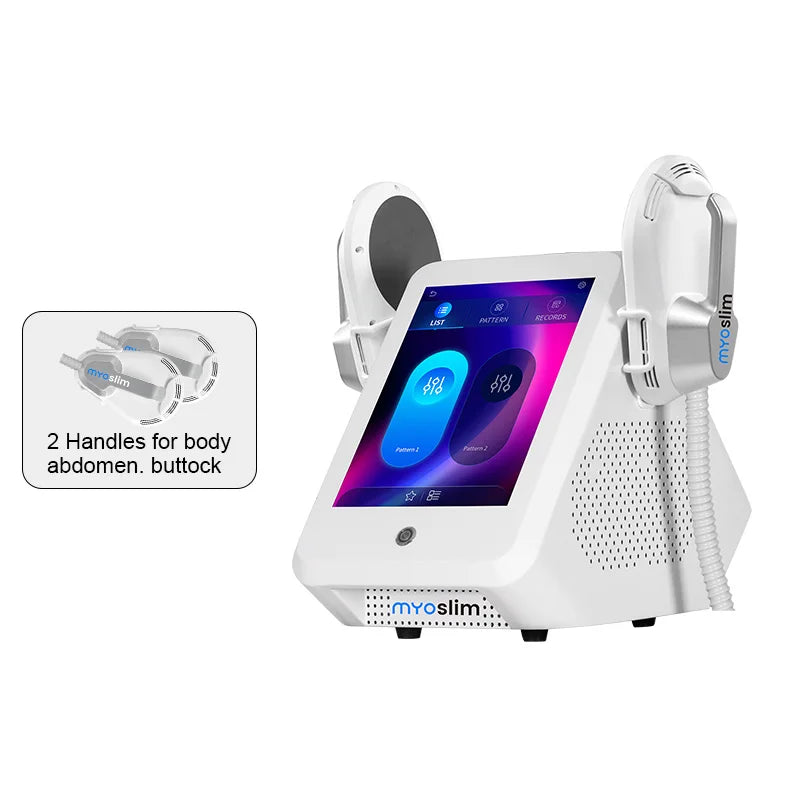
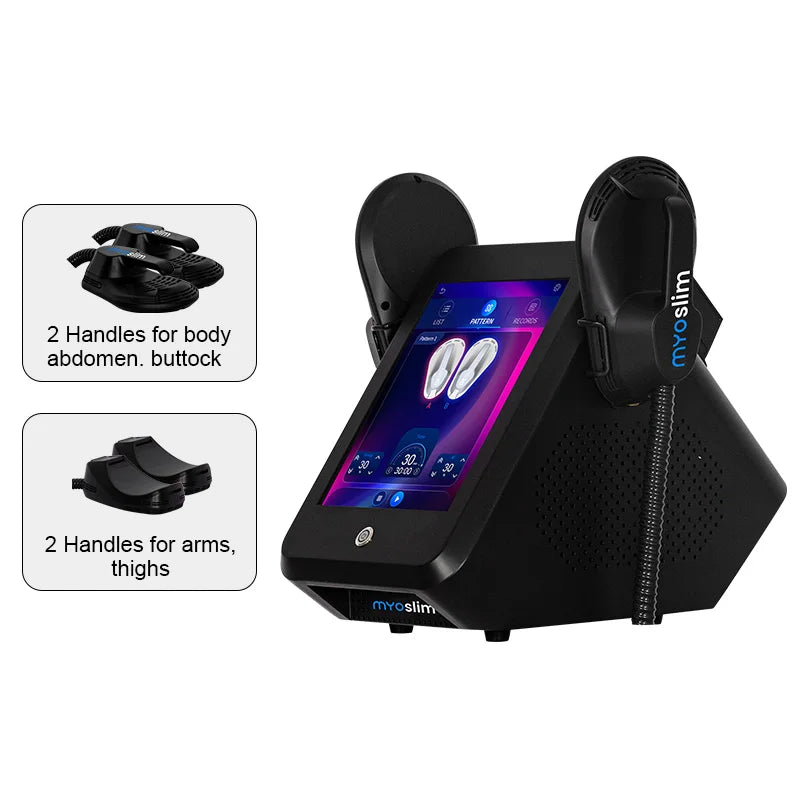
One example is the MYOSLIM EMS Body Sculpting Machine for muscle toning and contouring. According to the supplied product specifications, it combines EMT and EMS technology, offers a 20–100 Hz adjustable frequency range, uses four detachable treatment heads, provides a 10-inch HD color touchscreen, and is designed for targeted areas including the abdomen, buttocks, thighs, arms, and back.
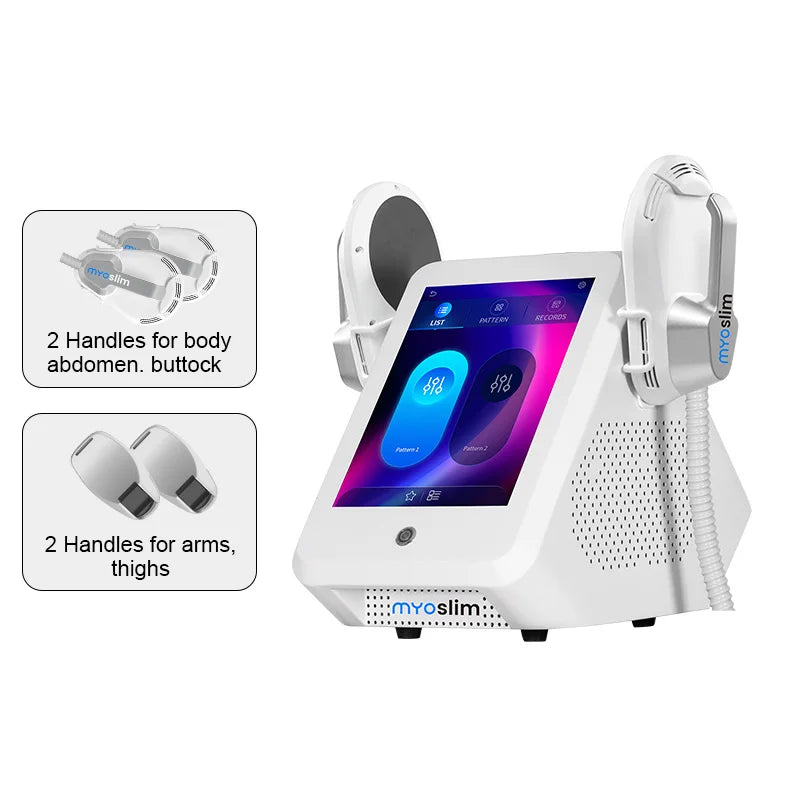
Those specifications can make the system relevant for users who value adjustable targeted stimulation and multi-area treatment. They should not, however, be interpreted as proof that the device will produce a particular amount of fat loss, muscle growth, or visible body reshaping. The appropriate question is whether the device's configuration and intended use match the user's goals.
For broader wellness and self-care research, the Beauty & Self-Care Blog offers additional context around technology-assisted personal-care routines.
EMS Muscle Stimulator Effectiveness: What to Expect
The realistic bottom line
EMS muscle stimulators are not a marketing invention: electrical stimulation can produce genuine muscle contractions, and appropriately designed stimulation protocols can have legitimate muscle-activation and strength-related applications. Clinical NMES also has established rehabilitation uses.
What EMS does not establish is a guaranteed shortcut to a leaner body, localized fat loss, dramatic muscle definition, or an exercise-equivalent workout. FDA specifically cautions that EMS alone should not be expected to produce major appearance changes or serve as a proven weight-loss method. :contentReference[oaicite:6]{index=6}
For someone with limited time or difficulty maintaining a traditional routine, the most sensible approach is to view EMS as a potential supplemental muscle-stimulation tool. If a consumer system fits your intended use, has understandable controls, clear safety information, appropriate treatment-head placement, and realistic claims, it can be evaluated on those merits rather than on exaggerated promises.
If targeted muscle stimulation is the specific goal, you can explore the MYOSLIM EMS Body Sculpting Machine and compare its specifications with your desired treatment areas, preferred session format, and expectations before making a decision.
Pillar Article: Best Abdominal Muscle Stimulation Devices in 2026













