

Electrical Muscle Stimulation Benefits: What the Evidence Shows
Electrical muscle stimulation (EMS) can produce real muscle contractions, but what those contractions accomplish depends on the stimulation method, target muscle, protocol, device, and intended use. EMS and related technologies such as neuromuscular electrical stimulation (NMES) and functional electrical stimulation (FES) have legitimate applications in muscle strengthening, rehabilitation, and selected fitness settings. However, they should not automatically be treated as a replacement for exercise or as a guaranteed shortcut for fat loss or dramatic body sculpting.
This evidence-first guide explains the potential electrical muscle stimulation benefits, where the technology has the strongest practical rationale, what remains more uncertain, and how to evaluate an EMS device realistically.
What Is Electrical Muscle Stimulation?
Electrical muscle stimulation uses controlled electrical impulses to stimulate nerves associated with skeletal muscles. When the appropriate nerves are activated, the muscle can contract even though the contraction was initiated externally rather than entirely through voluntary movement.
The basic idea is straightforward: an electrical signal reaches the relevant motor nerves, those nerves trigger muscle fibers, and the resulting contraction creates a form of muscular activation. The physiological response is real, but the outcome varies according to stimulation intensity, frequency, placement, treatment duration, muscle condition, and the specific technology being used.
How EMS Creates a Muscle Contraction
Voluntary exercise begins with signals generated by the nervous system to activate muscles. EMS introduces an external electrical stimulus that can activate motor nerves and produce contractions. The strength and quality of those contractions depend on the parameters of stimulation and how effectively the target muscle is activated.
That distinction matters because producing a contraction is not the same as guaranteeing muscle growth, improved fitness, or reduced body fat. A useful EMS program should be evaluated according to its intended outcome rather than simply whether the muscles visibly contract.
EMS vs NMES vs FES
EMS is a broad term for electrical muscle stimulation. NMES, or neuromuscular electrical stimulation, generally refers to stimulation intended to activate nerves and muscles, particularly in rehabilitation and strengthening applications. FES, or functional electrical stimulation, coordinates stimulation with a functional movement so that the resulting contraction contributes to a specific physical action.
These terms overlap, but they should not be treated as interchangeable. Clinical NMES or FES protocols may involve different equipment, settings, supervision, treatment goals, and patient populations than consumer-oriented EMS devices.
Clinical Electrotherapy vs Consumer EMS Devices
Not every EMS device produces the same stimulation, uses the same programming, or has been evaluated for the same outcomes. Clinical systems may be selected and configured around a specific rehabilitation objective, while consumer devices are often designed for convenience, general muscle stimulation, fitness support, or wellness applications.
For that reason, evidence supporting one type of electrical stimulation should not automatically be transferred to every consumer device or every cosmetic body-contouring claim.
For readers exploring other wellness technology, the Body Care and Health Devices collection provides a broader category context.
Electrical Muscle Stimulation Benefits: What the Evidence Supports
The potential benefits of electrical muscle stimulation are best understood by use case. The strongest rationale is generally associated with activating muscles, supporting strengthening, and assisting rehabilitation when voluntary muscle activation is limited or needs additional support. Other applications, including consumer fitness and recovery, require more careful interpretation.
Muscle Strengthening
Repeated electrically induced muscle contractions can provide a training stimulus. Under appropriate conditions, EMS may therefore contribute to improvements in muscle strength. The outcome depends on factors such as stimulation intensity, frequency, protocol, muscle condition, consistency, and whether stimulation is used alongside active exercise.
The important distinction is that EMS can provide muscular activation, but a contraction alone does not guarantee substantial hypertrophy or a specific change in appearance.
Reducing or Managing Muscle Atrophy
When normal voluntary muscle activation is reduced, maintaining muscle activity can become difficult. Electrical stimulation may have a role in supporting muscle activation in appropriate situations, particularly when movement or voluntary contraction is limited.
This is one reason electrical stimulation has relevance in rehabilitation settings. The appropriate protocol depends on the individual and the underlying reason for reduced muscle activity.
Physical Rehabilitation
NMES is used in rehabilitation programs because externally induced contractions can help activate specific muscles when voluntary recruitment is difficult or insufficient. In clinical practice, stimulation may be incorporated alongside physical therapy, exercise, and other rehabilitation strategies rather than used as a standalone solution.
For injury-related weakness, significant functional limitations, or rehabilitation after a medical procedure, professional guidance is more appropriate than assuming a consumer EMS device is equivalent to clinical treatment.
Muscle Recovery
Some EMS applications are marketed for recovery after exercise. Stimulation may be used with recovery-oriented goals, but recovery claims should be separated from the stronger rationale for strengthening and rehabilitation.
Different stimulation modes are designed for different purposes, so the fact that an electrical stimulation device can activate a muscle does not automatically establish that every mode will accelerate recovery or reduce post-exercise discomfort.
Functional Movement With FES
FES is distinct because stimulation can be coordinated with functional activity. In appropriate clinical applications, the induced contraction can contribute to a specific movement rather than simply producing an isolated muscle contraction.
This illustrates why the intended use of electrical stimulation matters. A technology designed to support functional movement should not be evaluated using the same criteria as a consumer device marketed primarily for general muscle stimulation.
Fitness and Exercise Support
EMS can potentially serve as an adjunct to fitness and resistance training. It may provide an additional way to stimulate selected muscles, particularly when targeted activation is the objective.
However, EMS does not reproduce every benefit of active exercise. Traditional exercise involves voluntary movement, coordination, cardiovascular demand, balance, motor control, and whole-body movement patterns that electrical stimulation alone does not automatically provide.
Does Electrical Muscle Stimulation Actually Build Muscle?
EMS can create muscle contractions and, under appropriate conditions, those contractions can contribute to a training stimulus. But “causes a contraction” and “guarantees significant muscle growth” are not equivalent statements.
What Muscle Activation Means
Muscle activation means that stimulation has caused the target muscle to contract. Repeated contractions can provide a physiological stimulus, but meaningful changes in strength or muscle size depend on the overall protocol and the individual's response.
For consumer body-sculpting applications, it is especially important to distinguish muscle activation from claims about dramatic changes in body composition.
When EMS May Contribute to Strength Gains
Potential strength improvements depend on variables including stimulation intensity, frequency, session duration, training frequency, muscle condition, and consistency. The effect may also differ depending on whether EMS is used independently or alongside voluntary resistance exercise.
A higher-quality evaluation therefore asks not simply whether an EMS device works, but what it is being used to accomplish and whether its stimulation parameters are appropriate for that goal.
Why Results Vary Between Clinical and Consumer Devices
Clinical and consumer devices can differ in output, programming, electrode or treatment-head placement, supervision, treatment objectives, and user adherence. Even when two devices are both described as EMS systems, their practical applications may be substantially different.
EMS vs Voluntary Exercise: Which Is More Effective?
EMS should generally be viewed as a targeted complement to appropriate physical activity rather than a universal replacement for voluntary exercise.
How EMS and Voluntary Exercise Recruit Muscles Differently
Voluntary exercise relies on the nervous system to intentionally activate muscles during movement. EMS introduces stimulation externally to trigger contractions. Both can activate skeletal muscle, but they do so through different mechanisms and do not necessarily produce the same overall training experience.
Active exercise also involves movement patterns, coordination, balance, cardiovascular activity, and other physiological demands that are not automatically supplied by isolated electrical stimulation.
When EMS Can Complement Exercise
EMS may fit alongside resistance training, rehabilitation, or other physical activity when targeted muscle activation is useful. The combination can be more meaningful than treating electrical stimulation as an all-purpose substitute for movement.
For consumers interested in body-focused wellness equipment, exploring Skin and Beauty Care Devices can also help place body-sculpting technology within the broader category of at-home care devices.
Why EMS Should Not Be Treated as a Complete Exercise Replacement
EMS does not automatically provide cardiovascular conditioning, movement skill, coordination, balance training, or the broad physiological stimulus associated with active exercise. It therefore makes more sense to consider electrical stimulation as a targeted tool than as a complete substitute for physical activity.
| Factor | EMS | Voluntary Exercise |
| Muscle activation | Externally induced | Voluntarily initiated |
| Targeted stimulation | Can focus on selected muscles | Depends on the exercise movement |
| Cardiovascular training | Not automatically provided | Can be substantial depending on activity |
| Movement coordination | Limited in isolated stimulation | Integral to active movement |
| Rehabilitation applications | Can be useful in appropriate protocols | Often central to rehabilitation |
| Exercise replacement | Not a complete replacement | Provides broader physical activity benefits |
Can Electrical Muscle Stimulation Help With Muscle Recovery?
Recovery is one of the more frequently discussed EMS applications, but it requires careful interpretation. Not every stimulation setting is designed for recovery, and evidence supporting one specific protocol should not automatically be generalized to every consumer device.
EMS for Post-Exercise Recovery
Recovery-oriented stimulation is intended to serve a different purpose from strengthening-focused stimulation. The relevant settings, intensity, duration, and treatment goals can vary, so consumers should follow the instructions associated with their specific device rather than assuming that stronger stimulation is necessarily better.
Recovery Claims vs Evidence Strength
When evaluating a recovery claim, ask what outcome was actually measured. Reduced perceived discomfort, changes in muscle function, improved strength, and faster return to activity are different outcomes. A credible claim should identify the specific outcome rather than using “recovery” as a catch-all term.
What EMS Can and Cannot Do
What EMS Can Potentially Help With
- Targeted muscle activation
- Muscle-strengthening support under appropriate protocols
- Muscle activation when voluntary recruitment is limited
- Selected rehabilitation applications
- Functional movement support when using appropriate FES protocols
- Supplemental stimulation as part of a broader fitness routine
What EMS Does Not Automatically Do
- Guarantee substantial muscle growth
- Replace a complete exercise program
- Guarantee fat loss
- Produce dramatic body sculpting results from every device or protocol
- Make clinical rehabilitation unnecessary
Toning vs Fat Loss
Muscle toning and fat loss are different outcomes. Increased muscle activation or strength can influence how muscles perform and potentially how they appear, while reductions in body fat involve overall energy balance and broader physiological factors.
Consequently, an EMS device should not be described as a guaranteed fat-loss solution simply because it causes muscle contractions. Evidence for muscle stimulation and evidence for changes in body composition are separate questions.
Clinical NMES vs At-Home EMS: What Matters Before Choosing a Device
Once the basic benefits and limitations are clear, consumers can evaluate an at-home EMS system according to practical criteria rather than marketing language.
Stimulation Intensity and Control
Adjustable stimulation can make it easier to select an appropriate level for a particular program and target area. A device with clearly defined controls can also make sessions more consistent.
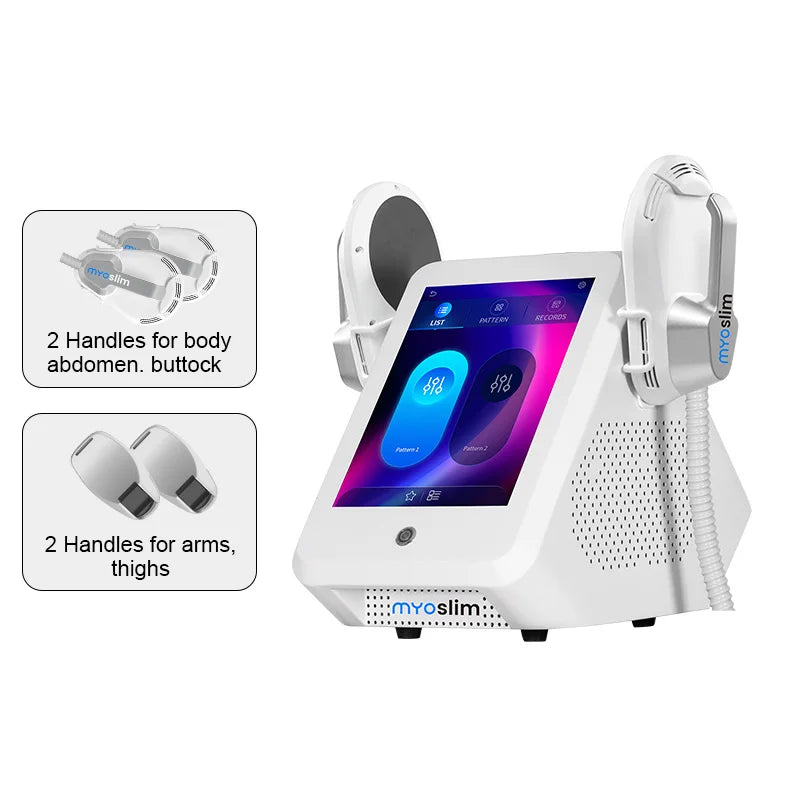
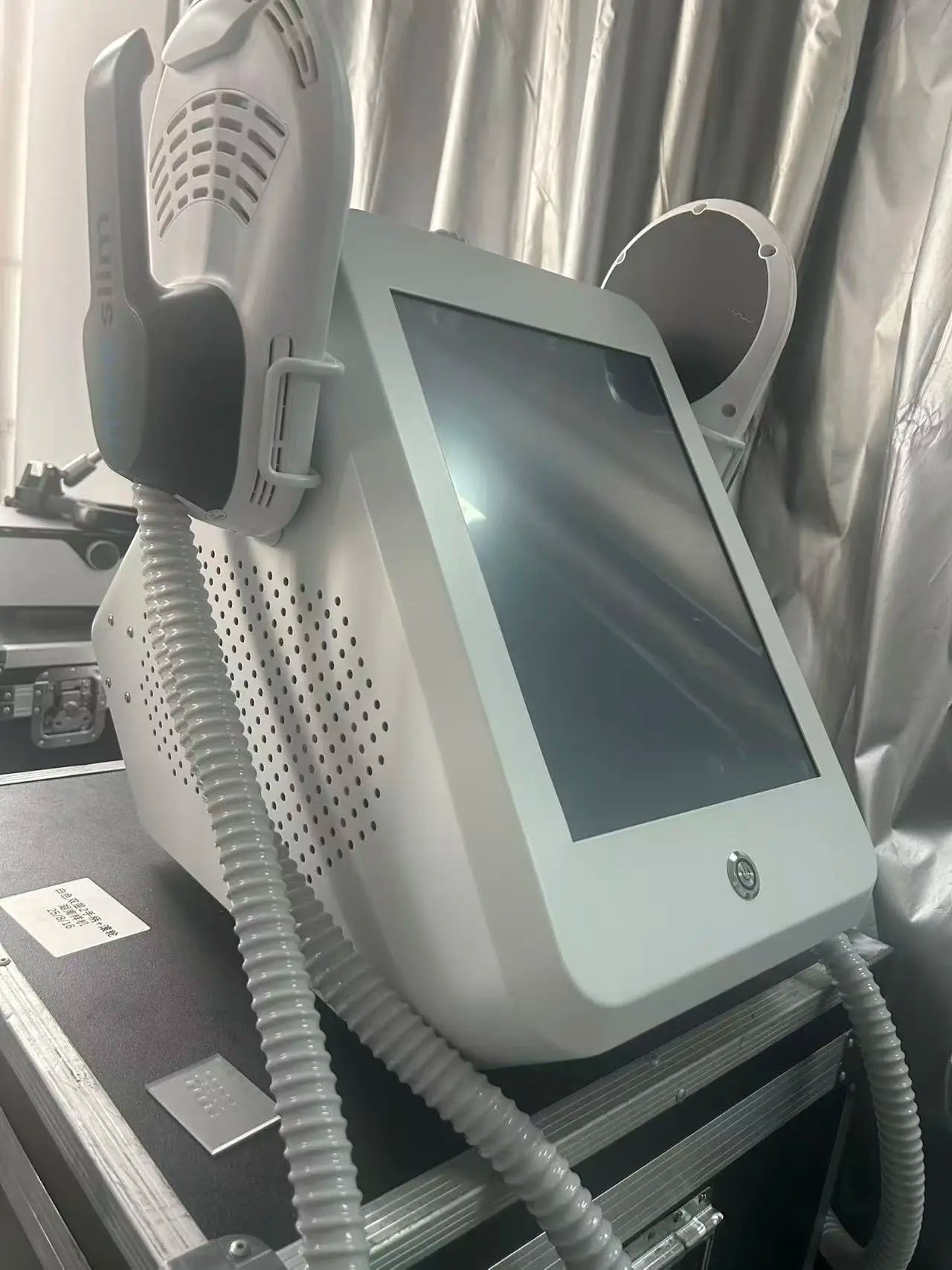
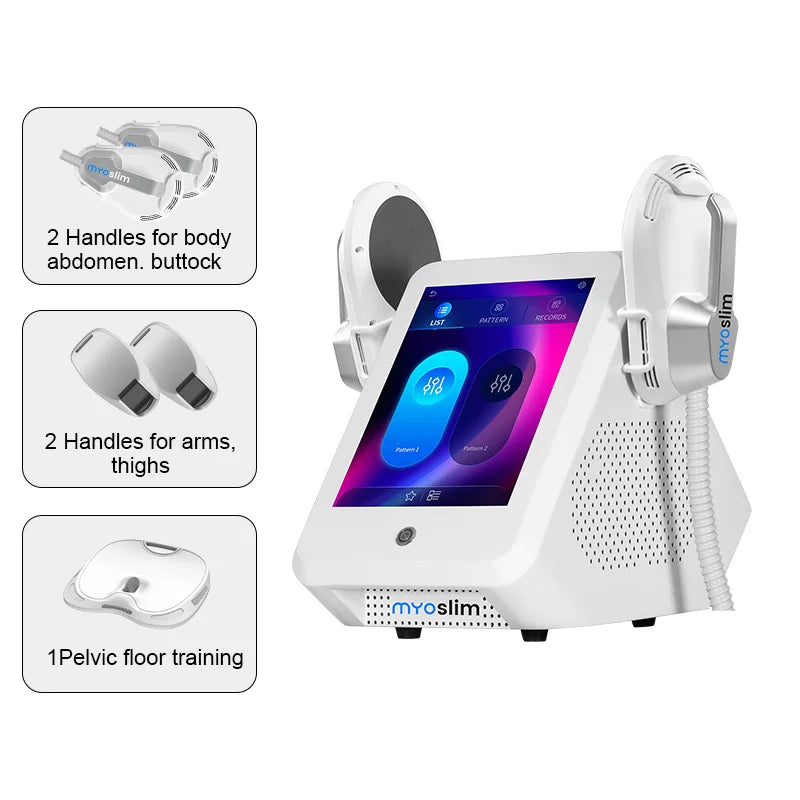
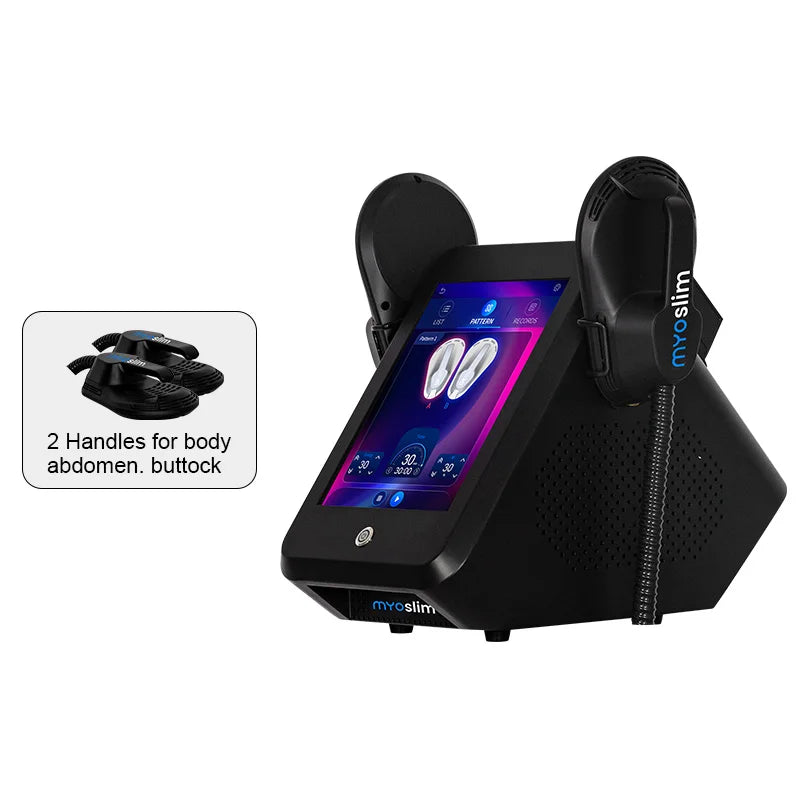
The MYOSLIM EMS Body Sculpting Machine combines EMT and EMS technology and provides adjustable frequency from 20–100 Hz. It includes a 10-inch HD color touchscreen and four detachable treatment heads. Its stated session duration is 20–30 minutes, depending on the selected program and treatment area.
For readers specifically looking for a consumer system for targeted muscle stimulation, the MYOSLIM EMS Body Sculpting Machine for muscle toning and contouring is one example of this product category. It is best considered an at-home or wellness-oriented option rather than a substitute for clinically supervised NMES.
Electrode Placement and Muscle Targeting
Correct placement is important because electrical stimulation needs to reach the intended muscle effectively. Multi-head systems can be useful when the goal is to work with different treatment areas, but users should follow the manufacturer's placement and operating instructions.
The MYOSLIM system is specified for the abdomen, buttocks, thighs, arms, and back, with four detachable treatment heads. These specifications make it relevant to consumers interested in targeted body areas rather than a single-muscle application.
Programs, Comfort, and Ease of Use
Consistency matters. A device that is difficult to configure or uncomfortable to use may be harder to incorporate into a routine. Adjustable settings, straightforward controls, session timing, and practical treatment-head design can therefore influence real-world usability.
When Professional Guidance Makes More Sense
Professional guidance is appropriate when electrical stimulation is being considered for rehabilitation, significant muscle weakness, injury-related limitations, recovery from a medical procedure, or a condition that could affect safe use. Consumer wellness equipment should not be assumed to provide the same treatment as a clinically prescribed electrotherapy protocol.
How to Evaluate an EMS Benefit Claim
Look at the Intended Use
Evidence for rehabilitation cannot automatically be transferred to cosmetic body contouring. Before accepting a benefit claim, identify whether the evidence relates to rehabilitation, strength, muscle activation, functional movement, recovery, fitness, body composition, or appearance.
Check the Type of Stimulation
Determine whether the source is discussing general EMS, NMES, FES, or another form of electrotherapy. These technologies may overlap, but their intended uses and protocols can differ significantly.
Consider the Outcome Being Measured
Strength, muscle size, functional performance, pain, recovery, body composition, and visual appearance are separate outcomes. A credible evaluation should make clear which outcome was actually studied.
Separate Evidence From Advertising Claims
Be cautious when marketing language moves from “stimulates muscle contractions” to guarantees of dramatic fat loss, effortless muscle growth, or complete exercise replacement. A more reliable approach is to match each claim to the specific device, stimulation method, protocol, and outcome being measured.
For broader body-focused wellness technology, the body care device collection can be used as a starting point for exploring related categories rather than treating any single device as a universal solution.
Electrical Muscle Stimulation Benefits: Key Takeaways
The Benefits With the Strongest Practical Rationale
Electrical muscle stimulation is a legitimate technology capable of producing muscle contractions. Its most defensible applications include targeted muscle activation, strengthening support, rehabilitation, and selected functional uses. In appropriate situations, EMS or NMES can complement active exercise or physical therapy rather than compete with them.
The Claims That Need More Caution
Claims about dramatic fat loss, effortless body transformation, or replacing comprehensive exercise require greater caution. Muscle stimulation and body composition are not the same outcome, and results can vary substantially between stimulation methods, devices, protocols, and users.
If your goal is targeted muscle stimulation at home, a system such as the MYOSLIM EMS Body Sculpting Machine may fit a wellness routine built around adjustable stimulation and targeted treatment areas. Its stated specifications include EMT + EMS technology, 20–100 Hz frequency adjustment, four detachable treatment heads, a 10-inch HD touchscreen, and 20–30 minute sessions. The appropriate choice still depends on your intended use and whether an at-home device is suitable for your situation.
Ultimately, electrical muscle stimulation works best when expectations match the technology. It can be a useful targeted complement to exercise or rehabilitation, but it should not be presented as a universal substitute for voluntary movement or as a guaranteed shortcut to fat loss and dramatic body sculpting.
Pillar Article: Best Abdominal Muscle Stimulation Devices in 2026













