

Electromagnetic Muscle Stimulation: How It Works, Results & Safety
Electromagnetic muscle stimulation is a noninvasive technique that uses changing magnetic fields to stimulate nerves and produce involuntary muscle contractions. Unlike conventional electrical muscle stimulation (EMS), which typically delivers electrical current through electrodes placed on the skin, electromagnetic systems generate a magnetic field that induces electrical activity within targeted tissue.
The technology is increasingly discussed for muscle conditioning and noninvasive body contouring, particularly around the abdomen and glutes. But the terms used in this category can be confusing, and marketing claims do not always apply equally to every device. Results depend on the specific technology, treatment protocol, body area, device authorization, and individual response.
This guide explains how electromagnetic stimulation works, what HIFEM and HI-SMS mean, what research has found, how it differs from conventional EMS, what results are realistic, and what safety considerations matter before treatment.
What Is Electromagnetic Muscle Stimulation?
Electromagnetic muscle stimulation uses a time-varying magnetic field to induce electrical activity in targeted neuromuscular tissue. That activity can stimulate motor nerves and trigger repeated skeletal muscle contractions without requiring surface electrodes to deliver the primary stimulation.
The FDA describes magnetic-field body-contouring devices as systems that can trigger a small electric current in muscle, causing contractions that may temporarily improve muscle tone and firmness. The agency also notes that effects can be temporary and that ongoing treatments may be needed to maintain them. Source: U.S. Food and Drug Administration, Non-Invasive Body Contouring Technologies.
Electromagnetic stimulation vs electrical muscle stimulation
Conventional EMS uses electrodes that contact the skin and deliver electrical stimulation directly through the treatment area. Electromagnetic stimulation instead uses a magnetic field generated by a coil or applicator. The changing magnetic field induces an electrical field in the underlying tissue, which can activate motor nerves.
Both approaches can produce muscle contractions, but the energy-delivery mechanism is different. That distinction matters when evaluating claims about treatment depth, contraction intensity, treatment experience, and intended use.
What HIFEM and HI-SMS mean
HIFEM generally refers to High-Intensity Focused Electromagnetic technology. HI-SMS is used for High-Intensity Focused Electromagnetic Stimulation or closely related terminology. These terms describe particular approaches to electromagnetic neuromuscular stimulation, but they should not automatically be treated as interchangeable with every product marketed as an electromagnetic, EMT, or muscle-sculpting device.
When comparing products, identify the actual technology, intended use, treatment parameters, and regulatory status rather than relying on a technology label alone.
How Does HIFEM or HI-SMS Electromagnetic Muscle Stimulation Work?
Electromagnetic stimulation works by generating a changing magnetic field near the targeted muscle. The field can induce electrical activity in neuromuscular tissue, causing motor nerves to activate and skeletal muscles to contract involuntarily.
From electromagnetic energy to muscle contraction
The basic sequence is straightforward: an electromagnetic applicator generates a changing magnetic field; that field induces electrical activity in the treatment region; motor nerves are stimulated; and the targeted skeletal muscles contract.
Repeated contractions increase the muscle's activity and metabolic demand during the session. The exact physiological response depends on stimulation intensity, frequency, duration, treatment area, and the individual's baseline condition.
What are supramaximal muscle contractions?
Supramaximal contractions are contractions described as stronger or more extensive than a person would typically generate voluntarily during ordinary movement. The term is frequently used in HIFEM marketing and research discussions because electromagnetic stimulation can activate many motor units rapidly.
However, readers should distinguish the physiological concept from a guaranteed cosmetic result. Producing strong involuntary contractions does not automatically mean a particular device will produce a specific amount of muscle growth or fat reduction.
What happens to muscle during repeated contractions?
Repeated muscle contractions create a physiological stimulus that can contribute to muscle adaptation. Studies of electromagnetic body-contouring systems have evaluated outcomes such as muscle thickness, strength, abdominal muscle measurements, and changes in fat thickness.
The strongest evidence should be interpreted as evidence for particular devices and protocols, rather than proof that every electromagnetic muscle stimulator produces identical outcomes.
What Results Can You Expect From Electromagnetic Muscle Stimulation?
Electromagnetic muscle stimulation may support changes in muscle thickness, muscle conditioning, visible definition, and selected body-contouring measurements. It should not be presented as a replacement for exercise, nutrition, or medically indicated weight-management treatment.
Muscle toning and muscle thickness
Clinical research has measured changes in muscle thickness and related muscle outcomes following electromagnetic stimulation. A systematic review published in 2023 identified 15 clinical studies of high-intensity focused electromagnetic energy with or without radiofrequency. Across abdominal studies, the review reported average reductions in fat thickness and increases in muscle thickness, although protocols and devices varied.
Source: PubMed systematic review, 2023. The authors also emphasized the need to interpret results in the context of the specific treatment technology and study design.
Fat reduction and body contouring
Muscle stimulation and fat reduction are separate outcomes. Some electromagnetic body-contouring studies have reported changes in subcutaneous fat measurements alongside muscle changes, but that does not mean every muscle stimulation device is cleared or clinically validated for fat reduction.
The FDA specifically advises consumers to understand the intended use and limitations of individual body-contouring devices. Regulatory authorization should therefore be checked for the exact device rather than inferred from the general technology category.
When do results appear?
Results are generally not something to judge from a single session. Research protocols commonly involve multiple treatments followed by later measurements. One systematic review found that a typical protocol in the available literature involved four treatments over approximately two to four weeks, although the number of treatments and follow-up periods varied.
Temporary muscle fatigue or soreness can occur shortly after treatment, while measurable structural or cosmetic changes require time and may vary between individuals.
How long do electromagnetic stimulation results last?
Long-term durability remains less certain than short-term treatment response. Some studies have reported maintained changes during follow-up periods, but the available research includes small studies, different treatment protocols, and varying follow-up durations.
Maintenance treatments and lifestyle factors may influence how long cosmetic effects remain noticeable. The FDA likewise notes that some body-contouring effects may be temporary and may require ongoing procedures.
For readers exploring related at-home wellness technology, the Body Care and Health Devices collection provides a broader category of body-focused devices.
Where Is Electromagnetic Muscle Stimulation Used?
Abdominal muscles
The abdomen is one of the most studied areas for electromagnetic muscle stimulation. Research has evaluated changes in abdominal muscle thickness, fat thickness, circumference, imaging findings, and patient-reported outcomes.
Abdominal treatment should nevertheless be understood as a muscle-conditioning or body-contouring intervention rather than a substitute for overall fitness or significant weight loss.
Gluteal muscles
Gluteal stimulation is another commonly studied application. Repeated contractions can activate the gluteal muscles, but terms such as “lifting” or “sculpting” describe cosmetic outcomes that should be evaluated separately from the underlying muscle activation.
Other treatment areas
Studies and commercial systems have also evaluated areas such as the thighs, arms, calves, and back. Evidence is less uniform across these areas than for abdominal applications, and indications vary by device.
What Does the Clinical Evidence Say?
The evidence base is promising but should be interpreted carefully. A critical review of electromagnetic muscle stimulation for aesthetic body shaping identified 20 studies involving 521 patients. The review classified nine studies as moderate quality, eight as low quality, and three as very low quality.
What studies have measured
Researchers have evaluated muscle thickness, muscle strength, fat thickness, circumference, imaging measurements, and patient-reported outcomes. The most frequently studied region has been the abdomen, with additional research involving the buttocks and smaller groups involving the arms and calves.
How strong is the evidence?
Study quality varies. Randomized or controlled trials generally provide stronger evidence than small observational studies, but even controlled studies may have limited sample sizes or short follow-up. Manufacturer-sponsored research also deserves careful interpretation because funding and study design can influence how results are presented.
Key limitations readers should know
- Many studies have relatively small sample sizes.
- Treatment protocols are not standardized across every device.
- Follow-up periods are often limited.
- Results from one branded system cannot automatically be applied to another.
- Some studies combine electromagnetic stimulation with another energy modality.
- Long-term maintenance requirements are not fully established.
How to interpret before-and-after photos
Before-and-after photographs can illustrate a possible cosmetic change, but they do not establish causation on their own. Lighting, posture, camera angle, hydration, abdominal positioning, and other variables can change the appearance of the body.
Objective measurements, controlled study designs, imaging, standardized photography, and appropriate follow-up provide a stronger basis for evaluating effectiveness.
Electromagnetic Muscle Stimulation vs EMS: What's the Difference?
The simplest distinction is how the stimulation reaches the muscle. Conventional EMS generally uses electrodes on the skin to deliver electrical current, while electromagnetic systems use a changing magnetic field to induce electrical activity in the targeted tissue.
| Feature | Electromagnetic stimulation | Conventional EMS |
| Primary energy delivery | Changing magnetic field | Electrical current through surface electrodes |
| Skin electrodes | Not required for the primary magnetic stimulation | Typically required |
| Muscle activation | Magnetic field induces electrical activity that stimulates motor nerves | Electrical stimulation activates nerves through electrodes |
| Common applications | Muscle conditioning and selected body-contouring applications | Muscle re-education, conditioning, rehabilitation, and selected consumer uses |
| Evidence transfer | Device- and protocol-specific | Device- and indication-specific |
Which approach is better for muscle stimulation?
There is no universal winner. The appropriate approach depends on the goal, device specifications, intended use, treatment area, safety profile, evidence, and professional guidance where applicable.
FDA information on EMS also illustrates why technology labels alone are insufficient: different electrical muscle stimulators have different authorized uses, and the agency has warned against unsupported claims involving weight loss and dramatic cosmetic transformation.
How Does It Compare With Other Noninvasive Body-Contouring Technologies?
Electromagnetic stimulation vs cryolipolysis
Cryolipolysis uses controlled cooling to target fat cells, whereas electromagnetic muscle stimulation primarily targets neuromuscular activation. If the primary goal is muscle conditioning, these technologies address different biological targets.
Electromagnetic stimulation vs radiofrequency
Radiofrequency devices use electromagnetic energy to generate tissue heating and may be designed for effects involving skin appearance, tissue tightening, or circumference reduction. Electromagnetic muscle stimulation uses magnetic fields specifically to stimulate neuromuscular activity.
Electromagnetic stimulation vs photobiomodulation
Photobiomodulation uses specific wavelengths of light to influence biological processes. It should not be described as equivalent to electromagnetic neuromuscular stimulation simply because both are sometimes grouped under broad “energy-based” wellness or aesthetic categories.
Choosing based on your primary goal
- Muscle stimulation or definition: prioritize technologies designed for neuromuscular activation.
- Localized fat reduction: evaluate technologies specifically intended and authorized for fat-related body contouring.
- Skin or tissue appearance: consider technologies designed for those biological targets.
- General fitness: exercise, nutrition, and appropriate training remain foundational rather than optional replacements.
Is Electromagnetic Muscle Stimulation Safe?
Electromagnetic muscle stimulation can be well tolerated when an appropriate device is used according to its intended use and safety instructions, but it is not risk-free.
Common short-term effects
Strong contractions can feel unusual or intense. Temporary muscle soreness, fatigue, cramps, or discomfort may occur. The FDA lists muscle soreness and cramps among possible complications associated with magnetic-field body-contouring devices.
Who should avoid electromagnetic stimulation?
Contraindications depend on the exact device. The FDA states that magnetic-field body-contouring devices should not be used by people with active implanted electronic devices such as pacemakers or implantable cardioverter-defibrillators, or with certain metal under the skin from an implant or injury.
Because device labeling can differ, anyone with an implanted device, significant medical condition, recent procedure, pregnancy, or another relevant health concern should review the specific manufacturer's contraindications and seek appropriate medical advice before treatment.
Why device-specific safety instructions matter
“Electromagnetic muscle stimulation” is a category rather than a guarantee that every device has identical performance or authorization. Check the exact device's intended use, treatment areas, regulatory documentation, contraindications, and operating instructions.
Who Is a Good Candidate for Electromagnetic Muscle Stimulation?
Best-fit goals
A reasonable candidate may be someone primarily interested in targeted muscle stimulation, conditioning, or modest body-contouring changes rather than major weight loss. Expectations should be based on the evidence for the exact technology and treatment protocol.
When expectations should be limited
Electromagnetic muscle stimulation should not be presented as a replacement for regular exercise, balanced nutrition, significant weight-loss treatment, or surgery. It may complement a broader wellness or body-contouring routine, but it does not eliminate the physiological benefits of active exercise.
Before choosing a home device, readers can also explore the broader Body & Face Blog for related educational content on body-focused wellness technology.
Questions to ask before treatment
- What exact technology does the device use?
- What body areas is it intended to treat?
- What regulatory authorization applies to the exact device?
- What clinical evidence exists for that specific device?
- What treatment schedule is recommended?
- What contraindications and warnings apply?
- Are maintenance sessions expected?
- What outcomes are realistic rather than promotional?
What a Typical Electromagnetic Muscle Stimulation Treatment Is Like
Before the session
A professional treatment may begin with screening, confirmation of treatment goals, review of contraindications, and assessment of the intended treatment area. At-home users should perform the same basic safety check against the device's instructions before starting.
During the session
The treatment generally begins at a lower intensity and progresses according to the device protocol and user tolerance. The main sensation is repeated involuntary muscle contraction. Intensity should be individualized rather than increased simply because a higher setting appears more effective.
After the session
Some users may notice temporary muscle fatigue or soreness. Follow the device-specific aftercare instructions and avoid assuming that stronger post-treatment soreness means better results.
How to Evaluate an Electromagnetic Muscle Stimulation Device or Treatment
Check the technology and intended use
Look beyond phrases such as “muscle sculpting” or “body shaping.” Identify whether the system uses electromagnetic stimulation, conventional EMS, a combination technology, or another modality. The FDA classifies certain electromagnetic muscle stimulators under the powered muscle stimulator category, but authorization applies to specific devices and intended uses.
Look for credible clinical evidence
Strong evidence should identify the device, patient population, protocol, endpoints, sample size, follow-up period, and limitations. Evidence from one HIFEM system should not automatically be treated as evidence for an unrelated EMT or EMS product.
Review safety, contraindications, and provider qualifications
Safety information should be easy to find and specific to the device. For professional treatment, consider whether the provider is appropriately qualified to operate the system and screen candidates.
What marketing claims should raise questions?
Be cautious with claims that promise effortless replacement of exercise, permanent results, dramatic fat loss, major weight loss, or universal suitability. The FDA has specifically warned that body-contouring results can be temporary and that consumers should understand the risks, limitations, and intended use of individual devices.
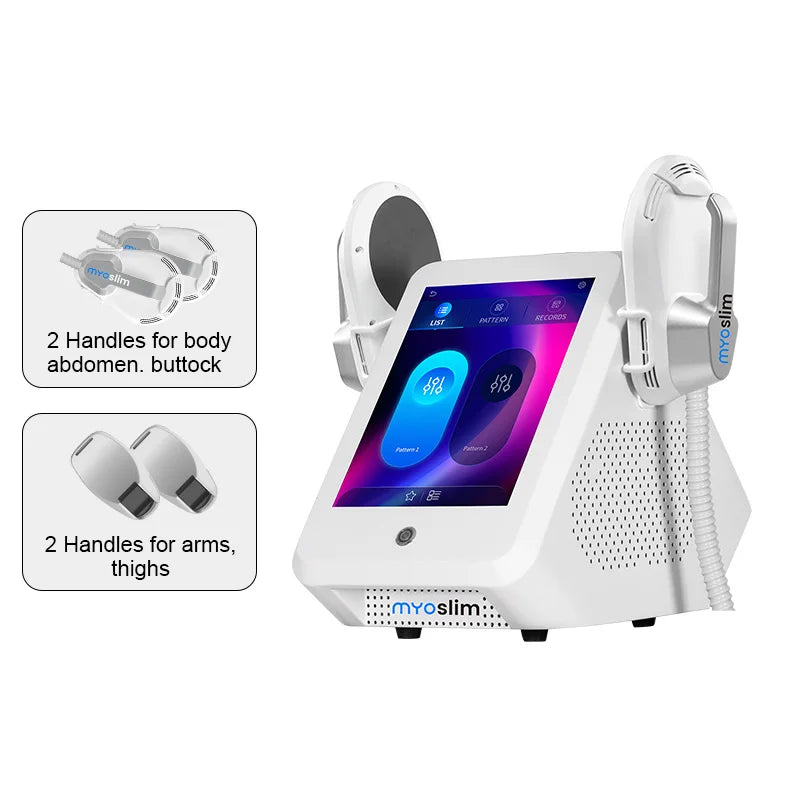
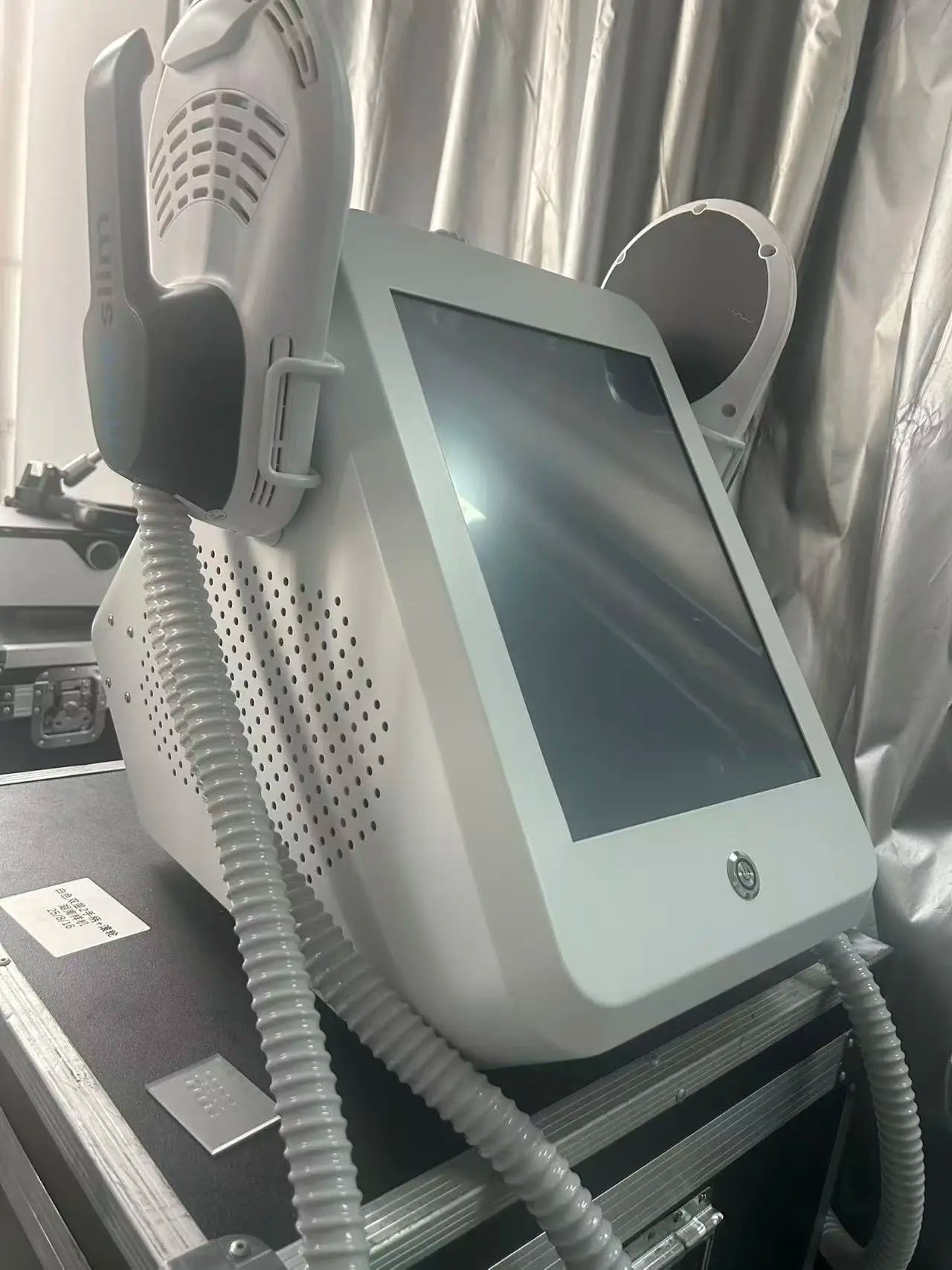
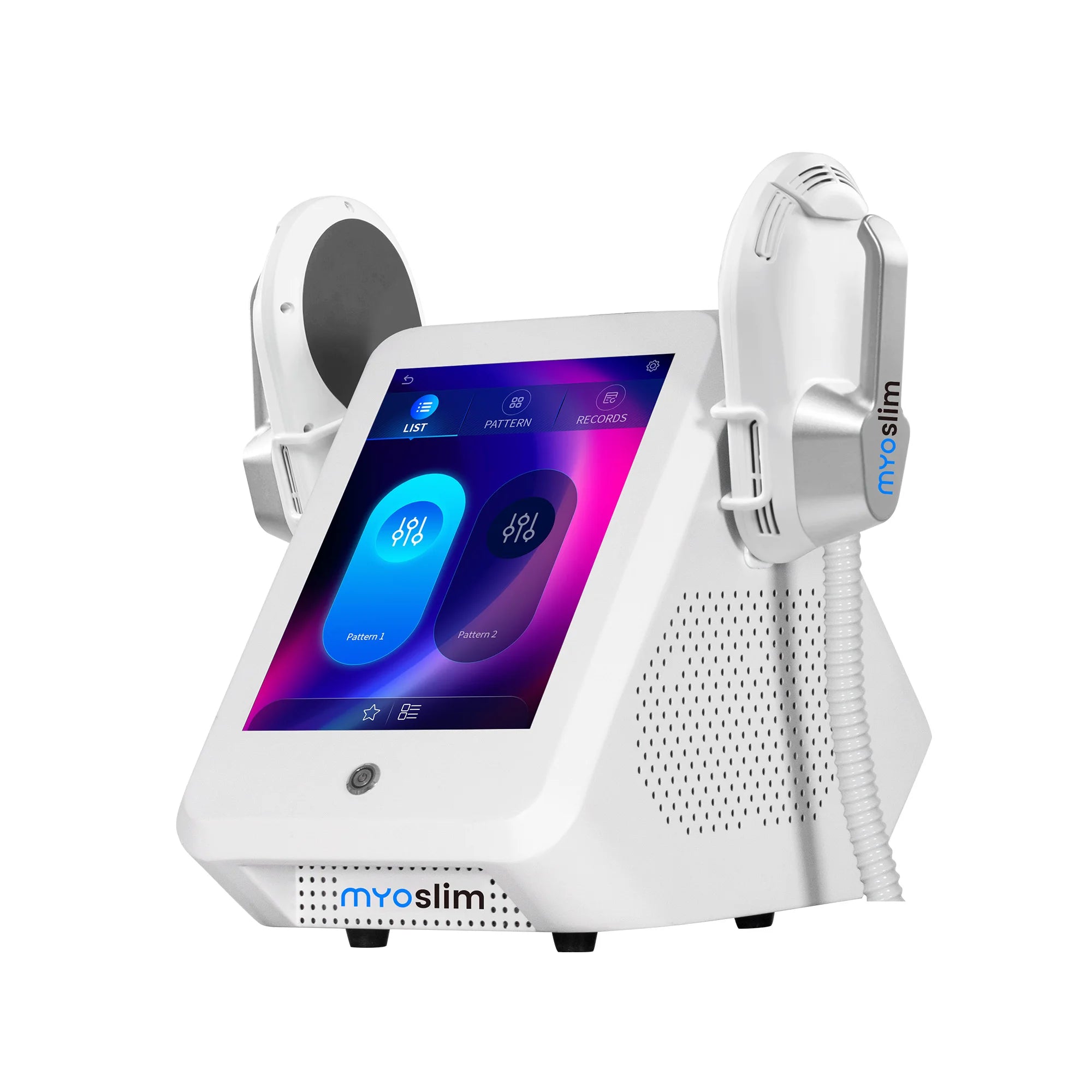
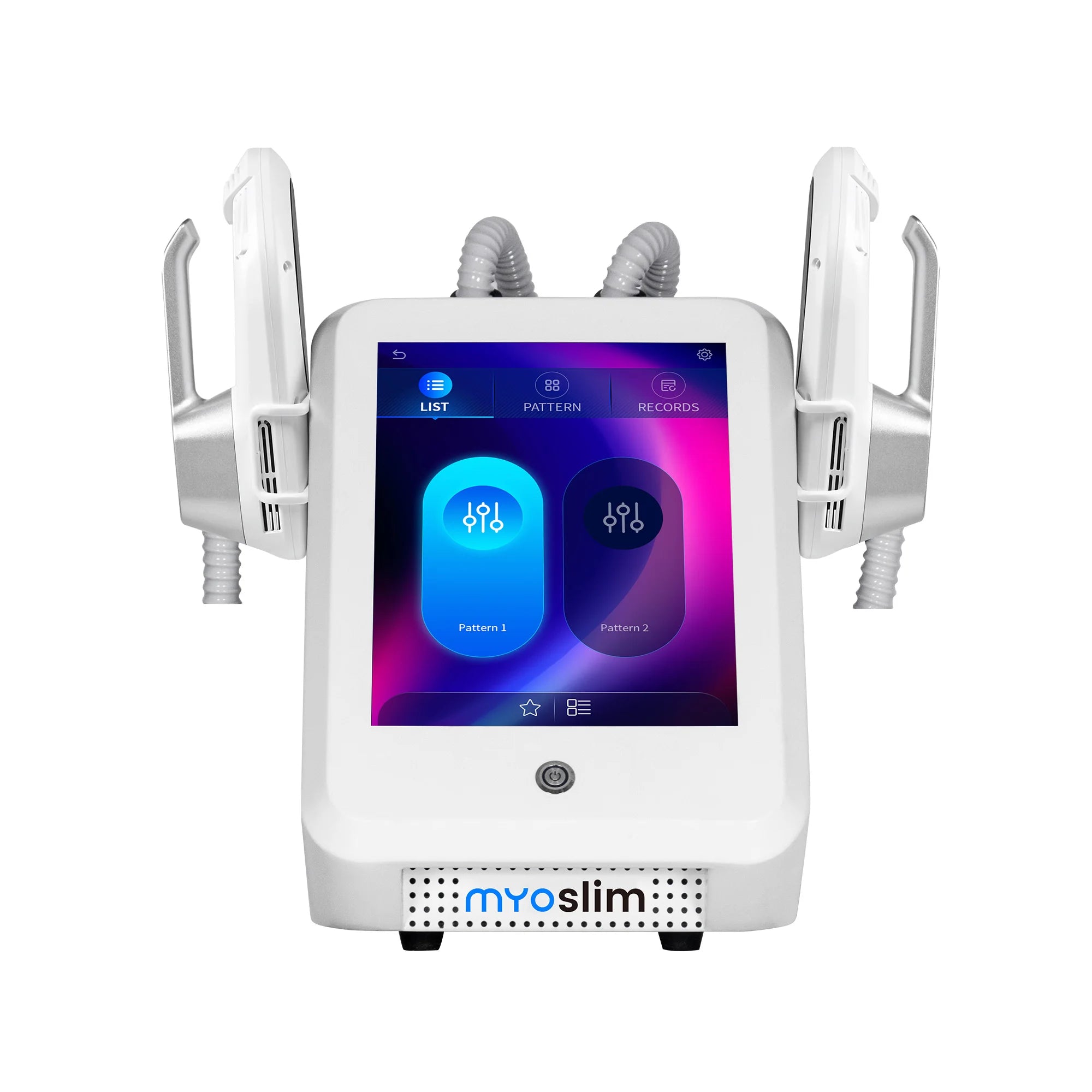
For readers evaluating a home-oriented option, the MYOSLIM EMS Body Sculpting Machine is an example of a system marketed for targeted muscle stimulation and body-sculpting support. According to the supplied product specifications, it combines EMT and EMS technology, offers adjustable 20–100 Hz frequency settings, includes four detachable treatment heads, and is designed for 20–30 minute sessions. These specifications describe the product itself and should not be interpreted as evidence that it provides the same clinical outcomes as a particular HIFEM device studied in published research.
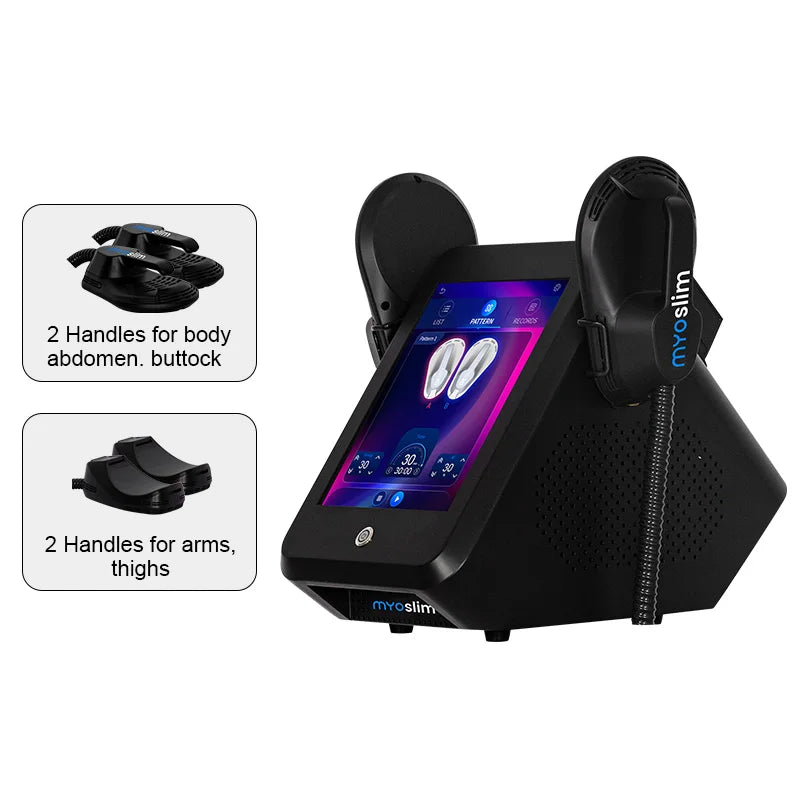
For a reader whose goal is targeted muscle stimulation at home, product features such as adjustable frequency, multiple treatment heads, session duration, and operating instructions may be useful decision criteria. The more important question, however, is whether the device's actual intended use and safety information match the user's goals.
Electromagnetic Muscle Stimulation: What It Can and Cannot Do
What the evidence supports
Current research supports the basic physiological premise that electromagnetic stimulation can activate skeletal muscles and produce repeated involuntary contractions. Clinical studies also report measurable changes in selected muscle and body-contouring outcomes, particularly in abdominal applications.
A systematic review published in Plastic and Reconstructive Surgery found evidence of increased abdominal muscle thickness and reduced abdominal fat thickness, while also concluding that larger controlled studies are needed, particularly for areas such as the buttocks, thighs, arms, and calves.
What remains uncertain
Important uncertainties remain around long-term durability, optimal treatment protocols, how results transfer between different devices, and the magnitude of cosmetic benefits for less-studied treatment areas. Study quality also varies considerably.
The most reliable approach is therefore to separate mechanism, clinical evidence, and marketing claims. A device can produce muscle contractions without guaranteeing a particular cosmetic outcome.
Final Takeaway
Electromagnetic muscle stimulation is a legitimate form of noninvasive neuromuscular stimulation that uses changing magnetic fields to induce electrical activity and trigger muscle contractions. HIFEM and HI-SMS represent specific approaches within this broader category, while conventional EMS relies on electrical stimulation delivered through surface electrodes.
Research suggests that electromagnetic stimulation can produce measurable muscle and selected body-contouring changes, particularly around the abdomen, but the evidence is not uniform across every device or treatment area. Results should therefore be evaluated using device-specific clinical evidence, realistic timelines, appropriate safety screening, and clear regulatory information.
If you are considering an at-home muscle-stimulation system, focus first on technology, intended use, contraindications, treatment parameters, and evidence rather than dramatic promises. For broader device options, you can also browse body care and health devices and compare products according to your actual wellness goal.
Pillar Article: Best Abdominal Muscle Stimulation Devices in 2026













