

How Does Electrical Muscle Stimulation Work? EMS Explained
Electrical muscle stimulation (EMS) works by sending controlled electrical impulses through the skin to stimulate motor nerves, which then trigger skeletal muscle contractions. Instead of relying entirely on a voluntary signal from the brain, EMS uses an external electrical current to activate motor nerves and produce a measurable muscle response. Understanding this signal pathway helps explain what EMS can realistically do, how it differs from TENS, where it is used, what it feels like, and why correct settings and placement matter.
How Does Electrical Muscle Stimulation Work?
EMS uses electrodes or treatment heads placed over or near a target muscle to deliver controlled electrical stimulation. The electrical current stimulates motor nerves, generating signals that activate motor units and cause skeletal muscle fibers to contract.
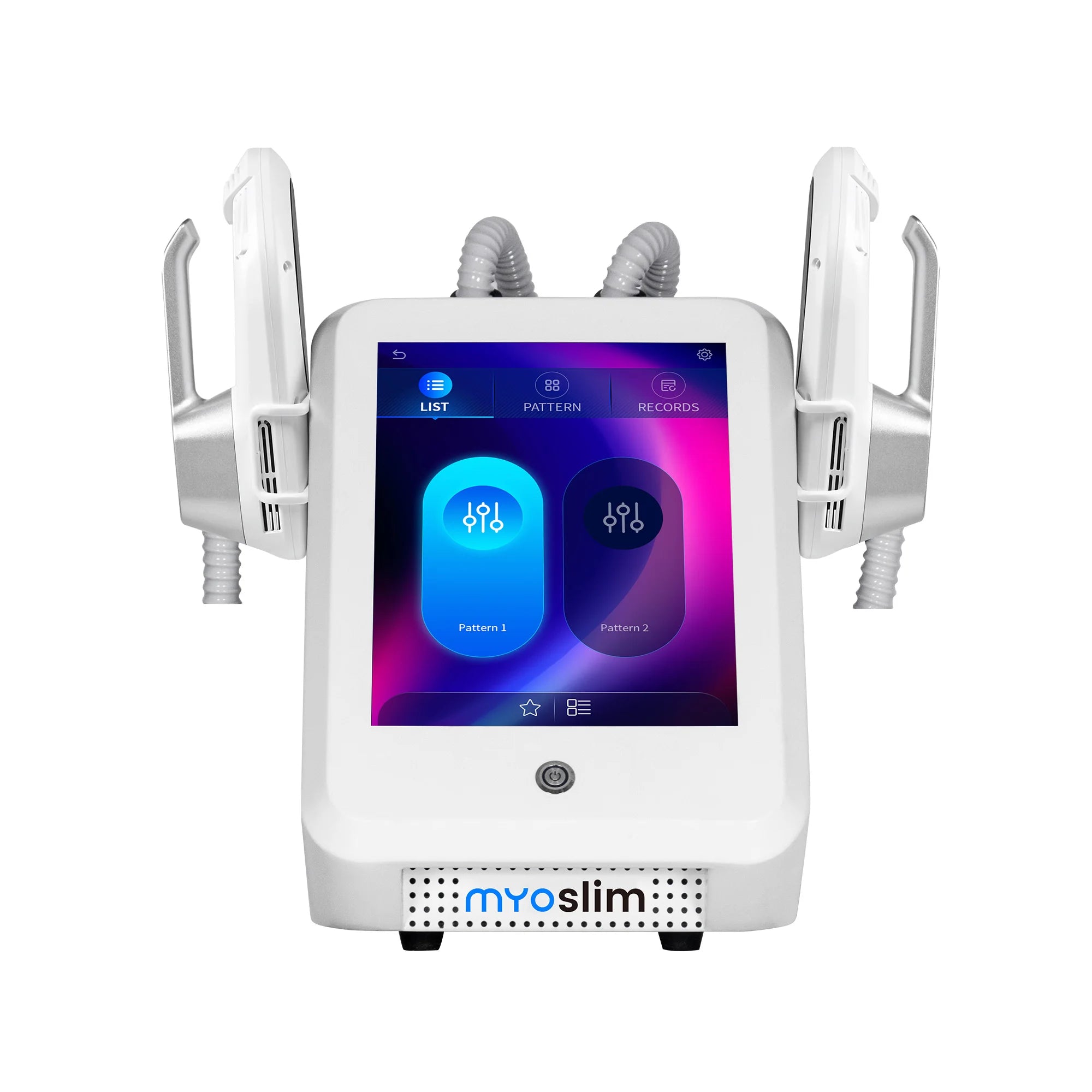
The EMS Signal Pathway: From Electrode to Muscle Contraction
- Electrical stimulation is delivered: Electrodes or treatment heads deliver a controlled electrical current through the skin.
- Motor nerves are stimulated: When the stimulation reaches an appropriate threshold, it can excite motor nerves beneath the treatment area.
- An action potential is generated: The stimulated nerve produces an electrical signal that travels along the nerve.
- The motor unit is activated: The signal ultimately activates the motor unit, which consists of a motor neuron and the muscle fibers it controls.
- Muscle fibers contract: Activated muscle fibers produce a contraction, creating the tightening, twitching, or visible movement commonly associated with EMS.
What Is a Motor Unit?
A motor unit is a functional group made up of one motor neuron and the skeletal muscle fibers controlled by that neuron. When the motor neuron is activated, the muscle fibers associated with it can contract.
EMS takes advantage of this basic neuromuscular pathway. Rather than requiring the user to consciously initiate every contraction, external stimulation can activate motor nerves and produce muscle activity.
Why EMS Can Make a Muscle Contract Without Voluntary Movement
During normal movement, the nervous system generates signals that travel from the brain and spinal cord through motor nerves to muscles. EMS introduces an external electrical stimulus that can activate motor nerves without requiring the same voluntary initiation of movement.
This does not mean EMS bypasses muscle physiology. The resulting contraction still depends on nerve activation, motor-unit recruitment, and the normal mechanisms responsible for skeletal muscle contraction.
What Happens to Your Muscles During EMS?
EMS does not simply send electricity directly into muscle tissue and automatically build muscle. Its primary mechanism is electrical stimulation of nerves that control skeletal muscles. Once those nerves are activated, the downstream process produces muscle contractions.
Motor Nerve Activation and Action Potentials
A motor nerve responds to an adequate electrical stimulus by generating an action potential. This electrical signal travels along the nerve toward the neuromuscular junction, where communication with muscle fibers occurs.
The exact response depends on factors such as stimulation intensity, pulse characteristics, electrode placement, and the condition of the targeted muscle.
Neuromuscular Junction and Muscle Fiber Activation
The neuromuscular junction is the communication point between a motor neuron and the muscle fibers it controls. Under normal conditions, nerve signaling at this junction helps initiate muscle contraction. With EMS, external electrical stimulation initiates the nerve signal that leads to muscle activation and contraction.
Contraction Strength, Frequency, and Pulse Width
The strength and character of an EMS contraction are influenced by several variables. Electrode placement determines which nerves and muscles are being stimulated, while intensity affects the strength of the stimulation. Pulse frequency and pulse width also influence how the muscle responds.
Higher stimulation does not automatically mean better results. The appropriate setting depends on the device, intended use, treatment area, user tolerance, and manufacturer instructions. A controlled and sustainable stimulation level is generally more useful than simply maximizing intensity.
What Does EMS Do to Your Muscles?
EMS produces electrically induced muscle contractions that can support muscle activation, conditioning, and neuromuscular re-education in appropriate situations. However, EMS should be viewed as a tool for muscle stimulation rather than a universal replacement for active exercise or medical treatment.
Muscle Activation and Strength Training Support
Repeated electrically induced contractions can provide muscle activation and may support strength or conditioning goals in selected circumstances. Results depend on the stimulation parameters, treatment consistency, muscle condition, electrode placement, and whether EMS is combined with active exercise.
EMS for Muscle Re-Education and Rehabilitation
Neuromuscular electrical stimulation (NMES) may be used in physiotherapy to help activate muscles that are weak, inhibited, or difficult to contract voluntarily. In rehabilitation settings, electrical stimulation can form part of a broader treatment plan designed around restoring functional movement.
People recovering from injury or surgery should not treat consumer EMS as a substitute for professional rehabilitation assessment. The appropriate stimulation method depends on the underlying condition and treatment goals.
What EMS Cannot Do on Its Own
EMS cannot replace comprehensive exercise, progressive resistance training, appropriate nutrition, or treatment of an underlying medical condition. It also should not be presented as a guaranteed method for dramatic fat loss or effortless body transformation.
EMS vs. NMES vs. TENS: What's the Difference?
EMS, NMES, and TENS are related forms of electrical stimulation, but their terminology and intended applications differ. The biggest distinction is whether the stimulation is intended to produce purposeful muscle contractions or is primarily used for sensory nerve stimulation and pain management.
EMS and NMES
EMS generally refers to electrical muscle stimulation intended to activate nerves and produce muscle contractions. NMES, or neuromuscular electrical stimulation, is commonly used to describe electrical stimulation specifically intended to activate nerves and muscles, particularly in rehabilitation and physiotherapy.
TENS
TENS stands for transcutaneous electrical nerve stimulation. It is primarily associated with pain-management applications and is not intended to produce the same type of purposeful therapeutic muscle contraction associated with EMS or NMES.
EMS vs. TENS Comparison Table
| Feature | EMS / NMES | TENS |
| Primary purpose | Muscle activation and purposeful muscle contraction | Pain-management stimulation |
| Primary target | Motor nerves and associated skeletal muscles | Sensory nerves |
| Muscle contraction | Intended to produce muscle contraction | Not primarily intended to produce therapeutic muscle contraction |
| Typical sensation | Tingling, pulsing, tightening, twitching, or contraction | Typically a sensory tingling or pulsing sensation |
| Common application | Muscle activation, conditioning, and rehabilitation support | Pain-management applications |
What Is Electrical Muscle Stimulation Used For?
Physiotherapy and Muscle Re-Education
One established use of neuromuscular electrical stimulation is helping activate muscles when voluntary contraction is difficult or impaired. In a supervised physiotherapy context, stimulation may be incorporated into a broader rehabilitation program.
Strength and Conditioning Support
EMS can provide additional muscle stimulation in selected strength and conditioning situations. However, it should complement rather than automatically replace active training. Voluntary exercise provides benefits that electrical stimulation alone cannot reproduce.
Muscle Activation After Inactivity or Injury
Following periods of inactivity, injury, or certain rehabilitation situations, clinicians may use electrical stimulation to help encourage muscle activation. The appropriate approach depends on the person's condition, recovery stage, and treatment objectives.
When injury or surgery is involved, professional guidance is particularly important before adding EMS to a recovery routine.
Consumer EMS Fitness and Toning
Consumer EMS devices are often used for muscle activation and toning. These products can provide targeted stimulation, but users should maintain realistic expectations. Temporary muscle activation during a session is not the same as guaranteed long-term muscle development or comprehensive body composition change.
For people interested in home wellness devices, the Body Care and Health Devices collection provides a broader category of at-home body-care technology.
What Does Electrical Muscle Stimulation Feel Like?
EMS sensations vary according to stimulation intensity, treatment area, device design, electrode placement, and individual sensitivity.
Typical EMS Sensations
Common sensations can include tingling, pulsing, tightening, twitching, or a rhythmic muscle contraction. At an appropriate setting, users may notice the target muscle visibly tightening or moving during stimulation.
Why Higher Intensities Feel Stronger
Increasing stimulation intensity can produce stronger sensations and contractions because the stimulation can recruit more nerve fibers or increase the strength of the resulting muscle response. However, stronger is not automatically better.
Intensity should be increased gradually and kept within the device's recommended operating range. The goal is controlled stimulation rather than unnecessary discomfort.
When EMS Should Not Feel Comfortable
Normal stimulation may feel unusual or strong, but sharp pain, burning, excessive discomfort, or significant skin irritation should not be ignored. Stop the session if the stimulation becomes painful or causes an unexpected reaction, and follow the manufacturer's safety instructions.
Does Electrical Muscle Stimulation Actually Work?
EMS clearly has a physiological mechanism for activating motor nerves and producing muscle contractions. Whether it produces a meaningful practical result depends on the intended use, stimulation parameters, treatment consistency, muscle condition, placement, and whether it is combined with appropriate active training or rehabilitation.
What the Evidence Supports
The strongest rationale for electrical muscle stimulation involves neuromuscular activation and selected rehabilitation applications. NMES can be used to help stimulate muscles when voluntary activation is limited or difficult. Electrical stimulation can also provide selected strength or conditioning support when appropriately incorporated into a broader program.
Factors That Affect Results
- Stimulation frequency and pulse characteristics
- Current intensity and user tolerance
- Electrode or treatment-head placement
- Target muscle and baseline muscle condition
- Session duration and consistency
- Whether EMS is combined with active exercise
- The specific purpose of treatment
EMS Results: What to Expect Realistically
EMS can create measurable muscle contractions and support muscle activation, but outcomes should be framed realistically. It is not a guaranteed shortcut to dramatic fat loss, effortless muscle building, or a complete body transformation.
For body-sculpting applications, EMS should be understood as one component of a broader wellness routine. Consistent use, appropriate settings, correct placement, and realistic goals matter more than simply choosing the strongest stimulation available.
How to Use EMS Effectively
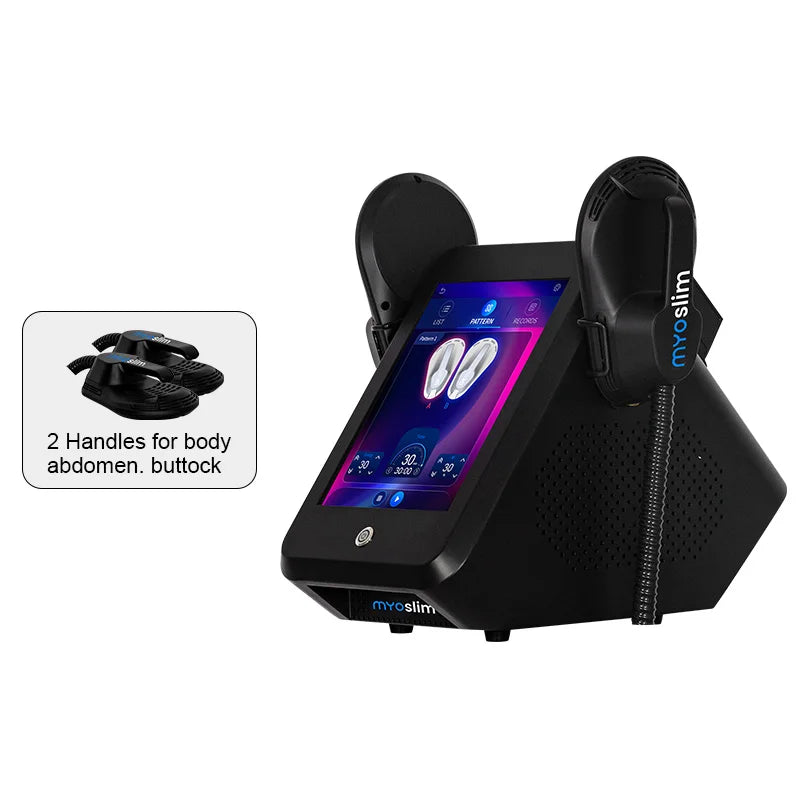
Correct Electrode Placement
Placement matters because the electrical stimulus needs to interact effectively with the nerves associated with the target muscle. Follow the device's placement instructions rather than positioning treatment heads randomly.
For a consumer body-sculpting system, the target areas may include the abdomen, buttocks, thighs, arms, and back. Placement should always follow the specific manufacturer's instructions for the device and treatment area.
Choosing Appropriate Intensity and Settings
Begin with an appropriate stimulation level and increase gradually according to comfort and device instructions. Do not assume that maximum power produces maximum benefit.
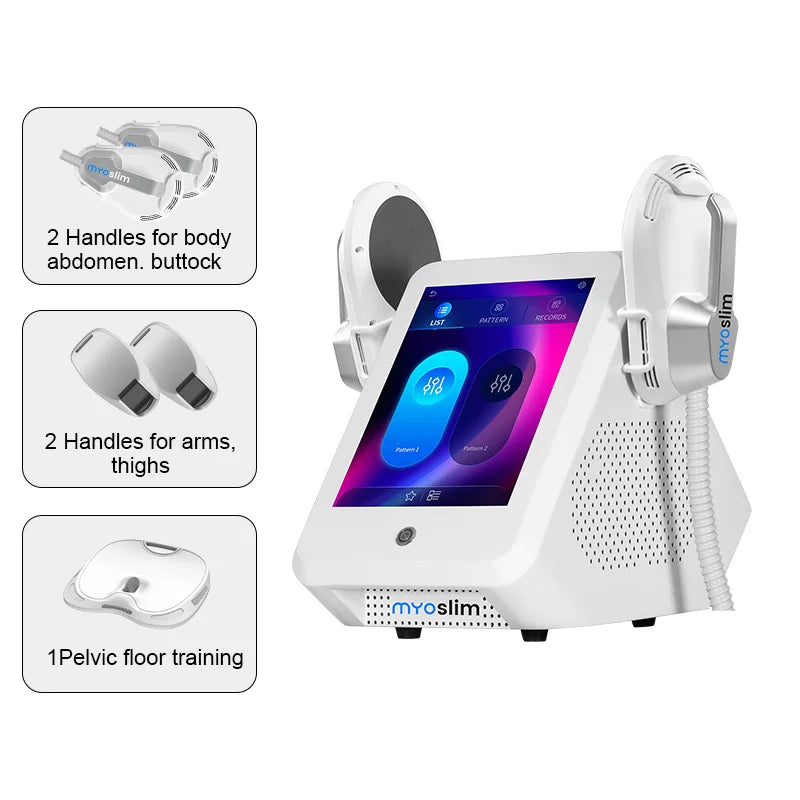
For example, the MYOSLIM EMS Body Sculpting Machine is described as combining EMT and EMS technology with adjustable 20–100 Hz frequency, four detachable treatment heads, dual-area treatment capability, and typical 20–30 minute sessions. These specifications describe the device's available configuration; they should not be interpreted as a universal EMS treatment protocol.
EMS With Active Exercise
EMS can complement voluntary exercise in appropriate circumstances. Active training remains important because conventional exercise provides broader movement, progressive loading, cardiovascular benefits, coordination, and functional training that passive electrical stimulation does not replace.
The goal is to use EMS as a targeted stimulation tool rather than treating it as a complete substitute for movement.
Readers exploring other wellness technologies can also browse the Skin and Beauty Care Devices collection for related at-home device categories.
Is Electrical Muscle Stimulation Safe?
Electrical muscle stimulation can be appropriate for many users when the device is used correctly, but it is not suitable for everyone. Safety depends on the device, treatment area, stimulation settings, individual health circumstances, and whether professional supervision is appropriate.
Common Side Effects and Skin Reactions
Temporary redness, mild skin irritation, soreness, or discomfort can occur after electrical stimulation. Stop using the device if irritation becomes significant, symptoms persist, or the stimulation causes unexpected pain.
Who Should Avoid EMS or Seek Medical Guidance First?
People with implanted electronic devices or certain medical conditions should seek appropriate healthcare guidance before using EMS. Pregnancy-related concerns, recent surgery, significant medical conditions, unexplained symptoms, or recovery from an injury can also warrant professional assessment before electrical stimulation is used.
When there is uncertainty about whether EMS is appropriate, a qualified healthcare professional should determine whether stimulation is suitable rather than relying solely on a consumer device's general instructions.
Where EMS Should Not Be Applied
Do not place stimulation electrodes or treatment heads on sensitive or inappropriate areas. Follow the manufacturer's placement instructions carefully and avoid improvising treatment locations.
Clinical EMS vs. At-Home EMS Safety
Clinical EMS or NMES is often incorporated into an individualized treatment plan, particularly when rehabilitation is involved. At-home EMS places more responsibility on the user to understand device instructions, placement, intensity, and contraindications.
A consumer device can be convenient for general wellness and muscle stimulation, but professional assessment is more appropriate when the purpose is rehabilitation, recovery from surgery, treatment of significant weakness, or management of an underlying medical problem.
EMS Benefits and Limitations at a Glance
Potential Benefits
- Produces targeted skeletal muscle contractions
- Supports muscle activation
- Can assist neuromuscular re-education in appropriate clinical settings
- May complement selected strength and conditioning goals
- Allows targeted stimulation of specific muscle groups
- Can provide a convenient option for consumer muscle-toning routines
Key Limitations
- Results vary between individuals and applications
- Correct placement and settings are important
- EMS does not replace comprehensive exercise
- It is not a guaranteed fat-loss or body-transformation method
- Some users should avoid EMS or seek medical guidance first
- Rehabilitation applications may require professional supervision
Frequently Asked Questions About Electrical Muscle Stimulation
How does electrical muscle stimulation work?
Electrical muscle stimulation sends controlled electrical impulses through the skin to stimulate motor nerves. The stimulated nerves generate signals that activate motor units and cause skeletal muscle fibers to contract.
What does EMS do to your muscles?
EMS produces electrically induced muscle contractions. Depending on the application and treatment plan, these contractions can support muscle activation, conditioning, or neuromuscular re-education. EMS does not replace exercise or automatically produce dramatic body-composition changes.
What is the difference between EMS and TENS?
EMS and NMES are generally associated with stimulating motor nerves to produce muscle contractions, while TENS is primarily associated with sensory nerve stimulation for pain-management applications.
What does electrical muscle stimulation feel like?
EMS may feel like tingling, pulsing, tightening, twitching, or rhythmic muscle contractions. Stronger settings can produce stronger sensations, but sharp pain, burning, or excessive discomfort is a reason to stop the session.
Is electrical muscle stimulation safe?
EMS can be appropriate when used correctly, but it is not suitable for everyone. People with implanted electronic devices, certain medical conditions, pregnancy-related concerns, recent surgery, or unexplained symptoms should seek appropriate medical guidance before use.
Final Takeaway: How EMS Works and What It Can Realistically Do
Electrical muscle stimulation works by delivering controlled electrical impulses that stimulate motor nerves and trigger skeletal muscle contractions. The essential pathway is straightforward: electrical stimulation activates a motor nerve, an action potential travels through the nerve, the motor unit is activated, and the associated muscle fibers contract.
That mechanism explains why EMS can be useful for muscle activation, neuromuscular re-education, rehabilitation support, and selected fitness or body-toning applications. It also explains its limitations. EMS is not a universal substitute for active exercise, progressive resistance training, appropriate nutrition, or professional medical care.
For readers interested in targeted at-home muscle stimulation, a device such as the MYOSLIM EMS Body Sculpting Machine can illustrate how modern consumer systems combine adjustable stimulation with targeted treatment areas. The most important consideration is not simply the strength of the electrical signal, but whether the device, placement, settings, and intended use are appropriate for the individual.
For broader wellness-device options, explore the Body Care and Health Devices collection and choose products according to your specific goals, instructions, and safety considerations.
Pillar Article: Best Abdominal Muscle Stimulation Devices in 2026













