

The safest way to use a skin tag removal kit is to first confirm the growth is a typical skin tag, then follow the product instructions carefully while keeping the area clean and protected. Most kits work by freezing the tissue, reducing blood supply, drying the tag, or using a targeted treatment method. When used correctly, the skin tag usually darkens, shrinks, and falls away naturally over several days to two weeks.
How to Use Skin Tag Removal Kit Safely at Home (Step-by-Step Guide)
Wondering how to use a skin tag remover safely and effectively at home? Many people search for painless removal methods, whether wart treatments work on skin tags, and when professional treatment is necessary. Modern at-home skin tag removal kits are designed to make small skin tag treatments simple, but using the correct technique is important for safer results.
This guide explains how skin tag removal kits work, how to prepare your skin, step-by-step removal instructions, healing expectations, common mistakes, and how to choose the right home treatment method.
⏱ 12 min read
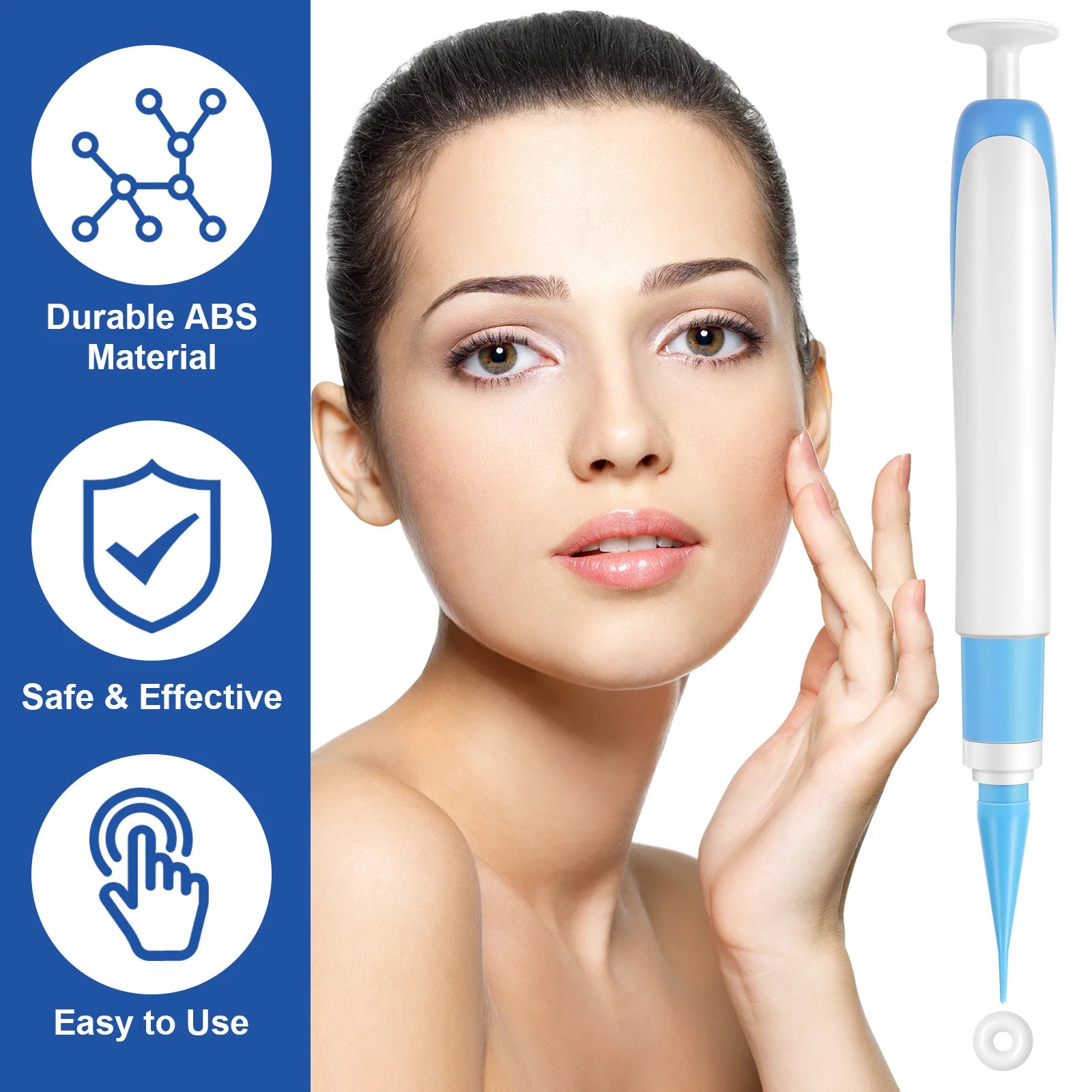
How to use skin tag remover safely at home — achieve painless skin care results!
What Is a Skin Tag Removal Kit?
A skin tag removal kit is an at-home device or treatment designed to remove small, benign skin tags without a clinic visit. Different kits use different technologies, so understanding how your chosen remover works is important before treatment.
Types of Skin Tag Removal Kits
- Cryotherapy kits: Freeze the skin tag tissue until it dries and naturally falls away.
- Ligation band devices: Place a small band around the base of the tag to reduce blood supply.
- Skin tag removal pens: Use targeted application methods designed for precise treatment.
- Topical solutions or patches: Help dry or weaken the tissue over time.
How Do Skin Tag Removers Work?
Most skin tag removers work by one of four methods:
- Cryotherapy: freezes the tissue until it dies and separates naturally.
- Ligation: cuts off blood flow so the tag shrinks and detaches.
- Topical liquids or pens: gradually dry or damage the treated tissue.
- Adhesive patches: deliver treatment ingredients over a set period.
Always follow the instructions included with your specific kit because treatment times and application methods can vary.
Which Removal Method Is Right for Your Skin Tag?
Small, soft skin tags located on areas such as the neck, underarms, or torso are usually the most suitable for home treatment. Larger growths, irritated skin tags, bleeding areas, or growths near sensitive locations should be evaluated by a healthcare professional.
Before You Start: Important Safety Checks
How to Identify a True Skin Tag
Skin tags are usually soft, flesh-colored growths attached by a narrow stalk. They are often painless but may become irritated from friction caused by clothing or jewelry.
If a growth is dark, rapidly changing, irregular, painful, or bleeding without injury, do not attempt home removal.
Skin Growths That Should Never Be Treated at Home
- Moles
- Suspicious pigmented lesions
- Skin cancers
- Unknown bumps
- Bleeding growths
- Rapidly enlarging lesions
Areas Where You Should NOT Use a Skin Tag Kit
- On eyelids or very close to the eyes
- On genital areas
- On infected, irritated, or broken skin
- On very large or painful growths
Who Should Avoid At-Home Skin Tag Removal
Avoid self-treatment if you have poor circulation, bleeding problems, active skin infections, severe immune system problems, or uncertainty about whether the growth is actually a skin tag.
When to See a Doctor Instead
A healthcare professional can confirm the diagnosis and remove skin tags using methods such as sterile removal, cauterization, or professional cryotherapy.
Preparation Checklist Before Treatment
Supplies You'll Need
- Skin tag removal kit
- Mild soap
- Clean towel
- Alcohol wipe if recommended by the manufacturer
- Mirror for hard-to-see areas
Cleaning and Sanitizing the Area
Wash your hands and gently clean the surrounding skin. Dry the area completely before applying any remover.
Read Your Manufacturer Instructions First
Every product may have different treatment times, application methods, and aftercare instructions. Compare general guidance with the directions provided with your kit.
How to Use a Skin Tag Removal Kit (Step-by-Step)
Step 1 — Confirm the Skin Tag Is Suitable for Home Removal
Only treat small, clearly identifiable skin tags away from sensitive body areas.
Step 2 — Wash and Dry the Skin
Clean the treatment area thoroughly and allow the skin to dry completely before application.
Step 3 — Select the Correct Removal Method
Choose the method designed for your kit, whether freezing, banding, pen treatment, topical solution, or patch application.
Step 4 — Apply the Device Correctly
Target only the skin tag and avoid unnecessary contact with surrounding healthy skin. Follow the recommended application time.
Step 5 — Follow the Recommended Treatment Time
Do not freeze longer than instructed, leave patches on longer than recommended, or repeatedly apply treatments during the same session.
Step 6 — Protect the Area After Treatment
Keep the area clean, avoid rubbing, and allow the treated tissue to separate naturally.
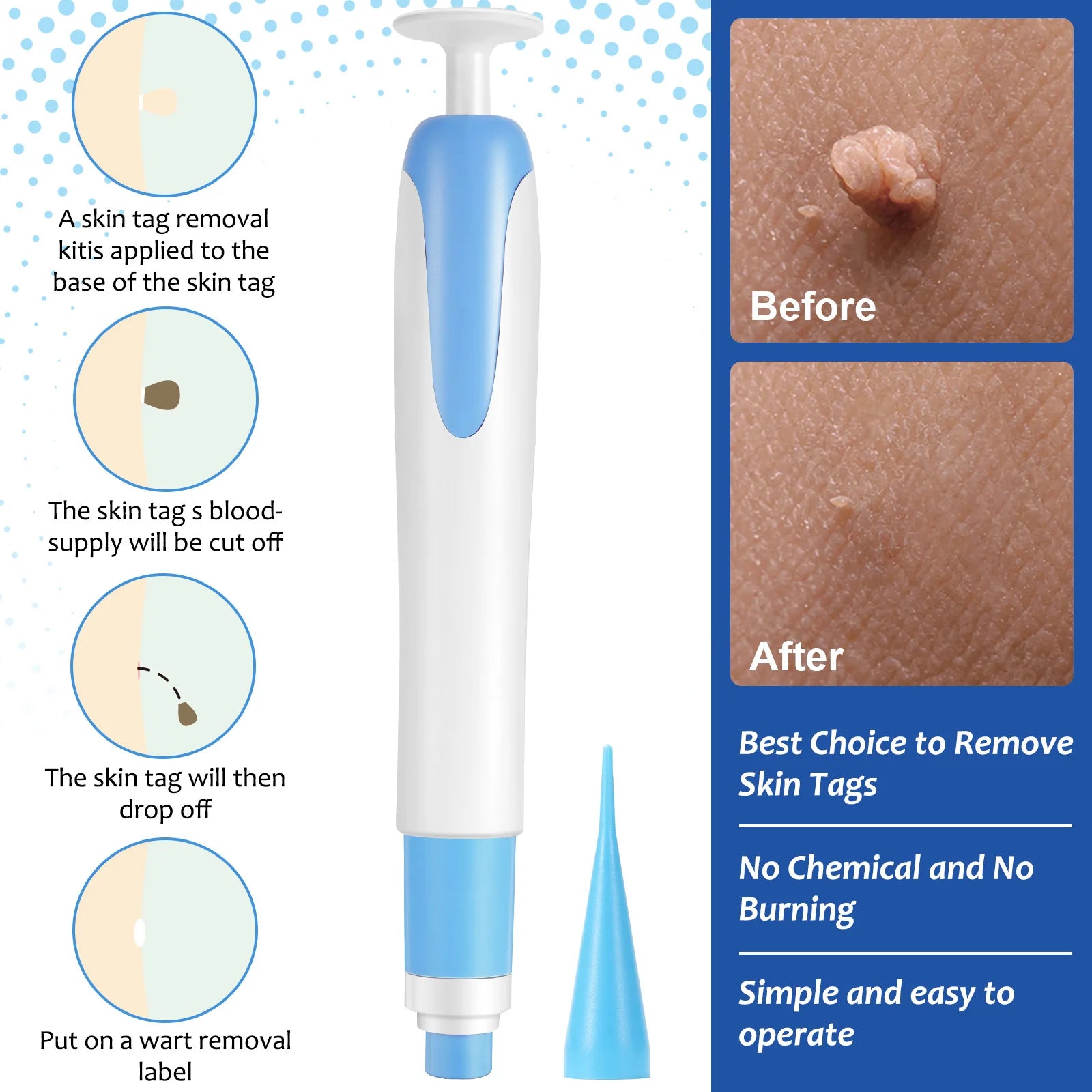
Step-by-step instructions on how to use skin tag remover effectively.
Instructions by Skin Tag Removal Method
How to Use Skin Tag Remover Pen
Clean the area, position the pen tip carefully, activate the device according to instructions, and avoid prolonged contact with healthy skin.
How to Use Auto Skin Tag Remover Kit
Automatic kits are designed for consistent application. Position the device correctly before activation and complete only the recommended treatment cycle.
Skin Tag Removal Pen Instructions
Keep your hand steady and avoid repeated overlapping applications during one treatment session.
How to Use Skin Tag Remover Patches
Apply patches to clean, dry skin and replace them according to the product schedule.
Skin Tag Patches: How Long Should They Stay On?
Wear time depends on the product. Follow the package instructions rather than extending treatment for faster results.
How to Freeze Off Skin Tags Using Cryotherapy Kits
Apply the freezing applicator for the recommended duration and allow the tissue to heal naturally.
Nitrogen Skin Tag Removal Explained
Cryotherapy works by freezing tissue. The treated area may darken, dry, and fall away over time.
What Happens After Treatment?
Expected Healing Timeline
After treatment, mild redness or swelling may occur. Over several days, the skin tag may darken, shrink, and detach.
After Care Skin Tag Removal Guide
- Keep the area clean.
- Avoid scratching or picking.
- Do not pull partially detached tissue.
- Reduce friction around the treated area.
Normal Healing vs Signs of Infection
Mild tenderness can be normal. Seek medical advice if redness spreads, pus appears, fever develops, or pain worsens.
When a Second Treatment May Be Needed
Some larger skin tags may require another treatment after the recommended waiting period. Avoid repeating treatment too soon.
Common Mistakes That Slow Healing
Applying Too Much Product
Using extra product does not necessarily improve results and may increase irritation.
Removing the Tag Too Early
Allow treated tissue to detach naturally instead of cutting or pulling it away.
Treating the Wrong Type of Growth
Not every raised bump is a skin tag. Correct identification is one of the most important safety steps.
Can You Use Wart Remover on Skin Tags?
Why Wart Treatments Sometimes Work
Some wart treatments use freezing or tissue-drying ingredients that may also affect skin tags.
Why Dermatologists Usually Don't Recommend It
Wart products are designed for warts, not skin tags. Strong ingredients may irritate surrounding skin or cause unwanted reactions.
Can Nitrogen Wart Removers Remove Skin Tags?
Some cryotherapy products may freeze skin tags, but results vary because many are formulated mainly for wart treatment.
Does Skin Tag Removal Hurt?
Most home skin tag removal methods cause little discomfort. Banding devices are usually painless after placement, cryotherapy may feel cold or sting briefly, and topical treatments may cause mild tingling.
Tips for Easier Healing
- Avoid tight clothing that rubs the area.
- Keep the site clean and dry.
- Do not pick scabs.
- Follow treatment intervals exactly.
- Protect newly healed skin from excessive sun exposure.
Pros and Cons of At-Home Skin Tag Removal Kits
| ✅ Pros | ❌ Cons |
|---|---|
| Lower cost than professional procedures | Results are not immediate |
| Convenient home treatment | Not suitable for suspicious growths |
| Multiple treatment methods available | Incorrect use may irritate skin |
Best Tools & Kits for Home Dermatology
Choose a skin tag removal kit that explains its method clearly, provides safety instructions, and is designed specifically for skin tags.
Choosing the Right Kit for Your Skin Type
Consider the treatment location, skin sensitivity, and size of the skin tag before selecting a removal method.
The KentDO Skin Tag Mole Removal Kit is designed for targeted at-home application.
Explore more options in our Skin and Beauty Care Devices collection and Body Care and Health Devices .
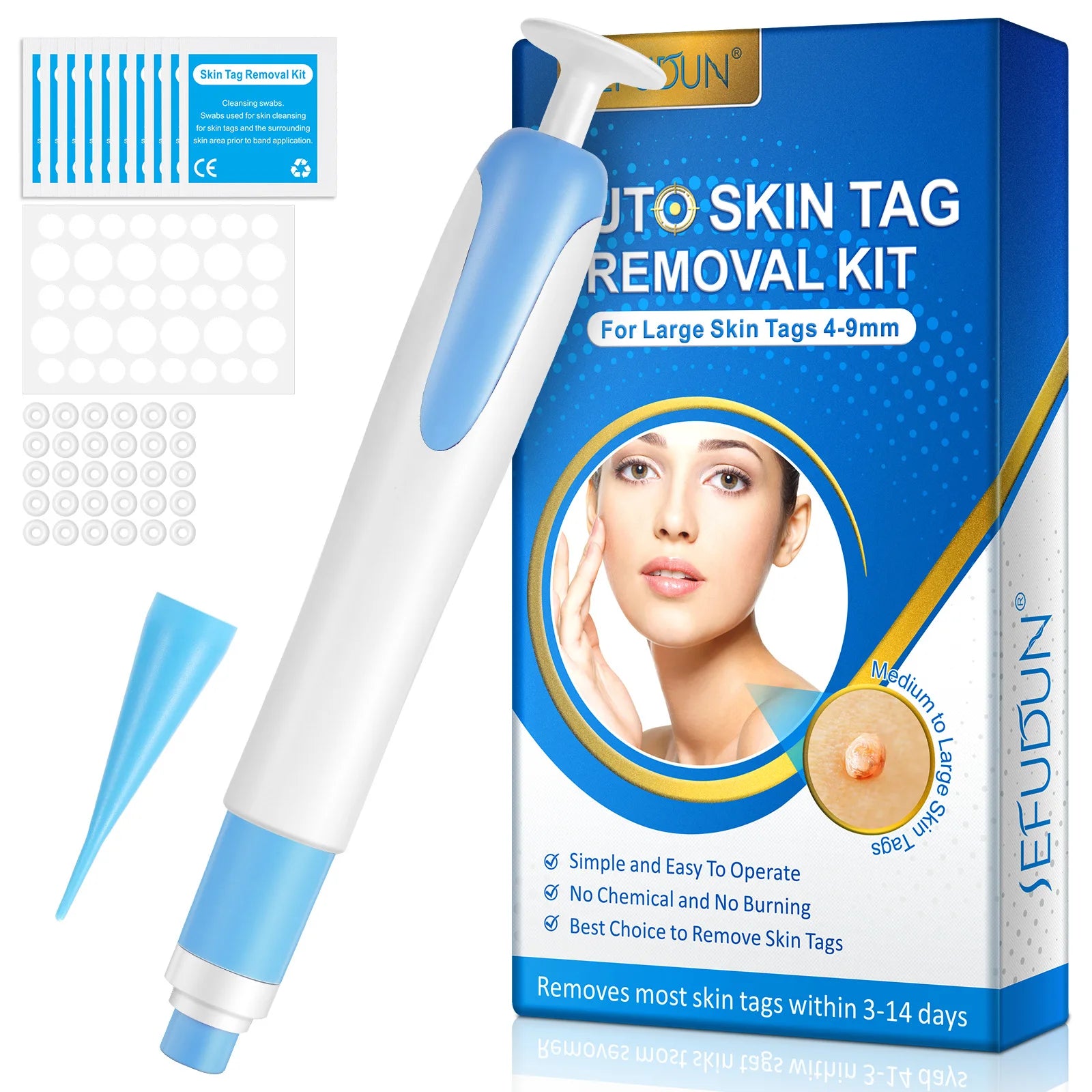
Get smoother, clearer skin — trusted skin tag remover kits with fast results.
Frequently Asked Questions
Can I remove skin tags at home safely?
Yes, many small skin tags can be removed at home when using a suitable kit and following instructions carefully.
How do skin tag removers work?
They work by freezing, drying, or cutting off blood supply to the skin tag so the tissue eventually falls away.
How does a skin tag remover pen work?
Most pens use targeted treatment methods designed to affect the skin tag while minimizing contact with surrounding skin.
How long do you leave skin tag patches on?
Wear time varies by product, so follow the manufacturer's instructions.
How long does it take for a skin tag to fall off?
Many treated skin tags fall away within one to two weeks.
Can you use wart remover on skin tags?
Wart removers may affect skin tags, but they are not specifically designed for this purpose.
How do I care for the area afterward?
Keep the area clean, avoid picking healing tissue, and watch for signs of infection.
Can skin tags grow back after removal?
The removed skin tag usually does not return, but new skin tags can appear in other areas.
Related Articles:
- Large Skin Tag Removal at Home: What You Must Know Before Trying
- How to Use a Skin Tag Remover Without Hurting Yourself
- Safe Skin Tag Removal at Home: Avoid Common Mistakes
- Painless Removal of Skin Tags: Tips for Stress-Free At-Home Use
Pillar Articles:













