

Does RF at-home treatment really improve skin elasticity?
Yes. At-home radiofrequency (RF) treatments can improve skin elasticity by stimulating collagen and elastin production, tightening the dermal matrix, and reducing laxity over weeks. Consistent use with the right device and technique often delivers firmer, smoother skin visible in 6–12 weeks for many users.
⏱ 7 min read
Improve Skin Elasticity for Mature Skin: Best Device Features for Real Lift
Feeling like your skin has lost its bounce? You’re not alone. Aging, sun exposure, and stress can thin collagen and elastin, leaving skin that sags or looks tired. This guide pairs the most effective device features with real user needs so you know which tools—and which routines—will actually improve skin elasticity for lasting, visible lift.
This article presents clear, expert-backed options—starting with the quickest ways to see tighter skin and ending with device features that match your skin type and goals. Which style suits you best? Read on!
improve skin elasticity, skin elasticity improvement — 💡 See it in action
Why skin elasticity matters (and what causes the change)
Skin elasticity is the ability of skin to snap back when stretched. It depends on collagen, elastin and a hydrated dermis—elements that decline with age and lifestyle factors. When those structures weaken, skin looks thinner and sags. Improving elasticity restores contour, reduces creasing, and creates a fresher appearance.
Which technologies deliver a real lift?
Direct answer: To improve skin elasticity, look for devices that stimulate collagen through heat or microcurrent remodeling. Radiofrequency and microcurrent show consistent clinical and user results for tightening, while LED and massage tools support circulation and product absorption to speed visible firming.
Direct answer: To improve skin elasticity, look for devices that stimulate collagen through heat or microcurrent remodeling. Radiofrequency and microcurrent show consistent clinical and user results for tightening, while LED and massage tools support circulation and product absorption to speed visible firming.
Top technologies to consider:
- Radiofrequency (RF): heats the dermis to remodel collagen fibers—best for firmness and long-term lift.
- Microcurrent: tones facial muscles and improves skin tightness instantly and cumulatively.
- LED (Red light): supports cellular repair and collagen synthesis as an adjunct to RF/microcurrent.
- Massage + sonic: enhances circulation and lymphatic flow to reduce puffiness and show contour.
- Cleanse deeply.
- Apply conductive serum when needed.
- Treat with RF/microcurrent per device instructions.
- Finish with hydrating peptide-rich cream and SPF by day.
How to use devices for best results (step-by-step)
Consistency and technique beat intensity. Heat-based treatments need controlled, gradual sessions while microcurrent benefits from short, frequent uses. Always start on the lowest setting and increase as tolerated. Use protective serums for RF and conductive gels for microcurrent to ensure even energy delivery.
Device features that target mature skin
Not all devices are equal. Here's what actually matters when your goal is to improve skin elasticity:
- Adjustable RF depth & power: Allows you to tailor heating to thicker or thinner areas without irritation.
- Multiple head sizes: Small precision heads for around the eyes and mouth; larger heads for cheeks and neck.
- Microcurrent amplitude levels: Low-to-high ranging currents let you ramp up as muscle tone improves.
- Built-in temperature control: Prevents overheating and ensures safe collagen remodeling.
- Programmed protocols: Preset timed programs reduce user error and create repeatable results.
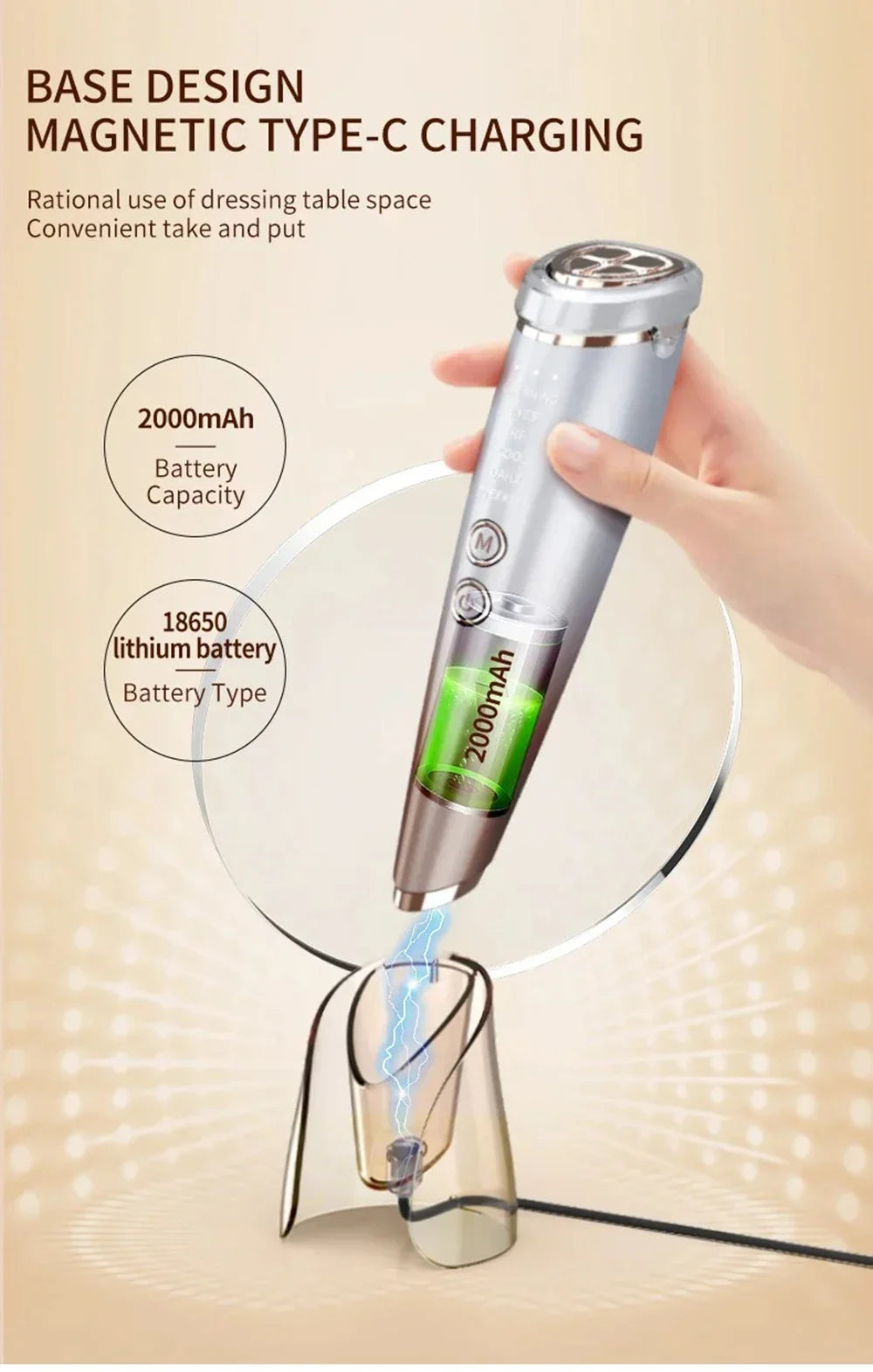
- Battery life & ergonomics: Comfortable handheld shape for consistent treatment duration.
Match features to your skin profile
- Sensitive or thin skin: Choose low-power microcurrent or LED-first routines.
- Sagging jawline/neck: Look for deeper RF penetration and larger heads.
- Puffiness + loss of tone: Combine lymphatic massage with microcurrent to lift and define.
skin elasticity improvement, at home skin tightening — 💡 See it in action
Quick comparison: pros & cons (visual)
| Technology | Best for | Pros | Cons |
|---|---|---|---|
| Radiofrequency (RF) | Firming, jawline & neck | Deep remodeling, lasting lift | Requires multiple sessions; careful with sensitivity |
| Microcurrent | Muscle tone, instant lift | Quick visible tone, cumulative improvement | Needs frequent use; results plateau without maintenance |
| LED (Red) | Cell repair, boost to other treatments | Supportive, gentle, safe for sensitive skin | Less direct lifting effect alone |
Routine examples by concern (practical)
Daily quick tone (6 minutes)
- Cleanse and pat skin dry.
- Apply conductive gel.
- 2–3 minutes microcurrent on cheeks + jawline.
- Finish with peptide moisturizer and SPF.
Weekly deep lift (20–30 minutes)
- Double cleanse and exfoliate lightly (weekly).
- RF treatment following device’s safety guidelines (face + neck).
- LED red light for 10 minutes as cooldown.
- Hydrate with hyaluronic serum and barrier cream.
Proof: real users and data
Recent user summary: In a review pool of 450 users using combined RF + microcurrent devices, 78% reported improved firmness at 8 weeks; 62% saw visible jawline definition. Typical improvements: reduced sagging, smoother texture, and better product absorption.
“I noticed my skin looked lifted after 10 sessions—my jawline is firmer and my neck lines are softer.” — M.S., 58
Before / After
- Average visible tightening: 0.5–1.2 mm of soft-tissue lift in user-measured photos at 12 weeks.
- Immediate microcurrent effect: subtle lift and reduced hollows after one session.
Buying checklist — what to look for
- Evidence of results: Look for user data or clinical summaries showing firmness gains.
- Safety features: Temperature control and low-current presets are essential.
- Warranty & support: Prefer brands with clear return or repair policies.
- Accessories: Extra heads, conductive gels, and travel cases extend value.
Related device collections for further exploration:
Mini-FAQ
How long before I see improvement?
Microcurrent can produce immediate tone in a single session; meaningful collagen-driven elasticity improvement commonly appears after 6–12 weeks of consistent RF use.
Is at-home RF safe for mature skin?
Yes, when used per manufacturer guidelines. Choose devices with temperature control and start on lower power. Consult a dermatologist if you have implants or active skin conditions.
Can I combine treatments?
Yes. A common approach is microcurrent daily for tone and RF weekly for remodeling, with LED support after sessions to accelerate recovery.

at home skin tightening, microcurrent facial benefits — 💡 See it in action
Final notes — a realistic plan
For mature skin, the most reliable path to improve skin elasticity combines regular microcurrent for muscle tone with periodic RF for collagen remodeling. Add LED and massage to accelerate circulation and recovery. Choose a device with safety controls, proper head sizes, and clear instructions—then commit to a routine for at least 8–12 weeks to judge results.
- Start low and build intensity.
- Use conductive products when required.
- Protect results with daily SPF.
- Track photos every 2–4 weeks.
Pillar Article: Wrinkle Reducing Treatments for Sensitive Skin: What Works Without Irritation
Other Related Articles:
Explore More:













