

Non-Invasive Body Contouring Devices: How to Choose
Non-invasive body contouring devices are designed to change the appearance or shape of specific areas without surgery or incisions. But “body contouring” is not one treatment goal. Some technologies primarily target localized fat, while others focus on muscle stimulation, skin firmness, cellulite appearance, or temporary changes in circumference. The right choice depends on the tissue you want to affect, the result you expect, the treatment setting, and the evidence supporting the specific device.
The U.S. Food and Drug Administration (FDA) explains that non-invasive body contouring is different from weight-loss treatment: these procedures may change body shape or circumference but do not treat obesity or provide the broader health benefits associated with weight loss.
Non-Invasive Body Contouring Devices: Which Technology Fits Your Goal?
Quick Answer: What Non-Invasive Body Contouring Devices Can and Cannot Do
Non-invasive body contouring devices use technologies such as controlled cooling, radiofrequency, ultrasound, light-based energy, magnetic fields, or mechanical stimulation to address localized cosmetic concerns. Depending on the technology and authorized indication, the goal may be localized fat reduction, muscle toning, skin tightening, cellulite improvement, or circumference reduction. These treatments should not be confused with general weight-loss programs, and results can vary considerably between devices and individuals.
At-a-Glance Comparison of Body Contouring Technologies
| Technology | Primary mechanism | Target tissue | Best for | Typical setting | Expected outcome | Downtime | Evidence strength | Main limitations |
| Cryolipolysis | Controlled cooling | Subcutaneous adipose tissue | Localized fat bulges | Professional | Gradual reduction in treated fat bulge | Usually minimal | Stronger for authorized indications | Not weight loss; treatment-site effects and rare complications are possible |
| Radiofrequency | Controlled heating | Skin, connective tissue, and sometimes fat | Skin firmness, cellulite appearance, selected contouring goals | Professional and device-specific home applications | Skin tightening or localized contour changes | Often minimal, depending on treatment | Moderate to stronger for specific indications | Results and risks depend heavily on energy delivery and device |
| Focused ultrasound | Focused acoustic energy | Targeted deeper tissue | Selected localized contouring applications | Primarily professional | Localized tissue change | Device-dependent | Device- and indication-specific | Should not be confused with every consumer “cavitation” device |
| Ultrasound cavitation | Ultrasound energy | Soft tissue | Marketed for localized contouring | Professional and consumer products | Variable cosmetic contour changes | Often marketed as minimal | Limited or device-specific | Marketing terminology can exceed the evidence |
| Laser/light | Light or laser energy | Superficial/deeper tissue depending on technology | Selected fat or cellulite-related indications | Professional and device-specific | Localized circumference or appearance changes | Usually limited, but device-dependent | Device-specific | Not all red-light or laser products have the same indication |
| Electromagnetic muscle stimulation | Magnetic-field-induced muscle contractions | Muscle | Muscle tone and firmness | Professional and selected home-use products | Muscle stimulation and possible temporary improvement in tone | Usually limited | Moderate to device-specific | Primarily muscle-focused rather than a direct fat-removal technology |
| Mechanical vibration/massage | Pressure, rolling, or vibration | Skin and superficial tissue | Cellulite appearance and temporary changes | Professional and home | Temporary cosmetic improvement | Usually minimal | Limited to moderate | Temporary effects should not be presented as permanent fat loss |
Match the Technology to Your Desired Outcome
- Localized fat reduction: Consider technologies specifically authorized or clinically studied for reducing localized adipose tissue, such as cryolipolysis and certain heat, ultrasound, or light-based systems.
- Muscle definition: Electromagnetic or electrical muscle stimulation is more directly aligned with muscle-focused goals than a fat-reduction device.
- Skin firmness: Radiofrequency and selected heating technologies may be more appropriate when laxity and firmness are the primary concern.
- Cellulite appearance: Mechanical, radiofrequency, light-based, and other technologies may have cosmetic applications, but improvements can be temporary.
- Temporary circumference changes: Several technologies may produce localized changes, but the mechanism and durability differ substantially.
Cryolipolysis: Best Known for Localized Fat Reduction
How Cryolipolysis Works
Cryolipolysis, commonly called fat freezing, uses controlled cold temperatures to affect fat cells in a targeted area. During professional treatment, an applicator draws a pinchable fat bulge into the treatment area and cools it. The body then gradually clears damaged fat cells over time. The FDA describes cryolipolysis as a technology intended to reduce visible localized fat bulges rather than overall body weight.
What Results Can You Expect?
Results are gradual rather than immediate because the body needs time to process the affected fat cells. The exact outcome depends on the treatment device, applicator, treatment area, anatomy, and protocol. The American Society of Plastic Surgeons notes that cryolipolysis is intended for localized fat bulges and that results develop over several months.
Who Is Cryolipolysis Best For?
Cryolipolysis is generally considered when a person has a localized, pinchable fat bulge that does not respond as desired to diet and exercise. It is not intended to replace weight management or surgery for substantial excess tissue.
Evidence Strength, Risks, and Limitations
Cryolipolysis has substantial clinical history for specific professional indications, but it is not risk-free. Temporary soreness, numbness, swelling, bruising, and contour irregularities can occur. Rare complications have also been reported. The FDA specifically warns that the safety and effectiveness of over-the-counter or home-use fat-freezing products have not been established.
Pros:
- Targets localized subcutaneous fat.
- Does not require surgical incisions.
- Results develop gradually.
Cons:
- Not a weight-loss treatment.
- Professional treatment is typically required for established indications.
- Results vary and complications are possible.
Radiofrequency Body Contouring: Skin Tightening and Tissue Remodeling
How Radiofrequency Affects Tissue
Radiofrequency (RF) body-contouring systems use electrical energy to generate controlled heating. Depending on the device, the energy can affect tissue beneath the skin, connective tissue, or fat. The FDA notes that RF body-contouring technologies may be used for effects including temporary cellulite improvement, localized circumference reduction, and a tighter-looking appearance through tissue shrinking or collagen-related effects.
Importantly, “radiofrequency body contouring” does not describe one identical treatment. Energy delivery, depth, temperature, applicator design, treatment protocol, and regulatory indication can differ significantly.
Best Areas and Expected Results
RF may be considered for areas such as the abdomen, thighs, arms, and other regions where skin laxity or localized contour concerns are present. Some professional RF systems are specifically designed for fat reduction, while others focus more heavily on skin tightening or cellulite appearance.
Evidence Strength, Side Effects, and Downtime
Evidence should be evaluated at the device and indication level. Temporary redness, swelling, discomfort, and tenderness may occur, while excessive heating can produce more serious injuries such as burns. The FDA also identifies active implants and metal beneath the skin as important considerations for certain RF devices.
Focused Ultrasound and Ultrasound Cavitation: What Is the Difference?
Focused Ultrasound for Body Contouring
Focused ultrasound concentrates acoustic energy at a selected depth. In body contouring, the technology may be designed to produce a controlled tissue effect without an incision. The FDA recognizes focused ultrasound among technologies used for body contouring and lists a specific regulatory category for focused ultrasound used for tissue heating or cell disruption.
Because treatment depth and energy delivery matter, focused ultrasound should be evaluated according to the exact device and indication rather than simply by the word “ultrasound.”
Ultrasound Cavitation Devices
“Ultrasound cavitation” is frequently used in consumer and professional marketing, but the term can encompass products with very different technical characteristics. A buyer should verify the device's operating parameters, intended use, treatment instructions, and evidence instead of assuming that all ultrasound machines produce the same biological effect.
Best Uses, Evidence, and Limitations
Professional ultrasound technologies may have defined applications for localized contouring, but evidence from one focused-ultrasound device should not automatically be transferred to an unrelated home cavitation machine. This is one of the most important distinctions when comparing non-invasive body contouring devices.
Laser and Light Body Contouring: Where It Fits
How Laser and Light-Based Contouring Works
Light-based body contouring technologies can use infrared, laser, or other controlled light energy. Depending on the system, energy may be used to heat tissue or produce another defined biological effect. The FDA identifies light-based energy and low-level laser systems among non-invasive body-contouring technologies with specific regulatory classifications.
This category should not be confused with every red-light wellness product. A consumer device marketed for general wellness is not automatically equivalent to a medical body-contouring system with a specific indication.
Expected Outcomes and Treatment Course
Potential outcomes depend on the device. Some systems are designed for localized circumference or fat-layer reduction, while others may be aimed at cellulite appearance. Treatment schedules can range from individual sessions to repeated treatments, and results should be assessed according to the manufacturer's intended protocol.
Evidence Strength and Safety Considerations
Light-based procedures can create eye and skin risks if the technology is used incorrectly. The FDA notes that light-based energy may cause pain, redness, swelling, blisters, burns, or nodules and that appropriate eye protection may be necessary.
Electromagnetic Muscle Stimulation: Best for Muscle Definition
How Electromagnetic Muscle Stimulation Works
Electromagnetic muscle stimulation uses a magnetic field to induce electrical activity that causes muscles to contract. The FDA describes magnetic-field body-contouring devices as capable of producing repeated muscle contractions that may improve muscle tone and firmness in specific areas.
This mechanism makes electromagnetic muscle stimulation fundamentally different from cryolipolysis. One is primarily designed around muscle activation; the other is designed around controlled cooling of localized fat.
Muscle Definition vs Fat Reduction
Muscle stimulation can influence the appearance of an area by affecting muscle tone and firmness without necessarily reducing body weight. That distinction is essential. A person seeking more visible abdominal or gluteal definition may be looking for muscle stimulation, whereas someone seeking to reduce a localized fat bulge needs to evaluate a technology intended to affect adipose tissue.
The FDA also cautions that electrical muscle stimulators have historically been marketed with unsupported claims involving weight loss, girth reduction, and dramatic abdominal definition. Buyers should therefore distinguish documented device indications from promotional language.
Evidence Strength, Treatment Sessions, and Safety
Evidence for muscle stimulation should be evaluated according to the exact technology, device, treatment protocol, and intended use. Muscle soreness or cramping can occur after magnetic-field treatment. The FDA advises against using magnetic-field body-contouring devices in people with active implants such as pacemakers or implantable cardioverter-defibrillators, or with certain metal beneath the skin.
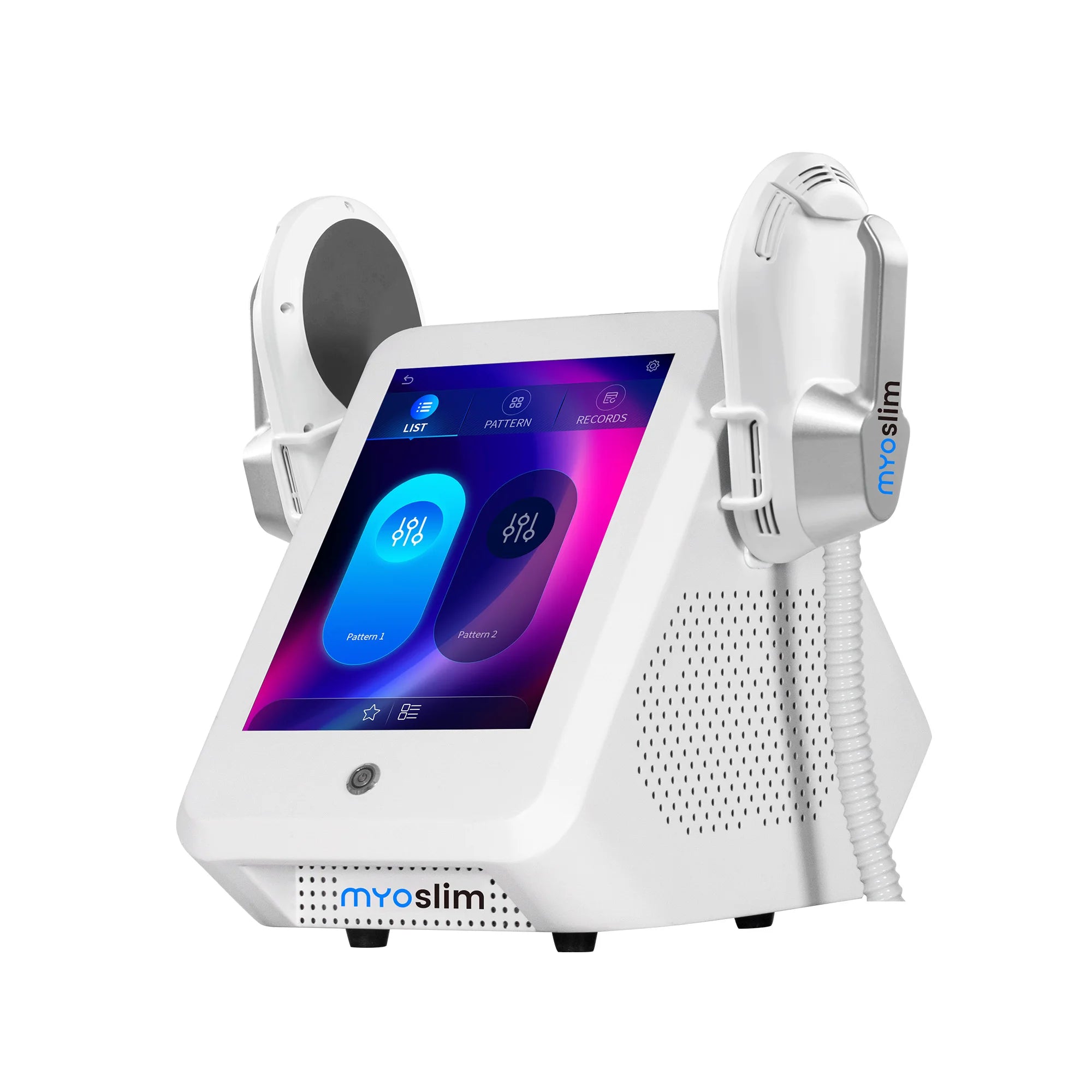
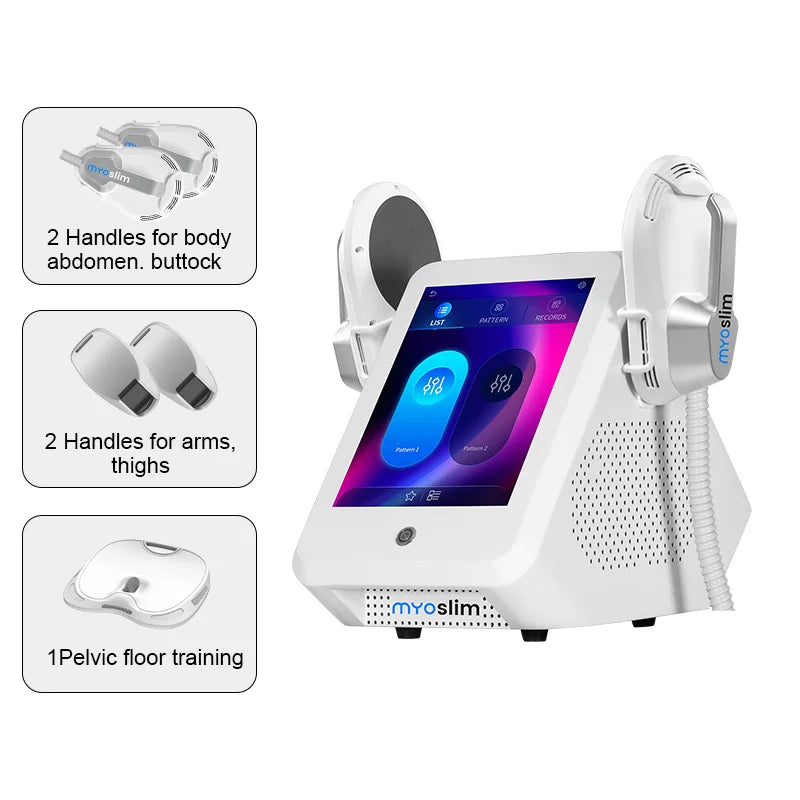
For readers specifically interested in home-based muscle stimulation, the MYOSLIM EMS Body Sculpting Machine is one example of a device positioned around targeted muscle stimulation and body contouring. The supplied product specifications describe EMT + EMS technology, adjustable 20–100 Hz frequency, four detachable treatment heads, and 20–30 minute sessions. These specifications describe the product; they should not be interpreted as proof of a particular FDA authorization or clinical outcome.
For additional body-focused device options, explore the Body Care and Health Devices collection and compare products according to their stated technology and intended use.
Vibration Therapy and Mechanical Body Contouring
What Vibration and Mechanical Devices Actually Do
Mechanical body-contouring technologies use pressure, massage, rolling, vibration, or related mechanical stimulation. The FDA describes these technologies as potentially improving the appearance of cellulite by affecting fluid between fat cells and through mechanical effects on the skin and superficial tissues.
Cellulite Appearance and Temporary Circumference Changes
Mechanical treatments are particularly important to distinguish from established localized fat-reduction technologies. A temporary reduction in swelling or an improvement in the appearance of cellulite does not necessarily mean that fat cells have been permanently removed.
Evidence Strength and Who Should Be Cautious
Evidence varies considerably by device. Bruising, discomfort, and skin reactions are possible. People with conditions that produce abnormal reactions to vibration or pressure should receive appropriate medical guidance before treatment.
Which Non-Invasive Body Contouring Device Is Best for Your Goal?
Best for Localized Fat Reduction
If your primary goal is reducing a localized fat bulge, start by looking for a technology specifically intended to affect subcutaneous adipose tissue. Cryolipolysis has a well-established role in professional localized fat reduction, while certain RF, ultrasound, and light-based systems have device-specific fat-reduction indications. The selection should be based on the exact device and authorized use rather than the technology name alone.
Best for Skin Laxity and Firmness
When loose or less-firm skin is the main concern, a technology designed around controlled heating and tissue remodeling may be more logical than a muscle stimulator. RF is particularly relevant because some systems are designed to heat tissue and support a tighter-looking appearance.
Best for Muscle Definition
For muscle definition, electromagnetic muscle stimulation is the more directly aligned category. Repeated induced contractions can affect muscle tone and firmness. However, muscle stimulation should not be presented as a substitute for comprehensive physical activity or as a guaranteed fat-loss method.
For a targeted home-use option, the EMS body sculpting machine for muscle toning is designed around adjustable muscle stimulation for areas including the abdomen, buttocks, thighs, arms, and back. Its listed session duration is 20–30 minutes, but users should follow the manufacturer's instructions and verify that the device is appropriate for their circumstances.
Best for Cellulite Appearance
Cellulite is not simply the same thing as excess fat. Mechanical, RF, light-based, and other approaches may improve its appearance through different mechanisms, but the duration and magnitude of improvement vary. A device promising “fat loss” does not automatically provide the best cellulite treatment.
Best for Multiple Goals
People with several goals may consider combining technologies, but each treatment should be evaluated independently. A device that stimulates muscle does not automatically provide the same effect as a fat-reduction device, and a skin-tightening treatment should not be marketed as equivalent to either.
Best Body Contouring Technologies by Treatment Area
Abdomen and Waist
The abdomen can involve several different concerns: localized fat, muscle definition, skin laxity, or a combination. Cryolipolysis or other authorized fat-reduction technologies may be relevant for a localized fat bulge. Muscle stimulation is more appropriate when the goal is muscle tone. RF may be considered when firmness or skin appearance is the priority.
Thighs and Hips
Thigh and hip concerns can include localized adipose tissue, cellulite, and skin laxity. This makes technology selection particularly important. A fat-reduction technology, cellulite-focused technology, and muscle stimulator may all produce different outcomes even when applied to the same general area.
Arms
For the arms, the primary question is whether the concern involves localized fat, loose skin, or muscle definition. RF may be relevant to selected skin-firming goals, while a muscle stimulation device may be considered when muscle tone is the desired outcome.
Buttocks
Buttock contouring requires a clear distinction between increasing or improving muscle definition and reducing surrounding fat. Magnetic or electromagnetic muscle stimulation is designed around contractions, whereas fat-reduction technologies target adipose tissue. Neither should be assumed to produce the same aesthetic result.
Professional vs Home Non-Invasive Body Contouring Devices
Professional Systems: Energy, Indications, and Clinical Oversight
Professional systems may deliver energy through controlled protocols administered by trained personnel. Their indications, applicators, energy levels, treatment areas, and safety procedures can be specifically defined. Professional treatment also provides an opportunity for screening and individualized treatment planning.
Home Devices: What Changes?
Home devices prioritize convenience and repeated use, but the consumer should not assume that a home device provides the same energy delivery, treatment protocol, or clinical evidence as a professional system. FDA notes that medical-device authorization is tied to the intended use and body sites for which a device is authorized.
How to Evaluate a Home Device Before Buying
- Technology: Identify whether the device uses EMS, electromagnetic stimulation, RF, light, ultrasound, vibration, or another mechanism.
- Target tissue: Determine whether the intended target is muscle, fat, skin, or superficial tissue.
- Specifications: Review frequency, treatment duration, applicators, power requirements, and adjustment options.
- Intended use: Read the manufacturer's instructions instead of relying only on marketplace descriptions.
- Safety information: Look for contraindications, warnings, treatment restrictions, and emergency guidance.
- Evidence: Determine whether published evidence applies to the exact device rather than simply to the general technology.
- Regulatory status: Verify the actual regulatory authorization instead of accepting a vague “FDA approved” statement.
- Support: Consider warranty, return policy, documentation, replacement parts, and customer support.
The supplied product information for the MYOSLIM EMS Body Sculpting Machine lists a 10-inch HD touchscreen, four detachable heads, adjustable 20–100 Hz frequency, and 20–30 minute sessions. The product data supplied for this article does not establish an FDA clearance or approval status, so buyers should verify regulatory documentation independently before making a purchase based on regulatory claims.
FDA-Cleared vs FDA-Approved: Why the Wording Matters
“FDA-cleared” and “FDA-approved” are not interchangeable marketing phrases. Different medical-device pathways involve different regulatory processes, and authorization is tied to a specific device, intended use, and indication. The FDA advises consumers to use its medical-device databases to verify marketing authorization and review the indication associated with a particular device.
A product page saying that a technology is “FDA approved” is therefore not enough. Ask which device received authorization, under what pathway, for which indication, and for which treatment sites.
How Long Do Non-Invasive Body Contouring Results Take?
What You May Notice After One Session
Early changes are not necessarily final results. Depending on the technology, a person may notice redness, swelling, tenderness, muscle fatigue, soreness, or temporary changes in fluid distribution. These effects should not automatically be interpreted as permanent contour improvement.
Typical Treatment Course and Intervals
Treatment schedules vary by technology and device. Some professional body-contouring procedures use a single treatment, while others involve multiple sessions. Home devices may require repeated sessions according to their manufacturer's instructions. There is no universal “best” frequency for every body-contouring technology.
When Results Peak
Results can appear gradually when the biological process involves tissue remodeling or the body's clearance of affected fat cells. For example, the FDA notes that fat cells affected by cryolipolysis are generally cleared over a period of months.
How Long Results Last
Durability depends on the technology and the biological change produced. Some improvements may be temporary and require maintenance treatments. Changes in body weight, aging, skin elasticity, and future lifestyle factors can also affect the appearance of the treated area.
Safety, Side Effects, and Who Should Avoid Body Contouring Devices
Common Temporary Side Effects
Possible side effects vary by technology. Depending on the treatment, they can include redness, swelling, tenderness, bruising, numbness, discomfort, muscle soreness, cramping, or temporary skin changes. More serious complications can occur with some technologies, including burns, blisters, scarring, or other tissue injury.
Important Contraindications and Screening Questions
Screening is technology-specific. Questions may involve pregnancy, active implants, metal in the treatment area, circulation problems, cold sensitivity, skin conditions, photosensitivity, medications, or other medical conditions. For example, the FDA identifies active implanted devices as an important contraindication for certain magnetic-field and RF technologies.
For electrical muscle stimulation specifically, the FDA has reported concerns involving shocks, burns, bruising, skin irritation, pain, and interference with implanted devices for some EMS products.
When to Stop Treatment and Seek Medical Advice
Stop using a device and seek appropriate medical advice if you experience severe or unexpected pain, significant swelling, burns, blistering, persistent skin changes, unusual weakness, or symptoms associated with a medical emergency. Do not attempt to diagnose a serious reaction by relying on a general body-contouring guide.
Why Device-Specific Instructions Matter
Two devices that appear to use the same technology can have different energy delivery, treatment areas, protocols, warnings, and regulatory indications. Always follow the instructions supplied with the exact device and do not transfer settings from a different machine.
“Noninvasive body contouring is a medical procedure with benefits and risks.” — U.S. Food and Drug Administration
How to Choose a Non-Invasive Body Contouring Device: Buyer Checklist
1. Define the Outcome You Want
Start with the result rather than the machine. Are you trying to reduce a localized fat bulge, improve muscle definition, tighten skin, improve cellulite appearance, or temporarily change circumference? Each goal points toward a different technology category.
2. Identify the Technology and Target Tissue
Determine exactly what the device is designed to affect. Fat, muscle, skin, and superficial tissue are not interchangeable targets. A device that contracts muscle should not be evaluated using the same criteria as a device designed to cool adipose tissue.
3. Check the Intended Use and Regulatory Status
Look for the exact intended use, treatment site, and regulatory pathway. The FDA provides databases that allow consumers to investigate device marketing authorization rather than relying solely on promotional terminology.
4. Review Evidence, Specifications, and Safety Information
Look for clinical evidence involving the exact technology and preferably the exact device or a highly comparable system. Then review treatment parameters, contraindications, side effects, operating instructions, and manufacturer documentation.
5. Calculate the Real Cost of Treatment
For professional treatment, consider the cost per session, number of sessions, maintenance appointments, consultation fees, and travel. For home equipment, consider the purchase price, warranty, consumables, replacement parts, electricity requirements, and expected treatment frequency.
6. Avoid Guaranteed Results
Be cautious of claims promising guaranteed fat loss, permanent weight loss, instant transformation, or identical results for everyone. Even established body-contouring technologies can produce variable outcomes, and the FDA notes that effects may sometimes be temporary.
For buyers considering a muscle-focused home device, the MYOSLIM muscle stimulation machine can be evaluated using these same criteria: technology, target tissue, adjustable settings, treatment areas, session length, documentation, safety information, and verified regulatory status.
Non-Invasive Body Contouring: What the Evidence Actually Supports
Evidence Strength by Technology
| Technology | Evidence assessment | What the evidence can support | What should not be assumed |
| Cryolipolysis | Stronger for specific professional indications | Localized fat-bulge reduction | General weight loss or equivalent home-device results |
| Radiofrequency | Moderate to device-specific | Selected skin, cellulite, circumference, or fat-related effects | Every RF device produces the same result |
| Focused ultrasound | Device- and indication-specific | Selected localized tissue effects | All ultrasound cavitation devices are equivalent |
| Laser/light | Device-specific | Selected circumference, fat, or cellulite-related indications | All red-light products are medical body-contouring devices |
| Electromagnetic muscle stimulation | Moderate to device-specific | Muscle contraction, tone, and firmness for applicable devices | Direct fat removal or general weight loss |
| Mechanical vibration | Limited to moderate | Selected temporary cellulite or appearance improvements | Permanent localized fat removal |
Why Results Vary Between Devices
Results can vary because devices differ in energy type, power or intensity, treatment depth, applicator design, treatment duration, target tissue, body site, treatment protocol, and patient characteristics. Regulatory authorization is also device-specific. The FDA specifically notes that legally authorized body-contouring devices are reviewed for their intended uses and body sites.
Professional Claims vs Consumer Marketing Claims
Evidence from a professional medical device should not automatically be applied to a consumer product that uses a similar technology name. This distinction is especially important for EMS, ultrasound cavitation, RF, light, and electromagnetic products, where marketing terminology can cover devices with very different specifications.
When researching a home body-contouring device, compare the actual specification sheet and intended use with the evidence being cited. Do not assume that evidence for a high-powered clinical system validates every lower-powered consumer device.
Frequently Asked Questions About Non-Invasive Body Contouring Devices
What are non invasive body contouring devices?
Non-invasive body contouring devices use technologies such as cooling, radiofrequency, ultrasound, light, magnetic fields, or mechanical energy to address localized cosmetic concerns without surgical incisions. Depending on the technology, they may target fat, muscle, skin firmness, cellulite appearance, or circumference. They are not the same as weight-loss treatments.
Which non invasive body contouring device is best for fat reduction?
There is no universally best device. The appropriate choice depends on the target area, amount and type of tissue, device indication, evidence, safety profile, and treatment setting. Technologies such as cryolipolysis and selected RF, ultrasound, and light-based systems may have localized fat-reduction applications, but the exact device and authorized indication matter.
Do non invasive body contouring devices really work?
Some technologies have clinical evidence for specific localized cosmetic indications, but results vary by device, treatment protocol, treatment area, and individual anatomy. These treatments are generally intended for localized contouring rather than general weight loss. Evidence for a professional system should not automatically be transferred to an unrelated home device.
Are non invasive body contouring devices safe?
They can be designed for non-surgical use, but non-invasive does not mean risk-free. Side effects may include redness, swelling, bruising, tenderness, numbness, soreness, cramping, or discomfort, depending on the technology. Some devices also have important contraindications involving implants, metal, skin conditions, cold sensitivity, or photosensitivity.
What is the difference between professional and home body contouring devices?
Professional systems may use different energy levels, applicators, treatment protocols, regulatory indications, and operator oversight than home products. Home devices emphasize convenience and repeated use, but they should be judged by their own specifications, instructions, evidence, and regulatory status. Evidence from professional equipment should not automatically be applied to consumer products.
Final Takeaway: Choose the Technology Before You Choose the Device
The best non-invasive body contouring device is not the machine with the longest feature list. It is the one whose technology, target tissue, intended use, evidence, safety profile, and treatment setting match the outcome you actually want.
For localized fat reduction, investigate technologies specifically intended to affect adipose tissue. For skin firmness, look at appropriate tissue-heating approaches. For cellulite appearance, consider technologies designed around the structures that contribute to cellulite. For muscle definition, electromagnetic or electrical muscle stimulation may be the more logical category.
If a convenient, targeted muscle-stimulation approach is your primary goal, the MYOSLIM EMS Body Sculpting Machine is one product example to evaluate. Its supplied specifications include EMT + EMS technology, adjustable 20–100 Hz frequency, four detachable treatment heads, and 20–30 minute sessions. As with any body-contouring product, evaluate the exact intended use, safety instructions, evidence, and regulatory documentation before purchase.
You can also explore related options through the Skin and Beauty Care Devices collection or continue researching body and face technology through the Body & Face Blog.
The most important decision rule is simple: fat reduction, skin tightening, muscle definition, cellulite improvement, and temporary circumference changes are different goals and should be matched to different technologies. Start with the outcome, verify the target tissue, evaluate the evidence and safety information, and only then choose the device.
Pillar Article: Best Abdominal Muscle Stimulation Devices in 2026













