

Noninvasive Body Sculpting: Which Technology Is Right for You?
Noninvasive body sculpting can help change the appearance or shape of selected body areas without surgical incisions, but “body sculpting” is not one treatment and the technologies do not produce the same kind of result. Some approaches target localized fat, some focus on skin tightening or cellulite appearance, and others stimulate muscles. The right choice therefore depends less on finding a universally “best” machine and more on matching the technology to your actual goal, treatment area, expectations, tolerance for discomfort and downtime, and medical history.
The U.S. Food and Drug Administration describes non-invasive body contouring as a category that can include changes in body circumference, reduction of small areas of fat, improvements in muscle tone or firmness, and improvements in the appearance of cellulite. These procedures are intended for body contouring rather than treating obesity or producing major weight loss.
What Is Noninvasive Body Sculpting?
Noninvasive body sculpting, also called noninvasive body contouring, uses energy or other physical mechanisms applied through the skin to change the appearance of selected areas without surgical cutting. Depending on the technology, the intended effect may involve adipose tissue, skin, connective tissue, or muscle.
That distinction matters. A treatment that reduces a localized fat bulge is solving a different problem from one designed to make skin appear tighter or stimulate repeated muscle contractions.
How noninvasive body sculpting works
Different technologies use different mechanisms. Cryolipolysis, commonly called fat freezing, uses controlled cooling to damage fat cells in a selected area. Radiofrequency uses electromagnetic energy to heat tissue and may be used for body circumference reduction, cellulite appearance, or skin-tightening effects depending on the authorized device and indication. Focused ultrasound uses acoustic energy to create targeted tissue effects. Laser-based approaches can use controlled light energy for selected adipose-tissue applications. Electromagnetic muscle stimulation is different again: its primary objective is to induce muscle contractions rather than directly remove fat.
Because devices differ substantially, the mechanism alone is not enough to determine what a particular machine can legally or clinically be expected to accomplish. FDA authorization, intended body sites, labeling, treatment parameters, and manufacturer instructions all matter.
Body contouring vs. weight loss
Noninvasive body sculpting should not be confused with a weight-loss program. Body contouring generally addresses localized shape or appearance rather than reducing overall body weight. Someone can have a healthy or relatively stable body weight and still want to address a localized fat bulge, mild skin laxity, cellulite appearance, or muscle definition.
If significant weight loss is your primary objective, a body-contouring procedure is unlikely to be the appropriate first-line strategy. The more useful question is whether you are already near your desired weight and want to change the appearance of a specific area.
What these treatments can and cannot change
- Localized fat reduction: Some authorized technologies can reduce selected fat deposits or visible fat bulges.
- Skin tightening: Selected energy-based treatments may improve the appearance of lax or less-firm skin.
- Muscle toning: Electromagnetic stimulation can produce repeated muscle contractions and is aimed at muscle-related outcomes.
- Circumference: Some treatments may produce measurable changes in the circumference of a treated area.
- Overall weight: Noninvasive body sculpting is not a substitute for comprehensive weight-management treatment.
- Major excess skin: Energy-based contouring cannot be assumed to correct substantial excess skin in the way surgical tissue removal can.
Which Noninvasive Body Sculpting Technology Is Best for Your Goal?
The fastest way to narrow your options is to begin with the result you want rather than the machine name.
- Want to reduce a localized fat bulge? Consider technologies specifically authorized for localized fat reduction, such as cryolipolysis and selected radiofrequency, ultrasound, or laser-based approaches.
- Want firmer-looking skin? Radiofrequency and selected energy-based technologies may be more relevant.
- Want more muscle definition or stimulation? Electromagnetic muscle stimulation is the more directly relevant category.
- Want both fat reduction and muscle definition? Ask whether a particular device has an authorized indication for both outcomes rather than assuming every “EMS” or electromagnetic system does.
For localized fat reduction: cryolipolysis, radiofrequency, focused ultrasound, and laser-based approaches
Localized fat reduction is about changing a specific fat deposit rather than producing generalized weight loss. Cryolipolysis uses controlled cooling, while selected RF, ultrasound, and laser technologies use thermal or energy-based mechanisms. Treatment suitability depends on the amount and location of fat, the specific device, and its authorized indication.
For skin tightening: radiofrequency and selected energy-based treatments
Skin tightening is a separate objective from fat reduction. Some radiofrequency treatments heat tissue and can produce effects associated with tighter-looking skin. However, the result depends on the device, energy delivery, treatment protocol, and the degree of skin laxity.
For muscle toning or strengthening: electromagnetic muscle stimulation
Electromagnetic muscle stimulation is designed to trigger repeated involuntary contractions. Clinical literature has evaluated electromagnetic treatments for noninvasive body contouring, including abdominal applications. A systematic review identified 14 clinical studies and found that many used protocols involving four treatments over two weeks, although protocols vary by device and study.
This category should not automatically be treated as interchangeable with traditional resistance training. EMS or electromagnetic stimulation can create muscle contractions, but it does not reproduce every benefit of voluntary exercise, including cardiovascular conditioning, coordination, mobility, and whole-body activity.
For a combination of fat reduction and muscle definition
Some FDA-cleared professional systems combine electromagnetic energy with radiofrequency for specified body-contouring indications. However, the fact that one device has such an indication does not mean another machine using “EMS,” “EMT,” or similar terminology produces the same outcome. Device-specific evidence and authorization should always be checked.
Noninvasive Body Sculpting Technologies Compared
| Technology | Primary target | Typical goal | Key consideration |
| Cryolipolysis | Localized adipose tissue | Fat-bulge reduction | Cold-related effects and modality-specific risks require screening |
| Radiofrequency | Soft tissue and skin | Contour, circumference, skin appearance | Results and safety depend heavily on the specific RF device |
| Focused ultrasound | Selected tissue layers | Localized contouring | Device indication and treatment depth matter |
| Electromagnetic muscle stimulation | Muscle | Muscle contractions and tone-related outcomes | Not equivalent to direct fat reduction |
| Laser-based approaches | Selected adipose tissue | Localized fat reduction | Indications vary by device |
Cryolipolysis (fat freezing)
Cryolipolysis uses controlled cooling to target pinchable fat. The body gradually clears damaged fat cells, so visible changes do not necessarily appear immediately. The FDA notes that the fat released from damaged cells is generally cleared over approximately two to three months.
One important distinction is that FDA information identifies paradoxical adipose hyperplasia, or PAH, as a rare but serious complication unique to fat freezing. Instead of shrinking, fatty tissue can enlarge into a firm bulge, and surgery may be required.
Pros:
- Designed specifically for selected localized fat deposits.
- No surgical incision.
- Can be appropriate when the primary objective is a localized fat-bulge change.
Cons:
- Does not provide a weight-loss solution.
- Results develop gradually.
- Cold-related side effects and contraindications must be considered.
- PAH is a rare but important modality-specific risk.
Radiofrequency body contouring
Radiofrequency treatments deliver electromagnetic energy that generates heat. Depending on the device, RF may be used for body circumference reduction, cellulite appearance, or skin tightening. Some RF devices use external energy, while others use needles to deliver energy into the skin.
The FDA specifically cautions that RF devices can have risks and that certain RF applications should not be used in people with active implanted devices or certain metal beneath the skin. An IUD can also warrant discussion with an appropriate healthcare professional before treatment.
Pros:
- Can address more than one appearance-related concern depending on the device.
- Selected systems can target skin firmness or circumference.
- Does not require surgical incisions.
Cons:
- Not every RF machine has the same indication.
- Heat-related complications are possible.
- Implants, metal, tattoos, and other factors may affect candidacy.
Focused ultrasound body contouring
Focused ultrasound uses acoustic energy to create controlled effects in selected tissue layers. It is another example of why “noninvasive” does not mean “risk-free.” Energy is still being delivered to tissue, and the specific device determines its intended use, treatment depth, protocol, and potential complications.
Electromagnetic muscle stimulation
Electromagnetic systems are primarily relevant when muscle contraction or muscle definition is part of the goal. Published reviews suggest that electromagnetic body-contouring treatments have been studied for changes in abdominal and other body areas, but the evidence base includes different devices, protocols, and study designs.
That makes a critical distinction for shoppers: an electromagnetic or EMS machine should not automatically be marketed as a fat-freezing alternative, a replacement for exercise, or an equivalent to every FDA-cleared professional body-contouring system.
Pros:
- Directly targets muscle contractions.
- Relevant for users prioritizing muscle tone or definition.
- Sessions can be relatively convenient compared with conventional gym routines.
Cons:
- Muscle stimulation is not the same as comprehensive physical exercise.
- Evidence and indications differ among devices.
- Implanted electronic devices and other medical considerations may affect suitability for particular systems.
Laser-based fat reduction
Selected laser-based technologies use controlled light energy to produce effects in adipose tissue. As with RF and ultrasound, the important question is not simply whether a device uses a particular technology, but what the exact device is authorized to do and for which body sites.
Quick comparison: fat reduction vs. skin tightening vs. muscle stimulation
Think of the three goals as separate lanes. Fat reduction targets localized adipose tissue. Skin tightening focuses on tissue firmness and appearance. Muscle stimulation targets muscle contraction and tone. A device may address more than one lane, but you should verify the evidence and authorized indication rather than infer capabilities from the technology name.
How to Choose Based on Body Area
Abdomen and belly fat
The abdomen is one of the most frequently discussed body-contouring areas, but “belly fat” can describe very different concerns. A pinchable subcutaneous fat layer, loose skin, and weak or poorly defined abdominal muscles require different strategies. If muscle definition is the priority, electromagnetic stimulation may be more relevant than a fat-reduction technology. If the main issue is a localized fat bulge, a fat-reduction modality may make more sense.
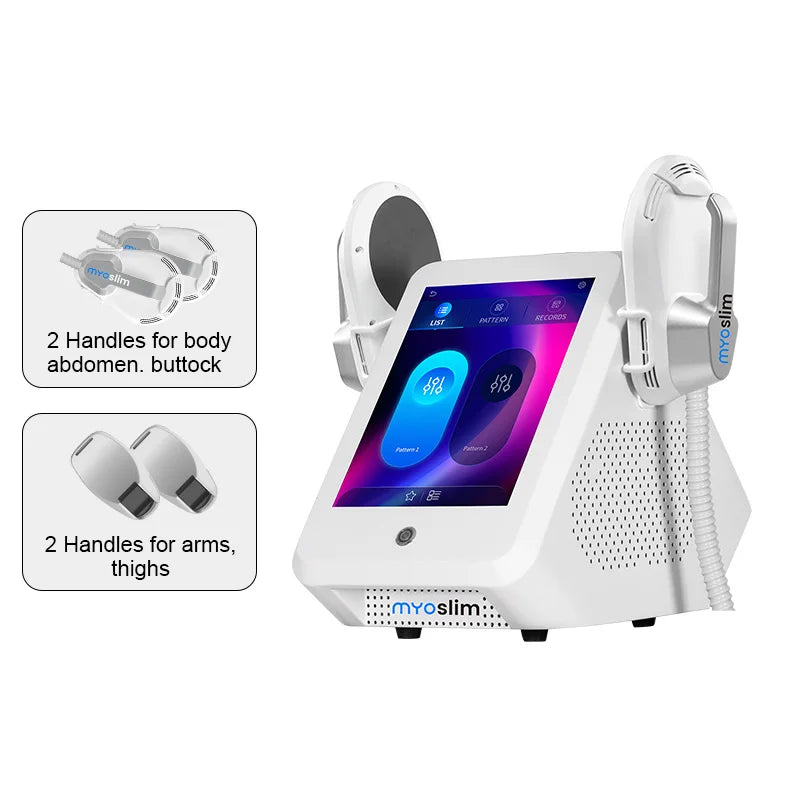
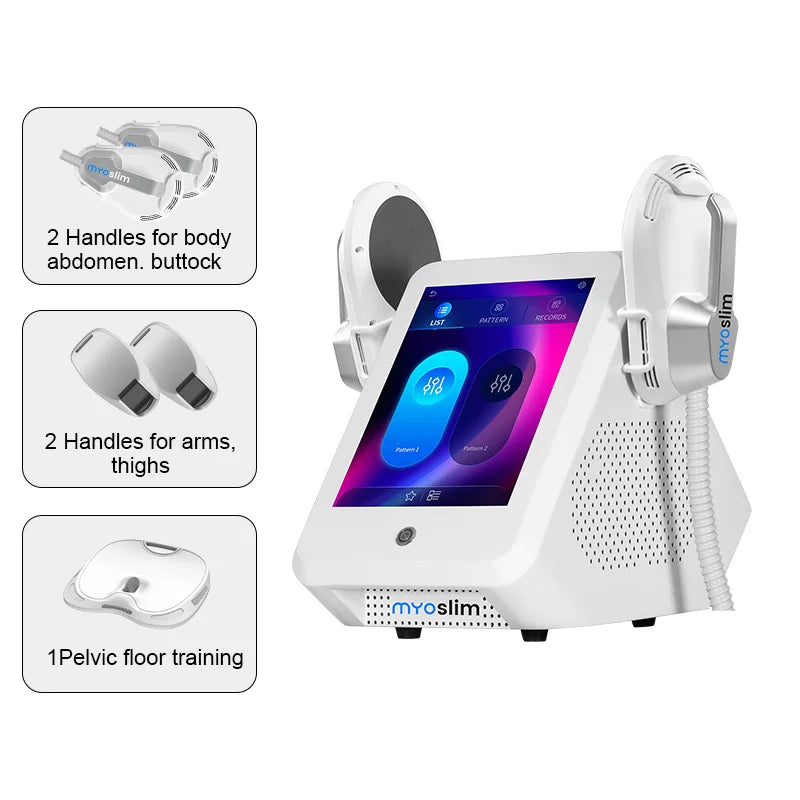
For readers interested specifically in targeted muscle stimulation, the MYOSLIM EMS body sculpting machine is designed for adjustable muscle stimulation across areas including the abdomen.
Flanks and love handles
Flanks are commonly evaluated for localized fat reduction. The most important factors are the amount of pinchable tissue, skin quality, body proportions, and the intended outcome. A muscle-stimulation device should not be presented as a direct substitute for a technology specifically indicated for reducing a localized fat bulge.
Thighs
Thigh contouring can involve fat, skin laxity, cellulite appearance, or muscle definition. Because these concerns can overlap, the best technology depends on which feature is most noticeable and which outcome matters most to you.
Upper arms
Upper-arm concerns can involve localized fat, loose skin, or relatively low muscle definition. A muscle-stimulation approach may be relevant when muscle tone is the goal, but substantial excess skin requires a different level of intervention.
Submental area and other smaller treatment areas
Smaller treatment zones can have very different device requirements from the abdomen or thighs. Do not assume that a machine appropriate for one body area is automatically appropriate for another. FDA authorization is device- and indication-specific.
What Results Can You Realistically Expect?
The most useful expectation is usually subtle to moderate contour improvement in a selected area, not dramatic overall body transformation. The FDA notes that noninvasive body-contouring procedures may not always produce the desired effect and that results may sometimes be temporary.
When results typically become noticeable
Timing varies substantially. Cryolipolysis generally produces gradual changes as the body clears damaged fat cells. Muscle-stimulation outcomes may be assessed according to the treatment protocol and repeated sessions used in clinical studies. Skin-tightening effects can also evolve over time.
Why results vary from person to person
- Starting body composition and the amount of localized tissue.
- Skin elasticity and degree of laxity.
- Muscle mass and baseline muscle definition.
- Device technology and treatment parameters.
- Number and spacing of sessions.
- Provider technique and adherence to the manufacturer's protocol.
- Individual biological response.
How long noninvasive body sculpting results may last
Durability depends on the mechanism. A reduction in selected fat cells may be relatively durable, but remaining fat cells can enlarge with weight gain. Muscle-related changes require continued attention to physical activity and overall lifestyle. Skin-aging processes also continue after treatment.
Why these treatments are not a substitute for weight-loss treatment
Body contouring is designed around shape and appearance, not comprehensive treatment of obesity. If your main objective is significant weight reduction, prioritize evidence-based weight-management care rather than choosing a contouring device because it promises a smaller-looking treatment area.
How Many Treatment Sessions Do You Need?
There is no universal session number. Some professional electromagnetic protocols studied in the literature have used four treatments over approximately two weeks, while other technologies may require different schedules. The device, indication, body area, treatment intensity, and individual response all affect the plan.
Single-session vs. multi-session treatment plans
A single session may be appropriate for some protocols, while a series is more common for others. Be cautious of claims that promise a guaranteed result after one session without identifying the device, treatment parameters, evidence, and endpoint being measured.
When maintenance treatments may be considered
Maintenance depends on the technology and the durability of the desired effect. Muscle definition can change with activity and training status, while body-fat distribution can change with weight fluctuations. Ask a provider whether maintenance is actually recommended for the specific device rather than assuming recurring sessions are necessary.
Why device-specific treatment protocols matter
Frequency, energy level, applicator position, session duration, and treatment spacing are not interchangeable between machines. A generic “best EMS frequency” is therefore misleading. The appropriate settings are the settings specified for the particular device and intended use.
What Is the Treatment Experience Like?
Discomfort and common sensations
Experience varies by technology. Cryolipolysis can involve intense cold, pulling, pressure, temporary numbness, or discomfort. Thermal technologies can feel warm or hot. Muscle stimulation can feel like strong involuntary contractions.
“Noninvasive” describes the absence of surgical incisions; it does not guarantee that every treatment is sensation-free.
Downtime and returning to normal activities
Many noninvasive procedures are designed to avoid the recovery period associated with surgery, but downtime still varies. Temporary redness, swelling, bruising, pain, discomfort, or altered sensation can occur depending on the technology.
What happens during and after a session
A typical session involves positioning the patient, placing an applicator or treatment head over the intended area, delivering the device's prescribed energy, and monitoring the treatment experience. Afterward, the provider should explain expected sensations, warning signs, activity instructions, and follow-up timing.
Risks, Side Effects, and Safety Considerations
Noninvasive does not mean risk-free. The FDA identifies potential complications across body-contouring technologies including pain or discomfort, redness, swelling, bruising, and nodules. Some technology-specific complications can last longer or require medical intervention.
Common temporary side effects
- Redness
- Swelling
- Bruising
- Tenderness or discomfort
- Temporary altered sensation
- Temporary lumpiness or nodules
Paradoxical adipose hyperplasia and other modality-specific risks
PAH deserves special attention because it is associated with cryolipolysis. Instead of shrinking, treated fatty tissue becomes enlarged and firm. According to FDA information, it may appear two to five months after fat-freezing treatment and can require surgery.
Skin injury, nerve effects, and other potential complications
Energy-based treatments can cause tissue injury when energy is excessive, incorrectly delivered, or used outside the intended protocol. Depending on the modality and treatment area, complications can include burns, nerve effects, prolonged numbness, pigmentation changes, or other tissue injury.
Who should not have noninvasive body sculpting treatments?
Candidacy depends on the specific technology. Examples include people with certain cold-sensitivity disorders for cryolipolysis and people with active implanted electronic devices or certain metal-related factors for some RF applications. Pregnancy, hernias, impaired circulation, relevant medical conditions, medications, recent surgery, and implanted devices may also warrant professional assessment depending on the technology.
Do not treat a general internet checklist as a substitute for screening. The exact device instructions and a qualified healthcare professional's assessment should determine whether a treatment is appropriate.
Why FDA-cleared indications and device-specific instructions matter
FDA authorization is not a blanket endorsement of every claim made about a technology category. A legally marketed device is evaluated in relation to its intended uses and body sites. That is why “uses EMS” or “uses radiofrequency” is not enough information to determine what a particular product can safely or effectively accomplish.
When Noninvasive Body Sculpting May Not Be the Right Choice
When the primary goal is significant weight loss
If you want substantial overall weight loss, body sculpting is the wrong tool to put at the center of the plan. Consider comprehensive medical or lifestyle-based weight-management support instead.
When there is substantial excess skin or advanced skin laxity
Energy-based skin tightening may have a role in selected cases of mild or moderate laxity, but substantial excess skin can exceed what a noninvasive treatment can realistically correct.
When medical history or implanted devices affect candidacy
Implanted electronic devices, metal, circulation problems, cold sensitivity, hernias, pregnancy, recent procedures, and other medical factors can change the risk profile. Always disclose relevant medical history before treatment.
When expected results do not justify the cost, sessions, or risk
A treatment can be technically appropriate and still be a poor personal choice. If the likely improvement is too small for your expectations, if repeated sessions are impractical, or if the risks outweigh the potential benefit, another option may be more appropriate.
How Much Does Noninvasive Body Sculpting Cost?
There is no single reliable price for noninvasive body sculpting because total cost depends on the technology, provider, geographic market, body area, number of sessions, treatment plan, and whether multiple modalities are combined.
What affects the total cost
- Technology and device type
- Number of treatment areas
- Number of sessions
- Provider expertise and facility
- Geographic location
- Whether consultation and follow-up are included
- Whether maintenance sessions are recommended
Cost per session vs. total treatment plan
Comparing only the advertised price of one session can be misleading. A lower per-session price may not be cheaper if the treatment requires substantially more visits. Ask for the expected total plan, including consultation, treatment, follow-up, and potential maintenance.
Why cheaper is not always better
With energy-based medical treatments, device quality, operator training, patient screening, protocol adherence, and safety procedures matter. A discount is not necessarily a bargain if the treatment is performed with an inappropriate device or by an inadequately trained provider.
How to Prepare for a Noninvasive Body Sculpting Consultation
Information to bring to your consultation
- Your primary body-contouring goal.
- The body area you want to change.
- Your approximate weight stability and recent changes.
- Relevant medical conditions and medications.
- Information about implanted electronic devices, metal, IUDs, hernias, or previous surgery when applicable.
- Previous aesthetic or body-contouring treatments.
- Your tolerance for discomfort and preference regarding downtime.
Questions to ask a qualified provider
- What exactly is this treatment designed to change?
- Is the device FDA-cleared or otherwise legally authorized for this specific use and body area?
- What results are realistic for someone with my starting anatomy?
- How many sessions are normally recommended?
- What side effects should I expect?
- What complications are specific to this technology?
- What medical conditions or implanted devices could make treatment inappropriate?
- How will my results be measured?
- What alternatives should I consider?
- What is the estimated total cost rather than only the per-session price?
Before booking, it can also help to explore broader body care and health devices if you are comparing home wellness equipment with professional treatment options. Consumer wellness devices should not automatically be considered equivalent to FDA-cleared clinical body-contouring systems.
How to evaluate a proposed treatment plan
A credible treatment plan should connect your goal to a specific mechanism, explain why you are a reasonable candidate, disclose limitations and risks, identify the expected number of sessions, and give you a realistic range of outcomes. Be cautious when a provider focuses almost entirely on dramatic before-and-after photographs or guarantees an outcome without discussing candidacy.
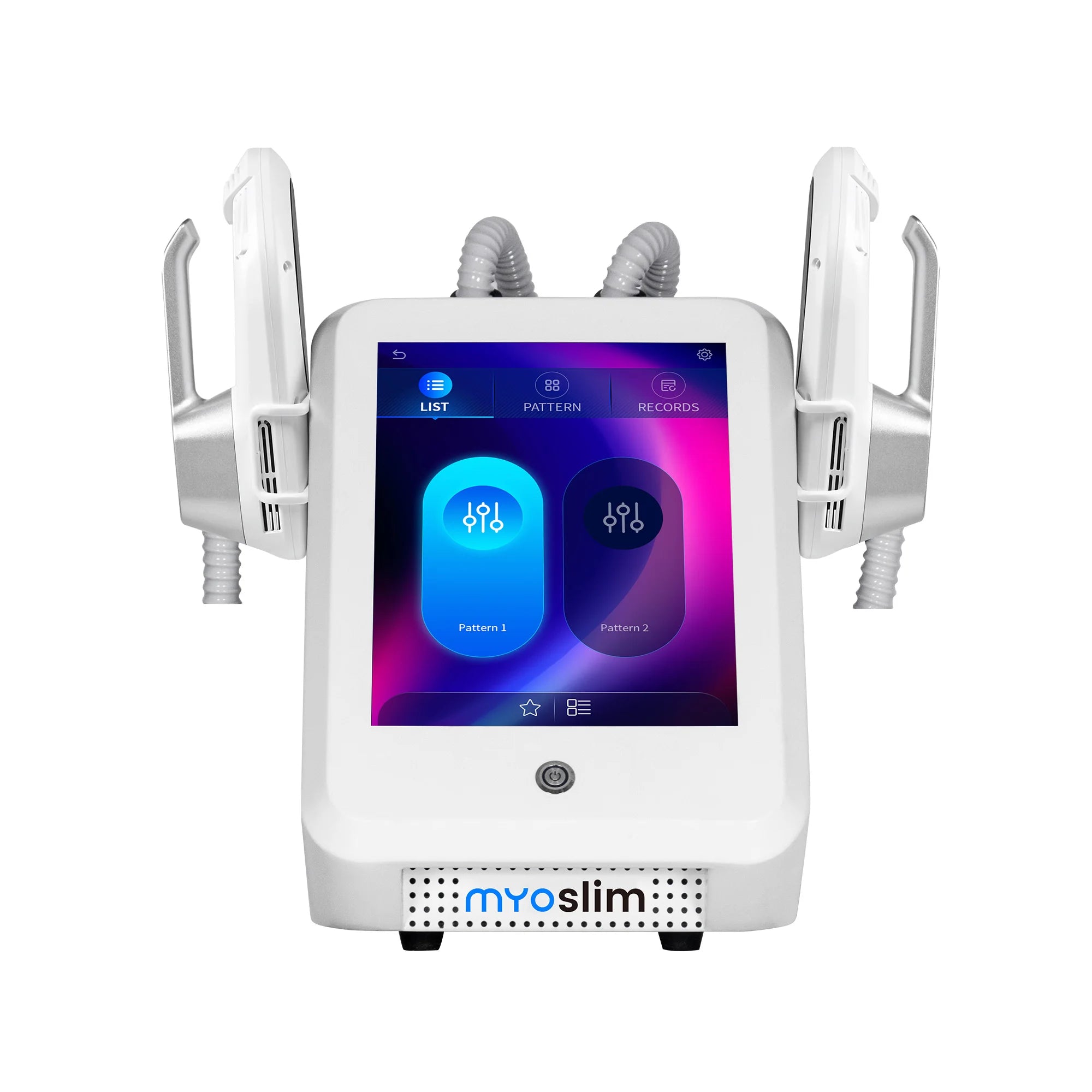
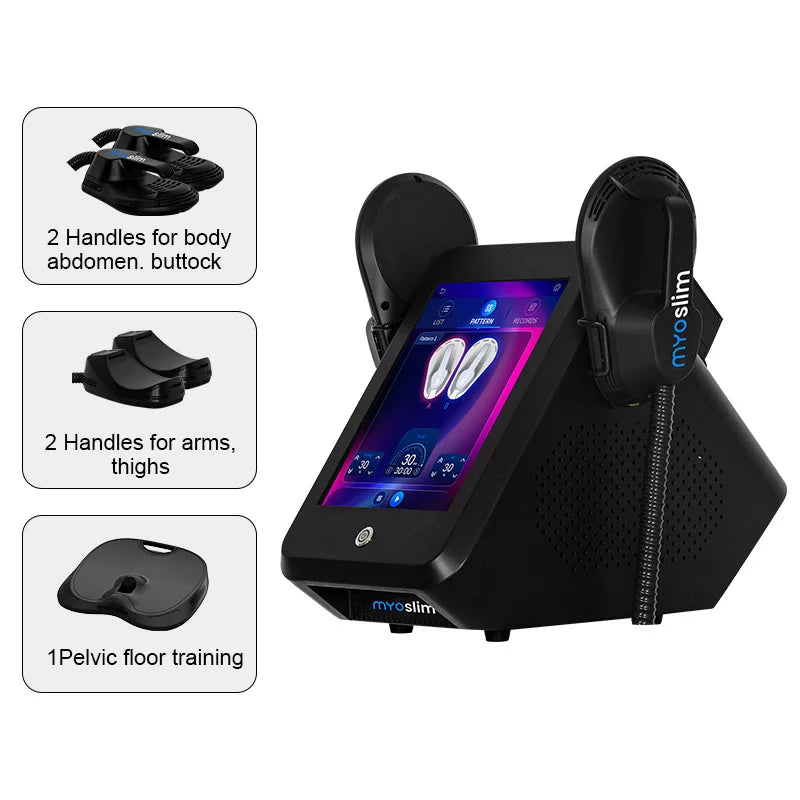
If your goal is targeted muscle stimulation rather than clinical fat reduction, a device such as the MYOSLIM EMS Body Sculpting Machine for muscle toning and contouring may be worth evaluating as a wellness-oriented option. Its stated specifications include four detachable treatment heads, adjustable 20–100 Hz frequency, a 10-inch HD color touchscreen, and typical 20–30 minute sessions. These specifications describe the product itself and should not be interpreted as proof that it provides the same clinical outcomes or regulatory indications as a professional FDA-cleared body-contouring device.
Use the provider-question checklist above before purchasing or booking. The goal is to make sure the technology matches your desired outcome rather than choosing a machine simply because its marketing uses terms such as “sculpting,” “EMS,” “EMT,” or “body contouring.”
Noninvasive Body Sculpting Decision Checklist
Start with your primary goal
- Are you trying to reduce localized fat?
- Are you primarily concerned with skin laxity?
- Are you looking for muscle stimulation or definition?
- Are you trying to improve more than one of these concerns?
Match the goal to the appropriate technology
Choose the modality based on the actual biological target. Localized fat, skin, and muscle are different tissues and should not be treated as interchangeable targets.
Check candidacy, risks, recovery, and expected durability
- Confirm that the device is appropriate for your body area.
- Review contraindications and implanted-device considerations.
- Ask about discomfort and expected downtime.
- Understand how many sessions are recommended.
- Ask how results will be measured.
- Understand whether maintenance may be needed.
- Compare likely improvement against total cost and risk.
Confirm the treatment plan with a qualified clinician
The strongest decision is not necessarily the most technologically sophisticated one. It is the option whose mechanism, evidence, safety profile, expected outcome, and practical requirements fit your individual situation.
For home wellness routines, you can also browse body and face care resources to compare related approaches, while keeping the distinction between consumer wellness equipment and medical body-contouring treatment clear.
Sources, Evidence, and Clinical Review
Medical review and update information
This article is intended as educational information, not an individualized medical recommendation. For a clinical publication, the page should be reviewed by a qualified clinician with relevant experience in aesthetic medicine, dermatology, plastic surgery, or another appropriate specialty. The page should display the reviewer's name and credentials, original publication date, and most recent medical-review date.
FDA and peer-reviewed evidence
The FDA's current non-invasive body-contouring guidance explains that these procedures can change body circumference, reduce small areas of fat, improve muscle tone or firmness, or improve cellulite appearance, while also emphasizing that outcomes may be temporary and that each technology carries its own risks.
Peer-reviewed systematic reviews have evaluated electromagnetic treatments for body contouring, including studies of electromagnetic stimulation protocols and abdominal outcomes. The evidence base is heterogeneous, however, and results from one branded professional system should not automatically be transferred to every device marketed as EMS or EMT.
Limits of current evidence
Noninvasive body sculpting is a broad category rather than a single treatment. Evidence varies by technology, device, treatment protocol, study population, and outcome measurement. Marketing terminology can also blur important distinctions between muscle stimulation, fat reduction, skin tightening, and general wellness.
For that reason, the most reliable decision process is device-specific: identify the intended outcome, verify the device's authorized indication and body site, review the evidence, evaluate candidacy and contraindications, and discuss alternatives with a qualified healthcare professional.
Frequently Asked Questions
What is noninvasive body sculpting and how does it work?
Noninvasive body sculpting uses energy or physical mechanisms delivered through the skin to change the appearance of selected body areas without surgical incisions. Depending on the technology, it may target localized fat, skin firmness, cellulite appearance, or muscle tone.
What is the difference between noninvasive body sculpting and weight loss?
Body sculpting is intended to change the shape or appearance of selected areas, while weight loss reduces overall body mass. Noninvasive body contouring is not a substitute for obesity treatment or a comprehensive weight-management plan.
Which noninvasive body sculpting treatment is best for belly fat?
There is no universal best treatment. If the concern is a localized fat bulge, a technology authorized for localized fat reduction may be appropriate. If the goal is abdominal muscle definition, muscle-stimulation technology may be more relevant. Loose skin represents another problem again. A qualified provider should determine candidacy and match the technology to the actual tissue and desired outcome.
How long do noninvasive body sculpting results last?
Durability depends on the technology and the biological change being targeted. Some localized fat-cell reductions can be relatively durable, but remaining fat cells can enlarge with weight gain. Muscle-related outcomes can change with activity and training, while skin aging continues after treatment.
Who should not have noninvasive body sculpting treatments?
It depends on the device. Certain cold-sensitivity disorders can make cryolipolysis inappropriate, while some RF devices should not be used with active implanted electronic devices or certain metal-related conditions. Other medical circumstances may also affect candidacy. A professional screening assessment and the device's official instructions should be used before treatment.
Conclusion: Choose the Technology That Matches the Goal
There is no single best noninvasive body sculpting technology for everyone. Cryolipolysis is designed around localized fat reduction, selected RF and ultrasound technologies can address contouring or skin-related goals, laser-based approaches have specific adipose-tissue applications, and electromagnetic muscle stimulation is aimed more directly at muscle contractions and tone-related outcomes.
The key is to separate the goals before comparing machines. If you want to reduce a localized fat bulge, investigate fat-reduction technologies. If loose skin is the dominant concern, look at appropriate skin-tightening options. If muscle definition is the priority, evaluate muscle-stimulation technology and the evidence supporting the specific device.
For people seeking a convenient targeted muscle-stimulation routine, the MYOSLIM EMS Body Sculpting Machine is one option to evaluate based on its stated EMT + EMS technology, four detachable treatment heads, 20–100 Hz adjustable frequency, and 20–30 minute session format. It should be considered according to its actual specifications and intended use rather than assumed to be equivalent to a professional medical body-contouring system.
Before choosing any noninvasive body sculpting treatment, compare your goal, body area, expected result, recovery tolerance, safety considerations, evidence, and total cost. When medical treatment is involved, confirm individual candidacy with a qualified clinician rather than relying on generalized online claims.
For broader at-home wellness and personal-care options, explore skin and beauty care devices as a separate category, keeping the distinction between wellness products and regulated medical body-contouring technologies in mind.
Pillar Article: Best Abdominal Muscle Stimulation Devices in 2026













