⏱ 7 min read
Q: What’s the difference between sonic and ultrasonic facial brushes, and which should I choose?
A: Sonic brushes vibrate at ~300 Hz for surface-level cleansing, while ultrasonic brushes reach ~24,000 Hz to penetrate deeper and stimulate collagen. Choose sonic for oily or combination skin, ultrasonic for sensitive, dry, or aging skin, or a hybrid device for flexible daily and restorative use.
Difference Between Sonic and Ultrasonic Facial Brush: Technology Explained
In this sonic facial cleansing brush comparison, we break down what sets these buzzworthy tools apart. Whether you're hunting for the best ultrasonic face brush or the best sonic brush for face, understanding the real technology behind them can change your skincare routine dramatically. One focuses on high-speed surface cleansing, while the other uses ultra-fast micro-vibrations for gentler deep cleansing and product absorption.

💡 Discover the difference in action — the best sonic brush for face meets ultrasonic innovation.
What’s the Difference Between Sonic and Ultrasonic Facial Brushes?
The main difference between a sonic facial brush and an ultrasonic facial brush lies in the type of vibration technology used to cleanse the skin. While both devices rely on high-frequency movement to remove dirt, oil, and makeup residue, they operate at very different vibration speeds.
A sonic brush for face cleansing uses rapid mechanical oscillations—usually hundreds of movements per second—to physically sweep away debris from pores and gently exfoliate the surface of the skin.
An ultrasonic brush for face cleansing, by contrast, works at much higher frequencies—often tens of thousands of vibrations per second—producing micro-vibrations that loosen impurities with very little surface friction.
- Sonic facial brushes: stronger surface cleansing using high-speed oscillation.
- Ultrasonic facial brushes: gentler cleansing driven by micro-vibration energy.
- Both technologies: enhance cleanser performance and improve skincare absorption.
Understanding how each technology interacts with the skin helps determine which facial cleansing brush is best for your routine and skin type.
How Sonic Facial Brush Technology Works
A facial sonic brush uses high-speed mechanical oscillations to move silicone touchpoints or bristles across the skin. These vibrations create rapid sweeping movements that help loosen oil, makeup residue, and environmental pollutants trapped inside pores.
Sonic Vibration Frequency and Motion
Most sonic facial brushes operate between 200 and 400 movements per second. This vibration range is strong enough to provide deep cleansing without causing excessive abrasion when the brush is used gently.
Instead of spinning like traditional rotating brushes, many sonic devices rely on side-to-side oscillation. This motion reduces friction and distributes cleanser evenly across the skin surface.
How Sonic Brushes Cleanse Pores
The vibration energy helps loosen impurities while the brush surface sweeps them away. This process provides several skincare benefits:
- Improved removal of makeup and sunscreen
- Gentle surface exfoliation
- Enhanced circulation and natural skin glow
- Better absorption of skincare products after cleansing
Because sonic brushes rely on physical motion, they are often recommended for people with oily or congestion-prone skin who need deeper daily cleansing.
How Ultrasonic Facial Brush Technology Works
An ultrasonic brush for face cleansing uses extremely high-frequency sound waves to generate microscopic vibrations on the surface of the skin. These vibrations help loosen impurities without requiring strong physical brushing.
Ultrasonic Frequency Explained
Ultrasonic skincare devices typically operate above 20,000 vibrations per second. At this speed, the vibrations are too fast to be felt individually but still create a gentle agitation that helps lift debris from pores.
Because the vibrations occur at such a high frequency, ultrasonic devices rely more on micro-vibration energy than on mechanical scrubbing.
How Ultrasonic Vibrations Affect Skin and Pores
Rather than scrubbing the skin surface, ultrasonic waves create a subtle lifting effect that loosens oil, dead skin cells, and residue from pores with minimal irritation.
- Gentler cleansing for sensitive skin
- Reduced risk of surface irritation
- Less mechanical exfoliation
- Improved penetration of skincare products
Because of this gentler action, ultrasonic technology is commonly used in professional skincare treatments designed for delicate or reactive skin types.
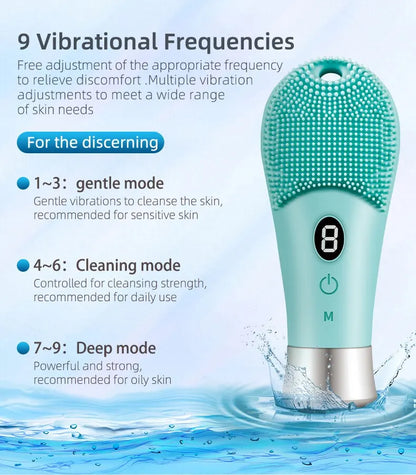
💡 Explore the best ultrasonic face brush with skin-lifting effects and zero friction cleansing.
Sonic vs Ultrasonic Facial Brush: Key Differences Explained
Although sonic and ultrasonic facial brushes are often grouped together, the technologies behind them create different cleansing experiences and skincare results.
Cleansing Mechanism
Sonic brushes rely on mechanical oscillation to physically sweep away dirt and oil. Ultrasonic brushes depend on extremely fast micro-vibrations that loosen impurities with less friction.
Vibration Frequency
The biggest distinction between these technologies is vibration speed.
- Sonic: hundreds of oscillations per second
- Ultrasonic: tens of thousands of vibrations per second
Skin Penetration Depth
Sonic vibrations mainly affect the skin surface and pores, while ultrasonic waves create subtle stimulation that helps loosen buildup more gently beneath the surface layer.
Because of this difference, sonic brushes are often associated with deeper cleansing, while ultrasonic brushes are typically preferred for sensitive or delicate skin.
Benefits Comparison: Sonic vs Ultrasonic Facial Brushes
Both technologies improve cleansing compared with manual washing, but they provide different skincare benefits depending on how they interact with the skin.
- Sonic facial brushes provide deeper physical cleansing and mild exfoliation.
- Ultrasonic facial brushes focus on gentle impurity removal with minimal surface friction.
- Both technologies can enhance skincare absorption after cleansing.
Choosing between the two usually depends on whether your priority is stronger exfoliation or a gentler daily cleansing experience.
Which Facial Brush Is Best for Your Skin Type?
Sensitive Skin
Ultrasonic brushes are typically better suited for sensitive or reactive skin because they rely on micro-vibrations instead of stronger physical brushing.
Acne-Prone Skin
Sonic brushes can benefit acne-prone skin because their oscillations help clear oil and debris from pores. Using soft silicone surfaces and light pressure is recommended to avoid irritation.
Daily Deep Cleansing
For people who regularly wear sunscreen or makeup, sonic facial brushes often provide a deeper daily cleanse than manual washing alone.
Sonic vs Ultrasonic Face Brush: Specs & Features Table
| Spec | KentDO Sonic Mode | KentDO Ultrasonic Mode |
|---|---|---|
| Vibration Speed | 300 Hz | 24,000 Hz |
| Skincare Use Case | Daily cleanse, blackhead control | Firming, anti-aging, sensitive skin |
| Heat Function | No | Yes |
| Suitable Skin Types | Normal to oily | Dry, aging, delicate |
| Additional Features | Waterproof, timer | Ion import/export, heating |
Hybrid Facial Brushes: When Devices Combine Both Technologies
Some modern skincare devices combine both sonic and ultrasonic technologies in a single tool. These hybrid facial brushes use sonic oscillation for deep cleansing while incorporating ultrasonic pulses that can enhance skincare absorption and provide gentle facial massage.
Multi-function devices are often designed for convenience because they allow users to perform several skincare steps—cleansing, massage, and product infusion—using one device.
An example is the KentDO Sonic-Ultrasonic Facial Brush, which offers both vibration modes so users can switch between deeper cleansing and gentler skin care depending on their routine.
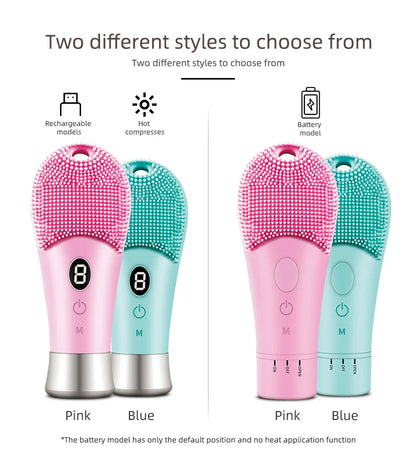
💡 One tool, two technologies — upgrade your skincare with the best of both worlds.
Frequently Asked Questions About Sonic vs Ultrasonic Facial Brushes
Is ultrasonic better than sonic for facial cleansing?
Not necessarily. Ultrasonic brushes are generally gentler, while sonic brushes often provide deeper cleansing. The better option depends on your skin type and how strong a cleansing effect you want.
Can sonic facial brushes damage the skin?
When used with light pressure and appropriate frequency settings, sonic facial brushes are considered safe for most skin types and can improve cleansing compared with manual washing.
Do ultrasonic brushes exfoliate the skin?
Ultrasonic brushes mainly loosen impurities rather than physically exfoliating the skin. Their cleansing action is usually gentler than sonic brushing.
Pillar Article: Best Sonic Facial Brushes in 2025: Real User Reviews & Top Picks