
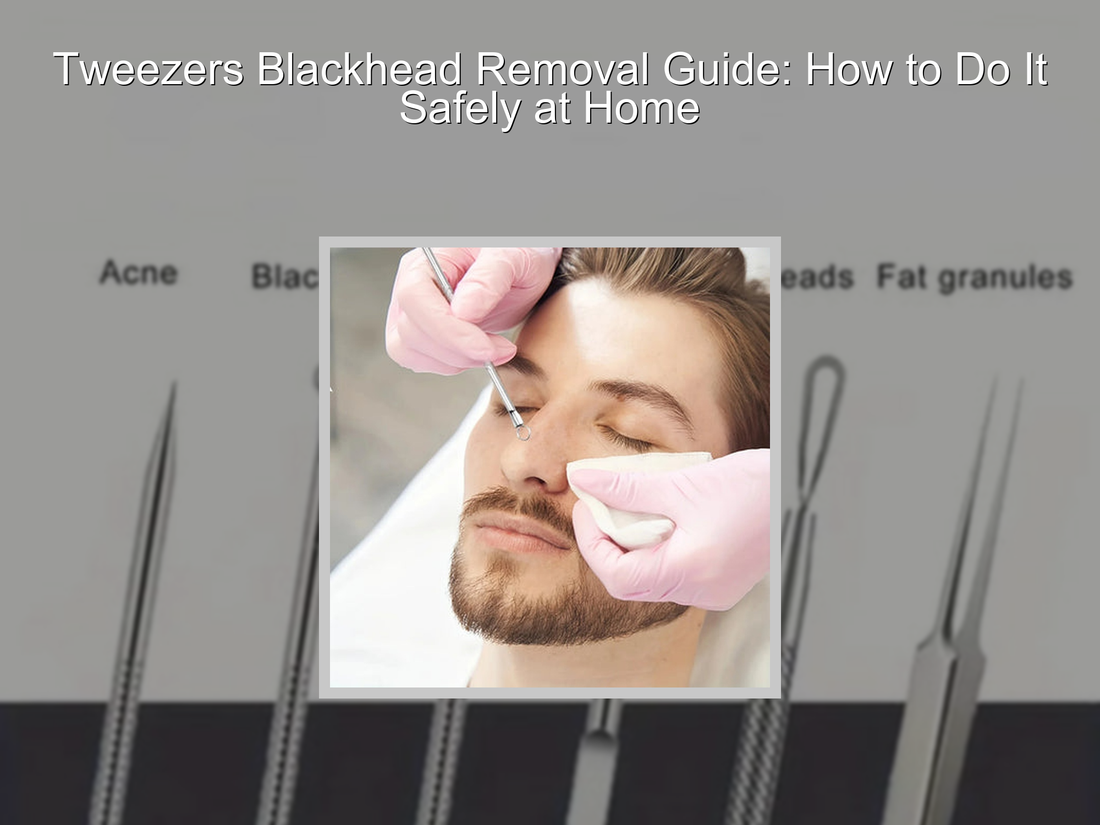
Removing Blackheads With Tweezers: Safe Extraction Guide, Risks & Best Practices
Tweezers blackhead removal can be an effective way to extract visible clogged pores at home when performed carefully. While blackhead removal using tweezers offers more precision than squeezing with fingers, success depends on proper skin preparation, tool sterilization, gentle technique, and realistic expectations. This guide explains when blackhead tweezers can help, when they should be avoided, and how to minimize the risk of irritation, infection, and scarring.
⏱ 12 min read

Tweezers blackhead removal with stainless tweezers – See it in action
See price — stock low!
Can You Remove Blackheads With Tweezers?
Yes, blackhead removal with tweezers is possible in some situations, but it must be done carefully to avoid skin damage, scarring, infection, and irritation. Blackhead tweezers are designed to grip the exposed oxidized plug inside an open pore, allowing extraction with less pressure than squeezing with fingers.
What Happens During Blackhead Extraction?
A blackhead forms when excess oil, dead skin cells, and debris become trapped inside a pore. Exposure to air oxidizes the material, causing the dark appearance. Extraction removes this plug from the pore opening and may temporarily improve the appearance of congestion.
Do Blackhead Tweezers Work?
Blackhead tweezers can be effective for visible, superficial blackheads that protrude slightly above the skin surface. Deeply embedded blackheads often respond better to exfoliating ingredients, retinoids, or professional extraction methods.
Are Blackhead Tweezers Safe?
They can be safe when used on properly prepared skin with sterilized tools and gentle technique. Improper use increases the risk of broken capillaries, skin trauma, post-inflammatory hyperpigmentation, and bacterial contamination.
What Are Blackheads and Why Do They Form?
Open Comedones Explained
Blackheads are open comedones, a non-inflammatory form of acne. Unlike whiteheads, the pore remains open, allowing trapped oil and dead skin cells to oxidize and darken when exposed to air.
Common Causes of Blackheads
- Excess oil production
- Dead skin cell buildup
- Hormonal fluctuations
- Comedogenic skincare products
- Inadequate exfoliation
- Genetic predisposition
Blackheads vs Sebaceous Filaments
Sebaceous filaments are normal structures that help move oil through pores. They are commonly mistaken for blackheads because they appear as tiny dark dots, especially on the nose. Unlike true blackheads, sebaceous filaments typically return quickly after extraction and do not necessarily require removal.
For a deeper explanation, see our guide on removing blackheads from nose with tweezers .
Is It Safe to Remove Blackheads With Tweezers?
Potential Benefits
- Immediate removal of visible blackheads
- More targeted extraction than squeezing with fingers
- Reduced pressure on surrounding skin when performed correctly
- Affordable at-home option for occasional use
Risks of Improper Extraction
- Skin tears
- Bleeding
- Post-inflammatory hyperpigmentation
- Bacterial contamination
- Scarring
- Worsening inflammation
Who Should Avoid At-Home Extraction
Individuals with active acne breakouts, rosacea, eczema, highly sensitive skin, skin infections, or signs of irritation should avoid extracting blackheads at home. Professional assessment is often the safer choice in these situations.
Tools Needed Before Removing Blackheads With Tweezers
Choosing the Right Blackhead Tweezers
Use stainless steel blackhead tweezers specifically designed for extraction. Avoid sharp cosmetic tweezers intended for hair removal because they can increase the risk of skin injury.
Essential Supplies
- Blackhead extraction tweezers
- Gentle facial cleanser
- 70% isopropyl alcohol
- Cotton pads or gauze
- Clean towel
- Soothing post-extraction skincare product
How to Sterilize Tweezers Properly
Wash the tool with soap and water, then disinfect it thoroughly with alcohol before and after use. Allow the tweezers to air dry completely before touching the skin.
How to Prepare Skin Before Blackhead Removal
Cleanse the Skin Thoroughly
Remove makeup, sunscreen, oil, and surface debris using a gentle cleanser. Starting with clean skin reduces the risk of transferring bacteria into open pores.
Use Warm Water or Steam
Warm water or a short steaming session can soften pore contents and make extraction easier. Avoid excessive heat, which may increase redness and sensitivity.
Identify Extractable Blackheads
Only target blackheads that are clearly visible and close to the skin surface. Deep lesions, inflamed acne, and painful bumps should not be forced out.
How to Remove Blackheads With Tweezers Safely
- Wash and dry your hands.
- Cleanse and prepare the skin.
- Disinfect the tweezers.
- Position the tweezers around the exposed plug.
- Apply minimal pressure.
- Lift or pull gently if the blackhead releases easily.
- Stop immediately if resistance occurs.
- Clean the area after extraction.
Step 1: Position the Tweezers Correctly
Grip only the exposed debris without pinching surrounding skin. A shallow angle generally provides better control than approaching directly downward.
Step 2: Apply Gentle Pressure
Use controlled movements rather than squeezing aggressively. The goal is to encourage release, not force it.
Step 3: Remove the Blackhead
If the plug loosens easily, remove it in one smooth motion. Avoid repeated pulling or twisting.
Step 4: Stop If It Doesn't Release
Forcing extraction significantly increases the risk of injury, broken skin, and scarring. If a blackhead resists removal, consider alternative treatments instead.

Blackhead removal using tweezers – step-by-step guide
Nose Blackhead Removal With Tweezers: Extra Precautions
Why Nose Skin Is More Vulnerable
The nose contains numerous oil glands and visible blood vessels, making redness and irritation more likely if excessive pressure is applied.
When Extraction Is Appropriate
Only attempt removal when the blackhead is clearly visible, superficial, and releases with minimal effort.
Common Mistakes on the Nose
- Applying excessive pressure
- Repeated attempts on the same pore
- Extracting sebaceous filaments
- Using unsterilized tools
Common Mistakes When Using Tweezers to Remove Blackheads
Using Excessive Force
Forceful extraction can damage the skin barrier, create irritation, and increase the risk of post-inflammatory marks.
Extracting Inflamed Acne
Red, swollen, painful acne lesions should not be treated with tweezers because this can worsen inflammation.
Skipping Sterilization
Unclean tools may transfer bacteria into pores and increase the likelihood of infection.
Over-Extracting Multiple Pores
Treating too many areas in one session can leave skin irritated and more vulnerable to redness.
Aftercare Following Blackhead Extraction
Cleanse the Area
Use a gentle cleanser to remove residue and help reduce bacterial contamination.
Apply Soothing Ingredients
Products containing niacinamide, panthenol, centella asiatica, or aloe vera may help calm the skin after extraction. You can also explore skin recovery strategies in our skin barrier repair resources.
What to Avoid for 24 Hours
- Harsh exfoliants
- Retinoids
- Picking the skin
- Heavy makeup
- Excessive sun exposure
When You Should NOT Remove Blackheads With Tweezers
Signs of Infection
Pus, increasing redness, warmth, swelling, or significant tenderness may indicate infection and should not be treated with at-home extraction.
Deep or Stubborn Blackheads
Deeply embedded blackheads often require professional extraction or ongoing topical treatment rather than forceful removal.
Sensitive or Compromised Skin
If your skin is irritated, sunburned, inflamed, or recovering from cosmetic procedures, postpone extraction until the skin barrier has recovered.
Alternatives to Blackhead Extraction With Tweezers
Comedone Extractors
Comedone extractors are designed to apply even pressure around pores and are often preferred for extraction when used correctly.
Salicylic Acid Treatments
Salicylic acid helps dissolve oil and dead skin cells inside pores, making it one of the most effective ingredients for blackhead management. See our salicylic acid skincare guides for more information.
Retinoids
Retinoids support cell turnover, reduce clogged pores, and may help prevent future blackhead formation. Learn more in our retinoid skincare guide.
Professional Extractions
Dermatologists and licensed estheticians can safely remove stubborn blackheads using specialized techniques and sterile equipment. Professional acne treatment may be appropriate for persistent congestion.
How to Prevent Blackheads From Returning
Daily Skincare Habits
- Cleanse consistently
- Remove makeup thoroughly
- Use non-comedogenic products
- Avoid excessive touching of the face
Ingredients That Help Prevent Clogged Pores
- Salicylic acid
- Retinoids
- Azelaic acid
- Clay masks
How Often Should You Extract Blackheads?
Extraction should be occasional rather than routine. Frequent picking can weaken the skin barrier, increase irritation, and make pores appear more noticeable over time. A consistent daily skincare routine is usually more effective for long-term prevention.
Pros and Cons of Removing Blackheads With Tweezers
Pros
- Precise removal of individual blackheads
- Less pressure than finger squeezing
- Affordable and reusable tool
Cons
- Risk of irritation if used incorrectly
- Not suitable for deep or inflamed acne
- Requires proper sterilization and patience
Final Verdict: Should You Remove Blackheads With Tweezers?
Removing blackheads with tweezers can be effective when performed carefully on visible, superficial blackheads using sterile tools and proper technique. However, extraction should never involve force. For recurring, deep, or difficult blackheads, preventive skincare and professional treatment are usually safer and more effective long-term solutions.

Stainless steel blackhead tweezers set – designed for precise extraction
FAQ About Removing Blackheads With Tweezers
Can I Use Tweezers to Remove Blackheads?
Yes, provided the blackhead is visible, superficial, and removed using sterilized tools with gentle pressure.
Can You Pull Out Blackheads With Tweezers?
Some blackheads can be lifted out when a portion of the plug is exposed. Deep clogs should not be forced.
Do Blackhead Tweezers Work Better Than Extractors?
Tweezers are useful for isolated visible blackheads, while comedone extractors may work better for certain clogged pores that require even pressure around the follicle.
Can Tweezers Damage Skin?
Yes. Excessive pressure, repeated attempts, or poor technique can cause irritation, broken skin, and temporary marks.
Why Do Blackheads Come Back?
Because oil production and dead skin cell shedding continue naturally. Consistent prevention is often more effective than repeated extraction.
How Often Is Extraction Safe?
Most people should limit extraction sessions to occasional use, generally every one to two weeks at most, depending on skin sensitivity and the number of blackheads present.
Related Articles:
- Blackhead Removal Using Tweezers: Mistakes to Avoid Right Now
- Blackhead Remover Stainless Steel: Best Practices for Safe Results
- Stainless Steel Surgical Tweezers: How to Handle Skin Safely
- Blackhead Remover Tool Stainless Steel: Step-by-Step Instructions
- 4 Piece Tweezer Set Explained: How to Use Each Tool Correctly
Pillar Articles:













