
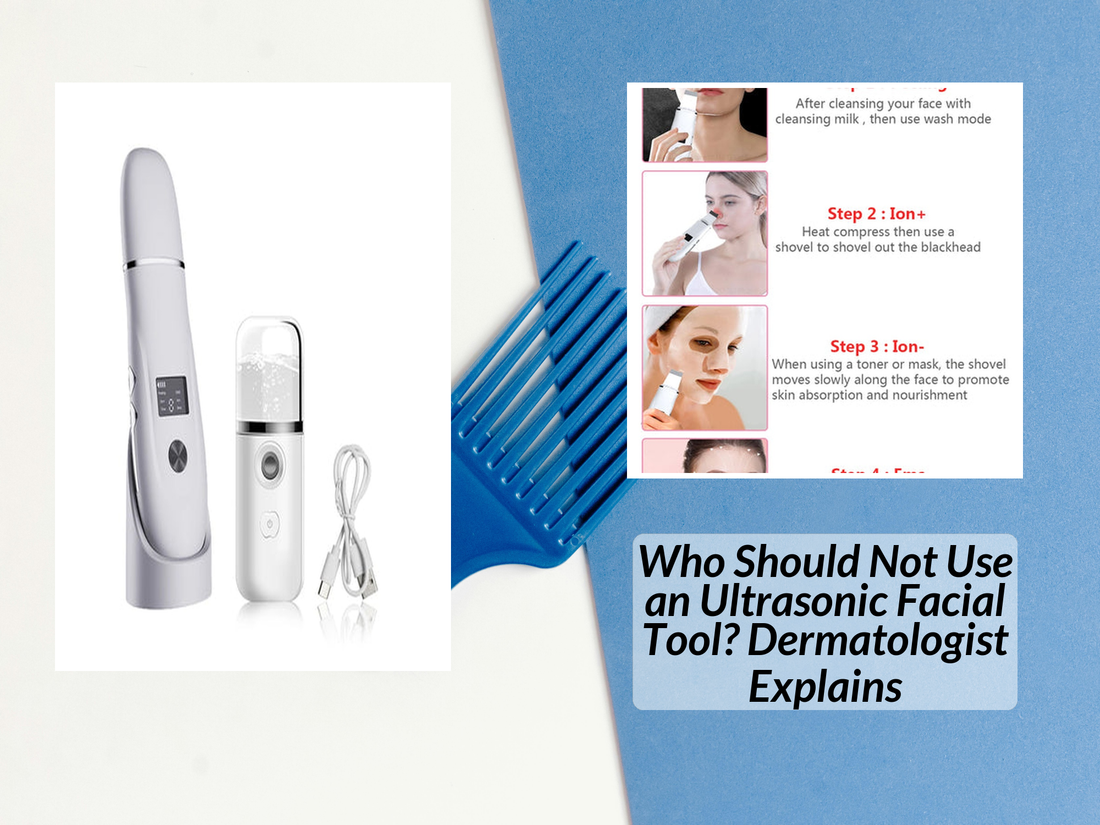
Ultrasonic Skin Scrubber: Dermatologist Guide to Benefits, Risks & Who Should Avoid It
Thinking about using an ultrasonic facial tool? While it’s a popular device for ultrasonic facial cleansing and blackhead removal, it’s not suitable for everyone. Certain skin types and medical conditions can actually worsen with regular use of an ultrasonic skin scrubber or ultrasonic face cleaner. Understanding how these devices work — and who should avoid them — is essential before adding one to your skincare routine.
⏱ 6 min read
Q: Who should avoid using an ultrasonic facial tool?
A: People with rosacea, eczema, active acne, or damaged skin should not use ultrasonic facial devices. The vibrations may worsen irritation, spread bacteria, or slow healing. Those with pacemakers or metal implants should also avoid them, and pregnant women should consult a doctor first.
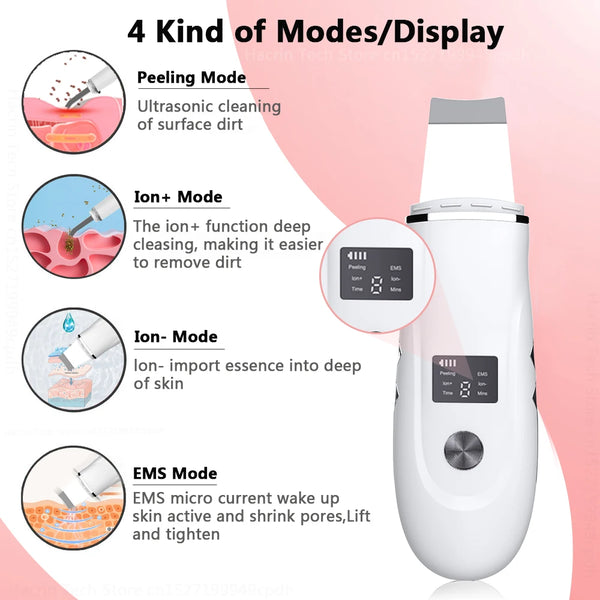
💡 See it in action — ultrasonic facial tool for deep cleansing and glowing skin
What Is an Ultrasonic Facial Tool?
The ultrasonic facial tool is a high-frequency skincare device that uses sound wave vibrations to help loosen debris from pores and support deeper cleansing. Many people use ultrasonic skin scrubbers for mild exfoliation, blackhead removal, and improving the absorption of skincare products.
- Removes dead skin cells gently
- Helps dislodge surface blackheads and clogged pores
- Improves absorption of serums and moisturizers
- May stimulate circulation for a temporary glow
In professional treatments, similar technology is sometimes referred to as ultrasonic exfoliation or sonophoresis, which uses vibration to support cleansing and product penetration.
How Ultrasonic Skin Scrubbers Work (Dermatologist Explanation)
What the Ultrasonic Vibration Actually Does
An ultrasonic skin scrubber uses high-frequency sound wave vibrations (typically 24,000–30,000 Hz) to loosen debris on the skin’s surface. When the metal spatula glides across damp skin, these vibrations create micro-currents that help dislodge oil, keratin buildup, and dead skin cells from pores.
Why Pores Appear Cleaner After Treatment
The ultrasonic spatula creates a process sometimes described as “cavitation,” where vibration combined with water molecules lifts impurities from the skin surface. This does not physically extract blackheads like professional extractions, but it can remove superficial debris that contributes to clogged pores.
Ultrasonic Spatula vs Traditional Exfoliation
Unlike abrasive scrubs or cleansing brushes, ultrasonic exfoliation relies on vibration rather than friction. Dermatologists often consider it a gentler alternative for removing dead skin cells, especially for people who cannot tolerate harsh physical exfoliants or aggressive scrubbing.
Ultrasonic Skin Scrubber Benefits According to Dermatologists
Gentle Exfoliation Without Abrasive Scrubs
Dermatologists often describe ultrasonic facial tools as a mild exfoliation method. The vibrating spatula can help remove dead skin cells from the outermost layer without rough particles or harsh mechanical friction.
Helps Remove Surface Oil and Pore Debris
When used on damp skin, ultrasonic devices may help lift oil, sebum, and cosmetic residue from pores. Although they cannot remove deeply embedded blackheads, they can improve the appearance of congested skin.
May Improve Skincare Absorption
After exfoliation, skincare ingredients may penetrate the skin more effectively. Many dermatologists recommend applying hydrating serums or soothing moisturizers immediately after using an ultrasonic face tool.
Ultrasonic Skin Scrubber Side Effects & Risks
Temporary Redness or Irritation
Some users experience mild redness after using an ultrasonic facial tool, especially if the device is used too aggressively or on sensitive skin.
Over-Exfoliation From Frequent Use
Using ultrasonic scrubbers too often may disrupt the skin barrier, leading to dryness, peeling, or sensitivity. Dermatologists typically recommend limiting use to once or twice per week.
Skin Barrier Damage in Sensitive Skin
Individuals with compromised skin barriers or inflammatory skin conditions may experience irritation if the tool is used incorrectly or on dry skin.
Ultrasonic Skin Scrubber Contraindications (Who Should NOT Use One)
People With Rosacea or Highly Reactive Skin
Ultrasonic vibration may aggravate flushing and inflammation in individuals with rosacea or highly sensitive skin.
Active Acne Lesions or Inflamed Breakouts
Using a vibrating spatula directly on inflamed pimples can worsen irritation and may spread bacteria across nearby skin.
Recent Chemical Peels, Lasers, or Microneedling
Skin recovering from dermatological procedures is more vulnerable to irritation. Dermatologists typically recommend waiting until the skin barrier fully heals before using exfoliating devices.
Pacemakers or Certain Medical Devices
Although uncommon, some medical guidelines recommend caution when using electronic facial devices if you have implanted medical equipment.
Ultrasonic Beauty Instruments and Pregnancy Safety
Ultrasonic exfoliation is generally considered low risk during pregnancy, but individuals who are pregnant should consult a healthcare provider before using any electronic beauty device.
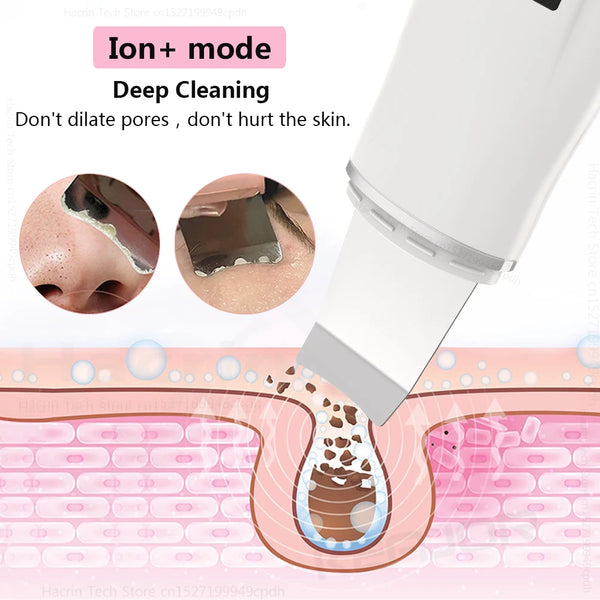
💡 Ultrasonic skin scrubber in action — deeper than manual exfoliation
Why Dermatologists Are Cautious With At-Home Ultrasonic Tools
Professional Dermasound vs Consumer Devices
In dermatology clinics and medical spas, professionals use controlled ultrasonic systems designed for clinical procedures. Consumer devices are intentionally less powerful, but they may still cause irritation if used improperly.
Incorrect Technique Can Irritate Skin
Holding the spatula at the wrong angle or using it on dry skin increases friction and can lead to redness or sensitivity. Correct technique and moderate use are essential.
Marketing Claims vs Clinical Evidence
While ultrasonic exfoliation is commonly used in aesthetic medicine, strong evidence supporting dramatic pore shrinkage or long-term acne improvement remains limited.
What Clinical Studies Say About Ultrasonic Skin Scrubbers
Evidence From Dermatology and Aesthetic Medicine
Clinical research suggests ultrasonic vibration can assist with surface cleansing and may enhance topical product penetration. Many studies focus on professional ultrasonic systems used in dermatology clinics.
Dermasound Facial Side Effects Reported in Research
Reported side effects are typically mild and temporary, including redness or slight sensitivity. Serious complications are rare when treatments are performed correctly.
According to a 2020 PubMed study, ultrasonic technology may support improved cleansing and circulation when used appropriately.
Ultrasonic Facial Tool vs Professional Spa Treatments
Esthetician Ultrasonic Facials
Professional facials performed by estheticians often combine ultrasonic exfoliation with deep cleansing, extraction techniques, and specialized skincare products.
At-Home Device Limitations
Consumer ultrasonic scrubbers are designed for safety and convenience. Because they operate at lower power levels, their results are usually more subtle than professional spa treatments.
How to Use an Ultrasonic Face Tool Safely
Step-by-Step Dermatologist-Approved Method
- Cleanse your face thoroughly.
- Keep skin damp with water or toner.
- Hold the ultrasonic spatula at a 30–45 degree angle.
- Gently glide across the skin without pressing.
- Finish with hydrating skincare.
Recommended Frequency for Different Skin Types
- Normal skin: 1–2 times per week
- Sensitive skin: once every 1–2 weeks
- Oily or congested skin: up to twice per week
What to Use Instead (If It’s Not for You)
If you fall into a higher-risk group, gentler skincare approaches may be safer alternatives:
- Cleansing Brushes: Soft-bristle sonic brushes can provide gentle exfoliation.
- Cooling Eye Massagers: Useful for reducing under-eye puffiness. Explore our eye care devices.
- Facial Steaming: Helps open pores naturally before cleansing.
- LED Therapy: A non-invasive option often used for acne or inflammation.
- Manual Exfoliation: Enzyme peels or konjac sponges provide mild exfoliation.
For more options, browse our skin and beauty care device collection.
Pros & Cons: Is It Worth It?
- Pros: gentle exfoliation, easy at-home use, may improve skin texture
- Cons: results are temporary, not suitable for all skin conditions, improper use can irritate skin
For many people, ultrasonic skin scrubbers can be a useful addition to a skincare routine when used occasionally and correctly. However, they should not replace professional dermatological treatments for persistent skin concerns.
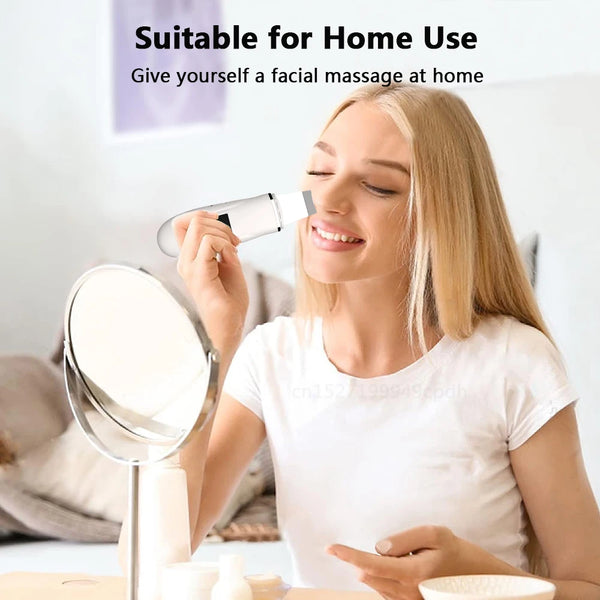
💡 Transform your skin — ultrasonic facial cleansing redefined
Mini FAQ
Is ultrasonic facial cleansing safe for mature skin?
Yes, many dermatologists consider ultrasonic exfoliation suitable for mature skin because it is typically less abrasive than scrubs or cleansing brushes.
Can I use the ultrasonic face cleaner with acne?
It may help remove excess oil and debris, but it should not be used directly on inflamed pimples or cystic acne.
How often should I use an ultrasonic skin scrubber?
Most dermatologists recommend using the device once or twice per week depending on skin sensitivity.
Can ultrasonic tools replace professional facials?
No. At-home ultrasonic tools provide mild exfoliation but cannot replicate professional extractions or clinical treatments.
Are ultrasonic beauty instruments safe during pregnancy?
Ultrasonic skin tools are generally considered low risk, but pregnant individuals should consult their healthcare provider before using any electronic beauty device.
Pillar Article: Ultrasonic Skin Scrubber Benefits for Oily, Dry, and Combo Skin Types
Other Related Articles:
Explore More:













