

Makeup Brush Set for Beginners: The Only Brushes You Need
Choosing a makeup brush set for beginners can be surprisingly difficult. Many kits contain 15, 20, or even 30 brushes, yet a first-time makeup user usually relies on a much smaller core collection. The best beginner set is not necessarily the biggest one; it is the set that gives you the right shapes for foundation, concealer, powder, blush, eyeshadow, blending, and brows without filling your bag with duplicates.
For most beginners, 7–10 useful brushes are enough for a complete everyday routine. Eye-focused beginners may want several additional blending and detail brushes. This guide explains exactly which brushes matter, how to compare synthetic and natural bristles, what makes a set good value, and how to use and maintain your brushes once you buy them.
If you are building a broader beauty routine, you can also explore the Skin and Beauty Care Devices collection alongside your makeup tools.
How Many Makeup Brushes Does a Beginner Really Need?
A beginner generally needs 7–10 versatile makeup brushes rather than a huge collection. That range can cover complexion, color, blending, and basic eye and brow definition. If you primarily wear simple makeup, you can start with even fewer and add specialty brushes later.
The 7–10 Brushes That Cover a Complete Beginner Routine
- Foundation brush: for liquid or cream foundation when you want controlled, even coverage.
- Concealer brush: for precise application around the eyes, nose, and individual blemishes.
- Powder brush: for setting makeup without concentrating too much product in one area.
- Blush or multipurpose face brush: for blush, bronzer, or other powder complexion products.
- Eyeshadow packing brush: for pressing color onto the eyelid.
- Blending brush: for softening edges and building crease color gradually.
- Angled brush: for brows, eyeliner, or other controlled definition.
- Detail brush: useful for the inner corner, lower lash line, or small areas.
- Optional precision eye brush: helpful when you regularly create detailed or layered eye looks.
Essential Brushes vs. Filler Brushes
A useful brush earns its place by performing a distinct task. A set containing three nearly identical fluffy face brushes may look impressive but provide less practical value than a smaller kit with a powder brush, blush brush, eyeshadow brush, blending brush, and angled brush.
For a first purchase, prioritize functional variety over brush count. Specialty brushes for cut-crease work, advanced contouring, elaborate eyeliner, or highly specific eye techniques can wait until you know you actually need them.
Quick buying rule: if you cannot explain what you would use a brush for, do not count it as added value.
What Should a Beginner Makeup Brush Set Include?
The easiest way to evaluate any kit is to ignore the advertised brush count temporarily and map each brush to a real makeup task. A good beginner makeup brush set should provide useful coverage across both face and eye application.
Foundation Brush
A foundation brush is typically denser than a fluffy powder brush and is designed to distribute liquid or cream foundation with control. A flat foundation brush can provide more directed application, while a dense rounded or buffing shape can help spread and blend complexion products.
Beginners should choose the shape that feels easiest to control rather than assuming a particular shape is universally superior. A makeup sponge can also be useful, but a brush offers a different application experience and can be particularly convenient for building coverage in targeted areas.
Concealer Brush
A smaller, more controlled concealer brush helps place product around the nose, under the eyes, and over individual blemishes. Precision matters because using a large face brush for concealer can make it harder to control exactly where the product goes.
Powder, Blush, and Bronzer Brushes
Beginners do not necessarily need a separate brush for every powder complexion product. A versatile medium-to-large fluffy brush can often apply setting powder, blush, or bronzer depending on its size, density, and the amount of product picked up.
This is one of the easiest places to save money: choose a genuinely versatile face brush rather than buying several brushes that perform almost the same job.
Eyeshadow Brush
An eyeshadow packing brush is designed to pick up color and place it on the lid. A relatively firm, flat surface gives beginners more control than trying to apply concentrated color with a very loose blending brush.
Blending Brush
A blending brush is one of the highest-value eye brushes for a beginner. It helps soften transitions between shades and prevents eyeshadow edges from looking overly harsh. A fluffy brush can be moved in small circular motions or gentle windshield-wiper motions through the crease area.
Angled Brush
An angled brush is a multipurpose precision tool. It can define brows, apply gel or cream eyeliner, and create a more controlled lower-lash-line effect. Its versatility makes it particularly useful in a smaller beginner kit.
Optional Detail and Precision Brushes
Small detail brushes are useful for inner-corner highlights, lower-lash-line color, precise eyeliner, and other small-area work. They are valuable additions when your makeup routine becomes more detailed, but they are not mandatory for a basic everyday look.
For readers specifically interested in eye tools, the Eye Care Blog provides additional eye-focused beauty and care content.
Best Makeup Brush Set for Beginners: What to Look For
Once you know the essential brush types, compare sets using function, construction, materials, and expected frequency of use. This prevents the common mistake of choosing a kit solely because it contains the largest number of pieces.
Brush Shape and Function
Shape determines how a brush interacts with makeup. Dense brushes generally provide more controlled product placement, while softer and more loosely packed brushes are useful for diffusing and blending. Flat brushes can pack color efficiently, while angled brushes help with directional precision.
The goal is not to find a brush labeled for every possible task. The goal is to find a small group of shapes that work across your actual routine.
Synthetic vs. Natural Bristles
Synthetic makeup brushes are commonly made from manufactured fibers and can be particularly versatile for modern liquid, cream, and powder formulas. They are also generally straightforward to clean and can be a practical choice for shoppers who prefer non-animal fibers.
Natural hair brushes can have a different feel and pickup characteristics, especially with some powder products, but they are not automatically better for beginners. For a first set, softness, shape retention, control, and ease of maintenance matter more than simply choosing one material category.
Vegan and Cruelty-Free Options
Vegan and cruelty-free do not mean exactly the same thing. Vegan generally refers to the absence of animal-derived materials, while cruelty-free generally concerns animal testing practices. A product may meet one standard without automatically meeting the other, so check the manufacturer's specific claims rather than assuming the terms are interchangeable.
The featured eye set in this guide uses synthetic fibers and is described by the manufacturer as cruelty-free. Shoppers with specific sensitivities should still review the manufacturer's current material information and discontinue use if irritation occurs.
Handle, Ferrule, and Bristle Quality
Look for bristles that feel soft but remain appropriately shaped for their intended task. The ferrule should hold the fibers securely, while the handle should provide enough control for repeated application. Excessive shedding, loose components, or a brush that quickly loses its intended shape can reduce the practical value of an inexpensive set.
How Many Brushes Are Actually Useful?
Use a value-per-use test. For every brush, ask: “Will I use this at least occasionally in my normal routine?” A 10-piece kit where all 10 brushes have clear jobs can be a better purchase than a 28-piece kit where half the brushes are duplicates or highly specialized.
Best Beginner Makeup Brush Sets by Skill Level and Budget
There is no single perfect brush count for every first-time user. Your best choice depends on how much makeup you wear, whether you prioritize eye makeup, and whether you want a compact starting kit or room to experiment.
| Beginner type | Ideal set approach | Prioritize | Main trade-off |
| Simple first routine | Compact 7–10 brush set | Foundation, concealer, powder, blush, eyeshadow, blending, angled | Fewer specialty options |
| Best value shopper | Medium-size versatile set | Useful shape variety and multipurpose brushes | May include a few less-used brushes |
| Eye makeup beginner | Eye-focused set with several shapes | Packing, blending, crease, angled, detail, precision | Less useful for full-face application |
| Beginner who wants to experiment | Larger specialist set | Multiple eye shapes and precision tools | Higher count and learning curve |
| Ethical-material shopper | Synthetic-fiber set | Fiber composition and manufacturer claims | Requires checking individual brand policies |
Best Simple Set for a First Makeup Routine
Choose a compact set if your everyday makeup consists of foundation, concealer, powder, blush, one or two eyeshadows, and simple brow definition. You will learn faster when every brush has an obvious purpose.
Pros: lower cost, easier storage, simpler learning curve, fewer duplicates.
Cons: fewer options for advanced eye looks and detailed techniques.
Best Value Set for Beginners
The best value set is the one that adds genuinely different functions rather than simply increasing the piece count. A medium-sized kit can be worthwhile if it includes multiple useful eye and face shapes that you can realistically incorporate into your routine.
Pros: broader versatility and room to learn.
Cons: some brushes may remain unused.
Best Beginner Set for Eye Makeup
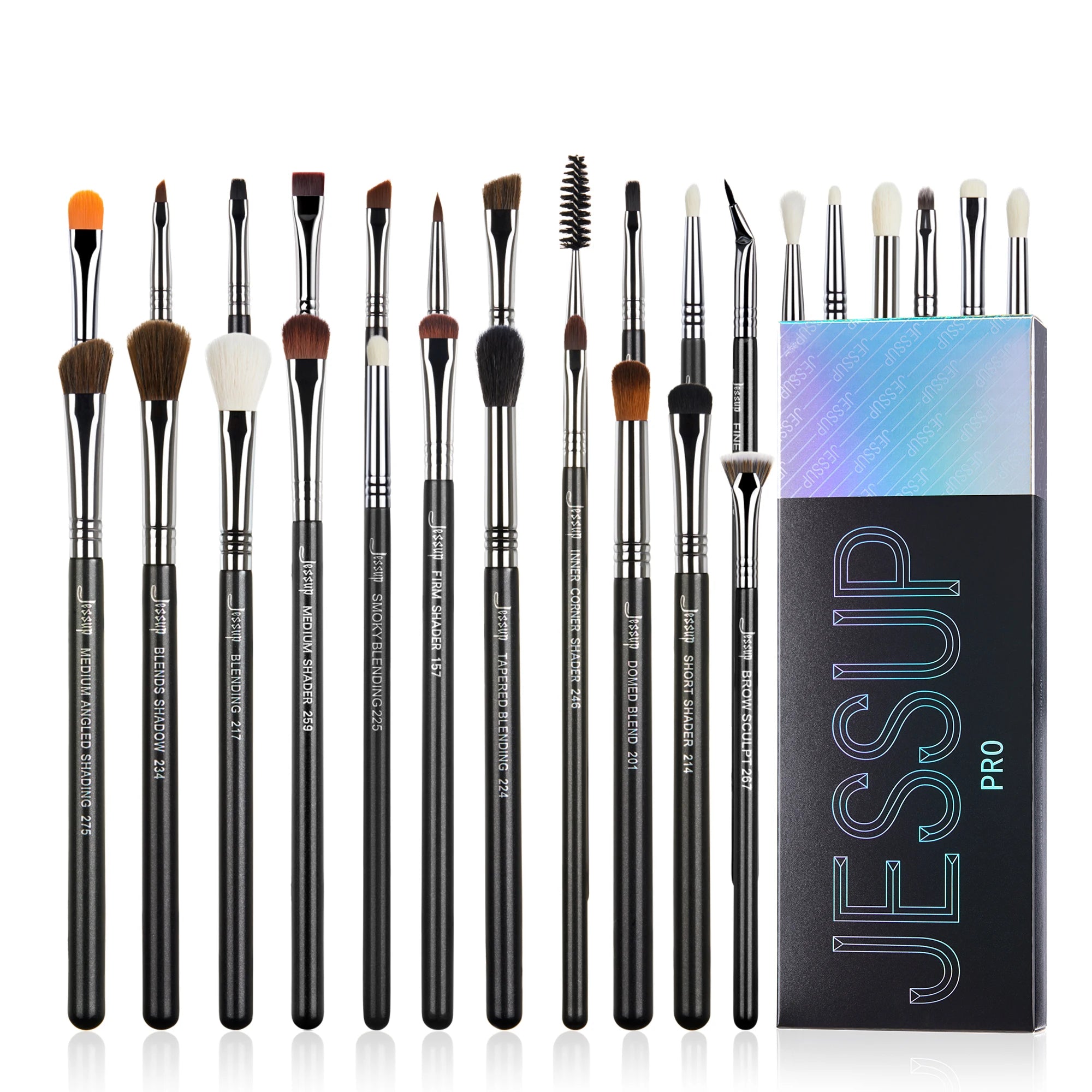
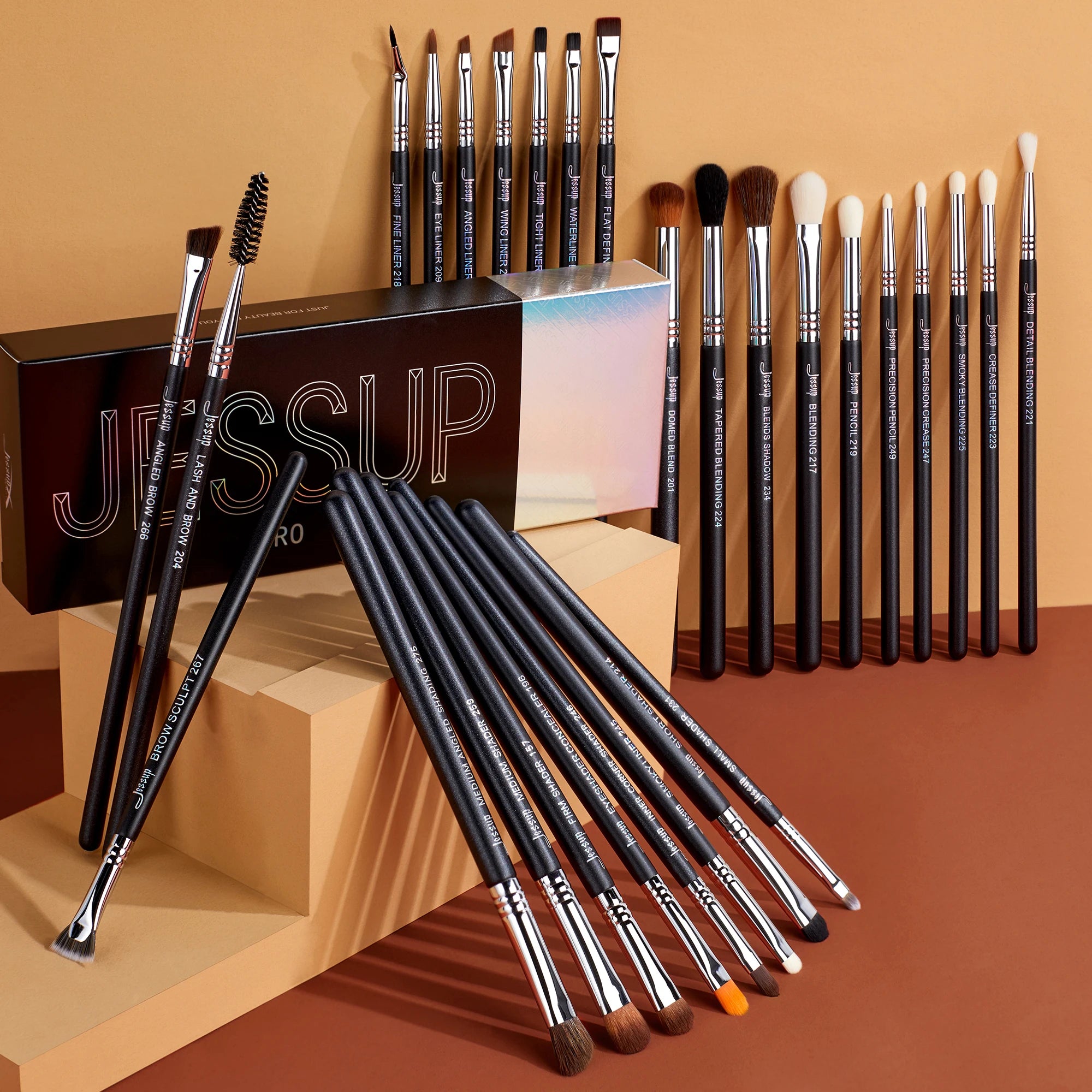
For someone primarily interested in eyeshadow, blending, eyeliner, and brow definition, an eye-focused kit can make more sense than a traditional face-and-eye starter set. The 28pcs Eye Makeup Brushes Set – Professional Precision Kit is particularly suited to beginners who want a large eye-brush selection rather than a minimal face-and-eye kit.
The set contains 28 eye brushes and uses synthetic fibers with wooden handles. Its range includes blending, eyeshadow, eyeliner, and eyebrow brush types, making it useful for beginners who want to experiment with natural through more elaborate eye looks.
Pros: extensive eye-brush variety, soft synthetic fibers, wooden handles, useful for both beginners and more experienced users.
Cons: 28 brushes are more than most beginners need for a basic routine, and the set is focused on eyes rather than providing a complete face-brush collection.
Explore the 28pcs Eye Makeup Brushes Set if your priority is having a broad selection of eye-specific tools while you learn different techniques.
Best Premium Upgrade for Beginners
Do not assume a higher price automatically creates better results. A premium brush upgrade becomes easier to justify when you use makeup frequently and can appreciate differences in softness, shape consistency, control, construction, or specialized brush design.
For a first purchase, investing in the right shapes is usually more important than immediately buying the most expensive professional kit available.
Best Vegan or Sensitive-Skin-Friendly Option
Synthetic fibers are a practical starting point for shoppers seeking non-animal bristles. However, “sensitive-skin-friendly” should not be treated as a universal guarantee. Skin sensitivity can vary, and the complete construction and products used with the brush also matter.
If you have specific material concerns, verify the current manufacturer's fiber, adhesive, coating, and care information before purchasing.
Beginner Eye Makeup Brush Map: Which Brush Does What?
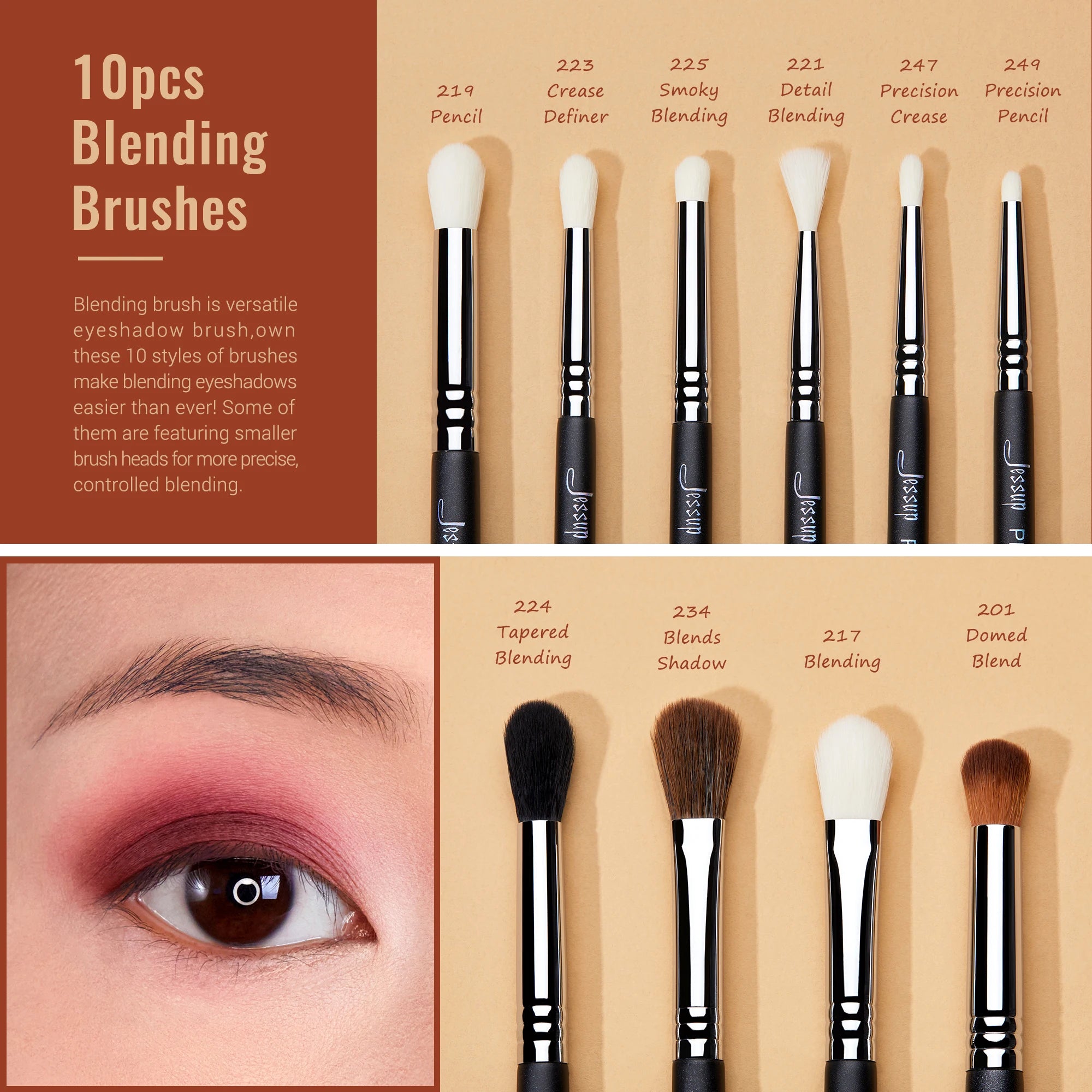
Eye makeup becomes much easier when you stop thinking about brush names and start thinking about the result you want. The four most useful categories are packing, blending, angled/detail, and precision brushes.
Eyeshadow Packing Brush
Use a flat or relatively dense eyeshadow brush to pick up pigment and press it onto the lid. Pressing rather than aggressively sweeping can help place concentrated color where you want it.
Blending and Crease Brush
Use a fluffy blending brush to soften transitions. Start with a small amount of product and move the brush gently through the crease using short circular or windshield-wiper motions. Building gradually is easier to control than applying a large amount of pigment at once.
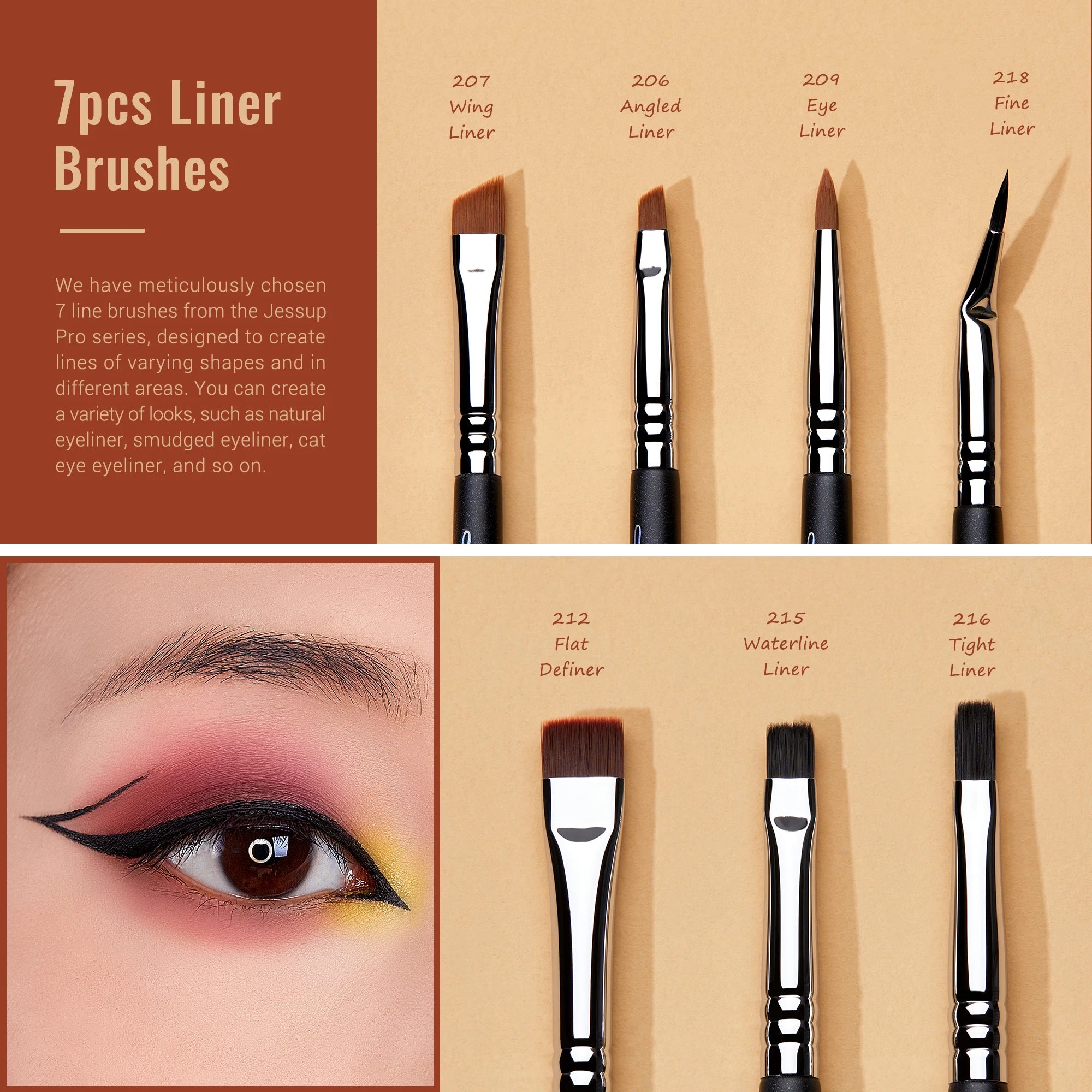
Angled and Detail Eye Brush
An angled brush provides directional control for brows and eyeliner. A smaller detail brush can place color close to the lash line or in other areas where a larger brush would feel clumsy.
Precision Eye Brush
A precision brush is useful for inner-corner highlights, lower-lash-line work, sharply defined color placement, and other small details. It is an upgrade in versatility rather than a requirement for basic makeup.
How to Use a Beginner Makeup Brush Set: A 5-Minute Routine
The fastest way to become comfortable with brushes is to use them consistently in the same sequence. Start with a small amount of product and build coverage or intensity instead of trying to perfect the look immediately.
Step 1: Apply Foundation and Concealer
Use your foundation brush to distribute complexion product across the face, working in manageable sections. Follow with a smaller concealer brush around the eyes, nose, or areas requiring additional coverage.
Step 2: Add Powder, Blush, and Bronzer
Use a fluffy face brush for powder and a suitable medium brush for blush or bronzer. Tap off excess powder before application when you want a lighter finish.
Step 3: Place Eyeshadow
Pick up a modest amount of eyeshadow with your packing brush. Press the pigment onto the lid, concentrating the strongest color where you want the most intensity.
Step 4: Blend the Crease
Switch to a clean blending brush or remove excess pigment from the brush before softening the edges. Use gentle repeated movements rather than pressing hard against the skin.
Step 5: Define the Eyes and Brows
Finish with an angled or detail brush for brow definition, eyeliner, or lower-lash-line color. This final precision step can make a simple eye look appear more deliberate without requiring a large collection.
Once you have mastered this sequence, you can experiment with more specialized eye tools. For broader beauty content, the Beauty & Self-Care Blog is another useful internal resource.
How to Clean and Maintain Beginner Makeup Brushes
Brush quality is only part of long-term value. Regular cleaning helps remove accumulated makeup, oils, and residue while keeping bristles performing as intended.
How Often Should Beginner Makeup Brushes Be Cleaned?
Brushes used with liquid or cream products generally need more frequent cleaning than brushes used only with dry powders because residue can build up more quickly. Eye brushes also deserve regular cleaning, particularly when you change colors or use them around the eye area.
A practical beginner routine is to clean frequently used complexion and eye brushes regularly rather than allowing product to accumulate for long periods.
How to Wash and Dry Makeup Brushes Correctly
- Wet the bristles with lukewarm water while keeping the handle and ferrule from becoming unnecessarily saturated.
- Apply a small amount of suitable brush cleanser or gentle soap to the bristles.
- Gently work the cleanser through the fibers without aggressively twisting or pulling them.
- Rinse until the water runs clear.
- Reshape the bristles and lay the brush flat or position it so water does not collect inside the ferrule while drying.
When to Replace a Makeup Brush
Consider replacing a brush when its bristles consistently shed, become permanently misshapen, develop an unusual odor that does not disappear with cleaning, or become rough enough to interfere with comfortable application. A damaged ferrule or loose handle is another practical replacement signal.
Do You Need a Makeup Brush Cleaner?
A dedicated makeup brush cleaner can make routine cleaning more convenient, but it is not the only possible cleaning method. The important factors are using an appropriate cleaning product, rinsing thoroughly, protecting the brush construction, and allowing it to dry completely.
Common Beginner Makeup Brush Buying Mistakes
Choosing the Largest Set Instead of the Most Useful Set
More brushes do not automatically mean better value. A large set can be worthwhile when you genuinely want many eye shapes, but unnecessary duplicates add cost and storage requirements without necessarily improving your makeup routine.
Buying Specialty Brushes Before Learning the Basics
Beginners often benefit more from mastering one good packing brush and one good blending brush than from purchasing several highly specialized eye tools. Build the foundation first, then expand according to the techniques you actually enjoy.
Ignoring Bristle Quality and Brush Shape
A poorly matched brush can make a good makeup product harder to use. Look at density, flexibility, softness, and shape rather than choosing solely by appearance or piece count.
Using One Brush for Every Eye Makeup Step
You can technically create a simple look with very few tools, but separate packing and blending brushes make it easier to control pigment and soften edges. A third angled or detail brush adds useful precision without dramatically increasing the learning curve.
Are Professional Brushes Better Than Beginner Brushes?
Professional brushes are not automatically better for every beginner. They are often designed with specialized shapes, consistent construction, and frequent-use scenarios in mind. Those qualities can matter more to a makeup artist or experienced enthusiast than to someone learning basic application.
When Beginner Brushes Are the Better Choice
Beginner-oriented brushes are the better choice when you want affordability, versatility, simple maintenance, and a manageable learning curve. The ability to understand what each brush does is more valuable than owning a highly specialized brush you rarely use.
When Professional Brushes Are Worth Upgrading To
Consider professional-grade tools when you use makeup frequently, create more complex looks, need specialized shapes, or have developed preferences for particular levels of softness, density, and control. At that point, buying individual high-quality brushes can make more sense than replacing an entire beginner collection.
Quick Brush Set Checklist Before You Buy
Before purchasing a makeup brush set for beginners, run through these seven questions:
The 7 Questions to Ask Before Buying
- Does the set cover my actual routine? Prioritize brushes you will use regularly.
- Does it include a useful blending brush? This is especially important for beginner eye makeup.
- Are the bristles appropriate for my preferences? Synthetic fibers are a practical option for many shoppers.
- Are the brush shapes meaningfully different? Avoid paying for duplicates disguised as variety.
- Can I maintain the brushes easily? Consider how you will clean and store them.
- Do the ethical claims match my priorities? Check vegan and cruelty-free claims separately.
- Will I actually use most of the brushes? Practical usage is a better value metric than the advertised piece count.
For beginners who specifically want a broad eye-brush collection, the 28-piece eye makeup brush set is a reasonable option to consider because it emphasizes synthetic eye tools for blending, shading, lining, and brow definition. For someone who only wants a basic everyday face-and-eye routine, however, a smaller set may be the more efficient starting point.
Final recommendation: start with the brushes that solve your real makeup problems. If you are learning everyday makeup, 7–10 versatile tools are usually enough. If eye makeup is your main interest, a larger eye-focused collection can provide more room to experiment, but only if you are comfortable learning and storing more brushes.
A smart first purchase is therefore not the set with the most pieces. It is the set whose brush shapes, materials, construction, and price make sense for your routine.
If you are continuing to build a complete self-care collection, you can also browse Lifestyle products and related beauty categories after choosing your essential makeup tools.
Pillar Article: Good Affordable Brush Set: Best Picks for Eye Makeup













