

Best Makeup Brushes for Professionals: Kits Compared
The best makeup brushes for professionals are not automatically the most expensive brushes or the largest brush sets. A working makeup artist needs tools that match the formulas, clients, techniques, sanitation workflow, and working environment they encounter every day. A bridal artist may value dependable blending and duplicate complexion brushes, while an editorial artist may need unusually precise shapes, dense pigment pickup, and fine-detail tools.
This professional-first guide compares brush characteristics rather than relying on brand popularity alone. It covers fiber type, density, shape, precision, product pickup, blending control, ferrule and handle construction, cleaning resilience, portability, and cost per usable brush. It also shows how to build a practical professional kit for bridal, editorial, high-volume, complexion-focused, eye-focused, and on-location work.
Quick verdict: for artists who need a broad eye-focused toolkit, a 28-piece synthetic set can provide more functional coverage than buying a few general-purpose brushes individually. For a complete professional kit, however, the smartest approach is usually a combination of versatile complexion brushes, specialized eye brushes, precision tools, and duplicates of the brushes used most frequently.
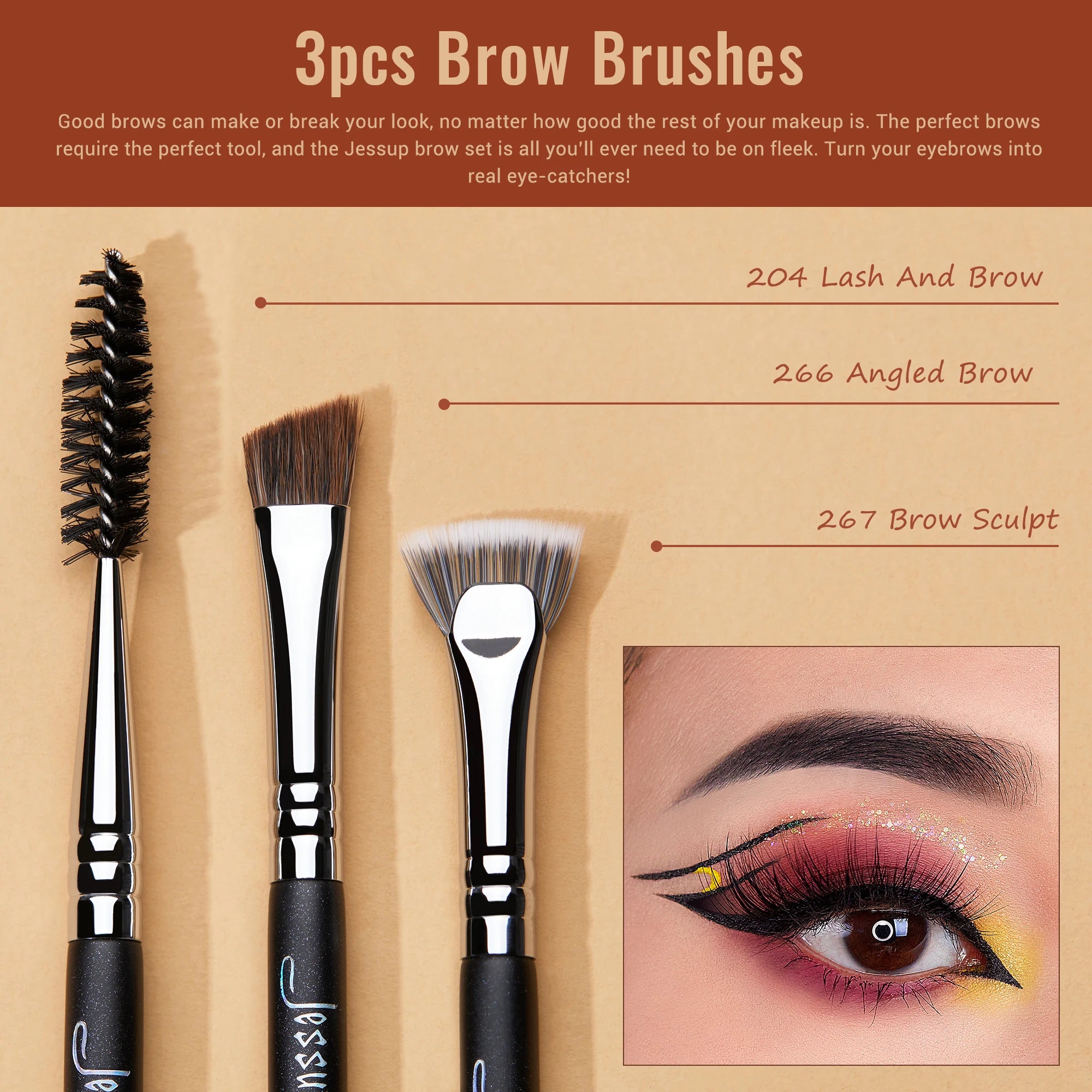
Best Makeup Brushes for Professionals: Quick Comparison
For professional buyers, the fastest way to compare brushes is to evaluate what each configuration does well rather than asking which brush is universally best.
Our Professional Brush Picks at a Glance
- Best broad eye-work option: a complete synthetic eye brush set with blending, shader, liner, smudge, brow, and detail shapes.
- Best for bridal: a versatile synthetic-heavy kit with reliable complexion, blending, concealer, blush, and eye brushes plus duplicates for high-use tools.
- Best for editorial: a mixed collection emphasizing precision, specialty shapes, dense pigment pickup, and fine-detail control.
- Best for high-volume work: durable synthetic brushes that tolerate frequent washing and can be rotated between clients.
- Best for complexion-focused artists: a smaller, purpose-built collection centered on foundation, concealer, powder, blush, contour, and finishing brushes.
- Best for on-location artists: a compact set with multifunctional shapes, lightweight handles, protective storage, and minimal unnecessary duplicates.
How We Define a Professional-Grade Brush
A professional-grade brush should provide predictable application, maintain its shape, tolerate repeated maintenance, and offer enough control to reproduce a technique consistently. The important question is not simply whether the bristles feel soft. A brush can be extremely soft and still be poorly suited to precise placement.
Our comparison framework considers five practical areas: performance, construction, formula compatibility, maintenance, and value. Performance includes pickup, payoff, diffusion, precision, and product waste. Construction includes fiber consistency, ferrule integrity, handle balance, and shedding. Value considers how many brushes are genuinely useful rather than how many pieces appear on the package.
What Makes a Makeup Brush Professional-Grade?
A professional makeup brush combines the correct shape, fiber structure, density, balance, and construction for its intended task. The right combination allows an artist to place product precisely without sacrificing blending speed or consistency.
Brush Shape and Precision
Brush shape determines where product goes and how quickly it diffuses. Flat shader brushes are useful for packing eyeshadow onto the lid, while tapered blending brushes soften transitions. Angled brushes can create controlled brow or liner work, and pencil brushes are useful for concentrated color along the lash line or outer corner.
Rounded, fluffy shapes generally favor diffusion. Flat and compact shapes tend to favor placement and payoff. Very fine detail brushes provide maximum precision but are less efficient for large areas. Professionals therefore benefit from having several shapes rather than expecting one multifunctional brush to perform every task equally well.
Fiber Density, Softness, and Product Pickup
Density affects how much product a brush picks up and how easily that product can be distributed. A dense brush can deliver stronger coverage or pigment payoff, whereas a looser brush tends to create softer diffusion.
Softness also needs context. For powder eyeshadow, excessive softness can sometimes reduce immediate pigment pickup. For sensitive under-eye areas, however, a softer brush may be preferable. The professional goal is controlled performance, not maximum softness by itself.
Synthetic vs. Natural Hair Fibers
Synthetic makeup brushes are particularly practical for creams and liquids because their fibers do not absorb product in the same way natural hair can. They are also popular in professional sanitation workflows because they are generally straightforward to wash and maintain.
Natural hair brushes can offer distinctive powder pickup and diffusion characteristics that some artists prefer for finishing, eyeshadow, blush, and other powder applications. Neither fiber type is automatically superior for every task. A hybrid kit can make more sense than committing to one material throughout.
Ferrule and Handle Construction
The ferrule connects the brush head to the handle and is one of the areas worth inspecting when evaluating long-term durability. Look for a secure connection without visible movement between the handle and ferrule.
Handle ergonomics matter during long appointments. A lightweight wooden handle can provide comfortable control, while a balanced handle helps an artist make small movements without excessive grip pressure. The best handle is ultimately the one that remains comfortable during repeated application.
Shedding, Cleaning Resilience, and Drying Time
Professional brushes may be washed repeatedly, so durability cannot be separated from maintenance. Persistent shedding, fiber deformation, a loose ferrule, or an odor that remains after proper cleaning are signs that a brush may no longer be dependable.
Drying time also matters for artists who maintain several sets. Brushes that retain excessive moisture can slow down a sanitation rotation, especially when multiple clients are scheduled close together.
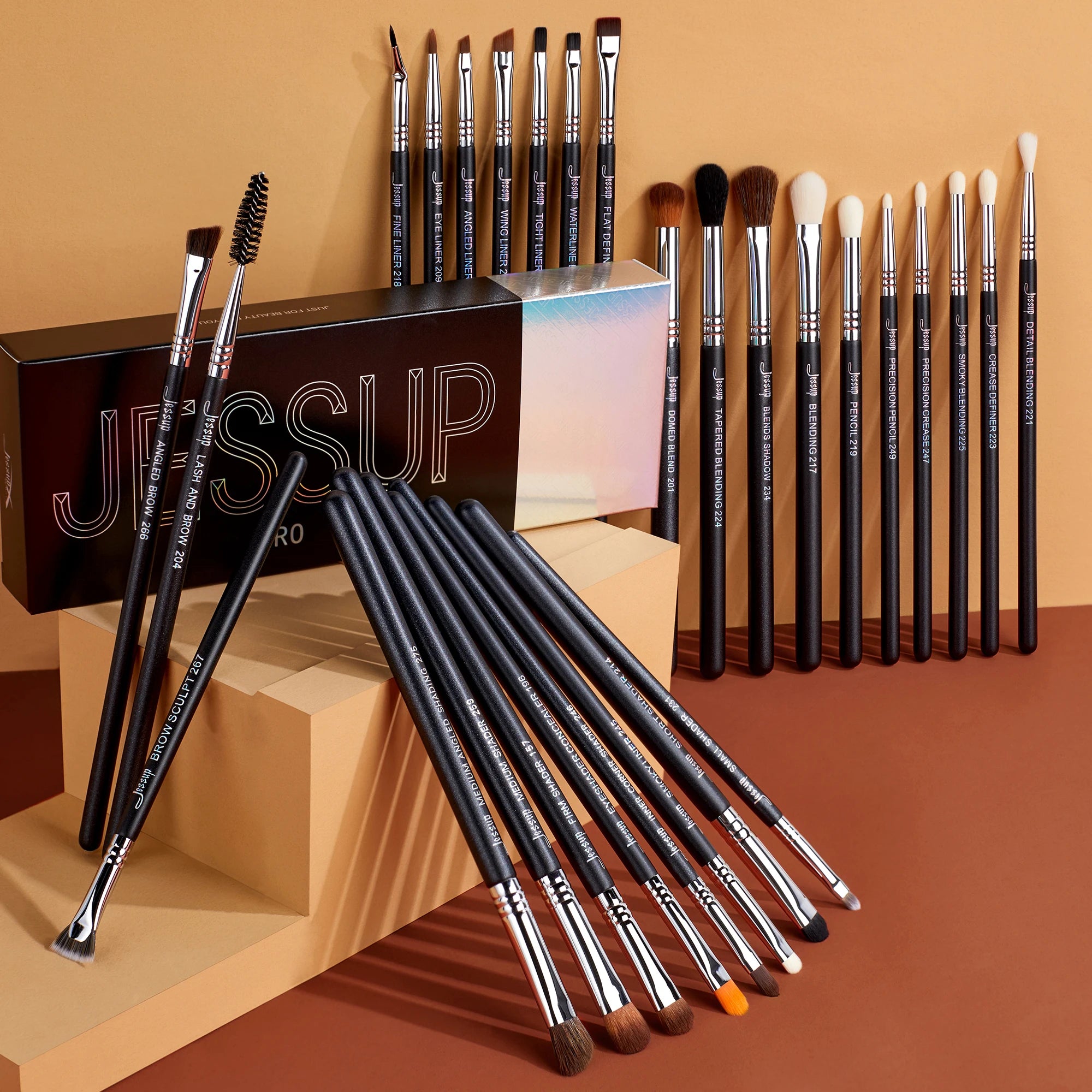
Best Professional Makeup Brushes by Working Scenario
There is no single professional brush configuration that fits every artist. The better approach is to match the kit to the workflow.
Best for Bridal Makeup
Bridal artists need dependable complexion work, controlled blending, long-wear application, and efficient sanitation. A practical bridal kit should include several foundation and concealer options, powder and blush brushes, multiple blending brushes, shader brushes, a precision liner, and at least a few duplicate high-use tools.
Who this is for: artists working weddings, special events, and multiple clients in one day.
Best configuration: synthetic-heavy complexion brushes combined with versatile eye brushes and duplicates of the tools used most frequently.
- Pros: efficient for repeatable looks, versatile across skin types and formulas, easier to organize around sanitation.
- Cons: requires more duplicate brushes than a personal makeup collection.
Best for Editorial and Creative Makeup
Editorial work rewards precision and experimentation. Instead of filling a kit with multiple similar fluffy brushes, prioritize specialty shapes: fine liners, small shaders, pencil brushes, angled brushes, dense pigment-placement brushes, and detail tools.
Who this is for: artists creating graphic liner, saturated color placement, unusual shapes, and detailed creative looks.
- Pros: greater control over unusual techniques and high-pigment applications.
- Cons: specialty brushes can be less versatile and may increase kit volume.
Best for High-Volume Client Work
For high-volume work, durability and rotation can matter more than having every conceivable brush shape. Synthetic brushes are especially practical when frequent washing is part of the workflow.
Who this is for: artists handling several clients in a day or maintaining separate clean and used brush rotations.
- Pros: efficient rotation, predictable application, practical maintenance.
- Cons: purchasing duplicates increases the initial investment.
Best for Complexion-Focused Artists
Complexion artists should invest in brushes that control coverage and finish. A flat foundation brush can place product, a dense buffing brush can refine coverage, and a smaller concealer brush can handle localized correction. Powder, blush, contour, and finishing brushes should then be selected according to the desired level of diffusion.
Who this is for: artists whose signature work emphasizes foundation, skin correction, sculpting, and polished finishes.
Best for Eye-Detail Work
Eye specialists benefit from having dedicated blending, shader, pencil, smudge, angled, liner, and detail brushes. A larger collection is useful here because subtle differences in diameter, taper, density, and firmness can materially change the finished eye look.
For artists building an eye-focused kit, the 28pcs Eye Makeup Brushes Set is designed around this broader workflow. It uses synthetic fibers with wooden handles and includes tools for blending, shading, eyeliner, and brow definition.
Best for Travel and On-Location Artists
On-location artists should prioritize function per cubic inch. A brush that can perform two related tasks may be more valuable than two highly specialized brushes that are rarely used.
Who this is for: artists traveling to weddings, shoots, events, hotels, or client homes.
- Pros: lower packing volume, easier organization, faster setup.
- Cons: multifunctional brushes cannot always replace specialty tools.
Professional Brush-by-Brush Use Cases
Understanding individual brush categories makes it easier to identify gaps in a professional makeup kit.
Foundation Brush
Flat foundation brushes are useful for controlled placement, while dense buffing brushes can distribute and refine liquid or cream foundation. Stippling brushes can create a lighter, layered application when the artist wants to build coverage gradually.
Concealer Brush
A small, controlled concealer brush helps target blemishes and areas requiring precise correction. A softer, slightly larger shape can be more efficient for diffusing concealer around the under-eye area without creating an obvious edge.
Powder, Blush, and Contour Brushes
Large, loose powder brushes favor diffusion and light setting, while denser shapes provide more controlled placement. Blush brushes generally need enough softness to distribute color without creating a concentrated patch. Contour brushes benefit from shapes that follow the intended sculpting area and allow controlled blending.
Eye Makeup Brushes
A professional eye collection commonly includes a shader for lid placement, one or more blending brushes for transitions, a pencil brush for concentrated color, a smudge brush for softer lash-line work, an angled brush for brows or liner, and smaller detail brushes for precision.
Eyeliner Brush
A fine angled or detail eyeliner brush can provide controlled application of gel or cream liner. A thinner tip generally favors precision, while a slightly wider angled brush can make it easier to build a graphic or softly smoked line.
Complete Professional Makeup Kit Builds
The most useful professional kit is rarely the one with the largest piece count. It is the one where the majority of brushes have a defined job and can survive the artist's workflow.
Essential Starter Professional Kit
Start with foundation, concealer, powder, blush, contour, two or three eye blending brushes, a shader, pencil brush, angled brush, and eyeliner/detail brush. This creates a lean foundation that can expand as the artist identifies recurring techniques.
Bridal and Multi-Client Kit
Build around the starter configuration but add duplicates of foundation, concealer, blending, shader, and powder brushes. More brushes allow clean-tool rotation without requiring rushed washing between appointments.
Editorial and Detail Kit
Add multiple fine-detail, liner, angled, pencil, small shader, and precision brushes. Keep several density levels available so the artist can move between crisp placement and diffused effects.
Premium All-Around Artist Kit
A premium kit should spend more selectively. Prioritize brushes that materially improve a recurring technique rather than buying expensive versions of every basic shape. A high-quality foundation brush, precision concealer brush, dependable blending brushes, and specialty eye tools may offer more practical value than a large collection of near-duplicates.
Portable On-Location Kit
Choose multifunctional complexion and eye brushes, remove low-use duplicates, and organize tools so clean and used brushes remain separated. A compact eye-focused set can be particularly useful when eye looks are a significant part of the service.
Soft product recommendation: if your professional workflow is strongly eye-focused, the 28-piece synthetic eye brush kit can fill several blending, shading, lining, and brow-detail roles without requiring a separate purchase for every basic eye shape.
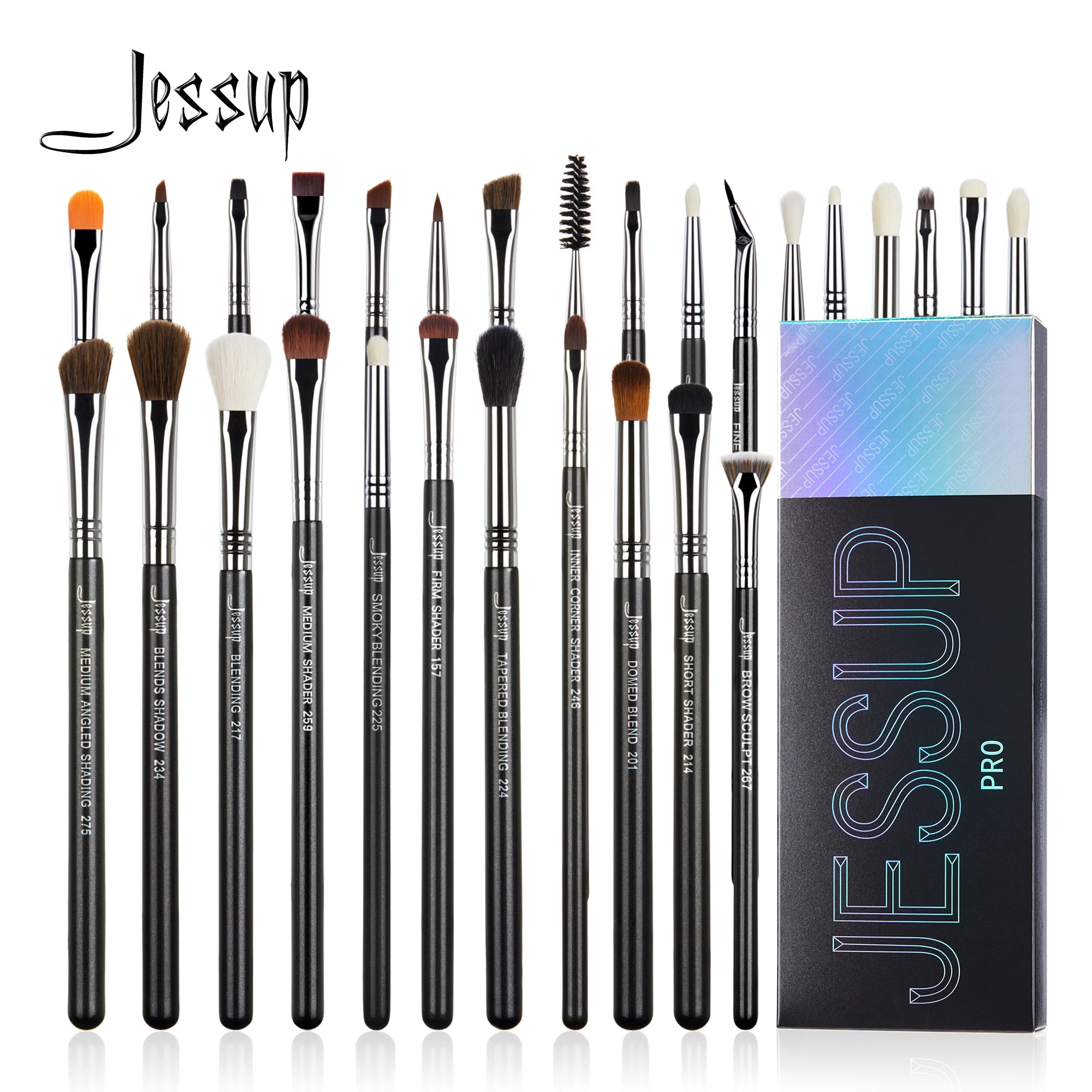
How to Choose the Right Professional Makeup Brush Set
The right professional makeup brush set should solve the artist's actual workflow rather than simply maximize the number of pieces.
Choose Based on Your Makeup Style
Bridal and natural makeup generally benefit from soft blending and complexion versatility. Glam makeup needs stronger pigment placement and controlled transitions. Editorial work requires more specialty and precision tools. Eye-focused artists should devote a larger portion of their budget to differentiated eye shapes.
Choose Based on Product Formulas
Creams and liquids often pair well with synthetic fibers because they offer consistent product distribution and straightforward maintenance. Powder products can work effectively with either synthetic or natural fibers depending on the desired pickup, softness, and diffusion.
Choose Based on Client Volume and Sanitation Needs
A solo artist doing occasional appointments can work with fewer brushes. An artist handling multiple clients should consider duplicates, clean-tool rotation, washing time, and drying capacity before purchasing a kit.
Choose Based on Budget and Cost per Usable Brush
Do not divide the purchase price by the advertised number of pieces without examining what those pieces actually do. A 30-piece set containing many redundant shapes may provide less value than a smaller kit where every brush has a distinct professional role.
A useful calculation is:
Cost per usable brush = total kit cost ÷ number of brushes you expect to use regularly.
Then consider expected lifespan, replacement cost, cleaning resilience, and whether individual brushes can perform multiple related tasks.
Choose Individual Brushes or a Complete Set?
Choose a complete set when you need to establish a broad workflow quickly and most of the included shapes match your services. Buy individual brushes when you already have a strong core kit and need specialized tools or replacements for heavily used brushes.
Synthetic vs. Natural Makeup Brushes for Professional Use
When Synthetic Brushes Are the Better Choice
Synthetic brushes are a practical choice for creams and liquids, frequent washing, consistent application, and artists who prioritize straightforward maintenance. They are also useful when an artist wants predictable fiber behavior across multiple identical brushes.
When Natural Hair Brushes Can Be Useful
Some artists prefer natural hair for powder applications because of its pickup and diffusion characteristics. The choice can be particularly personal for eyeshadow, blush, and finishing techniques where subtle differences in powder distribution matter.
The Best Professional Kit May Use Both
There is no requirement for a professional to use one fiber type exclusively. A hybrid kit can use synthetic brushes for creams and liquids while reserving preferred natural or synthetic powder brushes for specific finishing techniques.
Professional Makeup Brush Sanitation, Care, and Replacement
Brush quality does not replace proper hygiene. Professional artists should follow appropriate cosmetic sanitation practices, use clean tools for each client, and follow product-specific instructions for cleaning and disinfection.
How Often Should Professional Makeup Brushes Be Cleaned?
Brushes used directly on different clients should be cleaned and appropriately sanitized between clients according to the product and professional hygiene procedure. Brushes used with creams, liquids, and products that remain moist generally require especially careful cleaning because residue can accumulate more quickly.
Artists can also maintain separate clean and used brush containers to reduce accidental cross-use during busy schedules.
How to Clean and Dry Brushes Without Damaging Them
- Remove excess makeup from the fibers before washing.
- Use an appropriate brush cleanser or gentle cleansing method suitable for the brush material.
- Rinse thoroughly while avoiding unnecessary saturation of the ferrule and handle.
- Reshape the brush head while the fibers are damp.
- Dry brushes in a position that prevents water from pooling inside the ferrule.
- Do not store damp brushes in closed cases.
Signs a Professional Brush Needs Replacement
- Persistent shedding that affects application.
- A loose or visibly damaged ferrule.
- Fibers that remain misshapen after cleaning.
- Persistent odor after appropriate cleaning.
- Reduced product pickup or inconsistent payoff.
- Handle damage that affects grip or control.
For additional beauty education, artists can also explore the Beauty & Self-Care Blog and related Eye Care Blog resources when building a broader professional beauty routine.
Testing Methodology: How We Evaluate Professional Makeup Brushes
This guide uses a professional-first evaluation framework rather than claiming that a product earned its position through laboratory testing or undisclosed hands-on trials. Recommendations are assessed according to the characteristics that matter during professional use: intended application, brush shape, fiber construction, density, precision, formula compatibility, maintenance demands, portability, and value.
Performance Criteria
- Pickup: how efficiently the brush collects cream or powder product.
- Payoff: how predictably product transfers to the skin.
- Blending control: whether the brush diffuses without unnecessarily moving product.
- Precision: whether the shape supports controlled placement.
- Product waste: whether the brush appears to retain excessive product instead of depositing it.
Durability and Maintenance Criteria
Professional ownership requires attention to shedding, ferrule integrity, handle balance, cleaning resilience, drying practicality, and expected replacement needs. A brush that performs beautifully but deteriorates quickly may have lower professional value than a slightly less luxurious brush that remains dependable through repeated maintenance.
Value Criteria
Value is based on usable brush count, versatility, expected longevity, purchase price, replacement needs, and whether the set contains meaningful variations in shape and density. Pricing can change over time, so buyers should verify the current price and included pieces before purchasing.
Which Professional Makeup Brushes Are Right for You?
The following decision matrix is designed to make the final choice simple:
- Bridal makeup: choose a versatile synthetic-heavy kit with duplicates of high-use complexion and blending brushes.
- Editorial or creative jobs: prioritize precision brushes, liner brushes, pencil brushes, small shaders, and specialty shapes.
- High client volume: prioritize durable brushes, sanitation-friendly fibers, clean-tool rotation, and duplicates.
- Complexion focus: allocate more of the budget to foundation, concealer, powder, blush, contour, and finishing tools.
- Eye makeup focus: prioritize differentiated blending, shader, pencil, smudge, angled, liner, and detail brushes.
- Portable work: choose multifunctional brushes and eliminate low-use duplicates to reduce kit volume.
For artists whose work centers on eye makeup, a 28-piece synthetic eye makeup brush set is worth considering as a dedicated eye section of a larger professional kit. Its 28-piece configuration covers blending, shading, eyeliner, and brow-oriented tasks, while its synthetic fibers and wooden handles emphasize practical everyday control.
Artists who need broader beauty equipment can also browse KentDo's Skin and Beauty Care Devices collection to complement a professional beauty workflow.
Frequently Asked Questions
What are the best makeup brushes for professional makeup artists?
The best makeup brushes for professional makeup artists are those that consistently match the artist's formulas, techniques, client volume, and sanitation workflow. A versatile professional kit usually includes foundation, concealer, powder, blush, contour, blending, shader, pencil, angled, and eyeliner brushes, with duplicates added for high-volume work.
What brushes should a professional makeup artist have in their kit?
A practical professional kit should contain several complexion brushes, powder and cheek brushes, multiple eye blending and shader brushes, a pencil brush, an angled brush, and at least one fine-detail or eyeliner brush. Artists should add specialty shapes according to their primary services rather than buying every possible brush type.
Are synthetic or natural brushes better for professional makeup?
Neither is universally better. Synthetic brushes are particularly practical for creams, liquids, frequent cleaning, and consistent application. Natural hair can be preferred for certain powder techniques because of its pickup and diffusion characteristics. Many professionals can benefit from using both.
How do I choose a professional eye makeup brush set?
Look for meaningful variation in brush shape, density, size, and precision. A useful professional eye set should cover blending, lid shading, concentrated color, smudging, eyeliner, brow work, and detail application. Avoid judging a set only by its piece count.
How often should professional makeup brushes be cleaned and replaced?
Brushes used between clients should be cleaned and appropriately sanitized between clients according to the products and professional hygiene procedures being used. Replacement is necessary when fibers shed excessively, the brush loses its shape, the ferrule loosens, odor persists after cleaning, or application performance noticeably declines.
Final Verdict: Choose the Kit That Matches Your Workflow
The best makeup brushes for professionals are defined by workflow, not by price or piece count alone. Bridal artists should emphasize versatility, sanitation, and duplicates. Editorial artists should prioritize precision and specialty shapes. High-volume artists need durability and efficient rotation. Complexion specialists should invest heavily in controlled foundation, concealer, powder, blush, and contour application, while eye-focused artists benefit from a deeper selection of differentiated eye brushes.
A complete set makes sense when it fills several genuine gaps at once. Individual brushes make more sense when your core kit is already established and you need to improve a particular technique. For an eye-focused professional workflow, the 28-piece synthetic eye brush configuration is a practical option to evaluate alongside the rest of your kit.
The most reliable buying decision is therefore simple: identify your primary professional service, list the brushes you use repeatedly, evaluate fiber and construction quality, account for sanitation and drying requirements, and calculate cost per usable brush before purchasing. That approach produces a professional kit that is easier to work with, easier to maintain, and more valuable over the long term.
Ready to refine your professional eye kit? Explore the 28pcs Eye Makeup Brushes Set as an eye-focused addition, then build the rest of your collection around the specific complexion, cheek, and specialty tools your professional workflow actually requires.
Pillar Article: Good Affordable Brush Set: Best Picks for Eye Makeup













