

Cleaning Lens Contacts at Home: What Eye Care Experts Recommend
Learning how to clean lens contacts properly is essential for eye comfort, clear vision, and preventing infections. Contact lenses collect protein, lipids from your tears, and tiny particles from the environment throughout the day. Without proper cleaning, these deposits can lead to irritation, blurry vision, and even serious eye problems.
This guide explains cleaning lens contacts safely, step-by-step methods recommended by eye care professionals, and the safest tools to use at home. You'll also learn how to clean contact lenses at home, how to maintain your lens case, and whether devices like an ultrasonic cleaner for contact lenses are actually safe.
⏱ 7 min read

💡 Cleaning lens contacts at home? Start with the right tools — see our ultrasonic cleaner in action.
Why Cleaning Lens Contacts Is Crucial
Dirty contact lenses can harbor bacteria, protein deposits, and microscopic debris that cause eye irritation, infections, and even long-term vision damage. Regular cleaning ensures comfort, clarity, and safety—especially for those wearing lenses daily.
When lenses are worn throughout the day, they interact with tears, cosmetics, dust, and environmental particles. Without proper cleaning and disinfection, these substances accumulate and create a surface that can irritate the eyes or reduce visual clarity.
Maintaining consistent lens hygiene is one of the most important habits recommended by eye care professionals to protect long-term eye health.
What Actually Builds Up on Contact Lenses
Even when lenses appear clean, microscopic deposits can accumulate on their surface during daily wear. Understanding what builds up on contact lenses helps explain why proper cleaning and disinfecting routines are essential.
Protein Deposits
Your tear film naturally contains proteins that gradually attach to the surface of contact lenses. Over time these deposits can form a cloudy layer that reduces comfort and may affect vision clarity.
Lipid and Tear Film Residue
Tears also contain natural oils known as lipids. These oils can cling to the lens surface and create a thin greasy coating that interferes with clear vision.
Environmental Debris and Microbes
Throughout the day lenses can collect dust, pollen, makeup particles, and microorganisms from the surrounding environment. Proper cleaning removes these contaminants and reduces the risk of eye irritation or infection.
How to Clean Contact Lenses Safely (Step-by-Step)
Following a consistent cleaning routine helps remove deposits and disinfect your lenses. Eye care professionals typically recommend the “rub and rinse” method using approved contact lens solution.
Step 1: Wash and Dry Your Hands
Always wash your hands with mild soap and dry them with a lint-free towel before handling lenses. This prevents bacteria or debris from transferring to the lens surface.
Step 2: Rub and Rinse Method
Place the lens in your palm and apply several drops of contact lens solution. Gently rub the lens with your fingertip for about 10–15 seconds to loosen protein deposits and debris.
Step 3: Disinfect in Fresh Solution
After rubbing and rinsing, place the lens in a clean lens case filled with fresh disinfecting solution. Never reuse old solution because it loses disinfecting effectiveness.
Step 4: Proper Storage
Allow lenses to soak for the time recommended by the solution manufacturer. This step disinfects the lenses and prepares them for safe wear.
How to Clean Soft vs Rigid Gas Permeable (RGP) Contact Lenses
Cleaning methods can vary depending on the type of contact lenses you wear. Soft lenses and rigid gas permeable lenses have different materials and care requirements.
Cleaning Soft Contact Lenses
Soft lenses are flexible and absorb moisture easily, which means they can also absorb contaminants. These lenses should always be cleaned with multipurpose solution or hydrogen peroxide systems recommended by your eye doctor.
- Use the rub and rinse method daily
- Disinfect overnight in fresh solution
- Never expose soft lenses to tap water
Cleaning RGP Contact Lenses
Rigid gas permeable lenses are more durable and less prone to absorbing contaminants. However, they still require specialized cleaning solutions to remove deposits and maintain clear vision.
- Use RGP-specific cleaning solutions
- Gently rub to remove deposits
- Store lenses in disinfecting solution overnight
Contact Lens Cleaning Methods Explained
Several safe cleaning systems are available for contact lens care. The best method depends on your lens type, eye sensitivity, and your eye care provider's recommendation.
Multipurpose Solutions
Multipurpose solutions are the most common option for contact lens users. These solutions clean, rinse, disinfect, and store lenses using a single formula.
Hydrogen Peroxide Systems
Hydrogen peroxide systems provide deeper disinfection compared with standard solutions. These systems require a specialized case that neutralizes the peroxide before lenses can be worn.
Daily Disposable Lens Care
Daily disposable lenses do not require cleaning because they are discarded after one use. However, proper hygiene and safe handling are still essential to protect eye health.
Can Ultrasonic Cleaners Clean Contact Lenses?
An ultrasonic cleaner for contact lenses uses high-frequency sound waves to create microscopic bubbles in liquid. When these bubbles collapse, they help loosen debris from surfaces.
Ultrasonic technology is widely used for cleaning jewelry, glasses, and precision equipment. Some specialized devices are also designed specifically for contact lenses.
If considering the best ultrasonic cleaner for contact lenses, it is important to choose a device designed for lens care and use it together with approved contact lens solution. Ultrasonic cleaning should complement—not replace—proper disinfecting methods recommended by eye care professionals.
For example, the KentDO Ultrasonic Contact Lens Cleaner is designed to work for both contacts and glasses, giving you dual-purpose functionality in one device.

💡 Using ultrasonic cleaner for glasses and contacts saves time — and your lenses last longer.
Traditional Cleaning vs Ultrasonic Cleaning
Both traditional cleaning and ultrasonic cleaning aim to remove debris from lenses, but they work differently.
| Feature | Traditional Manual Cleaning | Ultrasonic Cleaning |
|---|---|---|
| Cleaning Time | 2–3 minutes per pair | 1–2 minutes per pair |
| Effectiveness | Good, may miss micro-debris | Excellent, removes microscopic deposits |
| Lens Wear | More manual handling | Minimal contact |
| Cost | Low ongoing cost | Higher initial investment |
For most users, the traditional rub-and-rinse method remains the safest and most widely recommended cleaning approach. Ultrasonic devices can assist with removing debris but should always be used alongside proper disinfecting procedures.
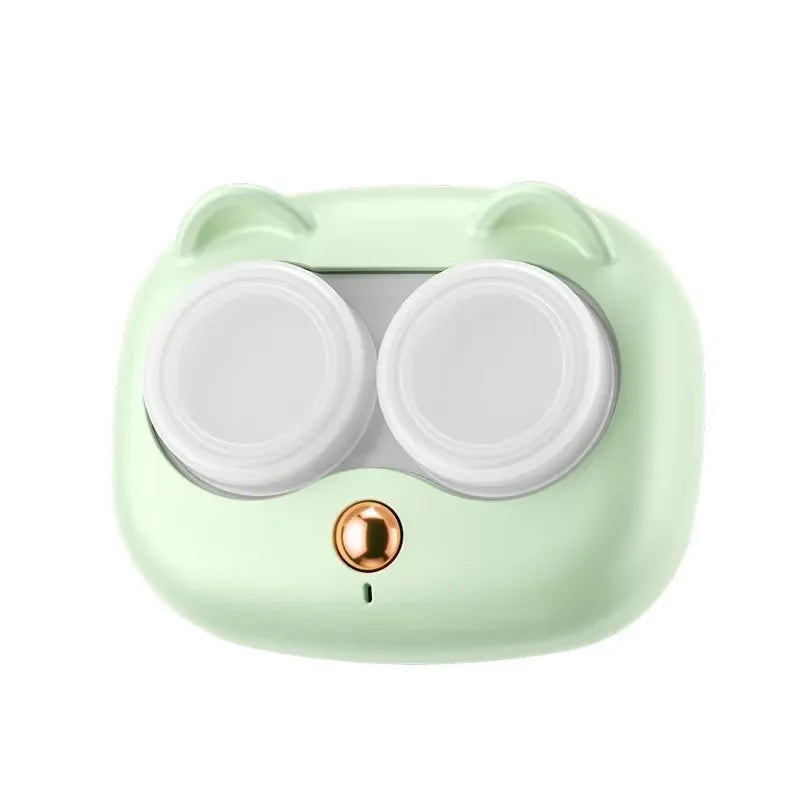
💡 Keep your lenses clean and eyes healthy — explore ultrasonic options today.
Choosing the Right Travel Case for Contact Lenses
A travel case for contact lenses should keep lenses sterile, organized, and easy to access while you're away from home. A well-designed case helps prevent leaks and protects lenses from contamination.
- Compact size for portability
- Leak-proof sealing lids
- Lens wells with smooth, easy-to-clean surfaces
- Optional compartments for tweezers or solution bottles
Pairing a reliable travel case with a trusted eye care device helps maintain proper lens hygiene even when traveling.
How to Clean a Contact Lens Case Properly
Your contact lens case can become a source of contamination if it is not cleaned regularly. Maintaining good case hygiene helps prevent bacteria from transferring to your lenses.
- Empty the old solution from the case after each use.
- Rinse the case with fresh contact lens solution (not tap water).
- Allow the case to air dry upside down on a clean tissue.
- Replace the case every 1–3 months.
Using alcohol or harsh cleaners is not recommended because chemical residues can irritate the eyes or damage lens materials.
What NOT to Do When Cleaning Contact Lenses
Some common habits can increase the risk of eye irritation or infection. Avoid these mistakes when cleaning your lenses:
- Do not rinse lenses with tap water or saliva.
- Do not reuse old contact lens solution.
- Do not store lenses in water.
- Do not mix different cleaning solutions unless instructed by an eye care professional.
- Do not sleep in lenses unless they are specifically approved for overnight wear.
When to Replace Contact Lenses and Cases
Even with proper cleaning, contact lenses and storage cases must be replaced regularly to maintain eye health.
- Daily lenses: Discard after one use.
- Bi-weekly lenses: Replace every two weeks.
- Monthly lenses: Replace every 30 days.
- Lens cases: Replace every 1–3 months.
Following the replacement schedule recommended by your eye care professional helps prevent deposit buildup and reduces the risk of eye infections.
FAQ
1. How often should I clean lens contacts?
Contact lenses should be cleaned every day after removal. Daily cleaning removes protein deposits, debris, and microorganisms that accumulate during wear.
2. Can I use tap water to rinse contact lenses?
No. Tap water may contain microorganisms that can cause serious eye infections. Always use sterile contact lens solution or saline solution recommended by your eye care provider.
3. Can ultrasonic cleaners clean contact lenses safely?
Some ultrasonic devices are designed specifically for contact lenses and can help remove debris. However, they should always be used together with approved disinfecting solutions and should not replace traditional cleaning methods.
4. Why do my contact lenses look cloudy after cleaning?
Cloudy lenses may result from protein deposits, lipid buildup, or residue from improper cleaning. Replacing old lenses, using fresh solution, and following the rub-and-rinse method can help restore clarity.
Pillar Article: Ultimate Review: How to Clean Lens Contacts for Safe, Clear Vision













