
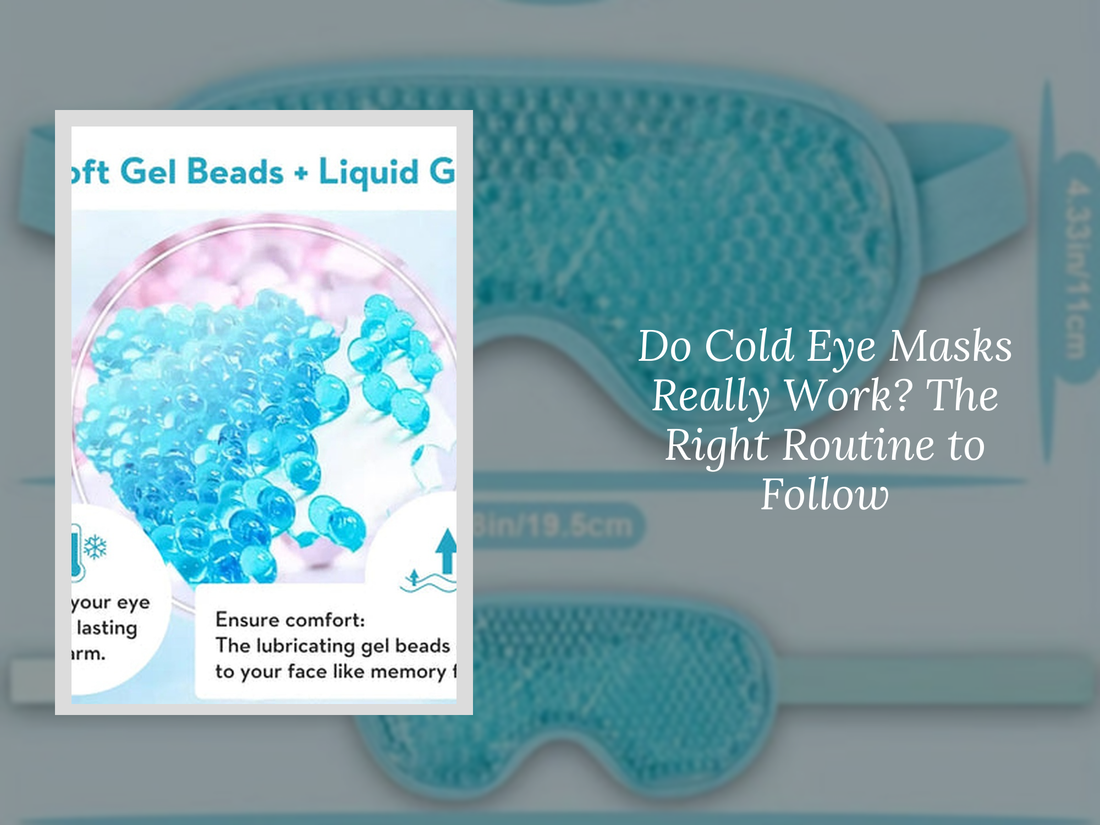
Do Cold Eye Masks Really Work? Science, Benefits, and the Right Routine
Cold eye masks are often recommended for puffiness, tired eyes, and dark circles. But do cold eye masks work as a quick fix or a real skincare tool? From gel eye mask benefits to the science behind cooling therapy, this guide explains what cold therapy can truly improve, where it has limitations, and how to use it effectively for visible results.
⏱ 7 min read

See it in action — best eye mask for puffy eyes and dark circles in your daily routine.
Quick Answer: Do Cold Eye Masks Work?
Yes, cold eye masks work for many common under-eye concerns, especially temporary puffiness, mild swelling, tired-looking eyes, and irritation caused by allergies or lack of sleep. The cooling temperature narrows blood vessels, reduces fluid buildup, and temporarily tightens the appearance of the skin.
What Cold Eye Masks Can Improve
- Morning under-eye puffiness
- Mild swelling around the eyes
- Tired or strained eyes
- Temporary inflammation
- Allergy-related eye discomfort
What Cold Eye Masks Cannot Fix Permanently
- Genetic dark circles
- Hyperpigmentation
- Age-related fat pads
- Permanent under-eye bags
- Skin laxity caused by aging
Expected Results and Timeline
Most people notice visible depuffing within 5–15 minutes of application. However, the results are temporary. Cold therapy provides short-term cosmetic improvement rather than a permanent solution for underlying structural causes of eye bags or dark circles.
What Does a Cold Eye Mask Do? The Science Behind Cold Therapy
Cold eye masks rely on a simple physiological response known as vasoconstriction. When the skin is exposed to cold temperatures, blood vessels temporarily narrow, reducing blood flow and limiting fluid accumulation in surrounding tissues.
Vasoconstriction: Why Swelling Shrinks
Narrowed blood vessels reduce excess fluid movement into the tissues around the eyes. This can make puffiness appear less noticeable within minutes.
Reduced Inflammation Around Delicate Eye Skin
Cold temperatures may help calm mild inflammation and irritation, particularly after poor sleep, seasonal allergies, or extended screen exposure.
Temporary Tightening of Under-Eye Tissue
Cooling causes tissues to contract slightly, creating a firmer and smoother appearance around the eyes.
Why Cooling Feels Soothing for Tired Eyes
Cold therapy can temporarily reduce sensations of heaviness, fatigue, and discomfort, making the eyes feel more refreshed even when structural changes are minimal.
Do Cold Eye Masks Reduce Puffiness?
Yes. Puffiness is one of the conditions that responds best to cold therapy because it is often caused by temporary fluid accumulation rather than permanent structural changes.
Puffiness Caused by Fluid Retention
Fluid can collect beneath the eyes after sleep, high-sodium meals, alcohol consumption, or hormonal changes. Cooling helps minimize this fluid buildup temporarily. For more strategies, see our guide on reducing eye puffiness .
Morning Swelling and Sleep-Related Puffiness
Many people notice the greatest benefit immediately after waking up. A chilled eye mask can reduce the swollen appearance that commonly develops overnight.
Allergy-Related Eye Puffiness
Cold therapy may help reduce swelling associated with mild allergic reactions by calming inflammation and constricting blood vessels. You can also explore related information about eye puffiness triggers and relief .
Do Cold Eye Masks Work for Puffiness and Dark Circles?
The effectiveness of cold eye masks depends largely on the cause of the under-eye concern. Puffiness, dark circles, and eye bags can have very different underlying reasons.
Puffiness Caused by Fluid Retention
This is the situation where cold therapy works best. When fluid accumulates under the eyes—often overnight—cooling the area helps constrict blood vessels and reduce swelling. Many users notice improvement within minutes.
Dark Circles Caused by Pigmentation
If dark circles are caused by excess melanin or genetic pigmentation, cold therapy usually has little effect. In these cases, treatments targeting pigmentation are generally more effective. Learn more about common causes in our dark circles and under-eye concerns guide .
Under-Eye Bags Caused by Fat Pads
Some under-eye bags are caused by structural fat pads beneath the eye. Cold eye masks may reduce surrounding swelling temporarily but cannot eliminate the underlying cause.
Do Cold Eye Masks Help With Dark Circles?
The answer depends on what causes the dark circles. Not all dark circles respond to cooling treatments.
Dark Circles Caused by Blood Vessels
If visible blood vessels contribute to a bluish or purple under-eye appearance, cold therapy may provide temporary improvement by constricting those vessels.
Dark Circles Caused by Pigmentation
When dark circles result from excess pigmentation, cold eye masks generally provide little to no meaningful improvement because pigment remains unchanged.
When Cold Therapy Helps and When It Doesn't
Cooling can temporarily brighten tired-looking eyes, but it is not considered a treatment for genetic discoloration, chronic pigmentation, or significant volume loss beneath the eyes.
Do Cold Eye Masks Work for Eye Bags?
Many people confuse puffiness with eye bags, but the two conditions are not the same.
Temporary Swelling vs Permanent Eye Bags
Puffiness is often caused by fluid retention and responds well to cold therapy. Permanent eye bags are usually related to anatomical changes.
Fat Pad Protrusion and Aging
As tissues weaken with age, fat beneath the eyes can become more prominent. Cold masks cannot reposition or eliminate these fat pads. If you're comparing treatment approaches, see our article on under-eye bag management .
Realistic Expectations
Cold therapy may reduce accompanying swelling and make eye bags appear less obvious, but it does not permanently remove them.
Cold Eye Mask Benefits Explained
Cold eye masks are widely used because they offer quick, non-invasive relief for common under-eye concerns.
Cooling Eye Mask Benefits for Tired Eyes
- Reduces morning puffiness
- Soothes irritated or tired eyes
- Provides comfort after long screen sessions
- Helps calm mild inflammation
Do Ice Eye Masks Work Better Than Gel Masks?
Not necessarily. Gel masks often provide more controlled cooling, maintain temperature longer, and fit comfortably around the eyes. Extremely cold ice-based tools may feel too intense for sensitive skin.
Cold Eye Pads Benefits for Morning Swelling
Reusable cold eye pads are particularly useful for reducing overnight fluid retention and preparing the eye area for the day.
Relief for Screen Fatigue and Eye Strain
People who spend hours on computers, tablets, or smartphones often use cooling eye masks to relieve discomfort and eye fatigue. You can also pair cooling therapy with tools from our Eye Care Devices collection.

Gel eye mask for puffy eyes — Instant calm for screen-tired skin.
Cold Eye Mask Benefits vs Limitations
Benefits Supported by Cold Therapy Science
- Reduced puffiness
- Temporary swelling relief
- Improved comfort for tired eyes
- Temporary tightening effect
- Short-term reduction in visible vascular dark circles
Limitations Users Should Understand
- Results are temporary
- Does not remove pigmentation
- Cannot eliminate fat pads
- Does not stop the aging process
- Requires ongoing use for consistent cosmetic benefits
Common Marketing Claims to Question
Be cautious of claims that a cold eye mask can permanently remove eye bags, erase dark circles, or dramatically reverse aging. Current evidence supports temporary cosmetic improvement rather than permanent correction.
Cold Compress vs Gel Eye Mask vs Ice Roller
Several cooling tools can be used around the eyes. Although they all rely on cold therapy, they vary in convenience, intensity, and design.
Cold Compress
A chilled cloth provides gentle cooling and quick relief but warms up relatively quickly.
Gel Eye Masks
Gel eye masks retain cold temperatures longer and distribute cooling more evenly across the eye area.
Ice Rollers
Ice rollers combine cooling with massage, which may help move excess fluid away from the under-eye region.
How to Use a Cold Eye Mask Correctly (Step-by-Step)
- Chill the mask according to manufacturer instructions.
- Place it gently over closed eyes.
- Leave it in place for the recommended duration.
- Remove and allow skin temperature to normalize.
- Repeat as needed throughout the week.
How Cold the Mask Should Be
The mask should feel cool, not painfully cold. Avoid direct skin contact with frozen surfaces.
How Long to Leave It On
Most users benefit from 5–15 minutes of application.
How Often to Use Cold Therapy
Daily use is generally sufficient for cosmetic depuffing and eye comfort.
Safety Precautions to Avoid Skin Irritation
- Do not apply ice directly to skin.
- Stop if discomfort occurs.
- Avoid prolonged exposure.
- Follow product-specific instructions.
For a full spa-like ritual, pair it with devices from our Eye Care Devices collection or incorporate tools from Lifestyle collections for wellness routines.
The Best Cold Eye Mask Routine for Visible Results
Consistency matters more than intensity. Regular use can help maintain a refreshed under-eye appearance.
Morning Depuffing Routine
- Apply a chilled mask after waking.
- Leave on for 5–10 minutes.
- Follow with moisturizer or eye cream.
Allergy Relief Routine
- Use after exposure to common allergy triggers.
- Combine with physician-recommended allergy care.
- Limit sessions to comfortable durations.
Recovery Routine After Long Screen Time
- Rest eyes away from screens.
- Apply a cooled mask for 5–15 minutes.
- Follow the 20-20-20 rule to reduce eye strain.
Keeping a mask chilled in your fridge makes it easy to include in your daily Skin and Beauty Care Devices routine.
Who Benefits Most From Cold Eye Masks?
People With Morning Puffiness
Individuals who wake up with swollen under-eye areas often experience the fastest visible results.
Allergy Sufferers
Cold therapy may help reduce mild swelling and discomfort associated with seasonal allergies.
Frequent Screen Users
People who spend long hours looking at digital screens often appreciate the soothing sensation of cooling eye masks.
Travelers and Shift Workers
Disrupted sleep schedules can contribute to tired-looking eyes and temporary puffiness, making cold therapy particularly useful.
When You Should Avoid Cold Eye Masks
Extremely Sensitive Skin
Some individuals may experience irritation or discomfort from prolonged cold exposure.
Certain Eye Conditions
Anyone with a diagnosed eye condition should follow guidance from their healthcare professional before using cold therapy around the eyes.
Signs You Should Stop Using Cold Therapy
- Pain
- Persistent redness
- Numbness
- Increased irritation
- Unexpected skin reactions
How to Choose the Best Eye Mask for Puffy Eyes and Dark Circles
Not all eye masks deliver the same experience. Focus on comfort, cooling performance, and durability.
Gel Masks
Gel-based masks maintain cold temperatures longer and provide more even cooling across the eye area.
Reusable Cooling Masks
Reusable designs offer long-term value and are convenient for daily routines.
Adjustable Compression Designs
An adjustable strap helps keep the mask in place while maintaining comfort during use.
| Feature | Why It Matters |
|---|---|
| Gel-based cooling core | Maintains cold temperature longer and distributes cooling evenly |
| Adjustable strap | Provides a secure and comfortable fit |
| Reusable material | Eco-friendly and suitable for long-term use |
| Soft, skin-safe cover | Protects delicate under-eye skin |

Reduce eye bags with cooling beauty tools that fit your routine. Shop smarter.
Cold Eye Mask FAQ
Do cooling eye masks work?
Yes. Cooling eye masks can temporarily reduce puffiness, swelling, and eye fatigue by constricting blood vessels and limiting fluid accumulation.
Does cooling eye mask work for tired eyes?
Many users find cooling masks soothing for tired eyes, especially after long periods of screen use or insufficient sleep.
Do cold eye masks reduce puffiness quickly?
In many cases, visible improvement can occur within 5 to 15 minutes.
Do cold eye masks help with dark circles?
They may help vascular dark circles temporarily but are unlikely to improve pigmentation-related dark circles.
Do ice eye masks work better than gel masks?
Not necessarily. Extremely cold masks may increase discomfort. Gel masks often provide more controlled and comfortable cooling.
How long should you use a cold eye mask?
Most people benefit from sessions lasting 5–15 minutes.
Can you use a cold eye mask every day?
Yes, daily use is generally appropriate when performed safely and according to product instructions.
Looking for more beauty insights? Explore our Eye Care Blog and Beauty & Self-Care Blog for expert guides on confidence-building routines.
Pillar Article: How to Use a Mask for Under Eye Bags Like a Pro
Other Related Articles:
- Your Under Eye Mask Isn’t Working? Here's Why and How to Fix It
- Use This Homemade Mask for Puffy Eyes Before Your Next Zoom Call
- What Is the Right Way to Use a Cold Eye Mask for Puffy Eyes?
- Stop Wasting Your Eye Mask! Do This One Thing First
Explore More:













