

Professional Makeup Brushes Set: Best Kits for Every Workflow
A professional makeup brushes set is not automatically better because it contains 20, 30, or 40 brushes. In professional makeup work, the more useful question is whether the kit gives you the right shapes, density, flexibility, precision, and coverage for the work you actually perform. A large set filled with duplicate blending brushes may be less practical than a smaller kit with reliable foundation, concealer, powder, blush, contour, shader, crease, liner, and detail brushes.
This guide takes a workflow-first approach to choosing professional makeup brushes. Instead of ranking sets by brush count alone, we look at bristle construction, brush shape, product pickup, handle balance, ferrule stability, durability, cleaning, portability, eye-versus-face coverage, and cost per usable brush. For readers specifically looking for a professional eye makeup brush set, we also examine when a dedicated eye kit makes more sense than a full-face collection.
Best Professional Makeup Brush Sets at a Glance
| Workflow | What to prioritize | Ideal coverage | Best fit |
| Full-face client work | Balanced face and eye coverage | Foundation, concealer, powder, blush, contour, eyeshadow, detail | 15–20 useful brushes |
| Bridal and event makeup | Soft blending, complexion control, precision | Face essentials plus multiple eye-blending shapes | 15–20 brushes with duplicates of high-use shapes |
| Editorial and detailed eye looks | Shape precision and variety | Shader, crease, blending, liner, smudge and detail brushes | Dedicated professional eye brush set |
| Freelance and mobile work | Portability and high-use coverage | Essential face and eye shapes | Compact 8–15 brush core |
| First professional kit | Versatility and low redundancy | Essential face, eye and detail functions | 8–12 core brushes plus targeted additions |
Best decision rule: choose the smallest professional makeup brushes set that covers your recurring workflow without forcing you to compromise on precision. Add specialty brushes when a recurring task justifies them.
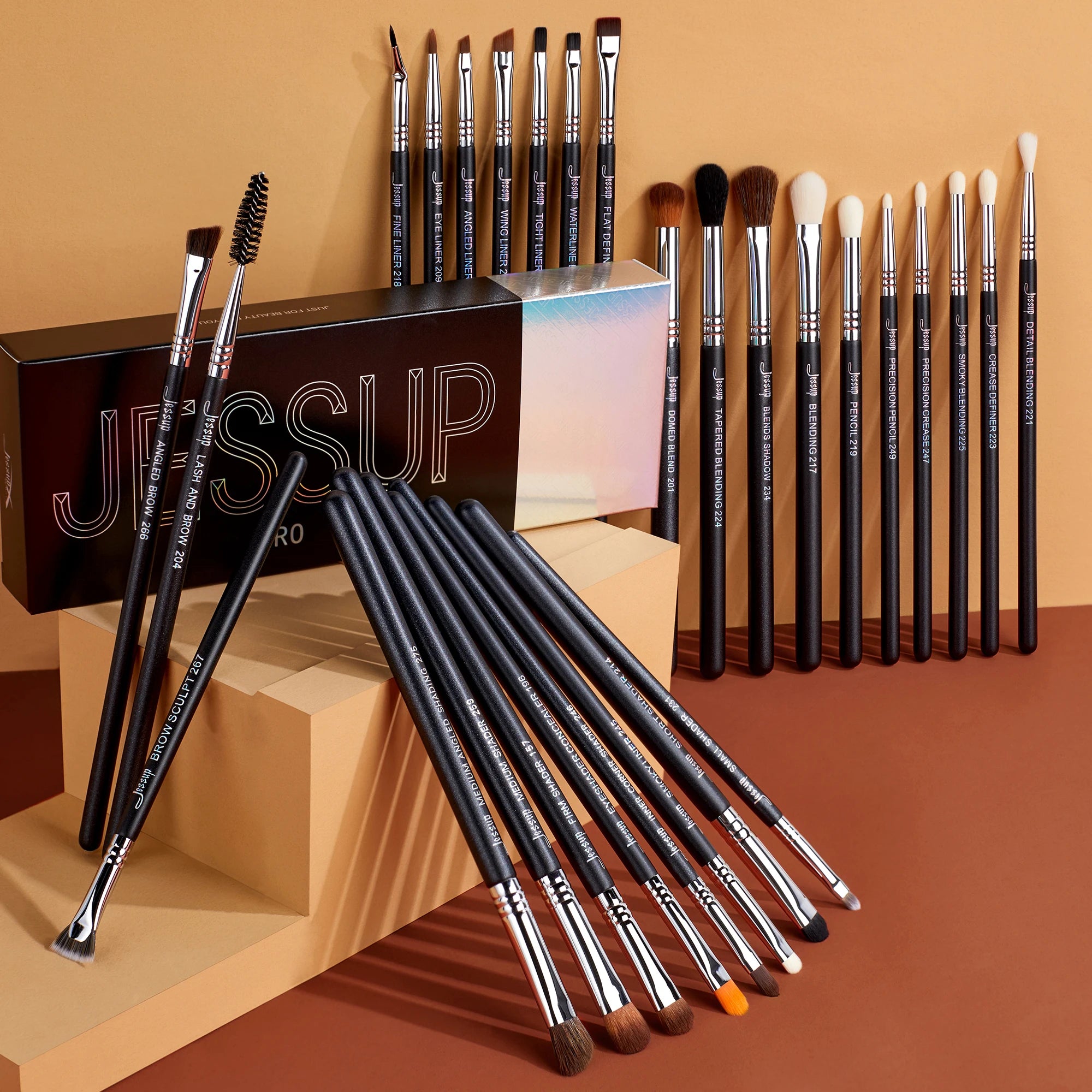
For readers concentrating primarily on eye makeup, the 28pcs Eye Makeup Brushes Set is a particularly relevant option to evaluate because its stated configuration focuses on blending, shading, eyeliner, eyebrow work, and other eye-specific tasks rather than attempting to replace every face brush.
Soft product discovery: If your main workload is detailed eye makeup rather than complexion work, compare the brush shapes in a dedicated eye kit against the functions you perform most often before choosing a larger all-purpose set.
How We Chose the Picks
A professional brush evaluation should consider more than the number printed on the package. The core criteria are bristle construction and cut, density, flexibility, shape precision, handle ergonomics, ferrule stability, expected shedding resistance, cleaning tolerance, kit completeness, portability, and cost per functional brush.
Product specifications supplied by the manufacturer are treated as specifications rather than independent performance findings. Claims such as softness, cruelty-free construction, professional suitability, or skin friendliness should therefore be understood as manufacturer-provided product information unless independently verified.
What Makes a Makeup Brush Set Professional?
A professional makeup brush set is defined less by brush count than by functional coverage and predictable control. A professional artist needs to be able to pick up an appropriate amount of product, place it accurately, blend without unnecessarily disturbing surrounding makeup, and repeat the result across different clients or looks.
Bristle Quality, Construction, and Cut
Bristles should be considered according to their intended job. A dense, tightly packed brush can provide controlled coverage, while a looser shape can diffuse powder or soften transitions. The cut also matters: an evenly shaped head is generally easier to control than one with inconsistent lengths or an imprecise silhouette.
Softness alone should not determine quality. An extremely soft brush can still be poorly shaped for precision work, while a firmer brush may be preferable for packing pigment, defining a crease, or creating a controlled liner application.
Density, Flexibility, and Product Pickup
Density and flexibility work together. Dense brushes can move more product and create stronger coverage, whereas flexible fibers can make diffused blending easier. Neither characteristic is universally better. The correct balance depends on whether the brush is intended for foundation, powder, blush, eyeshadow packing, crease work, or detail application.
Ferrule Stability and Handle Balance
The ferrule connects the bristles to the handle and is an important structural component. A professional brush should feel secure when pressure is applied during blending or detailed work. Handle balance also matters during long sessions because a brush that feels awkward or excessively heavy can become tiring when used repeatedly.
Precision Versus Blending Performance
Professional kits need both precision and diffusion. A small detail brush can place pigment exactly where needed, but it is not a substitute for a larger blending brush. Conversely, a fluffy blending brush cannot perform the same job as a sharply shaped liner brush. Functional variety is therefore more valuable than simply having multiple versions of the same shape.
Shedding, Durability, and Cleaning Tolerance
Frequent cleaning puts more demands on a professional kit than occasional personal use. Look for secure construction, consistent bristles, and handles that can withstand routine washing without obvious deterioration. No brush should be considered permanent; repeated use, cleaning, product buildup, and physical wear eventually affect performance.
Synthetic vs. Natural Bristles for Professional Makeup
Synthetic and natural fibers can both be useful in professional makeup. The better choice depends on the product formula, desired finish, brush shape, maintenance preferences, and workflow.
When a Synthetic Makeup Brush Makes More Sense
Synthetic fibers are particularly practical for cream and liquid products because they can be shaped for controlled application and are generally straightforward to clean. They are also commonly chosen by users who prefer cruelty-free brush construction.
The supplied specifications for the 28-piece eye set identify its brush material as synthetic hair and its handles as wood. That makes it relevant for readers seeking a synthetic professional eye makeup brush set, but the material specification alone does not prove superior performance compared with every natural-fiber alternative.
Where Natural Bristles Can Still Be Useful
Natural bristles remain an option for artists who prefer their feel and product interaction, particularly for certain powder applications. However, individual brush construction varies substantially, so fiber type should not be treated as a shortcut for judging overall quality.
Which Bristle Type Works Best for Cream, Liquid, and Powder Products?
For cream and liquid products, synthetic brushes are often a practical choice because their fibers can be designed for smooth application and cleaning. For powder products, both synthetic and natural options can work effectively. Shape, density, flexibility, and technique frequently matter as much as the fiber category.
The Essential Brushes Every Professional Set Should Cover
Face Brushes
A full-face professional makeup brushes set should normally provide functional coverage for complexion and color application.
- Foundation brush: distributes liquid or cream complexion products with controlled coverage.
- Concealer brush: handles targeted application around the eyes, nose, blemishes, and smaller facial areas.
- Powder brush: applies setting powder across larger areas without concentrating excessive product in one location.
- Blush brush: provides controlled color placement and soft diffusion.
- Contour brush: creates more directional definition along areas such as the cheekbones and jaw.
- Highlight brush: focuses powder or other highlighting products on smaller areas where precision matters.
Eye Brushes
A professional eye makeup brush set should provide several distinct functions rather than simply several similarly sized fluffy brushes.
- Flat eyeshadow brush: packs color onto the lid.
- Eyeshadow blending brush: diffuses edges and transitions between shades.
- Crease brush: places and blends color into the crease with more control.
- Pencil or detail brush: works around smaller areas and adds concentrated color.
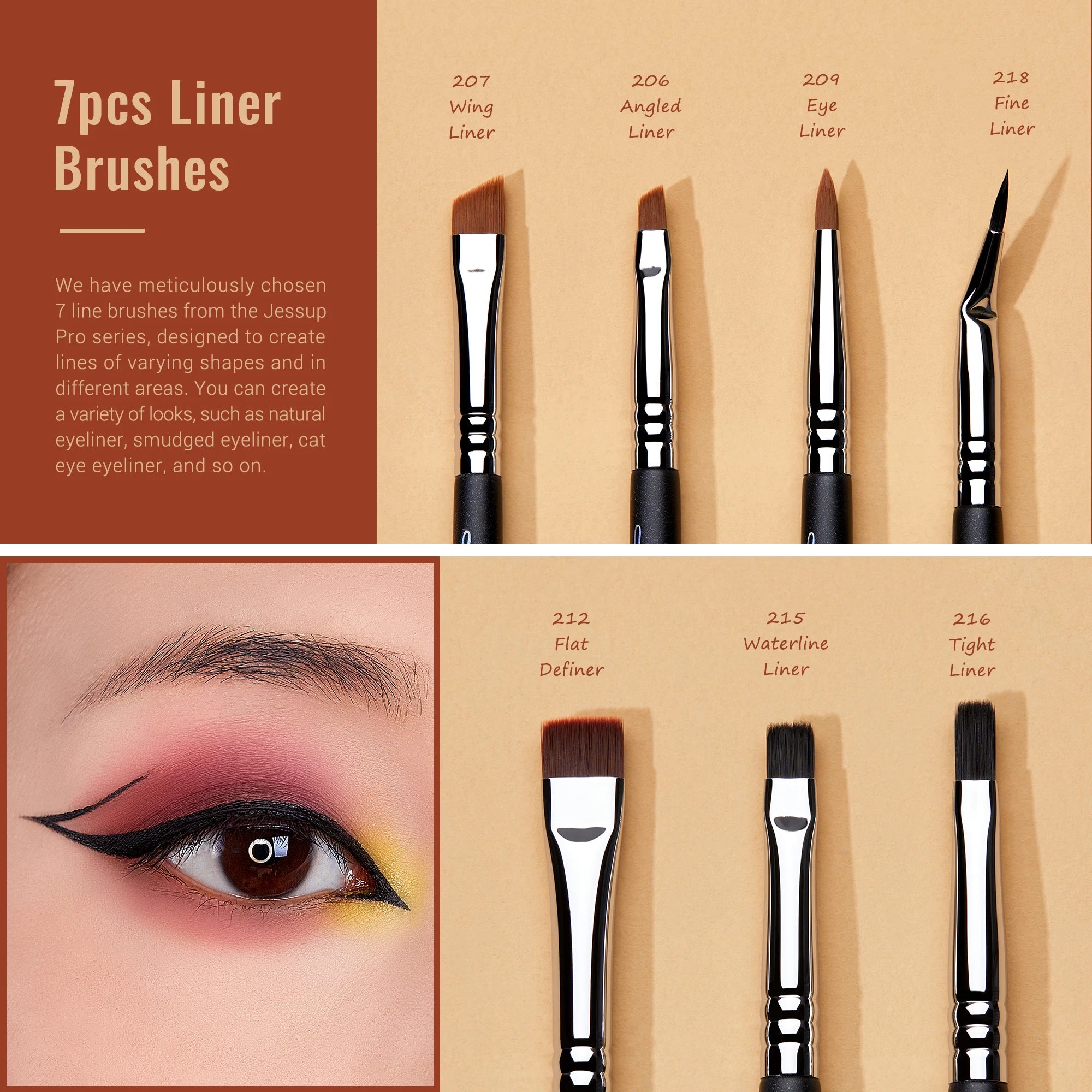
- Eyeliner brush: creates controlled lines with gel, cream, or other liner formulas.
- Smudge brush: softens liner or concentrated pigment along the lash line.
Brow and Detail Brushes
An angled brow brush, precision brush, lip or detail brush, and spoolie can expand the usefulness of a professional kit. These smaller tools become especially valuable for bridal, editorial, photography, and precision-focused work.
Multipurpose Brushes Worth Having
A versatile brush can reduce the total number of tools required in a mobile kit. For example, a medium-density brush may work for blush, bronzer, or powder depending on the formula and technique. Multipurpose brushes are valuable when they genuinely perform multiple tasks well rather than serving as an excuse to omit a brush that a recurring workflow requires.
How Many Brushes Are in a Professional Makeup Brush Set?
There is no universal professional brush count. An artist working primarily on personal clients may need fewer brushes than an artist managing several clients in succession, while an editorial artist may need many specialized eye and detail shapes.
A Practical 8–12 Brush Core Kit
An 8–12 brush kit can cover the fundamentals when each brush has a clear role. A useful core can include complexion, powder, blush, contour, shader, blending, crease, detail, liner, and brow functions.
A 15–20 Brush Full-Workflow Kit
For more complete client work, 15–20 brushes can provide greater separation between products and techniques. This is especially useful when artists want multiple blending shapes, additional complexion options, or clean brushes available between clients.
When 25+ Brush Sets Add Value—and When They Add Redundancy
Larger sets make sense when the additional brushes perform distinct recurring jobs. They become less attractive when several brushes have almost identical dimensions and flexibility. A 28-piece eye kit, for example, can be highly relevant to an artist whose work depends heavily on eye detail, but it does not replace the need for complexion brushes in a full-face workflow.
How to Calculate Cost per Usable Brush
Divide the purchase price by the number of brushes you realistically expect to use regularly. If a 30-piece kit contains only 12 shapes that match your workflow, calculating the price against all 30 brushes can make the set appear better value than it actually is.
A better formula is: cost per usable brush = total set price ÷ number of brushes with a recurring job in your workflow.
Best Professional Makeup Brush Sets by Workflow
Best for Full-Face Client Work
Prioritize a balanced collection with foundation, concealer, powder, blush, contour, highlight, shader, crease, blending, liner, brow, and detail coverage. A dedicated eye-only kit can supplement this workflow, but it should not be treated as a complete face kit.
Best approach: choose a balanced core set first, then add specialized eye brushes according to the looks you create most often.
Best for Bridal and Event Makeup
Bridal work rewards controlled complexion application, soft transitions, reliable eye blending, and precision around lashes and brows. Multiple useful blending shapes can be more valuable than a large collection of specialty brushes used only occasionally.
Best approach: prioritize repeatable complexion coverage, soft eye transitions, detail brushes, and enough clean high-use brushes for a busy session.
Best for Editorial and Detailed Eye Looks
This is where a professional eye makeup brush set can justify a higher brush count. Editorial work may require multiple sizes of blending brushes, flat shaders, detail brushes, smudge brushes, and liner shapes.
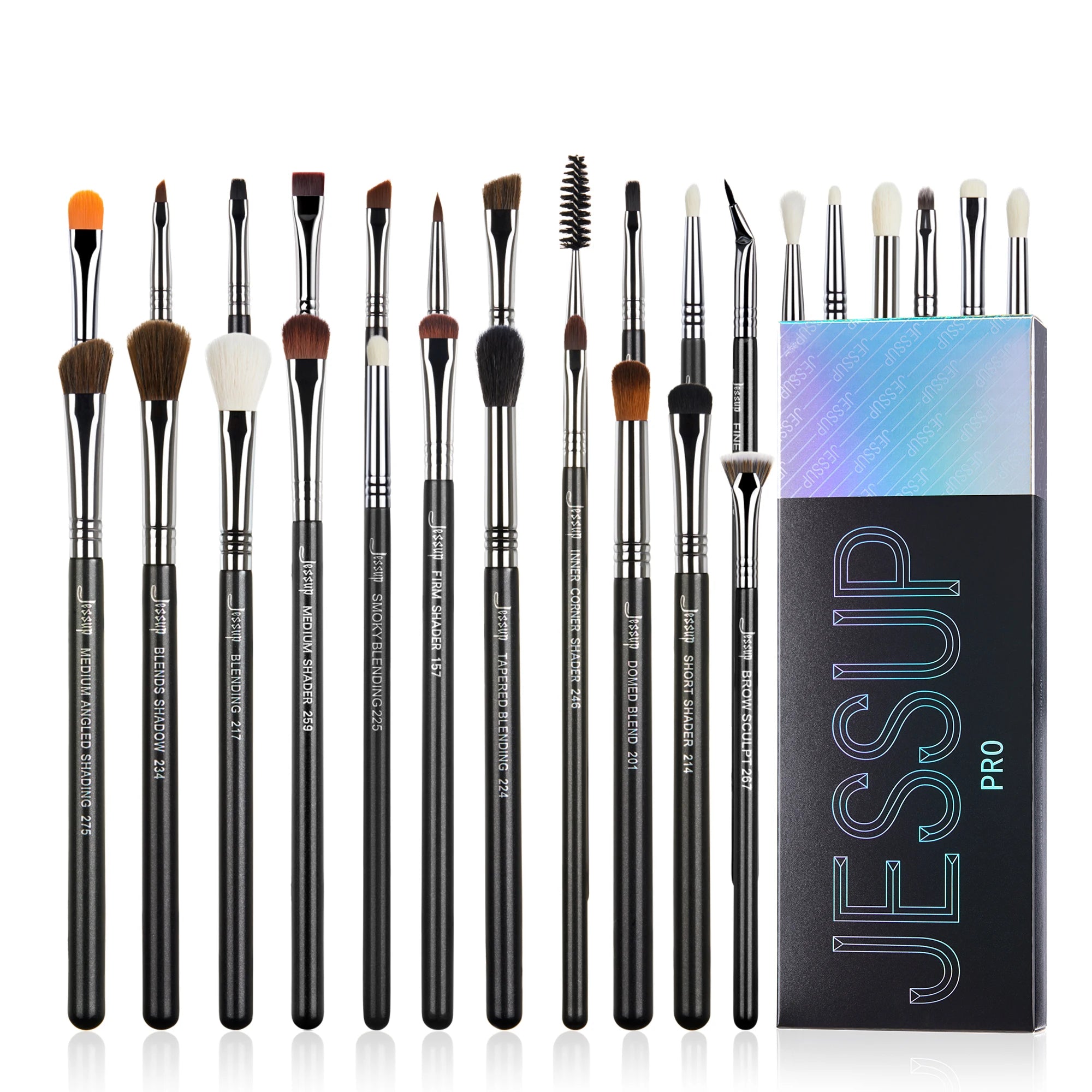
The supplied 28-piece eye set is positioned for this type of workflow because its listed functions include blending, shading, eyeliner, and eyebrow work. Its specifications identify synthetic hair, wood handles, a 28-piece quantity, and gift-box packaging. These are useful purchasing facts, while actual application performance should be assessed separately.
Pros
- Large 28-piece eye-focused configuration.
- Synthetic bristles according to the supplied specifications.
- Includes brushes intended for blending, shading, lining, and brow work.
- Wooden handles are specified for the set.
- Designed to serve both beginner and professional users according to the product description.
Cons
- Eye-focused coverage does not replace a complete face brush collection.
- A 28-piece count may include shapes some users rarely need.
- Manufacturer claims should not be confused with independent performance testing.
- Artists who prefer a minimal mobile kit may find a smaller selection more practical.
Best for Freelance and Mobile Makeup Artists
Mobile artists should prioritize footprint, storage, weight, and the number of high-use brushes rather than maximum brush count. A compact kit is easier to organize, protect, sanitize, and transport between appointments.
Best approach: carry the smallest set that supports your most common face and eye workflows, then keep specialty tools separate for jobs that specifically require them.
Best for Makeup Artists Building Their First Professional Kit
New artists should avoid buying a large set simply because it appears comprehensive. Start with essential shapes and learn which functions you repeatedly need. Individual upgrades can then be added based on real workflow gaps.
A dedicated eye kit can be a sensible addition if eye makeup is the area where you need more precision. A full-face kit should remain the priority if your client work is primarily complexion-focused.
Professional Makeup Brush Set Buying Guide
1. Check Brush-Type Coverage
List the makeup tasks you perform and map each task to a brush. This exposes missing functions and redundant shapes before you buy.
2. Evaluate Shape and Precision
Look at the silhouette of every brush rather than the number of pieces. A precise small brush and a large blending brush serve fundamentally different purposes.
3. Test Density and Flexibility
Consider whether each brush is firm enough for placement and flexible enough for the blending technique it is intended to perform.
4. Inspect Ferrule and Handle Construction
Check whether the handle feels balanced and whether the ferrule appears securely attached. Ergonomics matter more during long professional sessions than they do during occasional personal use.
5. Consider Shedding and Long-Term Durability
Frequent washing and repeated application can expose construction weaknesses. Pay attention to customer feedback and product evidence where available, and avoid assuming that a high brush count automatically indicates durability.
6. Compare Cleaning and Hygiene Requirements
Professional brushes require a consistent cleaning routine, especially when they are used across clients. Consider whether the materials and construction can tolerate the cleaning frequency your workflow demands.
7. Assess Portability and Storage
Artists who travel should evaluate whether the kit can be stored and transported without crushing or contaminating the brush heads.
8. Compare Cost per Functional Brush, Not Brush Count
Calculate value according to the brushes you will genuinely use. A smaller kit with excellent coverage can outperform a larger kit packed with duplicates.
Professional Brush Set Face Coverage: What Each Brush Should Do
Foundation Brush: Coverage and Finish
Foundation brushes should help distribute complexion product evenly while giving the artist control over coverage. Shape and density determine whether the tool is better suited to broad application, targeted coverage, or finishing work.
Concealer Brush: Precision Around the Eyes and Face
A smaller concealer brush gives better access to areas that are difficult to reach with a large complexion brush. It is particularly useful around the inner eye, sides of the nose, and isolated imperfections.
Powder Brush: Setting Without Overloading Product
The ideal powder brush depends on the finish required. A larger, softer shape can diffuse loose powder across broad areas, while a smaller brush can target specific areas that require additional setting.
Blush Brush: Placement and Diffusion
Blush brushes should provide enough control to place color without creating an abrupt edge. Brush size and flexibility influence how concentrated or diffused the final application becomes.
Contour Brush: Definition and Control
Contour application benefits from directional control. A brush that is too large or too flexible can make precise placement more difficult, while an excessively dense brush may deposit more product than intended.
Professional Eye Brush Set Coverage: Precision and Blending
Flat Shader Brush for Packing Color
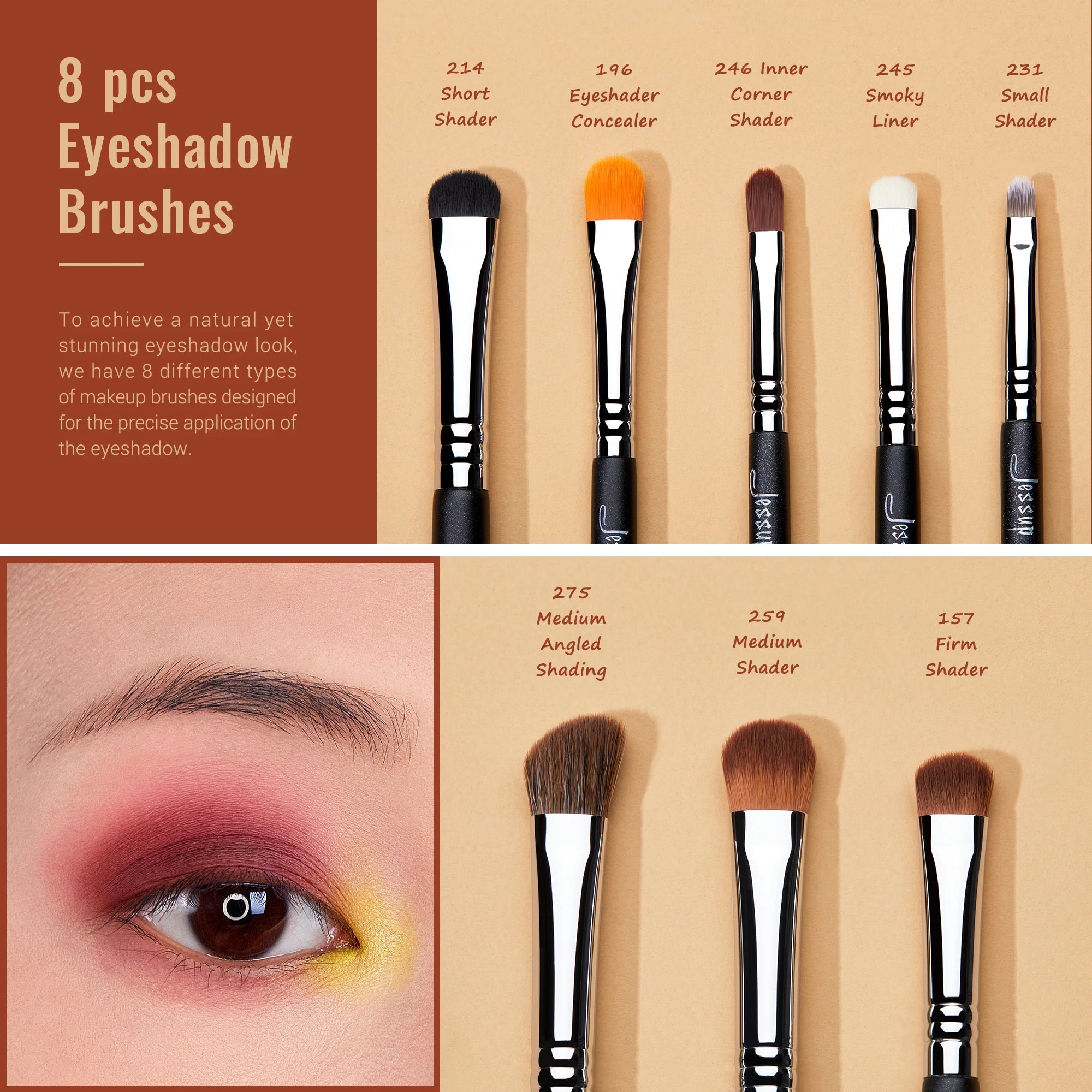
A flat shader is designed to place concentrated eyeshadow on the lid. It should provide enough surface area for efficient application while retaining enough structure for controlled placement.
Eyeshadow Blending Brush for Seamless Transitions
A blending brush should diffuse edges without removing all the color underneath. The correct density and flexibility make a major difference when transitioning between multiple shades.
Crease Brush for Controlled Definition
A crease brush is generally smaller and more controlled than a large blending brush. It allows color to be concentrated into the crease before a softer brush is used to diffuse the edges.
Eyeliner Brush for Fine Lines
An eyeliner brush needs a controlled tip and enough structural stability to create a consistent line. This is one area where brush precision is generally more important than brush softness.
Detail and Smudge Brushes for Small Areas
Small detail and smudge brushes are useful for lower lash-line work, inner-corner placement, tight color application, and deliberately softened liner. These shapes can be especially valuable in editorial and evening looks.
How to Tell If a Large Brush Kit Has Too Many Brushes
Spotting Duplicate Brush Shapes
Lay the brushes next to each other and compare head size, density, flexibility, and intended function. If several brushes perform essentially the same job, the advertised brush count may exaggerate the kit's practical versatility.
Specialty Brushes You May Rarely Use
Some specialty brushes can be useful but may not justify space in a compact professional kit if they are used only once every few months. Consider purchasing them separately when the need becomes recurring.
When Extra Brushes Are Valuable for Professional Work
Extra brushes have genuine value when they reduce cross-product contamination, allow multiple shades to be used efficiently, support multiple clients, or provide distinct shapes for detailed techniques. In those situations, a larger set can improve workflow rather than simply increasing the piece count.
How We Evaluate Professional Makeup Brushes
Testing Brush Feel, Pickup, and Application
A meaningful evaluation should examine how the brush feels in the hand, how much product it picks up, how easily it deposits that product, and whether its shape supports the intended technique. These are separate characteristics and should not be collapsed into a single quality score.
Checking Shedding and Ferrule Stability
Repeated use should be considered when evaluating durability. Observe whether fibers remain secure and whether the ferrule continues to feel stable after routine handling and cleaning.
Evaluating Cleaning Performance
Cleaning is part of professional brush performance. A brush that performs well initially but is difficult to clean or dry may be less practical for high-frequency use.
Separating Editorial Observations From Manufacturer Claims
This distinction is important for trustworthy product content. A stated material, brush count, or handle construction is a product specification. Claims about softness, professional performance, or skin friendliness are manufacturer statements unless supported by independent evidence. Readers should use the specifications to narrow their options and their own workflow requirements to make the final choice.
How to Clean and Maintain Professional Makeup Brushes
Routine Makeup Brush Cleaning
Clean brushes according to how frequently they are used and what products they contact. Brushes used with cream and liquid formulas generally require particularly careful cleaning because residue can remain between fibers.
For professional client work, establish a repeatable hygiene protocol rather than waiting until brushes visibly look dirty. Follow the instructions for the brush and cleaning product being used, and avoid sharing brushes between clients without appropriate cleaning.
Deep Cleaning and Drying
During deep cleaning, work cleanser through the bristles without unnecessarily soaking the handle or ferrule. Rinse thoroughly and reshape the brush head before allowing it to dry completely.
How to Prevent Damage to Bristles and Ferrules
Avoid prolonged soaking, excessive pressure, and aggressive twisting of the bristles. Dry brushes in a position that does not encourage water to remain trapped around the ferrule. Proper storage also helps prevent crushing and deformation.
When to Replace a Professional Brush
Replacement becomes appropriate when a brush has persistent shedding, permanently distorted bristles, a loose ferrule, damaged fibers, or a handle that compromises safe and controlled use. A brush does not become valuable simply because it has been owned for a long time.
For additional beauty-related product discovery, readers can also explore the Skin and Beauty Care Devices collection and the Eye Care Devices collection. Educational resources are available through the Beauty & Self-Care Blog, Body & Face Blog, and Eye Care Blog.
Which Professional Makeup Brushes Set Should You Buy?
Choose Based on Your Primary Workflow
If you perform full-face client makeup, choose balanced face-and-eye coverage. If your work is dominated by complex eye looks, a dedicated professional eye makeup brush set can provide more useful shape variety. Bridal artists should emphasize complexion control, soft blending, and reliable detail tools, while mobile artists should prioritize portability and high-use functions.
Choose Based on Required Brush Coverage
Make a checklist of the techniques you perform every week. If a kit lacks a brush for a recurring task, the advertised brush count is less important than the missing function. Conversely, if five brushes perform nearly identical jobs, you may be paying for redundancy.
Choose Based on Portability and Client Volume
One artist may benefit from a 25-plus-brush collection, while another can work more efficiently with 10–15 carefully selected tools. Client volume, cleaning logistics, storage, and transportation should determine the appropriate kit size.
Choose Based on Budget and Cost per Usable Brush
Do not compare two sets solely by total price or total brush count. Calculate how many brushes you expect to use regularly and determine whether the kit fills genuine workflow gaps.
For an eye-focused workflow: the 28pcs Eye Makeup Brushes Set is worth considering when you specifically want a large collection of eye-focused tools. Its supplied specifications list 28 synthetic-hair brushes, wooden handles, and functions covering blending, shading, eyeliner, and eyebrow work. It should be viewed as an eye-focused component of a professional kit rather than automatically as a complete full-face solution.
Soft CTA: If the set matches your recurring eye-makeup workflow, review its brush configuration and specifications before purchasing. If your work is broader, compare its eye coverage against the face brushes you would still need to build a complete kit.
FAQ: Professional Makeup Brushes Sets
What should a professional makeup brushes set include?
A professional set should cover the functions you perform regularly. A full-face kit typically needs foundation, concealer, powder, blush, contour, highlight, eyeshadow shader, blending, crease, liner, brow, and detail brushes. The exact number depends on workflow and whether brushes are dedicated or multipurpose.
How many brushes are in a professional makeup brush set?
There is no fixed professional standard. An efficient core kit can contain about 8–12 brushes, a broader full-workflow kit may use 15–20, and larger 25-plus collections can be useful when the additional brushes provide distinct functions or support high-volume work.
Are synthetic or natural bristles better for professional makeup brushes?
Neither is universally better. Synthetic brushes are a practical choice for many cream and liquid applications and are commonly preferred by users seeking cruelty-free construction. Natural bristles remain useful for some powder applications. Shape, density, flexibility, construction, and technique all influence performance.
What is the best professional eye makeup brush set for detailed eye looks?
The best set is the one that provides the distinct shapes required by your techniques, including flat shader, blending, crease, liner, smudge, and detail brushes. A larger eye-focused collection can be valuable for artists who frequently create layered or highly detailed looks, but brush count alone does not establish quality.
How do you clean and maintain professional makeup brushes?
Clean brushes regularly according to their use, use an appropriate cleanser, avoid prolonged soaking, protect the ferrule and handle from unnecessary water exposure, reshape the bristles after washing, and allow brushes to dry fully before storage. Replace brushes when shedding, structural damage, or permanently distorted bristles interfere with controlled application.
Final Verdict: Choose the Set That Fits the Work, Not the Number on the Box
The best professional makeup brushes set is the one that makes your real workflow easier. Professional quality comes from functional coverage, dependable construction, appropriate density and flexibility, precise shapes, comfortable handling, durability, hygiene, and a sensible balance between dedicated and multipurpose brushes.
If you need full-face client coverage, prioritize a balanced core. If your work centers on detailed eye makeup, put greater weight on shader, blending, crease, liner, smudge, and precision shapes. If you travel frequently, reduce redundancy and protect the brushes you use most. And if you are building your first professional kit, start with essential shapes rather than buying the largest collection available.
The simplest decision rule is this: choose the smallest set that fully supports your actual makeup workflow, then add specialty brushes only when they solve a recurring problem. A professional kit should earn its space through useful performance—not through brush count alone.
Pillar Article: Good Affordable Brush Set: Best Picks for Eye Makeup













