

Titanium vs Stainless Steel Derma Roller: Which Material Is Better for Microneedling?
Choosing the right microneedling device often comes down to the material used in the needles. When comparing a titanium vs stainless steel derma roller , most buyers want to know which option offers better durability, hygiene, sharpness, and long-term value. This guide explains the key differences between titanium and stainless steel needles, how needle count affects results, what to expect from derma roller before-and-after outcomes, and how to choose the right roller for your needs.
Titanium vs Stainless Steel Derma Roller: Quick Comparison
Choosing between a titanium vs stainless steel derma roller comes down to needle durability, corrosion resistance, skin sensitivity, maintenance, and long-term value. Both materials can work for microneedling, but they perform differently in real-world use.
Side-by-Side Comparison Table
| Feature | Titanium Derma Roller | Stainless Steel Derma Roller |
|---|---|---|
| Needle durability | Higher resistance to bending and wear | Strong but may dull faster with frequent use |
| Corrosion resistance | Excellent resistance to rust and oxidation | Good when properly cleaned and dried |
| Sharpness retention | Usually maintains performance longer | Can lose sharpness sooner depending on quality |
| Price | Usually more expensive | More affordable |
| Best use case | Frequent microneedling | Occasional microneedling |
Winner by Category: Sharpness, Durability, Hygiene, and Value
- Best durability: Titanium
- Best budget option: Stainless steel
- Best for frequent users: Titanium
- Best value for occasional use: Stainless steel
How Derma Rollers Work and Why Needle Material Matters
Microneedling and Collagen Induction Explained
A derma roller is a handheld microneedling tool designed to create controlled microchannels in the skin. This process is commonly known as collagen induction therapy .
The skin responds to these tiny punctures by activating its natural repair mechanisms. Over time, this process can support collagen and elastin production, which may improve skin texture, mild acne scars, and overall skin appearance.
- Supports collagen production
- May improve uneven skin texture
- Can enhance absorption of topical products
- Often used for beard and scalp microneedling routines
For a deeper explanation of microneedling science, visit our Beauty & Self-Care Blog where we cover additional techniques and skincare tools.
Related reading: explore our microneedling benefits guides and collagen induction therapy resources for a deeper understanding of how these treatments work.
Why Needle Material Affects Performance and Skin Safety
The material of a derma roller needle affects how consistently the needles enter the skin. Higher-quality materials maintain their shape better, which helps reduce uneven pressure and unnecessary skin trauma.
A worn or low-quality needle may create more irritation because it can drag across the skin instead of creating clean microchannels.
Titanium vs Stainless Steel Derma Roller: Detailed Comparison
Needle Sharpness and Precision Over Time
When comparing derma roller titanium vs stainless steel needles, sharpness retention is one of the biggest differences. Titanium needles generally maintain their structure longer because titanium alloys are resistant to wear.
However, manufacturing quality matters more than material alone. A poorly made titanium roller may perform worse than a high-quality stainless steel model.
Many users find that premium stainless steel needles initially feel extremely precise, while titanium-focused designs tend to offer more consistent performance over repeated sessions.
Durability, Strength, and Needle Deformation
Titanium derma rollers are often chosen by users who want longer-lasting performance. The material is lightweight, strong, and resistant to repeated stress.
Stainless steel rollers are also durable, especially for occasional microneedling, but lower-quality models may experience faster needle wear.
Resistance to needle deformation is important because bent or damaged needles can increase discomfort and reduce treatment consistency.
Corrosion Resistance, Cleaning, and Hygiene
Both titanium and stainless steel derma rollers can be hygienic when cleaned correctly. Titanium has excellent corrosion resistance, making it a strong choice for users who prioritize long-term maintenance.
Stainless steel requires careful drying and storage because moisture exposure can reduce lifespan over time.
Regardless of material, proper sanitization before and after each session remains one of the most important safety practices in home microneedling.
Lifespan and Long-Term Cost Comparison
While titanium rollers often cost more initially, their longer lifespan may reduce replacement frequency.
Stainless steel models are usually less expensive upfront and can provide excellent value for users who microneedle occasionally.
For frequent users, long-term ownership costs may favor titanium or titanium-coated designs because they generally withstand repeated use better.
Titanium vs Titanium-Coated Derma Rollers: What Buyers Need to Know
Pure Titanium vs Titanium-Coated Needles
Many shoppers assume that all titanium derma rollers use solid titanium needles. In reality, most products marketed as titanium rollers use stainless steel needles with a titanium coating.
This hybrid construction combines the sharpness of stainless steel with the added durability and corrosion resistance associated with titanium surfaces.
- Stainless steel provides a precise needle edge
- Titanium coating improves wear resistance
- The combination helps balance performance and longevity
Does Titanium Coating Improve Performance or Just Marketing?
In many cases, titanium coating does provide practical benefits, particularly for durability and maintenance. However, coating alone does not guarantee better performance.
Manufacturing quality, needle alignment, sterilization standards, and overall construction remain more important than marketing claims.
Stainless Steel vs Titanium Derma Roller: Which Is Better for Different Users?
Best Choice for Beginners
Beginners who microneedle occasionally may find stainless steel derma rollers a practical option because they are affordable and easy to replace.
Best Choice for Sensitive Skin
Users focused on consistent performance may prefer titanium because better needle durability can help maintain smoother rolling over time.
Regardless of material, shorter needle lengths and gentle technique are usually more important considerations for sensitive skin.
Best Choice for Frequent Microneedling Users
Frequent users often benefit from titanium rollers because the material is designed for repeated use and long-term durability.
If you follow a regular beard growth, scalp, or skin-texture routine, a titanium-based roller may provide a more economical long-term solution.
192 vs 540 Derma Roller: Does Needle Count Matter?
192 vs 540 Needle Roller Differences
Needle count affects how pressure is distributed across the skin during rolling.
- 192 needles: Often preferred for more precise penetration and needle spacing.
- 540 needles: Offers broader coverage across larger treatment areas.
Neither needle count is automatically superior. Results depend on needle quality, technique, consistency, and treatment goals.
Which Needle Count Is Better for Beard Growth and Hair Use?
Many users choose 540-needle rollers for beard and scalp treatments because they cover larger areas more efficiently.
Others prefer 192-needle designs because they may offer more consistent needle alignment. Personal preference and product quality play major roles in user satisfaction.
When a 540 Titanium Derma Roller Makes Sense
A 540 titanium microneedle derma roller can be a practical choice for users targeting beard growth, scalp care, or larger skin areas where broader coverage is desirable.
For additional guidance, see our needle size guides and comparison resources covering 192 vs 540 needle configurations.

Want to achieve similar results? Explore the Kentdo 540 Needle Derma Roller here .
Derma Roller Before and After Results: What to Expect
People searching for derma roller 540 before and after photos often want realistic expectations. Results vary based on skin type, treatment frequency, needle length, and overall skincare routine.
Beard Growth Results Timeline
Users incorporating a derma roller 0.5mm 540 titanium alloy into a beard care routine may begin noticing early changes after several weeks of consistent use.
Common observations include improved patch coverage, new vellus hair growth, and fuller beard appearance over time.
Hair and Scalp Results Timeline
For scalp microneedling, visible improvements typically require patience. Many users report early density changes after two to three months when microneedling is combined with a consistent hair-care regimen.
Improved product absorption and increased circulation are among the commonly cited benefits.
Skin Texture and Acne Scar Improvements
Microneedling is frequently used to improve mild acne scars and uneven skin texture. As collagen remodeling progresses, some users notice smoother skin, refined pores, and a more even appearance.
For more detailed timelines, explore our beard growth microneedling guides and hair regrowth skincare resources.
How Long Does a Derma Roller Last?
Titanium Derma Roller Replacement Timeline
A titanium or titanium-coated derma roller typically lasts 10–15 uses before replacement becomes advisable.
The exact lifespan depends on needle quality, cleaning habits, storage conditions, and usage frequency.
Stainless Steel Derma Roller Replacement Timeline
Stainless steel derma rollers commonly last around 5–10 uses . Premium models may perform longer, but regular inspection is still important.
Signs Your Derma Roller Needs Replacement
- Needles feel rough or scratchy during use
- Visible bending or uneven alignment
- Increased redness or irritation
- The roller drags instead of gliding smoothly
- Evidence of wear, corrosion, or damage
How to Choose the Best Derma Roller Before Buying
Needle Material Checklist
- Choose titanium for maximum durability and frequent use.
- Choose stainless steel for affordability and occasional use.
- Avoid unclear materials or low-quality manufacturing claims.
- Look for clear sterilization and quality-control information.
Needle Length and Usage Guide
Needle length should match your goals and experience level. Shorter needles are commonly selected for cosmetic maintenance, while longer needles require more caution and experience.
- 0.25mm: Product absorption and beginner use
- 0.5mm: Popular for beard, scalp, and general home microneedling
- Longer lengths: Require additional care and experience
Quality Features to Avoid Cheap Rollers
- Uneven needle spacing
- Loose roller heads
- Unclear sterilization information
- Poor manufacturing consistency
- Missing replacement recommendations
How to Use a Derma Roller Safely at Home
Cleaning and Sanitization Steps
- Disinfect the roller with isopropyl alcohol before use.
- Wash the treatment area with a gentle cleanser.
- Use gentle, controlled pressure while rolling.
- Rinse and disinfect the roller after use.
- Allow it to air dry completely.
- Store it in a protective case.
For more detailed maintenance instructions, see our derma roller cleaning and sterilization guides.
Safe Needle Lengths for Home Use
Many beginners start with needle lengths between 0.25mm and 0.5mm because they are widely used for cosmetic microneedling routines.
These shorter lengths can support circulation and topical product absorption while helping users develop proper technique.

Using a derma roller 0.5mm 540 titanium alloy can support consistent beard and hair stimulation. View product details here .
Risks and Safety Considerations
Infection and Hygiene Risks
Microneedling creates temporary microchannels in the skin. Improper cleaning practices can increase the risk of irritation, contamination, or infection.
Always sanitize your device and avoid sharing derma rollers with others.
Damage From Low-Quality or Dull Needles
Low-quality, bent, or worn needles can drag across the skin rather than creating clean punctures. This may increase discomfort and reduce treatment consistency.
Replacing rollers on schedule helps minimize this risk.
Who Should Avoid Microneedling
- People with active acne infections
- Individuals with eczema or psoriasis flare-ups
- People with open wounds or severe skin inflammation
- Anyone taking medications that significantly affect healing
Frequently Asked Questions
How long until I see derma roller before and after results?
Many users notice early skin texture improvements within four weeks, while collagen-related changes often become more visible after eight to twelve weeks of consistent use.
Is 540 better than 192 for beard growth?
A 540-needle roller provides wider coverage, while a 192-needle roller may offer more precise needle spacing. Neither option is universally better.
Can a titanium derma roller cause scarring?
When used correctly and with proper hygiene, scarring risk is generally low. Excessive pressure, poor technique, and worn needles increase the likelihood of irritation.
Is Titanium Better Than Stainless Steel for Derma Rollers?
Titanium is usually better for users who want longer lifespan and stronger corrosion resistance. Stainless steel remains a good option for budget-conscious users.
Which Is Better Stainless Steel or Titanium Derma Roller?
The better choice depends on your usage. Titanium is better for frequent use, while stainless steel offers good performance at a lower cost.
Is a 540 Titanium Derma Roller Better Than 192 Needles?
A 540 titanium derma roller is not automatically better. Needle count changes coverage and feel, while needle quality and correct usage affect results more.
Pillar Article: Ultimate Guide to 192 vs 540 Needle Derma Rollers: Which One is Better for Hair Growth?
Other Related Articles:
- 0.5mm Derma Rollers Compared: Which Product Is Best for Hair Regrowth?
- Derma Roller System 540 Needles Review: Pros, Cons, and Who Should Use It
- Top Rated Derma Roller 540 Models for Beard and Hair: Our Expert Picks
- 540 or 192 Needle Derma Roller: Which Offers Better Beard Growth Results?
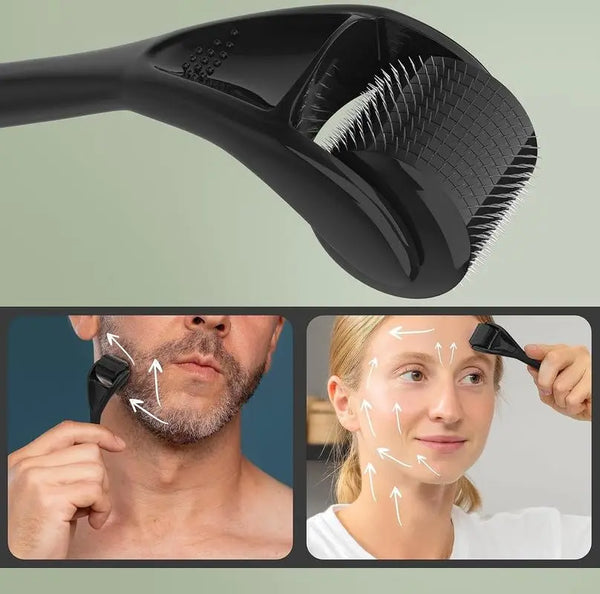
Ready to start your own
derma roller 540 before and after
journey?
Get the Kentdo 540 Needle Derma Roller Now
Final Verdict: Titanium or Stainless Steel Derma Roller?
When comparing a titanium vs stainless steel derma roller , the right choice depends on how often you plan to use the device and what factors matter most to you.
- Titanium rollers offer superior durability, corrosion resistance, and long-term value for frequent users.
- Stainless steel rollers remain a strong choice for affordability and occasional microneedling routines.
- Titanium-coated stainless steel needles combine characteristics of both materials and are common in modern consumer devices.
For most home users seeking durability, coverage, and consistent performance, a 540 titanium microneedle derma roller such as the Kentdo model provides a practical balance of strength and usability.
Still unsure? Visit our Beauty & Self-Care Blog for more microneedling tips, product comparisons, and expert buying guides. Consistency, hygiene, and proper technique remain the most important factors in achieving safe and effective microneedling results.













