Hair Straightening Brush vs Flat Iron: Which Tool Is Better for Your Hair?
Flat iron vs straightening comb—which tool truly wins when it comes to sleek, lasting results? Whether you're comparing a straightening brush vs straightening comb, wondering about electric hot comb vs flat iron, or asking "do ionic brushes damage hair?", we’ve got answers. Plus, find out how a hair dryer brush vs straightening brush can change your entire routine. Ready to discover which tool saves you time and protects your strands?
Hair Straightening Brush vs Flat Iron: Quick Comparison
If you're deciding between a hair straightening brush vs flat iron, the best option depends on the results you want, your hair type, and how much time you spend styling. While both tools straighten hair using heat, they produce very different finishes and require different techniques.
- Straightening brush: Best for quick styling, natural volume, and everyday touch-ups.
- Flat iron: Best for ultra-sleek styles, stubborn curls, and professional-level straightening.
- Hair damage risk: Flat irons can cause more heat stress because hair is pressed between plates.
- Ease of use: Straightening brushes are usually easier for beginners.
- Speed: Brushes often style larger sections of hair faster.
Understanding how each tool works — and which hair types they suit best — will help you choose the right styling tool for your routine.
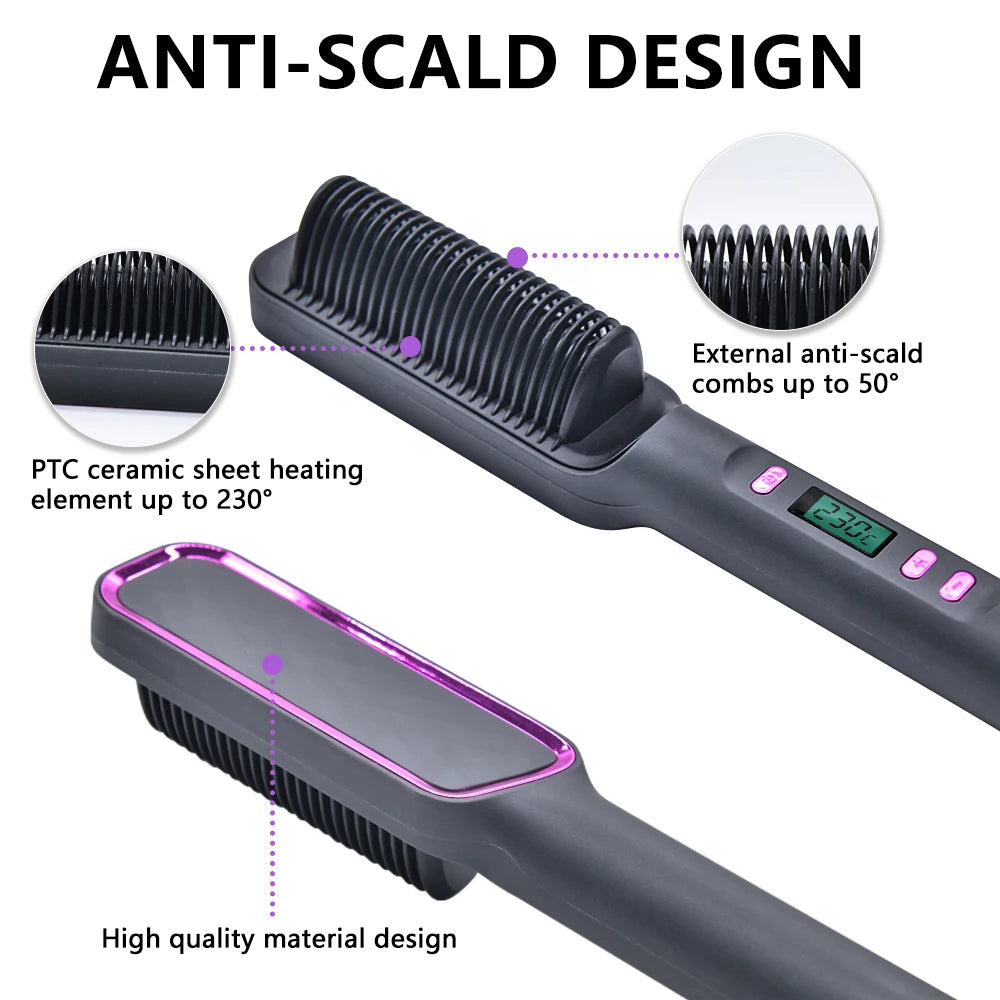
💡 See it in action: flat iron vs straightening comb — KentDO ionic brush now available.
⏱ 6 min read
What’s the Difference Between a Straightening Brush and a Flat Iron?
The main difference between a straightening brush vs flat iron is how heat is applied to the hair. A brush straightener combines heated bristles with gentle tension, while a flat iron presses hair between heated plates.
How a Hair Straightening Brush Works
A hair straightener brush looks similar to a paddle brush but contains heated ceramic or ionic bristles. As you brush through your hair, the heat relaxes the hair structure while the bristles guide the strands straight.
Because the hair is not clamped tightly between plates, straightening brushes typically create a softer, more natural finish with some volume left at the roots.
How a Flat Iron Works
A flat iron uses two heated plates that clamp the hair between them. The intense direct heat breaks hydrogen bonds in the hair temporarily, allowing the strands to become completely straight.
This technique creates the sleekest possible result, which is why flat irons are commonly used for professional smoothing treatments and very curly or coarse hair.
Side-by-Side Comparison: Straightening Brush vs Flat Iron
Although both tools straighten hair using heat, their performance differs depending on styling goals.
Heat Technology (Ceramic, Ionic, Tourmaline)
Most modern straighteners use ceramic, tourmaline, or ionic technology to distribute heat evenly and reduce hot spots that can damage hair.
- Ceramic plates: Provide stable, consistent heat.
- Ionic technology: Reduces static and frizz.
- Tourmaline coatings: Emit negative ions that smooth the hair cuticle.
Styling Results: Sleek vs Natural Volume
A flat iron produces the smoothest finish because hair is pressed tightly between heated plates. This makes it ideal for ultra-straight styles.
A straightening brush maintains more natural movement and root lift, which many people prefer for everyday styling.
Speed and Ease of Use
Straightening brushes are often faster because they style larger sections of hair at once and follow a natural brushing motion.
Flat irons typically require sectioning and more careful technique to avoid creases.
Hair Damage Risk
Flat irons expose hair to more concentrated heat, which may increase the risk of dryness or breakage if used frequently.
Straightening brushes apply gentler heat and tension, making them a safer option for frequent styling when used with heat protection.
Pros and Cons of Each Tool
Flat Iron Pros and Cons
- Pros: Ultra-sleek finish, versatile for curls or waves, long-lasting results.
- Cons: Higher heat exposure, requires more technique, slower for full styling.
Straightening Brush Pros and Cons
- Pros: Quick styling, beginner-friendly, natural volume, lower direct heat exposure.
- Cons: May struggle with very coarse or tightly curled hair.
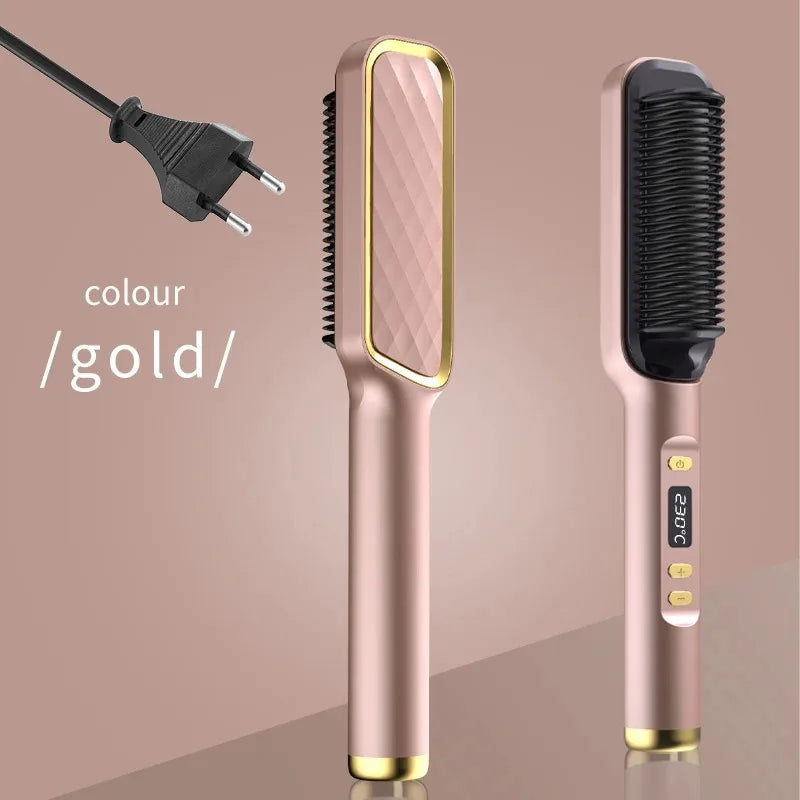
💡 Straightening brush vs straightening comb: try the KentDO ionic brush for easier styling
Which Tool Is Best for Your Hair Type?
Your hair texture plays a major role in deciding whether a straightening brush or flat iron will deliver better results.
Fine or Thin Hair
Fine hair typically responds well to straightening brushes because it requires less heat to smooth. Lower temperatures help reduce damage.
Thick or Coarse Hair
Thicker hair often needs stronger heat and tension. A flat iron may provide more consistent results for this hair type.
Curly or Wavy Hair
Moderately wavy hair can often be smoothed with a straightening brush. For tight curls, flat irons usually deliver more dramatic straightening.
Damaged or Color-Treated Hair
Hair that is bleached or fragile may benefit from the gentler heat exposure of a straightening brush. Always use adjustable heat settings and a heat protectant.
When You Should NOT Use Each Tool
Even the best styling tools have limitations. Knowing when not to use them can help prevent heat damage and frustration.
Situations Where Flat Irons Can Cause Problems
- Extremely fragile or heavily bleached hair
- Styling wet or damp hair
- Using very high heat daily
Flat irons concentrate heat between plates, which can weaken already damaged hair over time.
Situations Where Straightening Brushes May Not Work Well
- Very tight curls or textured hair
- Extremely thick hair sections
- Very short hair that cannot pass through brush bristles
In these situations, flat irons or professional styling methods may produce better results.
Hot Comb vs Flat Iron vs Straightening Brush
A hot comb, also known as a pressing comb, is another styling tool often compared with flat irons and straightening brushes.
Unlike a brush straightener, a hot comb uses a heated metal comb that passes directly through the hair to smooth curls.
- Hot comb: Traditional tool often used for thick or textured hair.
- Flat iron: Creates the smoothest and most polished straight style.
- Straightening brush: Best for quick smoothing and natural-looking results.
When a Pressing Comb Makes Sense
A pressing comb can work well for thick, textured hair that requires strong heat and tension. However, many modern users prefer flat irons or straightening brushes because they offer better temperature control.
Straightening Brush or Flat Iron: Which Should You Choose?
If you're still deciding between a straightening brush or flat iron, consider your styling goals and hair texture.
Choose a Straightening Brush If…
- You want quick daily styling
- You prefer natural-looking volume
- Your hair is fine, slightly wavy, or easy to smooth
- You want a beginner-friendly styling tool
Choose a Flat Iron If…
- You want extremely sleek, polished hair
- Your hair is thick, coarse, or tightly curled
- You want to create curls or waves with the same tool
- You want salon-style straightening results
Hair Dryer Brush vs Straightening Brush: What’s the Difference?
A hair dryer brush and a straightening brush simplify styling but serve different purposes.
| Tool | Use On | Main Benefit |
|---|---|---|
| Hair Dryer Brush | Wet or damp hair | Dries and styles at the same time |
| Straightening Brush | Dry hair | Smooths and detangles with gentle heat |
Think of a dryer brush as a blowout tool, while a straightening brush is better for smoothing already-dry hair.
Final Thoughts: Which Hair Straightening Tool Wins?
There is no universal winner in the debate between a hair straightening brush vs flat iron. Each tool serves a different styling purpose.
Straightening brushes are excellent for quick smoothing, everyday styling, and maintaining natural volume. Flat irons deliver the sleekest and most dramatic straightening results.
If your goal is fast, gentle styling, a brush straightener may be the better option. If you want ultra-smooth hair or need to straighten very curly textures, a flat iron will likely produce better results.
Choosing the right tool ultimately depends on your hair type, styling preferences, and how often you use heat.
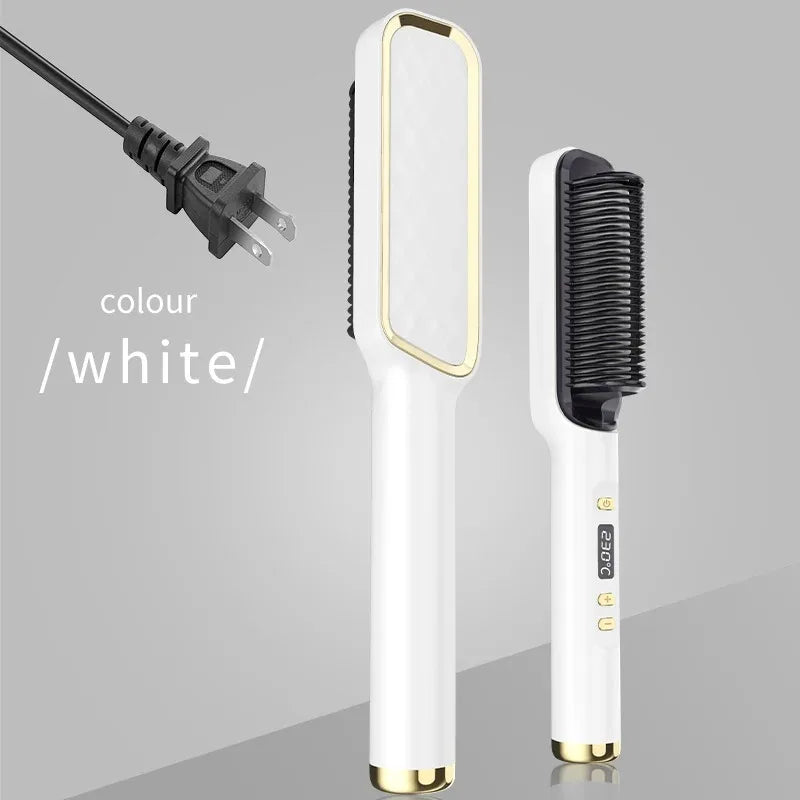
💡 Electric hot comb vs flat iron? Try the KentDO straightening comb — smooth hair in minutes.
✨ Want more home beauty insights? Visit our Beauty & Self-Care Blog or explore more styling devices in our Hair Care and Styling Devices collection.
FAQ
Is a straightening brush better than a flat iron?
Straightening brushes are easier to use and gentler for everyday styling. Flat irons usually produce sleeker, longer-lasting straight hair.
Can I use a flat iron every day?
Daily flat iron use can increase dryness and breakage. Always use a heat protectant and moderate temperature settings.
Are ionic straightening brushes safe for colored hair?
Yes. Ionic brushes can reduce frizz and static while using less concentrated heat, which may be safer for color-treated hair.
Which is easier for beginners: flat iron or straightening brush?
Straightening brushes are generally easier because they follow a natural brushing motion and reduce the risk of uneven heat.
Is a hot comb better than a flat iron for thick hair?
Hot combs can work well for thick or textured hair, but modern flat irons usually provide more consistent heat control.
Pillar Article: The Best Comb Flat Irons of 2025—Which One’s Worth It?
Other Related Articles:
- 2025’s Top Hair Straightening Brush Reviews—What the Pros Really Say
- Hair Anti Frizz Products Ranked: Best for Humidity, Curls & Frizz
- Electric Hot Comb Reviews: What You Didn’t Know Before Buying
- Flat Iron Comb Attachment Showdown: Which Actually Works?
Explore More: