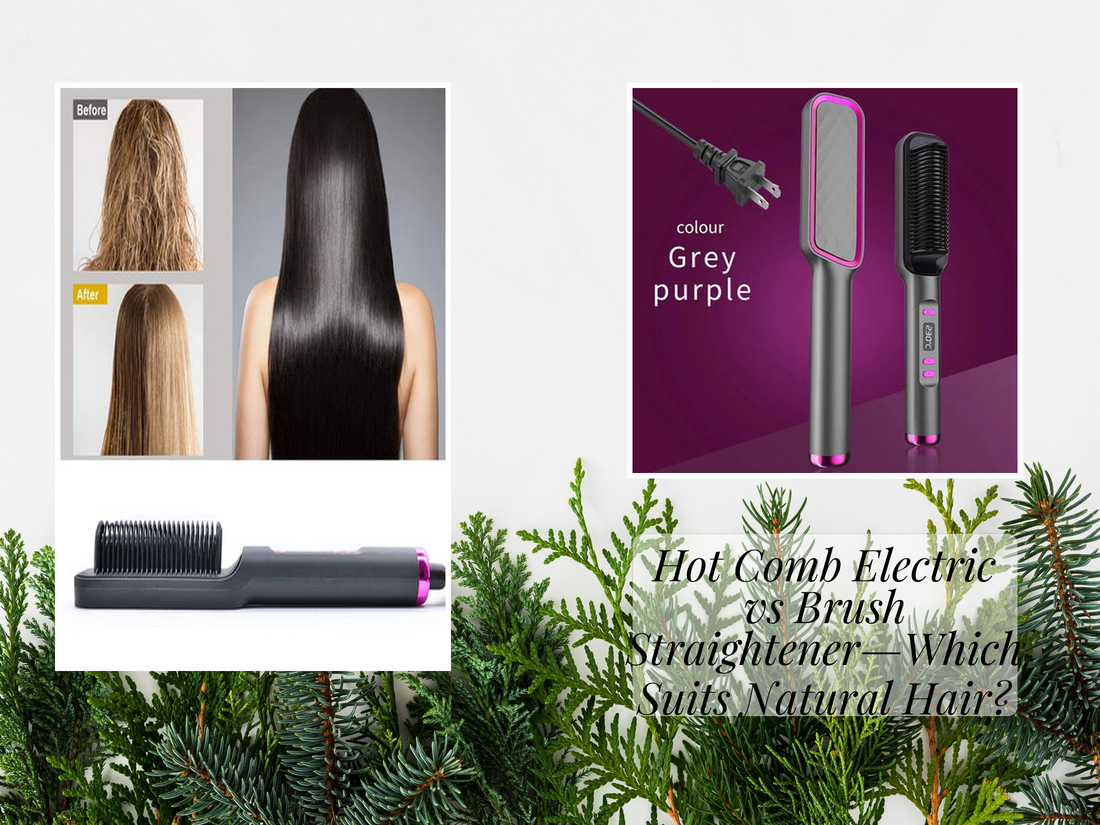
❓ Which is better for natural hair: a hot comb electric or brush straightener?
✅ A hot comb electric works best for afro-textured and 4C hair, reaching roots and edges with precision. Brush straighteners are gentler and ideal for looser curls. Choosing depends on your texture—go with a hot comb for control, or a brush for ease and everyday use.
Hot Comb vs Hot Brush: Which Straightening Tool Is Better for Your Hair Type?
Quick Answer: Hot Comb vs Hot Brush
If your goal is maximum straightness and a sleek salon-style finish, a hot comb is usually the better choice. If you want easier styling with less heat exposure and more natural-looking volume, a hot brush is often the better option.
The biggest difference is how heat reaches the hair. A hot comb concentrates heat directly onto each section, while a hot brush distributes heat through bristles around larger sections of hair.
Which Tool Wins for Smoothness?
Hot combs generally create a smoother and flatter finish, especially on coarse, textured, and natural hair. They can reach roots more effectively and help produce silk-press-style results.
Which Tool Wins for Ease of Use?
Hot brushes are typically easier for beginners because they combine brushing and straightening into a single motion. Most users can achieve polished results with less practice.
Which Tool Wins for Natural Hair?
For 3C, 4A, 4B, and 4C hair types, a quality electric hot comb often delivers straighter results. However, users prioritizing volume, reduced heat exposure, or quick touch-ups may prefer a hot brush.
Hot comb electric tools might look old-school, but they often outperform modern styling devices for textured hair. If you're comparing a straightening brush with a hot comb, understanding how each tool works can save time and reduce unnecessary heat exposure.
This guide explains the key differences between hot combs, hot brushes, and other straightening tools so you can choose the best option for natural, curly, coily, or coarse hair.
⏱ 7 min read

See it in action — hot comb electric for Black hair & natural curls
See price — stock low!
What Is a Hot Comb?
A hot comb is a heated styling tool that straightens and smooths hair using heated metal teeth. Unlike flat irons that press hair between plates, a hot comb glides through sections to stretch curls, smooth strands, and improve root control.
Modern electric hot combs feature adjustable temperature settings and are especially popular among users with natural, curly, coily, and coarse hair textures.
How an Electric Hot Comb Works
Electric hot combs transfer heat through metal teeth while combing. This allows users to detangle, stretch, and smooth hair simultaneously. Many people researching an electric hot comb buying guide prioritize root control, temperature adjustment, and ease of use.
- Detangles hair
- Stretches curls
- Smooths the cuticle
- Creates a sleek finish near the roots
When Stylists Prefer a Hot Comb
- Silk press styling on natural hair
- Smoothing roots before flat ironing
- Styling thick or coarse textures
- Straightening wigs and extensions
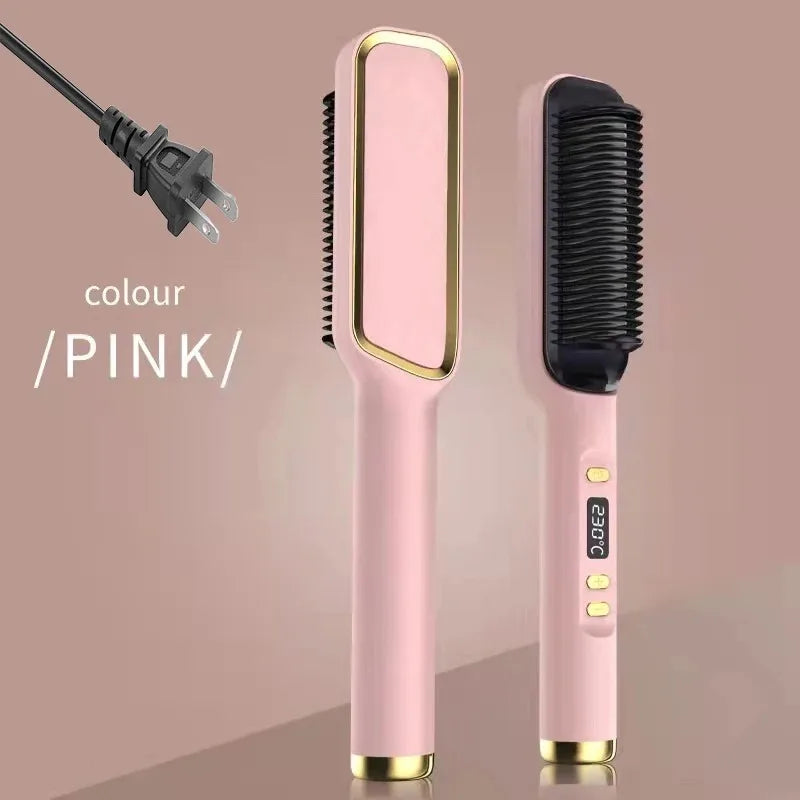
See it in action — best electric hot comb for afro hair edges
Grab yours now — limited availability
What Is a Hot Brush (Straightening Brush)?
A hot brush, also called a straightening brush, is a heated styling tool that combines brushing and smoothing in one step. It uses heated ceramic surfaces and protective bristles to reduce frizz and improve manageability.
Because it works similarly to a traditional hairbrush, many users find it easier to learn than a hot comb or flat iron.
How a Hot Brush Straightens Hair
Hot brushes use heat and gentle tension from bristles to smooth the cuticle while maintaining body and movement. They are often chosen for everyday styling and quick touch-ups.
- Ceramic or tourmaline heating surfaces
- Protective bristles to reduce scalp contact
- Even heat distribution
Who Benefits Most From a Straightening Brush
- People with wavy or slightly curly hair
- Users wanting quick daily styling
- Those seeking volume while smoothing hair
- Beginners who find flat irons difficult to use
Hot Comb vs Hot Brush: Side-by-Side Comparison
Both tools straighten hair, but they achieve results differently. Understanding the differences can help you choose the best option for your hair type, styling goals, and experience level.
Heat Delivery and Styling Technique
A hot comb applies concentrated heat through heated teeth that glide directly through the hair. A hot brush uses heated bristles to smooth larger sections while maintaining more movement and volume.
Straightening Power
Hot combs generally provide stronger straightening performance, particularly on coarse, curly, and highly textured hair. Hot brushes tend to create a smoother blowout effect rather than pin-straight results.
Smoothness and Finish
Hot combs often produce a sleeker finish with fewer visible bends or waves. Hot brushes create softer movement and preserve more body throughout the hair.
Speed and Ease of Use
Hot brushes usually have a shorter learning curve because brushing and straightening happen simultaneously. Hot combs may require more sectioning and precision for best results.
Heat Damage Risk
Neither tool automatically causes damage. Risk depends on temperature, frequency of use, heat protection products, and styling technique.
Learning Curve and Control
Experienced users often appreciate the precision of a hot comb. Beginners frequently prefer hot brushes because they feel more familiar and forgiving during styling.
Long-Term Hair Health
Using the lowest effective temperature, limiting passes, and applying heat protectant are more important than the specific tool you choose.
Hot Comb vs Straightener vs Brush: How They Compare
Difference Between Hot Comb and Straightener
A hot comb straightens hair using heated comb teeth, while a flat iron compresses hair between heated plates. Flat irons typically deliver the straightest finish, while hot combs provide better root access and control for textured hair. For a deeper breakdown, see our dedicated hot comb vs straightener comparison resources.
Is a Hot Comb Better Than a Straightener?
It depends on your goals. A hot comb may be better for natural hair, root touch-ups, silk presses, and detailed styling. A straightener may be better for achieving ultra-sleek, long-lasting straight styles.
Straightening Brush vs Straightening Comb
Straightening brushes generally have wider bristle spacing and are designed for faster styling. Straightening combs offer greater precision and often perform better on dense or tightly textured hair.
Which Tool Creates the Longest-Lasting Results?
Flat irons usually produce the longest-lasting straight styles. Hot combs often come second, while hot brushes prioritize softness and movement over maximum longevity.
Styling Results Comparison: What Does Each Tool Actually Look Like?
Hot Comb Results
Expect smoother roots, reduced shrinkage, and a sleek finish. Hot combs are often preferred for silk presses, wigs, lace fronts, and textured hair that requires maximum straightening.
Hot Brush Results
Expect softer straightening with more volume and movement. Hair usually appears fuller while still looking polished and controlled.
Flat Iron Results
Flat irons typically create the straightest and most uniform finish. However, they may reduce volume more significantly than either a hot comb or hot brush.
Best Tool for Different Hair Types
Best Electric Hot Comb for 4C Hair
Many users with 4C hair prefer electric hot combs because concentrated heat helps stretch curls and smooth roots more effectively than most hot brushes. Popular options discussed by consumers include the KentDO Electric Straightening Comb , Andis Professional Hot Comb, Tymo Ring Plus, and Revlon heated styling tools.
Best for Natural Hair
Natural hair users seeking silk-press-style results often favor hot combs. Those wanting less manipulation and more volume may prefer a hot brush. Explore additional natural hair styling resources through our hair care content library.
Best for Thick or Coarse Hair
Hot combs generally provide better control and stronger straightening performance on dense hair textures.
Best for Fine or Fragile Hair
Hot brushes can be gentler because they distribute heat across a larger area and often require less direct heat concentration.
Best for Damaged or Color-Treated Hair
Regardless of tool choice, lower temperatures and fewer styling passes are critical. Hot brushes are often preferred for maintaining some smoothness with reduced heat intensity.
Best for Wigs, Edges, and Silk Press Styles
Hot combs remain a popular option for detailed work near roots, edges, lace fronts, and silk-press finishing techniques.
Is a Hot Comb Good for Natural Hair?
Benefits for Coily and Textured Hair
Yes. A hot comb can be highly effective on natural hair when used correctly. It helps stretch curls, smooth roots, reduce shrinkage, and create a polished finish without requiring chemical relaxers.
Situations Where a Hot Brush May Be Better
If your priority is maintaining volume, minimizing heat concentration, or performing quick daily touch-ups, a hot brush may be a more practical choice.
How to Use a Hot Comb Safely on Natural Hair
Step-by-Step Styling Process
- Start with clean, completely dry hair.
- Apply a heat protectant evenly through your hair.
- Section the hair into small manageable parts.
- Begin combing from the roots and move slowly toward the ends.
- Use light tension and avoid repeated passes on the same section.
For additional styling techniques, browse our hair styling tutorials and educational guides.
Heat Protection and Damage Prevention
- Use the lowest effective temperature setting.
- Never use a hot comb on wet or damp hair.
- Avoid excessive styling frequency.
- Deep condition regularly.
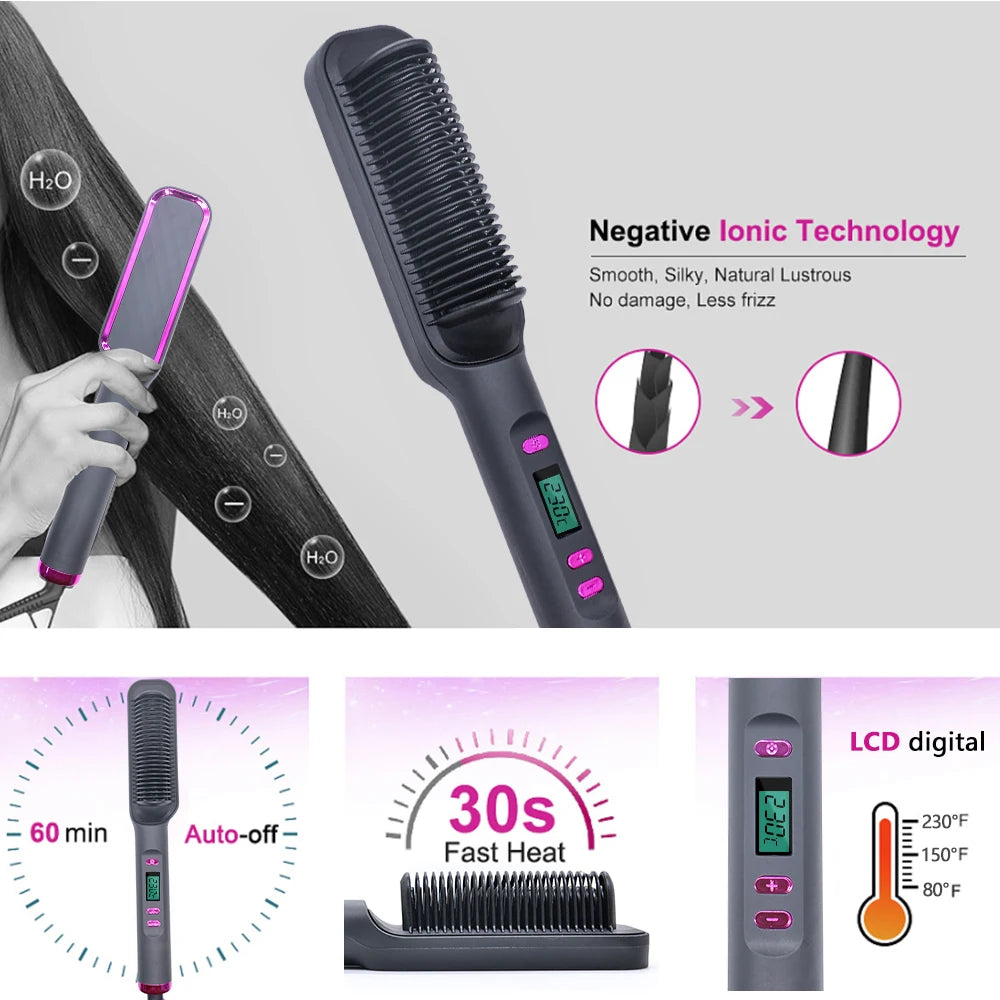
See it in action — electric straightening hot comb for thick curls
Buy the KentDO Electric Hot Comb now
Does a Hot Comb Damage Natural Hair?
What Causes Heat Damage
Heat damage occurs when excessive temperatures weaken the hair's protein structure and reduce its ability to return to its natural curl pattern.
Safe Temperature Guidelines
Fine hair typically requires lower temperatures, while coarse hair may tolerate moderately higher settings. Always begin with the lowest effective heat level.
Common Mistakes to Avoid
- Using excessive heat settings
- Repeated passes over the same section
- Skipping heat protectant
- Straightening damp hair
- Using heat too frequently
For more information, explore educational content focused on heat damage prevention and healthy styling practices.
Pros and Cons: Hot Comb vs Hot Brush
Hot Comb Pros
- Excellent root access
- Strong straightening performance
- Ideal for textured and natural hair
- Creates sleek finishes
Hot Comb Cons
- Steeper learning curve
- Higher risk of overheating if misused
- Can require more styling time
Hot Brush Pros
- Easy for beginners
- Faster daily styling
- Maintains volume and movement
- Comfortable one-step styling process
Hot Brush Cons
- May not fully straighten very coarse hair
- Less precise at roots
- Results may not last as long as a hot comb or flat iron
When to Choose a Hot Comb Instead of a Hot Brush
A hot comb may be the better styling tool if you need stronger straightening power or precise root smoothing.
- You have very curly or coily hair
- You want sleek silk press results
- You need to straighten roots or edges
- You are styling wigs or thick extensions
A hot brush may be a better choice for quick everyday styling, especially if your hair is wavy or only slightly curly.
Buying Guide: What to Look for in an Electric Hot Comb
Adjustable Heat Settings
Look for multiple temperature settings so you can match heat levels to your hair type and reduce unnecessary damage.
Ceramic vs Titanium Teeth
Ceramic typically provides even heat distribution, while titanium often heats faster and reaches higher temperatures.
Features That Matter for 4C Hair
- Consistent heat output
- Fast heat recovery
- Comfortable grip
- Wide temperature range
- Anti-scald design features
Explore our recommended electric hot comb collection to compare features and styling performance.
Final Verdict: Hot Comb or Hot Brush?
Best Choice for Natural Hair
A hot comb is often the stronger choice for textured, coily, and natural hair when maximum straightness is the goal.
Best Choice for Beginners
A hot brush is generally easier to learn and more forgiving during daily styling sessions.
Best Choice for Maximum Straightness
If achieving the sleekest possible finish is your top priority, a hot comb typically outperforms a hot brush. For users who value volume, softness, and convenience, a hot brush may be the better overall fit.
FAQ
Is a hot comb good for natural hair?
Yes. Hot combs are particularly effective for natural, coily, or afro-textured hair because they apply targeted heat and tension near the roots.
Does a hot comb damage natural hair?
Like all heated tools, improper use can cause damage. Using heat protectant products and avoiding high temperatures helps reduce the risk.
Can you use a hot comb on natural hair?
Yes. Many stylists use hot combs for natural hair when performing silk presses or root smoothing.
Which is better for 4C hair: hot comb or straightener?
Hot combs often work better for 4C hair when smoothing roots and dense curls, while flat irons may be used afterward to finish the lengths.
What is the best electric hot comb for natural hair?
The KentDO Electric Straightening Comb is designed for strong heat performance and controlled styling on thick or textured hair.
Electric hair straightener comb vs regular comb: what's the difference?
A regular comb only detangles hair. An electric straightening comb heats the teeth so it can detangle, stretch curls, and smooth strands simultaneously.
Hot comb or straightener: which causes less damage?
Neither tool is inherently safer. Hair health depends on temperature settings, frequency of use, heat protection, and technique.
Can a straightening brush replace a hot comb?
For wavy or mildly curly hair, a straightening brush may be sufficient. For 4C, coily, or highly textured hair, a hot comb often provides better root control and straightening power.
Is a hot comb better than a straightener?
A hot comb is often better for roots, textured hair, and silk presses, while a flat iron is typically better for ultra-straight finishes.
How often can you use a hot comb on natural hair?
Most hair professionals recommend limiting heat styling and allowing recovery time between sessions. Frequency should depend on hair condition, moisture balance, and heat settings used.
Pillar Article: Best Straightening Brush for Every Hair Type—Is Yours on the List?
Other Related Articles:
Explore More: