Bath Sponge vs Loofah: Which Is Better for Exfoliating, Hygiene, and Skin Health?
When choosing between a bath sponge vs loofah, many people want to know which tool exfoliates better, stays cleaner, and is safer for their skin. Both are common shower accessories designed to help remove surface buildup, improve cleansing, and support smoother-looking skin.
In general, loofahs provide stronger exfoliation because of their fibrous texture, while bath sponges are softer and better for sensitive skin . However, hygiene, durability, maintenance, and skin type all play important roles in determining which option is best for your routine.
Quick Verdict: Bath Sponge or Loofah?
If your goal is gentle daily cleansing, a bath sponge is usually the better choice because it creates rich lather while being less abrasive on the skin. If you want stronger physical exfoliation and removal of surface buildup, a loofah generally provides more exfoliating power.
Key Takeaway by Skin Type
- Sensitive skin: Bath sponge
- Dry skin: Soft bath sponge
- Oily skin: Loofah or exfoliating sponge
- Rough skin: Loofah
- Daily showering: Bath sponge
- Occasional exfoliation: Loofah
Fast Comparison Table
- Exfoliation: Loofah wins
- Gentleness: Bath sponge wins
- Lather production: Bath sponge wins
- Ease of cleaning: Bath sponge wins
- Eco-friendliness: Natural loofah wins
- Sensitive skin suitability: Bath sponge wins
⏱ 7 min read

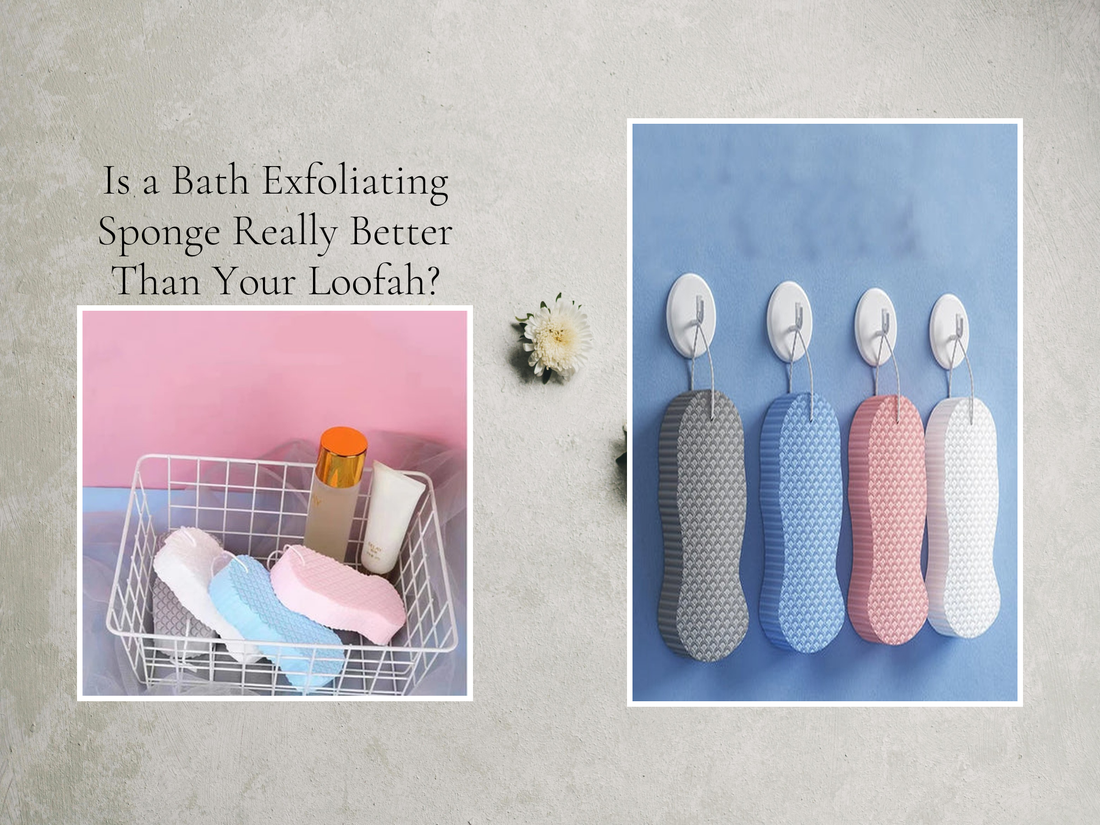
Bath exfoliating sponge vs loofah — see why more people are switching!
What Is a Loofah?
A loofah is a natural or synthetic bath tool used for cleansing and exfoliating the skin. Traditional loofahs come from the dried fibrous interior of the Luffa gourd, a plant related to cucumbers and squash.
Natural Loofah vs Synthetic Loofah
- Natural loofah: Made from dried plant fibers and offers firm exfoliation.
- Synthetic loofah: Typically made from plastic mesh and designed to generate abundant lather.
How Loofahs Exfoliate Skin
Loofahs exfoliate by creating friction across the skin's surface while washing. This helps lift away accumulated dead skin cells and leaves skin feeling smoother.
This is why many people search questions like do loofahs exfoliate or can you use a loofah to exfoliate skin . The answer is yes—loofahs are specifically designed for physical exfoliation. For best results, combine exfoliation with proper skin care habits and avoid excessive scrubbing.
What Is a Bath Sponge?
A bath sponge is a soft, porous cleansing tool used in the shower or bath to apply soap and wash the skin. Unlike loofahs, most bath sponges prioritize comfort and gentle cleansing over aggressive exfoliation.
Types of Bath Sponges
- Synthetic bath sponges: Made from foam or mesh materials.
- Natural sea sponges: Harvested from the ocean and valued for their soft texture.
Do Bath Sponges Exfoliate?
Bath sponges can provide mild exfoliation, but they are generally softer than loofahs. Many people prefer them for daily cleansing because they are less abrasive on sensitive skin.
If you want additional exfoliating benefits, choosing a dedicated exfoliating bath sponge can provide a middle ground between a soft sponge and a coarse loofah.
Bath Sponge vs Loofah: Side-by-Side Comparison
Quick Comparison Chart
| Feature | Bath Exfoliating Sponge | Loofah |
|---|---|---|
| Texture | Soft, gentle exfoliation | Rough, abrasive feel |
| Exfoliation | Mild to moderate | Moderate to strong |
| Cleansing | Excellent daily cleansing | Good cleansing with exfoliation focus |
| Hygiene | Often dries faster | Can trap moisture longer |
| Durability | Good with proper care | Shorter lifespan |
| Environmental Impact | Varies by material | Natural options biodegradable |
Material and Texture
Loofahs use a rigid fiber structure that creates noticeable friction against the skin. Bath sponges are softer and more flexible, making them more comfortable for frequent use.
Exfoliation Strength
If your goal is stronger exfoliation, loofahs generally outperform bath sponges. However, frequent use of coarse exfoliating tools may irritate sensitive skin.
Cleansing Performance
Bath sponges generally create more foam using less body wash, making them effective for everyday cleansing. Loofahs also cleanse well but are primarily valued for their exfoliating texture rather than lather production.
Hygiene and Bacterial Growth
Both tools can harbor bacteria when left damp. However, natural loofahs contain more crevices where microorganisms can accumulate if not thoroughly dried. Proper cleaning and regular replacement are essential regardless of which tool you choose.
Durability and Lifespan
Natural loofahs often wear down faster with repeated exposure to water. Many bath sponges maintain their structure longer when cleaned and dried correctly.
Environmental Impact
Natural loofahs are biodegradable because they come from plant fibers. Synthetic bath sponges are commonly made from plastic-based materials that may contribute to environmental waste over time.
Cost and Value
Bath sponges are usually inexpensive and widely available. Natural loofahs may cost slightly more but appeal to users seeking a more eco-conscious bathing accessory.
Which Is More Hygienic: Sponge or Loofah?
Hygiene is one of the most important considerations when choosing between a bath sponge and a loofah.
Why Bath Accessories Harbor Bacteria
Warm, humid shower environments create ideal conditions for bacterial and fungal growth. Any bathing tool that remains wet for extended periods can become a breeding ground for microorganisms.
Bacteria and Mold Risks
Natural loofahs tend to trap moisture and skin debris more readily, increasing contamination risk when not properly maintained. Bath sponges can also accumulate microbes but often dry more quickly depending on their construction.
Dermatologist Hygiene Advice
Dermatologists generally recommend thoroughly rinsing bathing tools after each use, allowing complete air drying, and avoiding use on broken or irritated skin.
Replacement Timeline
- Natural loofah: Every 3–4 weeks
- Synthetic loofah: Every 6–8 weeks
- Bath sponge: Every 4–8 weeks
- Sea sponge: Every 6–8 weeks
How to Reduce Contamination Risk
- Rinse thoroughly after use.
- Squeeze out excess water.
- Hang in a well-ventilated area.
- Disinfect regularly.
- Replace when odor, discoloration, or breakdown occurs.
Bath Sponge vs Loofah Pros and Cons
Bath Sponge Pros and Cons
- ✅ Gentle exfoliation ideal for sensitive skin
- ✅ Comfortable for daily cleansing
- ✅ Produces abundant lather
- ✅ Often dries faster
- ❌ Less exfoliating power than loofahs
Loofah Pros and Cons
- ✅ Stronger exfoliation for rough skin
- ✅ Natural plant-based options available
- ✅ Effective for occasional deep exfoliation
- ❌ Requires more frequent replacement
- ❌ Higher contamination risk if not dried properly

Bath exfoliating sponge — a gentler alternative to traditional loofahs
Sea Sponge vs Loofah: Which Natural Option Is Better?
Texture and Exfoliation
Natural sea sponges are softer and provide gentle cleansing. Loofahs offer significantly more exfoliation due to their coarse fibrous structure.
Hygiene Differences
Sea sponges often feel softer and absorb more water, while loofahs dry faster when stored properly. Both require routine cleaning and replacement.
Best Uses for Each
- Sea sponge: Sensitive or delicate skin
- Loofah: Rough skin and exfoliation-focused routines
- Sea sponge: Daily cleansing
- Loofah: Weekly exfoliation sessions
Exfoliating Gloves vs Loofah: Which Exfoliates Better?
Exfoliating gloves are another popular option for physical exfoliation and often provide more control than traditional loofahs.
Are Exfoliating Gloves Better Than a Loofah?
Exfoliating gloves typically provide more consistent pressure and coverage than loofahs, making them popular for intensive exfoliation routines.
Exfoliation Intensity Comparison
- Bath sponge: Mild
- Sea sponge: Mild
- Loofah: Moderate
- Exfoliating gloves: Moderate to strong
Hygiene Comparison
Many exfoliating gloves can be machine washed, making them easier to sanitize compared with natural loofahs.
Best Situations for Each Tool
- Daily cleansing: Bath sponge
- Gentle exfoliation: Loofah
- Heavy exfoliation: Exfoliating gloves
- Sensitive skin: Soft sponge
Which Option Is Best for Your Skin Type?
The ideal choice depends on your skin type, sensitivity level, and exfoliation goals.
Sensitive Skin
A soft bath sponge or natural sea sponge is usually the safest option because it minimizes friction while still providing effective cleansing.
Dry Skin
People with dry skin often benefit from gentle exfoliation that helps smooth flaky areas without disrupting the skin barrier.
Oily or Acne-Prone Skin
Individuals with oilier skin may prefer occasional use of a loofah or exfoliating sponge to help remove excess buildup from the skin surface.
Mature Skin
Mature skin often benefits from gentler exfoliation. Soft bath sponges are generally safer for frequent use than coarse loofahs.
Keratosis Pilaris or Rough Skin
Individuals dealing with rough patches or keratosis pilaris may prefer occasional loofah use because the added friction helps remove surface buildup.
Everyday Showering
For daily use, most people will find a bath sponge more comfortable and less likely to cause irritation over time.
How Often Should You Replace a Bath Sponge or Loofah?
Loofah Replacement Schedule
Natural loofahs should generally be replaced every three to four weeks because their fibrous structure can retain moisture and debris.
Bath Sponge Replacement Schedule
Most bath sponges should be replaced every four to eight weeks depending on usage frequency, drying conditions, and visible wear.
Signs It's Time to Replace Yours
- Persistent odor
- Visible mold
- Discoloration
- Tearing or breakdown
- Texture changes
How to Clean and Maintain Your Bath Sponge or Loofah
Proper maintenance helps extend the lifespan of your shower tools and minimizes contamination risk.
How to Clean a Loofah
- Rinse thoroughly after each use.
- Squeeze out excess water.
- Hang in a well-ventilated area.
- Disinfect weekly using warm water and mild soap.
How to Clean a Bath Sponge
- Rinse thoroughly after each shower.
- Squeeze out water completely.
- Hang in a dry ventilated space.
- Replace every 2–3 months or sooner if worn.
Proper Drying and Storage
The most important maintenance step is complete drying between uses. Avoid leaving sponges or loofahs in enclosed shower spaces where moisture remains trapped.
- Hang tools after use.
- Maximize airflow.
- Avoid sealed containers.
- Replace regularly.

Eco friendly bath exfoliating sponge — for skin and planet care
Alternatives to Loofahs and Bath Sponges
If you are looking for alternatives to traditional loofahs or bath sponges, several modern exfoliating tools may offer better hygiene, durability, or ease of maintenance.
Silicone Body Scrubbers
Silicone scrubbers are popular because they resist moisture retention, dry quickly, and are easy to clean.
Exfoliating Towels
Long exfoliating towels allow you to reach your back more easily and control pressure during exfoliation.
Body Scrub Brushes
Brushes with natural or synthetic bristles provide stronger exfoliation and are commonly used for dry brushing routines.
Washcloths
Washcloths are among the most hygienic bathing tools because they can be machine washed after every use. They provide mild exfoliation and suit most skin types.
Which Alternative Is Most Hygienic?
Machine-washable washcloths and exfoliating gloves are often considered the easiest options to keep clean. Silicone scrubbers also resist moisture retention and dry quickly.
Decision Matrix: Which Bath Tool Should You Choose?
Best for Exfoliation
Natural loofah or exfoliating gloves.
Best for Sensitive Skin
Soft bath sponge or sea sponge.
Best for Hygiene
Washcloth, silicone scrubber, or washable exfoliating gloves.
Best Eco-Friendly Choice
Natural loofah.
Best Overall
For most users, a bath sponge provides the best balance of cleansing effectiveness, comfort, and everyday usability, while a loofah works best as an occasional exfoliation tool.
Frequently Asked Questions
Is a bath sponge better than a loofah?
A bath sponge is generally better for gentle daily cleansing, while a loofah is better for stronger exfoliation.
Do loofahs exfoliate better than sponges?
Yes. Most loofahs provide more friction and remove surface buildup more effectively than standard bath sponges.
Are loofahs good for exfoliating?
Yes, but they should be used carefully to avoid over-exfoliation or skin irritation.
Do bath sponges exfoliate?
Some exfoliating bath sponges do, but standard bath sponges provide milder exfoliation than loofahs.
What is better than a loofah?
Depending on your needs, exfoliating gloves, silicone scrubbers, or washable washcloths may offer better hygiene or more controlled exfoliation.
How often should you replace a loofah?
Most natural loofahs should be replaced every three to four weeks.
Explore more self-care insights in our Beauty & Self-Care Blog and Body & Face Blog .
Pillar Article: Bath Sponge Exfoliate Showdown: The Best Options Ranked for You
Other Related Articles:
- Bath Sponge Loofah Reviews: Which One Lasts Longer and Cleans Better?
- Body Scrubber Exfoliator Review: The Hidden Features That Change Everything
- Exfoliating Bath Sponge vs Shower Mitts: What You Didn’t Know Matters
- Gentle Exfoliating Glove Reviews: Stop Wasting Money on the Wrong Mitt
Explore More: