
LED Face Mask Colors Explained: Meaning, Benefits & Light Therapy Chart
LED mask color benefits aren’t just skin-deep—they target everything from breakouts to fine lines. Whether you’re curious about 7 color LED masks or wondering if purple LED mask benefits go beyond relaxation, this guide breaks down exactly what each light does. Confused between a 3 color LED mask or full-spectrum therapy? Our LED face mask color chart simplifies it all. But which shade gives the fastest visible results—and which one might surprise you?
⏱ 8 min read
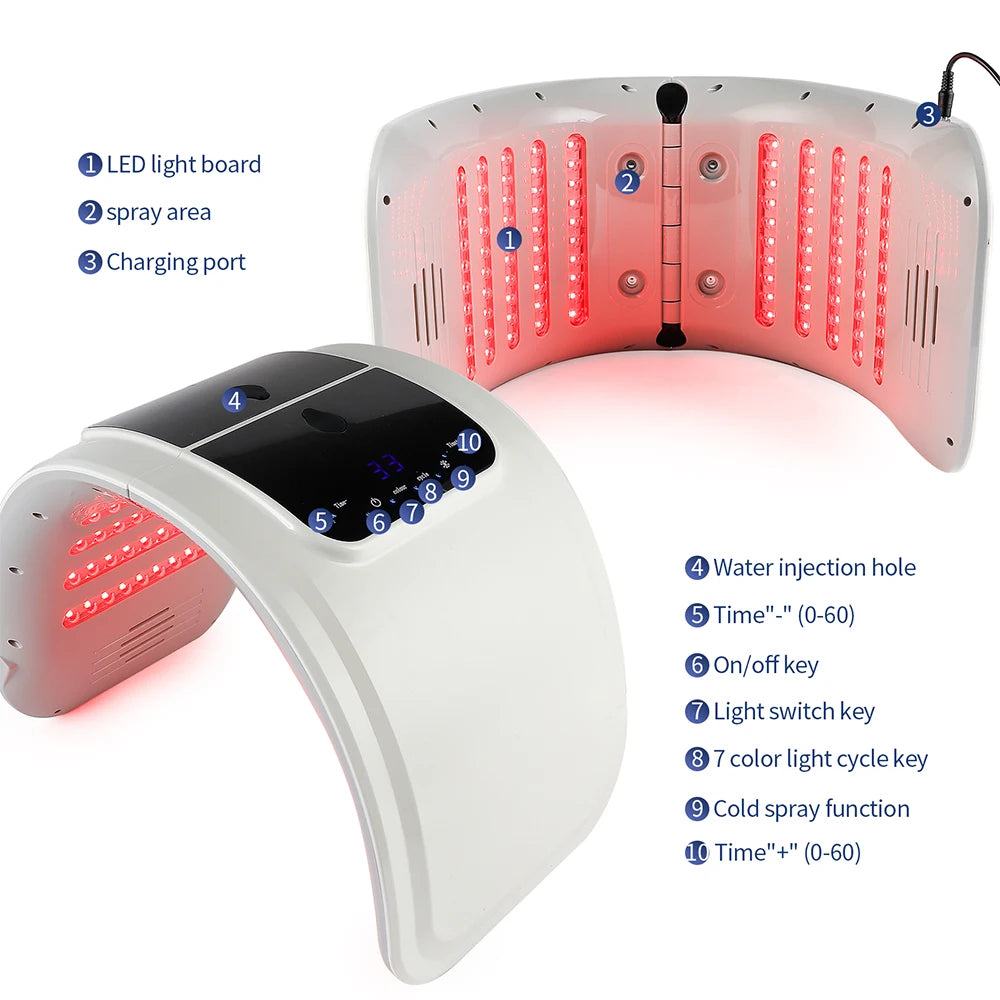
💡 7 color LED mask + nano mist fusion — see the full benefits unfold!
What Are LED Face Mask Colors?
LED face mask colors refer to different wavelengths of light used in LED light therapy to treat specific skin concerns. Each color penetrates the skin at a different depth and triggers unique biological responses inside skin cells.
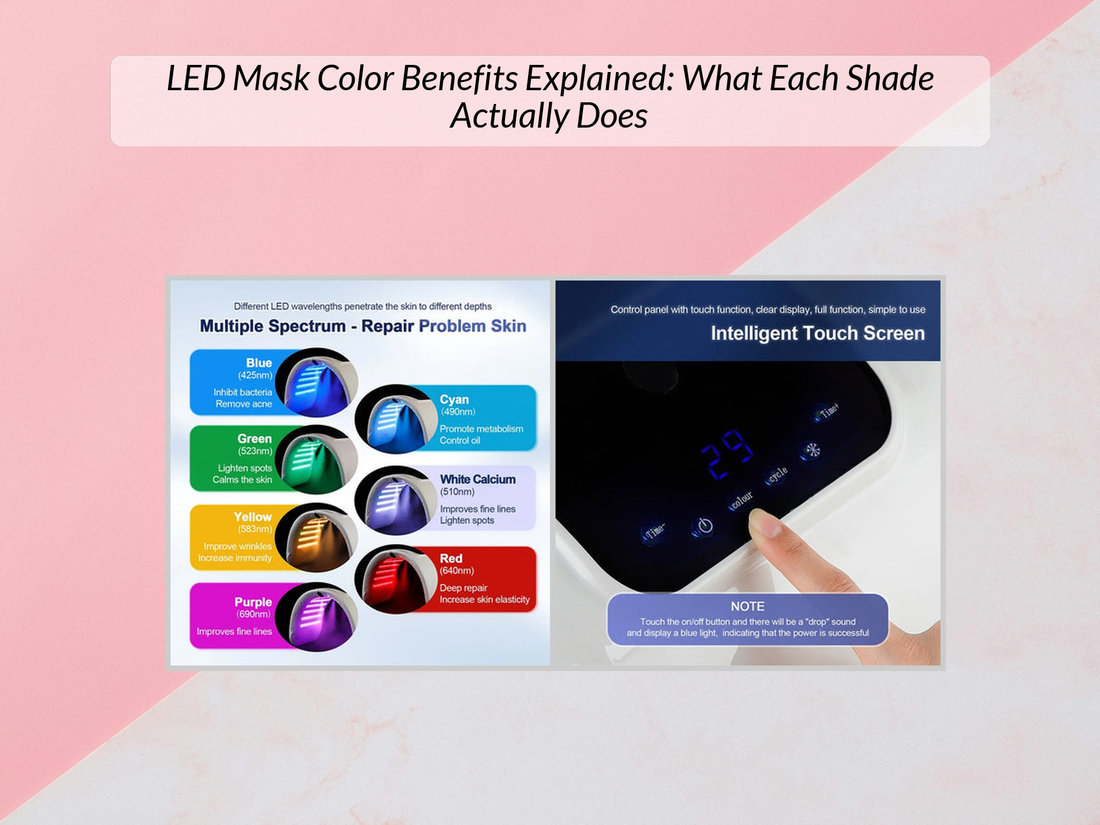
Modern LED masks commonly include red, blue, green, yellow, purple, cyan, and white light settings. These colors are not just cosmetic—they correspond to specific wavelengths measured in nanometers (nm), which influence collagen production, bacteria reduction, inflammation, and skin tone balance.
Because each wavelength interacts with the skin differently, understanding LED face mask color meaning helps you choose the best treatment for acne, wrinkles, redness, or hyperpigmentation.
Why LED Light Therapy Uses Different Colors
Different LED colors penetrate the skin at varying depths. Shorter wavelengths like blue light stay near the surface to target acne-causing bacteria, while longer wavelengths like red light penetrate deeper layers where collagen and elastin are produced.
- Blue light: targets acne-causing bacteria on the skin surface
- Red light: stimulates collagen in deeper dermal layers
- Green light: helps balance pigmentation and dark spots
- Yellow light: supports circulation and reduces redness
How LED Light Therapy Works for Skin
LED light therapy works through a process called photobiomodulation, where specific wavelengths of light stimulate cellular activity inside the skin. When skin cells absorb these wavelengths, they increase energy production and activate repair mechanisms that improve overall skin health.
Photobiomodulation: The Science Behind LED Skin Therapy
Photobiomodulation occurs when light energy is absorbed by mitochondria—the energy-producing structures inside skin cells. This process increases ATP (adenosine triphosphate) production, which boosts cellular repair, collagen synthesis, and tissue regeneration.
As a result, LED light therapy can improve multiple skin concerns including acne, fine lines, inflammation, and uneven tone without damaging the skin barrier.
Light Penetration Depth in Skin Layers
Each LED color penetrates the skin at a different depth, which determines its therapeutic effect.
- Blue light (≈415 nm): surface level, targets acne bacteria
- Green light (≈520 nm): mid-layer, helps regulate pigmentation
- Yellow light (≈590 nm): improves circulation and redness
- Red light (≈630–660 nm): deep dermis, stimulates collagen
- Near-infrared / white light: deepest penetration for tissue repair
LED Face Mask Color Chart
Quick LED Face Mask Color Chart (Benefits + Wavelengths)
- Red Light (630–660 nm): stimulates collagen and reduces wrinkles
- Blue Light (405–420 nm): kills acne-causing bacteria
- Green Light (520–535 nm): reduces pigmentation and dark spots
- Yellow Light (570–590 nm): calms redness and improves circulation
- Purple Light: combination of red and blue for acne healing
- Cyan Light: soothes irritated skin
- White Light: penetrates deepest for skin repair
Which LED Color Targets Which Skin Concern
- Acne: blue light or purple light
- Wrinkles and aging: red light
- Hyperpigmentation: green light
- Redness and inflammation: yellow light
- Skin recovery and healing: white or red light
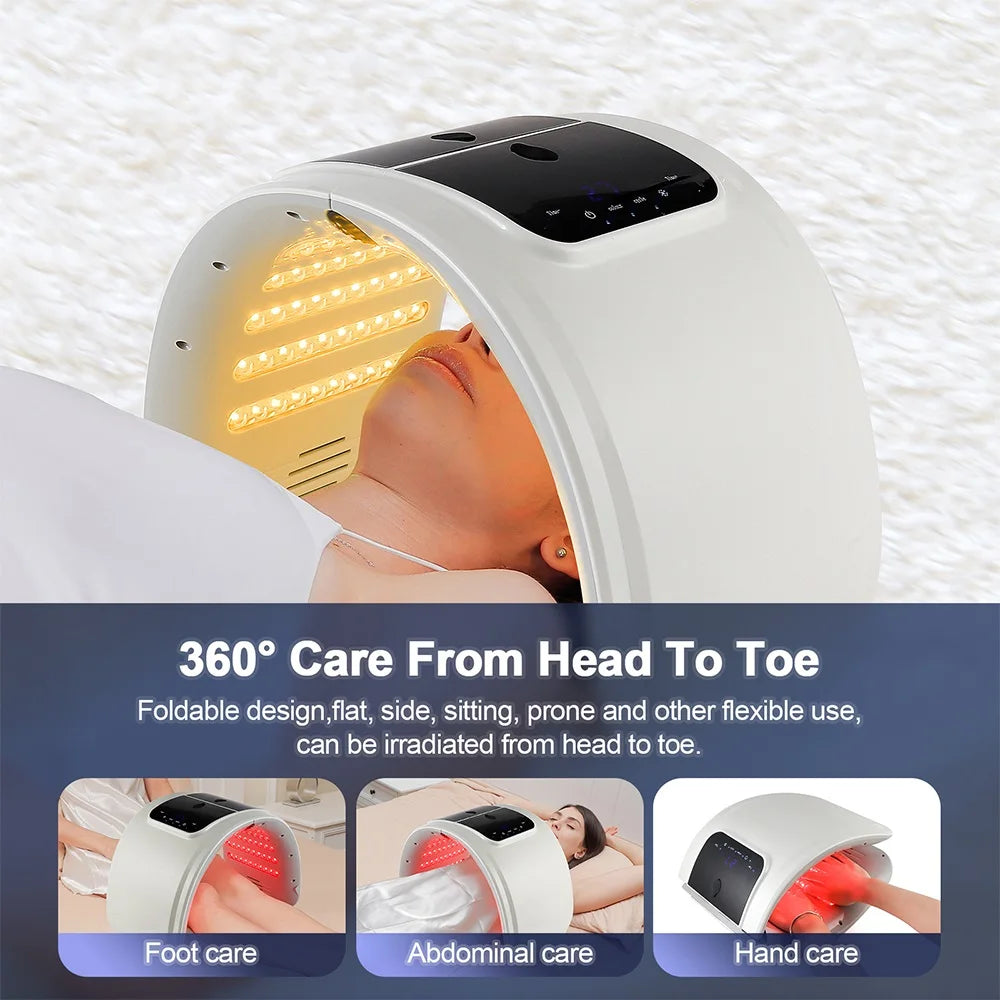
💡 Mid-treatment glow with 3 color LED mask — build your skincare confidence
What Each LED Face Mask Color Does
Red LED Light Benefits
Red LED light is one of the most widely studied wavelengths in light therapy. It penetrates deep into the dermis to stimulate collagen and elastin production, helping reduce fine lines and improve skin firmness.
Learn more about advanced options in our best red light therapy devices comparison guide.
Blue LED Light Benefits
Blue light targets acne by killing Propionibacterium acnes bacteria on the skin’s surface. This helps reduce breakouts and prevents future blemishes without harsh topical treatments.
Explore more treatments in our guide to LED mask colors by skin concern.
Green LED Light Benefits
Green light helps regulate melanin production, making it useful for fading dark spots, sun damage, and uneven skin tone.
Yellow LED Light Benefits
Yellow LED light improves circulation and reduces redness. It is commonly used for sensitive skin, rosacea-prone skin, and post-treatment calming.
Purple LED Light Benefits
Purple light combines red and blue wavelengths. This combination targets acne while also supporting healing and reducing inflammation, making it ideal for breakout-prone skin that is also sensitive.
Cyan LED Light Benefits
Cyan light helps calm irritated skin and may support wound healing and skin soothing after treatments.
White LED Light Benefits
White light penetrates the deepest layers of the skin and is often used for skin rejuvenation and recovery support.
Choosing the Best LED Color for Your Skin Concern
LED Colors for Acne
Blue LED light is the most effective color for acne because it targets acne-causing bacteria. Purple light is also useful because it combines antibacterial action with healing support.
LED Colors for Anti-Aging
Red light therapy stimulates collagen production and improves skin elasticity. Consistent use can help reduce wrinkles and improve overall skin texture.
LED Colors for Hyperpigmentation
Green LED light helps regulate melanin production and may gradually reduce the appearance of dark spots and uneven skin tone.
LED Colors for Redness and Sensitive Skin
Yellow and cyan LED lights are commonly used to calm inflammation, reduce redness, and support sensitive or reactive skin types.
3-Color vs 7-Color LED Masks: What’s the Difference?
LED face masks typically come in two configurations: basic 3-color systems or advanced 7-color systems.
- 3-color masks: usually include red, blue, and green light for anti-aging, acne, and pigmentation.
- 7-color masks: expand treatment options with additional lights like yellow, purple, cyan, and white.
While 3-color masks can address the most common skin concerns, 7-color LED masks provide more targeted treatments and greater flexibility for different skin needs.
Which style suits you best? Read on — or check the full LED + mist combo now 🔥
Who Benefits Most From LED Masks?
LED masks serve diverse skincare needs, but here’s who gains the most:
- Women and men ages 25–55 seeking anti-aging alternatives
- Acne-prone individuals sensitive to topical treatments
- Busy professionals who need at-home spa-quality care
- People with uneven skin tone or visible pores
- Beauty skeptics looking for proven tech and real results
How to Use LED Face Mask Colors for Best Results
Consistency is key for seeing results from LED light therapy. Most treatments require regular use over several weeks to improve skin appearance.
Recommended Treatment Frequency
- Use LED mask 3–5 times per week
- Typical session length: 10–20 minutes
- Most users see visible improvements within 4–8 weeks
Can You Combine LED Colors?
Yes. Many LED masks allow sequential treatments using different colors. For example, blue light may be used first for acne control, followed by red light to promote healing and reduce inflammation.
- Cleanse your face thoroughly.
- Apply a hydrating mist or serum (e.g. nano mist if available).
- Select the light mode based on your skin concern.
- Wear the mask for 10–20 minutes per session.
- Use 3–5 times a week consistently.
- Follow up with moisturizer or SPF in daytime.
LED Mask FAQ
What do different LED colors do for skin?
Different LED colors target different skin concerns. Red light supports collagen production, blue light fights acne bacteria, green light helps pigmentation, and yellow light reduces redness.
Which LED mask color is best for wrinkles?
Red LED light is considered the most effective color for wrinkles because it stimulates collagen and elastin production in deeper skin layers.
Which LED light color helps acne?
Blue LED light is best for acne because it kills acne-causing bacteria on the skin surface.
How long does LED mask therapy take to work?
Most users begin seeing improvements after 4 to 8 weeks of consistent use several times per week.
Why the KentDO LED Mask Stands Out
The KentDO LED Mask delivers premium LED mask color benefits with an added nano mist feature for enhanced hydration. Unlike typical LED masks, this one combines light therapy with a soothing mist, amplifying absorption and comfort in every session.
| Pros ✅ | Cons ❌ |
|---|---|
| 7 light colors in one device | Requires consistent use for results |
| Includes nano mist for hydration boost | Initial cost higher than basic models |
| Adjustable fit, USB rechargeable | Not waterproof (must clean carefully) |
| Great for anti-aging + acne users | Needs quiet time (no multitasking!) |
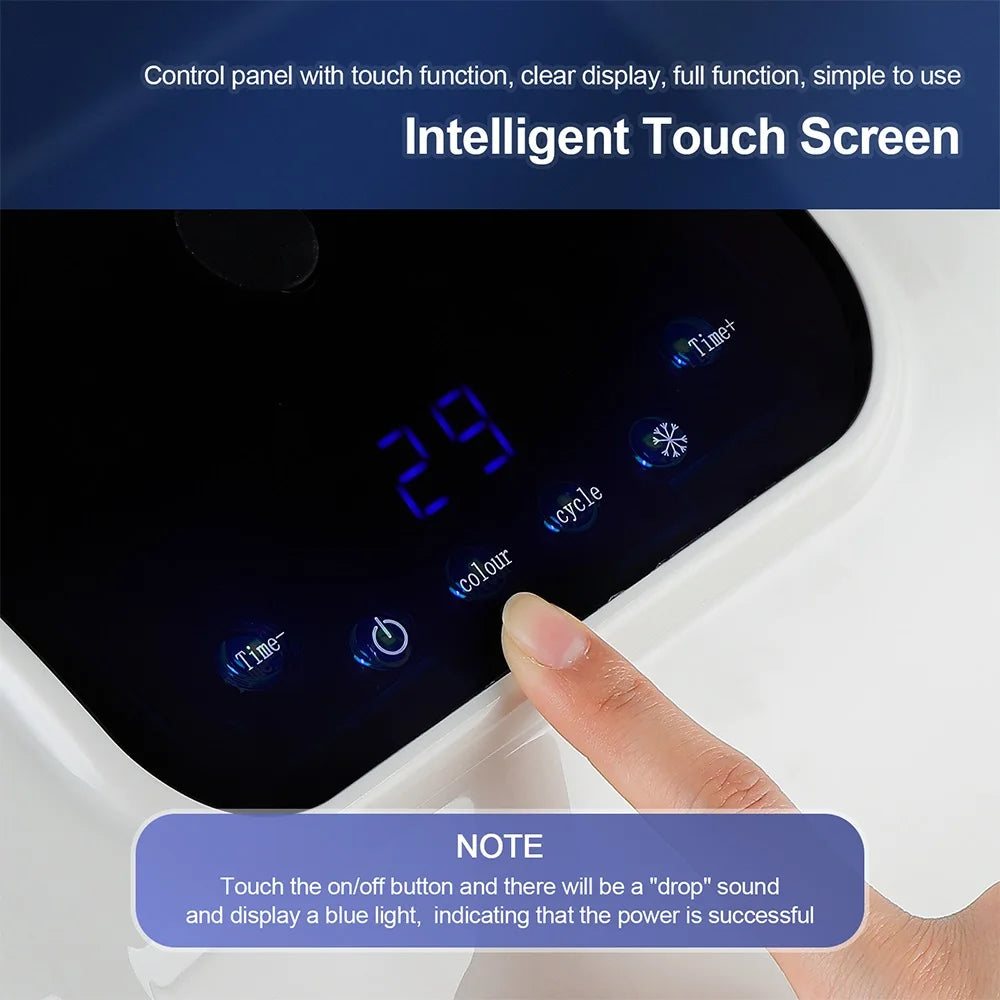
💡 Purple LED mask benefits + mist = your glow ritual at home
Explore more devices at our Skin and Beauty Care Devices collection or read more science-backed tips in the Beauty & Self-Care Blog.
Related Articles:
- What Is a 3 Color LED Mask and Should You Buy One?
- The Hidden Science Behind 7 Color LED Masks (And Why It Works)
Pillar Articles:













