

Best Pet Hair Remover Glove for Furniture: Remove Fur from Couches & Sofas
Pet hair can become surprisingly difficult to remove once it works its way into a couch, sofa, cushion, or upholstered chair. A quick shake may remove loose fur, but shorter hairs can cling to fabric fibers and collect along seams, corners, and cushion edges. If you are looking for the best way to remove pet hair from furniture without repeatedly buying disposable rollers, a reusable pet hair remover glove can be a practical option.
This furniture-first guide explains how a pet hair remover glove works, which upholstery surfaces it is best suited for, how it compares with lint rollers and vacuums, and how to use and clean one effectively.
Why Pet Hair Is So Difficult to Remove from Furniture
Furniture presents a different cleaning challenge from smooth clothing or hard surfaces. Upholstery has thousands of fibers, textures, seams, and crevices where loose fur can settle. Movement from pets and people can work that hair deeper into the fabric, making a simple wipe less effective.
How pet hair gets trapped in upholstery fibers
Dog and cat hair can become caught between upholstery fibers through friction and static. Fine, short hairs may be particularly easy to overlook because they can sit close to the fabric rather than forming obvious clumps. Longer fur is usually easier to see but can become tangled around seams, cushion piping, and textured areas.
Why couches and cushions need more than a quick lint pass
A lint roller can be useful for loose surface hair, but large furniture areas require repeated passes and replacement sheets. A vacuum can cover more area, but its effectiveness depends on the upholstery attachment, suction, and how deeply the hair is embedded. A hand-guided removal tool offers a different approach: you can physically direct it across small sections and concentrate on areas where hair accumulates.
How a Pet Hair Remover Glove Works on Couches and Sofas
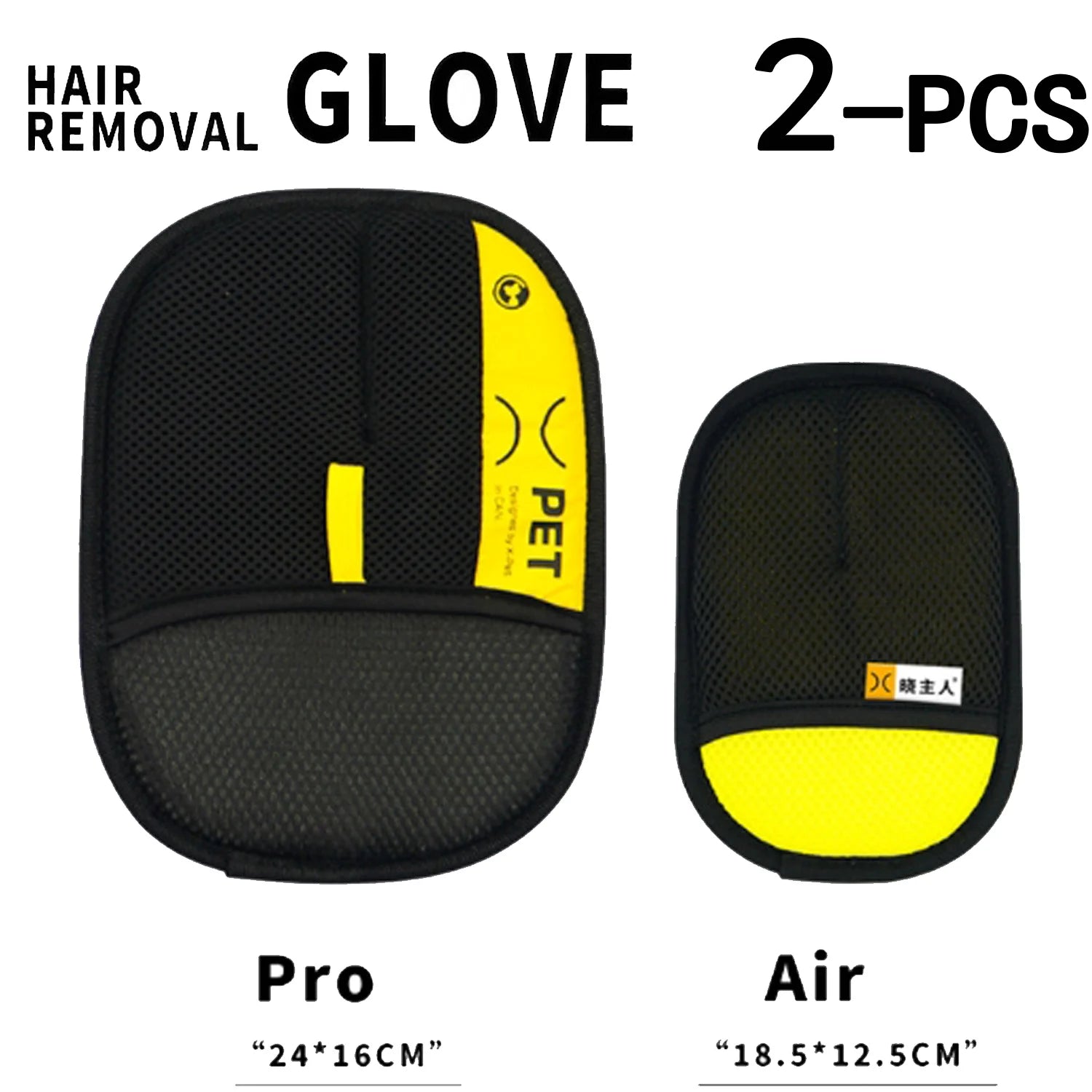
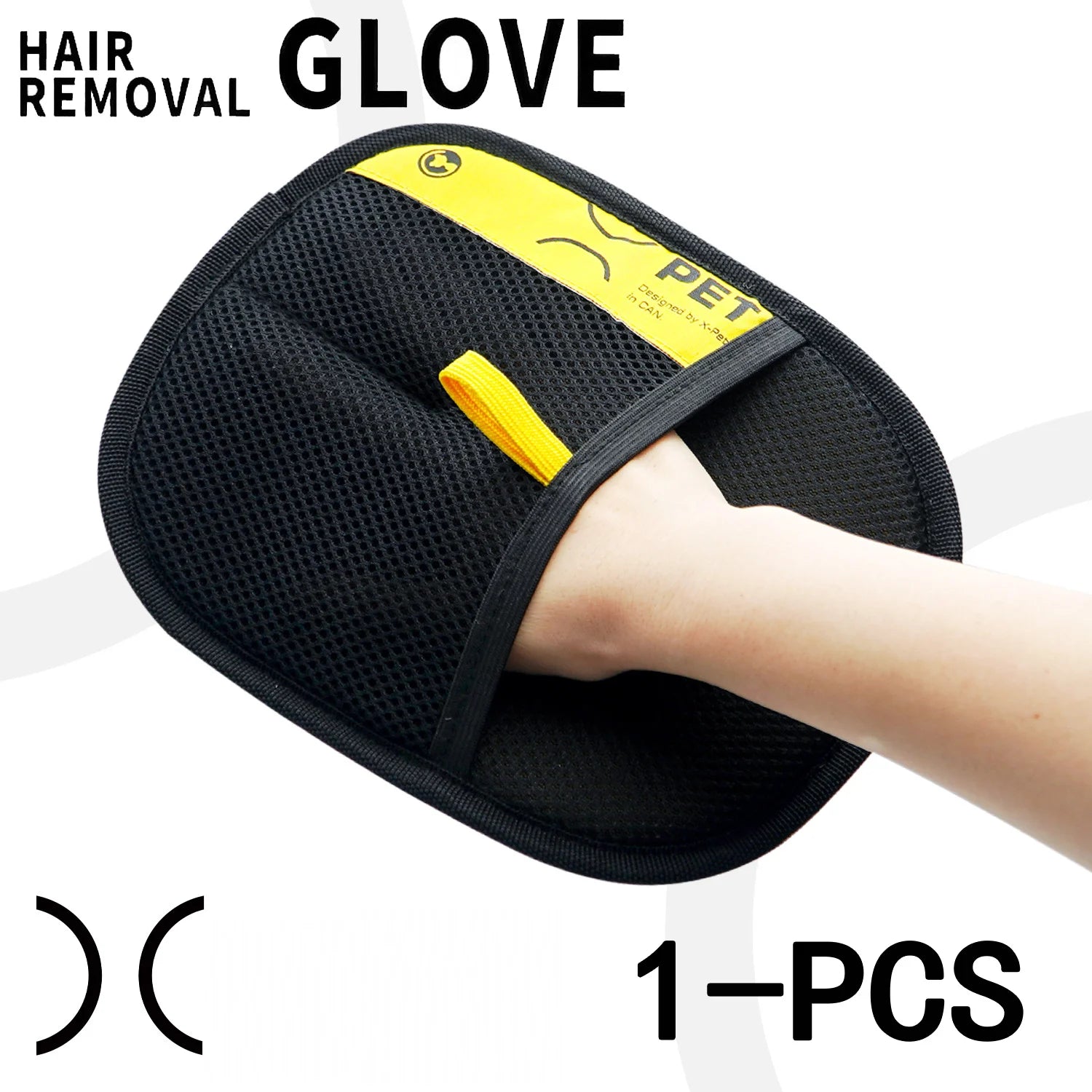
A pet hair remover glove uses a textured cleaning surface and hand-guided movement to help lift loose pet hair, lint, and dust from common fabric surfaces. The KentDO Pet Hair Remover Glove uses static-powered hair removal and is designed for both pet grooming and fabric cleanup.
The material and surface texture that grip pet hair
The glove is made from plastic and functions as a hair-removal mitt. Its static-powered cleaning approach helps attract and lift loose fur as you move your hand across a fabric surface. Rather than relying on adhesive sheets, you collect hair with a reusable tool that can be cleaned and used again.
How to move the glove for better hair collection
Use controlled strokes instead of rapidly rubbing the same area in multiple directions. Start with a small section of the couch and move the glove across the fabric consistently. If hair begins forming into small piles, collect those piles before moving to the next section.
Why hand control helps around seams, cushions, and corners
Furniture rarely has a completely flat cleaning surface. Seams, cushion gaps, armrests, and corners can collect disproportionate amounts of fur. Because a glove follows your hand, it can be easier to guide around these areas than a larger cleaning head.
Explore the KentDO Pet Hair Remover Glove if you want a reusable option for everyday couch, upholstery, clothing, carpet, bedding, and car-seat hair cleanup.
Best Furniture Surfaces for a Pet Hair Removal Glove
Fabric sofas and couches
Fabric upholstery is one of the most natural applications for a pet hair removal glove. The hand-guided design allows you to work across broad seating areas and then concentrate on high-hair zones such as cushions, armrests, and backrests.
Microfiber upholstery
Microfiber has a dense, soft texture that can hold onto fine debris. Use gentle, controlled strokes and test the glove on an inconspicuous area first, particularly if the upholstery manufacturer provides specific care instructions.
Velvet and textured fabrics
Textured upholstery deserves extra care. Avoid aggressive pressure or repeated scrubbing. Test a small hidden area before treating the entire piece, and follow the furniture manufacturer's cleaning recommendations.
Removable cushion covers
Cushion covers can be treated section by section. Remove loose debris first, then use the glove over the areas where fur remains. If the cover is machine washable, laundering according to its care label can complement manual hair removal.
Surfaces that require extra care
Do not assume every upholstery material reacts identically. Delicate, antique, specialty, or manufacturer-restricted fabrics should be tested carefully before full use. For leather, suede, silk-like upholstery, or other sensitive materials, follow the manufacturer's cleaning instructions rather than treating the glove as universally suitable.
Pet Hair Removal Performance by Hair Type
Hair type affects how quickly a furniture surface can be cleaned. No single tool should be expected to remove every strand instantly, especially when a couch has accumulated a heavy layer of embedded fur.
Short dog hair
Short dog hair can be difficult to see and may sit close to upholstery fibers. Repeated, consistent strokes can help gather loose hair into manageable groups rather than simply moving individual strands around.
Long dog and cat hair
Long fur is generally easier to spot but may collect around seams and cushion edges. A glove gives you direct control over those smaller areas, making it useful for detail cleaning after the main seating surface has been treated.
Fine hair embedded in fabric
Fine hair may require several passes. Start gently, work in sections, and avoid excessive force. If hair remains deeply embedded, combine the glove with another suitable upholstery-cleaning method rather than expecting one pass to solve the entire problem.
Heavy shedding and larger hair buildup
For furniture covered in substantial amounts of fur, remove the largest visible buildup first. A vacuum with an appropriate upholstery attachment can help with bulk debris, while a reusable glove can then be used for targeted areas and finishing work.
Pet Hair Remover Glove vs. Lint Roller, Brush, Vacuum, and Rubber Tools
Furniture pet hair removal comparison
| Tool | Best Use | Reusable | Furniture Detail Work | Main Consideration |
| Pet hair remover glove | Couches, upholstery, grooming, fabric surfaces | Yes | Strong | Requires hand-guided strokes |
| Lint roller | Loose hair on clothing and smaller surfaces | Usually limited | Moderate | Adhesive sheets need replacement |
| Vacuum | Large furniture areas and heavier debris | Yes | Strong with upholstery tools | Requires a suitable attachment and power source |
| Brush | Loosening or gathering fur | Yes | Strong | Performance varies by brush design and fabric |
| Rubber cleaning tool | Gathering loose hair from selected surfaces | Yes | Strong | Can require additional cleaning after use |
When a glove is better than a disposable lint roller
A reusable glove can make sense when you regularly clean pet hair from large fabric surfaces and want to reduce reliance on disposable adhesive sheets. It is also useful when you want one tool that can move between pet grooming and surrounding fabric cleanup.
When a vacuum or upholstery attachment makes more sense
A vacuum may be the better first choice when a sofa has a substantial amount of debris or when you need to clean a large area quickly. The glove can complement rather than replace a vacuum, especially for seams, corners, cushions, and remaining loose fur.
When a rubber brush or scraper may be useful
Rubber-based tools can be useful for gathering hair from certain upholstery types. They may be particularly helpful when fur is tightly concentrated in one area. The right choice depends on the furniture material, amount of hair, and the level of hand control you prefer.
What to Look for in a Pet Hair Remover Glove for Furniture
Hair-gripping material and effectiveness
Look for a glove designed specifically to lift pet hair rather than simply functioning as a generic household glove. Static-powered cleaning can be useful for attracting loose fur, lint, and dust during surface passes.
Left- and right-hand usability
Hand fit matters when cleaning an entire sofa. A glove that feels restrictive can make repetitive cleaning uncomfortable. Check the product's actual design and sizing information before assuming it is ambidextrous or available in multiple sizes.
Comfort, fit, and wrist flexibility
Furniture cleaning involves repeated movements, especially when treating cushions, seat backs, armrests, and seams. A flexible construction can make the process easier to manage over longer cleaning sessions.
Reusable and washable construction
Washability is an important distinction between a reusable pet hair remover and disposable alternatives. The KentDO glove can be rinsed or machine washed, allowing you to remove collected debris and prepare it for another cleaning session.
Durability for repeated furniture cleaning
A reusable tool should fit naturally into a recurring cleaning routine. Instead of evaluating durability only by how it performs on the first use, consider whether it is convenient to clean, dry, store, and reuse.
Surface safety
Always test an unfamiliar cleaning tool on a discreet area first. Avoid excessive pressure, and follow upholstery care labels. ASTM or CPSC standards are not substitutes for manufacturer-specific furniture-care instructions, and this type of household cleaning mitt should not be treated as universally safe for every fabric.
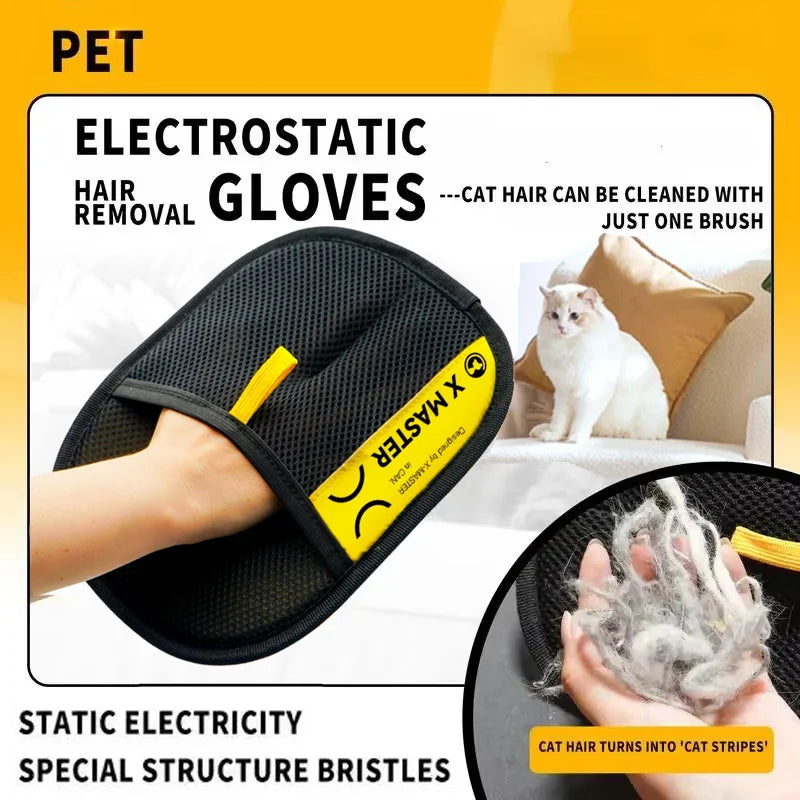
See the reusable Pet Hair Remover Glove to review its material, washable construction, static-powered cleaning design, and intended use with dogs, cats, and common fabric surfaces.
How to Remove Pet Hair from a Couch with a Glove
The most effective approach is to work systematically instead of repeatedly passing over the entire sofa at random.
Step 1: Prepare the sofa surface
Remove blankets, toys, cushions, and other loose items. Pick up large visible clumps of fur by hand and check the upholstery care instructions before starting.
Step 2: Use short strokes in one direction
Put on the glove and begin with a small section. Move your hand in short, consistent strokes across the upholstery. Avoid aggressive scrubbing, especially on textured or delicate fabric.
Step 3: Gather loosened hair into piles
As the glove collects fur, guide it toward a central area. This makes the accumulated hair easier to pick up and prevents you from scattering it across already-cleaned sections.
Step 4: Clean the glove between sections
Remove accumulated hair when the glove becomes heavily covered. Working with a cleaner glove surface can make it easier to continue collecting loose fur from the next section.
Step 5: Finish seams, corners, and cushions
Give extra attention to cushion gaps, piping, armrests, corners, and the space beneath removable cushions. These areas often hold hair that remains after the broad surfaces have been cleaned.
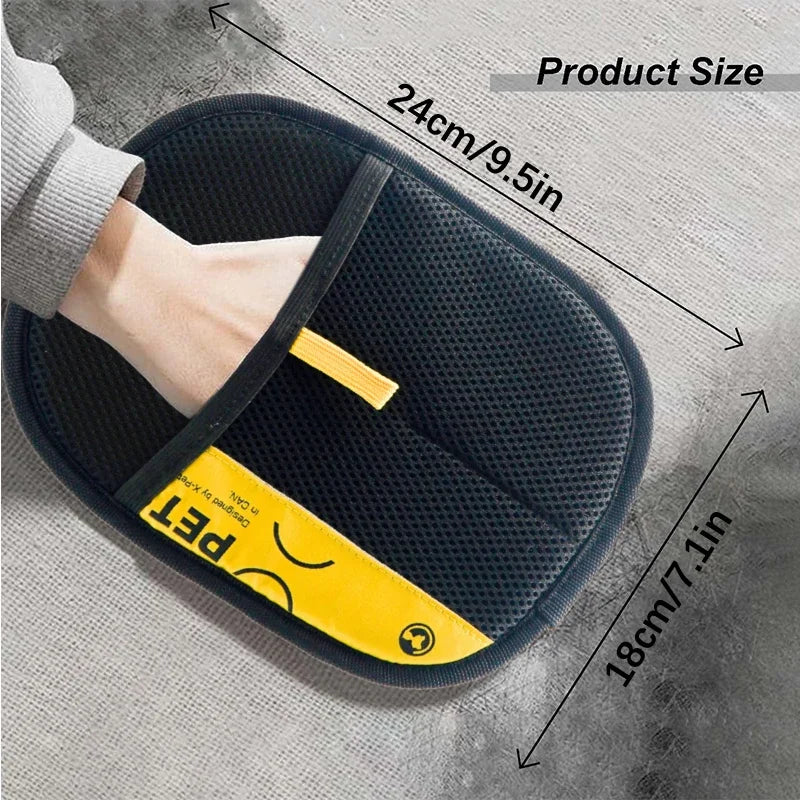
For recurring shedding, combining targeted glove cleaning with routine vacuuming and regular pet grooming can be more practical than waiting until a sofa is completely covered in fur.
Furniture Pet Hair Removal: Before-and-After Demonstration
A useful product demonstration should show realistic furniture conditions rather than only a clean couch. For meaningful results, photograph the same upholstery section before cleaning, during the hair-removal process, and after loose fur has been collected.
Before-and-after on a fabric sofa
Start with a visible patch of loose fur on a fabric sofa. Use consistent strokes across half of the area and leave the other half untouched. This creates a clearer visual comparison than showing two unrelated furniture photographs.
Before-and-after on a microfiber couch
Microfiber can demonstrate why controlled movement matters. Photograph the surface under similar lighting before and after cleaning, while noting that results vary according to the fabric, hair type, and amount of buildup.
Close-up of hair collected by the glove
A close-up can help shoppers understand what the glove actually collects. Showing loose fur gathered on the mitt provides more useful product evidence than a generic photograph of the glove alone.
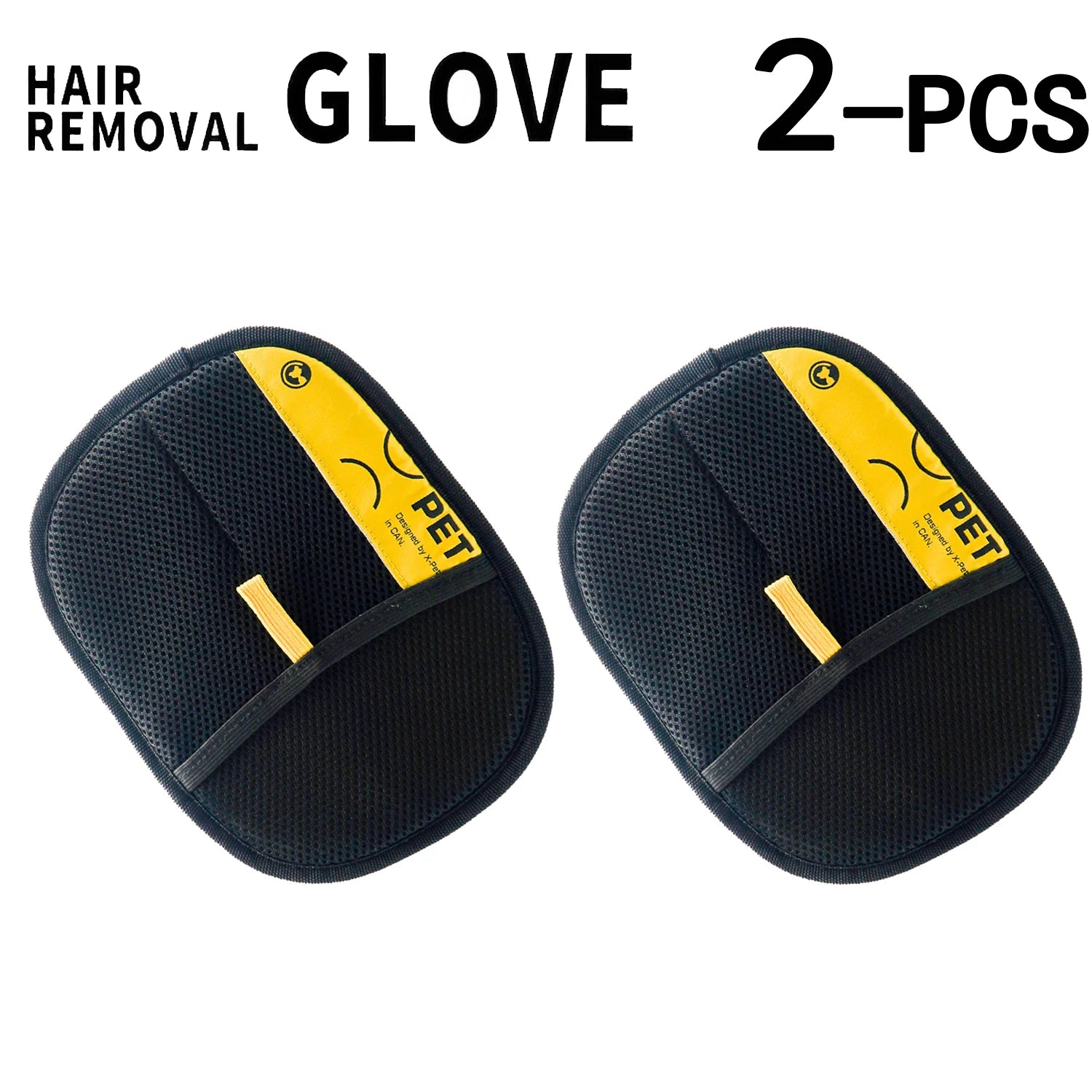
How to Clean and Store a Reusable Pet Hair Removal Glove
How to remove collected pet hair
After cleaning, remove accumulated fur from the glove rather than storing it with hair still attached. Gather the loose material and dispose of it with your household waste.
How to wash the glove
The KentDO Pet Hair Remover Glove is reusable and washable. It can be rinsed or machine washed according to the product's care guidance. Allow the glove to become clean before putting it away for the next use.
How to dry and store it between uses
Let the glove dry appropriately before storage. Keeping a washable cleaning tool clean and dry between uses helps make it more convenient to reach for during the next shedding cleanup.
Is a Pet Hair Remover Glove Worth It for Furniture?
For households that regularly deal with dog hair on furniture or cat hair on couches, a reusable pet hair remover glove can be worthwhile when its hand-guided design fits the cleaning routine. Its main advantages are reusability, portability, direct control, and the ability to work on both pets and surrounding fabric surfaces.
Pros
- Reusable and washable instead of dependent on disposable adhesive sheets.
- Designed for both pet grooming and fabric hair removal.
- Static-powered cleaning helps lift loose pet hair, lint, and dust.
- Hand-guided design provides control around cushions, seams, and corners.
- Suitable for common fabric surfaces including couches, clothing, carpets, bedding, and car seats.
Cons
- Heavy furniture buildup may require multiple passes.
- A vacuum can be faster for very large areas or substantial debris.
- Not every upholstery material should be treated without first testing a discreet area.
- Performance can vary depending on hair type, fabric texture, and how deeply fur is embedded.
Best choice for frequent couch and sofa cleanup
A reusable glove is particularly appealing when your main problem is recurring loose fur on fabric furniture and you want a compact tool that can also be used for pet grooming. It is less about replacing every other cleaning tool and more about adding a convenient, reusable option to the routine.
Who may prefer another pet hair removal method
If you routinely clean entire rooms covered in heavy fur, a vacuum may be the more efficient primary tool. If your main concern is removing a few hairs from clothing before leaving home, a lint roller may be more convenient. The glove is most compelling when you want hands-on control for furniture and the convenience of a washable, reusable tool.
Try the KentDO Pet Hair Remover Glove for furniture and everyday pet-hair cleanup if a reusable, washable mitt fits the way you clean your home.
Final Takeaway: Make Furniture Pet Hair Cleanup More Manageable
Removing pet hair from couches and sofas becomes easier when you treat the furniture according to its fabric, hair buildup, and problem areas. A pet hair remover glove offers a simple approach: use controlled strokes to lift loose fur, gather it into manageable piles, clean the mitt, and repeat as needed.
The KentDO Pet Hair Remover Glove combines static-powered hair removal with a reusable, washable design and 2-in-1 use for pet grooming and fabric cleanup. For households dealing with recurring dog hair on furniture, cat hair on couches, or loose fur throughout upholstered spaces, it can be a practical addition to a broader cleaning routine.
For the best results, use the glove as part of regular pet-hair maintenance rather than waiting for upholstery to become heavily covered. Pair targeted glove cleaning with appropriate vacuuming, routine grooming, and manufacturer-approved furniture care to keep couches, cushions, and other fabric surfaces looking cleaner with less reliance on disposable cleaning products.
Pillar Article: Electrostatic Pet Hair Remover Glove: Hands-On Comparison













