Q: What’s the normal range for skin moisture?
A: The normal skin moisture meter reading for healthy facial skin ranges between 35% and 50%. Levels below 30% indicate dryness or dehydration, while readings above 55% usually reflect surface oil rather than true hydration. For the most accurate results, measure on clean skin and compare regularly with a skin moisture level chart.
Skin Moisture Level Chart: What’s Normal & How to Read Your Results
Wondering if your skin hydration is actually within a healthy range? This guide breaks down how to interpret your skin moisture level chart, what a moisture meter normal range really means, and how to get accurate readings using a moisture meter for face. Whether you're tracking hydration or comparing tools, you'll learn how to turn numbers into actionable skincare insights.
⏱ 7 min read
Skin Moisture Level Chart (Quick Reference Guide)
Skin Hydration Percentage Ranges Explained
Skin moisture levels are typically measured as a percentage using a skin analyzer or moisture meter. The chart below shows how to interpret your results:
- 0–30%: Very dry / dehydrated skin (low hydration, tightness likely)
- 30–40%: Dry to slightly dehydrated (needs hydration support)
- 40–50%: Normal skin moisture level (balanced hydration)
- 50–60%: Well-hydrated skin (healthy moisture barrier)
- 60%+: Highly hydrated (may feel plump or slightly oily)
Moisture Meter Readings Chart (Face vs Body)
Different areas of the body naturally hold different moisture levels:
- Face: 40–60% is considered normal
- Hands: 30–50% is typical
- Body (arms/legs): 30–55% depending on environment
Use this chart as a quick reference to understand whether your skin hydration level is within a healthy range.

💡 See it in action — skin moisture meter + level chart
What Is a Normal Skin Moisture Level?
A normal skin moisture level typically falls between 40% and 60% when measured with a skin moisture meter. However, this range can vary depending on age, skin type, and environmental conditions.
Normal Skin Moisture by Age
- Teens–20s: 45–60% (naturally higher hydration)
- 30s–40s: 40–55% (gradual moisture decline)
- 50+: 35–50% (reduced natural oil and water retention)
Normal Skin Moisture by Skin Type
- Oily skin: 45–60% (higher due to sebum retention)
- Normal skin: 40–55% (balanced hydration)
- Dry skin: 30–45% (lower baseline moisture)
- Combination skin: varies by area (T-zone vs cheeks)
Understanding these variations helps you interpret your skin moisture index more accurately instead of relying on a single “ideal” number. You can explore deeper skin profiling in this skin type guide.
How Skin Moisture Is Measured (Devices & Methods)
How Skin Moisture Meters Work
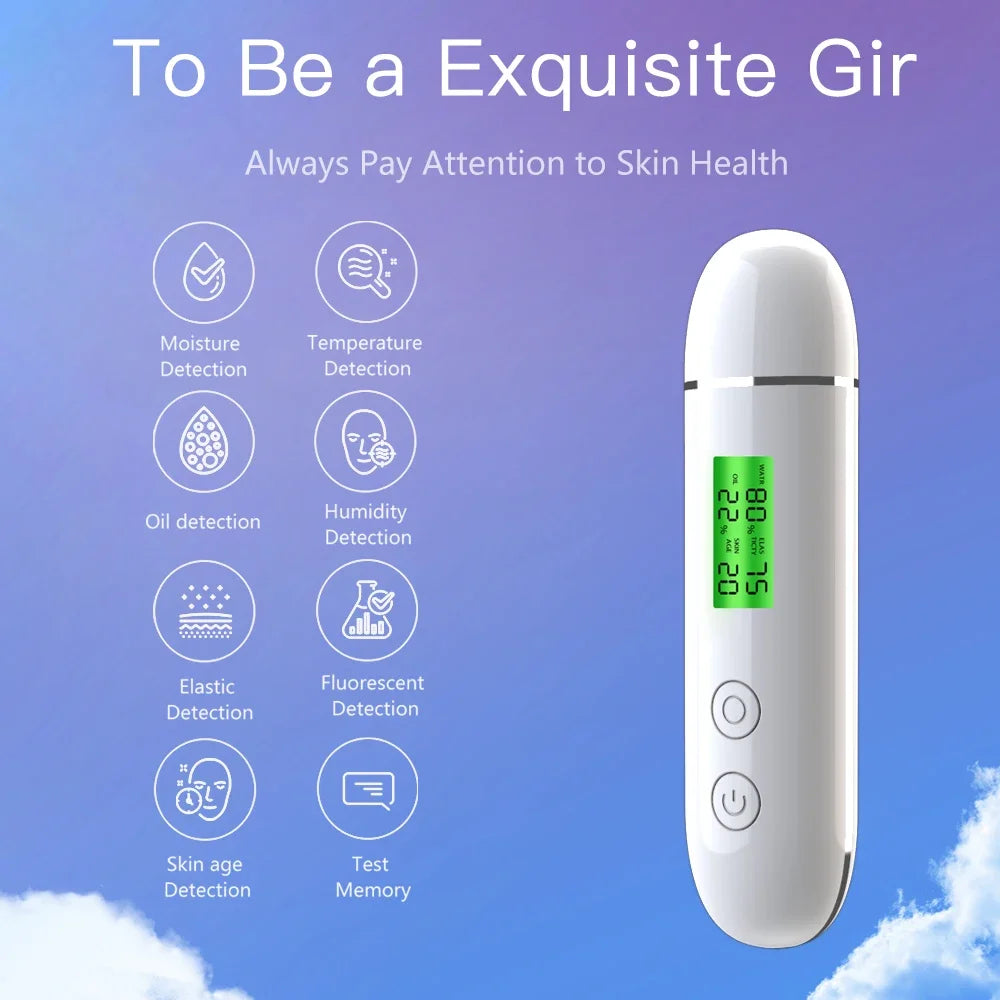
Skin moisture meters measure hydration by analyzing the skin’s electrical resistance or capacitance. Since water conducts electricity, higher moisture levels produce different readings than dry skin.
- Capacitance method: most common in consumer devices
- Resistance method: used in some professional analyzers
What Is a Normal Reading on a Moisture Meter?
Most devices display hydration as a percentage. While scales vary slightly by brand, general benchmarks include:
- Below 30% → Dry / dehydrated
- 30–50% → Normal range
- Above 50% → Well-hydrated
Always refer to your device’s specific moisture meter readings chart, as calibration can differ between models. For a deeper breakdown, see this skin analyzer guide.
How to Read a Skin Moisture Meter Correctly
Step-by-Step Usage Guide
- Cleanse your skin and wait 10–15 minutes
- Ensure skin is dry (no creams or serums applied)
- Turn on the device and calibrate if needed
- Press the sensor gently against your skin
- Hold steady for 2–3 seconds to get a reading
Common Mistakes That Skew Readings
- Measuring right after applying skincare products
- Testing sweaty or damp skin
- Inconsistent pressure on the sensor
- Measuring different areas without comparison
For best accuracy, always measure at the same time of day and under similar conditions. Avoid these common pitfalls detailed in this skincare mistakes guide.
Why Your Skin Moisture Level Changes (Key Factors)
Climate & Environment
Low humidity, cold weather, and air conditioning can reduce skin moisture levels quickly, while humid environments help retain hydration.
Skincare Routine & Ingredients
- Humectants (like hyaluronic acid) increase hydration
- Harsh cleansers can strip moisture
- Occlusives help lock in water
Age & Lifestyle Factors
As you age, your skin produces less natural oil, making it harder to retain moisture. Diet, water intake, and sleep also impact hydration levels.
What Your Skin Moisture Level Means (Actionable Guide)
Dehydrated Skin (0–30%)
Your skin lacks water and may feel tight or flaky.
- Use hydrating serums (hyaluronic acid)
- Avoid over-cleansing
- Increase water intake
For a full routine, see this hydration skincare guide.
Normal Hydration (30–50%)
Your skin is balanced but may fluctuate depending on environment.
- Maintain a consistent skincare routine
- Use lightweight moisturizers
Well-Hydrated Skin (50%+)
Your skin has optimal moisture levels and a strong barrier.
- Focus on maintenance
- Avoid overloading with heavy products
Are You Misreading Your Moisture Meter?
Even experienced users can misinterpret results. Key issues include testing at inconsistent times, using uncalibrated devices, or confusing oil levels with hydration. Consistency and proper technique are essential for reliable tracking.
Comparison Chart: Moisture Meter for Face Devices
Differences Between Device Types
- Basic home devices: simple percentage readings
- Smart analyzers: app-connected with tracking
- Professional tools: higher accuracy, used in clinics
Accuracy vs Price Considerations
Higher-priced devices often provide more consistent readings, but even basic tools are useful for tracking changes over time rather than exact numbers.
💡 Skin moisture meter comparison — see which wins
Mini FAQ (Skin Moisture Levels Explained)
What is a normal moisture reading for skin?
A normal reading typically falls between 40% and 60%, depending on the device and skin type.
Do moisture meters really work?
Yes, they provide useful estimates of skin hydration, especially for tracking trends over time.
Why is my skin moisture level always low?
This can be caused by dehydration, harsh skincare products, or environmental factors like low humidity.
Can oily skin still be dehydrated?
Yes, oily skin can lack water even if it produces excess oil, leading to dehydration.
Explore more hydration tools and home wellness solutions in the Skin and Beauty Care Devices and Body Care and Health Devices collections.
Pillar Article: Top 7 Skin Analysis Devices Compared: Features, Accuracy & Value
Other Related Articles:
- Digital vs Analog Moisture Meters for Skin: Which Should You Trust?
- The Truth About Skin Moisture Meters (And Which One’s Reliable)
- Skin Analyzer Devices Reviewed: Stop Guessing Your Skin Type
- Is a Portable Skin Analyzer Machine Worth It? We Break It Down
Explore More: