What Not to Put in a Skincare Fridge (And Why It Matters)
Skincare fridges have exploded in popularity—but not everything belongs inside them. In fact, storing the wrong products in cold temperatures can damage formulas, reduce effectiveness, and even ruin your skincare entirely.
This guide breaks down exactly what not to put in a skincare fridge, backed by ingredient science. You’ll also learn why certain products react poorly to cold, what happens if you refrigerate them anyway, and how to use a beauty fridge correctly.
⏱ 6 min read
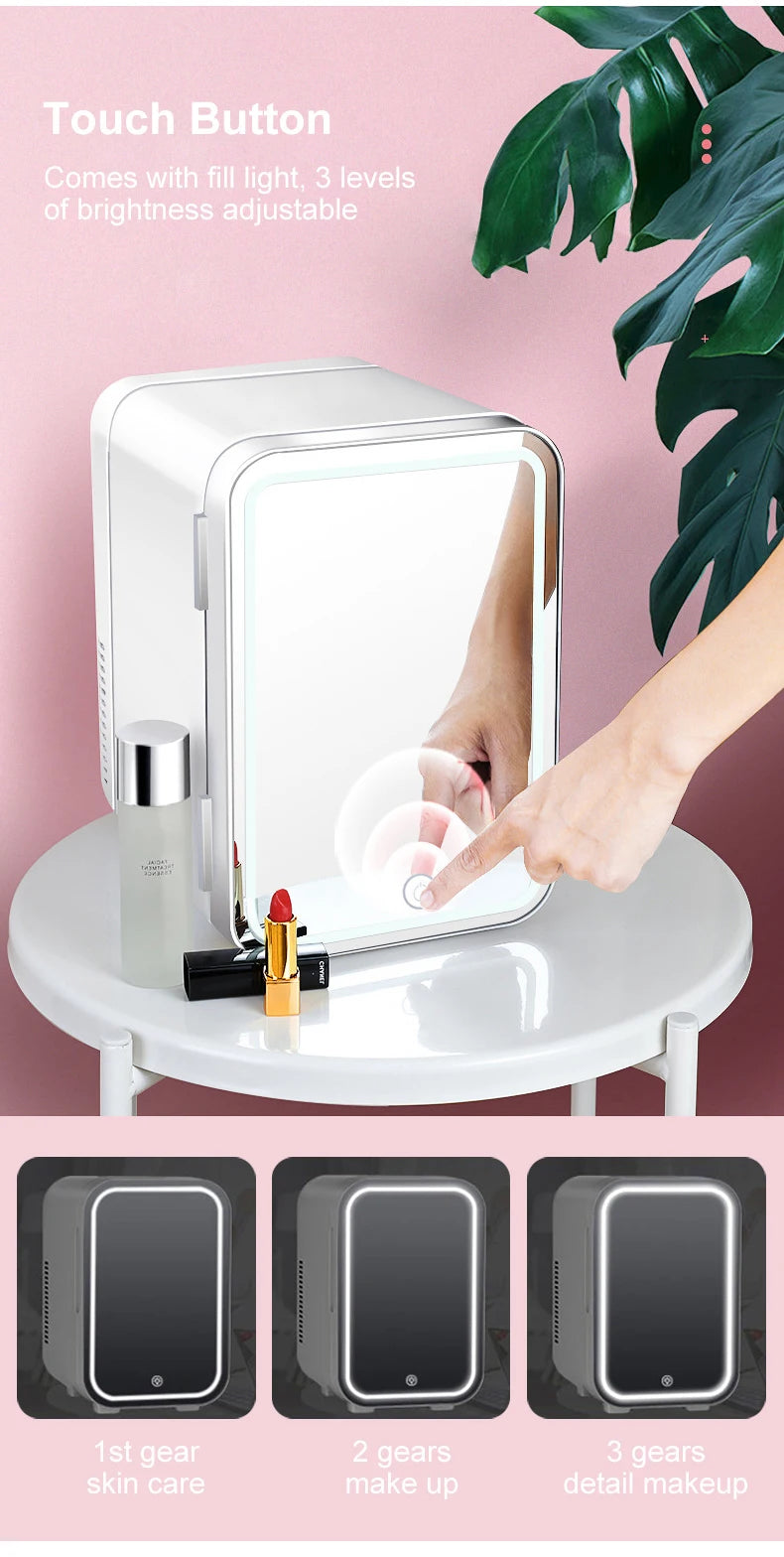
💡 See the KentDO mini makeup fridge with mirror in action — a skincare essential done right.
Why Skincare Fridges Became Popular
Beauty fridges became popular as consumers looked for ways to organize skincare and keep products away from excessive bathroom heat and humidity. However, the belief that every skincare product benefits from refrigeration is one of the most common storage misconceptions.
The “Cooling = Better” Myth Explained
Most skincare products are formulated to remain stable at room temperature. Refrigeration can disrupt delicate formulations—especially emulsions, oils, and active ingredients—leading to texture changes or reduced performance rather than improved results.
What a Skincare Fridge Is Actually Designed For
Many consumers assume that colder temperatures automatically improve skincare performance. In reality, a skincare fridge is primarily designed to provide a stable storage environment for selected products that benefit from cooling, such as eye gels, sheet masks, and soothing treatments.
Unlike a standard kitchen refrigerator, a beauty fridge typically operates at a milder temperature range intended to reduce heat exposure without freezing formulas. The goal is comfort and storage consistency—not increasing ingredient potency.
Understanding this distinction helps prevent one of the most common skincare fridge mistakes: refrigerating products that were formulated to remain stable at room temperature.
How Cold Temperatures Affect Skincare Formulas
To understand what not to refrigerate, it helps to know how low temperatures interact with different skincare formulations.
How Refrigeration Changes Ingredient Stability
Skincare formulas are carefully engineered to remain stable within a specific temperature range. When products are exposed to temperatures that are significantly colder than intended, ingredients can behave differently than the manufacturer designed.
Water-based ingredients, oils, emulsifiers, waxes, preservatives, and active compounds may respond differently to cold storage. Some formulas become thicker, others separate, and some ingredients lose their ability to distribute evenly throughout the product.
For this reason, refrigeration should be considered a storage choice rather than a universal skincare upgrade.
Emulsions Can Separate
Creams and lotions are emulsions—blends of oil and water stabilized by emulsifiers. Cold temperatures can destabilize this balance, causing separation, clumping, or a grainy texture.
Oils Can Solidify or Crystallize
Natural oils often contain fatty acids that harden when chilled. This can clog droppers, alter texture, and make application uneven.
Active Ingredients May Degrade or Become Ineffective
While heat is usually more damaging, extreme cold can still affect how active ingredients absorb or perform—especially if products are repeatedly exposed to temperature changes. Retinoids, vitamin C derivatives, peptides, and other advanced skincare ingredients should generally be stored according to manufacturer instructions.
Preservatives Can Become Less Effective
Preservative systems are designed for specific temperature ranges. Refrigeration may reduce their ability to maintain stability once the product returns to room temperature.
Why Condensation and Temperature Swings Matter
Repeatedly moving products between a cool beauty fridge and a warmer bathroom environment creates temperature fluctuations. These swings can generate condensation inside packaging and expose formulas to moisture changes.
Over time, repeated warming and cooling cycles may place additional stress on delicate formulations, particularly products containing complex emulsions or unstable natural ingredients.
What Not to Put in a Skincare Fridge
Here are the most common product types that should not be stored in a skincare fridge—and why.
Oil-Based Products (Face Oils, Balms)
Facial oils and cleansing balms can thicken or solidify in cold temperatures, making them harder to use and less effective.
Clay Masks and Mud Treatments
Clay-based products can harden or dry out faster when exposed to cold, reducing spreadability and performance.
Thick Creams and Emulsions
Moisturizers may separate or become grainy due to disrupted emulsions, especially with repeated cooling and warming cycles.
Retinoids and Prescription Treatments
Retinoids are sensitive to environmental conditions. Unless specifically stated on the packaging, refrigeration can destabilize their formulation.
Certain Serums (Vitamin C, Peptides)
Some vitamin C formulas benefit from stable storage, but others can crystallize. Peptide serums may also lose effectiveness depending on formulation.
Cleansing Balms and Oil Cleansers
Cleansing balms often rely on oils, waxes, and emollients that soften at room temperature. Refrigeration can cause these ingredients to harden, making the product difficult to scoop, spread, and emulsify properly during cleansing.
Fragrance-Based Beauty Products
Perfumed skincare products and fragrance-heavy formulations may experience changes in scent performance when repeatedly exposed to cold temperatures. While not always harmful, refrigeration can alter the intended sensory experience.
Products With Waxes and Butters
Products containing shea butter, cocoa butter, beeswax, or similar structural ingredients can become excessively firm when refrigerated. This may affect application consistency and lead to uneven product distribution.
Ingredient Types Most Vulnerable to Refrigeration
Natural Oils
Many plant-derived oils become cloudy, thick, or partially solidified when exposed to cold temperatures.
Plant Extracts
Botanical ingredients can react differently to refrigeration depending on formulation design and preservation systems.
Emulsifiers
Emulsifiers help keep oil and water phases blended together. Cold storage can disrupt this balance and increase separation risk.
Wax-Based Formulas
Products that depend on wax structures may become overly rigid, reducing spreadability and user experience.
What Happens If You Refrigerate These Products Anyway?
Immediate Changes You May Notice
- Thicker texture
- Hardening of oils or balms
- Difficulty dispensing the product
- Visible cloudiness
- Uneven application
Long-Term Formula Damage
Repeated refrigeration can contribute to ingredient separation, crystallization, and reduced formula consistency. In some cases, products may no longer perform as intended even after returning to room temperature.
The risk is generally highest for products containing oils, waxes, emulsions, and complex active ingredient systems.
Signs a Product Has Been Damaged by Refrigeration
Texture Changes
A formula that becomes unusually thick, grainy, lumpy, or difficult to spread may have been affected by cold storage.
Separation
If oil and water layers become visible and do not remix easily, the emulsion structure may have been disrupted.
Crystallization
Small crystals or gritty particles can indicate ingredient solidification caused by low temperatures.
Reduced Performance
If a product no longer absorbs, hydrates, cleanses, or applies as expected, refrigeration-related changes may be responsible.
What You Can Store in a Skincare Fridge (Safe List)
Not everything is off-limits. Some products actually benefit from cooling.
Products That Benefit from Cooling
- Sheet masks (enhanced soothing effect)
- Eye creams (reduce puffiness)
- Aloe gels and calming treatments
- Facial mists for a refreshing boost
These products are typically water-based and less sensitive to temperature shifts.
Eye Products
Cooling eye gels and under-eye treatments can provide a refreshing sensation and temporarily reduce the appearance of puffiness.
Sheet Masks
Sheet masks are among the most commonly refrigerated skincare products because cooling enhances the sensory experience without affecting most formulations.
Aloe and Soothing Gels
After-sun gels and soothing treatments often feel more comfortable when chilled, making them suitable candidates for beauty-fridge storage.
What to Put in a Skincare Fridge vs What to Keep at Room Temperature
Quick Reference Storage Chart
- Eye gels → Skincare fridge
- Sheet masks → Skincare fridge
- Aloe gels → Skincare fridge
- Face oils → Room temperature
- Cleansing balms → Room temperature
- Clay masks → Room temperature
- Retinoids → Follow manufacturer instructions
- Prescription products → Follow manufacturer instructions
Ideal Skincare Fridge Temperature
Recommended Skincare Fridge Temperature Range
Most skincare fridges perform best when maintaining temperatures between approximately 45°F and 55°F (7°C to 13°C). This range provides cooling benefits without exposing products to extreme cold.
Beauty Fridge Temperature vs Kitchen Refrigerator
Kitchen refrigerators often operate much colder than beauty fridges. Excessively cold temperatures increase the likelihood of thickening, separation, crystallization, and texture changes in certain skincare products.
Why Your Mini Makeup Fridge Isn’t Cooling Properly
A beauty fridge should maintain a consistent cool range. If it’s not, user habits are often the cause.
Common Cooling Failures
- Blocked ventilation openings
- Overloaded storage compartments
- Faulty power adapters
- Improper door sealing
- High ambient room temperatures
- Overstuffing limits airflow
- Blocked vents reduce cooling efficiency
- Poor placement near heat sources
- Lack of regular cleaning and maintenance
How to Fix Your Mini Makeup Fridge (Step-by-Step)
Troubleshooting Checklist
- Verify the power connection.
- Check that the cooling fan is operating.
- Reduce product overload.
- Inspect door seals for gaps.
- Clean ventilation areas.
- Allow several hours for temperature stabilization.
- Unplug & Reset: Turn off for 30 minutes.
- Declutter: Remove excess items.
- Check Air Vents: Clean gently.
- Avoid Heat: Keep away from sunlight.
- Test Temperature: Aim for ~45°F (7°C).
- Clean Seals: Ensure tight closure.
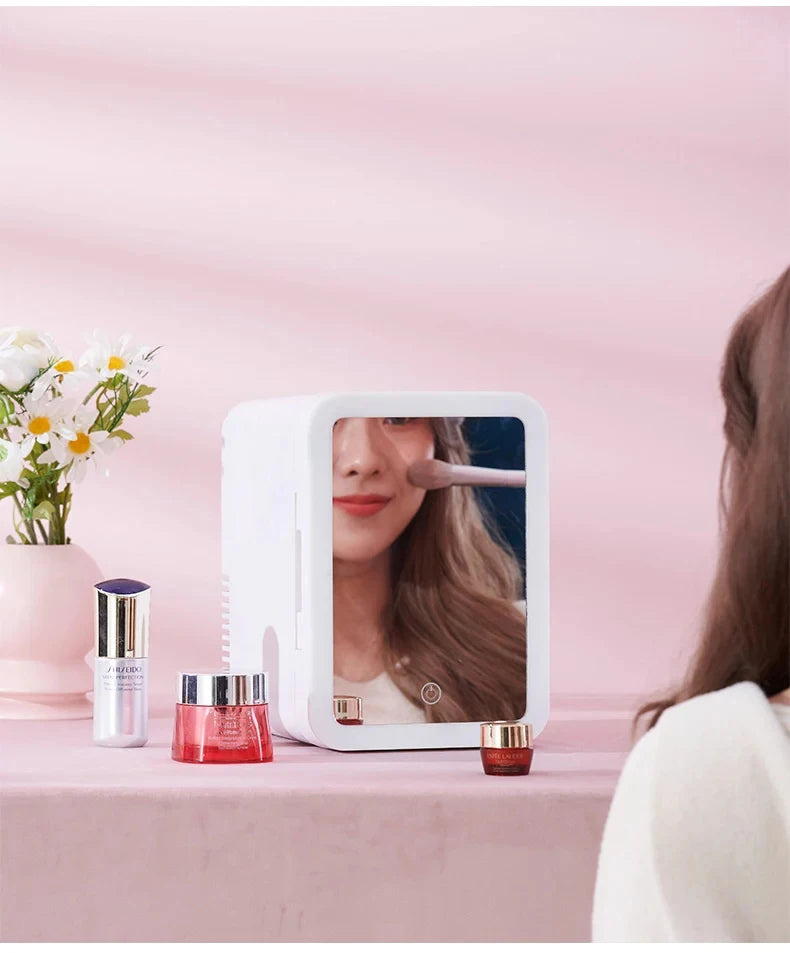
💡 This beauty mini fridge can preserve anti-aging tools, masks, and serums — effortlessly.
Common Skincare Fridge Mistakes (That Ruin Products)
Overloading the Fridge
Packing too many items blocks airflow, causing uneven cooling.
Incorrect Temperature Settings
Beauty fridges should stay between 10–15°C (50–59°F). Too cold can damage formulas.
Storing the Wrong Product Types
Putting oils, creams, and sensitive actives in the fridge is one of the most common mistakes.
Frequent Door Opening
Opening the fridge repeatedly causes temperature fluctuations that can stress certain formulations over time.
Mixing Cosmetics and Skincare Improperly
Not every cosmetic product benefits from refrigeration. Storing incompatible products together often leads to unnecessary texture and performance issues.
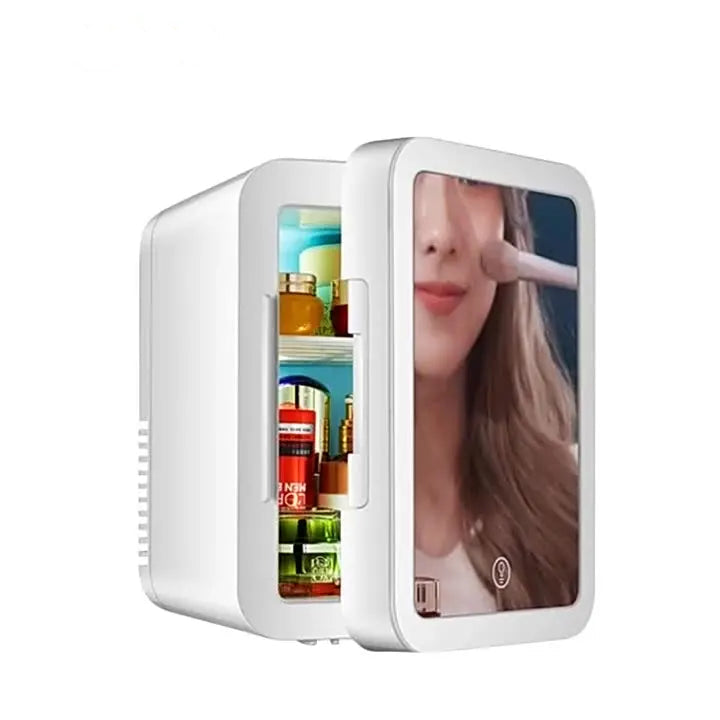
💡 A makeup fridge with mirror that works as hard as your skincare routine.
Best Practices for Using a Beauty Fridge Safely
Storage Guidelines by Product Type
- Store soothing gels and sheet masks in the fridge if desired.
- Keep oils and balms at room temperature.
- Follow manufacturer instructions for prescription products.
- Avoid freezing temperatures.
- Monitor beauty fridge temperature regularly.
- Discard products showing persistent separation or unusual texture changes.
- Keep temperature consistent (avoid frequent opening)
- Only store products that benefit from cooling
- Do not mix skincare with food or drinks
- Clean regularly to prevent contamination
- Always follow product storage instructions
Skincare Fridge FAQs
Can You Put Cleanser in a Skincare Fridge?
Most cleansers do not benefit from refrigeration. Oil cleansers and cleansing balms may become thicker or harder to use when chilled.
What Do You Put in a Skincare Fridge?
Common choices include eye gels, sheet masks, soothing gels, and products specifically labeled for refrigerated storage.
What Skincare Products Should Not Be Refrigerated?
Face oils, cleansing balms, clay masks, thick emulsions, and certain active formulations are among the most commonly recommended products to keep at room temperature.
What Temperature Should a Beauty Fridge Be?
A beauty fridge generally performs best around 45°F–55°F (7°C–13°C).
Can a Skincare Fridge Damage Products?
Yes. Some products may separate, crystallize, thicken, or lose their intended texture when exposed to inappropriate cold temperatures.
For more beauty device tips and product care guides, visit our curated categories:
- Skin and Beauty Care Devices
- Eye Care Devices
- Body Care and Health Devices
- Lifestyle
- Beauty & Self-Care Blog
Pillar Article: How to Use a Car Mini Fridge Like a Pro (Even on Short Trips)
Other Related Articles:
- How Does a Mini Fridge for the Car Work? A Quick Beginner’s Guide
- Can You Put All Skincare in a Mini Fridge? How to Store It Right
- The Right Way to Use a Portable Car Freezer Without Draining Your Battery
- Step-by-Step: Set Up Your Mini Car Refrigerator in Under 10 Minutes
Explore More:
- What’s the Best Mini Fridge for Your Car? We Compare the Top Picks
- What Type of Beauty Products Belong in a Mini Fridge?
Final Takeaway: Refrigerate Selectively, Not Everything
A skincare fridge can be useful for a small group of products, but it is not a universal storage solution. Many formulas are designed to remain stable at room temperature and may actually perform worse when refrigerated.
If you are unsure whether a product belongs in a beauty fridge, check manufacturer guidance first and focus on ingredient stability rather than the assumption that colder is always better.