

How to Remove Plaque and Tartar at Home (Safe Methods Dentists Recommend)
Wondering how to remove plaque and tartar effectively without costly appointments? Maintaining good oral hygiene at home can significantly reduce plaque buildup and slow tartar formation. With the right routine and tools—such as brushing, flossing, and carefully designed dental cleaning kits—you can keep your teeth cleaner between professional dental visits and support long-term oral health.
⏱ 7 min read

💡 How to remove plaque and tartar at home with dental stainless steel utensils
Can You Actually Remove Tartar at Home?
Many people search for ways to remove plaque and tartar at home, but it is important to understand the difference between what can be safely treated at home and what requires professional dental care.
Plaque is a soft, sticky film made of bacteria and food particles. It forms on teeth every day and can usually be removed through proper brushing, flossing, and oral hygiene.
Tartar (also called dental calculus) is hardened plaque that forms when plaque minerals combine with saliva. Once plaque hardens into tartar, it strongly attaches to the tooth surface and is much harder to remove.
In most cases, hardened tartar requires professional dental scaling performed by a dentist or dental hygienist. However, good oral hygiene and certain dental tools can help:
- Remove soft plaque before it becomes tartar
- Reduce early tartar buildup near the gumline
- Maintain cleaner teeth between dental visits
Understanding these limits helps you choose safe methods to improve oral hygiene at home without damaging your teeth or gums.
Plaque vs. Tartar: What’s the Difference?
Understanding how plaque turns into tartar helps explain why daily oral care is so important.
What Is Dental Plaque?
Plaque is a sticky bacterial film that constantly forms on teeth after eating or drinking. When plaque bacteria feed on sugars and starches, they produce acids that can irritate gums and weaken tooth enamel.
If plaque is not removed through brushing and flossing, it begins to accumulate along the gumline and between teeth.
How Plaque Turns Into Tartar
When plaque stays on teeth for too long, minerals from saliva harden the film into tartar. This process can begin within 24–72 hours. Unlike plaque, tartar bonds tightly to tooth enamel and cannot be removed with normal brushing alone.
Why Tartar Is a Problem
- Provides a rough surface where more bacteria can grow
- Increases risk of gum inflammation and gingivitis
- Makes teeth appear yellow or stained
- Can lead to periodontal disease if untreated
Preventing plaque buildup is the most effective way to avoid tartar formation and maintain long-term oral health.
How to Remove Plaque and Tartar at Home (Step-by-Step Routine)
While hardened tartar often requires professional dental cleaning, you can significantly reduce plaque buildup and slow tartar formation by following a consistent oral hygiene routine.
Step 1: Brush Properly to Remove Plaque
Brush your teeth at least twice a day using a soft-bristled toothbrush and fluoride toothpaste. Spend about two minutes brushing, focusing on the gumline where plaque tends to accumulate.
- Hold the toothbrush at a 45-degree angle toward the gums
- Use gentle circular motions
- Brush the outer, inner, and chewing surfaces of each tooth
Step 2: Floss Daily to Stop Plaque Between Teeth
Dental floss removes plaque that toothbrush bristles cannot reach. Flossing once per day helps prevent plaque from hardening into tartar between teeth.
Step 3: Use a Water Flosser or Antibacterial Mouthwash
Water flossers and antimicrobial mouthwashes can help flush bacteria and food particles from difficult areas of the mouth, especially around the gumline.
Step 4: Use a Dental Cleaning Kit Carefully
A dental cleaning kit for home may include tools such as plaque remover tools, dental mirrors, and tartar scrapers. These tools can help remove soft plaque buildup, but they must be used gently and carefully to avoid gum injury.
Step 5: Maintain Daily Oral Hygiene to Prevent Tartar
The best way to deal with tartar is prevention. Consistent brushing, flossing, and regular dental checkups help prevent plaque from hardening into tartar.
Is It Safe to Remove Tartar at Home?
Many people wonder whether it is safe to remove tartar from teeth without a dentist. The answer depends on the method used and the amount of tartar buildup present.
Basic oral hygiene practices such as brushing, flossing, and using mouthwash are safe and recommended daily. However, scraping hardened tartar with sharp tools can potentially damage tooth enamel or irritate the gums if done incorrectly.
Dental professionals typically use specialized instruments and training to safely perform dental scaling. These tools are designed to remove tartar while minimizing damage to teeth and surrounding tissues.
If you notice heavy tartar buildup, bleeding gums, or persistent bad breath, it is best to schedule a professional dental cleaning.
- Home care can remove plaque
- Home tools may help reduce minor buildup
- Professional scaling removes hardened tartar safely
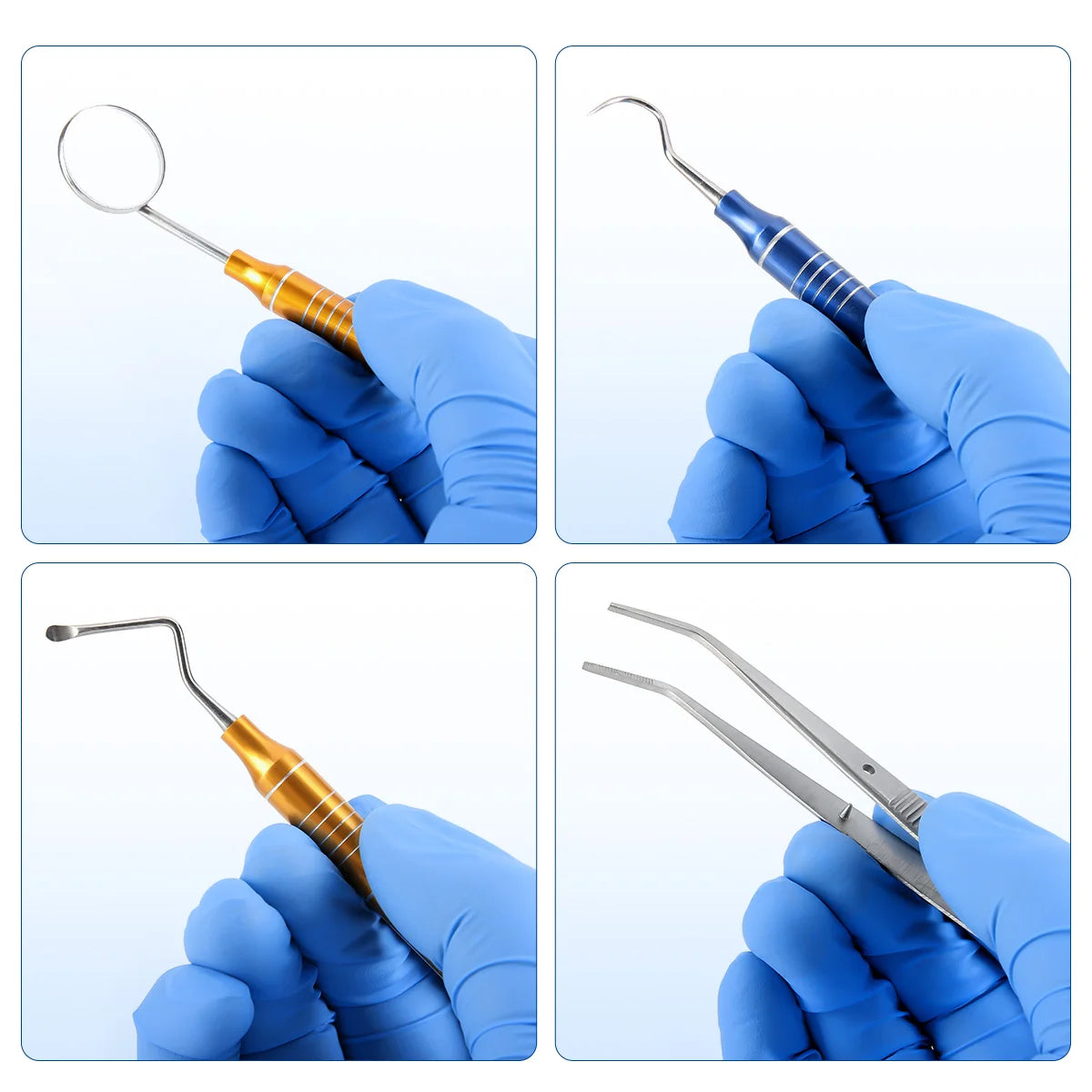
💡 Dental stainless steel utensils make plaque removal safer and more effective
The Benefits of a Dental Cleaning Kit for Home
When used carefully, a dental cleaning kit for home can complement daily brushing and flossing. These kits typically include dental utensils made of dental stainless steel that help users reach areas that may be harder to clean with a toothbrush alone.
- Better visibility: Dental mirrors help you see buildup along the gumline.
- Precision cleaning: Plaque remover tools can help remove soft plaque deposits.
- Convenience: Maintain oral hygiene between professional dental visits.
- Cost efficiency: Helps reduce the frequency of minor dental maintenance appointments.
How to Use a Plaque Remover Tool Safely
If you choose to use a plaque remover tool or dental cleaning kit, following proper technique is essential to avoid injury.
- Wash and disinfect your dental stainless steel tools before use.
- Use a dental mirror and bright lighting so you can clearly see the tooth surface.
- Gently remove visible plaque deposits near the gumline.
- Avoid scraping aggressively or pushing tools under the gums.
- Rinse your mouth and sanitize tools thoroughly after each session.
Using dental utensils occasionally and carefully may help maintain cleaner teeth, but daily brushing and flossing remain the most effective methods for plaque control.
Best Tartar Removal Kits for Home Use (2025 Guide)
Several dental cleaning kits designed for home use include stainless steel tools that support plaque removal and general oral hygiene maintenance. Below are examples of commonly recommended kits.
| Kit | Best For | Pros | Cons |
|---|---|---|---|
| KentDO Dental Cleaning Tools Set | All-around home use | ✅ Stainless steel ✅ Multiple utensils ✅ Affordable | ❌ Requires careful handling |
| Precision Smile Kit | Detail-oriented users | ✅ Extra mirrors ✅ Comfortable grip | ❌ Slightly pricier |
| QuickClean Tartar Remover | Beginner-friendly | ✅ Lightweight ✅ Easy storage | ❌ Limited utensils |
Quick Comparison: Best Plaque and Tartar Removal Kits
| Feature | KentDO Set | Precision Smile | QuickClean |
|---|---|---|---|
| Utensils Included | 5 | 6 | 3 |
| Material | Dental Stainless Steel | Dental Stainless Steel | Dental Stainless Steel |
| Price | Affordable | Premium | Budget |

💡 Upgrade your home dental care routine today
When You Should See a Dentist for Tartar Removal
Even with excellent oral hygiene, most people still need professional dental cleanings to remove hardened tartar that forms over time.
You should consider visiting a dentist or dental hygienist if you notice:
- Yellow or brown deposits near the gumline
- Gums that bleed when brushing or flossing
- Persistent bad breath
- Visible tartar buildup on the back of teeth
Professional dental scaling uses specialized tools, including ultrasonic dental cleaners and manual scalers, to safely remove tartar from tooth surfaces and below the gumline.
Most dentists recommend professional dental cleaning every six months to maintain healthy teeth and gums.
Frequently Asked Questions About Removing Plaque and Tartar
Is it safe to remove tartar at home?
Basic plaque removal through brushing and flossing is safe and recommended. However, removing hardened tartar with sharp tools can damage enamel or gums if done incorrectly, so professional dental cleaning is often safer.
How often should I use a dental cleaning kit?
If you use a dental cleaning kit at home, it should only be used occasionally and with caution. Daily oral hygiene habits such as brushing and flossing remain the most important methods for preventing plaque buildup.
Can home kits replace professional dental cleanings?
No. Home dental tools can help maintain oral hygiene, but they cannot fully replace professional dental scaling performed by a dentist or dental hygienist.
What is the best tartar remover for teeth?
The most effective way to remove hardened tartar is professional dental scaling. At home, the best tools are those that support plaque removal, such as electric toothbrushes, water flossers, and carefully designed dental cleaning kits.
Pillar Article: Plaque Tool Removal Reviews: 7 Kits Dentists Secretly Approve













