
15 Back Stretches for Flexibility: A Beginner-Friendly Guide
Spending long hours sitting, working at a desk, or following a repetitive daily routine can leave your back feeling stiff and restricted. You may notice difficulty reaching overhead, rotating your torso, bending forward, or maintaining comfortable posture during everyday activities. Fortunately, incorporating regular back stretches for flexibility can help improve your range of motion and make movement feel more comfortable.
Improving back flexibility involves more than stretching the lower back. Your thoracic spine, shoulders, hips, hamstrings, and surrounding muscles all contribute to how comfortably your body moves. A balanced routine should therefore combine spinal flexion, extension, rotation, and lateral movement with complementary hip and hamstring exercises.
This guide introduces 15 beginner-friendly stretches you can perform at home without specialized equipment. You will also learn how to prepare your body, how long to hold each stretch, how to build a 12-minute routine, and how to track your progress over four weeks.
What Are Back Stretches for Flexibility?
Back stretches for flexibility are controlled movements and sustained positions designed to improve the comfortable range of motion of the spine and surrounding muscles. They target different areas of the back, including the thoracic spine (middle and upper back) and lumbar spine (lower back), while also addressing supporting muscles around the shoulders and hips.
Understanding Spinal Flexibility and Mobility
Flexibility generally describes how comfortably muscles and other soft tissues can lengthen during movement. Mobility refers to your ability to actively move a joint through its available range of motion with control.
These qualities work together. For example, a seated forward bend involves lengthening muscles along the back of your body, while Cat-Cow encourages controlled movement through multiple sections of your spine.
Rather than concentrating exclusively on touching your toes or reaching deeper positions, focus on comfortable movement, balanced muscular control, and consistency.
Four Types of Spinal Movement
- Spinal flexion: Bending your spine forward, as when gently rounding your back during Cat-Cow.
- Spinal extension: Moving your spine backward, as when gently lifting your chest during a thoracic extension exercise.
- Spinal rotation: Turning your torso to one side, as in the Open Book Stretch.
- Lateral flexion: Bending your torso sideways to lengthen the muscles along one side of your trunk.
A well-rounded flexibility routine includes comfortable variations of these movements rather than repeatedly stretching in only one direction.
Why Upper-Back, Lower-Back, and Hip Mobility Matter
The upper back contributes to shoulder movement and comfortable torso rotation. Thoracic spine mobility is particularly relevant when reaching overhead or turning to look behind you.
The lumbar region works with your abdominal muscles, glutes, and hips to support everyday movements. Tight-feeling hip flexors or hamstrings may also influence how comfortably you bend and change positions.
Addressing these surrounding areas can make your stretching routine more balanced without requiring aggressive movement of the spine.
How to Prepare Before Stretching Your Back
Before attempting deeper back stretches for flexibility, spend a few minutes preparing your muscles and joints. A gentle warm-up helps you transition from inactivity into controlled movement.
Start With a 3-5-Minute Gentle Warm-Up
Choose two or three easy activities to increase movement gradually:
- Walk around your room for one to two minutes.
- March gently in place for 30-60 seconds.
- Perform 8-10 slow shoulder rolls.
- Practice 8-10 gentle pelvic tilts.
- Move your torso gently from side to side without forcing rotation.
Keep the movements relaxed. You do not need an intense cardio session before a flexibility routine.
Use Controlled Breathing and Comfortable Range of Motion
Breathing helps you maintain control while stretching. Inhale naturally as you prepare for a movement, then exhale slowly as you ease into a comfortable position.
Avoid holding your breath or forcing your body toward its maximum range. Your goal is to feel a mild, manageable pulling sensation rather than intense tension.
How to Recognize a Comfortable Stretch
A comfortable stretch typically feels like mild muscular tension that decreases or remains manageable as you relax into the position.
Stop or modify an exercise if you experience:
- Sharp, stabbing, or worsening pain.
- Tingling or numbness.
- Pain traveling into your arms or legs.
- Unexpected weakness or loss of coordination.
- Symptoms that continue or become more noticeable after stretching.
15 Best Back Stretches for Flexibility to Try at Home
The following exercises are organized by their primary target areas. You do not need to complete all 15 in one session. Select movements that match your comfort level and gradually build a balanced routine.
Upper-Back and Shoulder Stretches
1. Seated Upper-Back Stretch
Target areas: Rhomboids, trapezius, and surrounding upper-back muscles.
Hold: 15-30 seconds.
Repetitions: 2 rounds.
How to perform it:
- Sit comfortably on a stable chair with your feet supported.
- Extend both arms forward and gently bring your hands together.
- Round your upper back slightly while allowing your shoulder blades to move apart.
- Lower your chin naturally without forcing your neck forward.
- Breathe slowly and maintain the position.
- Return to an upright sitting position.
Beginner modification: Keep your arms slightly lower and avoid pulling your shoulders aggressively.
Common mistake: Rounding the entire spine excessively instead of focusing on a gentle upper-back movement.
2. Standing Wall Shoulder Stretch
Target areas: Shoulders, upper back, and chest.
Hold: 15-20 seconds per side.
Repetitions: 2 rounds.
How to perform it:
- Stand beside a stable wall.
- Place one palm against the wall at a comfortable height.
- Keep your arm extended without locking the elbow.
- Slowly rotate your torso away from the wall until you feel a gentle stretch across your chest and shoulder.
- Hold while breathing naturally.
- Repeat on the opposite side.
Beginner modification: Position your hand below shoulder height if overhead movement feels uncomfortable.
Common mistake: Twisting your torso too far or allowing your shoulder to move into an uncomfortable position.
3. Cross-Body Shoulder and Upper-Back Stretch
Target areas: Posterior shoulder and upper-back muscles.
Hold: 15-30 seconds per side.
Repetitions: 2 rounds.
How to perform it:
- Stand or sit with your shoulders relaxed.
- Bring your right arm horizontally across your chest.
- Use your left hand to support the right arm just above the elbow.
- Gently draw the arm closer to your chest.
- Hold without twisting your torso.
- Switch sides.
Beginner modification: Use less pressure and keep your shoulders away from your ears.
Common mistake: Pulling the arm forcefully or rotating the entire upper body.
Middle-Back and Thoracic Spine Stretches
4. Cat-Cow Stretch
Target areas: Thoracic and lumbar spine, spinal extensor muscles, and surrounding trunk muscles.
Hold: 2-3 seconds per position.
Repetitions: 8-12 slow cycles.
How to perform it:
- Start on your hands and knees with your wrists beneath your shoulders.
- Position your knees beneath your hips.
- Inhale and gently lift your chest while allowing your abdomen to lower slightly.
- Exhale and slowly round your back toward the ceiling.
- Allow your head to follow the movement naturally.
- Continue alternating between both positions.
Beginner modification: Perform the movement while seated with your hands resting on your thighs.
Common mistake: Moving too quickly or forcing the lower back into an exaggerated arch.
5. Thread the Needle Stretch
Target areas: Thoracic spine, posterior shoulders, and upper-back muscles.
Hold: 15-30 seconds per side.
Repetitions: 2 rounds.
How to perform it:
- Begin on your hands and knees.
- Lift your right arm toward the ceiling while gently opening your chest.
- Slowly guide your right arm underneath your left arm.
- Allow your right shoulder to move toward the floor without forcing it.
- Rest your head comfortably if your neck allows.
- Hold, then return to the starting position and switch sides.
Beginner modification: Reduce the rotation range or place a cushion beneath your supporting arm.
Common mistake: Forcing your shoulder toward the floor or rotating through pain.
6. Open Book Stretch
Target areas: Thoracic spine, chest, and shoulder muscles.
Hold: 5-10 seconds per side.
Repetitions: 6-8 repetitions per side.
How to perform it:
- Lie on your side with both knees bent and stacked.
- Extend both arms in front of your chest with your palms together.
- Slowly move your upper arm upward and across your body.
- Rotate your chest toward the opposite side while keeping your knees together.
- Follow your hand with your eyes only if comfortable.
- Return slowly and repeat.
Beginner modification: Place a pillow beneath your head and keep the movement small.
Common mistake: Allowing your knees to separate or forcing your arm toward the floor.
7. Child's Pose
Target areas: Back extensors, hips, and shoulders.
Hold: 20-30 seconds.
Repetitions: 2 rounds.
How to perform it:
- Begin on your hands and knees.
- Slowly move your hips backward toward your heels.
- Extend your arms forward along the floor.
- Allow your chest to lower toward the floor as far as comfortable.
- Relax your shoulders and breathe slowly.
- Return to your starting position.
Beginner modification: Separate your knees, place a cushion beneath your chest, or use a supported seated alternative.
Common mistake: Forcing your hips toward your heels when your knees or ankles feel uncomfortable.
8. Seated Thoracic Extension Stretch
Target areas: Thoracic spine and chest.
Hold: 3-5 seconds per extension.
Repetitions: 8-10 repetitions.
How to perform it:
- Sit upright in a stable chair with your feet flat on the floor.
- Place your hands lightly behind your head or across your chest.
- Keep your lower back relatively neutral.
- Gently lift your chest and extend your upper back.
- Return to your starting position slowly.
Beginner modification: Keep the movement small and avoid leaning backward excessively.
Common mistake: Creating the entire arch through the lower back rather than the upper back.
Lower-Back and Lumbar Mobility Stretches
9. Knee-to-Chest Stretch
Target areas: Lower-back muscles and gluteal region.
Hold: 15-30 seconds per side.
Repetitions: 2 rounds.
How to perform it:
- Lie on your back with your knees bent and feet flat on the floor.
- Gently bring your right knee toward your chest.
- Support the back of your thigh or shin with both hands.
- Hold the position without pulling forcefully.
- Slowly release and repeat with your left leg.
Beginner modification: Bring one knee toward your chest at a time and keep the opposite leg comfortably positioned.
Common mistake: Pulling the knee aggressively or holding your breath.
10. Supine Lower-Trunk Rotation
Target areas: Lumbar region and surrounding hip muscles.
Hold: 10-20 seconds per side.
Repetitions: 5-8 controlled repetitions.
How to perform it:
- Lie on your back with both knees bent.
- Extend your arms outward for comfortable support.
- Keep your shoulders relaxed against the floor.
- Slowly lower both knees toward your right side.
- Move only as far as comfortable.
- Return to the center and repeat on the opposite side.
Beginner modification: Reduce the rotation range and place a cushion beneath your knees if needed.
Common mistake: Forcing your knees toward the floor or lifting your shoulders unnecessarily.
11. Pelvic Tilt
Target areas: Lumbar region and abdominal muscles.
Hold: 3-5 seconds.
Repetitions: 10-12 repetitions.
How to perform it:
- Lie on your back with your knees bent and feet flat.
- Relax your shoulders and keep your arms beside your body.
- Gently tighten your abdominal muscles.
- Tilt your pelvis so your lower back moves slightly toward the floor.
- Hold for several seconds while breathing naturally.
- Release and repeat.
Beginner modification: Use a very small pelvic movement and avoid excessive abdominal tension.
Common mistake: Pushing forcefully through your feet or lifting your hips off the floor.
12. Supported Supine Spinal Stretch
Target areas: Back muscles and surrounding spinal tissues.
Hold: 15-20 seconds.
Repetitions: 2 rounds.
How to perform it:
- Lie comfortably on your back.
- Place a pillow or folded cushion beneath your knees.
- Allow your arms to rest beside your body.
- Relax your shoulders and let your breathing become steady.
- Maintain a comfortable neutral position without forcing your lower back flat.
- Remain in the supported position before slowly getting up.
Beginner modification: Adjust the pillow height until your lower back and hips feel comfortable.
Common mistake: Using a support height that increases discomfort or creates excessive arching.
Supporting Hip and Hamstring Stretches
Back flexibility is also influenced by the muscles surrounding your pelvis. Adding gentle hamstring and hip mobility exercises can help create a more balanced routine.
13. Seated Hamstring Stretch
Target areas: Hamstrings and posterior thigh muscles.
Hold: 20-30 seconds per side.
Repetitions: 2 rounds.
How to perform it:
- Sit on the floor with one leg extended.
- Bend the opposite knee comfortably.
- Keep your spine relatively neutral.
- Hinge forward gently from your hips.
- Stop when you feel a mild stretch along the back of your extended thigh.
- Return upright and switch legs.
Beginner modification: Bend the extended knee slightly and use a cushion beneath your hips.
Common mistake: Rounding your entire back to reach your toes.
14. Half-Kneeling Hip Flexor Stretch
Target areas: Hip flexors and front of the thigh.
Hold: 20-30 seconds per side.
Repetitions: 2 rounds.
How to perform it:
- Begin in a half-kneeling position with one knee on the floor.
- Place your opposite foot in front with the knee bent.
- Keep your torso upright.
- Gently tighten your abdominal muscles.
- Shift your hips forward slightly until you feel a stretch at the front of the rear hip.
- Hold and switch sides.
Beginner modification: Place a folded towel beneath your rear knee.
Common mistake: Arching your lower back to create a deeper stretch.
15. Supine Figure-Four Stretch
Target areas: Gluteal muscles and external hip rotators.
Hold: 20-30 seconds per side.
Repetitions: 2 rounds.
How to perform it:
- Lie on your back with both knees bent.
- Place your right ankle across your left thigh, just above the knee.
- Keep your right foot gently flexed.
- Remain in this position or gently bring the supporting thigh closer to your torso.
- Hold while breathing naturally.
- Repeat on the opposite side.
Beginner modification: Keep your supporting foot on the floor and avoid pulling the knee toward your chest.
Common mistake: Allowing the crossed knee to experience excessive pressure.
Quick Comparison: Which Back Stretch Should You Choose?
Use this comparison to select exercises based on the area you want to move and your current comfort level. Difficulty is relative and may vary depending on individual mobility.
| Stretch | Primary Target | Movement Type | Difficulty | Main Benefit |
| Seated Upper-Back Stretch | Upper back | Flexion | Easy | Upper-back mobility |
| Standing Wall Shoulder Stretch | Shoulders and chest | Shoulder mobility | Easy | Chest and shoulder flexibility |
| Cross-Body Shoulder Stretch | Posterior shoulder | Cross-body movement | Easy | Shoulder flexibility |
| Cat-Cow | Middle and lower back | Flexion and extension | Easy | Spinal mobility |
| Thread the Needle | Thoracic spine | Rotation | Easy-Moderate | Upper-back rotation |
| Open Book | Thoracic spine | Rotation | Easy | Controlled torso rotation |
| Child's Pose | Back and hips | Flexion | Easy | Gentle posterior stretching |
| Seated Thoracic Extension | Middle back | Extension | Easy | Thoracic movement |
| Knee-to-Chest | Lower back | Supported flexion | Easy | Gentle lumbar stretching |
| Lower-Trunk Rotation | Lower back | Rotation | Easy | Controlled lumbar movement |
| Pelvic Tilt | Lumbar region | Pelvic movement | Easy | Movement awareness |
| Supported Supine Stretch | Back muscles | Supported positioning | Easy | Comfortable positioning |
| Seated Hamstring Stretch | Hamstrings | Hip hinge | Easy-Moderate | Posterior thigh flexibility |
| Half-Kneeling Hip Flexor | Hip flexors | Hip extension | Easy | Front-of-hip flexibility |
| Supine Figure-Four | Glutes and hips | Hip external rotation | Easy | Hip mobility |
A Simple 10-15-Minute Daily Back Stretching Routine
Instead of attempting all 15 exercises, begin with a manageable sequence that covers spinal mobility, upper-back flexibility, lumbar movement, and supporting hip mobility.
The Beginner-Friendly 12-Minute Routine
Follow this approximate sequence, adjusting the duration to your comfort level:
- Gentle warm-up – 2 minutes: Walk, march in place, and perform slow shoulder rolls.
- Cat-Cow – 1 minute: Alternate between gentle spinal flexion and extension.
- Child's Pose – 1 minute: Maintain a comfortable supported position.
- Thread the Needle – 2 minutes: Spend approximately one minute on each side.
- Knee-to-Chest – 2 minutes: Stretch each side gently.
- Seated Hamstring Stretch – 2 minutes: Allow approximately one minute per leg.
- Figure-Four Stretch – 2 minutes: Finish with gentle hip mobility.
Move slowly between positions. If an exercise feels uncomfortable, replace it with a supported alternative rather than pushing through symptoms.
How Often Should You Perform the Routine?
A practical starting point is three to five sessions per week. Gentle mobility movements may also be performed daily when they feel comfortable and do not increase symptoms.
Consistency is more useful than occasional intensive stretching. If you spend most of your day sitting, consider taking short movement breaks throughout the day rather than relying exclusively on one stretching session.
For additional wellness and movement-related reading, explore the Body & Face educational blog.
Your 2-4-Week Flexibility Progression Plan
Use the following progression as a general framework rather than a guaranteed improvement schedule.
- Week 1 – Learn positioning: Practice basic stretches with small, comfortable movement ranges. Focus on breathing and correct positioning.
- Week 2 – Improve consistency: Repeat your selected routine regularly and work on smooth, controlled transitions.
- Week 3 – Gradually increase duration: If your body tolerates the routine well, increase selected static holds or repetitions slightly.
- Week 4 – Combine movements: Practice a smoother sequence and evaluate your comfortable range of motion and movement quality.
Progress differs between individuals. Some people notice improved movement comfort relatively quickly, while others need more time. Avoid using deeper positions as your only measure of success.
How Long Should You Hold Back Stretches?
Many comfortable static back stretches can be held for approximately 15-30 seconds. Repeat each movement according to its instructions and your individual tolerance.
Recommended Hold Times for Beginners
- Short mobility movements: 2-5 seconds per position.
- Gentle static stretches: 15-30 seconds.
- Supported relaxation positions: Approximately 15-30 seconds or longer if comfortable.
- Dynamic exercises: 6-12 controlled repetitions.
These are practical starting ranges, not mandatory targets. You can use shorter holds when beginning or when a particular position feels challenging.
Static Stretching vs. Dynamic Mobility
Static stretching involves holding a position for a period of time. Child's Pose, Knee-to-Chest, and Figure-Four are examples.
Dynamic mobility involves moving through a comfortable range repeatedly. Cat-Cow and controlled thoracic rotations are examples.
Dynamic movements are useful during warm-ups and movement preparation. Static stretches can be incorporated into a separate flexibility session or after gentle movement.
How to Progress Without Overstretching
Increase only one aspect of your routine at a time. For example, you might add a few seconds to a comfortable hold or one additional repetition.
Do not force your body into deeper positions simply because you have practiced for another week. Better control, relaxed breathing, and improved movement comfort are meaningful progress indicators.
Common Back Stretching Mistakes to Avoid
Forcing Deep Spinal Rotation
Deep rotation is not necessary to improve flexibility. Excessive twisting can place unnecessary stress on your back, particularly when your muscles are unprepared. Keep movements controlled and remain within a comfortable range.
Bouncing or Stretching Too Aggressively
Repeated bouncing can make it difficult to control the intensity of a stretch. Instead, move slowly into the position and maintain steady breathing. Gradual progression is preferable to forcing a sudden increase in flexibility.
Holding Your Breath
Holding your breath can create unnecessary tension throughout your shoulders, abdomen, and back. Breathe naturally and avoid straining while maintaining a stretching position.
Ignoring Pain and Warning Signs
Do not confuse sharp pain, tingling, numbness, or radiating symptoms with ordinary muscular tension. Stop the exercise if symptoms develop or worsen.
Expecting Immediate Flexibility Improvements
One stretching session cannot reliably transform your flexibility. Your results depend on several factors, including your starting mobility, consistency, exercise selection, and individual response to training.
Back Stretching Safety: When to Modify or Stop
Back stretching should be comfortable and appropriate for your individual movement capacity. The same exercise may feel easy for one person and challenging for another.
Modifications for Beginners and Limited Mobility
If floor-based stretching is difficult, consider these adjustments:
- Use a stable chair for seated upper-back stretches and Cat-Cow variations.
- Place cushions beneath your knees or chest for additional support.
- Use a wall for standing shoulder movements.
- Reduce the range of rotation during exercises such as Open Book.
- Choose supported positions instead of attempting advanced yoga poses.
- Take breaks whenever maintaining a position becomes uncomfortable.
Accessible movement is still useful movement. You do not need to perform every exercise exactly as illustrated to develop a consistent flexibility routine.
When Back Stretching May Not Be Appropriate
Stop an exercise if it produces sharp or worsening pain, numbness, tingling, or pain that travels into your arms or legs. Persistent or severe symptoms should be assessed by an appropriate healthcare professional rather than managed through increasingly intense stretching.
New bowel or bladder dysfunction, numbness around the groin or saddle region, or progressive leg weakness can indicate a serious neurological problem. Seek urgent medical evaluation if these symptoms occur.
Who Should Seek Professional Guidance First?
Individualized advice is particularly important for people with:
- Recent back or spinal injuries.
- A history of spinal surgery.
- Diagnosed spinal conditions that affect movement.
- Osteoporosis or known bone fragility.
- Persistent unexplained back symptoms.
A physical therapist or other qualified healthcare professional can help identify appropriate movements, determine which positions to modify, and create an exercise plan suited to your circumstances.
Evidence-Informed Stretching Recommendations
Responsible flexibility training emphasizes controlled movement, gradual progression, and exercise selection appropriate to the individual. Organizations such as the American Physical Therapy Association and healthcare resources such as the NHS and Cleveland Clinic provide educational information about movement, musculoskeletal health, and back-related symptoms.
It is important to distinguish general flexibility training from treatment for a diagnosed back condition. Stretching may support comfortable movement, but it should not be presented as a guaranteed treatment for spinal disorders, nerve compression, or chronic back pain.
For additional information about general wellness equipment and self-care products, visit the Body Care and Health Devices collection.
Can an Aerial Yoga Hammock Help Improve Back Flexibility?
An aerial yoga hammock offers an optional way to explore supported stretching and assisted body positioning. Unlike conventional floor exercises, the fabric provides an additional point of support that can help users experiment with selected movements.
However, a hammock is not necessary for improving back flexibility. Beginners can develop a useful routine through conventional floor-based and standing stretches without purchasing specialized equipment.
How Aerial Hammock Stretching Works
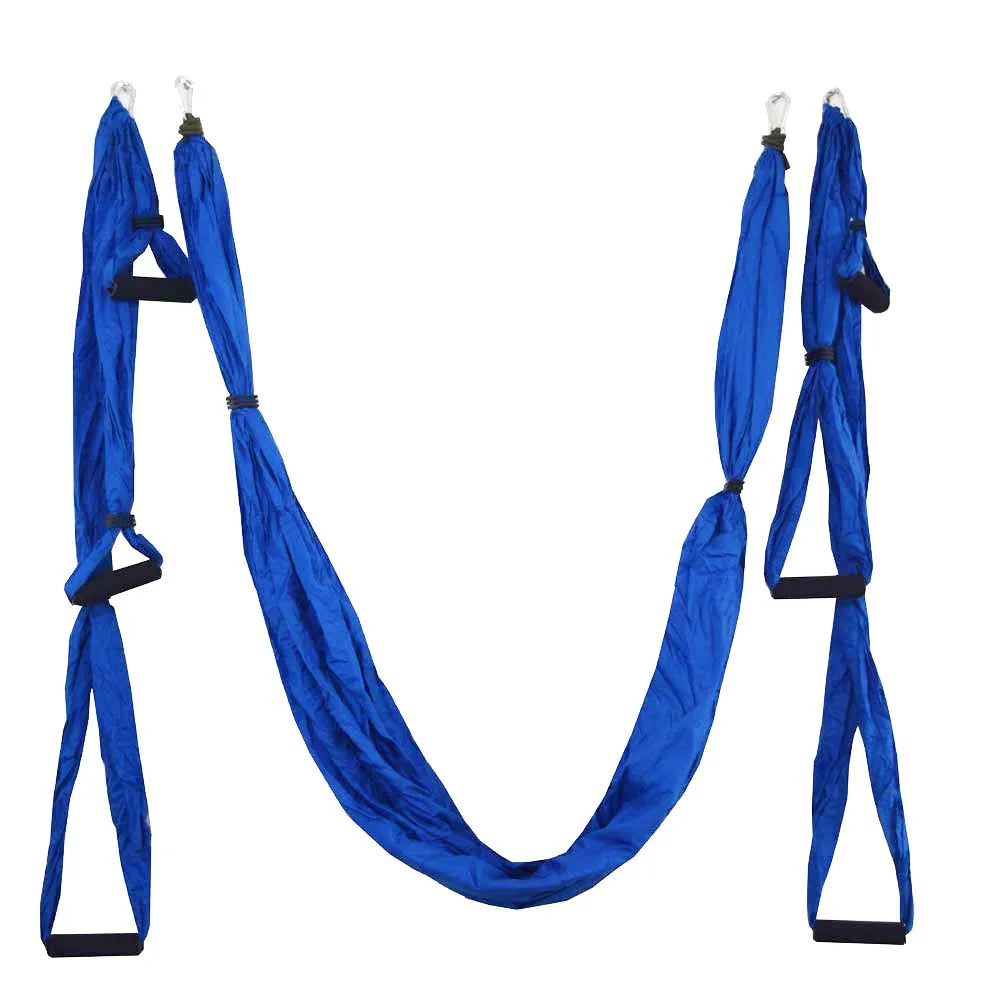
An aerial hammock is a suspended fabric support used in aerial yoga and related fitness activities. Depending on its configuration, it can assist with gentle forward folds, supported chest-opening movements, and selected mobility exercises.
The fabric may provide support while you explore different positions, but it does not automatically decompress the spine or guarantee greater flexibility. Appropriate technique, secure installation, and gradual progression remain essential.
Supported Positions for Assisted Spinal Mobility
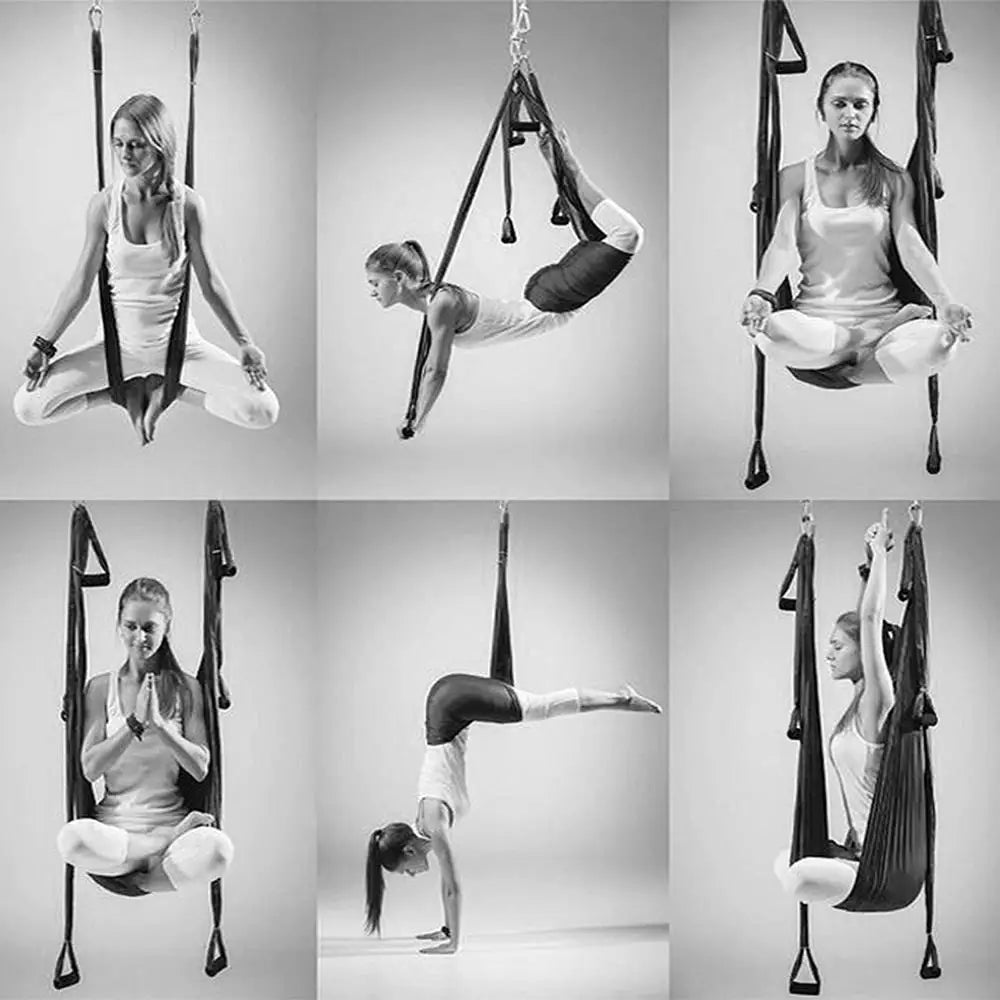
Some beginner-oriented aerial yoga movements use fabric support to explore comfortable body positioning.
- Supported forward fold: Use the fabric as a support point while maintaining a small, controlled forward hinge. Avoid allowing your body weight to pull you into an uncontrolled position.
- Supported chest opening: With appropriate instruction, position the fabric to provide gentle support around the upper body while maintaining a comfortable shoulder position.
- Controlled assisted mobility: Use the hammock to explore small, supported movements without forcing your spine into deeper ranges.
These movements should be learned with appropriate instruction and a properly installed system. Full inversions are not necessary to improve flexibility and are not recommended as a starting point for unsupervised beginners.
Aerial Hammock vs. Traditional Floor Stretching
| Comparison Factor | Floor Stretching | Aerial Hammock Stretching |
| Accessibility | Suitable for most home environments | Requires appropriate installation space |
| Equipment | Usually requires no specialized equipment | Requires a compatible hammock and suspension system |
| Movement Assistance | Uses the floor, cushions, or walls for support | Fabric provides an additional support point |
| Learning Curve | Generally straightforward for beginners | Requires equipment familiarity and technique instruction |
| Safety Considerations | Stable surfaces and comfortable positioning | Structural mounting, rated hardware, secure rigging, and equipment inspection |
| Flexibility Training | Supports conventional mobility and stretching | Offers optional assisted positioning and aerial movement variations |
Both approaches can be incorporated into a flexibility program. Floor stretching is the more accessible starting point, while an aerial hammock introduces additional equipment requirements and movement possibilities.
If you are interested in exploring supported stretching, you can learn more about this aerial yoga hammock with handles. Treat it as an optional fitness accessory rather than a requirement for improving spinal mobility.
Aerial Hammock Equipment and Installation Safety
Before using any aerial yoga hammock, check its stated load capacity, fabric specifications, attachment hardware, and installation requirements.
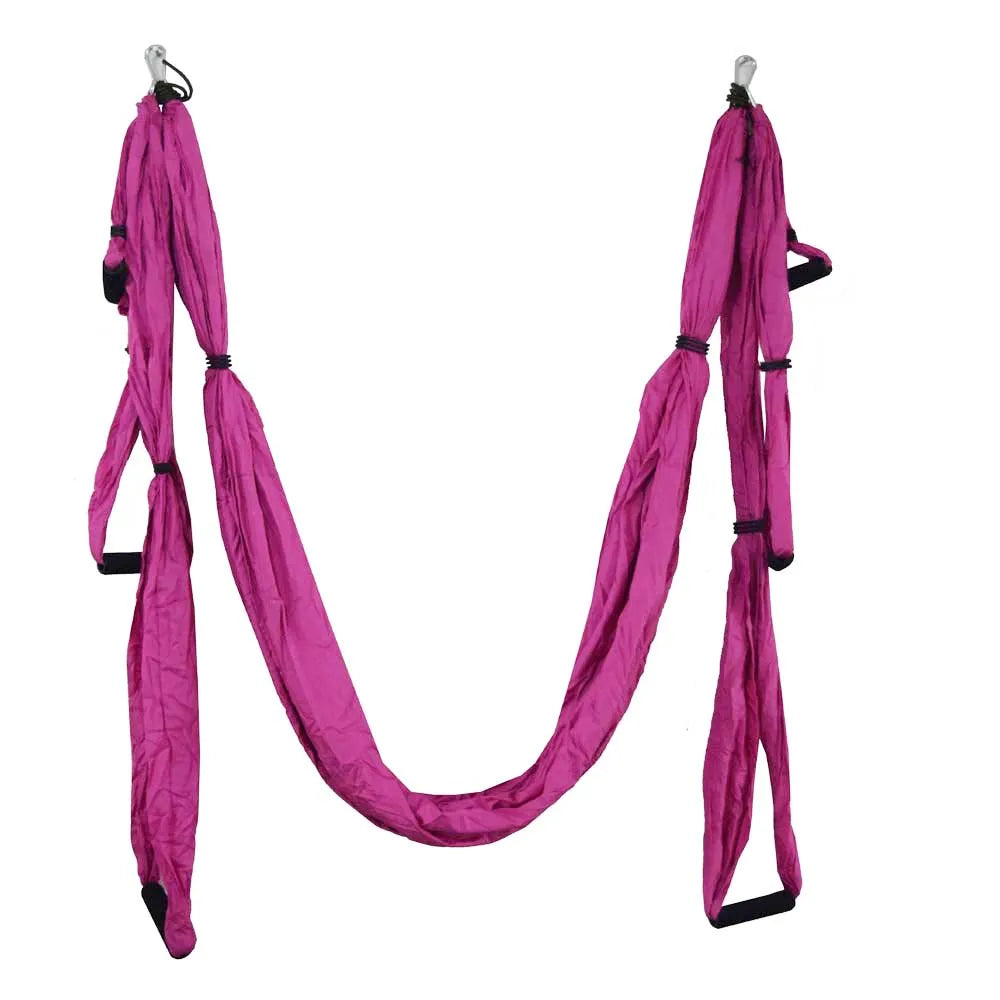
For example, the Aerial Yoga Hammock – 200KG Heavy-Duty Support Swing is specified with the following features:
- Fabric: Non-elastic 210T nylon parachute fabric.
- Main hammock size: 250 × 150 cm.
- Handle lengths: 30 cm, 85 cm, and 135 cm.
- Stated load capacity: Up to 200 kg (440 lbs).
- Approximate weight: 1.2 kg (2.65 lbs).
- Model: YGYB04SET.
- Package contents: Hammock, handles, four metal buckles, telescopic buckles, and carry bag.
The stated load capacity is a product specification, not independent proof that every installation is safe. The actual suitability of a suspension system depends on the mounting structure, compatible hardware, installation quality, dynamic loading, and manufacturer instructions.
Importantly, extension straps and ceiling hanging trays are not included and must be purchased separately. Confirm compatibility before acquiring additional components.
Never attach an aerial hammock to an improvised ceiling point, ordinary hook, unsupported beam, or mounting surface that has not been assessed for the intended loads. Use a structurally suitable installation point, compatible rated hardware, and qualified installation assistance where appropriate. Inspect fabric, stitching, buckles, and attachment components before each session.
For readers researching home aerial fitness equipment, the Lifestyle collection provides another place to explore related home-use accessories.
If you want to explore this type of equipment, the 200KG aerial yoga hammock offers non-elastic nylon fabric, multiple handle lengths, and a portable carry bag. Always verify that the complete suspension setup is suitable for your ceiling or support structure before use.
Is Aerial Hammock Stretching Right for Beginners?
Beginners can explore aerial yoga with appropriate instruction, suitable equipment, and a properly installed suspension system. However, learning how to enter and exit supported positions safely is essential before attempting more challenging movements.
Start with basic fabric familiarization and supported positions. Avoid independent inversions, complex wraps, and movements that place your body weight into unfamiliar attachment configurations.
If you have a recent injury, spinal condition, balance difficulty, or other health concern that could affect your ability to use suspended equipment safely, seek professional guidance first.
Most importantly, remember that a hammock is optional. A consistent 10-15-minute floor-based stretching routine can be a practical starting point for anyone who wants to improve everyday mobility.
How to Measure Your Back Flexibility Progress
Tracking your progress can help you understand which exercises feel beneficial and whether your routine needs adjustment. Rather than comparing your body with someone else's flexibility, use your own movement patterns as a reference.
Track Comfortable Range of Motion
Choose two or three familiar exercises, such as Cat-Cow, Open Book, and Seated Hamstring Stretch. Observe how comfortably you move through each position without forcing your body toward its end range.
Look for improvements in movement control, ease of positioning, and comfort rather than focusing exclusively on how far you can bend or twist.
Record Consistency and Movement Quality
Consider keeping a simple weekly record of:
- How many stretching sessions you complete.
- Which exercises you perform.
- How comfortably you move through each position.
- Whether you maintain relaxed breathing.
- Whether your movement feels more controlled over time.
- Whether any exercise produces discomfort or worsening symptoms.
A brief record is often enough to identify patterns and determine which movements deserve more attention.
When to Adjust Your Routine
If your back feels increasingly uncomfortable after stretching, reduce the intensity, shorten your holds, or temporarily remove the movements associated with the symptoms.
Consider replacing challenging floor exercises with supported seated or standing alternatives. If discomfort persists, becomes severe, or is accompanied by neurological symptoms, seek appropriate medical assessment instead of continuing to experiment with stretches.
Conclusion: Build Back Flexibility Through Consistent, Comfortable Movement
Improving back flexibility involves more than repeatedly stretching your lower back. A balanced approach addresses the upper back, thoracic spine, lumbar region, shoulders, hips, and hamstrings through a combination of controlled mobility exercises and comfortable static stretches.
The 15 back stretches for flexibility in this guide provide a practical starting point for building a home routine. Begin with the 12-minute sequence, practice three to five times per week, and gradually progress over two to four weeks as your body tolerates the movements.
Remember that comfortable movement, consistent practice, and good technique matter more than forcing deeper stretches. Stop exercises that cause sharp or worsening pain, and seek professional guidance when symptoms require individual assessment.
If you eventually want to experiment with supported mobility beyond conventional floor stretching, an aerial yoga hammock is an optional addition to your home fitness setup. Explore the Aerial Yoga Hammock – 200KG Heavy-Duty Support Swing as one possible equipment-based variation, while prioritizing proper installation and beginner instruction.
Start with simple stretches, build consistency, and allow your flexibility to develop gradually. A sustainable routine is more valuable than an ambitious session that pushes your body beyond its comfortable limits.
Pillar Article: Aerial Fitness Equipment: Complete Comparison & Buying Guide for Home Training