
Aerial Yoga Equipment: Complete Comparison & Buying Guide for Home Training
Choosing the right aerial fitness equipment involves more than finding a hammock or swing that looks comfortable. Your training goals, experience level, available ceiling height, installation conditions, fabric characteristics, and equipment specifications all influence which setup makes sense for your home or studio.
Popular options include aerial hammocks, yoga swings, aerial silks, aerial hoops, and freestanding aerial rigs. Each serves a different purpose. Some are designed primarily for supported stretching and recreational aerial yoga, while others accommodate advanced climbing, suspension, and performance movements.
This guide compares the main types of aerial fitness equipment, explains important material and load-rating terminology, and outlines what to check before purchasing. Most importantly, it distinguishes recreational aerial yoga products from specialized apparatus that require professional rigging and advanced instruction.
What Is Aerial Fitness Equipment? Understanding the Main Equipment Types
Aerial fitness equipment includes suspended fabric apparatus, rigid training structures, mounting systems, and accessories used for aerial yoga, flexibility training, strength development, and aerial performance. The appropriate equipment depends on the movements you intend to practice and the structural support available.
Aerial Hammocks: An Accessible Option for Aerial Yoga and Suspension Training
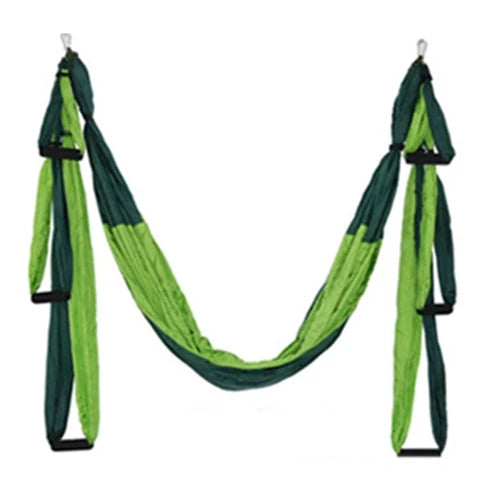
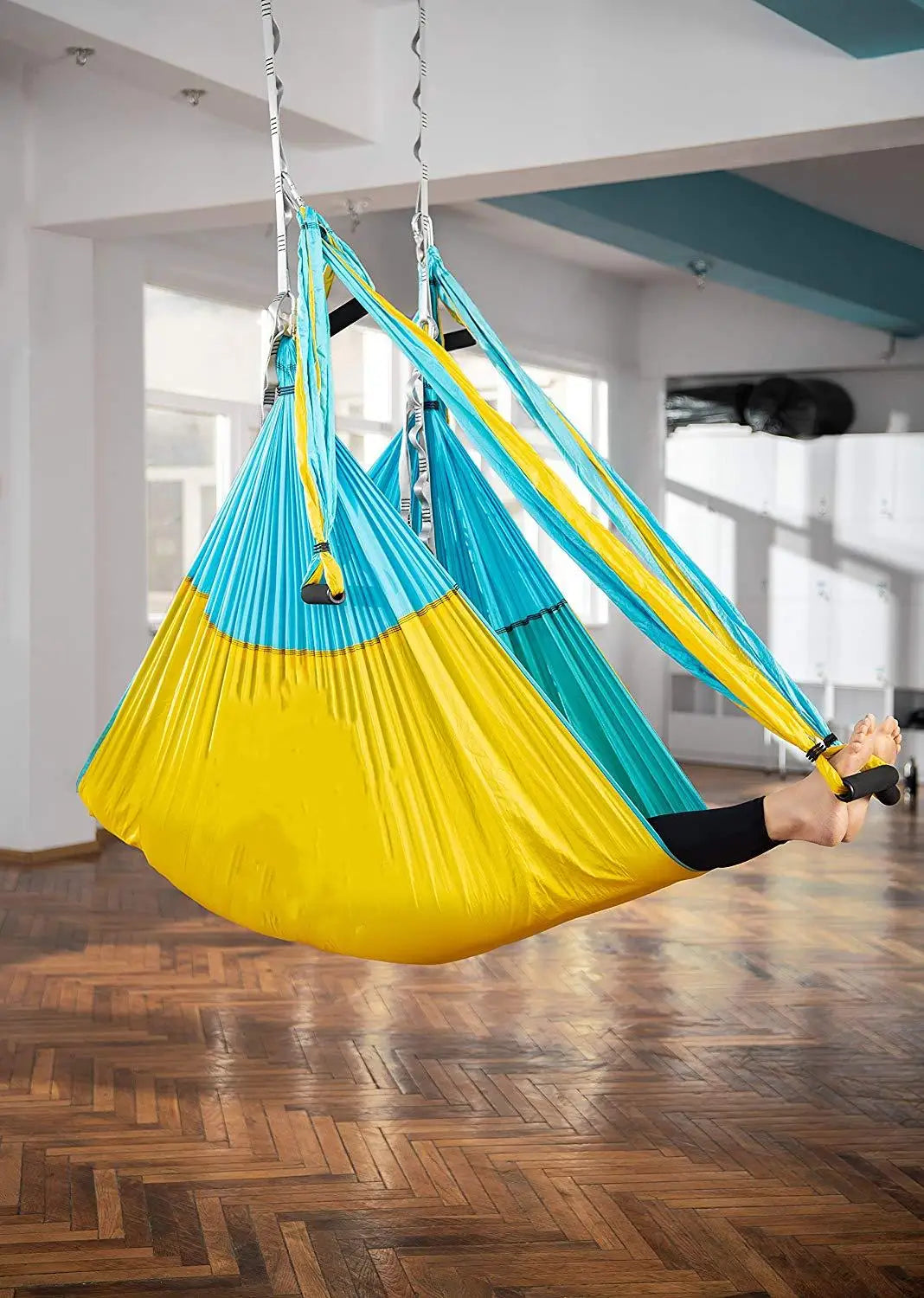
An aerial hammock is generally a length of fabric arranged in a suspended loop or sling configuration. It supports seated positions, gentle inversions, assisted stretching, balance exercises, and selected suspension movements.
For beginners, an aerial hammock can introduce a different approach to traditional yoga by allowing the fabric to support part of the body's weight during selected movements.
Typical applications include:
- Supported hip-opening and flexibility exercises.
- Gentle back and shoulder stretching.
- Balance and body-awareness exercises.
- Supported relaxation and swing-chair movements.
- Beginner aerial yoga sequences under appropriate instruction.
However, not every recreational hammock is suitable for advanced aerial performance. Fabric specifications, construction, connectors, installation, and intended use must all be verified.
Aerial Yoga Swings: Support, Handles, and Inversion Practice
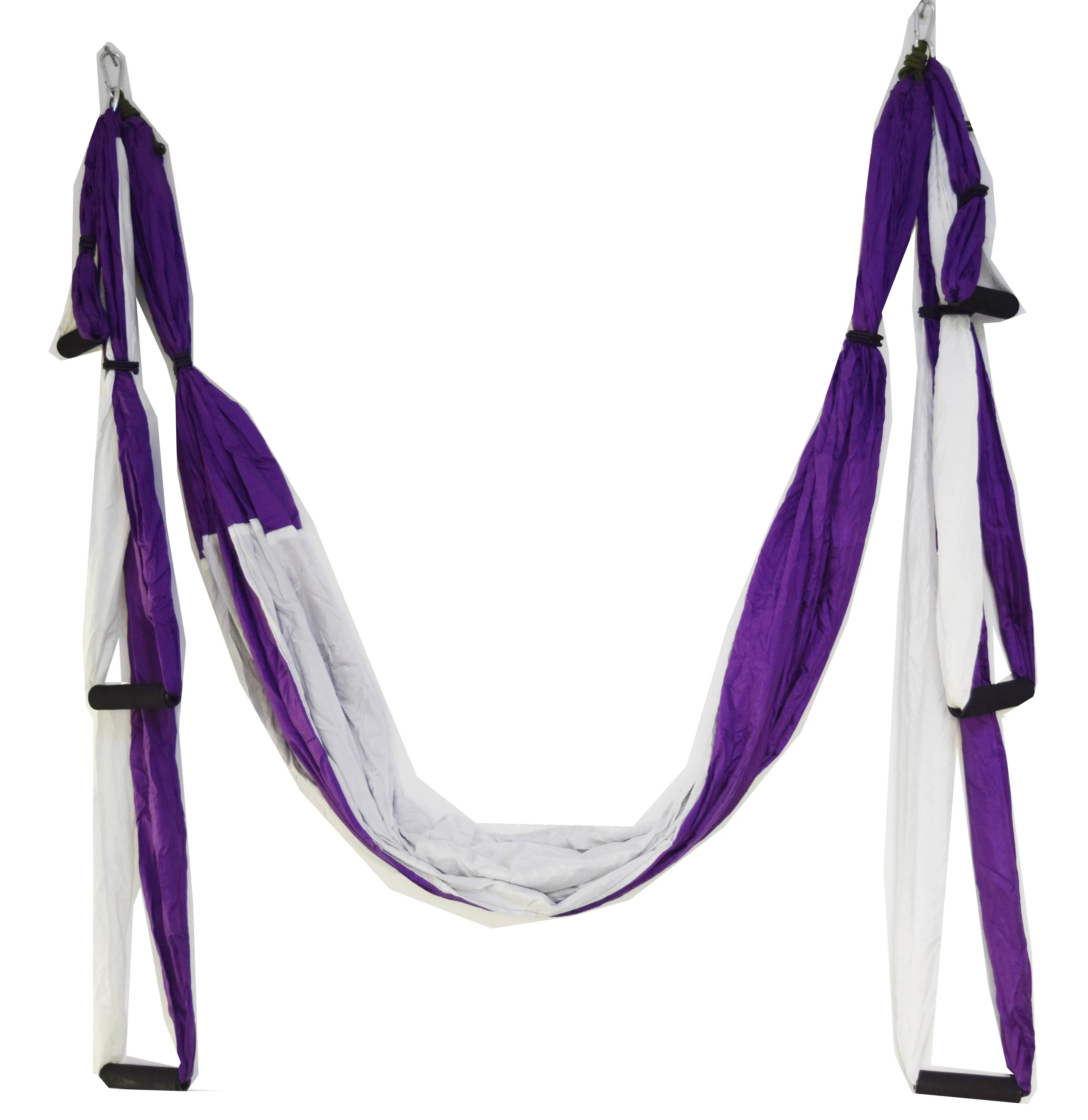
An aerial yoga swing is commonly designed with fabric support and additional handles or attachment points. Handle configurations can provide different grip positions for stretching, supported movement, and selected inversion exercises.
Unlike a simple fabric sling, some yoga swing systems include multiple handle lengths that expand positioning options. Buyers should check whether the handles, connectors, extension straps, and mounting accessories are included.
Aerial Silks: Fabric Apparatus for Advanced Aerial Training
Aerial silks use long lengths of specialized fabric suspended from an engineered rigging point. Practitioners learn climbing, wrapping, locking, transitions, and eventually more advanced movements.
Silks training requires specialized instruction because fabric management, grip technique, body positioning, and dynamic loading introduce risks that are different from recreational aerial yoga.
Do not assume that an ordinary aerial yoga hammock can replace equipment specifically designed and documented for aerial silks.
Aerial Hoops (Lyra): Circular Apparatus for Aerial Performance
An aerial hoop, also known as a Lyra, is a rigid circular apparatus suspended from a suitable rigging system. It supports static poses, transitions, strength exercises, and performance movements.
Hoops require apparatus-specific hardware and installation. Their rigid construction and concentrated loading characteristics make them fundamentally different from fabric hammocks.
Portable Aerial Rigs: Freestanding Training Solutions
A portable aerial rig is a freestanding structure designed to suspend compatible aerial apparatus without relying on a permanent ceiling attachment. Depending on its engineering and manufacturer specifications, it may be suitable for selected indoor or outdoor training environments.
Before purchasing, evaluate its footprint, assembly requirements, transportability, structural rating, compatible apparatus, ground conditions, and manufacturer-approved configurations.
Aerial Fitness Equipment Comparison: Which Setup Should You Buy?
The best aerial fitness equipment depends on what you want to practice rather than which apparatus offers the most features. An aerial hammock may suit supported stretching, while aerial silks and hoops serve more specialized training purposes.
Aerial Hammock vs. Yoga Swing vs. Aerial Silks
An aerial hammock generally offers a supportive fabric configuration for recreational aerial yoga. A yoga swing may add handles for different grips and assisted positions. Aerial silks are intended for a more technical training discipline involving climbing, wrapping, and specialized movement skills.
When comparing these options, consider how much fabric support you need, whether handles are important, and whether your intended movements require specialized training equipment.
Aerial Hoop vs. Aerial Hammock
The main difference is construction. Aerial hoops use a rigid circular frame, whereas aerial hammocks use flexible fabric. A hammock supports a wider range of assisted stretching and seated positions, while a hoop is designed for rigid-apparatus poses and transitions.
Neither should be treated as interchangeable equipment. Each requires compatible suspension hardware and suitable structural installation.
Permanent Ceiling Mount vs. Portable Aerial Rig
Permanent mounting can provide a convenient dedicated training location when the building structure and installation have been professionally assessed. A portable rig can offer greater flexibility for people who cannot permanently modify a property.
However, portable does not mean automatically safer or easier. Freestanding structures still require documented ratings, correct assembly, appropriate ground conditions, and adequate training clearance.
Quick Comparison Matrix: Equipment Features and Buying Considerations
| Equipment | Primary Use | Skill Level | Portability | Installation Considerations |
| Aerial hammock | Supported yoga and stretching | Beginner to advanced, depending on apparatus and training | Fabric may be portable | Verified suspension system required |
| Yoga swing | Assisted stretching and supported positions | Beginner to intermediate | Often lightweight | Compatible mounting and connectors required |
| Aerial silks | Climbing and aerial performance | Intermediate to advanced | Fabric is portable | Specialized rigging and instruction required |
| Aerial hoop | Rigid-apparatus training | Intermediate to advanced | Less convenient to transport | Apparatus-specific rigging required |
| Portable aerial rig | Freestanding aerial training | Depends on apparatus | Varies by design | Manufacturer-approved assembly and ground support |
| Ceiling mounting system | Permanent apparatus suspension | Depends on apparatus | Not portable | Structural assessment and professional installation |
| Accessories | Connecting and supporting equipment | Depends on application | Usually portable | Documented ratings and compatibility required |
For recreational aerial yoga and supported stretching, explore available body care and fitness-related equipment alongside dedicated aerial products. Select equipment according to its documented intended application rather than assuming that similar-looking suspension systems are interchangeable.
How to Choose Aerial Fitness Equipment: Materials, Construction, and Quality
Fabric and hardware construction influence the feel, handling, maintenance requirements, and intended applications of aerial equipment. A product's material description alone does not establish its suitability for every aerial movement.
Nylon vs. Polyester Aerial Fabric
Nylon and polyester are both used in textile applications, but their performance characteristics depend on the specific fabric construction, weave, thickness, finishing, and manufacturer specifications.
Nylon: Nylon fabrics are commonly selected for their lightweight construction and flexibility. Different nylon weaves can have different stretch characteristics, abrasion resistance, and surface textures.
Polyester: Polyester fabrics are commonly valued for dimensional stability and resistance to some environmental factors. Their suitability still depends on construction and documented application requirements.
Do not assume that all nylon stretches or that all polyester fabrics are suitable for aerial suspension. Check the exact material and intended-use documentation.
Fabric Width, Length, and Stretch Characteristics
Fabric dimensions influence how an aerial apparatus can be configured and how much material is available for supported positions. Wider fabric may offer more surface area for certain hammock configurations, while length affects the possible hanging arrangement.
Stretch characteristics also matter. Non-elastic fabric provides a firmer feel, whereas elastic or more extensible fabric changes how the apparatus responds during movement.
For home aerial yoga, compare:
- Fabric width and overall length.
- Elastic or non-elastic construction.
- Manufacturer-stated intended applications.
- Handle placement and attachment configuration.
- Compatibility with the intended suspension system.
Stitching Quality and Fabric Construction
Inspect stitching consistency, reinforced connection areas, fabric edges, and visible signs of manufacturing defects. Aerial equipment should come with clear product identification and manufacturer guidance on inspection and maintenance.
Look for cuts, pulled threads, inconsistent seams, abrasion, discoloration, and other changes that may indicate deterioration. Do not use questionable equipment until its condition has been assessed according to manufacturer guidance.
Hardware Materials: Steel, Aluminum, and Corrosion Resistance
Metal components can include carabiners, buckles, swivels, connectors, and mounting hardware. Material selection affects strength characteristics, corrosion resistance, weight, and environmental suitability.
Stainless steel and appropriately specified aluminum are common materials in equipment hardware, but material names alone do not establish a safe working capacity.
Always check:
- Manufacturer identification and documented specifications.
- Intended loading direction and application.
- Locking mechanisms and connector dimensions.
- Corrosion, deformation, and visible damage.
- Compatibility with the complete suspension system.
Aerial Equipment Weight Capacity: WLL, Safe Working Load, and Breaking Strength Explained
Load specifications are among the most important details to evaluate when buying aerial fitness equipment. A number displayed in a product description should never be interpreted as proof that the entire installation is safe for every movement.
What Is Working Load Limit (WLL)?
Working Load Limit (WLL) is the maximum load specified by a manufacturer for a particular component under defined conditions. It is an important purchasing specification, but its meaning depends on the manufacturer's documentation and the applicable equipment standards.
A WLL should be evaluated alongside the component's intended application, loading direction, installation configuration, and operating conditions.
Safe Working Load vs. Breaking Strength
Breaking strength describes the load at which a component fails under specified test conditions. It is not the same as a working load limit.
Safe working load is a term used in equipment contexts to describe an allowable operational load. Its relationship to WLL and other manufacturer-defined ratings should be confirmed from the relevant documentation rather than assumed.
Important distinction: Breaking strength is not a usable training capacity. Never select aerial equipment by treating its ultimate breaking strength as an acceptable operating load.
Why Dynamic Loading Matters in Aerial Training
Suspended equipment can experience forces beyond a person's static body weight. Swinging, sudden movements, transitions, changes in direction, and other dynamic actions can increase loading on fabric, connectors, anchors, and supporting structures.
Consequently, a stated capacity should not be interpreted as permission to perform any movement below that body-weight threshold.
Advanced aerial movements, drops, and dynamic performance training require equipment specifically designed for those applications and appropriate professional instruction.
How to Verify Manufacturer Load Specifications
Before buying, request or locate documentation that identifies:
- The exact product model and component identification.
- Manufacturer-documented WLL or other applicable ratings.
- Whether the rating applies to an individual component or the complete assembly.
- Applicable testing and operating conditions.
- Intended training applications and prohibited uses.
- Inspection, maintenance, and replacement requirements.
Do not rely exclusively on marketplace descriptions, promotional graphics, or unexplained weight figures.
Why Every Component Must Be Compatible
An aerial setup is a complete system rather than a single product. Fabric, carabiners, swivels, straps, buckles, mounting plates, anchors, and the supporting structure must work together in an appropriate configuration.
A component with an unsuitable rating, incompatible dimensions, or an incorrect loading orientation can compromise the complete installation.
When the manufacturer does not provide sufficient information about compatibility, seek clarification before using the equipment.
How to Install Aerial Fitness Equipment at Home Safely
Home installation requires more attention than simply finding a convenient ceiling location. Aerial equipment transfers loads into the building structure, making proper structural assessment and installation essential.
Identify Suitable Structural Ceiling Support
Drywall and decorative ceiling finishes are not structural attachment points. Aerial equipment requires a suitable supporting structure designed and assessed for the intended loads.
Ceiling joists, beams, and other structural members must be correctly identified and evaluated. Their presence alone does not prove that they can support dynamic aerial training loads.
Consult a qualified structural professional or aerial rigging specialist before selecting an attachment point.
Concrete Ceilings and Specialized Anchoring Requirements
Concrete installations require assessment of the actual substrate, concrete condition, anchor type, embedment requirements, installation conditions, and intended loading.
Not all concrete ceilings have identical structural properties. Selecting a generic expansion anchor or ordinary fastener based only on appearance is not an appropriate substitute for professional assessment.
Why Ordinary Ceiling Hooks and Unverified Anchors Are Unsafe
Decorative hooks, ordinary hardware-store fasteners, and improvised mounting points are not automatically suitable for aerial fitness equipment.
Even a metal hook that appears sturdy may lack the documented specifications needed for dynamic suspension applications. Avoid installations based on visual strength or unsupported online demonstrations.
Professional Rigging Consultation and Installation Verification
Professional assistance is particularly important for permanent installations, advanced aerial apparatus, and dynamic movements.
A qualified professional should evaluate the supporting structure, mounting hardware, load direction, component compatibility, and intended training activity.
Clearance Space, Ceiling Height, and Training Area
Before setting up an aerial training area, consider:
- Available ceiling height and apparatus dimensions.
- Clearance around the suspended fabric and moving body.
- Nearby furniture, walls, windows, and sharp edges.
- Suitable floor protection and protective mats.
- Access for equipment inspection and maintenance.
- Manufacturer-specific installation and use requirements.
Never begin suspended exercise simply because the apparatus has been attached. Installation must be verified before training.
Permanent Aerial Mounting vs. Portable Aerial Rigs: Which Is Better for Home Use?
The choice between permanent mounting and a freestanding rig depends on property restrictions, available space, intended apparatus, and installation requirements.
Advantages and Limitations of Permanent Ceiling Mounting
Permanent mounting can be convenient for people with a dedicated home training space and a suitable structure.
Advantages:
- Does not require storing a large freestanding frame.
- Can provide a consistent training location.
- May reduce equipment setup time after professional installation.
Limitations:
- Requires structural assessment and suitable installation.
- May involve professional installation costs.
- Can be unsuitable for rental properties.
- Changes to the property may require permission.
Advantages and Limitations of Freestanding Aerial Rigs
Portable aerial rigs provide an alternative when permanent mounting is unsuitable, but they require sufficient space and careful attention to manufacturer specifications.
Advantages:
- Can be relocated when the design permits.
- May suit properties where permanent modifications are restricted.
- Can support selected training arrangements without ceiling installation.
Limitations:
- May require substantial floor space.
- Can be heavy or complicated to assemble.
- Must be used on suitable ground or flooring.
- Still requires documented capacity and compatible apparatus.
Choosing Between Indoor, Outdoor, and Travel Setups
Indoor equipment should be evaluated for ceiling clearance, floor protection, structural installation, and available space. Outdoor equipment additionally requires consideration of ground conditions, weather, moisture, sunlight, and environmental exposure.
Travel-friendly fabric does not automatically mean that the complete suspension system is suitable for outdoor use. Follow the manufacturer's approved configurations.
What to Check Before Purchasing a Portable Aerial Rig
- Documented load ratings for the complete rig.
- Compatible aerial apparatus and connectors.
- Assembly instructions and installation requirements.
- Required floor space and ceiling clearance.
- Inspection and maintenance documentation.
- Warranty and replacement component availability.
If you are comparing recreational suspension equipment for home use, review the available lifestyle equipment collection for relevant product options. Always verify that the actual product supports your intended installation and training application.
Essential Aerial Fitness Accessories: What Do You Actually Need?
Accessories connect and support aerial apparatus, but buying additional hardware does not automatically make a setup safer. Every component must be appropriate for the intended load, configuration, and manufacturer requirements.
Load-Rated Carabiners and Connectors
Carabiners are connectors used in certain suspension systems. Buyers should check manufacturer documentation, locking mechanisms, material, rating, dimensions, and permitted loading orientation.
A connector designed for a different application should not be substituted simply because it fits physically.
Swivels, Daisy Chains, and Extension Straps
Swivels allow controlled rotation in compatible systems. Daisy chains and extension straps provide connection or length-adjustment functions in selected rigging configurations.
These components require documented ratings and manufacturer-approved use. Avoid combining unrelated accessories without verifying compatibility.
Rigging Plates and Mounting Hardware
Rigging plates can organize multiple connection points, while mounting hardware connects an apparatus to a suitable structural support. Their selection depends on the intended system and the installation requirements.
Structural mounting hardware should be specified and installed by qualified professionals when required.
Protective Mats and Training Accessories
Protective mats provide floor cushioning and can be a useful addition to a suitable training area. Their dimensions and placement should match the apparatus configuration and the manufacturer's guidance.
Other supplementary accessories may include storage bags and equipment inspection supplies. None replaces appropriate supervision or correct installation.
Aerial Equipment Compatibility Checklist
Before purchasing accessories, verify the following:
- Every component has identifiable manufacturer documentation.
- Ratings are appropriate for the intended application.
- Connectors have compatible dimensions and loading orientations.
- Fabric, handles, straps, and buckles are approved for the configuration.
- Mounting hardware matches the professionally assessed support structure.
- There are no signs of corrosion, deformation, or fabric deterioration.
- Inspection and replacement instructions are available.
For additional equipment comparisons, explore the relevant body care and health equipment range while keeping dedicated aerial rigging requirements separate from general fitness accessories.
Best Aerial Fitness Equipment for Different Home Training Goals
Rather than choosing equipment based on a universal ranking, match the apparatus to your actual training goals and experience.
For Beginners Starting Aerial Yoga at Home
Beginners interested in supported yoga and stretching may find an appropriately specified aerial hammock or recreational yoga swing a practical starting point.
Prioritize a clearly identified product, understandable specifications, suitable fabric construction, compatible accessories, and verified installation requirements.
Start with instructor-guided foundational movements rather than attempting unsupported inversions or advanced transitions independently.
For Flexibility and Supported Stretching
An aerial hammock can provide assistance during selected stretching movements. It may help practitioners explore different body positions, including supported hip-opening exercises, shoulder mobility work, and gentle back stretching.
The fabric should be appropriate for the intended application, and users should avoid forcing joints into unfamiliar ranges of motion.
For Advanced Aerial Fitness and Performance Training
People interested in climbing, drops, advanced silks sequences, or hoop performance need specialized apparatus and professional training.
A recreational yoga swing should not be assumed to support these activities. Seek apparatus-specific documentation, qualified installation, and instructor supervision.
For Renters and People with Limited Space
Renters should consider property restrictions before planning permanent installation. A portable aerial rig may be an alternative where adequate floor space and an appropriate configuration are available.
However, a lightweight hammock is not a complete installation solution. The suspension point and every connecting component still require verification.
For Dedicated Home Studios and Professional Instructors
Dedicated studios require a more extensive equipment evaluation process. Multiple apparatus, users, training activities, and installation locations introduce additional planning requirements.
Consider professional structural assessment, documented equipment ratings, apparatus-specific inspection procedures, replacement policies, and a maintenance schedule.
A Recreational Home Option: Aerial Yoga Hammock with Non-Elastic Fabric
For shoppers interested specifically in supported aerial yoga and home stretching, the Aerial Yoga Hammock – 200KG Heavy-Duty Support Swing offers a clearly described recreational hammock configuration.
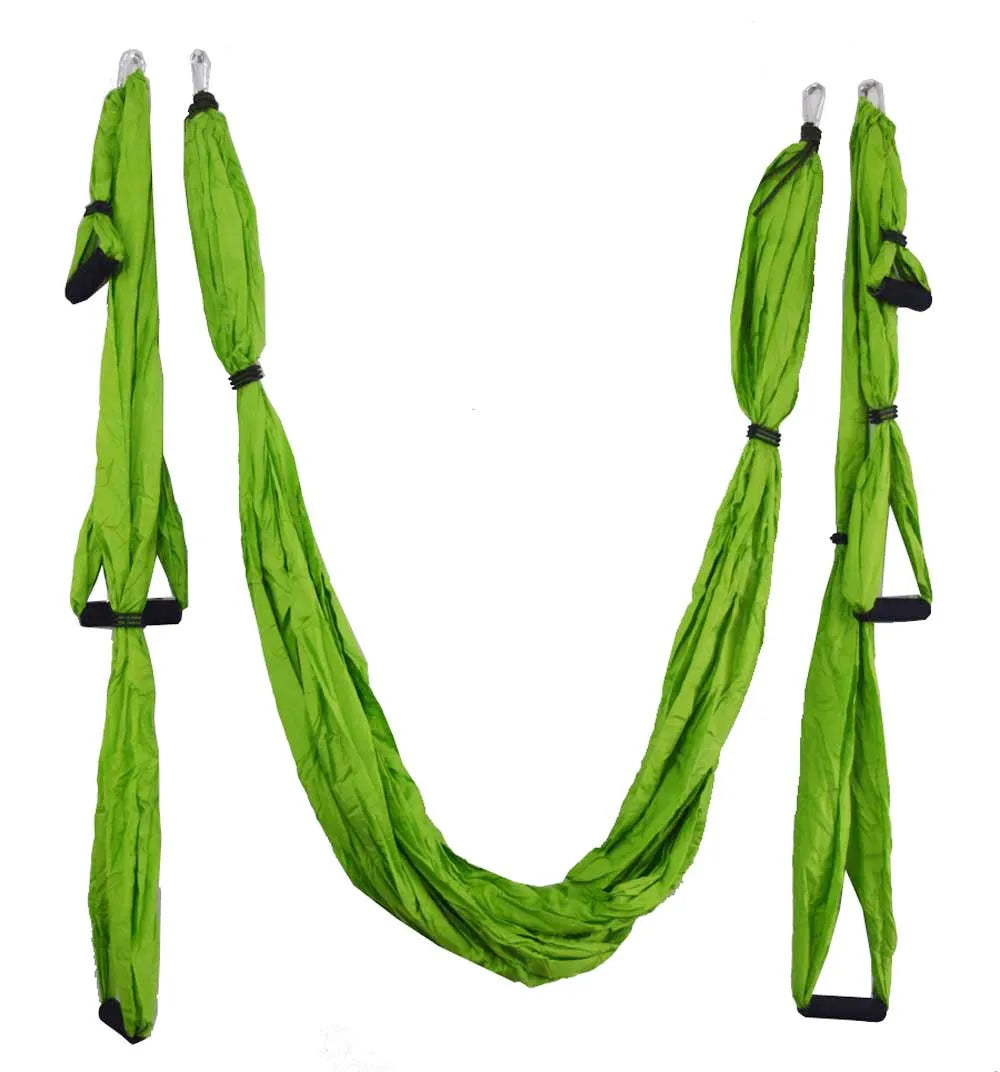
Its listed specifications include:
- Material: 210T non-elastic nylon parachute fabric.
- Main hammock size: 250 × 150 cm.
- Handle lengths: 30 cm, 85 cm, and 135 cm.
- Stated load capacity: Up to 200 kg (440 lbs).
- Weight: Approximately 1.2 kg (2.65 lbs).
- Model: YGYB04SET.
- Colors: 20 options.
The listed package includes the hammock, handles, four metal buckles, telescopic buckles, and a carry bag.
Important purchasing consideration: Extension straps and ceiling hanging trays are not included and must be purchased separately. The stated 200 kg capacity is a product-description specification, not independent verification of the complete installation's safe working load. Confirm the manufacturer's technical documentation, component ratings, intended use, and mounting requirements before use.
View the aerial yoga hammock specifications, included accessories, and available colors to determine whether its configuration matches your recreational training needs.
How to Evaluate Aerial Equipment Before Buying: A Product Specification Checklist
Comparing product specifications helps prevent purchasing equipment that looks suitable but lacks the documentation or accessories required for your intended setup.
Compare Documented Product Specifications
Evaluate each product using the following criteria:
- Product model and intended application.
- Fabric material, dimensions, and construction.
- Stitching quality and reinforced areas.
- Hardware materials and component identification.
- Manufacturer-documented load ratings.
- Installation and inspection instructions.
Check Included Accessories and Compatibility
Do not assume that all aerial equipment kits include mounting hardware, extension straps, carabiners, or ceiling attachments.
Compare the actual package contents against the accessories needed for the installation. Verify that separately purchased components are approved for the intended configuration.
Review Installation Instructions and Manufacturer Support
Reliable purchasing decisions depend on more than attractive product photographs. Look for clear instructions, product identification, inspection guidance, technical documentation, and access to manufacturer support.
Compare Warranty, Returns, and Replacement Policies
Review warranty coverage, return eligibility, shipping conditions, replacement component availability, and after-sales support before purchasing.
These details are particularly important for equipment that requires regular inspection and may need component replacement over time.
Aerial Equipment Purchase Comparison Matrix
| Purchase Criteria | What to Verify | Why It Matters |
| Material | Exact fabric type and construction | Helps assess suitability and handling characteristics |
| Dimensions | Fabric width, length, and handle measurements | Determines configuration and space requirements |
| Load documentation | WLL and manufacturer-defined ratings | Clarifies the documented operating limitations |
| Included accessories | Handles, buckles, connectors, straps, and bag | Prevents assumptions about package contents |
| Installation | Mounting instructions and structural requirements | Helps determine whether professional installation is needed |
| Warranty | Coverage and exclusions | Clarifies manufacturer support |
| Returns | Return conditions and eligibility | Helps evaluate purchasing risk |
| Replacement parts | Availability of compatible components | Supports ongoing equipment maintenance |
For the featured hammock, the available product information identifies its fabric, dimensions, stated capacity, model, and included package contents. Independent test results, detailed WLL documentation, warranty terms, and return conditions are not established by those specifications alone. Confirm these details with the seller before relying on the product for a particular installation or activity.
Review the complete aerial hammock product details and compare the disclosed specifications with other equipment you are considering.
Aerial Fitness Equipment Maintenance: Inspection, Cleaning, and Storage
Regular maintenance is an essential part of aerial equipment ownership. Fabric and metal components should be inspected according to manufacturer instructions, with particular attention to damage that could affect their intended function.
How to Inspect Aerial Fabrics Before Each Training Session
Inspect the entire fabric length and all connection areas for:
- Cuts, tears, or pulled threads.
- Damaged or inconsistent stitching.
- Visible abrasion or thinning.
- Discoloration or chemical contamination.
- Unexpected deformation or other deterioration.
Do not continue using fabric with unexplained damage or questionable integrity. Follow the manufacturer's inspection and replacement guidance.
Inspecting Carabiners, Swivels, and Metal Hardware
Metal components should be checked for cracks, corrosion, deformation, excessive wear, and gate-function problems.
Verify that locking mechanisms operate correctly and that components have not been modified or used outside their documented applications.
Cleaning and Storing Aerial Equipment
Follow manufacturer-approved cleaning instructions for the specific fabric and hardware. Avoid unapproved chemicals, excessive heat, and cleaning processes that may damage textile fibers or component finishes.
Allow equipment to dry as instructed before storage. Keep fabric away from prolonged direct sunlight, sharp objects, moisture, and chemical exposure where these conditions are prohibited by the manufacturer.
When Should Aerial Equipment Be Replaced?
Replacement decisions should depend on manufacturer guidance, inspection findings, equipment history, and exposure to abnormal loading or environmental damage.
There is no universal replacement interval suitable for every aerial hammock, connector, or rigging component. If equipment has experienced an unexpected load, visible damage, or an incident that may affect its integrity, remove it from use pending appropriate assessment.
Final Buying Recommendations: Which Aerial Fitness Equipment Should You Choose?
The best aerial fitness equipment is the apparatus that matches your intended movements, experience, installation conditions, and available space.
- For beginner aerial yoga: Consider a recreational aerial hammock or yoga swing with clearly documented specifications and suitable installation support.
- For assisted stretching: Prioritize comfortable fabric configurations and equipment intended for supported recreational movements.
- For advanced aerial performance: Choose specialized silks or hoop apparatus with professional rigging and qualified instruction.
- For rental properties: Evaluate properly engineered portable rigs rather than improvising ceiling attachments.
- For dedicated studios: Prioritize documented ratings, professional installation, inspection procedures, and long-term equipment support.
Before placing an order, confirm the exact product specifications, manufacturer documentation, compatible connectors, structural requirements, included accessories, warranty, and replacement policies.
For shoppers exploring recreational aerial yoga at home, the Aerial Yoga Hammock – 200KG Heavy-Duty Support Swing is one option to evaluate. Its non-elastic 210T nylon construction, 250 × 150 cm hammock dimensions, multiple handle lengths, and carry bag make its listed configuration straightforward to compare against your training requirements.
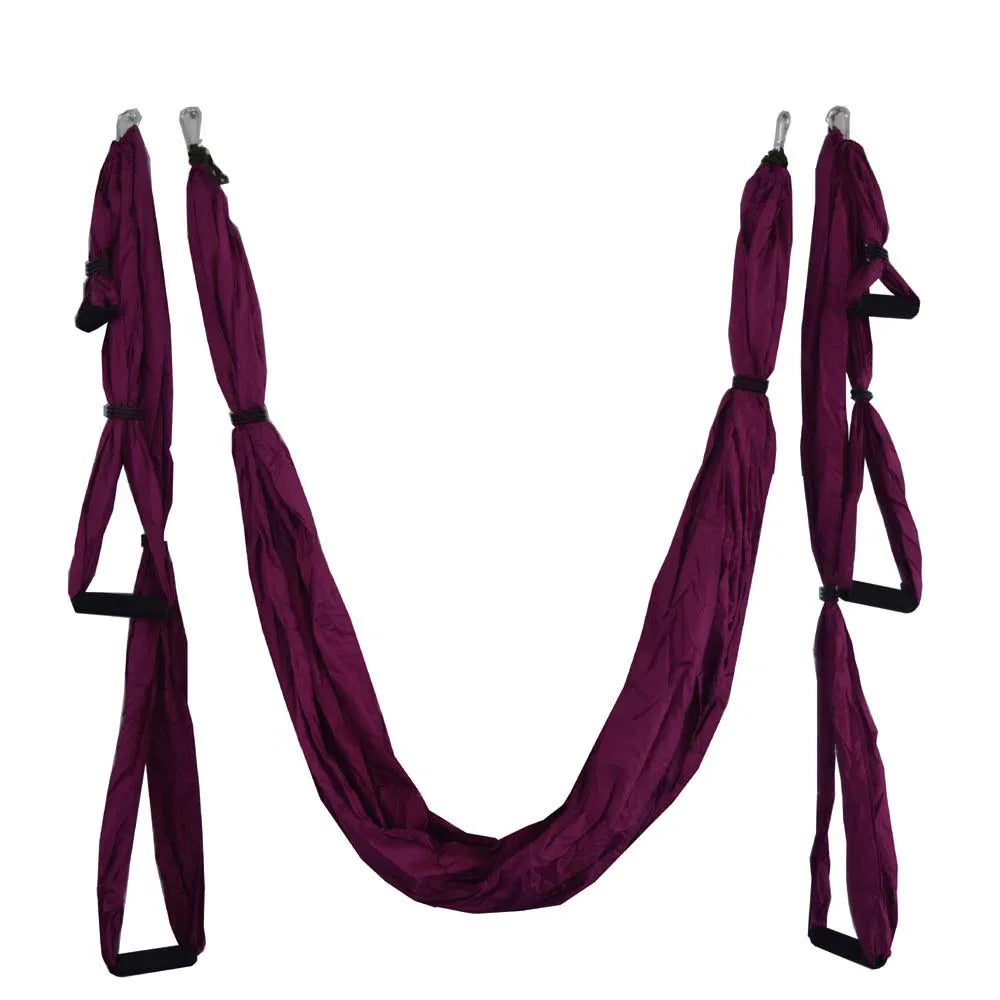
Remember that extension straps and ceiling hanging trays are sold separately. The stated 200 kg capacity should not be treated as an independently verified working load limit for a complete suspension installation. Confirm all required technical details and installation conditions before use.
Ultimately, a suitable aerial setup combines appropriate apparatus, compatible hardware, verified structural support, adequate clearance, and consistent maintenance. Take the time to compare these factors before choosing equipment so your home training space is practical, appropriate for your experience, and aligned with the manufacturer's documented instructions.
Related Articles:
- Yoga Swing Aerial: Compare Features, Handles & Weight Limits
- 12 Hip Opening Yoga Stretches for Tight Hips: Beginner-Friendly Guide
- 15 Back Stretches for Flexibility: A Beginner-Friendly Guide
- Anti Gravity Yoga Explained: 10 Beginner Poses, Benefits and Safety Tips
- Inversion Yoga Poses: 15 Exercises from Beginner to Advanced
- Hammock Weight Limits: Lbs, Kg, and Safe Capacity Explained
- Best Aerial Yoga Equipment in 2026: Complete Buying Guide for Home Practice
- Aerial Yoga Hammock for Home: How to Choose, Install & Use Safely
- Aerial Hammock for Beginners: 8 Poses to Build Confidence Safely