
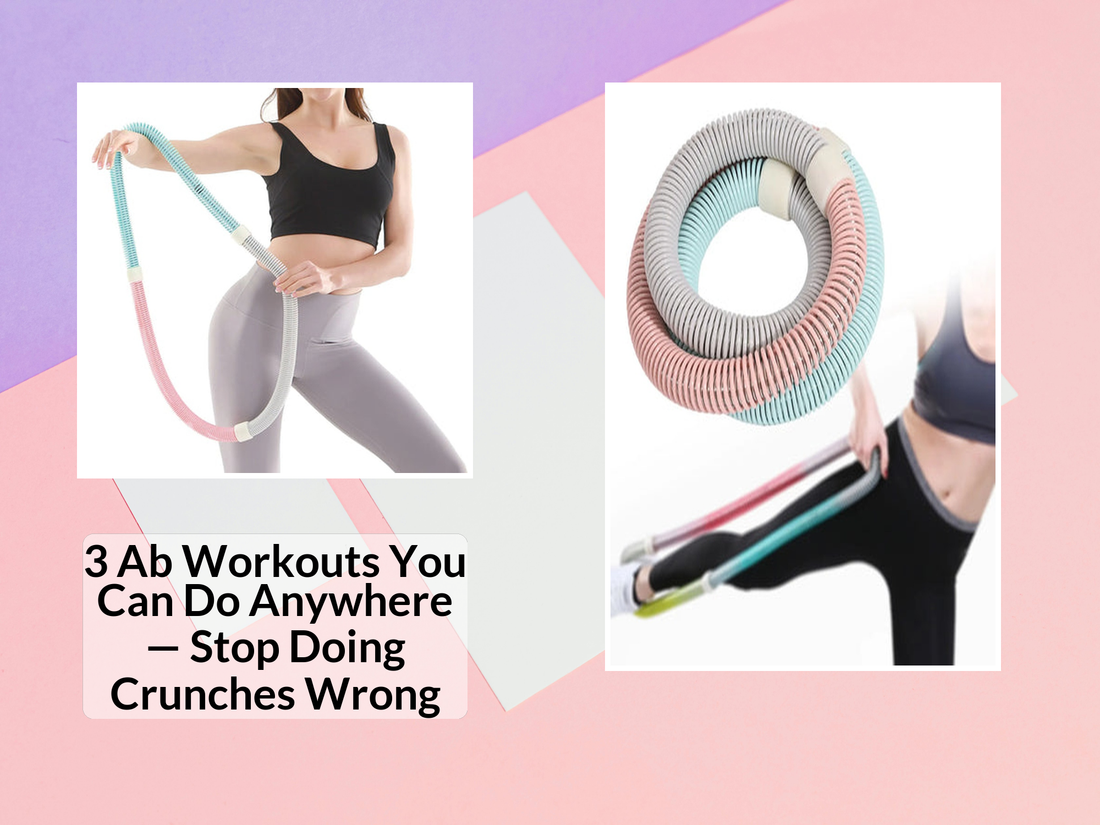
3 Ab Workouts You Can Do Anywhere — Stop Doing Crunches Wrong
The most effective 3 ab workouts focus on building a stronger, more stable core—not simply performing endless crunches. A well-designed routine trains your entire midsection, including the deep stabilizing muscles that support posture, balance, and everyday movement. In this guide, you'll learn 3 core exercises you can perform almost anywhere using only your body weight, making them ideal for beginners and anyone looking for an efficient home workout.
Using effective space-friendly core moves — the 3 ab workouts you need. See them in action.
How This Approach to 3 Ab Workouts Actually Delivers
Effective core training is about improving stability, strength, and movement quality rather than maximizing the number of crunches you perform. These 3 ab workouts emphasize functional movement patterns that engage multiple abdominal muscles at once, helping you develop a stronger foundation for daily activities, sports, and other forms of exercise.
- Trains your entire core: Your core includes the rectus abdominis, transverse abdominis, obliques, lower back, hips, and pelvic muscles. Strengthening these muscle groups improves trunk stability and posture.
- Builds functional strength: Research suggests that well-designed core training can improve balance, movement control, and overall physical performance by enhancing trunk stability.
- Moves beyond traditional crunches: Exercises that resist rotation and stabilize the spine often recruit deeper core muscles more effectively than repetitive crunches alone.
- Suitable for almost any space: Because these workouts require no equipment, they're easy to perform at home, while traveling, or anywhere you have enough room for a yoga mat.
- Beginner-friendly and scalable: Each exercise can be modified or progressed, making the routine appropriate whether you're new to training or looking to improve your existing core strength.
Key takeaway: These 3 ab workouts strengthen your core by improving stability, muscle coordination, and body control. While stronger abdominal muscles support better posture and athletic performance, reducing body fat depends on overall physical activity, nutrition, and maintaining a sustainable calorie balance—not abdominal exercises alone.
The 3 Core Exercises You Can Do Anywhere
These 3 core exercises require no equipment and can be completed in a living room, hotel room, or any small workout space. Together, they strengthen your entire core by targeting stability, anti-rotation, and controlled movement.
Exercise 1: Forearm Plank with Alternating Leg Lift
Target muscles: Transverse abdominis, rectus abdominis, glutes, shoulders, and lower back stabilizers.
- Start in a forearm plank with your elbows directly beneath your shoulders.
- Keep your head, hips, and heels aligned in a straight line.
- Brace your core and slowly lift one leg a few inches off the floor.
- Hold for 2–3 seconds before lowering and switching sides.
- Continue alternating until you've completed 8–10 lifts per leg.
Recommended volume: Hold the plank for 30–45 seconds while performing the alternating leg lifts.
Common mistakes: Letting the hips sag, raising the hips too high, or holding your breath.
Form tip: Keep your ribs down, tighten your abdominal muscles, and breathe steadily throughout the movement.
Exercise 2: Dead Bug
Target muscles: Deep core stabilizers, rectus abdominis, transverse abdominis, and hip flexors.
- Lie on your back with your knees bent to 90 degrees and your arms extended toward the ceiling.
- Press your lower back gently into the floor.
- Slowly extend your right arm and left leg without arching your back.
- Return to the starting position under control.
- Repeat on the opposite side for 10 repetitions per side.
Why it works: The Dead Bug teaches proper core bracing while improving coordination and spinal stability, making it one of the best ab exercises for beginners .
Form tip: Move slowly and only extend as far as you can while keeping your lower back in contact with the floor.
Exercise 3: Side Plank with Reach-Under
Target muscles: Internal and external obliques, transverse abdominis, shoulders, and glutes.
- Begin in a side plank supported on one forearm.
- Stack your shoulders and keep your hips lifted.
- Reach your top arm underneath your torso with a controlled rotation.
- Return to the starting position without dropping your hips.
- Complete 8–12 repetitions before switching sides.
Why it works: This variation develops rotational control while strengthening the muscles that stabilize your spine during everyday movements.
Form tip: Rotate through your upper body instead of allowing your hips to twist toward the floor.
| Exercise | Primary Focus | Recommended Volume | Main Benefit |
|---|---|---|---|
| Forearm Plank with Leg Lift | Deep core stability | 30–45 seconds | Improves posture and trunk endurance |
| Dead Bug | Core control | 10 reps per side | Builds foundational stability for beginners |
| Side Plank with Reach-Under | Obliques and rotational strength | 8–12 reps per side | Enhances balance and rotational control |
How to Combine These Into a 5–10 Minute Home Core Workout
You don't need a lengthy gym session to build a stronger core. Performing the three exercises in sequence creates an efficient home core workout that fits into even the busiest schedule.
| Exercise | Sets | Repetitions / Time | Rest |
|---|---|---|---|
| Forearm Plank with Leg Lift | 2–3 | 30–45 seconds | 20–30 seconds |
| Dead Bug | 2–3 | 10 reps per side | 20–30 seconds |
| Side Plank with Reach-Under | 2–3 | 8–12 reps per side | 30–45 seconds between rounds |
Weekly frequency: Complete this routine 2–4 times per week on non-consecutive days to allow your muscles adequate recovery.
Progression: Once you can perform every movement with excellent technique, gradually increase your hold time by 5–10 seconds or add 2–3 repetitions per set before advancing to more challenging variations.
Beginner tip: Focus on slow, controlled movement rather than speed. Proper technique delivers better results than performing additional repetitions with poor form.
Can These 3 Easy Exercises Help Reduce Belly Fat?
The 3 easy exercises to reduce belly fat in this guide can strengthen your abdominal muscles and improve posture, but it's important to set realistic expectations. No exercise can selectively burn fat from one area of the body. Fat loss occurs when you consistently maintain a calorie deficit through a combination of regular physical activity, balanced nutrition, adequate sleep, and sustainable lifestyle habits.
These exercises still play an important role because a stronger core improves movement efficiency, supports better posture, and helps you perform other calorie-burning activities more effectively.
How to Build Them Into Your Weekly Routine
- Frequency: Perform the routine 3–4 times per week for 5–10 minutes.
- Training style: Complete all three exercises as a circuit, resting 20–45 seconds between movements.
- Location: Suitable for home, apartments, hotel rooms, or any small workout space without equipment.
- Breathing: Exhale during the effort, inhale as you return, and keep your abdominal muscles gently braced throughout each repetition.
- Consistency: Short, regular workouts are generally easier to maintain than occasional long sessions.
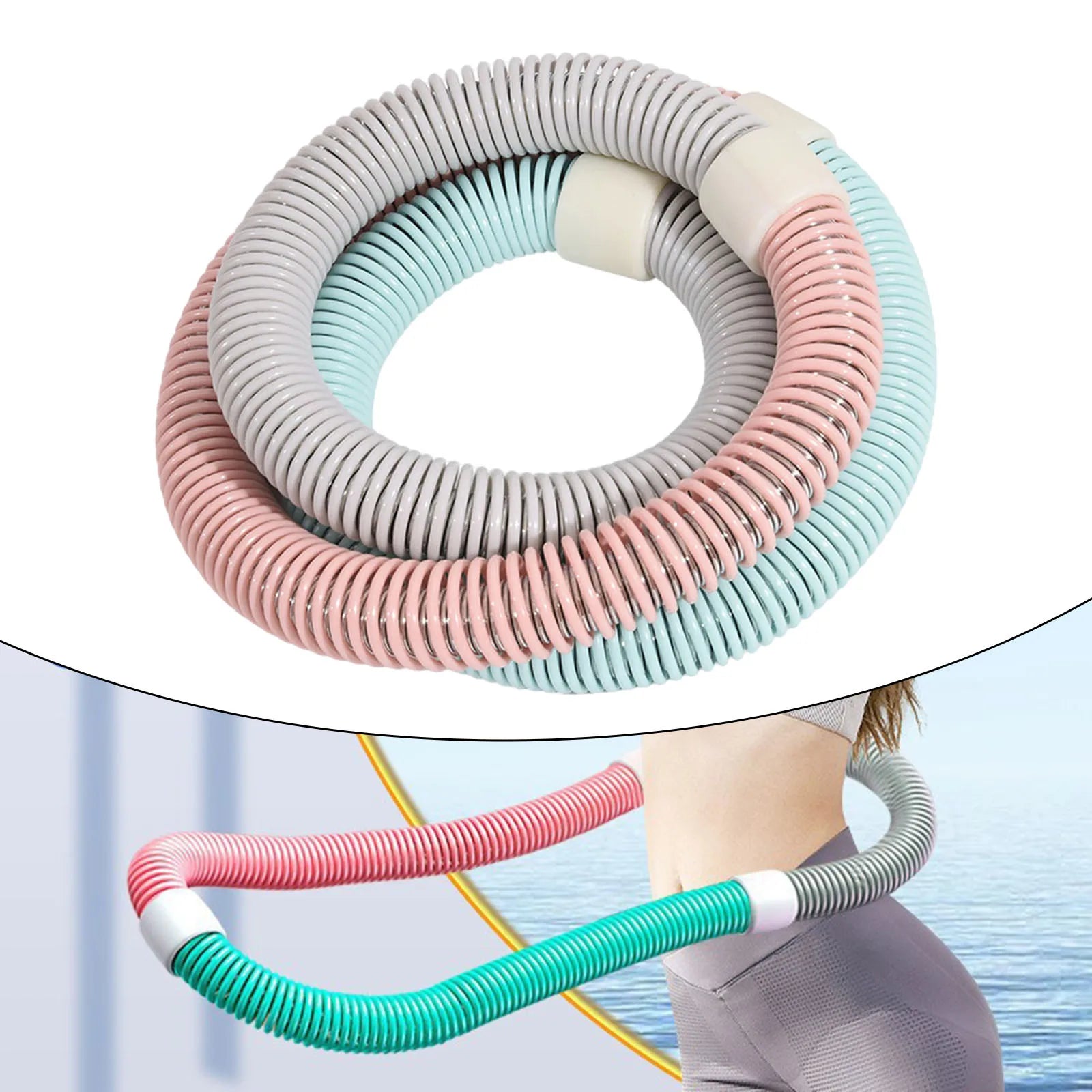
If you'd like to increase movement variety during your home workouts, the KentDO Weighted Fitness Hoop can complement your routine by encouraging longer periods of light-to-moderate physical activity while challenging coordination and core engagement.
Pros and Limitations
| Benefits | Considerations |
|---|---|
| No gym membership or equipment required. | Visible body composition changes require consistent nutrition and exercise habits. |
| Suitable for beginners and small spaces. | Proper technique is essential to reduce unnecessary strain on the neck or lower back. |
| Improves core stability, posture, and functional strength. | Progressive overload is needed to continue building strength over time. |
| Easy to incorporate into a busy schedule. | Stop exercising and seek medical advice if you experience sharp or persistent pain. |
Pull It All Together and Make It Your Every-Day Routine
| Week | Training Goal | Recommended Schedule |
|---|---|---|
| 1 | Learn proper technique | 2 sessions |
| 2 | Increase confidence and endurance | 2–3 sessions |
| 3 | Extend hold times or repetitions | 3 sessions |
| 4 | Progress intensity while maintaining excellent form | 3–4 sessions |
Always begin with a brief warm-up and stop if you experience sharp pain, dizziness, or symptoms that worsen during exercise. Mild muscle fatigue is expected, but discomfort in the joints or spine is a sign to reassess your technique or reduce the difficulty.
Frequently Asked Questions
What are the best 3 ab workouts for beginners?
A beginner-friendly routine includes the Forearm Plank with Leg Lift , Dead Bug , and Side Plank with Reach-Under . Together, these exercises strengthen the entire core while improving balance, stability, and posture without requiring equipment.
How often should I do these 3 core exercises?
For most people, performing these 3 core exercises two to four times per week allows enough training stimulus while giving your muscles time to recover. Focus on quality movement rather than training your core every day at maximum intensity.
Can ab workouts at home strengthen my core without equipment?
Yes. Bodyweight exercises such as planks, dead bugs, and side planks effectively improve core stability and muscular endurance. As your strength improves, you can increase hold times, repetitions, or training volume to continue progressing.
Do these exercises reduce belly fat?
These exercises strengthen and develop your abdominal muscles, but they do not specifically burn fat from your stomach. Losing body fat requires a consistent calorie deficit supported by regular physical activity, nutritious eating habits, adequate sleep, and long-term consistency.
How many sets and reps should beginners perform?
Start with 2–3 sets of each exercise. Hold planks for 20–45 seconds and perform 8–12 repetitions per side for dynamic movements. Increase volume gradually only after you can maintain proper form throughout every set.
What should I do if planks hurt my lower back?
Lower back discomfort usually indicates your core is no longer braced or your hips have dropped. Shorten the hold time, perform the exercise from your knees if needed, and focus on keeping your spine in a neutral position. If pain is sharp, persistent, or radiates into your legs, stop exercising and consult a qualified healthcare professional.
Building a stronger core doesn't require complicated equipment or hundreds of crunches. By consistently practicing these 3 ab workouts with proper technique and pairing them with healthy nutrition and regular physical activity, you can improve stability, posture, and overall functional strength over time.
Pillar Article: 2 Day Workout Split — The Minimalist Plan That Keeps You Fit for Life
Other Related Articles:
Explore More:













