

⏱ 6 min read
Adjustable Flame Kerosene Heater: Adjustable Flame Control, Efficiency, and Buying Guide
An adjustable flame kerosene heater gives you direct control over heat output, making it easier to stay comfortable while reducing unnecessary fuel consumption. Instead of producing constant maximum heat, the flame can be raised or lowered to match changing temperatures, room sizes, or outdoor conditions. Whether you're heating a garage, cabin, workshop, campsite, or emergency living space, proper flame adjustment improves efficiency, extends burn time, and helps maintain a cleaner, more stable burn.
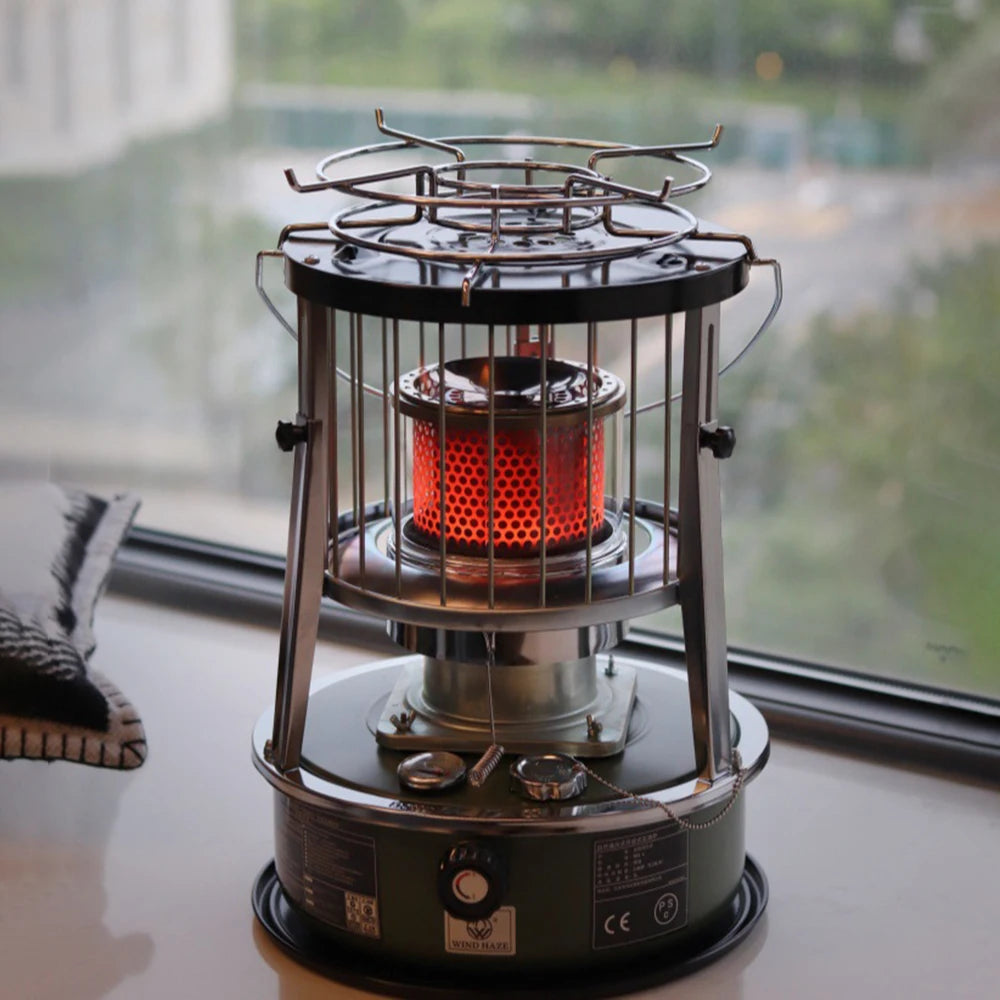
Adjustable flame heat control on a kerosene heating stove for steady comfort. See it in action.
How Adjustable Flame Control Works
What kerosene heater flame control does
A kerosene heater generates heat by drawing fuel through a wick. The flame adjustment knob raises or lowers the exposed portion of the wick, changing the size of the flame and, in turn, the amount of heat produced. This simple mechanical system gives users precise control over warmth without requiring electricity, making adjustable flame kerosene heaters especially valuable during power outages and off-grid use.
Unlike fixed-output heaters, models with adjustable flame control allow you to tailor heat production to current conditions. A smaller flame is suitable for maintaining a comfortable temperature after the room has warmed, while a larger flame provides faster heating during extremely cold weather.
Why flame adjustment matters for efficiency and comfort
Proper kerosene heater flame control improves both comfort and operating efficiency. Running the heater at the highest setting all the time can waste fuel, shorten runtime, and create excess heat that makes a room uncomfortable. Adjusting the flame to the lowest effective level helps maintain a consistent temperature while extending the amount of time each tank of fuel lasts.
Correct flame adjustment also supports cleaner combustion. When the wick is properly set and supplied with clean kerosene, the flame burns steadily with minimal smoke, soot, or odor. This not only improves indoor comfort but also reduces carbon deposits that can affect long-term heater performance.
How to Adjust a Kerosene Heater Flame
Step-by-step adjustment
- Fill the heater with clean 1-K kerosene and inspect the wick before lighting.
- Ignite the heater according to the manufacturer's instructions and allow the flame to stabilize for several minutes.
- Locate the flame adjustment knob or wick control.
- Raise the wick gradually for more heat or lower it slowly to reduce heat output.
- Pause after each adjustment so the flame has time to stabilize before making additional changes.
- Continue fine-tuning until the room reaches a comfortable temperature.
Heat control settings
Lower heat settings are generally ideal for maintaining warmth in smaller rooms or during milder weather, while higher settings are better suited for larger spaces or rapid heating after startup. Rather than frequently switching between maximum and minimum output, small incremental adjustments usually provide the most consistent comfort and the best fuel economy.
Correct flame appearance
A healthy kerosene heater flame should appear even and stable around the burner with little or no visible smoke. Excessively high flames, flickering flames, or heavy soot buildup often indicate that the wick requires adjustment, maintenance, or replacement. Checking the flame after every adjustment helps ensure efficient combustion and reliable heating performance.
Benefits of Adjustable Flame Kerosene Heaters
Fuel savings
One of the biggest advantages of an adjustable flame kerosene heater is improved fuel economy. Rather than operating continuously at maximum output, you can lower the flame once the desired room temperature is reached. This reduces unnecessary kerosene consumption while maintaining comfortable warmth.
Small flame adjustments throughout the day often provide better efficiency than repeatedly turning the heater on and off. For households using kerosene as a primary or supplemental heat source, these savings can add up over an entire heating season.
Long burn performance
Long burn kerosene heater efficiency depends largely on balancing heat output with actual heating needs. Running the heater at a moderate flame extends the runtime of each fuel tank, making adjustable models well suited for emergency backup heating, cabins, workshops, and other locations where refueling may be inconvenient.
A properly maintained wick, clean 1-K kerosene, and correct flame height all contribute to longer operating times while helping the heater maintain stable performance throughout extended use.
Portable temperature control
Portable kerosene heater temperature control makes these heaters adaptable to a wide variety of environments. As outdoor temperatures change or additional people enter a room, you can quickly fine-tune the flame instead of accepting a fixed heat output.
This flexibility makes adjustable flame heaters practical for garages, workshops, cabins, patios, camping shelters, and emergency situations where electrical heating may not be available. Users can produce rapid heat when needed, then reduce the flame to maintain comfort while conserving fuel.
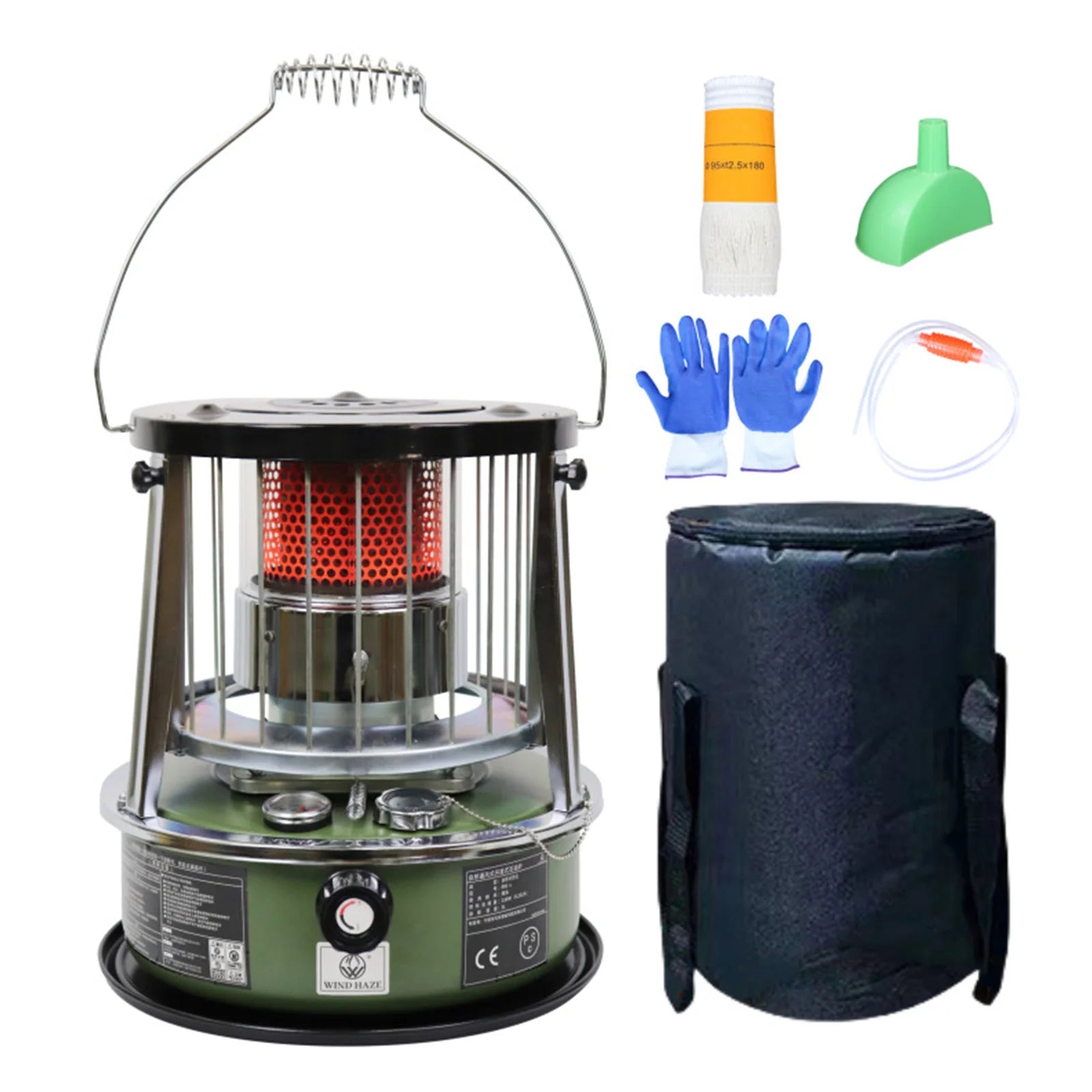
Fine-tuning warmth with adjustable flame heat control on an indoor outdoor kerosene heater. See it in action.
Best Adjustable Flame Kerosene Heaters (2026 Comparison Guide)
Comparison table
| Specification | Why It Matters |
|---|---|
| BTU Output | Determines the maximum area the heater can warm effectively. |
| Fuel Tank Capacity | Larger tanks generally provide longer runtimes between refills. |
| Runtime | Indicates how long the heater can operate on a full tank at typical settings. |
| Flame Control Range | Allows more precise adjustment for comfort and fuel efficiency. |
| Safety Features | Look for automatic shutoff, tip-over protection where available, and durable construction. |
| Portability | Handles, compact size, and moderate weight make moving the heater easier. |
Top picks by use case
- Emergency backup heating: Prioritize long runtime, a large fuel tank, and dependable ignition.
- Garage or workshop: Choose higher BTU output with wide flame adjustment for changing conditions.
- Cabins and off-grid living: Focus on fuel efficiency, simple maintenance, and reliable wick performance.
- Occasional outdoor use: Select a portable model with sturdy construction and adjustable heat output.
Key specifications to compare
When comparing an adjustable flame kerosene heater , evaluate heating capacity, expected runtime, fuel tank size, ease of wick adjustment, replacement wick availability, and maintenance requirements. These specifications have a greater impact on long-term ownership than appearance alone.
If you're searching for the best kerosene heater for indoor outdoor use , choose a model that provides precise flame control, stable operation, and safety features recommended by the manufacturer. Always verify whether the heater is approved for indoor use and follow ventilation requirements.
How to Use Adjustable Flame Heat Control Effectively
- Start the heater using the manufacturer's lighting procedure and allow the flame to stabilize.
- Begin with a moderate flame instead of maximum output to warm the space gradually.
- Increase or decrease the flame in small increments until the desired temperature is reached.
- Maintain the lowest flame that comfortably heats the area to maximize fuel efficiency.
- Periodically check the flame during operation to ensure it remains even and stable.
- Lower the flame before shutting the heater down according to the manufacturer's instructions.
For complementary comfort solutions and lifestyle essentials, explore the Lifestyle collection, designed to support everyday wellness and convenience.
Indoor and Outdoor Safety Best Practices
Ventilation
- Always provide adequate fresh-air ventilation when operating a kerosene heater indoors.
- Follow the manufacturer's minimum ventilation recommendations for enclosed spaces.
- Never operate a kerosene heater in tightly sealed rooms without airflow.
Carbon monoxide precautions
- Install working carbon monoxide detectors near occupied living areas.
- Turn the heater off immediately if occupants experience headaches, dizziness, or nausea.
- Never use a kerosene heater in bedrooms, bathrooms, or other poorly ventilated spaces unless specifically approved by the manufacturer.
Safe fueling and storage
- Use only clean, high-quality 1-K kerosene.
- Refuel only after the heater has completely cooled.
- Store kerosene in approved containers away from heat sources and open flames.
- Place the heater on a stable, level, non-combustible surface.
- Keep furniture, curtains, bedding, paper, and other combustible materials well outside the manufacturer's recommended clearance distances.
- Never leave a burning heater unattended.
- Inspect and maintain the wick regularly for safe, efficient operation.
Troubleshooting Low Flame, Smoke and Soot
Low flame causes
A weak or low flame usually indicates one or more maintenance issues rather than a problem with the heater itself. Common causes include:
- Carbon buildup or a worn wick that no longer draws fuel efficiently.
- Low-quality or contaminated kerosene.
- Improper wick height or incorrect flame adjustment.
- A partially filled fuel tank reducing consistent fuel delivery.
Start by adjusting the wick according to the manufacturer's instructions. If the flame remains weak, inspect the wick for wear, clean the burner if recommended, and replace the wick when necessary.
Smoke and odor
Excessive smoke, soot, or strong kerosene odors often indicate incomplete combustion. These issues may result from an excessively high flame, poor-quality fuel, inadequate ventilation, or a dirty burner assembly.
- Lower an overly high flame until it burns evenly.
- Use only clean 1-K kerosene from a reliable source.
- Improve ventilation when operating the heater indoors.
- Allow the heater to cool before performing any maintenance.
Wick maintenance
Routine wick care is one of the most important maintenance tasks for preserving efficient heater performance. Inspect the wick regularly for carbon buildup, frayed edges, or uneven wear. Replace it according to the manufacturer's maintenance schedule or whenever flame adjustment becomes difficult.
Buying Guide: What to Look for Before You Buy
Heating capacity
Select an adjustable flame kerosene heater with a BTU rating appropriate for the size of the area you plan to heat. Oversized heaters may consume more fuel than necessary, while undersized models may struggle to maintain comfortable temperatures.
Runtime and fuel tank
Compare both fuel tank capacity and estimated runtime at typical operating settings. Larger tanks generally require less frequent refilling, making them ideal for emergency preparedness and extended heating sessions.
Safety features
Choose models with dependable ignition systems, sturdy construction, stable bases, and any manufacturer-provided safety mechanisms. Clear operating instructions, readily available replacement parts, and accessible wick replacements also contribute to long-term reliability.
Indoor vs outdoor suitability
The best kerosene heater for indoor outdoor use depends on where it will be operated most often. Indoor applications require strict attention to ventilation and manufacturer recommendations, while outdoor or workshop use may prioritize higher heat output and portability.
Frequently Asked Questions
Can I use an adjustable flame kerosene heater indoors?
Yes, but only when the heater is approved for indoor use, operated according to the manufacturer's instructions, and used with adequate ventilation. Carbon monoxide detectors should always be installed in occupied living areas.
What is the ideal flame height?
The ideal flame is steady, even, and free from excessive smoke or soot. Follow the manufacturer's guidance for your specific heater model rather than relying on maximum flame height.
Does lowering the flame save fuel?
Yes. Lowering the flame after the room reaches a comfortable temperature reduces fuel consumption while helping maintain stable, efficient heat output.
How often should I replace the wick?
Replacement intervals vary by model and frequency of use. Replace the wick whenever it becomes difficult to adjust, develops heavy carbon deposits, burns unevenly, or no longer produces a stable flame.
How does adjustable flame control improve kerosene heater efficiency?
Adjustable flame control allows heat output to closely match heating demand, reducing unnecessary fuel consumption and extending runtime without sacrificing comfort.
What is the correct flame color on a kerosene heater?
A properly adjusted heater should produce a stable, clean-burning flame with minimal smoke or soot. If the flame flickers excessively or produces heavy smoke, inspect the wick, fuel quality, and flame setting.
Can I leave a kerosene heater on overnight?
Always follow the manufacturer's recommendations. Many safety experts advise against leaving portable kerosene heaters unattended while sleeping, even if the heater has adjustable flame control.
How do I fix a kerosene heater with a low flame?
Check the wick adjustment first, inspect for carbon buildup, verify that clean 1-K kerosene is being used, and replace the wick if it is worn or damaged.
Which adjustable flame kerosene heater is best for emergency backup?
Look for a model with long runtime, dependable flame adjustment, adequate heating capacity for your space, straightforward maintenance, and safety features appropriate for emergency use.
Are adjustable flame kerosene heaters safe for indoor use with proper ventilation?
Yes. When the heater is designed for indoor operation, used with adequate ventilation, and maintained according to the manufacturer's instructions, adjustable flame control can provide safe and efficient supplemental heating.
Related Guide: High Efficiency Kerosene Heater Features That Maximize Heat













