

AI Facial Skin Analyzer: 7 Key Features Compared for Professionals
Choosing an AI facial skin analyzer is more complicated than comparing camera resolution or counting software features. Professional systems can look similar on a specification sheet while differing significantly in imaging technology, measurable skin parameters, AI interpretation, reporting, workflow integration, data management, calibration, and ongoing support. For salons, skincare clinics, med spas, dermatology practices, and estheticians, the right system should produce useful, repeatable information that improves the consultation process rather than simply generating attractive facial images.
This guide compares the seven capabilities that matter most when evaluating professional AI facial skin analysis systems, explains what each feature actually contributes, and shows how to assess accuracy, workflow fit, privacy, support, and total ownership value before buying.
What Is an AI Facial Skin Analyzer?
An AI facial skin analyzer is a professional imaging and analysis system that captures standardized facial images and uses software, computer vision, and artificial intelligence to identify or quantify selected skin characteristics. Depending on the system, analysis may include pigmentation, pores, wrinkles, acne-related characteristics, skin tone, moisture, sebum, texture, or elasticity.
Unlike a basic facial photograph, a professional analyzer is designed to turn images into structured analysis results that can be reviewed with a client and compared during subsequent visits. The exact measurements and detection methodology vary between manufacturers, so a longer feature list does not automatically mean a more accurate system.
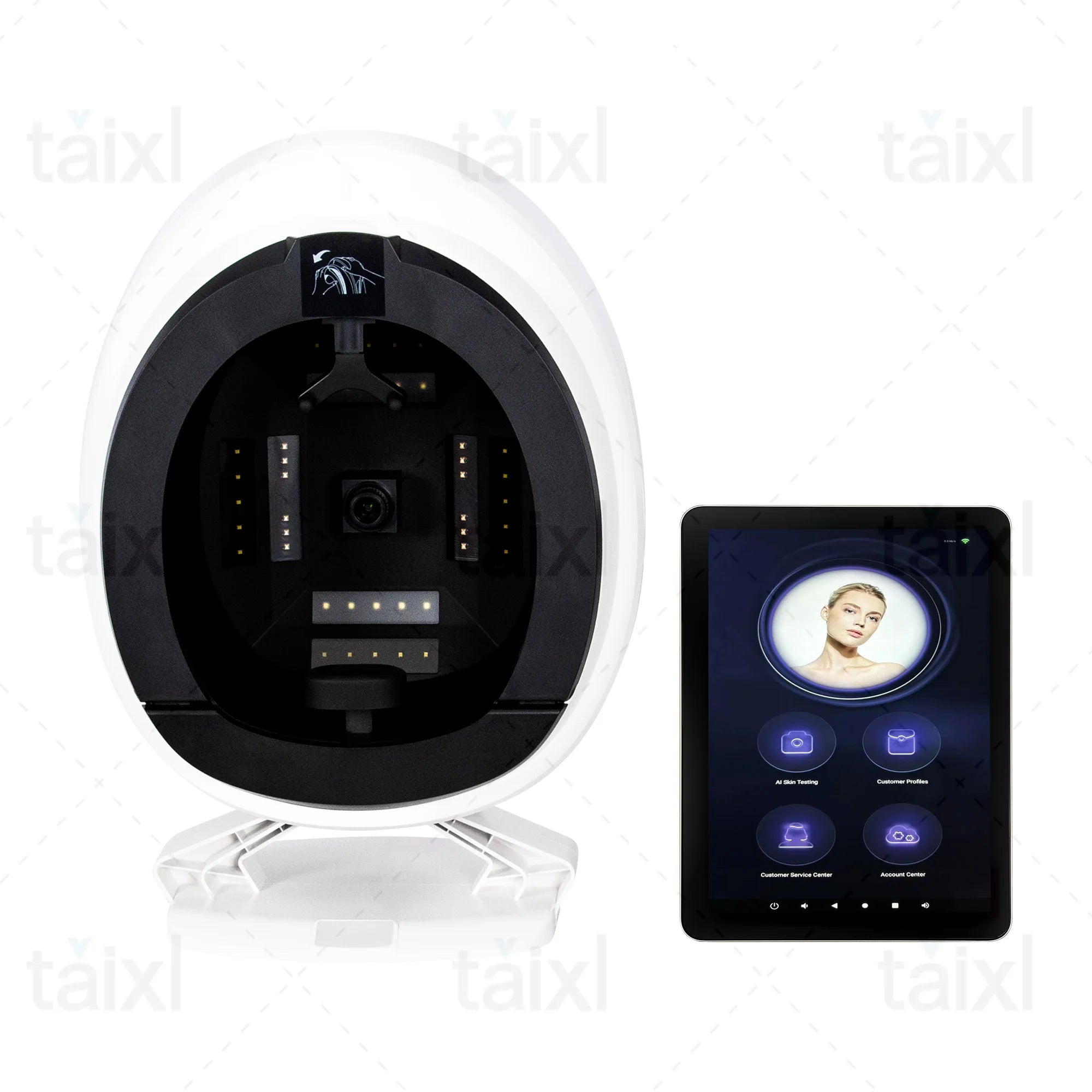
How AI facial skin analysis works
A typical workflow starts with controlled facial image capture. The system then processes the images using image-analysis algorithms and AI models to identify patterns associated with selected skin characteristics. Results may be presented as visual maps, scores, measurements, or digital reports.
The important distinction is that AI analysis supports measurement and interpretation; it should not automatically be treated as a medical diagnosis. Professional users should understand exactly what the manufacturer claims the system can detect and whether those claims are supported by appropriate validation.
AI analyzer vs standard facial imaging
A standard camera records what is visible under its particular lighting conditions. An AI skin analysis system can add controlled capture conditions, specialized imaging, algorithmic analysis, structured reporting, and longitudinal comparison. These additional capabilities can make the information more useful during professional consultations.
What professional systems are designed to measure
Common analysis categories include acne, pigmentation, pores, wrinkles, skin tone, moisture, sebum, and elasticity. More advanced systems may use multiple wavelengths or imaging modalities to expose characteristics that are less apparent in ordinary visible-light photographs.
The 7 Key Features to Compare in Professional AI Skin Analyzers
1. Imaging technology and capture consistency
Image quality is the foundation of every downstream analysis. Look beyond megapixels and evaluate whether the system can consistently capture comparable images from one session to the next. Camera resolution, lighting control, facial positioning, exposure, distance, and repeatable capture conditions can all influence results.
A 36MP industrial HD camera, for example, can provide highly detailed facial images, but resolution alone does not establish analytical accuracy. The practical question is whether the entire capture process produces reliable inputs for the software.
2. AI detection and computer vision capabilities
AI and computer vision can help identify patterns across facial images and organize them into understandable results. When comparing systems, ask which algorithms are used, which concerns they evaluate, how results are validated, and whether the manufacturer clearly distinguishes detection from diagnosis.
A useful system should help a professional interpret measurable characteristics rather than simply assigning unexplained scores. Transparency about the analysis process is especially important when results influence treatment discussions or skincare recommendations.
3. Measurable skin parameters and concern detection
The number and type of parameters supported should match the needs of the practice. A professional consultation may benefit from information about pigmentation, pores, wrinkles, acne, moisture, sebum, tone, and elasticity.
For example, moisture analysis can provide a quantitative indicator that complements visual assessment, while pigmentation and tone analysis can make uneven coloration easier to document. Pore and wrinkle analysis can support progress tracking when standardized images are captured under comparable conditions.
However, professionals should verify the methodology behind each measurement. A system that lists many indicators is not necessarily superior if those indicators are poorly defined or difficult to reproduce.
4. 3D facial scanning and multispectral imaging
Advanced imaging can provide additional information compared with conventional visible-light photography. Multispectral or spectrum-based imaging captures facial information across multiple wavelength ranges, while 3D scanning focuses on facial geometry and depth.
The key purchasing question is not whether advanced imaging sounds impressive. It is whether the additional information solves a real problem in your workflow. A practice focused primarily on skin texture, pigmentation, pores, and consultation visualization may prioritize multispectral analysis. A practice needing facial geometry or dimensional measurements may place greater value on 3D capture.
5. Reports, visualization, and client presentation
Professional analysis becomes more useful when results can be explained clearly. Digital reports, visual maps, side-by-side comparisons, and organized measurement summaries can help professionals communicate findings without relying entirely on subjective descriptions.
Reporting should support the consultation rather than overwhelm it. Look for systems that allow results to be presented in a way clients can understand and that make repeat-visit comparisons straightforward.
6. Client data management and workflow integration
For businesses that perform repeated consultations, data management can be just as important as camera hardware. Evaluate whether the system supports client records, image tracking, result history, report storage, exports, permissions, and integrations with existing business software.
Before purchasing, ask whether data is stored locally or through cloud services, who can access it, how long it is retained, and whether the vendor provides appropriate administrative controls. These questions become especially important when facial images are linked to identifiable client information.
For broader professional device categories, explore skin and beauty care devices when evaluating how a facial analyzer fits into a larger skincare technology setup.
7. Hardware, support, customization, and total ownership value
The purchase price is only one part of the investment. Consider warranty length, training, technical support, software fees, replacement requirements, calibration procedures, upgrades, and expected service life.
Hardware specifications should also match the environment. A professional system may require dedicated space, stable electrical power, controlled positioning, or specific operating procedures. For example, the MYOSLIM AI Skin Analyzer described in this source uses a 36MP industrial HD camera, AI and 8-spectrum imaging, operates at 220V, carries CE and RoHS certifications, and includes a one-year warranty. :contentReference[oaicite:0]{index=0}
Professional AI Facial Skin Analyzer Comparison: What Each System Capability Actually Tells You
The following comparison matrix can be used as a practical framework when evaluating different professional systems. It focuses on what each capability means operationally rather than assuming that more features automatically produce better results.
| Capability | What to Compare | Why It Matters |
|---|---|---|
| Imaging | Camera resolution, lighting control, capture consistency | Determines the quality and repeatability of image inputs |
| Spectrum | Visible-light versus multispectral or multi-wavelength capture | Can reveal different image characteristics than standard photography |
| AI analysis | Detection categories, algorithms, validation, transparency | Determines how raw images become structured results |
| Skin parameters | Acne, pigmentation, pores, wrinkles, moisture, sebum, tone, elasticity | Shows whether the system fits the consultation goals of the practice |
| 3D capability | Depth capture, facial geometry, dimensional analysis | Useful when facial structure or depth measurements matter |
| Reporting | Digital reports, visual maps, progress comparisons | Improves client communication and documentation |
| Data management | Client records, image history, exports, permissions, integrations | Determines how well the analyzer fits repeated professional workflows |
| Support | Training, warranty, calibration, technical service | Reduces operational risk after purchase |
Which specifications matter most in daily practice?
For most professional users, capture consistency, relevant skin parameters, reporting, data management, and support deserve more attention than headline specifications alone. A system should produce information that can be used repeatedly and interpreted consistently by the team.
Which features are useful extras rather than buying requirements?
Some advanced features may be valuable but unnecessary for a particular practice. A clinic that does not need facial geometry may not benefit enough from sophisticated 3D scanning to justify the added cost. Similarly, extensive software integrations may have limited value for a small practice operating a simple consultation workflow.
Standard Imaging vs Multispectral Imaging vs 3D Facial Scanning
Standard visible-light facial imaging
Standard imaging captures the appearance of the face under visible light. It is useful for documenting visible characteristics such as tone, texture, wrinkles, and obvious pigmentation. It can also provide a visual baseline for progress comparisons when lighting and positioning are controlled.
Multispectral imaging
Multispectral imaging captures information across multiple spectral ranges. The additional spectral information can help software distinguish or visualize characteristics that may be difficult to evaluate from a conventional photograph alone.
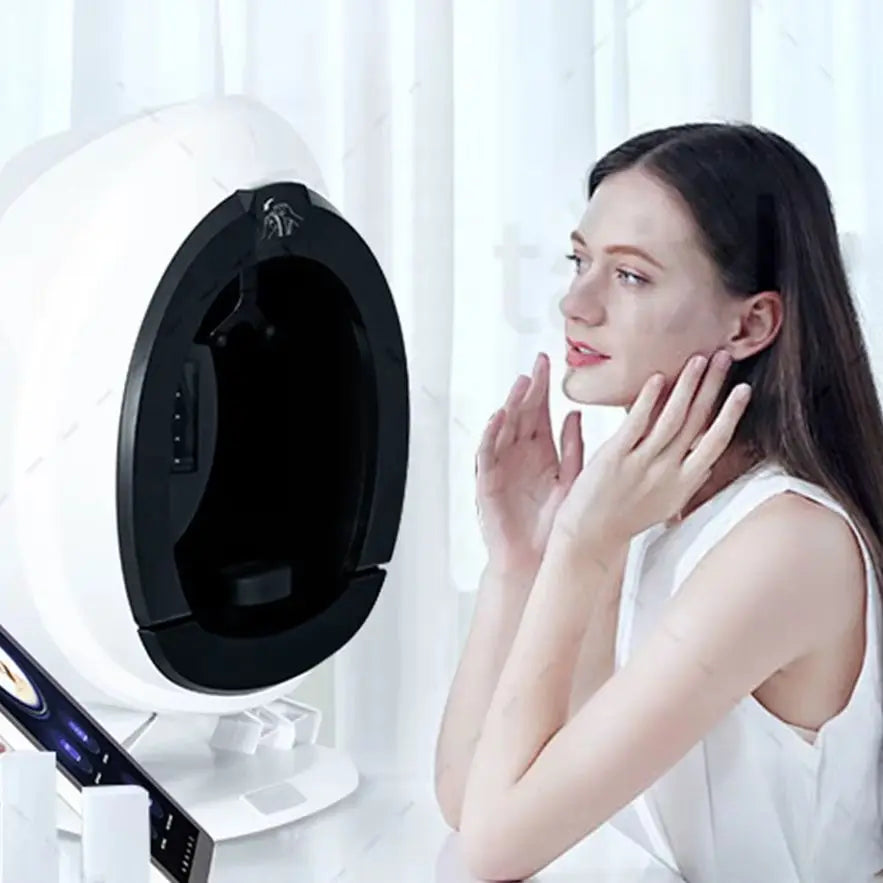
The MYOSLIM system in this source uses 8-spectrum imaging alongside AI analysis and 36MP imaging. Its stated analysis categories include acne, pigmentation, pores, wrinkles, moisture, sebum, tone, and elasticity. :contentReference[oaicite:1]{index=1}
3D facial scanning
3D scanning adds information about facial geometry and depth. This can be particularly relevant when a professional needs dimensional or structural information rather than only surface appearance.
When advanced imaging is worth the added cost
Advanced imaging is most valuable when it supports a measurable business or consultation need. Before paying more for multispectral or 3D capabilities, identify which decisions the additional information will improve, how often the feature will be used, and whether the vendor provides sufficient evidence for its claimed performance.
What Should a Professional AI Skin Analyzer Measure?
A professional AI skin analyzer should measure characteristics that are relevant to the services and consultation model of the business. Common categories include pigmentation, pores, wrinkles, acne, moisture, sebum, skin tone, and elasticity. :contentReference[oaicite:2]{index=2}
Common measurable skin parameters
- Acne-related characteristics
- Pigmentation and uneven tone
- Pore appearance
- Wrinkles and texture
- Moisture or hydration-related indicators
- Sebum-related indicators
- Skin tone
- Elasticity-related indicators
Texture, pores, pigmentation, redness, and wrinkles
Image-based analysis can make visible characteristics easier to document and compare. This is particularly useful when the objective is to demonstrate change over multiple consultations rather than relying exclusively on memory or subjective visual impressions.
Hydration, sebum, and other quantitative indicators
Quantitative indicators can add structure to a consultation, but professionals should confirm how the device derives each value. A number is useful only when its meaning, measurement method, repeatability, and limitations are understood.
Detection is not the same as medical diagnosis
An AI skin analyzer can support observation, documentation, measurement, and consultation. That does not mean every detected pattern constitutes a clinical diagnosis. Professional users should avoid presenting automated results as definitive medical conclusions unless the system has the appropriate validated and regulated basis for such use.
How Accurate Are Professional AI Facial Skin Analyzers?
Accuracy should be evaluated as a system characteristic rather than inferred from AI branding or camera resolution. A useful evaluation considers accuracy, repeatability, consistency, capture conditions, calibration, image quality, and algorithm validation.
Accuracy vs repeatability vs consistency
Accuracy asks how closely a measurement corresponds to an appropriate reference. Repeatability asks whether the same system produces similar results when the same subject is assessed under comparable conditions. Consistency considers whether the workflow produces comparable results across users, sessions, and environments.
What can affect AI skin analysis results?
Lighting, facial positioning, camera distance, exposure, makeup, skin preparation, movement, and environmental conditions can affect image-based analysis. A sophisticated algorithm cannot completely compensate for poor or inconsistent image capture.
How to evaluate manufacturer accuracy claims
Ask the manufacturer what was tested, what reference standard was used, how many subjects were included, what parameters were evaluated, and whether results were independently validated. Be cautious of vague claims such as “medical-grade AI” or “100% accurate” without supporting methodology.
Why standardized capture and calibration matter
Standardized capture helps reduce variables unrelated to actual changes in skin condition. For businesses tracking clients over time, consistency can be more practically important than an impressive single-session image because progress comparisons depend on comparable inputs.
AI Skin Analyzer Workflow: From Client Scan to Treatment Recommendation
A professional skin analysis workflow should connect imaging technology to a repeatable consultation process. The device is most useful when it becomes part of a standardized sequence rather than a standalone gadget.
Client intake and standardized image capture
Begin with consistent client preparation and image capture. Record the conditions under which the images were taken and follow the manufacturer's recommended positioning and operating procedure.
AI analysis and results review
After capture, review the AI-generated results rather than presenting them as unquestionable conclusions. The professional should interpret the results within the context of the client's consultation and the capabilities and limitations of the system.
Visualizing progress across repeat visits
Image tracking can make changes easier to demonstrate. Structured reports and historical images allow professionals to compare results over time and explain how a client's skin characteristics have changed.
Turning analysis results into a professional consultation
The goal is not to replace professional judgment with an automated score. Instead, analysis results can provide a structured starting point for discussing visible concerns, documenting baseline characteristics, explaining skincare priorities, and planning appropriate follow-up assessments.
For practices building a broader technology ecosystem, professional body care and health devices can complement a facial-focused analysis workflow where appropriate.
If a professional wants to evaluate the hardware and workflow described in this guide, the AI Skin Analyzer for Professional 3D Facial Skin Analysis is one example of a system designed for salons, skincare clinics, and professional skin management businesses. Its stated workflow includes structured analysis reports, image tracking, and data management. :contentReference[oaicite:3]{index=3}
Client Records, Privacy, and Software Integration
Client data management features to evaluate
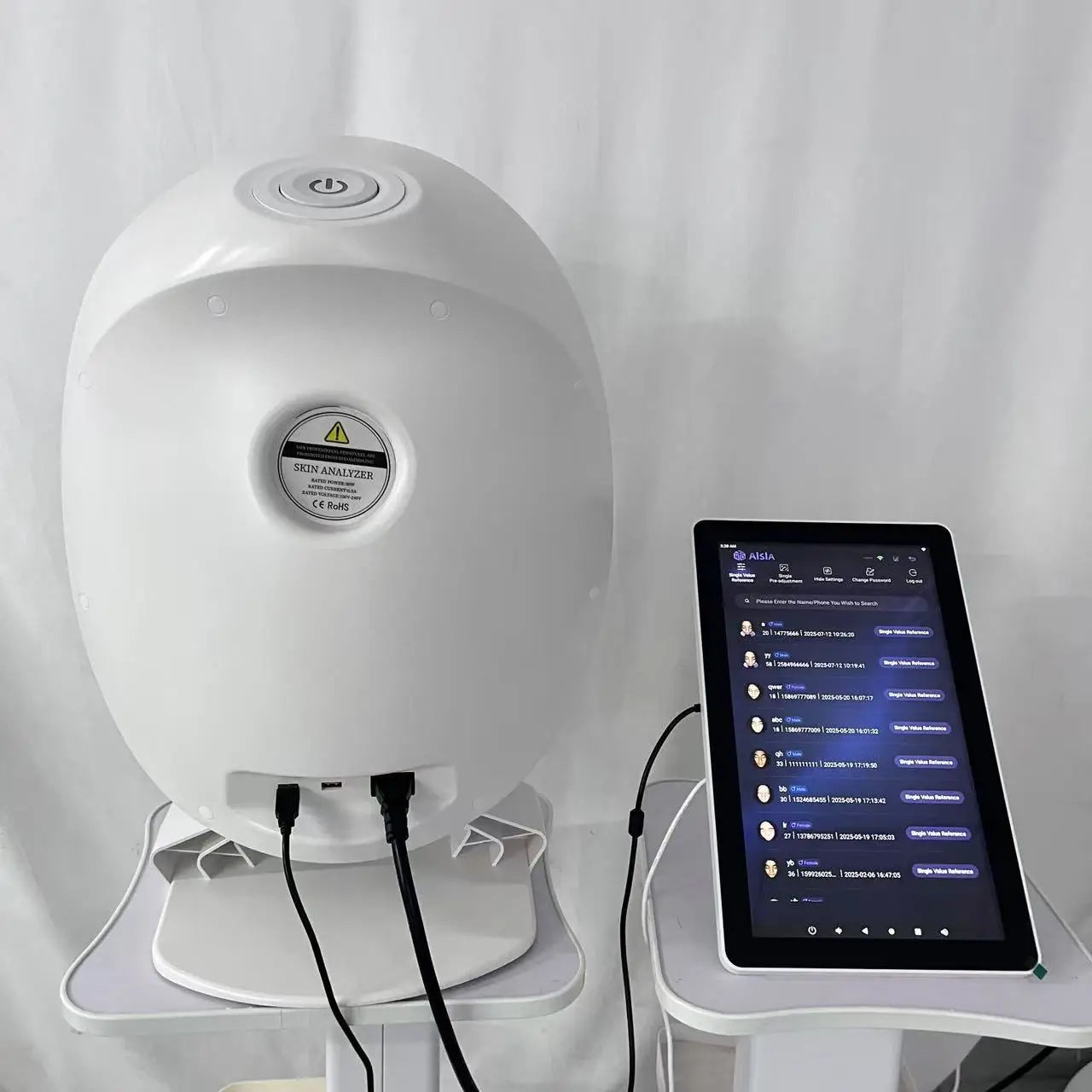
Ask whether the system stores client profiles, previous scans, reports, and images. Also evaluate export functionality, account permissions, backup procedures, retention controls, and whether administrators can control access to sensitive client information.
CRM, EMR, POS, or practice-management integrations
If the analyzer needs to fit into an existing practice-management environment, determine whether it can integrate directly or whether staff must manually transfer information. A technically advanced device can become inefficient if its data cannot move smoothly through the existing workflow.
Cloud storage, access controls, and privacy questions
Facial images can be sensitive personal data. Before deployment, clarify where images and reports are stored, who can access them, whether data is transmitted externally, how accounts are protected, and what procedures exist for deletion or export. The exact privacy controls should be confirmed directly with the vendor because they are not specified in the supplied product information.
Which Professionals Benefit Most From an AI Facial Skin Analyzer?
Dermatology clinics
Clinical environments may value standardized imaging and longitudinal documentation, but they should carefully distinguish cosmetic analysis functions from regulated diagnostic technologies.
Aesthetic clinics and med spas
Med spas can benefit from structured consultations, visual documentation, and repeat-visit comparisons. Reporting can also help practitioners explain cosmetic concerns and treatment-progress observations.
Esthetician and skincare professionals
Estheticians can use analysis results to make consultations more systematic and visually demonstrable. A device that measures the parameters most relevant to their services may be more useful than a system overloaded with rarely used features.
Skincare retailers and consultation environments
Retail consultation settings may prioritize speed, visual communication, simple reports, and ease of use. The ideal system therefore depends heavily on the number of consultations, staff training, and desired client experience.
AI Facial Skin Analyzer Buying Checklist for Professionals
Imaging and measurement checklist
- Confirm camera resolution and image quality.
- Check whether lighting and positioning are standardized.
- Identify exactly which skin parameters are analyzed.
- Determine whether multispectral or 3D imaging is included.
- Ask how repeat measurements are standardized.
Software and workflow checklist
- Review report formats and client-facing visualizations.
- Check whether historical images and results can be compared.
- Confirm client record and data-management functions.
- Evaluate compatibility with the practice's existing workflow.
Accuracy, calibration, and validation checklist
- Ask what validation evidence supports the manufacturer's claims.
- Determine calibration requirements and frequency.
- Ask how lighting and capture variation affect results.
- Separate detection capabilities from medical diagnostic claims.
Training, warranty, support, and service checklist
- Confirm staff training requirements.
- Review warranty coverage and duration.
- Ask how technical support is provided.
- Determine how software updates are handled.
- Understand procedures for repairs and replacement.
Pricing, recurring fees, and total cost of ownership
- Compare the complete purchase price rather than hardware alone.
- Check for software subscriptions or recurring service fees.
- Include training and maintenance in the budget.
- Estimate expected utilization before calculating ROI.
For a professional system matching these evaluation criteria, the MYOSLIM AI skin analyzer combines 36MP imaging, 8-spectrum technology, AI analysis, digital reporting, and image tracking. The supplied specifications also list CE and RoHS certification and a one-year warranty. :contentReference[oaicite:4]{index=4}
Pros and Cons of Professional AI Facial Skin Analyzers
Pros
- Creates structured facial analysis instead of relying only on visual inspection.
- Can evaluate multiple skin characteristics in a single workflow.
- Supports standardized documentation and repeat-visit comparison.
- Digital reports can make consultations easier to visualize.
- Multispectral imaging may provide information beyond conventional visible-light photography.
- Can support more consistent professional consultation workflows.
Cons
- Results depend on image quality and standardized capture conditions.
- AI detection should not automatically be treated as medical diagnosis.
- Advanced imaging can increase equipment cost without benefiting every practice.
- Software, data management, and support requirements can add operational complexity.
- Manufacturer accuracy claims require careful evaluation rather than automatic acceptance.
- Privacy and client-data handling must be assessed before implementation.
How to Evaluate ROI Before Buying an AI Skin Analysis System
ROI should be measured against the actual workflow of the business. Consider whether the analyzer reduces consultation time, improves documentation, increases repeat visits, supports client education, or creates opportunities for more personalized skincare services.
Revenue and efficiency factors to measure
- Number of consultations performed each month
- Average consultation time before and after implementation
- Repeat-visit frequency
- Client retention and follow-up documentation
- Value of services or products associated with consultations
- Software, maintenance, and support costs
Questions to ask during a vendor demo
Ask the vendor to demonstrate the complete workflow rather than showing only the most attractive scan. Request a real-time capture, analysis, report generation, historical comparison, data-management process, and explanation of calibration. Ask which features are included in the quoted price and which require additional fees.
When a simpler system may provide better value
A smaller practice with limited consultation volume may not need every advanced capability. If the primary requirement is consistent facial documentation and straightforward client visualization, an expensive system with extensive unused features may deliver a lower practical return than a simpler analyzer that staff can use reliably.
Before investing in any professional beauty technology, it can also be useful to review the broader Beauty & Self-Care Blog for related skincare and device topics.
Final Verdict: Choosing the Right AI Facial Skin Analyzer
The best professional AI facial skin analyzer is not necessarily the system with the longest feature list or the highest camera resolution. The stronger purchasing decision comes from matching imaging technology, measurable parameters, validated AI capabilities, reporting, data management, workflow integration, support, and total ownership cost to the needs of the practice.
For professionals evaluating a system with high-resolution imaging and multispectral analysis, the AI Skin Analyzer for Professional 3D Facial Skin Analysis provides a focused example. The supplied product information identifies 36MP HD imaging, 8-spectrum technology, AI analysis, multiple skin indicators, digital reports, and image tracking as core capabilities. :contentReference[oaicite:5]{index=5}
Use those specifications as a starting point, then verify the details that matter most for your environment: measurement methodology, accuracy evidence, calibration, privacy controls, integration, training, warranty, support, and recurring costs. That approach produces a more defensible buying decision than comparing feature counts alone.
Pillar Article: AI Facial Analyzer for Estheticians: Best Options Compared













