

AI Skin Analyzer Machine: 2026 Comparison & Buying Guide
Choosing an AI skin analyzer machine is not simply a matter of finding the device with the biggest camera resolution or the most impressive “AI-powered” label. Professional buyers need to understand how facial images are captured, what the imaging system can actually reveal, how algorithms classify skin characteristics, whether results can be repeated over time, and how reports fit into the consultation workflow.
That distinction matters because a dedicated professional analyzer, a multispectral imaging system, and a smartphone app may all describe themselves as skin analysis technology while using very different capture methods and producing different types of outputs. The strongest buying decision therefore starts with the imaging methodology and measurement claims, then moves to software, reporting, workflow, validation, privacy, support, and total cost of ownership.
This guide compares the major factors to evaluate when choosing professional facial analysis equipment for clinics, med spas, salons, skincare retailers, and other aesthetic businesses.
What Is an AI Skin Analyzer Machine?
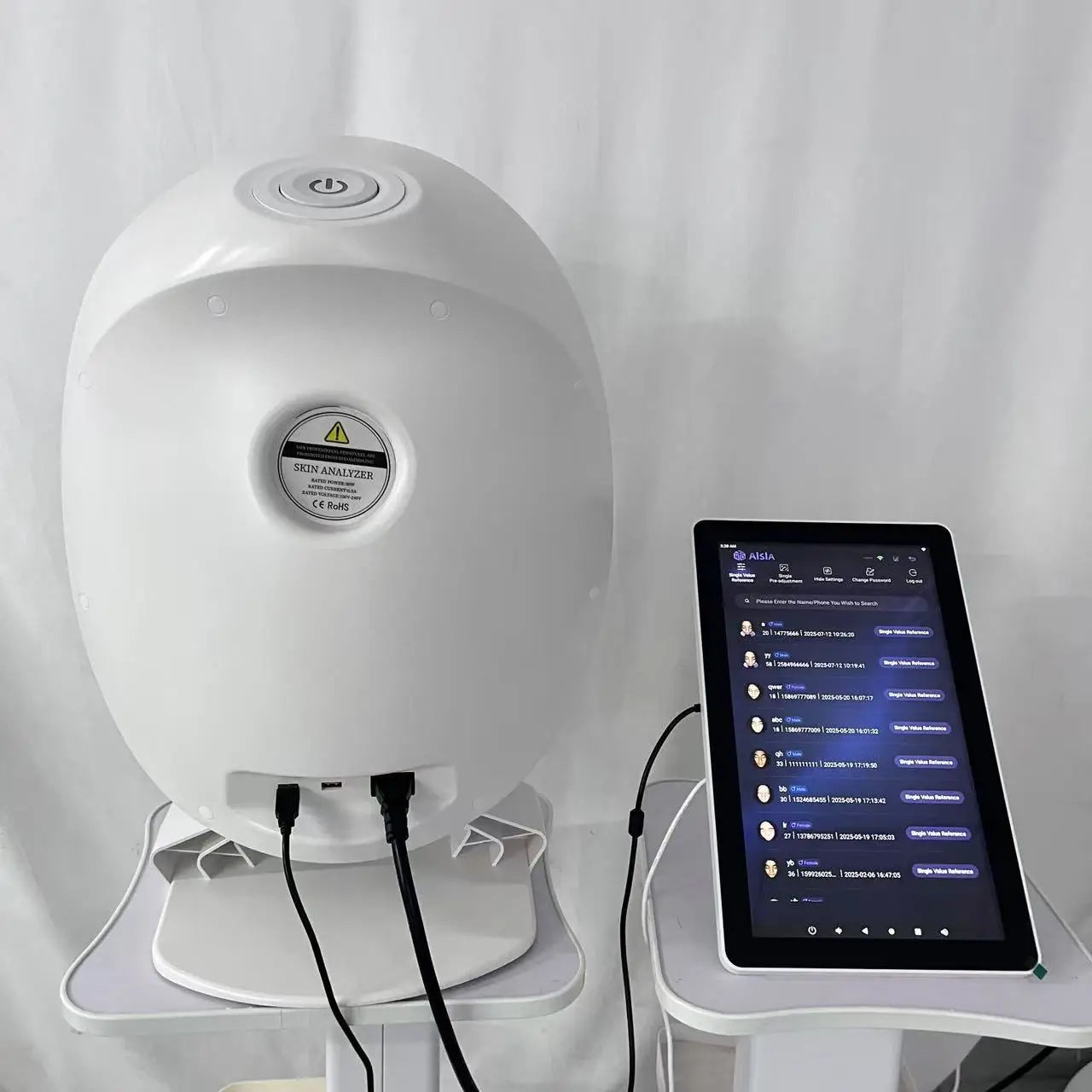
An AI skin analyzer machine is a professional system that combines facial imaging hardware, controlled illumination, image-processing software, and artificial intelligence algorithms to analyze visible or image-derived characteristics of facial skin. Depending on the system, analysis may include acne, pigmentation, pores, wrinkles, texture, skin tone, redness, moisture, sebum, elasticity, or other cosmetic skin indicators.
AI skin analyzer machine definition
The basic workflow is straightforward: capture standardized facial images, process those images, identify relevant facial regions, apply algorithms to detect or classify visual patterns, and convert the results into a digital report. More advanced systems can also retain images and results so professionals can compare skin changes during subsequent consultations.
AI skin analysis technology vs. traditional skin assessment
Manual skin assessment relies heavily on visual examination, professional experience, client questioning, touch, and consultation history. These methods remain useful, but they can make it difficult to consistently document subtle changes or compare the same characteristics across multiple appointments.
Digital facial imaging adds a visual record that can support a more structured consultation. Instead of relying only on what can be seen under ordinary room lighting, professionals can use standardized images and algorithmic analysis to identify patterns that may be less obvious during a conventional examination.
Hardware-based analyzers vs. camera and app-based analysis
A dedicated analyzer generally provides greater control over the imaging environment than a smartphone. Camera position, illumination, facial alignment, and capture distance can be standardized. App-based systems may be less expensive and more convenient, but results can vary with the phone camera, room lighting, angle, makeup, and distance from the face.
For professional businesses that need repeatable consultation records, the hardware-versus-software distinction is therefore more important than the word “AI” alone. Buyers should evaluate the entire capture and analysis system.
How AI Skin Analysis Technology Works
Step 1: Controlled facial image capture
A professional skin analysis session begins with image acquisition. Consistent positioning, camera distance, facial orientation, illumination, and skin preparation can improve the repeatability of results. If one appointment is photographed under bright white lighting and the next under warm ambient lighting, apparent changes in tone or redness may partly reflect the capture environment rather than an actual change in skin.
Step 2: Facial imaging and specialized illumination
Different systems use different imaging approaches. Standard visible-light imaging captures the skin much like a conventional high-resolution camera. Polarized imaging can help manage surface reflections and emphasize certain visual characteristics. Multispectral or spectrum-based systems use multiple wavelength ranges to collect information that ordinary photographs may not capture as clearly. UV imaging can reveal particular patterns associated with surface characteristics that are difficult to see under normal illumination.
Step 3: AI image segmentation
Before analyzing individual characteristics, software can identify the facial region and segment areas of interest. Segmentation helps distinguish skin from hair, eyes, lips, background, and other areas that should not be included in a particular calculation.
Step 4: Algorithmic skin analysis
Algorithms can then detect, classify, or score visual patterns. Depending on the system and its validation, these may include visible pigmentation, pore appearance, wrinkles, texture, acne-related features, redness, and variations in skin tone. Importantly, an algorithmic score is not automatically equivalent to a direct physiological measurement.
Step 5: Digital skin reports and recommendations
The final stage converts image-analysis results into a report that can support a professional consultation. A report may present scores, images, detected characteristics, comparisons, and recommendations. Buyers should distinguish between image-derived findings and AI-generated recommendations. A recommendation engine is an interpretation layer; it should not be presented as proof that a particular medical condition exists.
For professionals looking to expand their technology setup, skin and beauty care devices can also provide context for how digital tools fit alongside other professional and personal-care equipment.
What Can an AI Skin Analyzer Machine Measure?
The phrase “skin analysis” covers several different types of measurement. Before buying a machine, determine whether each metric is directly measured by a sensor, estimated from facial images, or classified by an AI algorithm.
Skin hydration measurement
Hydration is one of the most important examples of why terminology matters. Some dedicated instruments measure properties associated with skin hydration using physical sensors. An imaging-based analyzer may instead estimate or classify moisture-related characteristics from images and algorithms. Buyers should ask the manufacturer exactly how “moisture” or “hydration” is calculated rather than assuming every moisture score represents a direct physiological measurement.
Sebum measurement
Sebum analysis can similarly involve dedicated measurement hardware or image-based assessment. Image analysis may identify visible oiliness or related facial patterns, while a dedicated sebum instrument may use a different measurement principle. These approaches should not automatically be treated as interchangeable.
Pigmentation and skin tone analysis
Digital facial imaging can help identify visible spots, pigmentation patterns, and uneven tone. Multiple imaging wavelengths can potentially provide more information than a standard photograph, but results remain dependent on illumination, camera characteristics, skin preparation, algorithm design, and validation.
Pore analysis
High-resolution imaging can support pore detection by identifying small visual structures on the skin surface. Camera resolution and image quality matter because insufficient detail can make segmentation less consistent. Pore scores should therefore be interpreted as image-based assessments unless the manufacturer documents a different measurement method.
Wrinkle and texture analysis
Wrinkle detection systems can use facial images to identify lines, surface patterns, and texture variations. These outputs can be useful for consultation and progress tracking, but an image-derived wrinkle score is different from a clinical measurement of skin structure.
Redness and visible vascular features
AI facial imaging can identify areas of visible redness or color variation. However, visible redness does not establish its underlying cause. Cosmetic imaging should not be used to infer a medical diagnosis without appropriate clinical evaluation.
UV damage imaging
Some professional systems use UV or specialized illumination to visualize patterns that are difficult to see under ordinary lighting. UV imaging can be useful for client education and cosmetic assessment, but buyers should verify exactly what the system detects and what its results have been validated to represent.
Metric comparison: measured, estimated, or AI-classified
- Directly measured: A physical sensor measures a defined property using a documented measurement principle.
- Image-derived: Software extracts characteristics from captured facial images.
- AI-classified: An algorithm identifies or categorizes visual patterns based on its training and validation methodology.
- AI-recommended: Software interprets available findings to suggest skincare actions or products.
This framework is one of the most important questions to ask before purchasing an AI facial skin analyzer.
AI Skin Analyzer Machine Comparison Matrix
The following matrix is designed as a procurement framework rather than a ranking. A machine can have excellent specifications in one category and still be unsuitable for a particular professional workflow.
| Evaluation factor | What to compare | Why it matters |
| Imaging method | Visible light, polarized, multispectral, spectrum-based, UV, or combinations | Determines what visual information can be captured |
| AI analysis | Detection, classification, scoring, segmentation, recommendations | Clarifies what “AI-powered” actually means |
| Detectable concerns | Acne, pigmentation, pores, wrinkles, moisture, sebum, tone, elasticity, texture | Matches the system to consultation goals |
| Image resolution | Camera resolution and image quality | Higher detail can support more detailed visual analysis |
| Lighting control | Standardized illumination and capture conditions | Supports repeatability between sessions |
| Reporting | Scores, images, reports, comparisons, exports | Determines how useful results are during consultations |
| Customer records | Image history and longitudinal tracking | Supports progress comparisons |
| Recommendations | AI or software-generated skincare recommendations | Can streamline consultation workflows |
| Connectivity | Computer, tablet, USB, Wi-Fi, Bluetooth, or other supported connections | Affects installation and workflow integration |
| Calibration | Calibration process and quality-control requirements | Important for repeatable measurements and imaging |
| Certifications | Applicable certifications and documented compliance | Supports procurement and risk assessment |
| Warranty | Warranty duration and coverage | Reduces equipment ownership risk |
| Support | Training, installation, maintenance, troubleshooting | Influences long-term usability |
Hardware capabilities vs. software capabilities
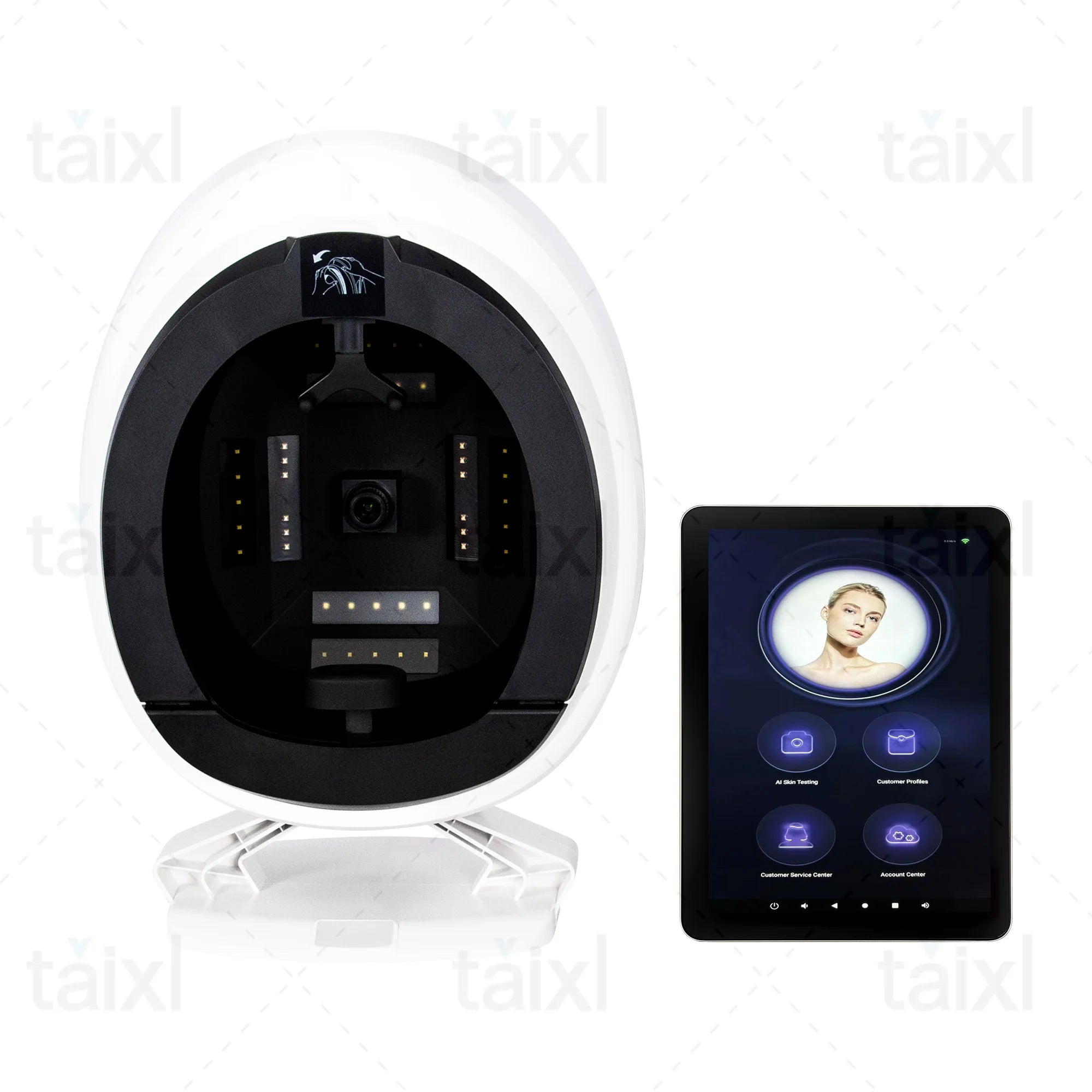
Hardware determines important characteristics such as camera quality, illumination, physical positioning, and imaging modalities. Software determines much of the segmentation, analysis, reporting, storage, and recommendation experience.
This distinction is especially important when comparing machines that appear similar on paper. A high-resolution camera does not automatically guarantee better AI analysis, while sophisticated software cannot recover information that the imaging hardware never captured.
Multispectral Imaging vs. Polarized Imaging vs. Standard Facial Imaging
Standard visible-light facial imaging
Visible-light imaging is the closest approach to conventional photography. It is useful for documenting visible pigmentation, acne-related features, pores, wrinkles, texture, and overall tone. Its primary advantage is familiarity and simplicity. Its limitation is that ordinary visible images cannot provide every type of information that specialized illumination can reveal.
Polarized imaging
Polarized imaging can reduce certain surface reflections and change how particular skin features appear in an image. This can help imaging software distinguish visual patterns that may be obscured by glare in conventional photography.
Multispectral imaging
Multispectral imaging uses multiple wavelength ranges rather than relying on a single visible-light image. The additional spectral information can help distinguish patterns that appear similar in ordinary photographs. However, “multispectral” should not be treated as a universal guarantee of accuracy. The relevant wavelengths, capture method, algorithms, calibration, and validation still matter.
UV imaging
UV imaging uses ultraviolet illumination to visualize patterns that may not be readily apparent under visible light. It can add another dimension to cosmetic skin imaging, particularly for education and visualization, but the output must be interpreted within the limitations of the particular device.
Which imaging approach is appropriate for different businesses?
Salons may prioritize fast, easy-to-understand reports and client education. Med spas may place greater emphasis on treatment tracking and consultation workflow. Clinics may require stronger documentation, validation, privacy controls, and interoperability. Retailers may prioritize customer engagement and recommendation workflows.
The right imaging system is therefore the one that provides useful information for the business's specific workflow rather than the machine with the longest feature list.
How Accurate Are AI Skin Analyzer Machines?
Accuracy is one of the most important—and most frequently oversimplified—questions in professional skin analysis.
What accuracy means in skin analysis
Accuracy can mean several different things: whether a feature is detected, whether it is correctly classified, how closely a score corresponds with a reference measurement, or whether repeated scans produce consistent results. These concepts should not be collapsed into a single percentage.
Validation and clinical evidence to look for
When evaluating a machine, ask whether the manufacturer provides validation studies, reference standards, sample populations, methodology details, and documented limitations. A credible technical claim should explain what was tested and under what conditions.
Repeatability and environmental variables
Lighting, camera distance, facial position, makeup, skincare products, skin moisture, and ambient conditions can influence image-based results. Professional systems should therefore have a documented capture procedure that staff can follow consistently.
Calibration and quality control
Calibration is particularly important when the system is used to track changes over time. If the imaging conditions or device calibration change substantially between visits, differences in reports may partly reflect the measurement system rather than the client's skin.
Measured data vs. AI interpretation
A machine may provide a numerical score, but the number alone does not establish how directly that score corresponds to a physiological property. Buyers should ask what the score represents, how it was validated, and whether it is intended for cosmetic assessment, research, consultation, or another purpose.
AI Skin Analyzer Machine vs. App-Based Skin Analysis
Dedicated hardware analyzers
Dedicated professional analyzers can provide controlled imaging, specialized illumination, standardized positioning, structured reporting, and customer-history functions. These features can be valuable when multiple professionals need to follow the same consultation procedure.
Smartphone and app-based analysis
Smartphone analysis offers accessibility and a lower barrier to entry. It can be useful for consumers and businesses that need basic image-based assessment without investing in dedicated equipment. The trade-off is that camera quality, lighting, angle, distance, and software behavior can vary significantly between sessions.
Which is better for professional use?
For professional environments, dedicated equipment is generally more attractive when standardized imaging, detailed reporting, repeatable capture, and client records are central to the workflow. App-based analysis may be sufficient when convenience and cost are more important than controlled capture.
For businesses evaluating other professional technology alongside facial analysis equipment, body care and health devices can help provide a broader view of equipment categories used in professional and personal-care workflows.
Professional Workflow and Reporting Features to Evaluate
Digital skin reports
A useful report should turn complex imaging results into information that a professional can actually use. Look for clear dashboards, images, scores, side-by-side comparisons, export options, and client-facing summaries.
Customer records and treatment tracking
Longitudinal tracking can be one of the strongest practical benefits of professional skin analysis. Saving previous images and reports allows professionals to compare changes rather than relying entirely on memory.
Personalized skincare recommendations
Recommendation engines can help structure consultations, but recommendations should remain distinct from measured findings. A strong workflow makes it clear which observations came from imaging and which recommendations were generated by software.
Cloud software and data management
Cloud-based systems may offer convenient access across devices, but buyers should ask where facial images are stored, how long records are retained, who can access them, how accounts are secured, and whether records can be deleted.
Connectivity and interoperability
Before purchasing, determine whether the analyzer works with the computers, tablets, printers, customer-management systems, or other software already used by the business. Compatibility problems can reduce the practical value of otherwise impressive equipment.
For qualified professional buyers looking for a dedicated system, this professional AI Skin Analyzer for facial skin analysis combines a 36MP industrial HD camera with 8-spectrum imaging and AI-powered analysis. Its documented specifications include analysis of acne, pigmentation, pores, wrinkles, moisture, sebum, skin tone, and elasticity, along with digital reporting and image tracking.
How to Choose an AI Skin Analyzer Machine by Business Type
Best considerations for dermatology and aesthetic clinics
Clinics should place validation, repeatability, documentation, privacy, intended-use claims, interoperability, technical support, and regulatory positioning near the top of the buying checklist. The most important question is not simply whether the system produces attractive images, but whether its outputs are appropriate for the intended professional workflow.
Best considerations for med spas and aesthetic practices
Med spas may benefit most from a balance of imaging depth, treatment tracking, reporting, staff usability, and consultation efficiency. A system that makes before-and-after comparisons easy can also help professionals document cosmetic changes over time.
Best considerations for salons and spas
Salons and spas may prioritize simple operation, fast reports, client education, compact equipment, and ease of training. The best system is often one staff members can use consistently without adding excessive complexity to appointment workflows.
Best considerations for skincare retailers
Retail environments may place greater emphasis on customer engagement, product recommendation workflows, digital reports, and customer records. Here, the value of an analyzer can come from making consultations more structured rather than simply adding more technical measurements.
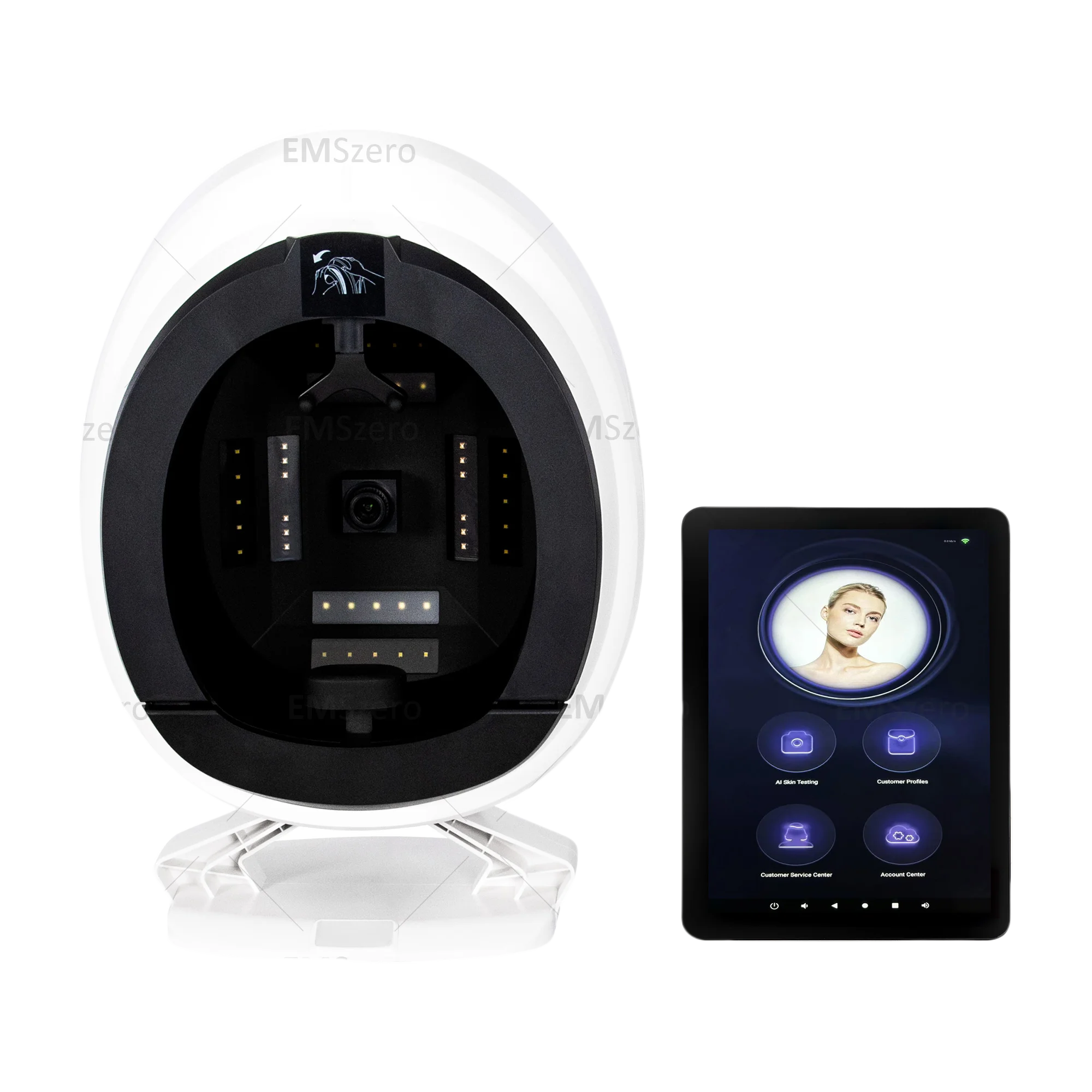
For businesses specifically seeking a professional facial imaging workflow, the MYOSLIM AI skin analyzer system is designed for beauty salons, skincare clinics, and professional skin management businesses. Its listed configuration includes 36MP HD imaging, 8-spectrum technology, digital analysis reports, image tracking, CE and RoHS certification, and a one-year warranty.
AI Skin Analyzer Machine Cost: What Determines the Price?
Hardware and imaging system costs
Camera resolution, imaging modalities, specialized illumination, sensors, physical construction, and positioning mechanisms can all influence equipment pricing. A machine that captures multiple imaging modes will generally have a different hardware cost structure from a basic camera-based system.
Software and subscription costs
Buyers should determine whether AI analysis, cloud storage, software updates, additional users, reporting, or recommendation functions are included in the purchase price or charged separately.
Installation, training, calibration, and maintenance
Professional equipment costs can extend beyond the initial invoice. Ask about installation, staff training, calibration, maintenance, replacement parts, software updates, and technical support before comparing quotes.
Total cost of ownership questions to ask
- Is the analysis software included?
- Are there recurring cloud or subscription fees?
- Are software updates included?
- How often is calibration required?
- Who provides technical support?
- Is staff training included?
- What happens if the camera or illumination system fails?
- Can customer records be exported?
- What are the data-storage and retention costs?
AI Skin Analyzer Machine Buying Checklist
Imaging and measurement checklist
- Verify the imaging modalities and wavelengths used.
- Confirm camera resolution and image quality.
- Ask how lighting and facial positioning are standardized.
- Identify which metrics are directly measured versus image-derived.
- Ask how AI segmentation and classification work.
- Verify calibration procedures.
Software and reporting checklist
- Review the actual digital report format.
- Check whether previous images can be compared side by side.
- Confirm whether customer records are stored.
- Ask whether reports can be exported or printed.
- Determine whether recommendations are generated automatically.
- Check how software updates are delivered.
Business and integration checklist
- Confirm compatibility with existing computers and workflow systems.
- Evaluate staff training requirements.
- Check the average capture and reporting workflow.
- Confirm connectivity requirements.
- Consider equipment footprint and installation requirements.
Trust and risk checklist
- Request manufacturer credentials and technical documentation.
- Ask for validation evidence where available.
- Verify certifications and applicable compliance claims.
- Review documented measurement limitations.
- Understand facial-image privacy and data-retention practices.
- Confirm warranty coverage.
- Ask about technical support and maintenance.
AI Skin Analyzer Machine Pros & Cons
Pros
- Creates a structured digital record of facial skin characteristics.
- Can reveal visual patterns that may be difficult to assess under ordinary conditions.
- Supports standardized consultation workflows.
- Can make before-and-after comparisons easier.
- Specialized imaging can provide information beyond a conventional photograph.
- Digital reports can improve client education and consultation communication.
- Professional systems can support ongoing skin-condition tracking.
Cons
- Image-derived results depend on capture conditions and image quality.
- Not every moisture, sebum, or elasticity score represents a direct physical measurement.
- AI classifications depend on algorithm design and validation.
- Dedicated hardware costs more than many app-based alternatives.
- Calibration and staff procedures may be required for consistent results.
- Cloud-connected systems introduce additional data-management and privacy considerations.
- AI skin analysis should not automatically be treated as medical diagnosis.
What an AI Skin Analyzer Machine Cannot Tell You
AI skin analysis is not automatically medical diagnosis
An AI skin analyzer can support cosmetic assessment and professional consultation, but an image-derived finding should not automatically be interpreted as a medical diagnosis. Whether a device is considered a medical device depends on its specific intended use, manufacturer claims, regulatory status, and applicable jurisdiction.
Image-based findings have measurement limitations
Makeup, skincare products, lighting, camera distance, facial position, skin moisture, reflections, calibration, and algorithm limitations can all affect image-based results. A professional workflow should minimize these variables whenever possible.
When professional clinical evaluation is still necessary
Persistent, changing, painful, bleeding, suspicious, or otherwise concerning skin findings may require assessment by an appropriately qualified healthcare professional. Cosmetic imaging technology can support documentation and consultation, but it should not replace clinical evaluation when a medical assessment is warranted.
Data Privacy, Security, Certifications, and Vendor Support
Facial image and customer data privacy
Facial images are sensitive business data even when the system is used for cosmetic purposes. Ask vendors about storage location, retention periods, user permissions, access controls, cloud hosting, backups, deletion procedures, and data export.
Certifications and regulatory claims
Do not select equipment solely because a product page displays certification badges. Ask the supplier which certification applies, what product configuration it covers, and whether the certification is relevant to the intended market and use.
The documented professional analyzer discussed in this guide lists CE and RoHS certification and a one-year warranty. Buyers should still confirm current documentation, applicable market requirements, and intended-use information with the supplier before procurement.
Warranty, training, maintenance, and technical support
Vendor support can materially affect the value of professional imaging equipment. Ask how installation works, how staff are trained, how calibration is handled, how software problems are resolved, and what happens when hardware requires service.
Businesses building a broader beauty technology offering may also find beauty and self-care resources useful when planning educational content around professional and consumer skincare technology.
Frequently Asked Questions About AI Skin Analyzer Machines
What is an AI skin analyzer machine and how does it work?
An AI skin analyzer machine combines facial imaging hardware, controlled illumination, image processing, AI algorithms, and reporting software. It captures standardized facial images, segments relevant skin areas, analyzes visual characteristics, and converts the results into digital reports. Some systems also store images and results for longitudinal comparison.
What can an AI skin analyzer machine accurately measure?
Capabilities vary by system. Professional analyzers may evaluate acne, pigmentation, pores, wrinkles, moisture, sebum, skin tone, texture, redness, or elasticity. However, buyers should determine whether each result is a direct measurement, an image-derived estimate, or an AI classification. The technology and validation methodology matter more than the metric name alone.
Are AI skin analyzer machines more accurate than app-based skin analysis?
A dedicated machine can provide more controlled and repeatable imaging because its camera, illumination, positioning, and capture environment can be standardized. However, accuracy still depends on the specific measurement method, algorithm, calibration, validation, and operating conditions. A professional machine is not automatically accurate simply because it uses AI.
How much does an AI skin analyzer machine cost?
Pricing depends on camera resolution, imaging modalities, illumination, AI software, reporting features, cloud services, customer records, installation, training, calibration, maintenance, and support. Compare total cost of ownership rather than the hardware price alone.
Is an AI skin analyzer machine a diagnostic medical device?
Not necessarily. Classification depends on the individual device, manufacturer claims, intended use, jurisdiction, and applicable regulatory framework. Cosmetic skin analysis should not automatically be treated as medical diagnosis, and concerning skin findings may require evaluation by an appropriately qualified healthcare professional.
Final Takeaway: How to Choose the Right AI Skin Analyzer Machine
The best AI skin analyzer machine is not necessarily the one with the most impressive marketing claims. For professional buyers, the better approach is to evaluate the complete measurement chain: imaging methodology, illumination, camera quality, AI segmentation, analysis algorithms, calibration, repeatability, reporting, data management, privacy, certifications, support, and total ownership cost.
Buyers should also distinguish between what the system measures, what it estimates from images, what it classifies with AI, and what it recommends through software. That distinction makes it easier to compare machines objectively and avoid paying for capabilities that do not materially improve the intended workflow.
For salons, skincare clinics, and professional skin management businesses seeking a dedicated facial analysis system, the AI Skin Analyzer for Professional 3D Facial Skin Analysis offers a documented combination of 36MP industrial HD imaging, 8-spectrum technology, AI-powered analysis, multiple skin indicators, digital reports, and image tracking. Its specifications can be evaluated against the same criteria outlined in this guide rather than against an unsupported generic accuracy claim.
Before purchasing, compare technical specifications on an equivalent basis, request documentation for validation and certifications, clarify software and support costs, and ask how the system handles calibration, repeat scans, customer records, and facial-image privacy. For qualified buyers, requesting detailed product specifications or a quote is a practical next step after confirming that the imaging methodology and workflow fit the business.
Pillar Article: AI Facial Analyzer for Estheticians: Best Options Compared













