

AI Skin Analyzer Machine: Features, Benefits & Buying Guide
An AI skin analyzer machine combines facial imaging, computer vision, and artificial intelligence to turn a visual skin assessment into a more structured and measurable consultation. Instead of relying only on what can be seen under ordinary lighting, professional systems can analyze characteristics such as pigmentation, pores, wrinkles, moisture, sebum, skin tone, acne, and elasticity. For salons, estheticians, skincare clinics, and other consultation-based businesses, this can make facial skin analysis more consistent and easier to document over time.
The value of an AI skin analyzer is not simply the number of features it lists. Imaging quality, spectrum technology, analysis capabilities, reporting, client history, software workflow, and professional interpretation all affect how useful the system is in practice. This guide explains what these machines do, how they work, what they can assess, and what to compare before choosing professional skin analysis equipment.
What Is an AI Skin Analyzer Machine?
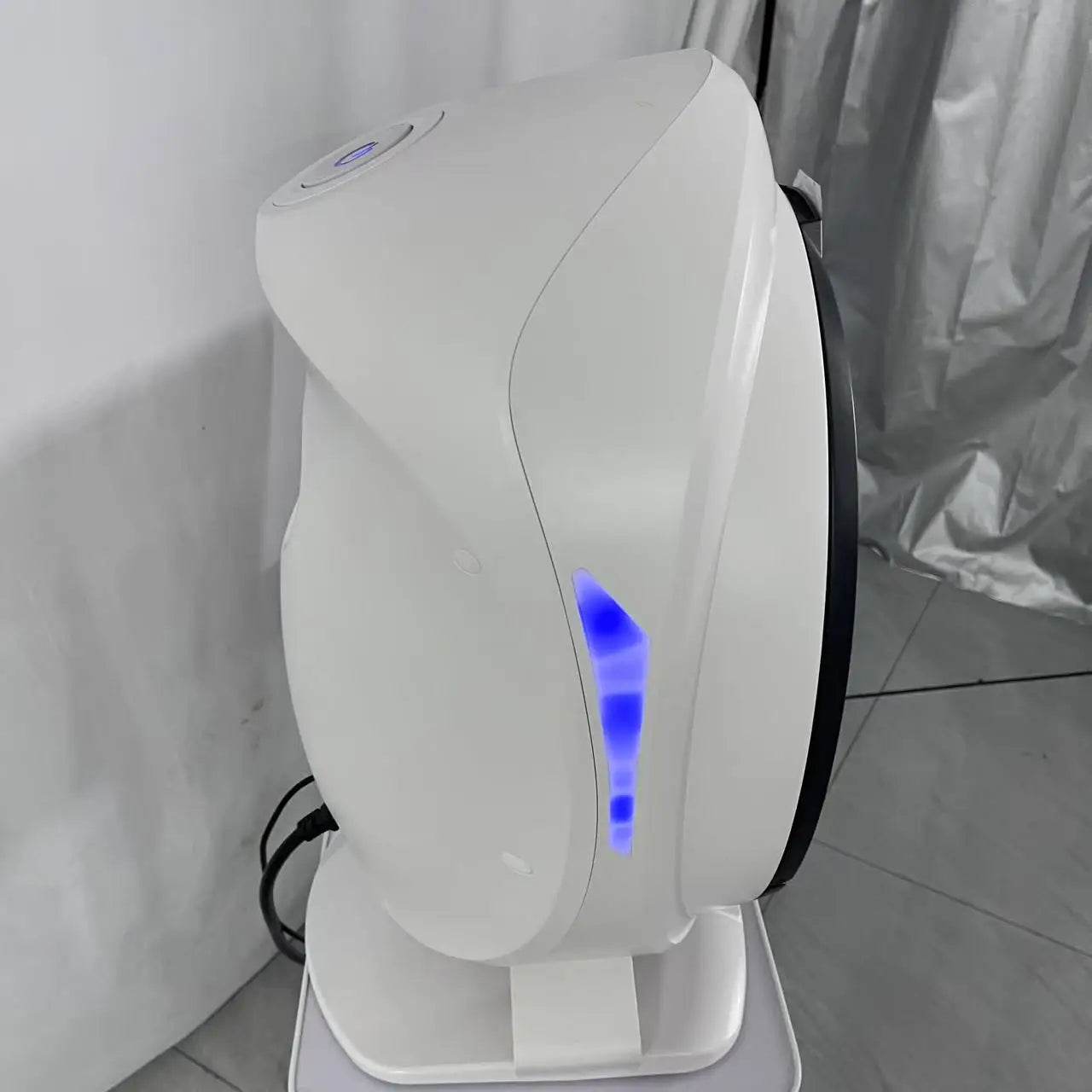
An AI skin analyzer machine is a professional facial analysis system that captures detailed facial images and uses image-processing and artificial intelligence technologies to evaluate multiple skin characteristics. Unlike a basic camera that records an image, an AI-powered analyzer is designed to organize facial imaging into structured skin-analysis information that can support professional consultations.
In practical terms, the system helps professionals move from “what does the skin look like?” toward “what measurable characteristics should we evaluate, document, and monitor?”
AI Skin Analysis vs. Traditional Facial Skin Assessment
A traditional facial assessment may depend heavily on visual inspection, professional experience, lighting, and consultation questions. An AI skin analyzer adds digital imaging and structured analysis to that process. This can help create a more repeatable consultation workflow and provide visual information that is difficult to compare accurately with the naked eye alone.
The technology should therefore be viewed as a professional consultation aid rather than an automatic replacement for trained skincare professionals.
What Makes a Skin Analyzer “AI-Powered”?
AI becomes relevant when software analyzes captured facial data rather than simply displaying photographs. Depending on the system, algorithms can identify or classify visual patterns associated with concerns such as pigmentation, pores, wrinkles, uneven tone, acne, and other skin characteristics. The quality of those results depends on the imaging system, software, algorithms, training data, and capture conditions.
How Does an AI Skin Analyzer Machine Work?
Most professional AI facial analysis workflows can be understood as a sequence of image capture, skin imaging, computational analysis, and reporting.
1. Facial Image Capture
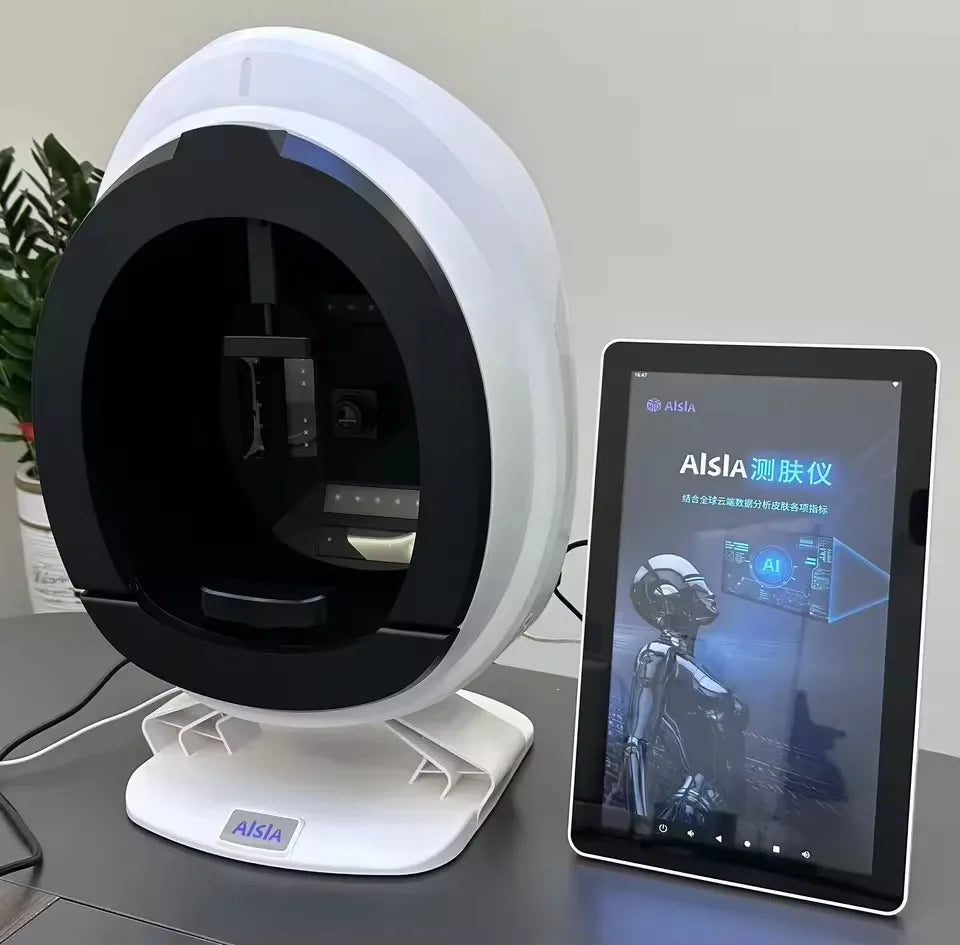
The process begins with controlled facial imaging. Camera resolution matters because detailed images provide more visual information for subsequent analysis. A professional system may also use dedicated lighting or multiple imaging conditions to capture characteristics that are difficult to distinguish in an ordinary photograph.
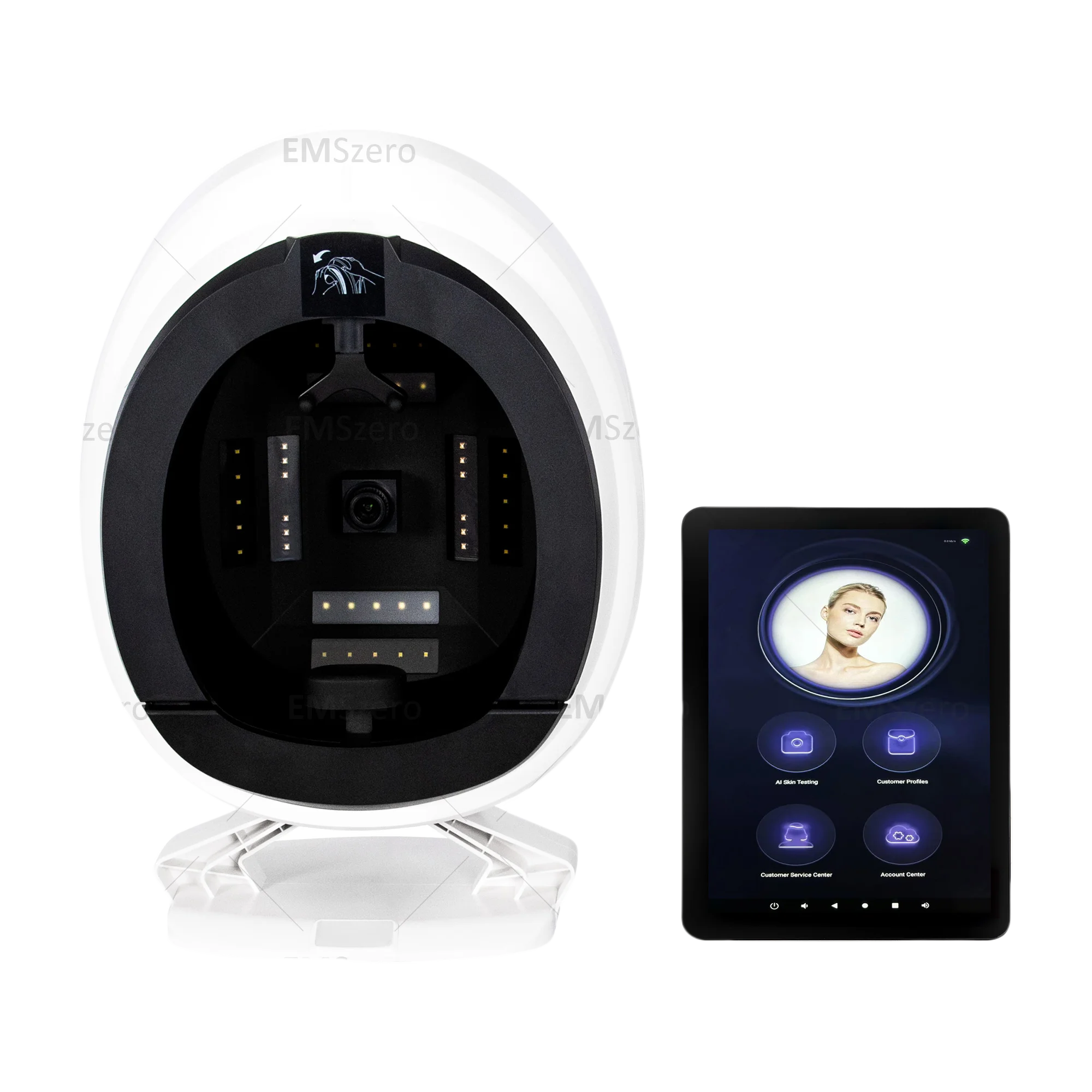
For example, the AI Skin Analyzer for Professional 3D Facial Skin Analysis uses a 36MP industrial HD camera and 8-spectrum imaging technology. Its specifications are designed around professional facial skin assessment rather than ordinary photography.
2. Skin Imaging and Data Processing
After image capture, the system processes facial images so that relevant areas and visual characteristics can be evaluated. Multiple imaging modes or spectrum-based imaging can provide additional information compared with a single conventional photograph.
3. AI-Based Skin Concern Analysis
The analysis layer evaluates selected skin characteristics using AI-powered image analysis. Depending on the system, these may include acne, pigmentation, pores, wrinkles, moisture, sebum, tone, and elasticity. The objective is to organize facial observations into information that can be used during a professional skincare consultation.
4. Results, Scores, and Treatment Recommendations
Many professional systems convert their analysis into digital reports or visual results. These reports can make consultation findings easier to explain to clients and can create a reference point for future assessments. Recommendations should still be interpreted by the appropriate skincare professional rather than treated as an independent medical diagnosis.
What Can an AI Skin Analyzer Detect?
The exact capabilities vary by device, imaging technology, and software. A professional AI skin analyzer may evaluate several common facial skin parameters, giving professionals a broader picture than visual inspection alone.
Skin Hydration and Moisture Levels
Moisture is an important part of many skincare consultations. Digital skin analysis can help organize information about moisture-related characteristics and make changes easier to discuss during follow-up consultations. It is important to distinguish software-based analysis from laboratory or clinical measurement methods, because different technologies do not necessarily measure the same physical property in the same way.
Skin Texture and Surface Irregularities
Texture analysis focuses on visible surface characteristics and irregularities. High-resolution imaging can make fine details easier to visualize and compare. This can be useful when discussing changes in texture as part of an ongoing skincare program.
Facial Pores and Congestion
Pores are commonly assessed during facial consultations. Detailed facial imaging can help professionals visualize pore appearance and related surface characteristics more consistently than casual visual inspection.
Hyperpigmentation and Uneven Skin Tone
AI skin analysis can help identify and visualize pigmentation patterns and uneven facial tone. Spectrum-based imaging can add another layer of information compared with standard photography, depending on the system's technology and software.
Wrinkles, Fine Lines, and Visible Aging
High-resolution facial images can make wrinkles and fine lines easier to document. This is particularly useful when the objective is to compare images across multiple consultations rather than relying on memory or subjective impressions.
Other Visible Skin Characteristics
Professional systems may also assess acne, sebum, and elasticity alongside pigmentation, pores, wrinkles, moisture, and tone. For example, the MYOSLIM system described in this guide is specified to evaluate acne, pigmentation, pores, wrinkles, moisture, sebum, tone, and elasticity.
Key Features to Look for in an AI Skin Analyzer Machine
When comparing professional systems, evaluate the complete workflow rather than focusing on one headline specification.
Imaging Quality and Camera Resolution
Camera resolution directly affects the level of facial detail available to the imaging system. A 36MP industrial HD camera, for example, provides a substantially different imaging foundation from a basic consumer camera. Resolution is not the only factor that matters, but it is an important starting point for evaluating image quality.
AI Analysis Accuracy and Skin Concern Detection
Look beyond the phrase “AI-powered.” Determine which skin characteristics the system actually analyzes, how results are presented, and whether the available analysis matches your consultation needs. A machine designed to assess acne, pigmentation, pores, wrinkles, moisture, sebum, tone, and elasticity may be more useful for a broad skincare consultation workflow than a system with a narrower analysis scope.
Multiple Imaging Modes or Lighting Conditions
Standard photography can miss visual differences that become more apparent under different imaging conditions. Spectrum-based imaging is therefore an important comparison point when evaluating professional facial analysis technology. The number of imaging modes should be considered together with what each mode contributes to the final analysis.
Automated Skin Reports and Visualization
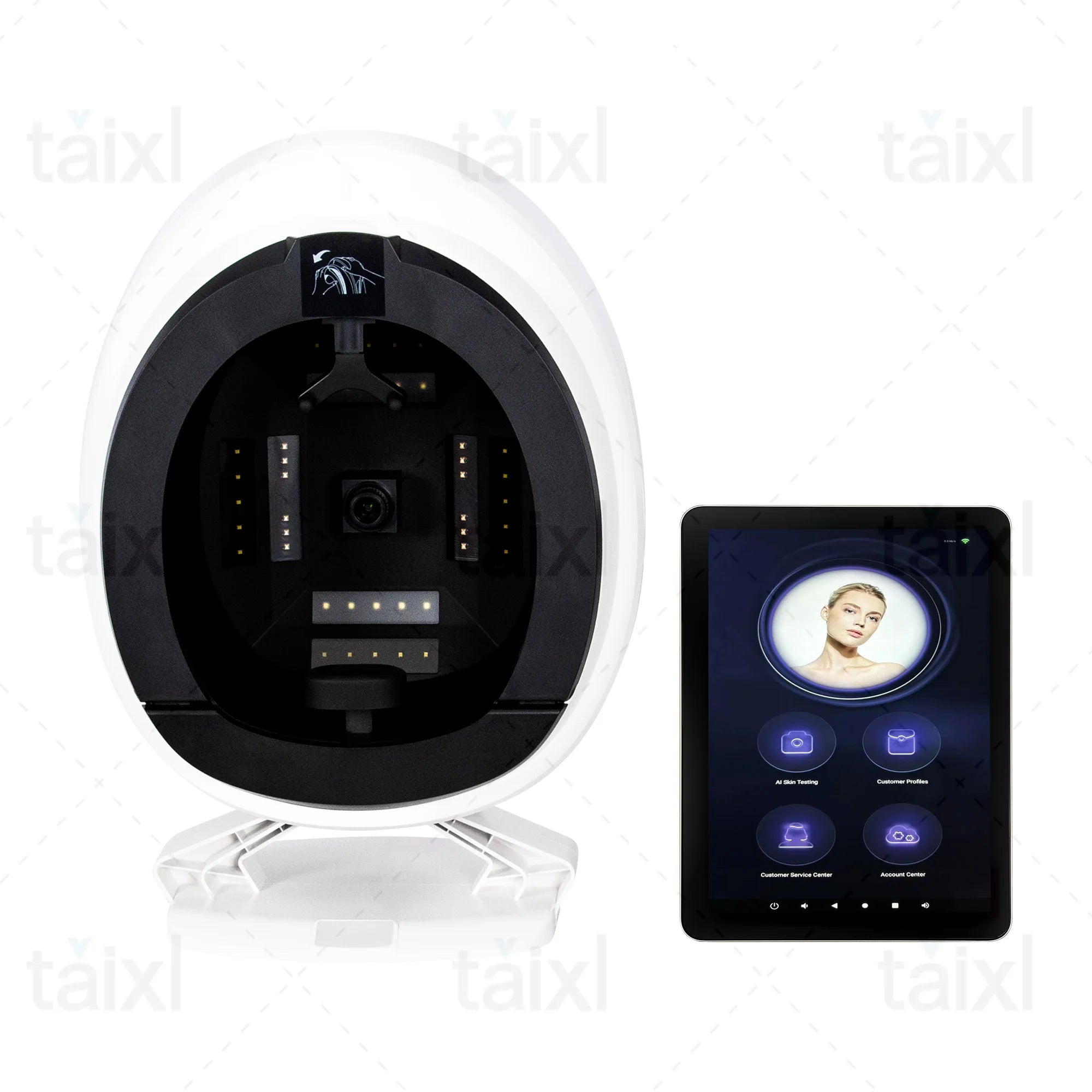
Reports turn analysis into something that can be used during a consultation. Look for clear visualizations, understandable results, and digital reporting that supports communication with clients rather than producing data that is difficult to interpret.
Client History, Progress Tracking, and Before-and-After Comparison
One of the strongest practical benefits of digital skin analysis is repeatability. If the system supports image tracking and data management, professionals can compare assessments over time and discuss changing skin characteristics with clients.
Ease of Use, Software, and Workflow Integration
A technically sophisticated analyzer still needs to fit into the daily consultation process. Consider setup, capture time, software usability, report generation, data management, and staff training. A system that is easy to operate consistently may provide more practical value than one with impressive specifications but a complicated workflow.
Data Privacy, Support, Training, and Total Cost of Ownership
Professional buyers should also consider how client data and facial images are managed, what training is provided, available support, warranty coverage, and the total cost of ownership. For example, the product specification supplied for the MYOSLIM AI skin analyzer lists CE and RoHS certification and a one-year warranty.
For businesses building a broader professional beauty-device setup, related equipment can also be explored through the Skin and Beauty Care Devices collection.
For a system that combines high-resolution imaging, spectrum technology, multiple skin indicators, digital reporting, and image tracking, you can also explore this professional AI skin analyzer as a reference point when comparing capabilities.
AI Skin Analyzer Comparison Matrix: What to Evaluate
- Basic facial camera: Primarily captures images; limited structured skin analysis.
- Digital skin scanner: May provide specialized skin imaging and measurements depending on its sensors and software.
- AI skin analyzer: Combines facial imaging with software-based analysis of selected skin characteristics.
- Multi-spectrum AI analyzer: Adds multiple imaging conditions or spectral information to broaden facial skin assessment.
- Professional consultation system: Places imaging and analysis inside a broader workflow that may include reports, client records, progress tracking, and consultation support.
This comparison does not mean that one category is universally better. The right choice depends on the skin parameters you need to assess, the depth of imaging required, the number of clients you serve, and how much reporting and progress tracking your workflow requires.
Benefits of Using an AI Skin Analyzer for Professional Skincare
More Consistent Facial Skin Analysis
Digital imaging creates a repeatable reference that can supplement professional visual assessment. This can reduce reliance on memory when comparing consultations and make findings easier to document.
More Personalized Skincare Consultations
When professionals have structured information about multiple skin characteristics, consultations can be more specific. Instead of discussing only the most obvious concern, the practitioner can consider several characteristics together when developing a skincare approach.
Better Client Education and Visualization
Clients may understand their skin more easily when they can see digital images and analysis results. Visual evidence can make otherwise abstract concepts such as uneven tone, pore appearance, or changes in skin texture easier to explain.
Progress Tracking Over Time
Repeat imaging provides a consistent visual reference for monitoring changing skin characteristics. This can be particularly useful for consultation-based businesses that want to document progress across multiple visits.
Stronger Professional Consultation Workflows
Automated reports, image tracking, and digital data management can help standardize parts of the consultation process. For businesses serving many clients, workflow efficiency can be as important as the imaging technology itself.
Professionals interested in complementary beauty equipment can also review the broader Body Care and Health Devices collection when planning a consultation-oriented equipment setup.
Who Should Use an AI Skin Analyzer Machine?
Estheticians and Skincare Professionals
Estheticians can use facial analysis technology to structure consultations, visualize skin characteristics, and establish reference images for follow-up appointments.
Med Spas, Salons, and Beauty Clinics
Salons and clinics that provide recurring skincare services can benefit from digital documentation and client-facing analysis. The technology can also help standardize how different staff members approach an initial skin consultation.
Dermatology and Aesthetic Practices
Aesthetic and dermatology-related practices may use facial imaging as an additional source of visual information. However, AI skin analysis should not automatically be treated as a medical diagnostic system unless the specific device and its regulatory status support that use.
Skincare Retailers and Consultation-Based Businesses
Retailers and businesses built around personalized skincare consultations may find structured facial analysis useful for educating customers and organizing recommendations. The technology is especially relevant when consultations are repeated and progress needs to be documented.
For related educational content, the Beauty & Self-Care Blog can provide additional skincare and beauty-device resources.
AI Skin Analyzer Machine Buying Guide: How to Compare Your Options
Define the Skin Concerns You Need to Analyze
Start with the consultation questions your business needs to answer. If your primary concerns are pigmentation and wrinkles, a system optimized for those characteristics may be sufficient. If you need a broader assessment covering acne, pores, moisture, sebum, tone, and elasticity, prioritize systems that explicitly support those indicators.
Compare Imaging and AI Capabilities
Compare camera resolution, spectrum or imaging technology, lighting conditions, analysis categories, and software functionality together. Do not assume that two products labeled as AI skin analyzers provide equivalent information.
Evaluate Reporting and Client-Facing Features
Ask whether the system produces reports that are useful in real consultations. Consider whether clients can understand the results, whether images can be compared over time, and whether the reporting workflow saves staff time.
Check Workflow, Training, and Software Requirements
Review how the device fits into your existing consultation process. Staff should be able to capture images consistently, understand the output, and explain the results appropriately. Training and software support should therefore be part of the buying decision.
Calculate the Total Investment and Expected Business Value
The purchase price is only one part of the investment. Consider setup, training, software, support, maintenance, warranty, workflow efficiency, and how the device may contribute to consultation quality and client retention. The strongest purchase is not necessarily the machine with the longest feature list; it is the system whose capabilities align with the actual needs of the business.
If your comparison points match the capabilities of a 36MP, 8-spectrum professional system, you can review the AI Skin Analyzer specifications and imaging features before making a final equipment decision.
AI Skin Analysis Limitations: What These Machines Cannot Tell You
Image Quality and Lighting Can Affect Results
Facial imaging is sensitive to capture conditions. Lighting, positioning, facial movement, camera setup, and other environmental factors can affect the resulting image. Consistent capture procedures are therefore important when comparing results over time.
AI Results Depend on the System and Training Data
“AI” is not a universal accuracy guarantee. Different systems use different imaging technologies, algorithms, datasets, and analysis methods. Buyers should evaluate the actual skin characteristics a system is designed to analyze instead of assuming that all AI analyzers have equivalent capabilities.
Skin Analysis Is Not the Same as Medical Diagnosis
An AI skin analyzer can provide structured information about facial skin characteristics, but skin analysis is not automatically equivalent to medical diagnosis. Suspicious lesions, persistent symptoms, or potential medical conditions require appropriate evaluation by qualified healthcare professionals.
Professional Interpretation Still Matters
The most useful role of an AI skin analyzer is to support professional judgment. The machine can provide images, analysis, reports, and comparisons, while the skincare professional provides context, consultation, and appropriate interpretation.
Conclusion: Choosing the Right AI Skin Analyzer Machine
The best AI skin analyzer machine is not necessarily the one with the greatest number of advertised features. A better evaluation starts with reliable facial imaging, relevant AI analysis, useful spectrum or imaging capabilities, clear reporting, progress tracking, manageable software, and a workflow that fits the business.
For professional skincare practices, the technology can make facial assessments more structured, visual, and repeatable while helping clients understand their skin characteristics. A system such as the AI Skin Analyzer for Professional 3D Facial Skin Analysis illustrates how high-resolution imaging, 8-spectrum technology, multiple skin indicators, digital reporting, and image tracking can be combined in one professional facial analysis workflow.
Ultimately, compare systems according to the skin concerns you need to assess, the quality of their imaging and analysis, their reporting and tracking capabilities, and how naturally they fit into your consultation process. That approach will help you choose professional skin analysis equipment based on practical value rather than feature count alone.
Pillar Article: AI Facial Analyzer for Estheticians: Best Options Compared













