
Best Aerial Yoga Equipment in 2026: Complete Home Buying Guide
Choosing the best aerial yoga equipment for home practice involves more than finding a colorful hammock with a high advertised weight capacity. Different products include different fabrics, suspension hardware, handles, mounting components, and installation requirements. A hammock-only set, a ceiling-mounted kit, and a freestanding aerial yoga system may look similar in product photos but offer very different setup options.
Before purchasing, consider where you plan to practice, whether your ceiling can accommodate an approved structural attachment, how much room you have, and which accessories are actually included. Fabric material, hammock dimensions, hardware documentation, working load limits, and manufacturer support also deserve attention.
This 2026 buying guide compares the main aerial yoga equipment configurations and explains how to select a suitable system for beginners, apartment users, dedicated home studios, travelers, and experienced practitioners.
Best Aerial Yoga Equipment in 2026: Quick Comparison of Home Setups
Most home aerial yoga equipment falls into three categories: hammock-only products, ceiling-mounted kits, and freestanding systems. The right configuration depends on your installation options and whether you already own compatible suspension hardware.
Complete Aerial Yoga Equipment Sets Compared
| Equipment type | Typical components | Installation requirements | Portability | Best suited for |
| Hammock-only product | Fabric hammock, sometimes handles and connectors | Requires separately sourced compatible suspension equipment | Usually high | Buyers who already have an approved suspension system |
| Ceiling-mounted kit | Hammock, suspension hardware, and potentially mounting components | Suitable structural attachment and approved installation | Low after installation | Dedicated home practice areas |
| Freestanding aerial yoga system | Support frame, suspension components, and compatible hammock | Correct assembly and adequate floor space | Varies by frame design | Users who cannot make permanent ceiling modifications |
These categories describe equipment configurations rather than interchangeable complete kits. Always check the seller's component inventory. A hammock advertised as a complete swing set may still exclude extension straps, ceiling mounts, or other components needed for installation.
Which Aerial Yoga Setup Is Best for Your Home?
- First-time buyers: Look for clearly documented fabric dimensions, included hardware, installation instructions, and manufacturer support. A transparent kit is easier to evaluate than a product with vague specifications.
- Apartment users: Check rental restrictions before considering permanent mounting. A compatible freestanding system may be an alternative if sufficient floor space is available.
- Dedicated home studios: A professionally assessed ceiling-mounted configuration may suit a permanent practice area where the structure and mounting system have been verified.
- Frequent travelers: Prioritize lightweight fabric, compact packed dimensions, and a carry bag. Portability does not mean every destination provides an appropriate suspension point.
- Experienced practitioners: Prioritize detailed fabric, hardware, compatibility, load-rating, and replacement-part documentation.
What to Check Before Buying an Aerial Yoga Set
Use this purchasing checklist to compare products before ordering:
- Fabric composition, weave, dimensions, and stretch characteristics.
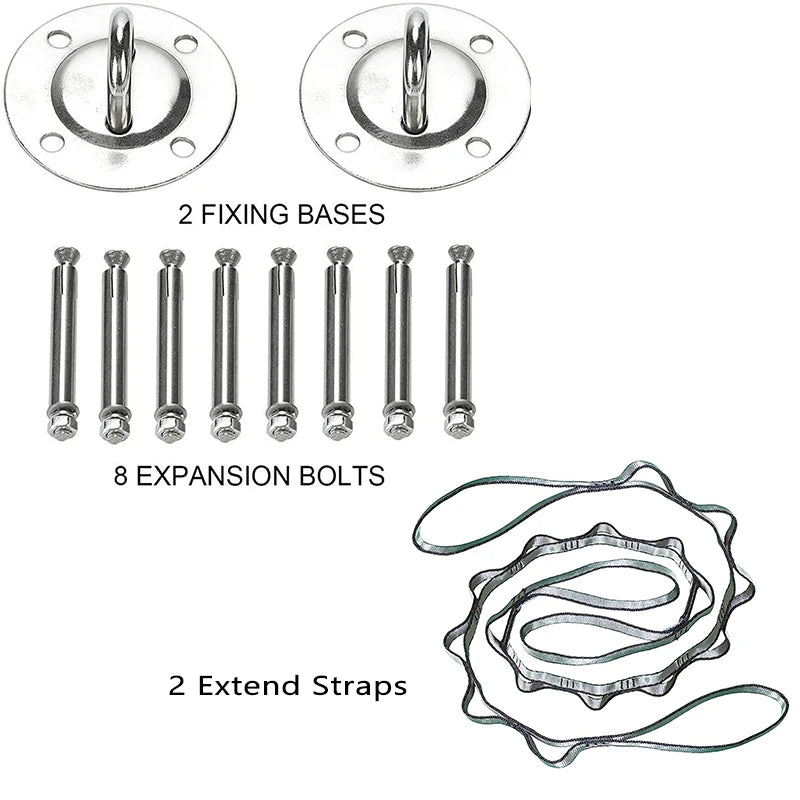
- Included handles, carabiners, daisy chains, and extension straps.
- Whether mounting plates and structural fasteners are included.
- Documented working load limit for the complete approved system.
- Compatibility between the hammock, connectors, and mounting equipment.
- Ceiling height, available practice space, and installation requirements.
- Warranty coverage, replacement components, and manufacturer support.
If you are comparing portable home equipment, the body care and health devices collection provides another place to explore home wellness equipment. For aerial practice, however, prioritize the actual suspension specifications rather than general product categories.
What Equipment Do You Need for Aerial Yoga at Home?
A home aerial yoga setup requires more than fabric. The hammock must connect to a compatible suspension arrangement, and that arrangement must transfer the applied loads to an appropriately assessed support structure or freestanding frame.
Essential Aerial Yoga Equipment Components
The main components include:
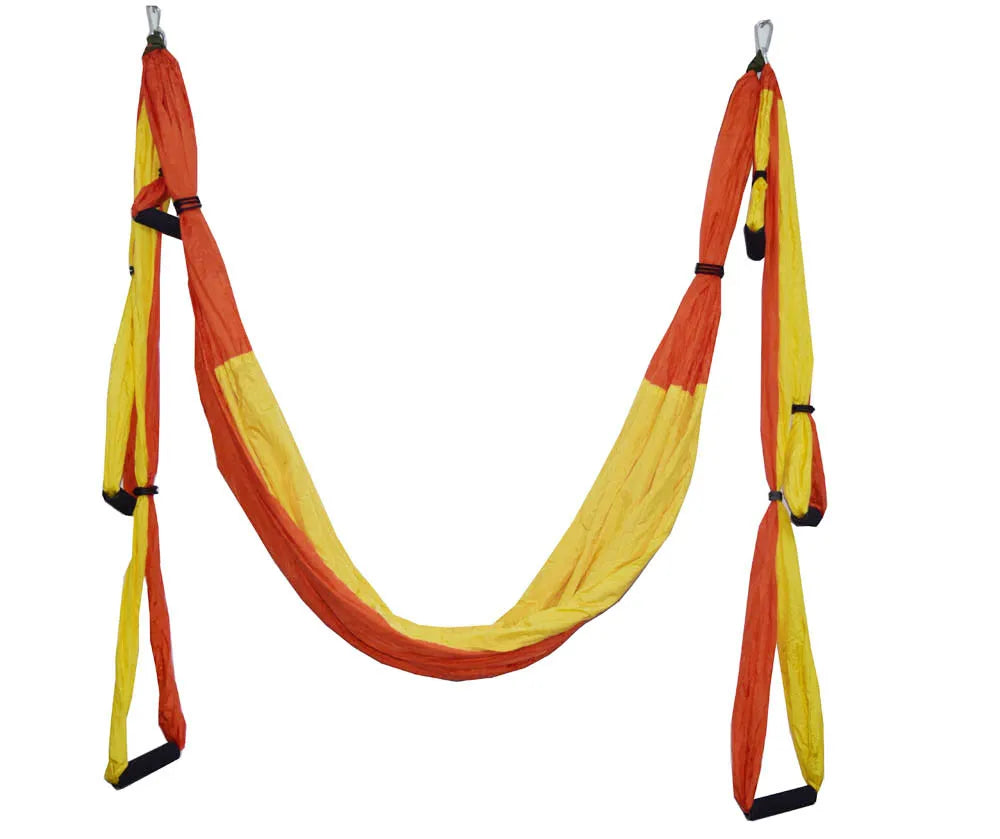
- Aerial yoga hammock: A length of fabric used for supported positions, stretching, seated movements, and selected inversion exercises.
- Carabiners: Connectors that join compatible suspension components. Their locking mechanism, material, manufacturer documentation, and rated application matter.
- Daisy chains: Adjustable webbing components that can provide different suspension lengths when approved for the system.
- Extension straps: Additional suspension components used to achieve compatible hanging configurations.
- Mounting plates: Structural attachment hardware used in certain ceiling-mounted systems.
- Freestanding support frame: An independent structure designed to support compatible aerial equipment.
What Should Be Included in a Complete Aerial Yoga Hammock Kit?
A complete kit should clearly identify every component required for its intended configuration. Depending on the manufacturer, the package may include:
- Hammock fabric with specified material and dimensions.
- Carabiners or other approved connectors.
- Daisy chains or adjustment straps.
- Extension straps, if required by the configuration.
- Handles or supplementary grip attachments.
- Ceiling mounting plates and compatible installation hardware, when applicable.
- Installation instructions and equipment documentation.
Do not assume that all these components come with every aerial yoga swing. Some products include the hammock and suspension accessories but exclude mounting equipment. Others require a separately purchased stand.
Essential Accessories vs Optional Aerial Yoga Accessories
Essential accessories are those required to complete the manufacturer's approved suspension configuration. Optional accessories improve convenience or provide additional practice options.
- Essential when specified: Compatible connectors, approved straps, mounting hardware, or a suitable support frame.
- Convenience accessories: Carry bags, storage solutions, and protective covers.
- Practice accessories: Additional handles or supplementary equipment approved by the manufacturer.
A carry bag is useful, but it does not make an otherwise incomplete suspension system ready for installation. Confirm the complete equipment requirements before purchasing.
How to Choose the Best Aerial Yoga Hammock Fabric
Fabric influences how an aerial hammock feels, how it supports the body, and which positions are practical. Buyers should compare the actual fabric construction and manufacturer specifications instead of relying exclusively on terms such as professional, premium, or heavy-duty.
Nylon vs Polyester Aerial Fabric: Key Differences
Nylon and polyester are both used in textile applications, but their characteristics differ. Actual performance depends on fiber construction, weave, fabric weight, finishing, and manufacturing quality.
| Comparison factor | Nylon aerial fabric | Polyester aerial fabric |
| Stretch characteristics | Depends on construction; non-elastic versions provide firm support | Generally designed with limited stretch in many applications, depending on construction |
| Texture | Can feel smooth and lightweight | Varies by weave and finish |
| Moisture behavior | Can absorb more moisture than polyester | Generally absorbs less moisture |
| Durability | Depends on fiber quality, weave, stitching, and care | Depends on fiber quality, weave, stitching, and care |
| Maintenance | Follow the manufacturer's cleaning instructions | Follow the manufacturer's cleaning instructions |
Neither material is automatically the best choice for every aerial yoga practice. A buyer should look for documented fabric specifications and suitability for the intended application.
How Fabric Stretch Affects Aerial Yoga Practice
Non-elastic fabric provides a relatively firm support surface, which can help practitioners become familiar with consistent hammock positioning. Stretch characteristics can influence how fabric wraps around the body, how much movement occurs under load, and how supported positions feel.
For beginners, predictable positioning and clear manufacturer guidance can make equipment easier to understand. However, non-elastic fabric is not automatically safer or more appropriate for every exercise.
Choosing the Right Hammock Width and Length
Fabric width and length are separate measurements. Width describes the fabric across its flat surface, while length describes the fabric from one end to the other before installation. Neither measurement directly establishes the final hanging height.
Wider fabric may provide more material for wrapping and supported positions. Longer fabric may provide additional adjustment possibilities, but the installed configuration also depends on suspension hardware, ceiling height, and manufacturer instructions.
Before ordering, compare:
- Flat fabric width.
- Total fabric length.
- Finished installation height and adjustment range.
- Compatibility with your intended suspension configuration.
- Manufacturer guidance for your height and intended practice.
Fabric Durability, Care, and Replacement
Fabric longevity depends on construction, exposure, usage, and maintenance. Inspect the material regularly for fraying, damaged seams, discoloration, unusual wear, or other changes that could affect its condition.
Follow the manufacturer's cleaning and drying instructions. Avoid unapproved chemicals, excessive heat, and prolonged environmental exposure that could degrade the fabric. Store equipment in suitable conditions when it is not in use.
Before buying, also check whether replacement fabric is available and whether the manufacturer provides clear guidance about when equipment should be retired.
Aerial Yoga Hardware: Carabiners, Daisy Chains, and Extension Straps
Suspension hardware is one of the most important parts of an aerial yoga equipment purchase. A visually impressive connector is not necessarily appropriate for aerial loading. Each component needs documented specifications and approval for its intended application.
Carabiners: What Specifications Should You Check?
Carabiners connect suspension components, but their suitability depends on their design and documented application. Check the following information:
- Manufacturer and product identification.
- Material and construction.
- Locking mechanism and correct closure.
- Documented load ratings and their intended conditions.
- Inspection and retirement guidance.
- Compatibility with the connected straps and attachment points.
Do not assume that a carabiner is suitable simply because it resembles climbing hardware. Climbing-rated equipment and general-purpose metal connectors are not interchangeable based on appearance.
Daisy Chains and Extension Straps: Functions and Compatibility
Daisy chains provide adjustable attachment positions in compatible systems. Extension straps provide additional length when a manufacturer-approved arrangement requires it.
When comparing these components, check:
- Webbing material and construction.
- Stitching and attachment-point design.
- Manufacturer identification and documented ratings.
- Approved connection configuration.
- Inspection requirements and replacement guidance.
Daisy chains and extension straps should not be treated as interchangeable unless the equipment manufacturer explicitly approves the arrangement.
Ceiling Mounting Plates and Suspension Hardware
A mounting plate provides an attachment interface between suspension hardware and a building structure. It does not independently establish that the ceiling is suitable for aerial loading.
Before purchasing a ceiling mounting system, verify the intended substrate, approved fasteners, installation specifications, and structural requirements. Generic anchors should never be substituted for specified mounting hardware without qualified approval.
How to Verify Complete Kit Hardware Compatibility
Use this compatibility checklist:
- Identify every component in the suspension chain.
- Confirm that each component is approved for the intended application.
- Check the documented ratings and limitations of every component.
- Verify that connector dimensions and attachment points are compatible.
- Follow the manufacturer's approved assembly configuration.
- Avoid combining unidentified hardware from unrelated products.
Aerial Yoga Hammock Installation: Ceiling Mounts vs Freestanding Stands
Installation is a major consideration when choosing aerial yoga equipment. A suitable hammock cannot compensate for an unsuitable ceiling, incompatible mounting hardware, or an incorrectly assembled frame.
Can You Install Aerial Yoga Equipment on a Regular Home Ceiling?
Ordinary drywall or plaster alone should not be treated as a structural attachment point for an aerial yoga hammock. The suspension system must connect to a suitable structural member or an appropriately assessed mounting location.
Ceiling appearance is not enough to determine structural suitability. A ceiling may contain hidden framing, concrete, suspended components, or other materials that require different assessment methods.
If you cannot verify the structure, consult a qualified professional before purchasing or installing permanent mounting hardware.
Installing Aerial Yoga Equipment on Wood Ceiling Joists
Wood joists may form part of a suitable structural installation, but locating one does not automatically establish that it can support aerial loading.
Assessment should consider:
- Joist dimensions and condition.
- Structural span and support arrangement.
- Existing damage, modifications, or deterioration.
- Load transfer through the surrounding structure.
- Manufacturer-approved mounting specifications.
Use appropriate professional assessment when the joist structure or installation requirements are uncertain.
Concrete Ceilings and Exposed Structural Beams
Concrete ceilings and exposed beams may provide potential structural attachment locations, but suitability depends on the actual construction and condition.
Concrete installations require assessment of substrate condition, anchoring requirements, and the appropriate approved fastening system. Exposed beams also need evaluation of their dimensions, material, condition, and structural role.
Do not substitute generic expansion anchors, ordinary screws, or unverified fasteners for an approved installation system.
When Ceiling-Mounted Installation Is Not Suitable
Consider another equipment configuration when:
- The only available attachment surface is drywall or plaster.
- The room has a suspended ceiling.
- Structural members cannot be identified or assessed.
- The building structure shows damage or deterioration.
- You rent the property and cannot obtain permission for modifications.
- The proposed mounting configuration cannot be verified.
Freestanding Aerial Yoga Stands: Benefits and Limitations
A freestanding aerial yoga stand uses an independent frame rather than relying on a permanent ceiling attachment. This can provide an alternative for homes where ceiling installation is impractical.
However, freestanding systems have their own requirements. Buyers should evaluate frame dimensions, assembly instructions, rated capacity, compatible suspension components, floor conditions, storage, and available practice space.
Portability varies substantially. Some frames are designed for disassembly, while others require more permanent floor space.
Ceiling-Mounted Hammock vs Freestanding Aerial Yoga Stand
| Factor | Ceiling-mounted system | Freestanding system |
| Structural dependency | Requires a suitable assessed building structure | Uses an independent frame |
| Permanent modifications | May require structural installation | Usually does not require ceiling modification |
| Floor space | Depends on the exercise and clearance | Must accommodate the frame footprint and movement area |
| Portability | Generally limited after installation | Depends on whether the frame can be disassembled |
| Setup considerations | Structural assessment and approved mounting | Correct assembly and frame inspection |
| Best suited for | Dedicated rooms with suitable structural mounting locations | Spaces where permanent ceiling mounting is unavailable |
If you are considering a fabric hammock for a compatible ceiling-mounted system, review the lifestyle collection alongside the individual product specifications. Do not assume that a hammock-only product includes a ceiling mounting system or that it is compatible with every freestanding stand.
Ceiling Height and Space Requirements for Home Aerial Yoga
Room dimensions influence which aerial yoga movements are practical. A setup that accommodates seated positions may not provide enough clearance for more extended movements or inversions.
How Much Ceiling Height Do You Need for an Aerial Yoga Hammock?
There is no universal ceiling-height requirement for every aerial yoga hammock. The necessary height depends on the hammock dimensions, suspension length, user dimensions, adjustment range, and intended exercises.
Before buying, compare the manufacturer's installation requirements with your actual ceiling height. Also establish the finished hammock height after all suspension components are installed.
How Much Floor Space and Clearance Should You Allow?
Plan for movement in every direction rather than measuring only the hammock's resting footprint.
- Allow clearance around the hammock for lateral movement.
- Remove nearby furniture and sharp-edged obstacles.
- Check the distance from walls, windows, and ceiling fixtures.
- Consider the space needed for mounting or assembling equipment.
- Maintain an appropriate clear floor area beneath the practice zone.
The necessary clearance depends on the specific exercises and equipment configuration. Follow the manufacturer's requirements and instructor guidance.
Planning a Dedicated Home Aerial Yoga Practice Area
Before purchasing equipment, assess the room using this checklist:
- Measure ceiling height and available floor space.
- Identify the ceiling construction and potential structural attachment locations.
- Check whether permanent installation is permitted.
- Evaluate nearby furniture, fixtures, and obstacles.
- Determine where the equipment will be stored.
- Confirm access for installation, inspection, and maintenance.
- Check ventilation and the condition of the practice floor.
Aerial Yoga Equipment Weight Limits: WLL vs Breaking Strength
Weight capacity is one of the most important specifications to understand when buying aerial yoga equipment. However, an advertised maximum weight figure does not automatically establish an approved working load for the complete suspension system.
What Is Working Load Limit (WLL)?
Working Load Limit (WLL) is the manufacturer's specified maximum permitted working load for equipment under stated conditions. Buyers should verify the actual rating, units, intended application, and supporting documentation before relying on a capacity claim.
What Is Minimum Breaking Strength (MBS)?
Minimum Breaking Strength (MBS) describes a specified minimum strength at which a component is expected to fail under defined testing conditions. It is not a permissible operating load and should never be treated as a substitute for a documented WLL.
Why the Lowest-Rated Component Matters
An aerial yoga system contains multiple connected components. Its operating limitations are affected by the weakest or lowest-rated component and the manufacturer's restrictions for the complete configuration.
These components may include:
- Hammock fabric and stitching.
- Carabiners and connectors.
- Daisy chains and extension straps.
- Mounting plates and fasteners.
- Structural attachment points.
- Freestanding support frames.
A high capacity claim for the fabric cannot compensate for undocumented connectors or an unsuitable structural attachment.
How to Evaluate Advertised Weight Capacity Claims
Before purchasing, determine whether the advertised figure refers to a working load, a breaking strength, a static test, or another manufacturer-defined measurement.
Also check whether the rating applies to the complete assembly or only one component. Dynamic movement and changes in body position can produce loading conditions different from simply hanging stationary.
Reject products that provide only a large number without identifying the applicable conditions and documentation.
How to Choose the Best Aerial Yoga Equipment for Your Needs
The best equipment depends on your experience, available installation options, preferred exercises, and budget. The following recommendations focus on practical buying considerations rather than unsupported product rankings.
Best Aerial Yoga Equipment for Beginners
Beginners should prioritize straightforward equipment specifications, clear instructions, compatible components, and accessible manufacturer support.
A hammock with documented dimensions and a clearly identified accessory package can simplify the purchasing process. However, beginners should not confuse a product advertised for home workouts with a fully installed aerial system.
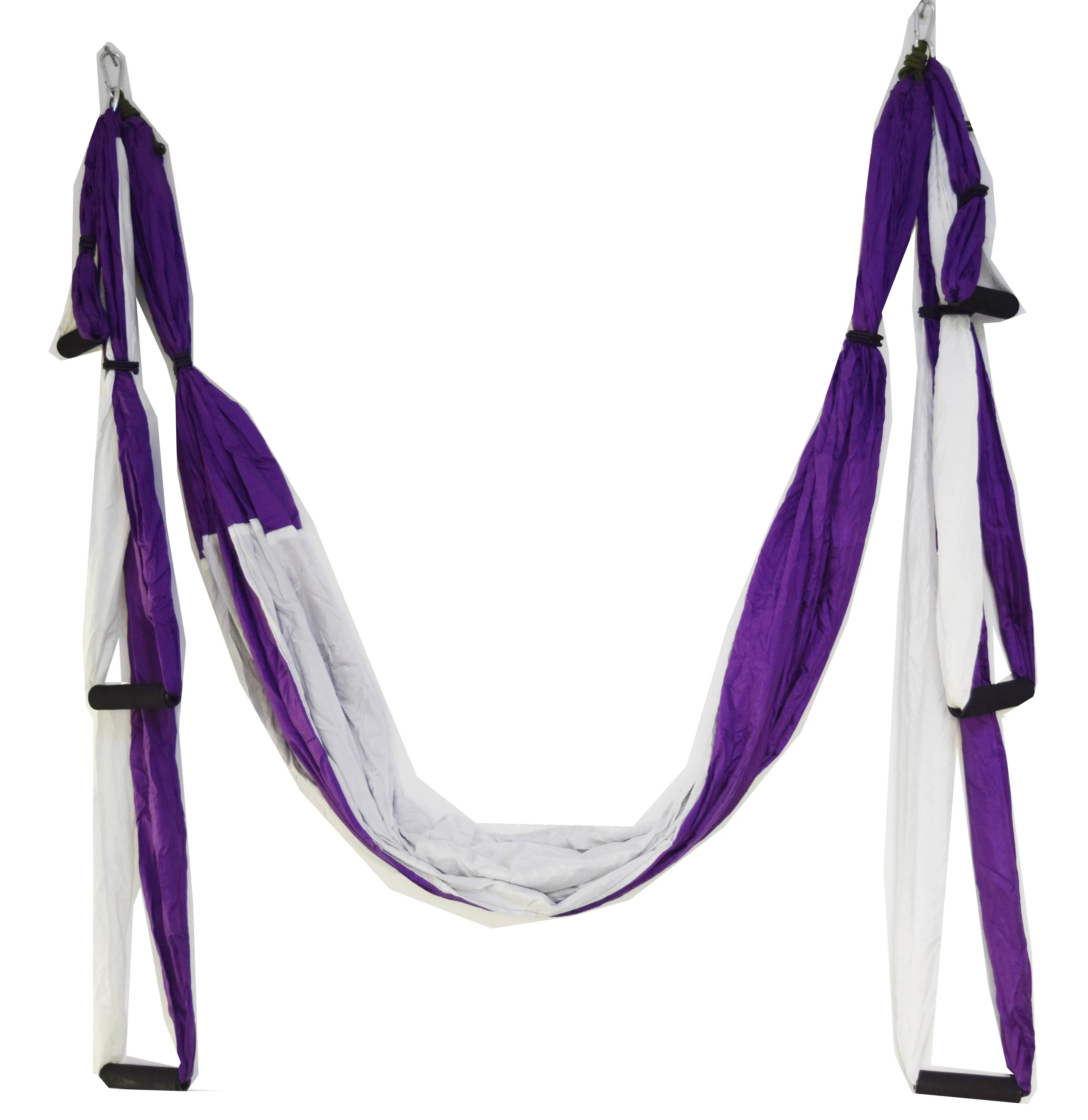
The Aerial Yoga Hammock – 200KG Heavy-Duty Support Swing is one option to consider when comparing non-elastic parachute nylon hammocks.

Its published specifications include:
- Fabric: 210T non-elastic nylon parachute fabric.
- Main hammock dimensions: 250 × 150 cm.
- Handle lengths: 30 cm, 85 cm, and 135 cm.
- Stated load capacity: Up to 200 kg (440 lbs).
- Product weight: Approximately 1.2 kg (2.65 lbs).
- Model: YGYB04SET.
- Package contents: Hammock, handles, four metal buckles, telescopic buckles, and carry bag.
- Colors: 20 options.
Pros
- Non-elastic 210T nylon construction.
- Multiple handle lengths for different positioning options.
- Lightweight design and included carry bag.
- Clearly specified main hammock dimensions.
- Designed for aerial yoga, stretching, and home fitness activities.
Cons and specification gaps
- Extension straps are not included.
- Ceiling hanging trays or mounting equipment are sold separately.
- The published product information does not independently establish a complete system WLL.
- Detailed ratings and application documentation for individual suspension components should be confirmed before use.
- Structural installation requirements must be assessed separately.
The stated 200 kg capacity is a product listing claim, not independent verification that every possible suspension arrangement supports that working load. Confirm the complete system documentation before using the hammock for aerial loading or inversion exercises.
For shoppers comparing fabric dimensions, handles, portability, and package contents, view the aerial yoga hammock's full product specifications before deciding whether the separately purchased suspension components fit your installation plan.
Best Aerial Yoga Equipment for Apartment Users
Apartment users should begin with property restrictions and available space rather than product appearance.
Permanent ceiling mounting may require landlord approval and a structural assessment. If modifications are not permitted, a compatible freestanding system may be worth investigating.
Consider these points:
- Whether permanent mounting is permitted.
- Whether the floor can accommodate a freestanding frame.
- How much clearance is available around the equipment.
- Whether the frame can be disassembled for storage.
- Whether all components have documented compatibility.
Best Aerial Yoga Equipment for Dedicated Home Studios
A dedicated home studio offers more opportunities to plan a permanent installation. Buyers can evaluate the ceiling structure, room dimensions, equipment storage, and preferred practice configuration before purchasing.
For this situation, a ceiling-mounted setup may be appropriate when a qualified assessment confirms that the structure and mounting arrangement are suitable. A well-documented hammock and compatible hardware should be selected together.
Best Portable Aerial Yoga Equipment for Travel
Portable equipment is useful for storage and transport, but the ability to carry a hammock does not guarantee that it can be installed wherever you travel.
Look for:
- Low packed weight.
- Compact storage dimensions.
- A suitable carry bag.
- Clearly identified suspension accessories.
- Manufacturer-approved attachment configurations.
Never improvise attachment points in hotels, rental properties, outdoor structures, or unfamiliar buildings.
Best Aerial Yoga Equipment for Experienced Practitioners
Experienced practitioners may require more detailed fabric and suspension specifications, adjustment options, and compatibility information. They should also consider replacement fabric, hardware availability, and manufacturer support.
Experience does not remove the need for structural assessment, equipment inspection, or adherence to the manufacturer's approved configuration.
What to Look for Before Buying an Aerial Yoga Hammock Set
Before placing an order, evaluate the product listing as carefully as the equipment itself. A trustworthy purchase decision depends on complete, understandable specifications.
Product Specifications Every Seller Should Disclose
Look for the following information:
- Exact fabric material and construction.
- Flat fabric width and total length.
- Included suspension and connection components.
- Hardware material and manufacturer identification.
- Documented load ratings and intended conditions.
- Approved component configurations.
- Mounting requirements and installation instructions.
- Manufacturer identity and product model.
If these details are missing, contact the seller before purchasing. Do not assume that a product photograph or marketing description provides enough information to establish compatibility.
Warranty, Replacement Parts, and Manufacturer Support
Warranty coverage is an important purchasing consideration, especially for equipment that contains multiple textile and metal components.
Check whether the warranty covers fabric, connectors, and accessories separately. Review exclusions for wear, improper installation, misuse, and environmental exposure.
Also investigate replacement fabric availability, compatible hardware replacements, customer support, and access to updated installation documentation.
Common Aerial Yoga Equipment Buying Mistakes
- Buying hammock-only equipment by mistake: Some products exclude essential suspension or mounting components.
- Ignoring ceiling construction: A visually solid ceiling is not automatically an appropriate attachment structure.
- Confusing MBS with WLL: Breaking strength is not a permitted working load.
- Mixing incompatible hardware: Components from different systems may not be approved for combined use.
- Overlooking fabric dimensions: The advertised fabric length does not establish the installed hammock height.
- Ignoring installation costs: Professional assessment and mounting may add to the purchase budget.
- Trusting unsupported capacity claims: A single advertised number does not establish the rating of the complete system.
Final Pre-Purchase Aerial Yoga Equipment Checklist
- Identify your intended aerial yoga activities.
- Measure ceiling height and available practice space.
- Determine whether a suitable structural installation is possible.
- Confirm whether the product is hammock-only or a complete system.
- Verify fabric composition, width, and length.
- Check all included hardware and accessory specifications.
- Verify the complete approved suspension configuration.
- Review documented operating ratings and limitations.
- Check warranty coverage and replacement-part availability.
- Read installation, inspection, and maintenance instructions.
Aerial Yoga Equipment Safety: Installation, Inspection, and Maintenance
Equipment quality, installation, and maintenance are all part of responsible aerial yoga practice. A product's advertised weight capacity should never be treated as a substitute for structural assessment or an approved suspension configuration.
Structural Assessment and Professional Installation
Permanent ceiling mounting requires an understanding of the building structure and the forces transferred through the attachment system. The appropriate installation method depends on the substrate, structural condition, mounting hardware, and equipment manufacturer's requirements.
When dealing with unfamiliar ceiling structures, concrete substrates, exposed beams, or permanent mounting modifications, seek qualified professional assessment and installation.
Aerial Yoga Equipment Inspection Checklist
Inspect the equipment before use and follow the manufacturer's specified inspection intervals.
- Fabric for cuts, fraying, discoloration, and unusual wear.
- Stitching and seams for damage or separation.
- Carabiners for deformation, corrosion, and locking problems.
- Daisy chains for damaged webbing or stitching.
- Extension straps for wear and attachment damage.
- Mounting plates and fasteners for movement or visible deterioration.
- Freestanding frames for loose connections, damage, and assembly problems.
Immediately discontinue use if any component is damaged or its condition is uncertain. Replace equipment according to manufacturer instructions rather than attempting unapproved repairs.
Equipment Maintenance and Storage
Follow manufacturer-directed washing and drying procedures for hammock fabric. Store textiles in a clean, dry location away from damaging environmental conditions.
Keep metal hardware clean and inspect it for corrosion or mechanical problems. Avoid modifying connectors, stitching, straps, or mounting components. Replace parts only with compatible manufacturer-approved replacements.
Safety Documentation to Check Before First Use
Before practicing, make sure you have access to:
- Manufacturer installation and assembly instructions.
- Complete product specifications.
- Approved suspension and hardware configurations.
- Documented load ratings and limitations.
- Structural mounting guidance.
- Inspection intervals and maintenance instructions.
- Relevant product warnings.
Beginners should learn fundamental aerial yoga movements with guidance from a qualified instructor before attempting unsupported inversions or advanced positions. People with relevant medical concerns should seek appropriate professional advice before beginning inversion-based exercise.
How to Get Started with Your Home Aerial Yoga Equipment
Once you have selected compatible equipment and completed the necessary installation checks, focus on learning the fundamentals rather than immediately attempting advanced movements.
Learn Basic Aerial Yoga Positions Before Your First Session
Start with supported positions and basic fabric familiarization. Learn how to enter and exit the hammock, distribute your weight appropriately, and maintain control during simple movements.
Progress gradually with instructor guidance. For additional general wellness and practice resources, explore the Beauty & Self-Care Blog.
Understand Aerial Hammock Installation Before Assembly
Installation should be completed according to the exact equipment manufacturer's instructions. Confirm the structural attachment, connector compatibility, suspension length, and required clearance before using the equipment.
Do not improvise mounting solutions or assume that instructions for another hammock apply to your product.
Build a Simple Home Aerial Yoga Practice Routine
A beginner routine should emphasize preparation, controlled movement, and gradual progression. Start with appropriate warm-up activities, learn basic supported positions, and finish with gentle movements that do not require advanced inversions.
Practice frequency and exercise selection should reflect your experience, comfort, and instructor guidance. Avoid progressing to challenging positions simply because the equipment appears capable of supporting them.
Final Recommendation: Choosing the Right Aerial Yoga Equipment in 2026
The best aerial yoga equipment is not necessarily the set with the most accessories or the largest advertised capacity. It is the complete, appropriately specified system that matches your home environment, experience, installation options, and intended practice.
Choose a hammock-only product if you already have a compatible, documented suspension system. Consider a ceiling-mounted kit when the building structure and mounting arrangement have been professionally assessed. Explore freestanding systems when permanent ceiling modifications are unavailable and you have sufficient floor space.
For buyers considering a portable non-elastic nylon hammock, the KentDO Aerial Yoga Hammock – 200KG Heavy-Duty Support Swing offers published specifications including 210T nylon fabric, 250 × 150 cm dimensions, three handle lengths, and a carry bag. Remember that extension straps and ceiling hanging trays are separately purchased, and the stated 200 kg capacity should not be interpreted as independent verification of the complete installed system's working load.
Before choosing any aerial yoga set, compare its actual package contents, fabric specifications, hardware compatibility, documented operating ratings, installation requirements, warranty, and replacement-part availability.
Taking time to verify these details helps you make a more informed equipment purchase and establish a home aerial yoga setup that matches your space and practice goals.
Pillar Article: Aerial Fitness Equipment: Complete Comparison & Buying Guide for Home Training